
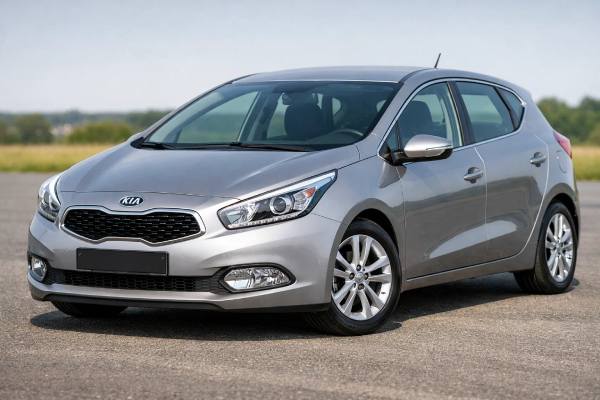
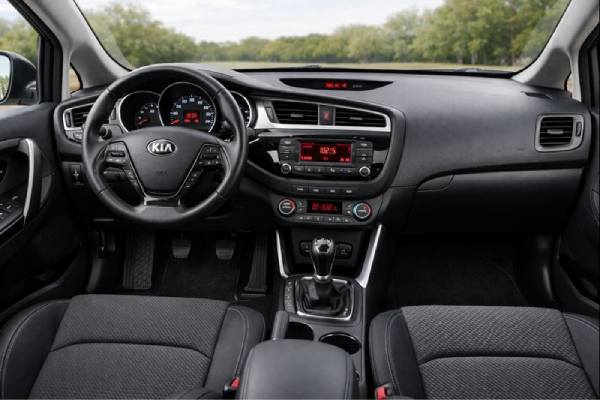
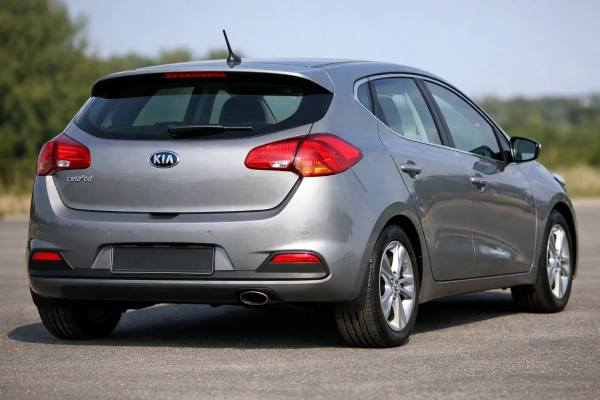
The 2012–2015 Kia Cee’d (JD) with the 1.4 U II CRDi (90 hp) is a pragmatic European diesel: compact outside, genuinely useful inside, and tuned for low running costs rather than fast numbers. The engine’s headline is torque—enough mid-range pull to make city traffic and motorway merges easy—paired with a manual gearbox that suits steady commuting. It’s also a “systems” car: emissions hardware (EGR and a diesel particulate filter on most Euro 5 versions) can be trouble-free when driven hot regularly, but short-trip use changes the ownership math.
If you want a simple, durable hatch or wagon with long-range fuel economy, this configuration can be a strong pick—provided you buy on condition and service history, not just mileage or price.
Quick Overview
- Strong real-world range from a modest 90 hp, especially on mixed and motorway driving.
- Comfortable chassis balance: stable at speed, compliant ride, and predictable handling.
- Parts availability is generally good, and routine servicing is straightforward.
- Repeated short trips can trigger DPF and EGR problems; a diesel needs regular hot running.
- Plan engine-oil service every 12 months or 15,000 km (shorter for severe city use).
What’s inside
- Kia Cee’d JD 1.4 CRDi explained
- Kia Cee’d JD 1.4 CRDi specifications
- Kia Cee’d JD diesel equipment guide
- Common diesel issues and recalls
- Maintenance schedule for U II
- Driving character and economy
- Diesel rivals comparison
Kia Cee’d JD 1.4 CRDi explained
This version of the Cee’d (JD) pairs Kia’s small 1.4-liter U II common-rail diesel with front-wheel drive and, in most markets, a 6-speed manual gearbox. The goal is simple: deliver the “diesel benefits” that were popular in Europe at the time—strong mid-range pull, low fuel use at steady speeds, and long distance between fill-ups—without the higher purchase and maintenance costs of larger diesels.
In daily driving, the 1.4 CRDi’s torque band is what matters. You don’t need to rev it hard; instead, it works best short-shifting and riding the mid-range. Around town it feels more relaxed than many small petrol engines because you can hold a higher gear at lower revs. On the motorway it’s competent rather than quick, and it rewards a calm driving style with notably good consumption.
The JD platform itself is a solid base. The Cee’d was engineered for European roads, so you get a stable wheelbase, good straight-line tracking, and suspension tuning that handles broken pavement well. It’s not a hot hatch, but it’s confidence-inspiring, especially on longer trips.
Where ownership gets nuanced is emissions hardware. Many 2012–2015 diesels use an EGR system (exhaust gas recirculation) to reduce NOx and a DPF (diesel particulate filter) to trap soot. Both systems can run for years with minimal drama if the car gets frequent hot running—think 20–30 minutes at operating temperature, not just five-minute errands. If you mainly do short trips, the same systems can become the car’s main expense item.
Bottom line: this is a sensible long-range commuter and family car when the usage pattern matches the diesel powertrain. Buy it for consistent driving and efficiency, not for low purchase price alone.
Kia Cee’d JD 1.4 CRDi specifications
Specs vary slightly by body style (5-door hatch, Sportswagon) and by market, but the figures below capture the typical 2012–2015 1.4 U II CRDi 90 hp configuration.
Powertrain and efficiency
| Item | Specification (typical) |
|---|---|
| Engine family | U II CRDi diesel |
| Common engine code (market-dependent) | D4FC (commonly listed for 1.4 CRDi 90) |
| Layout | Inline-4 |
| Valvetrain | DOHC, 16 valves (4 valves/cyl) |
| Induction | Turbocharged with intercooler |
| Fuel system | Common-rail direct injection (CRDi) |
| Displacement | 1.4 L (1,396 cc) |
| Bore × stroke | 73.0 × 82.0 mm (2.87 × 3.23 in) |
| Compression ratio | ~17:1 (varies by calibration) |
| Max power | 90 hp (66 kW) @ ~4,000 rpm |
| Max torque | ~220 Nm (162 lb-ft) @ ~1,500–2,750 rpm |
| Emissions standard | Typically Euro 5 (market/year dependent) |
| Rated combined consumption (typical) | ~4.1–4.5 L/100 km (57–52 mpg US / 69–63 mpg UK) |
| Real-world highway @ 120 km/h (typical) | ~5.0–5.6 L/100 km (47–42 mpg US / 56–50 mpg UK) |
Transmission and driveline
| Item | Specification (typical) |
|---|---|
| Transmission | 6-speed manual (most common) |
| Drive type | FWD |
| Differential | Open |
Chassis and dimensions (common configurations)
| Item | Hatchback (typical) | Sportswagon (typical) |
|---|---|---|
| Suspension (front / rear) | MacPherson strut / multi-link | MacPherson strut / multi-link |
| Steering | Electric power steering (EPS) | Electric power steering (EPS) |
| Length | ~4,310 mm (169.7 in) | ~4,505 mm (177.4 in) |
| Width | ~1,780 mm (70.1 in) | ~1,780 mm (70.1 in) |
| Height | ~1,470 mm (57.9 in) | ~1,485 mm (58.5 in) |
| Wheelbase | ~2,650 mm (104.3 in) | ~2,650 mm (104.3 in) |
| Turning circle (kerb-to-kerb) | ~10.6 m (34.8 ft) | ~10.8 m (35.4 ft) |
| Kerb weight | ~1,300–1,380 kg (2,866–3,042 lb) | ~1,350–1,430 kg (2,976–3,153 lb) |
| Fuel tank | ~53 L (14.0 US gal / 11.7 UK gal) | ~53 L (14.0 US gal / 11.7 UK gal) |
| Cargo volume (seats up / down) | ~380 L / ~1,318 L (VDA) | ~528 L / ~1,642 L (VDA) |
Performance (typical)
| Item | Value (typical) |
|---|---|
| 0–100 km/h (0–62 mph) | ~13.5–13.9 s |
| Top speed | ~170 km/h (106 mph) |
| Braking 100–0 km/h | ~39–41 m (test/tyre dependent) |
| Towing capacity (braked / unbraked) | Often ~1,200 kg / ~600 kg (market dependent) |
| Payload | Commonly ~450–550 kg (trim dependent) |
Fluids and service capacities (typical)
These are the “decision-making” fluids owners ask about most. Always confirm with the correct service data for your VIN and gearbox code.
| Item | Spec (typical) |
|---|---|
| Engine oil | ACEA C2/C3 low-SAPS, commonly 5W-30 |
| Engine oil capacity | ~5.3 L (5.6 US qt) with filter |
| Coolant | Ethylene glycol long-life; typically 50/50 mix |
| Manual transmission oil | GL-4 75W-85 (common spec) |
| Brake fluid | DOT 4 |
| A/C refrigerant (most markets) | R134a (charge varies by system) |
Key torque specs (typical ranges; verify for your VIN):
- Wheel nuts: 90–110 Nm (66–81 lb-ft)
- Engine oil drain plug: 30–40 Nm (22–30 lb-ft)
Kia Cee’d JD diesel equipment guide
Trim structures differ by country, but the JD Cee’d usually followed a clear ladder: entry trims with the essentials, mid trims with comfort and infotainment upgrades, and upper trims adding wheels, lighting, and convenience features. The 1.4 CRDi 90 commonly appeared as a value-focused diesel option—ideal for company-car use and high-mileage private owners—while higher-output diesels often sat above it.
Trims and options that change ownership
The biggest “functional” differences are not cosmetic; they affect tyre cost, ride comfort, and maintenance planning:
- Wheel and tyre packages:
Many cars run 15–16 inch wheels (often 195/65 R15 or 205/55 R16). Larger wheels can look good but raise tyre cost and can make the ride firmer on rough roads. For this diesel, smaller wheels often suit the powertrain best. - Infotainment generations:
Early cars may have simpler head units; higher trims often include navigation and a larger display. If you care about phone integration, check what’s actually fitted—many owners plan an aftermarket solution. - Climate control:
Manual A/C is common; dual-zone climate can be a comfort upgrade and may add blend-door actuators and sensors over time. Not a deal-breaker, but worth checking that temperature control is consistent on both sides. - Parking sensors and cameras:
Rear sensors are common; cameras vary by year/trim. On used cars, water ingress at sensors or a tired camera can be a small but annoying expense.
Safety ratings and passive safety
The JD Cee’d earned a strong safety reputation in its class. In Euro NCAP testing for the model generation, it achieved a five-star result and strong category scores for adult and child occupant protection, plus safety assist performance for its era. In practical terms, the car’s structure and restraint systems were competitive with mainstream rivals like the Golf and Focus.
Typical passive-safety equipment includes:
- Front, side, and curtain airbags (commonly six airbags total)
- ISOFIX/LATCH child-seat mounting points (usually outer rear seats)
- Seatbelt pretensioners and load limiters in front
Driver assistance and stability systems (era-appropriate)
Do not expect modern ADAS across the range. In 2012–2015, most cars in this segment relied on:
- ESC (electronic stability control) and traction control
- ABS with brake-force distribution
- Hill-start assist on many manual versions
- Tyre-pressure monitoring depending on market/year
Advanced features like automatic emergency braking and lane-keeping were not widespread on early JD cars. If you see a listing claiming full ADAS, verify it carefully—many sellers confuse “stability control” with modern driver-assist suites.
If the car has any camera- or radar-based features (rare on this specific diesel), keep in mind that windscreen replacement, wheel alignment, or suspension changes may require calibration checks.
Common diesel issues and recalls
The 1.4 U II CRDi can be a dependable engine when serviced correctly, but it is less forgiving of neglected maintenance and short-trip usage than a simple petrol MPI engine. Below is a practical, ownership-focused map of what tends to go wrong—organized by prevalence and cost impact.
Common and usually manageable
- EGR valve and intake soot build-up (common; low–medium cost)
Symptoms: Rough idle, hesitation, reduced power, higher consumption, occasional warning lights.
Likely cause: Soot accumulation from frequent low-load driving.
Remedy: Cleaning or replacing EGR components; check vacuum lines/actuators; ensure the engine reaches full temperature regularly. - DPF regeneration trouble (common on short-trip cars; medium cost)
Symptoms: Rising oil level (oil dilution), frequent fan operation, reduced power, DPF warning.
Likely cause: Interrupted regens from repeated short runs; incorrect oil spec; underlying EGR/injector issues increasing soot.
Remedy: Forced regen and root-cause fix; in persistent cases, DPF removal for professional cleaning or replacement (where legal and appropriate). - Glow plugs and relay issues (common with age; low–medium cost)
Symptoms: Hard starting in cold weather, uneven initial idle, glow-plug light faults.
Remedy: Replace faulty plugs; use correct torque and anti-seize practices to avoid thread damage.
Occasional but can be expensive
- Turbo control issues (occasional; medium–high cost)
Symptoms: Limp mode under load, uneven boost, whistle or whoosh changes, fault codes for boost regulation.
Likely cause: Sticking actuator, vacuum leaks, boost solenoid issues, or turbo wear.
Remedy: Diagnose vacuum system first; replace actuator/solenoid if needed; verify intercooler hoses and clamps. - Injector sealing and combustion leakage (occasional; medium cost)
Symptoms: “Chuffing” sound, diesel smell, black residue around injectors, poor idle.
Remedy: Replace seals and clean seats; confirm correct clamp torque and injector coding/adaptation where applicable. - Dual-mass flywheel (DMF) and clutch wear (occasional; medium–high cost)
Symptoms: Rattle at idle, vibration on take-up, judder, difficulty engaging gears.
Likely cause: City driving, aggressive launches, high-mileage use.
Remedy: Clutch and DMF replacement as a set is common; check hydraulic components too.
Rare but worth knowing
- Timing chain noise or tensioner wear (rare; high cost if ignored)
The U II family typically uses a chain. Chains aren’t “lifetime” in practice; they’re condition-based.
Symptoms: Cold-start rattle, timing correlation faults, persistent metallic noise.
Remedy: Investigate early—repairs are far cheaper before a jump or guide failure.
Software, calibrations, and service actions
Even on older vehicles, software updates can matter. Updates may address:
- Idle stability, cold-start behavior, and DPF regeneration strategy
- Sensor plausibility faults (MAF/MAP, EGR position, differential pressure sensors)
- Infotainment stability on higher trims
Ask a Kia specialist to check for outstanding campaigns by VIN and verify completion in dealer records. For recalls and service campaigns, treat “it was done” as unproven until you have documentation or a VIN status check from an official recall portal.
Maintenance schedule for U II
A diesel Cee’d can be inexpensive to run, but only if you keep the service basics tight—especially oil quality, filters, and DPF-friendly driving. Use the schedule below as a practical baseline, then align it to your market’s official intervals and your driving style.
Core maintenance intervals (typical owner-friendly plan)
- Engine oil and filter: every 15,000 km or 12 months
For heavy city use, short trips, or frequent DPF regens, consider 10,000–12,000 km. Always use the correct low-SAPS oil spec (commonly ACEA C2/C3). - Air filter (engine): inspect every service; replace every 30,000 km (sooner in dusty areas)
- Cabin air filter: every 15,000–20,000 km or annually
- Fuel filter (diesel): every 30,000–60,000 km (market and fuel quality dependent)
If you buy a used car with unknown history, replace it early—diesel injection systems dislike contaminated fuel. - Brake fluid: every 2 years regardless of mileage
- Coolant: typically 5 years / 100,000–150,000 km, then shorter repeat intervals (verify your coolant type)
- Manual gearbox oil: not always listed as a routine item, but a preventive change around 100,000–120,000 km can improve shift quality and longevity
- Serpentine/aux belt and tensioner: inspect each service; often replaced around 90,000–120,000 km or by age if cracked/noisy
- Battery (12 V): test yearly after 4 years; many last 4–6 years depending on climate and usage
Diesel-specific habits that prevent expensive problems
- Give the DPF a chance to finish regens. If the idle rises, fans run after shutdown, or consumption spikes briefly, the car may be regenerating. Avoid switching off mid-process repeatedly.
- Schedule a weekly “hot run.” A steady 20–30 minutes at operating temperature (motorway or open road) reduces soot load and moisture in the oil.
- Watch oil level trends. Rising oil can indicate fuel dilution from frequent regens—address it early.
Buyer’s guide: what to check before purchase
- Service history quality: Look for evidence of correct oil spec, timely changes, and fuel filter replacement.
- DPF behavior: Ask about warning lights, forced regens, or recent DPF work. A fresh DPF replacement without addressing the cause can repeat.
- Cold-start and idle: Listen for chain rattle, injector chuffing, and unstable idle when cold.
- Clutch/DMF feel: Test for judder, rattles, and vibration in higher gears at low rpm.
- Cooling system health: Check for stable operating temperature, clean coolant, and no sweet smell around the radiator/thermostat housing.
- Electrics and water ingress: Test windows, locks, parking sensors, and infotainment. Check boot and spare-wheel well for moisture.
Long-term durability outlook
With correct oil, clean fuel filtration, and DPF-friendly use, this powertrain can cover high mileage economically. The highest-risk ownership pattern is a “diesel used like a petrol”: short trips, infrequent servicing, and ignored warning signs. Match the car to your usage, and it tends to reward you.
Driving character and economy
The 1.4 CRDi 90 transforms the Cee’d into a calm, torque-led commuter. You won’t chase redlines; instead, you’ll use the engine’s mid-range to flow with traffic. Around town, it pulls cleanly from low rpm in a way many small petrol engines of the era can’t match without downshifting. On faster roads, it’s capable, but overtakes need planning—think “steady and safe” rather than “instant punch.”
Ride, handling, and NVH
- Ride: Generally compliant over broken pavement, especially on 15–16 inch wheels. Larger wheels can introduce sharper impacts.
- Handling: Balanced and predictable. The multi-link rear helps stability on uneven corners and gives confidence at motorway speeds.
- Steering: Light at parking speeds and more settled on the move; feedback is adequate rather than sporty.
- Noise and vibration: Cold-start diesel clatter is normal. Once warm, the cabin is fairly refined for the class, but wind and tyre noise dominate at higher speeds.
Powertrain character and gearbox feel
The turbo diesel’s response depends on revs and gear choice. Below the boost threshold, it can feel flat; once the turbo is working, the car becomes more flexible. A 6-speed manual suits the engine well: you can keep it in the torque band without revving hard. If you notice hunting, surging, or inconsistent pull, suspect airflow sensors, boost leaks, or EGR/DPF complications rather than “diesel personality.”
Real-world efficiency
Real-world economy depends heavily on driving pattern:
- City (stop-start, short trips): ~5.8–7.0 L/100 km (41–34 mpg US / 49–40 mpg UK)
Short trips also increase DPF regens, which raises consumption further. - Highway 100–120 km/h (60–75 mph): ~5.0–5.6 L/100 km (47–42 mpg US / 56–50 mpg UK)
- Mixed use: ~5.3–6.2 L/100 km (44–38 mpg US / 53–46 mpg UK)
Cold-weather delta: In winter, add roughly 0.7–1.2 L/100 km depending on trip length, tyre choice, and how quickly the engine reaches temperature.
Load, passengers, and towing
This 90 hp diesel is happiest with moderate loads. Two adults and luggage are fine; a full car plus steep hills will feel slow but manageable if you shift early and keep revs in the working range. If you tow, stay conservative: towing raises exhaust temperatures and soot load, and it can expose marginal cooling-system health. After a hard run, give the turbo a brief cool-down by driving gently for a minute before shutting off.
Diesel rivals comparison
In the 2012–2015 European C-segment, the Cee’d 1.4 CRDi 90 competed against a long list of mainstream diesels. The right comparison depends on what you value most: driving feel, cabin finish, long-term reliability, or repair cost.
Versus Volkswagen Golf 1.6 TDI (and similar VAG diesels)
- Golf advantages: Strong resale, polished interiors, and a refined “one class up” feel in many trims.
- Cee’d advantages: Often better value used, simpler trim strategy, and typically cheaper parts and labour in many markets.
- Ownership reality: Both rely on DPF/EGR systems; short-trip use can punish either. Condition matters more than badge.
Versus Ford Focus 1.6 TDCi / PSA-sourced diesels
- Focus advantages: Excellent steering and chassis tuning; many drivers prefer its handling.
- Cee’d advantages: Generally straightforward ownership when serviced well; cabin ergonomics are simple and durable.
- Watch-outs: Both can suffer from diesel emissions complications. Choose the one with the cleaner history and better driving pattern match.
Versus Renault Mégane 1.5 dCi (lower-output versions)
- Mégane advantages: Efficient engines and good motorway economy; often plentiful on the used market.
- Cee’d advantages: Typically solid-feeling suspension and a reputation for durability when maintained.
- Decision tip: If you mainly do long trips, both can be economical. If you do short trips, consider whether a petrol alternative would fit you better.
Versus Opel/Vauxhall Astra 1.3 CDTI / small diesels
- Astra advantages: Some versions feel torquey and relaxed, with strong cruising manners.
- Cee’d advantages: More modern platform feel in many trims, and the 1.4’s torque output is competitive for its size.
- Trade-off: Small diesels are least tolerant of short-trip life; the “diesel lifestyle” is the deciding factor.
The closest rival: Hyundai i30 (GD) 1.4 CRDi
As a corporate cousin, the i30 often feels very similar in powertrain character and ownership needs. If you cross-shop them, focus on:
- Service history quality and evidence of correct oil spec
- DPF/EGR health signs
- Tyres, suspension wear, and clutch/DMF condition
Verdict: The Cee’d JD 1.4 CRDi 90 is best when you want honest diesel efficiency and you drive enough distance to keep the emissions system healthy. If your driving is mostly short urban trips, a petrol Cee’d (or a hybrid in a newer generation) will often be cheaper and less stressful long-term—even if it uses a bit more fuel.
References
- euroncap_kia_ceed_2012_5stars.pdf 2012 (Safety Rating)
- Check for Recalls: Vehicle, Car Seat, Tire, Equipment | NHTSA 2026 (Recall Database)
- Kia Recalls | Kia Europe 2026 (Recall Database)
- Kia Car Owners Manual | Kia UK 2026 (Owner’s Manual)
- New-generation Kia cee’d awarded top safety score by EuroNCAP – Kia Slovakia s.r.o. 2012 (Safety Rating)
Disclaimer
This article is for informational purposes only and is not a substitute for professional diagnosis, inspection, or repair. Specifications, torque values, service intervals, and procedures can vary by VIN, market, model year, and installed equipment. Always verify details using the correct official service documentation for your specific vehicle and consult a qualified technician when needed.
If this guide helped you, please consider sharing it on Facebook, X/Twitter, or your favourite forum—your support helps us keep producing detailed owner-focused resources.