
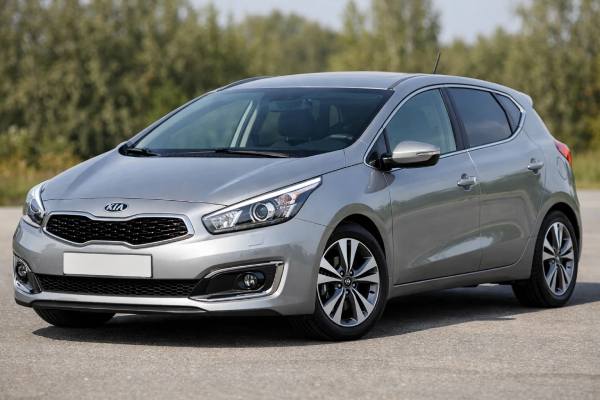
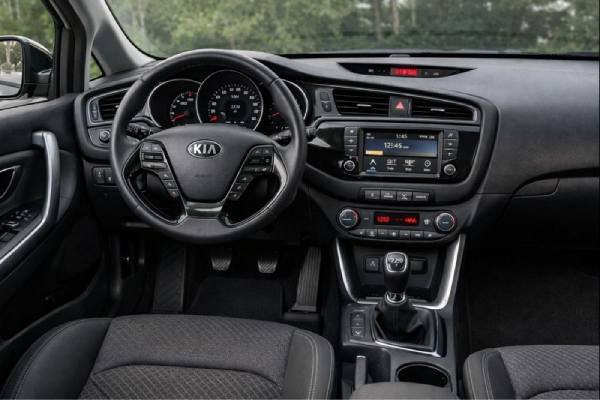
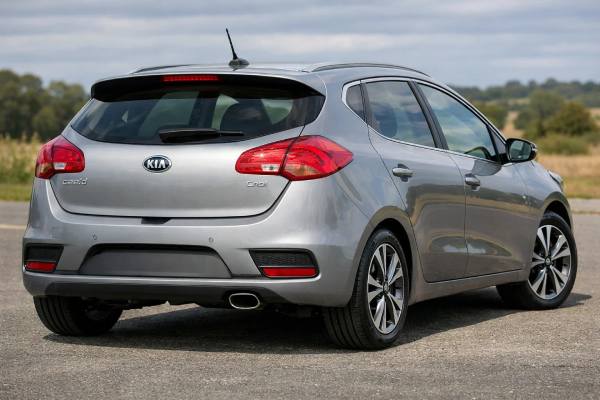
The facelifted Kia Cee’d (JD) with the 1.0 T-GDi 100 hp engine is a smart “right-sized” hatchback: compact outside, practical inside, and engineered around low running costs without feeling underpowered in everyday traffic. This small turbo petrol is a three-cylinder direct-injection unit that leans on mid-range torque rather than high revs, which suits commuting and mixed driving. The facelift years also brought meaningful refinement—better noise control, updated infotainment in many trims, and more available driver-assistance tech than early JD models.
Ownership tends to be straightforward if you respect turbo-GDI basics: correct oil, good warm-up habits, and timely spark plugs. Do that, and the car rewards you with stable handling, predictable brakes, and a cabin that ages better than many budget rivals.
Owner Snapshot
- Strong real-world mid-range pull for a 1.0 l, especially from 1,500–4,000 rpm.
- Practical hatchback packaging with an easy-to-load cargo area and family-friendly rear space.
- Generally low fuel use on steady runs when tyre pressures and alignment are kept in check.
- Direct injection can mean intake deposits over time if used mostly for short trips.
- Plan engine oil service about every 12 months / 15,000 km (whichever comes first) for conservative ownership.
Jump to sections
- Kia Cee’d JD facelift explained
- Kia Cee’d 1.0 T-GDi specs
- Kia Cee’d equipment and safety
- Reliability issues to watch
- Maintenance plan and buying
- Driving feel and economy
- Rivals in the same class
Kia Cee’d JD facelift explained
The JD-generation Cee’d facelift (often referred to as “JD2”) kept the same basic platform as the 2012–2015 car, but it tightened the overall package in the places owners actually feel: drivability, perceived quality, and tech. With the 1.0 T-GDi 100 hp engine, Kia’s goal was clear—deliver diesel-like flexibility for daily speeds, while keeping purchase and servicing costs closer to a simple petrol.
What the 1.0 T-GDi is really doing. This is a small, turbocharged, direct-injection three-cylinder. Instead of relying on peak horsepower, it leans on a broad torque band (the kind you use from 30–90 km/h). In practice, that means fewer downshifts in traffic and less “rev chasing” on gentle hills. The trade-off is that it is more sensitive to maintenance details than the older naturally aspirated engines: correct oil quality, fresh plugs, and clean air filtration matter.
Why the facelift matters for ownership. Facelift-era changes typically include updated infotainment hardware, revisions to trim packaging, and improvements in cabin noise. Many cars also gained more available safety features (like autonomous emergency braking and lane departure warning) depending on market and trim. Even when the feature list looks similar on paper, the facelift cars often feel more mature at highway speeds because of incremental suspension and steering tuning.
Who this version suits best.
- City + suburban drivers who want a compact hatch that doesn’t feel breathless on ring roads.
- Light annual mileage owners who prefer petrol simplicity but still want good torque.
- Buyers avoiding diesels because of DPF (diesel particulate filter) and short-trip usage.
Where expectations should be realistic. A 1.0 turbo can be efficient on steady runs, but it will not behave like a hybrid in stop-and-go traffic. If you drive aggressively or do very short trips in cold weather, consumption rises and deposit-related issues become more likely over time. Also, the clutch and dual-mass flywheel (where fitted) can suffer if the car is regularly lugged in high gear at low rpm.
The upside is that the platform itself is fundamentally conventional: front-wheel drive, predictable suspension geometry, and widely available parts. That combination—mainstream mechanical layout plus a modern small turbo—makes the 1.0 T-GDi Cee’d a strong used buy when you confirm service history and choose the right trim.
Kia Cee’d 1.0 T-GDi specs
Below are practical, ownership-focused specifications for the Kia Cee’d (JD facelift, 2015–2018) with the 1.0 T-GDi 100 hp petrol. Exact figures can vary slightly by market, wheel size, gearbox, and emissions certification.
Powertrain and efficiency
| Item | Specification |
|---|---|
| Code | Kappa / Kappa II 1.0 T-GDi (commonly listed as G3LC family in Hyundai-Kia applications) |
| Engine layout and cylinders | I-3, 3 cylinders, DOHC, 4 valves/cyl (12 valves total) |
| Bore × stroke | 71.0 × 84.0 mm (2.80 × 3.31 in) |
| Displacement | 1.0 l (998 cc) |
| Induction | Turbocharged (single turbo) |
| Fuel system | GDI (gasoline direct injection) |
| Compression ratio | ~10.0:1 (varies by calibration/market) |
| Max power | 100 hp (74 kW) @ ~4,500–6,000 rpm |
| Max torque | ~172 Nm (127 lb-ft) @ ~1,500–4,000 rpm |
| Timing drive | Chain |
| Rated efficiency (typical range) | ~4.8–5.6 L/100 km (~49–42 mpg US / 59–50 mpg UK) depending on test cycle and wheels |
| Real-world highway @ 120 km/h | ~6.0–7.0 L/100 km (~39–34 mpg US / 47–40 mpg UK) depending on load and wind |
Transmission and driveline
| Item | Specification |
|---|---|
| Transmission | 6-speed manual common; 7-speed DCT available in some markets/years |
| Drive type | FWD |
| Differential | Open (traction control manages wheel slip) |
Chassis, dimensions, and capacities
| Item | Specification |
|---|---|
| Suspension (front/rear) | MacPherson strut / multi-link (typical for Cee’d JD) |
| Steering | Electric power steering |
| Brakes | Front ventilated discs / rear discs (rear disc availability can vary by trim/market) |
| Wheels/tyres (popular) | 205/55 R16 (common everyday setup) |
| Ground clearance | ~140 mm (5.5 in) (varies by wheel/trim) |
| Length / width / height | ~4,310 / 1,780 / 1,470 mm (169.7 / 70.1 / 57.9 in) |
| Wheelbase | ~2,650 mm (104.3 in) |
| Turning circle (kerb-to-kerb) | ~10.6 m (34.8 ft) |
| Kerb weight | ~1,200–1,320 kg (2,646–2,910 lb) depending on gearbox/trim |
| Fuel tank | ~53 L (14.0 US gal / 11.7 UK gal) |
| Cargo volume | ~380 L (13.4 ft³) seats up / ~1,300+ L (45.9+ ft³) seats down (method varies by market) |
Performance and capability
| Item | Typical value |
|---|---|
| 0–100 km/h (0–62 mph) | ~12.5–13.5 s (gearbox and wheels matter) |
| Top speed | ~180–190 km/h (112–118 mph) |
| Braking distance 100–0 km/h | ~36–40 m (tyres dominate) |
| Towing capacity | Often not rated or limited for small petrols in some markets; where rated, expect modest figures—verify local handbook |
| Payload | Typically ~450–550 kg (992–1,213 lb) depending on trim |
Fluids, service capacities, and key torque specs
These are decision-making figures; always confirm by VIN/engine label.
| Item | Typical specification |
|---|---|
| Engine oil | Quality synthetic meeting Kia/ACEA spec; 5W-30 common; capacity ~3.6–4.2 L (3.8–4.4 US qt) with filter |
| Coolant | Long-life OAT type (region dependent), 50/50 mix typical; capacity ~5–6 L (5.3–6.3 US qt) |
| Manual gearbox oil | GL-4 spec gear oil (region dependent); capacity ~1.7–2.0 L (1.8–2.1 US qt) |
| DCT fluid (if fitted) | Kia-specified DCT fluid; capacity varies—service by spec |
| A/C refrigerant | Often R-134a in this era; charge varies by equipment |
| Key torque specs | Wheel bolts commonly ~88–110 Nm (65–81 lb-ft) depending on wheel; verify per trim |
Safety and driver assistance
| Item | Notes |
|---|---|
| Crash ratings | Euro NCAP testing exists for the Cee’d line; exact year/trim test version matters |
| Core safety systems | ESC, ABS, stability and traction control, ISOFIX/LATCH anchors |
| ADAS (availability) | AEB and lane departure warning/assist available on some facelift trims/markets |
Kia Cee’d equipment and safety
Trim names vary across Europe, but the facelift Cee’d range typically follows a familiar ladder: a value-focused base model, a mid-trim with comfort features, and higher trims that add appearance packs and technology. For used buyers, the key is to focus less on the badge and more on equipment evidence—wheels, headlight type, infotainment screen, and the presence of driver-assistance buttons and sensors.
Trims and options that change ownership
Look for these features because they meaningfully affect daily satisfaction and long-term cost:
- Infotainment generation: facelift cars often have improved connectivity and quicker response. A larger screen and factory navigation (where fitted) can be a resale plus, but check for touch responsiveness and Bluetooth stability.
- Headlights: projector or LED-style setups can improve night driving, but replacement cost is higher. Inspect lens clarity and condensation.
- Parking tech: rear camera and sensors make tight urban parking easier and can reduce bumper repair risk.
- Climate and seating: dual-zone climate control and heated seats/steering wheel (common in some markets) raise comfort without adding much mechanical complexity.
- Wheel size: larger wheels look great but typically worsen ride comfort and raise tyre costs. For the 1.0 T-GDi, a 16-inch package is often the best balance.
Quick identifiers when shopping
- Front radar/camera area: some AEB setups place sensors behind the grille or near the mirror housing. If you see the hardware, confirm it works and that warning lights are not present.
- Steering wheel buttons: lane or safety icons can hint at ADAS capability.
- Build sticker and VIN decode: dealer systems can confirm option codes and campaigns completed (especially for software updates).
Safety ratings and real-world safety feel
The Cee’d line earned strong Euro NCAP results in its era, but remember that test protocols evolve. A five-star score from an older test year does not translate directly to a five-star score today. Still, the underlying positives are meaningful for everyday safety:
- Predictable chassis behavior under braking and lane changes
- Standard electronic stability control helping prevent loss-of-control events
- Good child-seat provisions (ISOFIX) and generally practical rear-door access
Airbags and safety systems
Most facelift Cee’d models commonly include multiple airbags (front, side, and curtain). Verify the airbag count by trim and confirm the airbag warning light performs a normal self-check on startup.
Also verify ABS/ESC operation and that the car does not show persistent warnings for steering angle sensors or wheel speed sensors—these are often inexpensive fixes, but they matter for safety and MOT/TÜV inspections.
ADAS and calibration implications
If your car has AEB, lane departure warning, or traffic sign recognition, treat windshield replacement and front-end repairs as calibration events. Poorly calibrated systems can trigger warnings or behave inconsistently. When buying used, ask for evidence of professional repair and calibration if the car has a history of front bumper or windshield work.
The best approach is simple: choose the trim with the safety features you will actually use, then prioritize condition and service history over a higher badge. A well-kept mid-trim Cee’d is usually a better long-term bet than a neglected high-trim car with intermittent warning lights.
Reliability issues to watch
Overall reliability for the facelift Cee’d platform is usually solid, but the 1.0 T-GDi’s “small turbo + direct injection” architecture has predictable weak points. The good news is that many issues announce themselves early with symptoms you can check on a test drive and during inspection.
Common, usually low-to-medium cost
- Ignition coils and spark plugs (common)
Symptoms: misfire under load, rough idle, flashing check engine light.
Cause: high cylinder pressures in turbo engines stress ignition components.
Fix: replace plugs on schedule with correct heat range; replace coils as needed (often best in pairs or as a set if mileage is high). - PCV/breather system issues (common)
Symptoms: oily residue in intake piping, unstable idle, increased oil consumption.
Cause: crankcase ventilation wear; short-trip condensation.
Fix: inspect hoses and PCV valve function; keep oil changes conservative. - Cooling system wear (occasional)
Symptoms: slow coolant loss, sweet smell, temperature creeping in traffic.
Cause: hose clamps, thermostat, or water pump seepage over time.
Fix: pressure test; replace suspect components before overheating occurs.
Occasional, medium cost
- Carbon buildup on intake valves (direct injection behavior)
Symptoms: loss of crisp throttle response, uneven idle, reduced efficiency.
Cause: fuel does not wash intake valves in GDI engines; deposits accumulate faster with short trips.
Fix: periodic intake cleaning (chemical or walnut blasting depending on severity). Using quality fuel and occasional sustained highway driving can slow buildup. - Turbo control/wastegate rattle (occasional)
Symptoms: metallic rattle at certain rpm, inconsistent boost feel.
Cause: wastegate linkage wear or actuator behavior.
Fix: verify boost leaks first; repair/replace actuator or turbo hardware if needed. - Engine mounts (occasional)
Symptoms: vibration at idle, clunk on throttle transitions.
Cause: mount fatigue; three-cylinder vibration can accelerate wear.
Fix: replace worn mounts; it noticeably improves refinement.
Rare, higher cost if ignored
- Timing chain stretch/tensioner problems (rare)
Symptoms: cold-start rattles, correlation faults, rough running.
Cause: extended oil intervals, low oil level, or tensioner wear.
Fix: address early; chain work is more expensive than routine service. - DCT-specific concerns (if equipped) (rare-to-occasional)
Symptoms: shudder at takeoff, delayed engagement, warning messages.
Cause: clutch wear, mechatronic/actuator issues, or fluid condition.
Fix: confirm correct fluid service and software updates; avoid cars with persistent shudder.
Recalls, service actions, and software
Modern cars often improve with ECU and infotainment updates. For the 1.0 T-GDi, software can refine low-speed drivability, idle stability, and fault detection thresholds. When evaluating a used car:
- Ask for dealer service printouts showing campaign completion.
- Run a VIN recall check through official channels.
- Confirm warning lights are absent and that the car completes readiness monitors after a drive (where applicable).
Pre-purchase checks that pay off
- Cold start: listen for abnormal rattles (timing chain and turbo hardware)
- Test drive: load the engine in a higher gear from low rpm and confirm smooth pull
- Scan tool: check for stored misfire, boost, or fuel pressure codes
- Under-hood: inspect intake hoses for oil pooling and coolant for correct level and color
- Paperwork: confirm oil changes were done on time and with correct specifications
Most “scary” stories around small turbo engines trace back to neglected oil service, wrong spark plugs, or a car that lived on short trips. Choose carefully, and the 1.0 T-GDi can be a dependable daily driver.
Maintenance plan and buying
For long-term ownership, the best strategy with the 1.0 T-GDi Cee’d is simple but disciplined maintenance. Turbocharged direct-injection engines reward clean oil, correct plugs, and careful attention to air and cooling systems. Below is a practical schedule that fits real-world use, plus a buyer’s checklist tailored to this model.
Practical maintenance schedule
Every 10,000–15,000 km (6,000–9,000 mi) or 12 months
- Engine oil and filter (use the correct spec; keep the level near max without overfilling)
- General inspection: leaks, boost hoses, coolant level, accessory belt condition
- Tyre pressure check and visual tread inspection
Every 15,000–30,000 km (9,000–18,000 mi)
- Cabin air filter (annually if you drive in cities or dusty areas)
- Engine air filter (sooner in dusty regions)
- Brake inspection (pads, discs, slider pins) and parking brake function
Every 40,000–60,000 km (25,000–37,000 mi)
- Spark plugs (turbo-GDI engines are sensitive; don’t stretch this interval)
- Brake fluid (typically every 2 years regardless of mileage)
Every 60,000–100,000 km (37,000–62,000 mi)
- Coolant replacement per handbook interval (don’t guess—some long-life coolants last longer, but only if correct type was used)
- Manual gearbox oil (optional but wise for long life if you keep the car)
- DCT fluid service (if fitted) exactly per manufacturer guidance
As needed
- Wheel alignment (after tyre replacement or if steering pulls)
- Battery testing (12 V batteries often show weakness around 4–6 years)
- Intake valve cleaning if symptoms appear (idle quality and response)
Fluids and specifications that matter
- Oil quality matters more than brand. Choose a reputable full synthetic meeting Kia/ACEA requirements for your market. Turbo engines run hotter and shear oil faster than naturally aspirated engines.
- Coolant type must match. Mixing coolant chemistries can create sludge and corrosion risk.
- Spark plug heat range and gap are not negotiable. Wrong plugs can create misfires or knock control events.
Buyer’s guide: what to check before purchase
Body and structure
- Check for uneven panel gaps or overspray (front-end repairs can affect ADAS calibration)
- Inspect lower door seams and underbody for corrosion if the car lived in salty winters
Engine and drivetrain
- Confirm cold-start behavior: smooth idle, no extended cranking
- Look for consistent boost and no hesitation under load
- Check service history for regular oil changes and evidence of correct spark plug replacement timing
Transmission
- Manual: clutch bite point and any chatter; verify smooth engagement in 1st and reverse
- DCT (if equipped): test in stop-start traffic for shudder, delayed engagement, or overheating warnings
Electronics
- Confirm all warning lights self-check and then turn off
- Test infotainment, Bluetooth, camera/sensors, and steering wheel controls
Best trims and years to seek or avoid
- Seek: cars with documented dealer servicing, conservative oil intervals, and a trim that includes the comfort and safety features you’ll keep long-term (camera, sensors, and climate control are common “quality of life” upgrades).
- Be cautious: very low-mileage cars that only did short trips. Time-based degradation (oil moisture, deposits, battery life) can still be real.
- Avoid: cars with persistent misfire codes, repeated coil replacements without plug history, or “tuned” examples without proof of supporting maintenance.
Durability outlook
With disciplined oil service, timely plugs, and attention to cooling and air filtration, the 1.0 T-GDi Cee’d can age well. The chassis and interior typically hold up if the car hasn’t lived a hard city life (curbs, potholes, and bumper damage). Buy the best history you can, then maintain it like a turbo engine—not like an old-school 1.6 naturally aspirated petrol.
Driving feel and economy
The facelift Cee’d with the 1.0 T-GDi 100 hp tends to surprise people who expect a “small engine” to feel strained. The car’s personality is less about peak power and more about usable torque and calm road manners.
Ride, handling, and NVH
- Ride: On 16-inch wheels, the Cee’d usually rides with a controlled, slightly firm European feel. It absorbs motorway expansion joints well, while sharp potholes can still come through—common for the class. Larger wheels typically reduce comfort and increase tyre noise.
- Handling: The chassis is predictable. Turn-in is tidy, body roll is moderate, and the car feels stable mid-corner. It’s not a hot hatch, but it is confidence-inspiring on wet roads.
- NVH (noise, vibration, harshness): Three-cylinder engines have a distinct thrum at idle and under load. The facelift cars often feel better isolated than early JD models, but you will still hear the engine when accelerating hard—normal and not a fault unless it’s accompanied by misfires or metallic rattles.
Powertrain character
This engine works best when you drive it like a modern turbo:
- Use the torque band rather than chasing redline.
- Avoid lugging the engine at very low rpm in a high gear (it can feel unhappy and may increase knock control activity).
- Expect the best response once oil temperature has come up; cold engines feel flatter.
With a manual gearbox, gearing is typically chosen to keep cruise rpm low for efficiency. That’s good for noise and consumption, but it means downshifting is sometimes the cleanest way to pass quickly. If you have the DCT, it can feel quicker and more efficient in the right conditions, but it demands smooth throttle inputs at low speed to avoid shudder.
Real-world economy
Real-world consumption depends heavily on speed and trip length:
- City (short trips): often 6.5–8.0 L/100 km (36–29 mpg US / 43–35 mpg UK)
- Highway 100–120 km/h: often 6.0–7.0 L/100 km (39–34 mpg US / 47–40 mpg UK)
- Mixed use: often 5.8–7.0 L/100 km (41–34 mpg US / 49–40 mpg UK)
Cold weather and short journeys can push these higher because the engine runs richer during warm-up and because turbo engines like stable operating temperature.
Performance metrics that matter day to day
- 0–100 km/h: typically in the low-to-mid 13-second range for this 100 hp calibration.
- Passing: more dependent on downshifts than raw horsepower. A quick downshift to keep rpm in the torque band makes the car feel far stronger than its numbers suggest.
- Braking feel: generally consistent. Tyre quality and brake maintenance (clean slider pins, fresh fluid) matter more than the badge on the caliper.
Load carrying and long trips
With passengers and luggage, the engine remains usable, but you’ll notice the need to plan overtakes and downshift on inclines. Keep tyre pressures correct when loaded, and don’t ignore alignment—small deviations can noticeably hurt stability and fuel economy at motorway speeds.
Bottom line: the 1.0 T-GDi facelift Cee’d is not about excitement; it’s about an easy, efficient rhythm. Treated properly, it feels more grown-up than many budget hatchbacks and stays comfortable on long highway runs.
Rivals in the same class
In the 2015–2018 compact hatch segment, the Cee’d 1.0 T-GDi competes directly with other “downsized turbo” petrols. The best rival depends on what you prioritize: steering feel, cabin tech, long-distance comfort, or total running cost.
Volkswagen Golf 1.0 TSI
Why consider it: strong perceived quality, refined drivetrains, broad parts ecosystem.
Where the Kia wins: often better value used; simpler option structures; typically strong equipment for the money.
Watch-outs: Golf ownership costs can climb with DSG servicing and higher parts prices in some regions.
Ford Focus 1.0 EcoBoost
Why consider it: class-leading steering feel and chassis balance.
Where the Kia wins: a calmer, more straightforward ownership experience in many cases, and often better long-term interior wear.
Watch-outs: Focus can be more engaging, but you should verify engine-specific service history carefully.
Opel/Vauxhall Astra 1.0 Turbo
Why consider it: comfortable seats, good motorway stability, often attractive used pricing.
Where the Kia wins: typically more consistent trim reliability and a straightforward cabin layout.
Watch-outs: check infotainment, sensor faults, and service consistency.
Hyundai i30 1.0 T-GDi
Why consider it: closely related engineering and similar “torque-first” driving character.
Where the Kia wins: depending on market, the Cee’d may offer better equipment packaging or pricing.
Watch-outs: because the cars are similar, it comes down to condition, history, and which one has the better trim and maintenance record.
What makes the Cee’d a smart pick
- Value density: You often get camera/sensors, heated features, and solid infotainment at a lower used price than a Golf.
- Balanced chassis: predictable and confidence-building without harshness (especially on sensible wheel sizes).
- Practical packaging: easy hatchback usability with good rear-seat access.
Where rivals can beat it
- If you want the most “premium” interior feel, the Golf still sets the tone.
- If you want the most playful handling, the Focus is often the benchmark.
- If you do very high motorway mileage, a larger-displacement petrol or a well-suited diesel (for long trips) may feel more relaxed.
Choosing the right used example
Across all rivals, the most important differentiator is not the brochure—it’s the individual car. A well-maintained Cee’d with conservative oil changes, correct spark plug intervals, and clean electronics is often a better buy than a “prestige” badge with patchy history. If you want a compact hatch that feels mature, costs less to buy, and stays easy to live with, the facelift Cee’d 1.0 T-GDi is one of the more sensible choices in the segment.
References
- Distinctive looks, new engines and more dynamic performance for upgraded Kia cee’d 2015 (Press Release)
- Kia Recalls | Kia Europe 2026 (Recall Check)
- Kia Car Owners Manual | Kia UK 2026 (Owner’s Manual Portal)
- Kia C’eed – Crash Test 2012 2012 (Safety Rating)
- New-generation Kia cee’d awarded top safety score by EuroNCAP – Kia Slovakia s.r.o. 2012 (Safety Rating)
Disclaimer
This article is for informational purposes only and is not a substitute for professional diagnosis, inspection, or repair. Specifications, torque values, service intervals, and procedures can vary by VIN, market, model year, and equipment; always verify details using official Kia service documentation and the correct handbook for your vehicle. If you found this guide useful, please consider sharing it on Facebook, X/Twitter, or your favorite forum to support our work.