
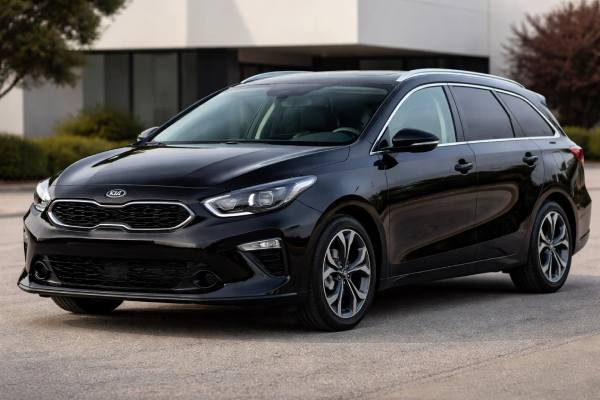
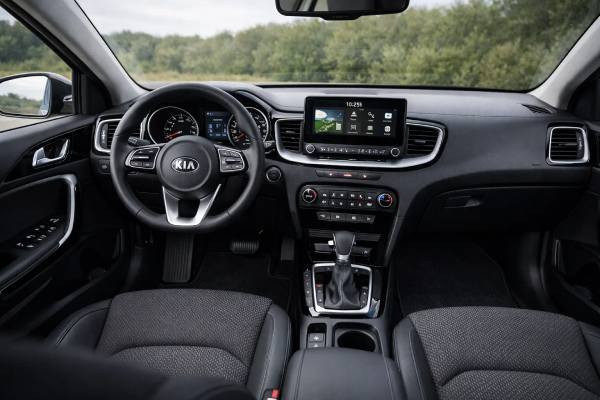
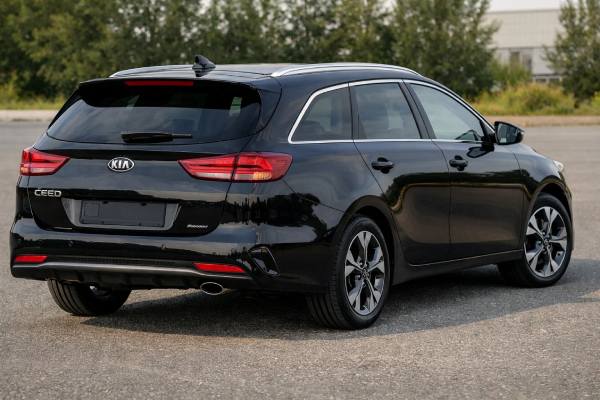
The Kia Ceed Sportswagon (CD) with the 1.6 CRDi diesel is the “do-it-all” version of the range: a compact estate that can rack up motorway miles cheaply, carry family gear without drama, and still feel tidy in town. In 114 hp form, this engine focuses less on outright speed and more on usable torque, relaxed cruising, and sensible running costs—especially for drivers who routinely cover longer distances. Under the skin you get Kia’s K2 platform, a practical 600 L class-leading boot in early specs, and a drivetrain that suits manual drivers who like straightforward, dependable hardware.
Ownership tends to be smooth when the car is used as intended (regular warm runs), but like most modern diesels it rewards correct oil, timely servicing, and attention to emissions hardware such as DPF and SCR/AdBlue on applicable builds. Done right, it’s one of the more rational long-term estates in this class.
Owner Snapshot
- Strong low-rpm pull for everyday driving, especially when loaded with passengers or luggage.
- Big, square boot and low loading lip make it genuinely useful for family and work gear.
- Best suited to regular longer trips; frequent short journeys can accelerate DPF and EGR issues.
- Engine oil and filter typically every 20,000 km (12,000 mi) or 12 months in many EU schedules (check your market/VIN).
- Choose tyres and alignment carefully—estate rear loads can wear the inner shoulders faster if toe is off.
Section overview
- Ceed Sportswagon CD 1.6 CRDi in context
- Technical specs and measurements
- Equipment, safety, and ADAS by trim
- Reliability and common diesel problems
- Maintenance plan and smart buying checks
- Real-world driving and fuel use
- Rival check: other compact diesel estates
Ceed Sportswagon CD 1.6 CRDi in context
In the Ceed CD family, the Sportswagon is the rational choice: it keeps the hatchback’s footprint and road manners, then stretches the rear for a longer load bay and a more useful tailgate opening. Early technical specs for the model highlight a 4,600 mm overall length, 1,800 mm width, 1,465 mm height, and a 2,650 mm wheelbase—dimensions that help explain why it feels stable on the motorway yet still parks like a C-segment car. The key point is packaging: the rear overhang grows to create real luggage volume without turning the car into a large estate.
The 114 hp (commonly listed as 115 PS / 85 kW) 1.6 CRDi tune is aimed at owners who value torque and low running costs over acceleration bragging rights. It’s a front-wheel-drive setup with a simple driveline, typically paired with a 6-speed manual in most markets (some regions also offered DCT on higher outputs). In everyday use, this engine’s character is defined by midrange strength: it’s the kind of diesel that pulls cleanly from low revs, settles into a quiet cruise, and doesn’t mind a boot full of gear.
Engineering-wise, this generation moved to Kia’s newer platform strategy for the Ceed range, with a fully independent rear suspension layout (useful for ride control when the cargo area is loaded) and steering calibrated for European roads. The Sportswagon’s extra rear mass can actually make it feel calmer over motorway undulations than the hatchback, provided the tyres and alignment are in good shape.
From an ownership standpoint, the main trade-off is the modern diesel emissions ecosystem. Depending on the exact build and year, you may be dealing with a DPF (diesel particulate filter) and SCR/AdBlue hardware. These systems are very manageable, but they dislike repeated short runs where the engine never gets properly hot. If your weekly routine includes steady 20–30 minute drives, the 1.6 CRDi is in its comfort zone. If you mostly do 3–5 km school runs, a petrol Ceed or hybrid in the same family is often the safer long-term bet.
Technical specs and measurements
Below are the core specifications that matter for ownership and comparison. Exact values can vary by market, emissions certification, wheel size, and gearbox, so treat performance and economy numbers as typical ranges unless your local brochure lists a single figure.
Powertrain and efficiency (1.6 CRDi 114 hp)
| Item | Specification |
|---|---|
| Engine code/family | Smartstream CRDi 1.6 (market naming varies) |
| Layout | Inline-4, turbocharged diesel |
| Valvetrain | DOHC, 16 valves (4 valves/cyl) |
| Bore × stroke | 77.0 × 85.8 mm (3.03 × 3.38 in) |
| Displacement | 1.6 L (1,598 cc) |
| Fuel system | Common-rail direct injection |
| Compression ratio | 15.9:1 |
| Induction | Turbocharger (intercooler typical) |
| Max power | 114 hp (85 kW) @ ~4,000 rpm |
| Max torque | 280 Nm (207 lb-ft) @ ~1,500–2,750 rpm |
| Timing drive | Chain (typical for this family; verify by engine label/VIN) |
| Rated efficiency (typical EU range) | ~4.0–4.7 L/100 km (about 50–59 mpg UK / 40–52 mpg US) |
| Real-world highway @ 120 km/h | often ~5.2–5.8 L/100 km depending on tyres, load, and wind |
Transmission and driveline
| Item | Specification |
|---|---|
| Transmission (common) | 6-speed manual |
| Alternative gearbox | 7-speed DCT appears more commonly with higher outputs/other trims |
| Drive type | FWD |
| Differential | Open |
Chassis and dimensions (Sportswagon)
| Item | Specification |
|---|---|
| Suspension (front/rear) | MacPherson strut front / independent rear multi-link (double wishbone style) |
| Steering | Electric rack-and-pinion |
| Brakes | 4-wheel discs on most trims (sizes vary by wheel package) |
| Popular tyre sizes | 195/65 R15, 205/55 R16, 225/45 R17 (market/trim dependent) |
| Length / width / height | 4,600 / 1,800 / 1,465 mm (181.1 / 70.9 / 57.7 in) |
| Wheelbase | 2,650 mm (104.3 in) |
| Fuel tank | 50 L (13.2 US gal / 11.0 UK gal) |
| Cargo volume (VDA, seats up) | 600 L (21.2 ft³) |
Performance and capability (typical)
| Item | Typical result |
|---|---|
| 0–100 km/h (0–62 mph) | ~10.8–11.8 s (gearbox/weight dependent) |
| Top speed | ~190–195 km/h (118–121 mph) |
| 100–0 km/h braking | commonly ~35–38 m on good tyres (test dependent) |
| Towing | Market dependent; many versions sit around 1,300–1,500 kg braked (check VIN plate) |
Fluids and service capacities (decision-useful)
| Fluid | Spec and typical capacity |
|---|---|
| Engine oil | Low-SAPs oil for DPF cars; 4.4 L (4.6 US qt) drain/refill is commonly listed for Ceed 1.6 diesel variants |
| Oil standard | Often ACEA C5/C2/C3 depending on market and emissions package |
| Manual gearbox fluid | Capacity and spec vary; confirm on gearbox code label |
| A/C refrigerant | Varies by A/C system; check under-hood label |
Key torque specs (critical fasteners only, typical guidance): torque values vary by brake package and engine variant, so use these as “order-of-magnitude” checks only: wheel bolts commonly ~88–110 Nm (65–81 lb-ft), front caliper carrier bolts often high-torque (100+ Nm). Always verify for your exact brake system.
Equipment, safety, and ADAS by trim
Trim naming differs across Europe (and can change year to year), but the Sportswagon lineup usually follows a familiar ladder: entry trims focused on value, mid trims adding comfort and tech, and sport-styled trims (often GT-Line) adding firmer styling and larger wheels. For the diesel estate buyer, the important differences are rarely “powertrain hardware” and more often wheels/tyres, lights, seats, and driver assistance.
Trims and options: what matters most
- Wheel size and tyre profile: 15–16 inch wheels typically ride more comfortably and protect you from pothole damage; 17s look sharper but can raise tyre costs and road noise. On an estate that may carry loads, the more forgiving sidewall is often a real advantage.
- Infotainment tier: higher trims often bring larger screens, navigation, and upgraded audio. Functionally, the big benefit is clearer reversing camera graphics and better phone integration.
- Comfort packs: heated seats/steering wheel are common options and can matter more in daily life than flashy exterior details.
- Practical add-ons: factory roof rails are common on Sportswagon specs; check for the correct cross-bar mounting points and any load rating labels if you plan bikes or a roof box.
Safety ratings: what to know
For the Ceed CD range, Euro NCAP testing for the generation reported strong adult and child occupant performance, with results also influenced by whether a Safety Pack is fitted. In practical terms, that means the base structure is solid, and the car’s score is shaped by which active safety systems are installed on the specific trim/year.
Safety systems and ADAS (availability varies)
Common systems you may see, depending on trim and options:
- AEB (Autonomous Emergency Braking): may be listed as FCA (Forward Collision-Avoidance Assist). Some versions include pedestrian and cyclist detection when properly equipped.
- Lane Keeping Assist and Lane Following Assist: lane boundary support varies by year and camera calibration.
- Adaptive cruise control: excellent for motorway drivers, but it’s not universal on lower trims.
- Blind-spot monitoring and rear cross-traffic alert: useful on an estate with thicker rear pillars and a loaded boot.
- Traffic sign recognition and speed limiter: can reduce “creep” into speeding, but depends on camera and map data.
Quick identifiers when shopping used
- Front camera/radar hardware: a radar behind the lower grille and a camera near the rear-view mirror typically indicate a higher ADAS spec.
- Button layout on steering wheel: adaptive cruise normally adds additional distance and cruise mode controls.
- Headlight type: LEDs (and sometimes dynamic features) usually come with higher trims; also check lens clarity and leveling function.
- Build sheet and VIN decoding at a dealer: the fastest way to confirm whether the car left the factory with a Safety Pack versus being “advertised as having it.”
Year-to-year notes (2018–2021)
Across these years, many markets gradually made core safety features more common, and mild-hybrid/efficiency-focused updates appeared on some diesel variants. When comparing two otherwise similar used cars, prioritize the one with documented ADAS calibration history after any windscreen replacement and with the Safety Pack you actually want—retrofitting factory-grade ADAS is usually not realistic or cost-effective.
Reliability and common diesel problems
The Ceed Sportswagon CD is generally a strong ownership proposition, but the 1.6 CRDi’s long-term experience depends heavily on usage pattern and service quality. Below is a practical map of issues by prevalence and cost tier, with symptoms and what to do next.
Common (most likely to appear)
- DPF loading on short-trip cars (medium cost if ignored):
Symptoms: rising fuel consumption, frequent cooling fan operation after shutdown, sluggish response, DPF warning messages.
Likely cause: repeated cold starts and low-speed driving prevent full regeneration.
Remedy: change driving pattern (longer steady runs), ensure correct low-SAPs oil, and address underlying causes like a stuck thermostat or EGR issues. If the filter is heavily loaded, professional cleaning or replacement may be required. - EGR and intake soot (medium cost):
Symptoms: hesitation, uneven idle, fault codes, increased smoke under load.
Likely cause: soot accumulation worsened by city use and low exhaust temperatures.
Remedy: diagnosis first (don’t guess), then cleaning/replacement as needed; confirm software updates that improve EGR strategy where applicable. - NOx sensor / SCR (AdBlue) warnings on equipped cars (medium to high cost):
Symptoms: warning messages, countdown-to-no-start behavior on some systems, limp mode.
Likely cause: sensor failure, crystallized urea deposits, or dosing issues.
Remedy: correct diagnostic workflow matters; replacing parts without confirming dosing pressure and quality can waste money.
Occasional (depends on mileage and driving style)
- Turbo control faults (medium cost):
Symptoms: weak boost, “flat” acceleration, intermittent limp mode.
Likely cause: sticking actuator mechanism, vacuum/boost leaks, or sensor drift.
Remedy: smoke test and actuator checks before replacing the turbo. - Injector sealing or fuel system sensitivity (medium cost):
Symptoms: diesel smell, chuffing noise, hard starts, rough running.
Likely cause: sealing washer leakage or contamination.
Remedy: repair early; extended leakage can carbon-lock injectors and raise labour cost. - Clutch and dual-mass flywheel wear (medium to high cost):
Symptoms: vibration on take-off, rattling at idle, clutch slip under load.
Likely cause: high-torque low-rpm lugging, heavy towing, stop-start commuting.
Remedy: replace as a set when required; avoid “lugging” in high gears.
Rare but expensive (watch for early clues)
- Cooling system leaks or thermostat problems (medium to high cost if overheated):
Symptoms: slow warm-up, temperature instability, coolant loss.
Why it matters: diesels that run too cool regenerate DPF poorly; overheating risks head gasket damage.
Remedy: fix warm-up issues promptly; use correct coolant spec and bleed procedure.
Software and calibrations
On modern Kia platforms, drivability complaints are often best solved by confirming ECU updates and checking for stored faults rather than swapping parts. This is especially true for:
- intermittent DPF regeneration behaviour,
- sensor plausibility faults (NOx, MAP/boost, EGT),
- ADAS camera/radar calibration after repairs.
Recalls, TSBs, and extended coverage
Instead of relying on generic lists, verify by:
- VIN-based recall check through official Kia channels for your country, and
- dealer service history showing recall completion and software campaign dates.
This approach matters because “same model year” does not always mean “same hardware,” particularly for emissions equipment and ADAS packages.
Maintenance plan and smart buying checks
A diesel estate can be extremely economical—if it’s maintained like a diesel estate. The plan below balances typical Kia schedules with real-world risk points (DPF, EGR, and long-life oil intervals).
Practical maintenance schedule (typical guidance)
Every 10,000–20,000 km (6,000–12,000 mi) or 12 months
- Engine oil and filter (use the exact ACEA spec required for your emissions system; many listings show 4.4 L fill volume for Ceed 1.6 diesel variants).
- Inspect air filter; replace earlier in dusty conditions.
- Check coolant level and concentration; inspect hoses and radiator edges for seepage.
- Brake inspection (pad thickness, slider movement, disc lip).
- Tyre rotation and alignment check (especially if you carry loads often).
Every 20,000–40,000 km
- Cabin filter (annually is common; more often in urban/pollen-heavy areas).
- Fuel filter (interval varies by market—important for injector life; follow official schedule).
- Brake fluid moisture check; many workshops replace brake fluid every 2 years as a safe standard.
Every 60,000–100,000 km (or by condition)
- Manual transmission fluid (if your usage includes heavy towing, city delivery work, or high temperatures, shorten the interval).
- Inspect auxiliary belt and pulleys; replace if cracking/noise appears.
- Suspension wear items: front lower arm bushes, drop links, and rear bushes (estate loads accelerate wear).
DPF and intake health (ongoing)
- If the car does mainly city miles, build in a weekly longer run (for many drivers, 25–40 minutes at steady speed helps).
- Never ignore a persistent engine light or repeated regeneration behaviour—diesels are cheaper when fixed early.
Fluid specifications (decision-useful)
- Engine oil: many Ceed diesel variants call for low-SAPs oils meeting ACEA C5/C2/C3 (market dependent). Wrong oil can shorten DPF life.
- Oil capacity: 4.4 L (4.6 US qt) appears commonly for Ceed family 1.6 diesels in official capacity tables; always verify with your exact engine and sump design.
- Coolant: use the correct long-life coolant spec for Kia/Hyundai family engines; mixing types can form sludge.
Buyer’s guide: inspection checklist (used market)
Documentation (non-negotiable)
- Service invoices showing oil spec (not just “5W-30”) and mileage/date intervals.
- Evidence of recall/service actions completed by VIN.
- Any DPF/EGR work documented with diagnostic codes and measured values.
Mechanical and emissions checks
- Cold start quality: listen for uneven idle or excessive diesel knock beyond the initial few seconds.
- Boost behaviour on a test drive: steady pull from 1,500 rpm without surging.
- DPF status (scan tool): soot load, regen history, and EGT sensor plausibility.
- Clutch feel: smooth engagement, no judder under moderate load, no rattle at idle with clutch engaged/disengaged.
Chassis and body
- Inner shoulder tyre wear (alignment and rear load patterns).
- Rear suspension knocks over sharp bumps (bushes and links).
- Tailgate seals and load-bay moisture (estate-specific).
Long-term durability outlook
For high-mileage drivers who service on time and keep the car hot often enough to stay “DPF-happy,” the 1.6 CRDi Sportswagon can be a durable, low-cost distance tool. For mainly short urban usage, ownership risk rises sharply—mostly due to emissions hardware—so the best “maintenance” may be choosing a different powertrain.
Real-world driving and fuel use
The 114 hp 1.6 CRDi is not about punchy sprints; it’s about relaxed progress. In the Sportswagon body, that character makes sense because the car is often used loaded—people, luggage, or work gear—and torque matters more than peak horsepower.
Ride, handling, and NVH
- Ride comfort: on 15–16 inch tyres the Ceed Sportswagon generally rides with a mature, controlled feel. The independent rear suspension helps it stay composed when the boot is full, and it tends to avoid the “bouncy rear” sensation some torsion-beam rivals can show when loaded.
- Handling balance: it’s safe and predictable rather than playful. Turn-in is clean, and body control is good for the class, but ultimate grip is tyre-limited.
- Noise and refinement: at a steady cruise the diesel settles down well. The main NVH differences come from tyre choice (17s can add road roar) and engine mount condition at higher mileage.
Powertrain character
- Low-rpm torque: the car feels strongest from about 1,500–3,000 rpm, which matches typical commuting and overtaking needs.
- Turbo behaviour: expect a mild ramp-in rather than a sudden “kick.” If you feel a pronounced dead zone or jerky boost, investigate boost leaks, EGR behaviour, or sensor issues.
- Manual gearbox pairing: the 6-speed manual suits this engine; short-shifting works well, and you can cruise at low rpm without constantly hunting gears.
Real-world efficiency (typical driver experience)
Fuel economy is strongly influenced by speed and trip length:
- City (warm engine): often ~5.5–6.5 L/100 km depending on traffic and DPF regen frequency.
- Highway 100–120 km/h: often ~5.0–5.8 L/100 km; headwinds and roof boxes matter a lot.
- Mixed driving: commonly ~5.0–6.0 L/100 km.
Cold weather can add a noticeable penalty, not only because diesel engines warm slowly, but also because regeneration events can be more frequent in winter city use.
Performance metrics that actually matter
- Overtaking: in-gear flexibility is the selling point. You usually get confident 80–120 km/h passing in the right gear without needing high revs.
- Brakes: pedal feel is generally consistent, but estates that do a lot of short trips can develop surface corrosion on discs. A few firm stops during a warm drive can keep the system cleaner.
Load use and towing (where applicable)
If you tow occasionally, the diesel’s torque is a real advantage. Just remember:
- towing increases exhaust temperatures (which can help DPF) but also loads the clutch and cooling system,
- keep to conservative oil intervals if you tow regularly,
- check rear tyre pressures when loaded—handling and tyre wear depend on it.
Rival check: other compact diesel estates
In the C-segment estate market, the Ceed Sportswagon 1.6 CRDi competes against cars that often feel very similar on paper. The differences that matter usually come down to cabin packaging, suspension tuning, gearbox choices, and how each brand handles modern diesel emissions systems.
Versus VW Golf Variant 1.6 TDI
- Golf strengths: strong interior feel, broad parts ecosystem, and typically excellent long-distance refinement.
- Ceed advantage: often better value for equipment, and the Sportswagon’s boot packaging can feel more straightforward in daily loading.
- Watch-outs: both are modern diesels—DPF/AdBlue risks exist either way, so condition and usage history matter more than badges.
Versus Skoda Octavia Combi 1.6 TDI
- Octavia strengths: larger overall cabin and a more “one class up” cargo feel in many configurations.
- Ceed advantage: slightly easier to place in tight cities, and often a simpler ownership proposition if you find a well-specced Kia with clean service history.
- Choosing tip: if you routinely carry rear-seat adults and big luggage, the Skoda’s extra space can outweigh everything else.
Versus Ford Focus Estate 1.5 EcoBlue
- Focus strengths: class-leading steering and chassis feel; very confidence-inspiring on B-roads.
- Ceed advantage: calmer “set-and-forget” motorway character and typically strong standard equipment by trim.
- Buyer tip: prioritise tyre quality on both; it transforms braking and noise.
Versus Peugeot 308 SW BlueHDi
- 308 strengths: efficient engines and a light, nimble feel; some drivers love the cockpit layout.
- Ceed advantage: more conventional ergonomics and a generally straightforward cabin interface.
- Caution: test-drive for seating position and visibility—these are very personal between these two.
Versus Renault Megane Sport Tourer dCi
- Megane strengths: comfortable ride and often strong used-market pricing.
- Ceed advantage: a simple, practical load bay and a reputation for solid “everyday” durability when maintained correctly.
- Buying tip: on any older diesel, choose the car with the best service evidence and the least short-trip history.
Bottom line
If your priority is a dependable, long-distance estate with sensible costs and a genuinely useful boot, the Ceed Sportswagon 1.6 CRDi is easy to recommend—provided your driving routine suits a modern diesel. If your routine is mostly short urban trips, the best rival may not be another diesel estate at all, but a petrol or hybrid version of the same class.
References
- 48V mild-hybrid power and Kia’s new intelligent Manual Transmission for Ceed model family 2020 (Press Release)
- Official Kia Cee’d 2019 safety rating 2019 (Safety Rating)
- Spacious new Kia Ceed Sportswagon joins 5dr Hatch 2018 (Technical Specifications)
- Recommended lubricants and capacities 2021 (Owner’s Manual)
- Engine Oil Grades and Capacities 2023 (Service Information)
Disclaimer
This article is for informational purposes only and is not a substitute for professional diagnosis, inspection, or repair. Specifications, torque values, fluid capacities, and maintenance intervals can vary by VIN, market, model year, emissions certification, and installed equipment. Always verify details using your vehicle’s official owner’s manual, service documentation, and labels on the vehicle itself.
If you found this guide useful, please consider sharing it on Facebook, X/Twitter, or your favorite forum to help support our work.