
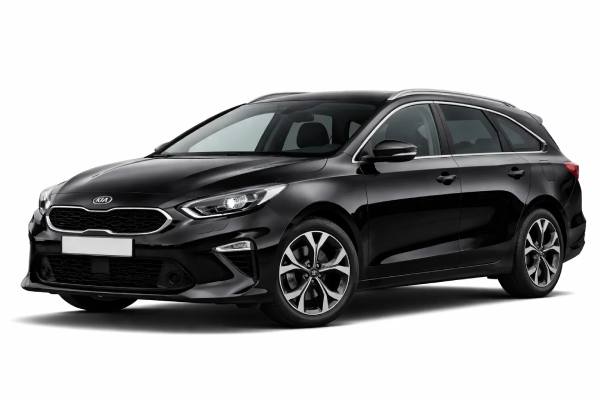
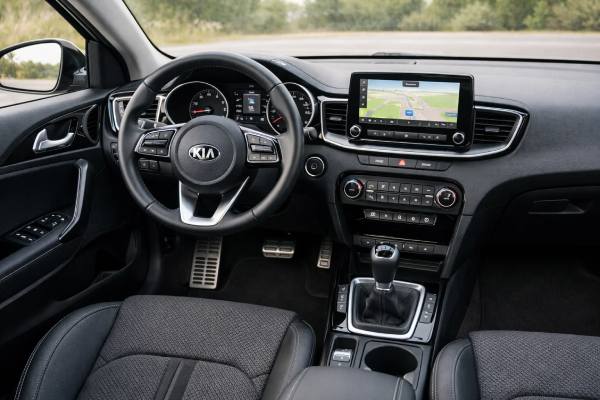
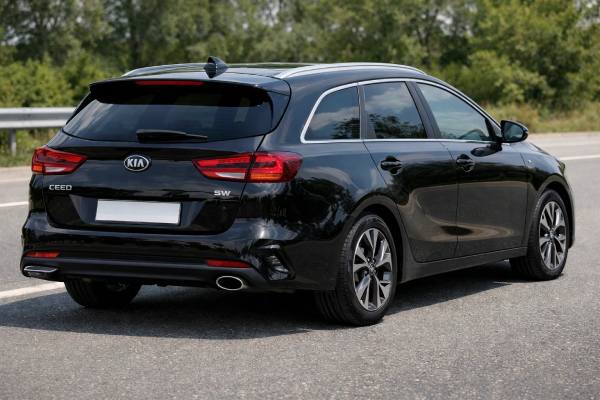
The 2018–2021 Kia Ceed Sportswagon (CD) with the 1.6 Smartstream CRDi (134 hp) is one of the more rational “do-it-all” estates in the C-segment: a roomy load bay, long-legged diesel efficiency, and a chassis tuned for European roads. This powertrain works best for drivers who cover steady motorway miles or mixed commuting with enough longer runs to keep the emissions system healthy. The engine’s strong low-rpm torque makes it relaxed when loaded, while the Sportswagon body adds everyday usability without a big penalty in handling.
Ownership is usually straightforward, but it rewards correct servicing and the right usage pattern. Like most modern Euro 6 diesels, it relies on DPF and SCR (AdBlue) hardware that can become expensive if neglected or used only for short trips. With the right maintenance rhythm, it can be a dependable, economical family wagon.
Quick Specs and Notes
- Strong low-rpm torque makes it easy to drive when loaded and comfortable on motorways.
- Big, square cargo area and low lift-over suit prams, bikes, and bulky luggage.
- Typically efficient on long runs; plan around diesel aftertreatment needs.
- If you do mostly short trips, expect higher DPF stress and more frequent forced regenerations.
- A sensible oil service interval for longevity is 12 months or 15,000 km (whichever comes first), even if the official schedule allows longer.
Jump to sections
- Kia Ceed Sportswagon 1.6 CRDi profile
- Kia Ceed Sportswagon data and specs
- Kia Ceed Sportswagon trims and safety
- Known faults and campaigns
- Service schedule and buying tips
- On-road feel and economy
- Competitors in the segment
Kia Ceed Sportswagon 1.6 CRDi profile
Think of this variant as the “high-mileage” sweet spot in the Ceed Sportswagon range. The CD Sportswagon body brings estate practicality—roof rails on many trims, a long load floor, and a wide tailgate opening—while the 1.6 Smartstream CRDi gives the kind of flexible torque you notice most when the car is full of people and luggage. In daily use, the engine’s character is less about chasing the redline and more about strong pull from low revs, which reduces shifting and keeps cabin noise under control on the motorway.
The engineering story here is modern diesel emissions management. These cars typically use a diesel particulate filter (DPF) plus selective catalytic reduction (SCR) with AdBlue. That combination helps meet Euro 6 emissions targets, but it also shapes ownership: short, cold trips can prevent the DPF from completing regenerations, and low AdBlue or crystallization issues can trigger warnings or limp-home strategies if ignored. For buyers who routinely do 20–30 km runs (or longer), this is usually a non-issue; for very short urban use, a petrol or hybrid alternative often makes more sense.
As a platform, the Ceed CD was developed specifically for European roads. You typically get a composed ride, tidy body control, and predictable front-wheel-drive manners. The Sportswagon adds a little rear mass but not the “wallow” you might expect from older estates. Most owners will notice the practical touches more than the dynamics: the low load lip, useful underfloor storage in many configurations, and rear seatbacks that fold to create a long, flat-ish cargo space for DIY runs or travel.
Who is it for?
- Best match: frequent motorway and mixed driving, fleets, long-distance commuters, and families who need real cargo volume.
- Less ideal: predominantly short trips, stop-start city use, or owners who skip preventive maintenance.
Kia Ceed Sportswagon data and specs
Specs for the Ceed Sportswagon vary slightly by market, trim, wheels, and gearbox. The tables below focus on the 2018–2021 Ceed Sportswagon (CD) with the 1.6 Smartstream CRDi 134 hp (100 kW) setup commonly sold in Europe.
Powertrain and efficiency
| Item | Specification |
|---|---|
| Engine family | Smartstream CRDi (diesel) |
| Layout | Inline-4 |
| Valvetrain | DOHC, 4 valves/cyl (typical for this family) |
| Displacement | 1.6 L (1,598 cc) |
| Induction | Turbocharged (VGT common on this class) |
| Fuel system | Common-rail direct injection |
| Compression ratio | ~15.9:1 (market-dependent) |
| Max power | 134 hp (100 kW) @ ~4,000 rpm |
| Max torque | ~280 Nm (206 lb-ft) @ ~1,500–3,000 rpm (often varies by gearbox/market) |
| Timing drive | Chain (typical for modern Hyundai-Kia 1.6 diesels; verify by engine code) |
| Emissions hardware | DPF + SCR (AdBlue) on most Euro 6 versions |
| Rated efficiency (typical) | ~4.0–5.0 L/100 km (59–47 mpg US / 71–56 mpg UK), depending on wheels and test cycle |
| Real-world highway @ 120 km/h | ~5.0–5.8 L/100 km (47–41 mpg US / 56–49 mpg UK) |
What the numbers mean in practice: the official consumption figure can look excellent, but the real differentiator is how stable it stays at motorway speeds. This engine usually holds speed with low boost and modest rpm, so it tends to deliver consistent long-run economy—provided tyres are correctly inflated and the alignment is good.
Transmission and driveline
| Item | Specification |
|---|---|
| Drive type | FWD |
| Manual gearbox | 6-speed manual (common) |
| Automatic option | 7-speed dual-clutch (market/trim dependent) |
| Differential | Open (traction control uses braking to manage wheelspin) |
Chassis and dimensions
| Item | Specification |
|---|---|
| Front suspension | MacPherson strut |
| Rear suspension | Multi-link (common on many Ceed variants; some markets may differ) |
| Steering | Electric power steering |
| Brakes | 4-wheel discs on most trims; diameters vary with wheel size |
| Popular tyre size | 205/55 R16 or 225/45 R17 (market dependent) |
| Ground clearance | ~135–150 mm (varies) |
| Length / Width / Height | ~4,600 / 1,800 / 1,465 mm (181.1 / 70.9 / 57.7 in) |
| Wheelbase | ~2,650 mm (104.3 in) |
| Turning circle | ~10.6–11.0 m (34.8–36.1 ft), depending on wheels |
| Kerb weight | ~1,350–1,500 kg (2,976–3,307 lb), depending on gearbox and trim |
| Fuel tank | ~50–53 L (13.2–14.0 US gal / 11.0–11.7 UK gal) |
| Cargo volume | ~600 L seats up / ~1,650 L seats down (method varies by market) |
Performance and capability
| Item | Typical figure |
|---|---|
| 0–100 km/h (0–62 mph) | ~10.0–11.5 s (gearbox and trim dependent) |
| Top speed | ~190–200 km/h (118–124 mph) |
| Braking 100–0 km/h | ~36–39 m (118–128 ft), tyre dependent |
| Towing capacity | Often ~1,300–1,500 kg braked / ~600–750 kg unbraked (check the VIN plate for your car) |
| Payload | Often ~450–600 kg (varies widely) |
Fluids and service capacities (typical, verify by VIN)
| Fluid | Specification (typical) | Capacity (approx.) |
|---|---|---|
| Engine oil | ACEA C2/C3 low-SAPS; commonly 0W-30 or 5W-30 | ~5.0–5.5 L (5.3–5.8 US qt) |
| Coolant | Long-life OAT coolant; typical 50/50 mix | ~6.5–7.5 L (6.9–7.9 US qt) |
| Manual gearbox oil | MTF per Kia spec | ~1.8–2.2 L (1.9–2.3 US qt) |
| DCT fluid (if equipped) | DCTF per Kia spec | varies; service fill differs from dry fill |
| A/C refrigerant | R-1234yf or R-134a (market dependent) | label on under-bonnet sticker |
| Brake fluid | DOT 4 (typical) | as required |
Key torque specs (common decision-use values, verify for your car):
- Wheel nuts: ~110 Nm (81 lb-ft)
- Engine oil drain plug: often ~30–40 Nm (22–30 lb-ft)
- Brake caliper carrier bolts: often ~80–110 Nm (59–81 lb-ft)
Kia Ceed Sportswagon trims and safety
Trim naming varies by country, but the pattern is similar across Europe: a base trim with essential comfort features, mid trims that add the best value (infotainment, cameras, heated seats/wheel in colder markets), and higher trims that bundle advanced driver assistance and nicer interior materials. For used-car buyers, the practical task is confirming what your specific car has—because two cars with identical badges can differ by option packs and build month.
Common trims and option patterns (typical EU structure)
- Entry trims (often “LX” or similar): usually 15–16 inch wheels, basic infotainment, fewer driver aids as standard.
- Mid trims (often “EX”, “Vision”, “Business”): frequently the sweet spot—rear camera, upgraded screen, better lighting, front parking sensors, and more comfort features.
- Higher trims (often “GT Line”, “Platinum”, “Premium”): sportier bumpers and seats, larger wheels, more ADAS, and sometimes improved headlights.
Mechanical differences to watch for:
- Wheel size: 16-inch wheels typically ride better and can return better real-world economy than 17-inch packages.
- Gearbox pairing: some markets reserve the dual-clutch gearbox for specific trims or fleet packages.
- Brakes and tyres: higher trims can bring larger discs and wider tyres; good for repeated high-speed stops, but tyre costs rise.
Quick identifiers when viewing a used example
- Headlights: projector or LED units often signal a higher trim or safety pack.
- Front radar and camera hardware: a radar panel in the grille and a camera housing near the rear-view mirror strongly suggest adaptive cruise control (ACC) and AEB capability.
- Cluster and steering wheel buttons: ACC buttons and lane support controls can confirm safety pack equipment without guessing.
- Build sheets and VIN: dealer printouts can clarify factory packs; this matters for ADAS calibration after repairs.
Safety ratings
In Euro NCAP testing for the Ceed (2019 protocol), the model achieved a five-star rating with category scores that reflect strong occupant protection and moderate vulnerable road user performance for the era:
- Adult Occupant: 88%
- Child Occupant: 85%
- Vulnerable Road Users: 52%
- Safety Assist: 68%
Keep in mind Euro NCAP ratings are tied to the test year and equipment assumptions (standard vs safety pack). For a buyer, the practical message is: the structure is good, and the safety systems are meaningful—but you should still confirm whether your exact car includes lane support and AEB/ACC features.
Safety systems and ADAS (what to expect)
Most cars in this generation include:
- Multiple airbags (front, side, and curtains) and strong belt pretensioning.
- ESC stability control, traction control, hill start assist, and tyre pressure monitoring.
Depending on trim and pack, you may also have:
- AEB (autonomous emergency braking): typically car-to-car; some versions add pedestrian/cyclist detection.
- Lane keeping and lane following support: uses the windscreen camera; requires correct calibration after windscreen replacement.
- Adaptive cruise control (ACC): radar-based; check that the front radar panel is intact and error-free.
- Blind-spot monitoring and rear cross-traffic alert: nice-to-have for estate body visibility.
Service implication: any front-end crash repair, windscreen replacement, or wheel alignment issue can affect ADAS performance. A proper post-repair calibration and a clean diagnostic scan are worth paying for.
Known faults and campaigns
Modern diesels can be very durable, but they concentrate cost into a few systems. For the Ceed Sportswagon 1.6 CRDi, most “bad stories” trace back to usage pattern (short trips), skipped fluid changes, or ignored warning lights.
Below is a practical map of what tends to show up, grouped by prevalence and cost tier. Mileage bands are approximate and depend heavily on driving style and maintenance quality.
Common (low to medium cost)
- DPF soot loading (often 30,000–120,000 km):
Symptoms: rising fuel consumption, frequent fan operation after shutdown, DPF warning, sluggishness.
Likely cause: repeated short trips, failed regen, incorrect oil spec, or a faulty sensor.
Remedy: complete a proper regeneration drive; diagnose differential pressure sensor and exhaust temperature sensors; fix root cause before forcing regens repeatedly. - AdBlue warnings (any age, more common after winter):
Symptoms: countdown warnings, “no restart” messages, poor starting behavior in cold weather.
Likely cause: low fluid, crystallization at the injector, or level sensor issues.
Remedy: top up with fresh AdBlue from sealed packaging; address injector deposits and update software if required. - EGR and intake contamination (50,000–150,000 km):
Symptoms: hesitation, uneven idle, smoke on acceleration, EGR codes.
Likely cause: soot and oil vapour deposits, especially with short trips.
Remedy: clean or replace EGR valve/cooler where applicable; verify boost and sensor data.
Occasional (medium cost)
- Turbo control issues (70,000–170,000 km):
Symptoms: limp mode under load, boost deviation codes, whistling or siren noise.
Likely cause: actuator sticking, vacuum/boost leaks, or vane mechanism wear.
Remedy: smoke test the charge system; check actuator operation; repair leaks before replacing the turbo. - Injector seal leakage (variable):
Symptoms: diesel smell, black “tar” deposits around injectors, ticking noise.
Likely cause: sealing washer leak or injector seating issues.
Remedy: replace seals, clean seats correctly, and re-check after heat cycles. - Dual-mass flywheel or clutch wear (manual cars, 120,000–220,000 km):
Symptoms: vibration at idle, rattling on shutdown, clutch judder.
Likely cause: normal wear accelerated by stop-start city use or towing.
Remedy: replace clutch and DMF as a set; check engine and gearbox mounts.
Rare (high cost, but important to screen)
- Cooling system failures leading to overheating:
Symptoms: coolant loss, heater performance changes, repeated temperature spikes.
Root cause: leaks, thermostat issues, or radiator damage.
Remedy: pressure test and repair early; overheating a modern diesel can escalate costs quickly. - Aftertreatment “cascade failures”:
Symptoms: persistent DPF and SCR codes together, repeated limp mode, failed regens.
Root cause: a primary failure (sensor, EGR, boost leak) that snowballs into DPF saturation and SCR faults.
Remedy: diagnose systematically; replacing parts without fixing the initiating fault often wastes money.
Software and calibrations
Many drivability complaints on late-2010s cars are solved by a dealer ECU update rather than hardware. Typical improvement areas:
- Regen strategy tweaks (less frequent nuisance regens when conditions allow).
- AdBlue dosing logic and sensor plausibility updates.
- Infotainment and camera module bug fixes.
Recalls, service actions, and how to verify
Recall coverage varies by country and VIN. The most reliable method is to run the VIN through an official Kia recall portal and request dealer history showing campaign completion. When you check, pay attention to:
- Campaign number and completion date (not just “no open recalls”).
- Any repeat visits for the same warning light—this can signal an unresolved root cause.
Service schedule and buying tips
A Ceed Sportswagon diesel can be a low-cost long-distance tool, but only if you maintain it like a modern Euro 6 diesel—not like an old-school taxi engine. The goal is to keep clean oil in the engine, keep the intake and emissions systems operating within their designed temperature window, and prevent small faults from stacking into expensive aftertreatment repairs.
Practical maintenance schedule (longevity-focused)
Every 12 months or 15,000 km (recommended for most owners)
- Engine oil and filter (use correct low-SAPS spec; keep receipts with oil grade listed).
- General inspection: leaks, boost hoses, coolant level stability, belt condition.
- Brake inspection and tyre condition check.
Every 30,000 km
- Engine air filter (more often in dusty regions).
- Cabin filter (often yearly if you want good HVAC performance).
- Rotate tyres and check alignment (especially if it feels “nervous” at motorway speed).
Every 60,000 km
- Brake fluid (time-based is important: every 2 years is common).
- Manual gearbox oil check (and change if shifting feel degrades or towing use is common).
- Inspect suspension bushings, ball joints, and rear multi-link arms for play.
Every 90,000–120,000 km
- Coolant service per official schedule (many schedules allow longer first interval; verify for your VIN).
- Check engine mounts, driveshaft boots, and wheel bearings.
As needed (usage-dependent)
- DPF health monitoring: if the car does frequent short trips, do a controlled longer run weekly (see Driving section).
- AdBlue: do not run it low repeatedly; use fresh fluid and keep filler area clean.
Fluids and decision-use notes
- Oil choice matters: the wrong oil can raise ash load in the DPF over time. If buying used, a folder of invoices with oil specs is a genuine value marker.
- Fuel quality: modern CRDi systems are sensitive to contaminated fuel; a reputable station is cheap insurance.
Buyer’s guide: what to check before purchase
Paperwork
- Full service history with dates and mileage (ideally stamped plus invoices).
- Proof of recall and campaign completion by VIN.
- Any emissions-system work history (DPF, EGR, AdBlue): one repair can be fine; repeated visits suggest unresolved issues.
Mechanical walkaround
- Cold start: it should settle quickly without hunting. Excessive smoke or rough idle needs diagnosis.
- Test drive: check for smooth torque delivery from ~1,500 rpm and no limp mode under full throttle.
- Listen for DMF noise: rattling at idle with clutch out, or clunks on shutdown.
- Cooling stability: heater should be steady; check for sweet coolant smell after the drive.
Diagnostics (strongly recommended)
- Scan for stored and pending codes, not just dash lights.
- Look at soot load and regeneration history if the scanner supports it.
- Confirm no active ADAS faults if your car has camera/radar systems.
Long-term durability outlook
With regular oil services, correct fluids, and a driving pattern that supports DPF regeneration, this drivetrain can age well. The biggest risk is not “fragility” but mismatch: a modern diesel used like a short-trip petrol car can become expensive.
On-road feel and economy
The Sportswagon body does not change the Ceed’s fundamental personality: it is stable, predictable, and tuned to feel “European” rather than soft. On typical 16-inch wheels, it rides with a composed, slightly firm edge that works well on faster roads and keeps the rear from bobbing when the cargo area is loaded. Step up to larger wheels and the car usually feels sharper, but the trade-off is more tyre noise on rough asphalt and higher tyre replacement cost.
Ride, handling, and NVH
- Straight-line stability: generally confident at motorway speed, especially with good tyres and correct alignment.
- Cornering balance: safe front-drive understeer when pushed; the rear multi-link setup (where fitted) helps it track cleanly.
- Steering: light in town, more weighted at speed; feedback is adequate rather than sporty.
- Braking: consistent for family use; repeated hard stops depend heavily on tyre grip and brake spec.
Noise levels tend to be dominated by tyres and wind rather than engine at steady cruise. Under load, you will hear the diesel’s texture, but the torque means it does not need to rev hard.
Powertrain character
This 1.6 CRDi is at its best from roughly 1,500–3,000 rpm:
- Low-rpm pull: strong enough that you can short-shift and still make progress easily.
- Turbo response: typically mild lag if you ask for full boost below 1,500 rpm, but it builds smoothly.
- Manual gearbox feel: usually light, with a clear gate; clutch take-up should be progressive.
- Dual-clutch behavior (if equipped): can be very efficient on the move but may feel less smooth in stop-start traffic than a torque-converter automatic.
Real-world efficiency
Your results depend on temperature, tyres, and how often the DPF is regenerating.
- City-heavy use: ~6.0–7.5 L/100 km (39–31 mpg US / 47–38 mpg UK), especially in winter.
- Motorway 100–120 km/h: ~5.0–5.8 L/100 km (47–41 mpg US / 56–49 mpg UK).
- Mixed driving: ~5.3–6.5 L/100 km (44–36 mpg US / 53–43 mpg UK).
Cold-weather delta: short winter trips can significantly increase consumption because the engine and aftertreatment take longer to reach operating temperature, and regenerations may occur more often.
Driving habits that protect the DPF
If your weekly routine includes short trips, build a simple habit:
- Once a week, do a steady 20–30 minute drive at warm operating temperature (motorway or open road).
- Avoid shutting the car off mid-regeneration if possible (signs include elevated idle, louder fan, and higher instant consumption).
- Keep oil changes frequent enough to manage soot and fuel dilution risks.
Load and towing notes
As a wagon, the Ceed handles moderate loads well. When towing:
- Expect a noticeable fuel penalty, often +15–30% depending on speed and trailer shape.
- Keep an eye on coolant temperature in summer grades and do not ignore warning messages.
- If you tow regularly, shorten oil and drivetrain fluid intervals.
Competitors in the segment
The Ceed Sportswagon sits in a crowded class where small differences in packaging, engine tuning, and running costs matter more than badge prestige. Here is how the 1.6 CRDi (134 hp) version typically stacks up against key rivals.
Versus Volkswagen Golf Variant TDI
- Strengths of the VW: often a slightly more refined cabin feel and a deep bench of drivetrain options.
- Ceed advantage: commonly better value for money on the used market, and straightforward ergonomics.
- Decision point: if you prioritize premium feel and broad powertrain choice, the Golf is strong; if you prioritize purchase value and warranty history, the Kia often wins.
Versus Skoda Octavia Combi TDI
- Strengths of the Skoda: usually even more rear-seat and cargo space, plus strong long-distance comfort.
- Ceed advantage: slightly smaller footprint makes it easier in tight cities and parking while still offering real estate practicality.
- Decision point: if maximum space is non-negotiable, Octavia leads; for a balanced size and price, Ceed is very competitive.
Versus Ford Focus Wagon diesel
- Strengths of the Ford: often sharper steering and a more playful chassis.
- Ceed advantage: relaxed torque delivery and commonly quieter motorway demeanor depending on tyres.
- Decision point: choose Ford for handling feel; choose Kia for calmer, torque-led cruising and value.
Versus Peugeot 308 SW BlueHDi
- Strengths of the Peugeot: efficient engines and a distinctive interior design approach.
- Ceed advantage: more conventional controls that many drivers find easier day to day, and typically strong practicality.
- Decision point: if you love the Peugeot cockpit layout, it can be great; if you want intuitive controls and simple ownership, the Kia has an edge.
Versus Toyota Corolla Touring Sports (hybrid)
- Strengths of the Toyota: avoids diesel aftertreatment complexity and excels in city efficiency.
- Ceed advantage: stronger long-run torque feel and usually better economy at sustained high motorway speeds versus many hybrids.
- Decision point: city-heavy drivers should strongly consider the hybrid; motorway-heavy drivers may still prefer the diesel’s steady-state efficiency—provided their routes support DPF health.
Bottom line
If you cover enough longer trips to keep a modern diesel happy, the Ceed Sportswagon 1.6 CRDi is a pragmatic choice: strong torque, big cargo space, and an ownership experience that is usually predictable when serviced correctly. If your driving has shifted to short, urban hops, consider a petrol or hybrid rival to reduce emissions-system risk.
References
- The new Kia Ceed 2018 (Press Kit)
- The new Kia Ceed Sportswagon specifications | Kia Europe 2025 (Specifications)
- Official Kia Cee’d 2019 safety rating 2019 (Safety Rating)
- Kia Recalls | Kia Europe 2026 (Recall Database)
- Normal maintenance schedule 2026 (Owner’s Manual)
Disclaimer
This article is for informational purposes only and is not a substitute for professional diagnosis, inspection, or repair. Specifications, torque values, service intervals, and procedures can vary by VIN, market, model year, and installed equipment. Always verify details using your vehicle’s official owner’s manual, service documentation, and dealer information for your exact car.
If you found this guide useful, consider sharing it on Facebook, X (Twitter), or your favorite forum to help others and support our work.