
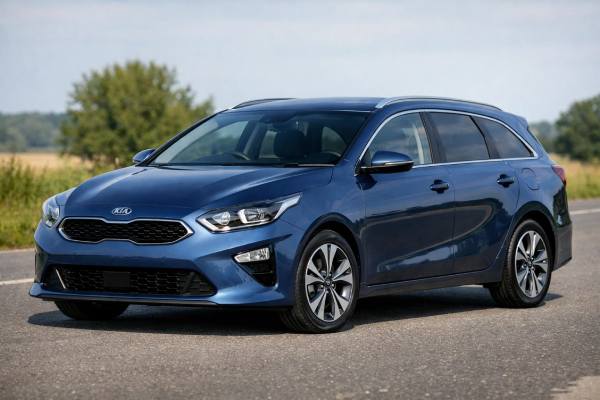
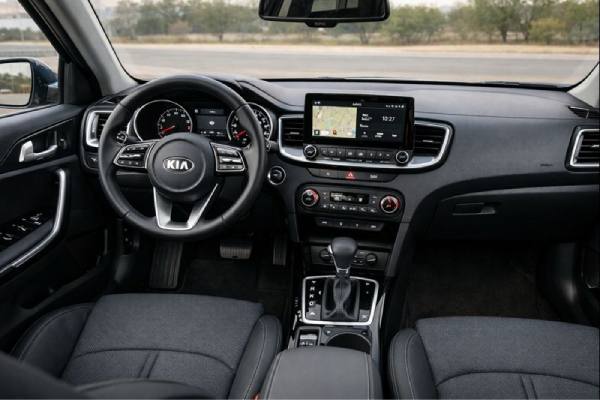
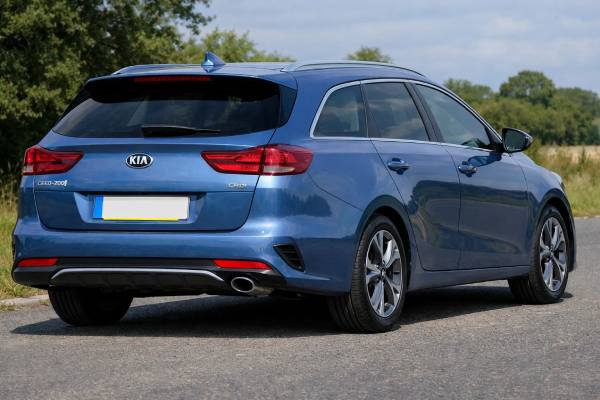
The Kia Ceed Sportswagon (CD) with the 1.4 T-GDi is one of the more balanced “do-it-all” estate options from 2018–2021: enough torque for motorway work, compact exterior dimensions for city use, and genuinely useful cargo volume for family or business duty. The turbocharged direct-injection petrol engine (138 hp) is tuned for mid-range pull rather than high-rev drama, and it pairs well with either a 6-speed manual or Kia’s 7-speed dual-clutch in many markets. Ownership tends to be straightforward if you respect warm-up habits, use the right oil, and keep an eye on intake and emissions hardware typical of modern DI turbo engines. Where this Sportswagon really earns its keep is packaging: long-roof practicality without the size, weight, and running costs jump that comes with a mid-size wagon.
Owner Snapshot
- Strong mid-range torque makes it relaxed at 100–130 km/h (62–81 mph), even when loaded.
- Big, square boot is the real advantage—excellent for strollers, tools, and airport runs.
- Choose options carefully: ADAS packs can materially improve safety capability and resale.
- Direct-injection turbo upkeep matters—short-trip use raises deposit risk and oil dilution.
- Plan on engine oil and filter service about every 15,000 km (10,000 miles) or 12 months (earlier for heavy city or short trips).
Guide contents
- Ceed Sportswagon CD: what it is
- Ceed SW 1.4 T-GDi specs
- Ceed SW trims and safety tech
- Common problems and service actions
- Maintenance plan and buying advice
- Driving feel and real economy
- Rivals and alternatives
Ceed Sportswagon CD: what it is
Think of the Ceed Sportswagon CD as Kia’s European-style estate built for daily usefulness rather than niche performance. In 2018–2021 form, it’s sized like a typical C-segment car but stretches its roofline and rear overhang to deliver a boot that’s meaningfully more practical than most crossovers of similar footprint. That matters in real life: you can load bulky luggage without stacking it high, carry longer items without folding the front passenger seat, and keep visibility decent because the load floor is long and flat.
The 1.4 T-GDi (138 hp) sits in the “sweet spot” of the range for many buyers. It has enough torque to avoid constant downshifts on grades, and it doesn’t feel strained at motorway speeds. Kia also engineered this generation to meet tighter emissions rules, and in many markets the petrol turbo engines use a gasoline particulate filter (GPF). The GPF is typically unobtrusive when the car is used normally, but it does mean consistent short-trip use can be harder on the emissions system over time—more on that in reliability and maintenance.
From an ownership standpoint, there are two broad personalities depending on gearbox choice. The 6-speed manual is simple and predictable, and it tends to be the “lowest drama” long-term option if you don’t mind shifting. The 7-speed dual-clutch transmission (where fitted) improves efficiency and can make the car feel quicker around town, but it demands good driving habits: smooth throttle inputs in slow traffic, avoiding excessive creeping, and timely fluid service if your use is harsh.
Where the Sportswagon excels is the total package: practical shape, stable highway manners, and generally sensible running costs for a turbo petrol estate. If you shop carefully for trim and safety equipment, it can be a quietly smart long-term family car.
Ceed SW 1.4 T-GDi specs
Below are the core technical details you actually use when comparing listings, planning maintenance, or checking whether a specific car matches your needs. Exact values can vary by VIN, market, wheel size, and gearbox, so treat these as the typical range for the 2018–2021 Ceed Sportswagon (CD) with the 1.4 T-GDi around 138 hp.
Powertrain and efficiency (typical EU-market configuration)
| Item | Spec |
|---|---|
| Engine | Turbocharged inline-4, gasoline direct injection (GDI) |
| Displacement | 1.4 L (1,353 cc) |
| Bore × stroke | 71.6 × 84.0 mm (2.82 × 3.31 in) |
| Induction | Turbo |
| Valvetrain | DOHC, 4 valves/cyl (typical) |
| Compression ratio | ~10.0:1 (varies by application) |
| Max power | 138 hp (103 kW) @ rpm (market-dependent) |
| Max torque | ~242 Nm (178 lb-ft) from low-mid rpm band (market-dependent) |
| Timing drive | Chain (typical for this family) |
| Fuel | Unleaded petrol; follow RON recommendation in your owner’s manual |
| Rated efficiency (combined) | ~5.7–6.3 L/100 km (41–37 mpg US / 50–45 mpg UK), depending on wheels/gearbox |
| Real-world highway @ 120 km/h (75 mph) | ~6.6–7.2 L/100 km (36–33 mpg US / 43–39 mpg UK) |
Transmission and driveline
| Item | Spec |
|---|---|
| Drive type | FWD |
| Manual option | 6-speed manual (common) |
| Automatic option | 7-speed dual-clutch (DCT), market/trim dependent |
| Differential | Open (traction control manages wheelspin) |
Chassis, dimensions, and capacities (Sportswagon)
| Item | Spec |
|---|---|
| Suspension (front/rear) | MacPherson strut / multi-link or torsion beam depending on trim/market (verify by VIN) |
| Brakes | 4-wheel discs on most trims (sizes vary with wheels/engine) |
| Common tyre sizes | 205/55 R16, 225/45 R17 (varies) |
| Length | ~4,600 mm (181.1 in) |
| Width | ~1,800 mm (70.9 in) |
| Height | ~1,465–1,475 mm (57.7–58.1 in), trim dependent |
| Wheelbase | 2,650 mm (104.3 in) |
| Turning circle | ~10.6 m (34.8 ft), tyre dependent |
| Kerb weight | ~1,290–1,390 kg (2,844–3,064 lb), gearbox/trim dependent |
| Fuel tank | ~50 L (13.2 US gal / 11.0 UK gal) |
| Cargo volume | ~625 L (22.1 ft³) seats up; ~1,694 L (59.8 ft³) seats down (method varies) |
Performance (typical)
| Metric | Typical figure |
|---|---|
| 0–100 km/h (0–62 mph) | ~9.0–9.5 s (gearbox and wheels matter) |
| Top speed | ~200 km/h (~124 mph) |
| Braking 100–0 km/h | ~36–38 m (118–125 ft), tyres dominate results |
| Towing capacity | Market dependent; commonly ~1,200–1,500 kg braked (verify VIN and hitch rating) |
Fluids and service capacities (decision-useful)
| Item | Typical spec |
|---|---|
| Engine oil | Fully synthetic meeting the manual’s API/ACEA requirement; common grades: 0W-30 / 5W-30 (climate dependent) |
| Engine oil capacity | ~4.2 L (~4.4 US qt) with filter (verify for your exact engine code) |
| Coolant | Long-life OAT-type coolant (do not mix types); verify standard in service info |
| A/C refrigerant | R-1234yf is common in EU in this era (verify under-hood label) |
Safety and driver assistance (platform-level overview)
| Item | Notes |
|---|---|
| Euro NCAP | Ceed family tested in 2019; dual ratings exist depending on safety pack availability |
| ADAS (common features) | AEB, lane assist, driver attention alert, speed assistance; ACC and stronger lane support often depend on trim/pack |
Ceed SW trims and safety tech
Because the Ceed Sportswagon was sold across many European markets, trim names vary (for example: “2/3/GT-Line” in one region, “Vision/Spirit/GT-Line” in another). Instead of chasing names, it’s smarter to shop by equipment reality—especially gearbox, headlights, and the driver-assistance suite.
Trims and options that change day-to-day ownership
- Gearbox choice (6MT vs 7DCT): The dual-clutch can feel sharper and may improve economy, but it is more sensitive to stop-start creeping and overheated clutch behavior if driven like a torque-converter automatic. If your commute is heavy traffic, confirm smooth low-speed take-up and no shudder.
- Wheel size: Larger wheels (often 17″) sharpen steering response but increase tyre cost and can worsen ride over broken surfaces. For long-distance comfort, 16″ often hits the best balance.
- Infotainment tier: Look for factory navigation if you value integrated routing and a cleaner dashboard, but also check phone integration support. Many owners end up using smartphone navigation anyway.
- Comfort packs: Heated seats, heated wheel, and dual-zone climate are “quiet luxuries” that matter in winter climates. They also tend to boost resale.
Safety ratings: what they mean for a buyer
Euro NCAP testing for the Ceed family in 2019 is important because it reflects modern crash structures and the growing role of active safety. The headline is that the Ceed can score differently depending on equipment: there is a standard-equipment rating and a with safety pack rating. That’s not unusual—Euro NCAP wants to show how much optional AEB and lane technology can change outcomes.
In practical terms, you should treat ADAS as part of the “safety structure” of the car you’re buying. If you’re choosing between two identical Sportswagons and one has a more complete safety pack, that option is often worth more than cosmetic upgrades.
Driver assistance and what to verify on a used car
When test-driving and inspecting:
- AEB and camera/radar calibration: Check for warning lights on the dash. After a windshield replacement or front-end repair, these systems can require calibration.
- Lane support behavior: On a clear road, confirm lane assist doesn’t “ping-pong” or drop out unexpectedly.
- Adaptive cruise control (if fitted): Confirm it holds distance smoothly and doesn’t brake harshly for shadows or mild curves.
- Headlights: Better headlight performance reduces fatigue and improves safety more than most people expect. Confirm beam pattern and check for moisture inside housings.
Finally, don’t forget the basics: verify airbag and seatbelt pretensioner fault history, confirm ISOFIX/child-seat anchors are intact, and inspect tyres—tyre condition affects braking and stability more than any single option package.
Common problems and service actions
The 2018–2021 Ceed Sportswagon with the 1.4 T-GDi is generally a solid ownership bet, but it’s still a modern turbo DI petrol with emissions hardware that rewards correct use. Below is a practical map of what tends to show up, organized by prevalence and cost tier.
Common (watchlist items)
- Direct-injection intake deposits (medium cost, long-term):
Symptoms: rough cold idle, hesitation, misfire codes, reduced economy—often after lots of short trips.
Why: DI sprays fuel into the cylinder, not across the intake valves, so oil vapors and EGR residues can bake onto valves over time.
Remedy: driving pattern change (regular full warm-ups), PCV system checks, and (when needed) professional intake valve cleaning (often walnut blasting). - Ignition coils and plugs (low to medium cost):
Symptoms: misfire under load, flashing MIL, jerky acceleration.
Why: turbo heat and high cylinder pressure stress ignition parts.
Remedy: replace coils/plugs with correct spec parts; don’t stretch intervals if you drive hard. - Turbo and boost-control quirks (medium cost):
Symptoms: underboost/overboost codes, inconsistent power, occasional rattle.
Why: wastegate actuator wear, vacuum/boost leaks, or sensor faults.
Remedy: smoke test for leaks, inspect control solenoids and hoses, verify actuator movement.
Occasional (depends heavily on usage)
- GPF and emissions-system sensitivity (medium cost):
Symptoms: rising fuel consumption, frequent fan operation, occasional warning messages.
Why: frequent cold starts and short runs can interrupt regeneration cycles.
Remedy: ensure the car regularly reaches full temperature; avoid repeated short runs back-to-back. - Dual-clutch low-speed shudder (medium to high cost if neglected):
Symptoms: judder creeping in traffic, harsh engagement, overheating warnings (rare).
Why: DCT clutches don’t love constant slip.
Remedy: adapt driving style (decisive throttle, avoid inching), check for software updates, and service fluid per severe-use guidance.
Rare but expensive (inspect carefully)
- Cooling system leaks/thermostat issues (medium to high):
Symptoms: slow coolant loss, temperature fluctuations, heater performance changes.
Remedy: pressure test and fix early—overheating is what turns a small repair into a major one. - Accident repair and ADAS alignment (cost varies):
Symptoms: persistent lane/AEB faults, steering pull, uneven tyre wear.
Remedy: verify structural alignment, check calibration status, inspect sensor mounts.
Recalls and service actions: what to do
Rather than relying on rumors or generic lists, verify by VIN. For Europe, Kia provides an official recall check tool, and EU authorities publish safety alerts. Ask the seller for documentation that recall work was completed, and confirm with a dealer if needed. If the car has ADAS packs, also ask for proof of calibration after windshield or front-end repairs.
Maintenance plan and buying advice
A Ceed Sportswagon 1.4 T-GDi rewards “boringly correct” maintenance. The goal is simple: keep oil quality high, manage heat, and prevent small drivability issues from turning into expensive turbo/DI problems.
Practical maintenance schedule (typical for Europe; follow your manual)
Every 12 months or ~15,000 km (10,000 miles)
- Engine oil and filter (use the exact spec required for your market; turbo DI engines are oil-sensitive)
- General inspection: leaks, belts, hoses, tyre wear, brakes, battery test
- Cabin air filter (often yearly if you drive in cities or dusty areas)
Every 30,000 km (20,000 miles) or 24 months
- Engine air filter
- Brake inspection with pad/rotor measurement; lubricate slide pins if needed
- Wheel alignment check (especially if you see uneven wear)
Every 2 years (regardless of mileage)
- Brake fluid (moisture control matters for pedal feel and ABS longevity)
- A/C performance check; cabin filter if not done yearly
Spark plugs (commonly 60,000–90,000 km / 40,000–55,000 miles, depends on plug type and market)
- If you feel misfires under load, don’t wait—turbo engines punish weak ignition.
Coolant (long-life intervals are common, but verify)
- Some schedules specify a long first interval (for example, 10 years/120 months) and shorter thereafter; always confirm for your exact VIN and coolant type.
Transmission
- Manual: inspect for seepage; consider a fluid refresh if shifting feels notchy at high mileage.
- DCT: follow the severe-use schedule if you sit in traffic often or drive in high heat; smoothness at low speed is your early warning.
Fluids, specs, and “decision” torque values
Use these as a planning baseline, then verify for your VIN:
- Engine oil capacity: ~4.2 L (~4.4 US qt) with filter
- Wheel lug torque: commonly in the ~90–110 Nm range (varies by wheel; verify on the car/service data)
- Spark plug torque: depends on plug design; follow spec to avoid thread damage
Buyer’s guide: how to choose a good one
Service history wins. Favor cars with consistent annual oil service, even if mileage is low. Short-trip cars can look “nice” but be harder on oil and emissions hardware.
Inspection checklist (quick but effective):
- Cold start: listen for abnormal rattles; confirm stable idle after a short settling period.
- Driveability: full-throttle pull in 3rd/4th should be smooth with no hesitation.
- Gearbox: DCT should creep cleanly with light throttle; no persistent shudder.
- Brakes: consistent pedal, no vibration; inspect rear brakes for corrosion if the car sat.
- Electronics: check camera/radar warnings, parking sensors, and infotainment resets.
- Boot area: look for water ingress around tailgate seals and spare-wheel well.
Best “all-round” spec for most buyers: 16″ wheels, good headlight package, and the most complete safety pack you can find—those choices age well and make the car easier to live with.
Driving feel and real economy
On the road, the Ceed Sportswagon 1.4 T-GDi feels like a car designed around European everyday speeds. It isn’t trying to be a hot estate; instead it aims for stability, predictable responses, and easy torque. That’s exactly what many owners want from a family wagon.
Ride, handling, and NVH (noise, vibration, harshness)
The Sportswagon’s longer rear body adds a touch of “grown-up” calm at motorway speeds compared with some short hatchbacks, especially when the car is loaded. With 16″ wheels, the ride usually stays composed over broken asphalt, while 17″ wheels can introduce sharper impacts on potholes and expansion joints.
Steering is typically light to medium-weight with a modern, filtered feel—accurate enough for lane placement, not chatty in the way older hydraulic systems were. In corners, the Ceed stays neutral at normal speeds and leans toward safe understeer when pushed. Braking feel is generally consistent, and the platform’s stability systems are tuned to intervene smoothly rather than abruptly.
Cabin noise depends heavily on tyres. Touring-oriented tyres reduce roar significantly; aggressive patterns can make the wagon sound louder than it really is. If you test drive one and notice a “booming” highway sound, check tyre brand, age, and wear pattern before blaming the car.
Powertrain character
The 1.4 T-GDi’s key trait is its usable torque band. Around town, it pulls cleanly without needing high revs. On the motorway, it has enough reserve to pass without drama, especially if you downshift once for a quick surge.
- Manual: straightforward gearing and predictable response; best for buyers who prioritize simplicity.
- 7DCT (if fitted): quicker shifts and potentially better economy, but it can feel less smooth in very slow traffic if driven with constant micro-throttle inputs. A good example will still be easy to live with—just be deliberate rather than “creepy.”
Real-world economy (what owners tend to see)
Your results will depend on speed, temperature, wheel size, and how many short trips you do:
- City-heavy use: ~7.2–8.2 L/100 km (33–29 mpg US / 39–34 mpg UK)
- Mixed use: ~6.2–7.0 L/100 km (38–34 mpg US / 46–40 mpg UK)
- Steady 120 km/h highway: ~6.6–7.2 L/100 km (36–33 mpg US / 43–39 mpg UK)
Cold weather usually pushes consumption up because the engine runs richer during warm-up and cabin heat demands more energy. If you mostly do short trips in winter, plan for noticeably worse fuel economy—and consider shortening oil intervals.
Load and towing notes
With the Sportswagon’s practical shape, many owners actually use it like a small workhorse. Loaded stability is good as long as tyres are correctly inflated and rear suspension isn’t tired. If you tow, verify the specific braked/unbraked limits for your VIN and hitch, and expect a significant fuel penalty under load.
Rivals and alternatives
The Ceed Sportswagon sits in a competitive part of the market: compact estates that try to out-practical many small SUVs while staying cheaper to run. Your best rival depends on whether you value driving feel, cabin tech, long-term simplicity, or maximum boot efficiency.
If you want sharper driving dynamics
- Ford Focus Estate (EcoBoost): typically more eager steering and playful balance. The tradeoff is that some buyers prefer Kia’s calmer, more insulated feel for long motorway days.
If you want an ultra-rational, easy-to-own wagon
- Skoda Octavia Combi (TSI): often offers more rear-seat space and a bigger “big-car” feel. It can be a better long-distance family hauler, though the Ceed is easier to park and can be cheaper to maintain depending on market.
If you prioritize comfort and refinement
- Peugeot 308 SW (PureTech era): strong design and comfort focus, often excellent seats. Just shop carefully by engine and service history, because long-term engine reputation varies by generation.
If you want the simplest drivetrain
- Toyota Corolla Touring Sports (hybrid): outstanding for stop-and-go economy and low-speed smoothness, with a different feel due to the eCVT-style hybrid system. Upfront pricing can be higher, and highway economy can be less dramatic than city gains.
Why the Ceed Sportswagon still makes sense
The Kia’s strongest argument is balance: realistic performance, genuinely useful cargo space, and a trim-and-safety structure that lets you choose exactly how “premium” you want it to feel. For buyers who want an estate that behaves like a normal car—quietly competent, not attention-seeking—the Ceed Sportswagon 1.4 T-GDi is often the “smart purchase” in the segment.
References
- The new Kia Ceed – Press Kit 2018 (Press Kit)
- Official Kia Cee’d 2019 safety rating 2019 (Safety Rating)
- Kia Ceed – Euro NCAP 2019 Results – standard equipment 4 stars and with safety pack 5 stars 2019 (Safety Rating)
- Normal Maintenance Schedule – For Petrol Engine [For Europe (Except Russia)] 2020 (Owner’s Manual)
- Kia Recalls | Kia Europe 2025 (Recall Database)
Disclaimer
This article is for informational purposes only and is not a substitute for professional inspection, diagnosis, or repair. Specifications, torque values, service intervals, and procedures can vary by VIN, market, model year, and equipment. Always verify details using your vehicle’s official owner’s manual, service documentation, and VIN-specific dealer information.
If you found this guide useful, consider sharing it on Facebook, X (Twitter), or your favorite forum to support our work.