
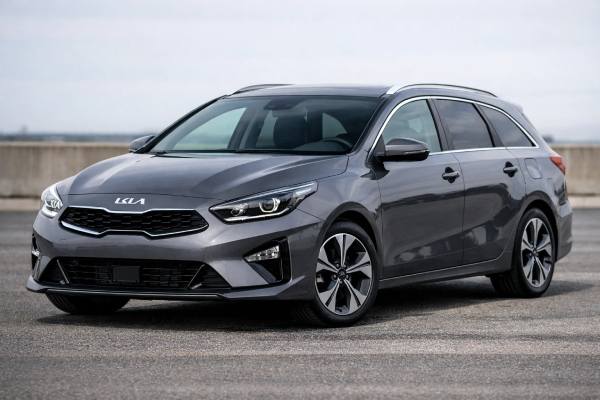
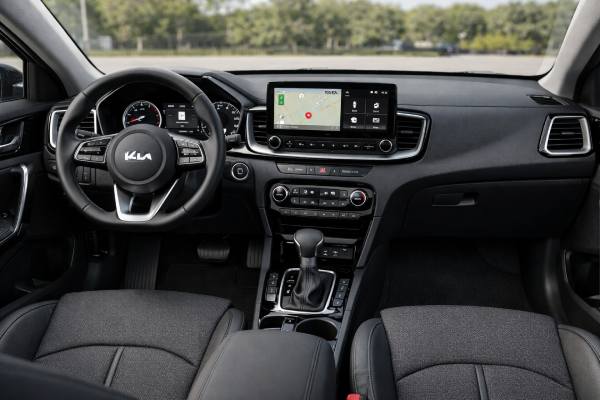
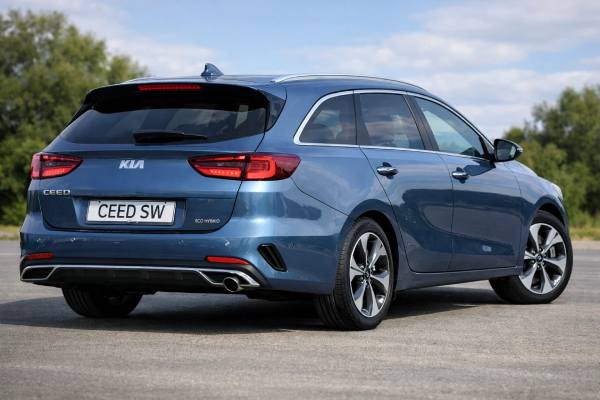
The facelift-era Kia Ceed Sportswagon (CD) with the 1.6 Smartstream CRDi in 114 hp form is built for people who cover real distance: commuters, fleet users, and families that value range, torque, and a large, usable boot. The engine’s low-rpm pull suits relaxed cruising and makes the car feel stronger than the power figure suggests, especially when loaded. In day-to-day ownership, this version rewards steady highway use with excellent fuel economy, but it also asks for the right driving pattern to keep the diesel aftertreatment system healthy—short trips and cold starts are where costs can creep in.
One important nuance: depending on country and model year, the facelift lineup often shifted toward higher-output 1.6 CRDi variants (commonly with 48V mild-hybrid support). This guide stays focused on the 114 hp diesel tune, while flagging the few places where equipment and figures can differ by market.
What to Know
- Strong low-rpm torque makes it easy to drive with passengers and luggage, especially on motorways and long grades.
- Large, square cargo area works well for strollers, pets, and bulky weekly loads without clever packing.
- Very efficient at steady speeds; best results come from warm, continuous driving rather than stop-start use.
- Main caveat: repeated short trips can accelerate DPF and EGR-related issues if the engine rarely reaches full temperature.
- Plan an “Italian tune-up” style run: 20–30 minutes at operating temperature every 1–2 weeks (or 500–800 km) if your use is mostly urban.
Contents and shortcuts
- Ceed Sportswagon CD diesel focus
- Ceed Sportswagon 1.6 CRDi data
- Ceed Sportswagon trims and safety tech
- Known diesel issues and recalls
- Service schedule and ownership tips
- On-road feel and economy
- Competitors for high-mile drivers
Ceed Sportswagon CD diesel focus
In the Ceed family, the Sportswagon is the “do everything” body style: longer roofline, larger cargo opening, and a load bay that stays practical even when the rear seats are in use. Pair that with the 1.6 Smartstream CRDi 114 hp diesel and you get a car that prioritizes effortless distance over quick sprints. It is not a hot-hatch wagon; it is a long-runner designed to sit happily at motorway speeds for hours, return strong fuel economy, and still behave like a tidy C-segment car in city traffic.
The diesel’s key advantage is how it delivers its performance. With peak torque arriving low in the rev range, the engine does not need to be worked hard. That matters in a wagon, where owners commonly drive with full seats, cargo, or roof boxes. In real life, the car feels “bigger” than its output because you can short-shift and ride the torque, which also keeps noise down and improves economy.
Facelift-era equipment and availability can be confusing. In many European markets, the updated Ceed range emphasized higher-output diesels and, in some cases, mild-hybrid (48V) systems. Yet fleet-friendly, lower-output tunes continued in certain countries and trim levels. If you are shopping used, you should treat “114 hp” as a sign to verify the exact engine tune and emissions setup by VIN and registration data, because it affects tax bands, AdBlue (SCR) hardware, and sometimes gearboxes.
Ownership strengths are straightforward: excellent range, a spacious boot, and a reassuringly stable chassis at speed. The main ownership “rule” is also straightforward: modern diesels like heat and steady driving. If your driving pattern is mostly short journeys, you can still own one, but you must proactively keep the DPF (diesel particulate filter) and EGR (exhaust gas recirculation) system healthy with regular longer runs and timely oil changes using the correct low-ash specification.
Ceed Sportswagon 1.6 CRDi data
Below are the core technical figures for the Kia Ceed Sportswagon (CD facelift era) with the 1.6 Smartstream CRDi in ~114 hp (85 kW) tune. Where markets differ, values are shown as realistic ranges. Always confirm against VIN-specific documentation for your exact car.
Powertrain and efficiency
| Item | Specification |
|---|---|
| Code | Smartstream CRDi 1.6 (market-dependent code family) |
| Engine layout and cylinders | I-4, DOHC, 16-valve |
| Bore × stroke | ~77.0 × 85.8 mm (3.03 × 3.38 in) |
| Displacement | 1.6 L (1,598 cc) |
| Induction | Turbocharged |
| Fuel system | Common-rail direct injection (diesel) |
| Compression ratio | ~15.5–16.0:1 (varies by tune) |
| Max power | 114 hp (85 kW) @ ~4,000 rpm |
| Max torque | ~260–280 Nm (192–207 lb-ft) @ ~1,500–2,750 rpm |
| Timing drive | Chain (typical for this family; verify by VIN) |
| Rated efficiency (WLTP) | ~4.2–4.8 L/100 km (56–49 mpg US / 67–59 mpg UK) |
| Real-world highway @ 120 km/h (75 mph) | ~5.0–5.6 L/100 km (47–42 mpg US / 56–50 mpg UK) |
Transmission and driveline
| Item | Specification |
|---|---|
| Transmission | Commonly 6-speed manual; some markets offer 7-speed DCT on other tunes |
| Drive type | FWD |
| Differential | Open (traction managed by brake-based systems) |
Chassis and dimensions (Sportswagon)
| Item | Specification |
|---|---|
| Suspension (front / rear) | MacPherson strut / multi-link |
| Steering | Electric power steering (rack assist) |
| Brakes | 4-wheel discs (front typically ventilated) |
| Wheels and tyres (popular) | 205/55 R16 or 225/45 R17 (varies by trim) |
| Ground clearance | ~140 mm (5.5 in) |
| Length / width / height | ~4605 / 1800 / 1465 mm (181.3 / 70.9 / 57.7 in) |
| Wheelbase | ~2650 mm (104.3 in) |
| Turning circle (kerb-to-kerb) | ~10.4–10.6 m (34.1–34.8 ft) |
| Kerb weight | ~1,350–1,500 kg (2,976–3,307 lb), by spec |
| Fuel tank | ~50 L (13.2 US gal / 11.0 UK gal) |
| Cargo volume | ~625 L (22.1 ft³) seats up; ~1,694 L (59.8 ft³) seats down (VDA), varies with spare wheel and electrification |
Performance and capability
| Item | Typical figure |
|---|---|
| 0–100 km/h (0–62 mph) | ~10.8–11.8 s (gearbox and tyres matter) |
| Top speed | ~188–195 km/h (117–121 mph) |
| Braking distance 100–0 km/h | ~36–38 m (typical class range; tyres dominate) |
| Towing capacity | Often ~1,200–1,500 kg (2,646–3,307 lb) braked; ~600–750 kg (1,323–1,653 lb) unbraked (market-dependent) |
| Payload | Commonly ~450–550 kg (992–1,213 lb), by trim |
Fluids, service capacities, and key torque specs (typical)
| Item | Specification (verify by VIN) |
|---|---|
| Engine oil | Low-SAPS ACEA C2/C3 (as specified for your emissions system); 0W-30 or 5W-30 common |
| Engine oil capacity | ~5.0–5.6 L (5.3–5.9 US qt) with filter |
| Coolant | Long-life OAT coolant, 50/50 mix typical |
| Coolant capacity | ~6.0–7.0 L (6.3–7.4 US qt) |
| Transmission fluid | Manual gear oil (spec per Kia); DCT uses dedicated fluid(s) |
| A/C refrigerant | R-1234yf common in this era; charge varies by system |
| Key torque: wheel nuts | ~90–110 Nm (66–81 lb-ft) |
| Key torque: oil drain plug | ~30–40 Nm (22–30 lb-ft) |
Safety and driver assistance (high-level)
| Item | Notes |
|---|---|
| Crash ratings | Euro NCAP rating exists for the Ceed line; confirm equipment level for your car’s year |
| ADAS suite | AEB, lane support, driver attention monitoring, and traffic sign recognition commonly offered; adaptive cruise and blind-spot features depend on trim and option packs |
Ceed Sportswagon trims and safety tech
Kia typically structured Ceed Sportswagon trims around equipment “steps” rather than major mechanical changes. That means your buying outcome depends less on the badge and more on whether the car has the comfort and safety packs you actually want. For a diesel Sportswagon, the most meaningful differences are usually transmission choice (where offered), wheel size (which affects ride and tyre costs), lighting (basic LED vs higher-spec units), and the level of driver-assistance calibration hardware fitted at the factory.
Trims and options that matter most
When you scan listings, focus on these functional identifiers:
- Wheels and suspension feel: 16-inch wheels generally ride more quietly and are cheaper to tyre; 17-inch wheels sharpen response but increase road noise and rim risk.
- Seat and cabin comfort: Heated seats and steering wheel, dual-zone climate, and better seat trim matter on long trips.
- Infotainment tier: Larger screens often bring better navigation performance and easier smartphone mirroring; check for OEM navigation if you prefer built-in routing.
- Lighting: Upgraded headlights (often full LED) are a genuine safety benefit for night motorway use, not just a styling upgrade.
Year-to-year changes you should recognize
Across the facelift window, equipment availability can shift even if the trim name stays the same. Common patterns include:
- Safety features that were optional becoming standard (or bundled differently).
- New infotainment revisions and updated instrument clusters.
- Diesel availability narrowing in some markets, with more emphasis on higher-output or electrified variants.
For used buyers, that means you should not assume two “same year” wagons have identical ADAS. Always confirm via build sheet, VIN decoding through a dealer, or a clear photo of the driver-assistance menus.
Safety ratings and what they mean here
The Ceed line has an established Euro NCAP assessment, but there is a practical nuance: crash structure is only half the story. Ratings also reflect active safety performance and which systems were standard during the tested configuration. In real ownership terms:
- AEB (Autonomous Emergency Braking) is most valuable in stop-start traffic, where rear-end impacts happen.
- Lane Keeping Assist / Lane Following Assist can reduce fatigue on long, monotonous motorway runs, but it demands correct camera calibration after windscreen replacement.
- Adaptive Cruise Control (ACC) is one of the biggest “quality of life” upgrades for high-mile drivers; it also increases the importance of radar alignment after front-end repairs.
ADAS calibration implication (often overlooked)
If the car has lane camera and front radar, budget for correct calibration after:
- Windscreen replacement
- Front bumper removal
- Suspension geometry changes beyond minor alignment
A perfectly good car can feel “broken” if ADAS calibration is off, so a proper scan and calibration check is a worthwhile pre-purchase request.
Known diesel issues and recalls
The 1.6 Smartstream CRDi is generally a durable long-distance engine when serviced correctly, but modern diesel ownership is less forgiving of mismatched use. Below is a practical map of issues by prevalence and cost tier, written for the Sportswagon’s typical driving patterns.
Common (low to medium cost if caught early)
- DPF soot loading (short-trip use):
Symptoms: rising fuel consumption, frequent fan running after shutdown, sluggish response, warning light.
Likely cause: too many cold starts and low-load journeys; interrupted regenerations.
Remedy: change driving pattern (longer runs), ensure correct oil spec, forced regen only after diagnosing underlying causes (exhaust temp sensors, thermostat operation, boost leaks). - EGR valve and intake soot build-up:
Symptoms: hesitant low-rpm pull, rough idle, occasional limp mode, fault codes.
Likely cause: normal soot/oil vapor accumulation accelerated by urban use.
Remedy: cleaning/replacement depending on severity; check for software updates that adjust EGR strategy. - Boost leaks (hoses and clamps):
Symptoms: whistle, underboost code, reduced torque, oily residue around pipes.
Remedy: pressure test, replace compromised hoses, verify intercooler joints.
Occasional (medium cost)
- NOx sensors / SCR (AdBlue) faults (if equipped):
Symptoms: emissions warnings, countdown-to-no-start messaging on some systems, poor economy.
Likely cause: sensor aging, AdBlue crystallization, wiring issues.
Remedy: correct diagnostic approach matters; avoid “parts darts.” If AdBlue is involved, check injector spray pattern and line crystallization. - Thermostat stuck open (diesel efficiency killer):
Symptoms: slow warm-up, weak cabin heat, higher consumption, more DPF trouble.
Remedy: replace thermostat; verify coolant temp stability on a scan tool.
Rare but higher-cost items
- Turbocharger actuator or variable-geometry sticking:
Symptoms: intermittent limp mode under load, inconsistent boost, whine or surge.
Remedy: correct root-cause check (oil quality, boost control, vacuum/actuator health) before replacement. - Clutch and dual-mass flywheel (manual cars):
Symptoms: judder on take-off, rattling at idle, vibration under load.
Remedy: replacement as a set; driving style and city use influence lifespan.
Software and calibration notes
For drivability complaints (flat spots, hesitation, unexpected regen frequency), software updates can be part of the official fix. The best approach is a dealer-level scan to check for outstanding ECU updates and any recorded service actions, especially if the car has radar/camera ADAS.
Recalls, service actions, and how to verify
Recalls can be market-specific. Your safest workflow:
- Run the VIN through an official Kia recall checker (regional site).
- Ask for dealer printouts showing completion dates.
- Confirm any safety recall work before negotiating—especially if it concerns restraint systems.
If you see warnings about seat belt pretensioners, airbags, braking, or steering electronics, treat them as “stop and verify” items rather than “fix later” items.
Service schedule and ownership tips
A diesel Sportswagon can be an excellent value over high mileage, but only if you treat maintenance as a system—not isolated oil changes. The goal is to protect the turbocharger, keep emissions hardware healthy, and prevent small cooling or sensor faults from cascading into expensive aftertreatment problems.
Practical maintenance schedule (typical, verify for your market)
Every 10,000–15,000 km (6,000–9,000 mi) or 12 months (diesel-friendly interval):
- Engine oil and filter using the correct low-ash specification (this is critical for DPF life).
- General inspection: leaks, intercooler piping, coolant level stability.
- Scan for stored emissions-related codes even if no warning light is on.
Every 20,000–30,000 km (12,000–18,000 mi) or 12–24 months (depending on dust and climate):
- Engine air filter (sooner in dusty areas).
- Cabin filter (often annually for comfort and HVAC performance).
- Brake inspection: pad thickness, rotor condition, slider pin lubrication.
Every 40,000–60,000 km (25,000–37,000 mi):
- Brake fluid (many owners benefit from a 2-year rhythm regardless of mileage).
- Manual gearbox oil check/replace if the car sees heavy urban use or towing.
Every 90,000–120,000 km (56,000–75,000 mi):
- Coolant replacement if your official schedule calls for it; monitor hoses and thermostat operation.
- Accessory belt and tensioner inspection; replace if cracking/noise appears.
As-needed, based on use:
- DPF health: if your driving is mostly short trips, plan a weekly longer run at full operating temperature.
- AdBlue (if equipped): keep it fresh; do not top up with unknown-quality fluid and avoid contamination.
Ownership tips that save real money
- Warm-up philosophy: drive gently for the first 5–10 minutes, but do not idle forever. The engine warms best under light load.
- Regen awareness: if you notice higher idle, fan running, or a different exhaust note, take the long way home and let the regen finish.
- Tyres matter more than you think: low rolling resistance tyres can improve economy, but choose a quality tyre that also brakes well in wet conditions.
Buyer’s guide checklist (high signal items)
- Full service history with oil spec noted (or receipts that show the correct grade and standard).
- Evidence of recall completion via VIN check and dealer documentation.
- Test drive from cold: look for smooth idle, clean pull from ~1,500 rpm, no excessive smoke, and stable coolant temperature.
- Check for DPF/EGR/NOx-related codes with a proper scan tool, not just a dashboard scan.
- Inspect tailpipes and underbody for signs of exhaust leaks or impact damage.
Long-term durability outlook is good for highway users. For mostly urban drivers, the same car can become “fussy” unless you adapt your maintenance and driving pattern to modern diesel realities.
On-road feel and economy
With the diesel 1.6, the Ceed Sportswagon drives like a calm, competent long-distance tool. The chassis is tuned to feel stable at speed, and the wagon body does not bring the floaty, top-heavy sensation some compact estates can have. The rear multi-link suspension helps it stay composed over imperfect roads, and it keeps the back end from feeling skittish when the load bay is full.
Ride, handling, and NVH
- Ride quality: On 16-inch wheels, the wagon tends to feel more supple over sharp edges and patched tarmac. On 17-inch wheels, you gain a slightly tighter response but feel more of the road surface.
- Steering: Light-to-moderate weight with a clean on-centre feel. It is not “sporty” feedback, but it tracks well on motorways and resists crosswinds better than many taller SUVs.
- Cabin noise: At steady speeds, diesel clatter fades into the background. The biggest noise contributors are usually tyres and wind around mirrors, so tyre choice and door seal condition matter.
Powertrain character
This engine’s personality is torque-first. The best progress comes from using the midrange, not chasing redline. In real traffic, that means fewer downshifts and more relaxed overtakes than you might expect from 114 hp. Turbo lag is typically mild; if you do feel a delay, it often correlates with low rpm in a high gear or a car that needs intake/boost system attention.
Manual gearboxes suit this tune well because you can hold the engine in its most efficient band. If your market offers a DCT on other diesel outputs, it can be excellent for convenience, but it also adds another fluid service consideration and can be more sensitive to stop-start heat and creeping.
Real-world efficiency (what owners actually see)
Assuming a healthy car and correct tyres:
- City (warm engine, light traffic): ~5.5–6.5 L/100 km (43–36 mpg US / 51–43 mpg UK)
- Highway 100–120 km/h: ~5.0–5.6 L/100 km (47–42 mpg US / 56–50 mpg UK)
- Mixed use: ~5.2–6.0 L/100 km (45–39 mpg US / 54–47 mpg UK)
Cold weather increases consumption and can trigger more frequent regenerations, especially if trips are short. If your use includes winter commuting, expect a noticeable economy drop and plan longer drives periodically to keep the aftertreatment system happy.
Load, luggage, and towing notes
A wagon encourages people to use it like a small van. When you load it heavily, the diesel’s torque helps it stay unfussed. The biggest “performance penalty” is usually economy: a full cabin, roof box, or trailer can push consumption up by roughly 10–25% depending on speed and terrain. Keep tyre pressures correct, and do not ignore brake and coolant maintenance if you tow even occasionally.
Competitors for high-mile drivers
If you are choosing a compact wagon primarily for efficient long-distance driving, the Ceed Sportswagon diesel sits in a competitive set. The best rival depends on whether you value outright fuel economy, cabin refinement, driver-assistance maturity, or long-term parts costs.
Versus Skoda Octavia Combi (diesel or efficient petrol)
The Octavia Combi is often the “space champion” in this class. If your priority is rear-seat room and a very large load bay, it can feel like the next size up. Many versions also offer excellent highway refinement. The trade-off is that some configurations can cost more in the used market, and complex options can make “like-for-like” comparisons tricky.
Versus Ford Focus Estate (diesel where available)
The Focus Estate is usually the handling benchmark. If steering feel and chassis balance matter to you, it may be more engaging than the Ceed. For long motorway days, the Kia counters with a calmer, torque-led character and typically straightforward ergonomics. On older diesel examples, also consider maintenance history carefully because usage patterns vary widely.
Versus Hyundai i30 Wagon (close cousin)
The i30 Wagon shares a lot of underlying engineering DNA, so the decision often comes down to pricing, trim availability, and condition. In practice, you should buy the cleaner history and better equipment rather than chase a specific badge.
Versus Toyota Corolla Touring Sports (hybrid alternative)
If your driving includes heavy city traffic and you want to reduce diesel aftertreatment complexity, a hybrid wagon becomes a compelling alternative. It will not match diesel range on fast motorways in all cases, but it can be easier to live with for mixed urban use and tends to be very predictable in stop-start conditions.
The Ceed Sportswagon diesel “best-fit” profile
Choose this Kia when:
- You drive long distances weekly, especially motorway-heavy routes.
- You value a large, practical boot without moving up to an SUV.
- You want low running costs and can commit to diesel-friendly driving habits.
Consider a hybrid or efficient petrol wagon instead when:
- Most trips are under 10–15 km and the engine rarely reaches full temperature.
- Your city driving is dense and slow, with frequent stop-start patterns.
In short, the Ceed Sportswagon 1.6 diesel is at its best when used as intended: a steady, efficient, comfortable distance car that also happens to haul a surprising amount of cargo.
References
- Official Kia Cee’d 2019 safety rating 2019 (Safety Rating)
- Kia Recalls | Kia Europe 2026 (Recall Database)
- Safety Gate: the EU rapid alert system for dangerous non-food products 2022 (Recall Database)
- Car Safety Recalls | What They Are & What To Do 2026 (Recall Database)
Disclaimer
This article is for informational purposes only and is not a substitute for professional inspection, diagnosis, or repair. Specifications, torque values, service intervals, and procedures can vary by VIN, market, model year, and equipment, so always confirm details using official Kia service information and documentation for your exact vehicle.
If this guide helped, please consider sharing it on Facebook, X (Twitter), or your favorite forum to support our work.