
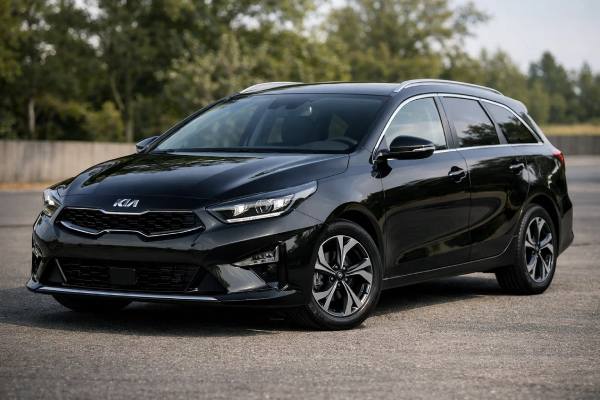
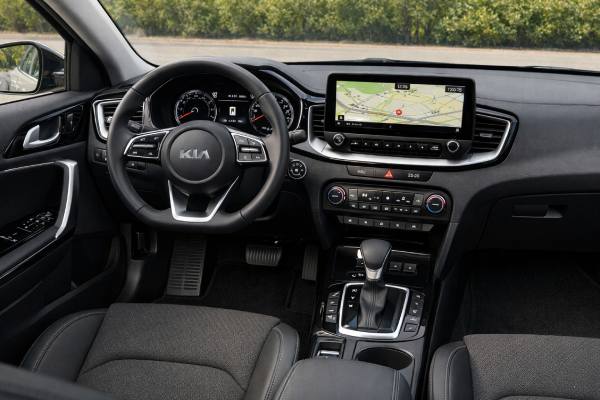
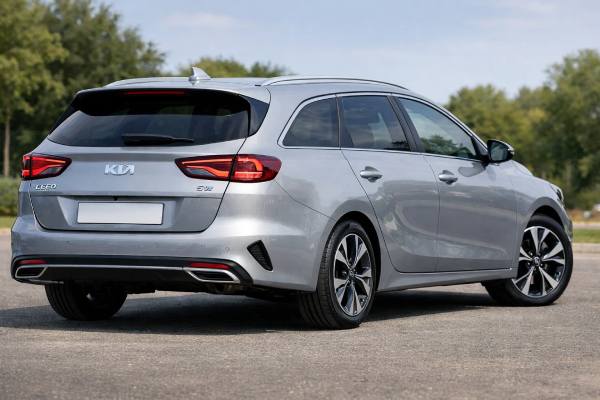
The facelifted Kia Ceed Sportswagon PHEV is a rare mix in today’s market: a compact estate that can run silently on electricity for short trips, yet still behave like a normal petrol car when the battery is empty. Its 1.6 GDi plug-in hybrid system targets owners who commute, do school runs, or spend most days in town—then occasionally take longer motorway journeys without planning charging stops.
The main ownership “trick” is simple: this car rewards routine charging and steady maintenance. Charge it often and you can cut fuel use dramatically; ignore charging and it becomes a heavier petrol estate that’s merely “okay” on economy. The facelift years also improved driver assistance and infotainment availability in many markets, so the right trim can feel genuinely modern—especially if you care about lane support, adaptive cruise, and everyday safety tech.
Owner Snapshot
- Best for short daily trips with home or workplace charging—EV-only driving can cover many commutes.
- Estate practicality remains strong, but PHEV battery packaging often reduces underfloor storage versus non-hybrid models.
- Plan on slightly higher tyre and brake costs than a basic petrol Ceed due to weight and torque.
- Change engine oil at least every 12 months or 15,000 km (earlier if you do many cold starts or short trips).
- Keep an eye on charging-port seals and cable condition if you charge outdoors year-round.
What’s inside
- Kia Ceed Sportswagon PHEV in context
- Kia Ceed Sportswagon PHEV technical specs
- Kia Ceed Sportswagon PHEV trims and ADAS
- Reliability and known weak points
- Service schedule and buying advice
- Driving feel and energy use
- Competitors for plug-in estates
Kia Ceed Sportswagon PHEV in context
Think of the Ceed Sportswagon PHEV as two cars blended into one routine. On weekdays, it wants to be an electric runabout: you leave home with a charged battery, glide through traffic with minimal engine use, and arrive without burning much petrol. On weekends, it flips into a conventional petrol estate with hybrid assistance—no range anxiety, no charging queue planning, just refuel and go.
In the facelift (2021–2026) era, the appeal comes from how well the PHEV system suits real European use patterns. Many owners drive 20–60 km a day. If your charging is reliable, that can translate into long stretches where the petrol engine barely runs—helpful for both running costs and noise levels. The estate body also matters: you get a long roofline, a practical load opening, and the kind of cargo flexibility that small SUVs often promise but don’t always deliver as efficiently.
There are also some “physics” realities you should budget for:
- Weight and packaging: A plug-in hybrid carries a traction battery, a motor, and extra cooling and high-voltage hardware. That adds mass and can reduce underfloor storage. Handling stays safe and predictable, but it won’t feel as light-footed as a basic petrol 1.0 T-GDi version.
- Best-case vs worst-case economy: This model has a wider efficiency swing than a normal car. If you charge daily, fuel use can be very low. If you rarely charge, you’re hauling extra weight and complexity for little benefit—economy becomes closer to a regular petrol estate.
- System behavior depends on temperature: Like most PHEVs, winter heating demand and cold battery chemistry reduce EV range. You can still do EV-first trips, but you’ll see shorter electric-only distances and more engine starts.
From an ownership perspective, the big advantage is flexibility. You can treat it like a normal car, yet you have the option to “electrify” most of your weekly driving without committing to a full BEV. That makes it especially attractive for renters, apartment dwellers with occasional charging access, or households that want one do-it-all vehicle.
The smart way to approach this PHEV is to decide whether your life supports the habit: predictable short routes, a place to plug in, and willingness to keep tyres, brakes, and fluids on schedule. If that fits, the Ceed Sportswagon PHEV can be a quietly competent long-term partner.
Kia Ceed Sportswagon PHEV technical specs
Below is a practical, trim-agnostic spec set for the facelift-era Ceed Sportswagon plug-in hybrid (market details vary by VIN and country). Use it as a decision-making baseline, then confirm exact figures for your registration market and wheel size.
Powertrain and efficiency (typical for 141 hp PHEV)
| Item | Specification |
|---|---|
| Code | 1.6 GDi PHEV system (market codes vary) |
| Engine layout and cylinders | Inline-4, DOHC, 16-valve (4 valves/cyl) |
| Displacement | 1.6 L (1,580 cc) |
| Induction | Naturally aspirated (NA) |
| Fuel system | Direct injection (DI) |
| Motor | Single e-motor on front axle (PHEV) |
| System output | 141 hp (≈105 kW) (combined) |
| System torque | Typically ≈265 Nm (≈195 lb-ft) combined |
| Timing drive | Chain (common for this family) |
| Real-world highway @ 120 km/h | Often 6.5–7.5 L/100 km once battery is depleted |
Battery and charging (typical)
| Item | Specification |
|---|---|
| Battery chemistry | Lithium-ion polymer (common in Kia PHEVs) |
| Battery capacity | Typically ≈8.9 kWh (gross) |
| Onboard AC charging | Commonly 3.3 kW (single-phase) |
| Typical 0–100% AC charge time | About 2.5–3.5 hours (home wallbox vs socket) |
| EV-only range (WLTP) | Often around 45–60 km, depending on market and wheels |
Transmission and driveline
| Item | Specification |
|---|---|
| Transmission | 6-speed dual-clutch automatic (6DCT) in many markets |
| Drive type | FWD |
| Differential | Open |
Chassis and dimensions (estate body, typical)
| Item | Specification |
|---|---|
| Suspension (front/rear) | MacPherson strut / multi-link (common Ceed rear layout) |
| Steering | Electric power steering |
| Brakes | 4-wheel discs (diameters vary by trim) |
| Popular tyre sizes | 205/55 R16 or 225/45 R17 (market-dependent) |
| Length / width / height | Around 4,605 / 1,800 / 1,465 mm (varies with rails/wheels) |
| Wheelbase | Around 2,650 mm |
| Turning circle | Around 10.6 m kerb-to-kerb |
| Kerb weight | Commonly ~1,500–1,650 kg depending on trim |
Performance and capability (typical)
| Item | Specification |
|---|---|
| 0–100 km/h (0–62 mph) | Often ~10–11 s |
| Top speed | Often ~170–180 km/h |
| Braking 100–0 km/h | Commonly ~36–40 m on road tyres (test-dependent) |
| Towing capacity | Market-dependent; often ~1,300 kg braked (verify for your VIN) |
| Payload | Typically lower than non-hybrid versions due to kerb weight |
Fluids and service capacities (decision-grade guidance)
| Item | Typical guidance (verify for your engine code) |
|---|---|
| Engine oil | Usually 0W-20 or 5W-30 meeting Kia/ACEA spec; capacity often ~3.8–4.5 L |
| Coolant | OEM long-life coolant; mix typically 50/50 |
| DCT fluid | Specific DCT fluid required; service interval varies by market use |
| Brake fluid | DOT 4 commonly used; change interval often every 2 years |
Key torque specs (critical fasteners only, common ranges)
| Fastener | Typical torque range |
|---|---|
| Wheel nuts | 88–108 Nm (65–80 lb-ft) |
| Engine oil drain plug | 25–35 Nm (18–26 lb-ft) |
| Spark plugs | 20–30 Nm (15–22 lb-ft) |
If you want one takeaway from the tables: the Ceed Sportswagon PHEV is not “fast,” but it’s brisk enough and designed for efficient, repeatable daily use. The technical risk is not raw performance—it’s owner fit. If you can charge regularly, the numbers work in your favor.
Kia Ceed Sportswagon PHEV trims and ADAS
Trim names vary widely across Europe (and even within the same market over time), so it’s more helpful to shop by hardware and identifiers rather than a badge alone. For the facelift-era Ceed Sportswagon PHEV, focus on four areas: charging practicality, cabin technology, safety/ADAS content, and wheel/tyre choices.
Trims and options that actually change daily life
- Charging equipment: Some markets bundle a Mode 2 cable (household plug) while others expect you to buy it. Confirm what’s included. If you charge outdoors, look for a robust charge-port door and a clean cable storage solution.
- Infotainment and app services: Facelift cars commonly improved screen responsiveness and phone integration. If you rely on navigation and trip planning, prioritize the larger screen and upgraded software package where offered.
- Heat management: PHEVs can benefit from more efficient cabin heating strategies. Depending on market, you may see different HVAC logic, seat heating availability, and sometimes heat-pump availability on other Kia lines (less common here). In cold regions, heated seats and steering wheel matter more than you might expect.
- Wheel size: Smaller wheels usually ride better and can improve winter efficiency, while larger wheels look sharper but can reduce EV range and increase tyre cost. If you’re buying for economy, don’t automatically “upgrade” wheels.
Quick identifiers when inspecting a used car
- Charge door and onboard charging: Check the charge flap alignment, hinge feel, and whether the cable locks/unlocks smoothly. A sticky charge door is small but annoying.
- Interior tell-tales: PHEV models typically have EV/HEV energy flow displays, charge timers, and drive-mode options that non-hybrids do not.
- VIN/build sheet: Ask a dealer to print the build data and confirm battery and charger configuration. This matters because PHEV equipment can differ even within the same trim badge.
Safety ratings and what they mean in practice
The Ceed line achieved strong Euro NCAP results for the generation tested, which generally reflects good structural performance and a solid baseline safety package. Still, the real-world difference between trims often comes down to active safety: whether advanced AEB functions, adaptive cruise control, blind-spot monitoring, and lane centering were standard or optional.
ADAS: standard vs optional patterns
Commonly available systems (depending on trim/year):
- AEB (Autonomous Emergency Braking): Often includes car detection; pedestrian and cyclist detection may depend on camera/radar package.
- Lane Keeping Assist (LKA) / Lane Following Assist (LFA): LKA nudges you back in lane; LFA can feel closer to lane-centering on highways when paired with adaptive cruise.
- Adaptive Cruise Control (ACC): Useful for motorway fatigue reduction; check for smoothness and whether stop-and-go is supported.
- Blind-spot monitoring (BSD) and Rear Cross-Traffic Alert (RCTA): Particularly valuable on an estate with a full cargo load that blocks rearward visibility.
Service note: camera/radar alignment can be needed after windscreen replacement, bumper repair, or certain suspension work. When buying used, ask if any front bumper work was done and whether calibration records exist.
Reliability and known weak points
The Ceed Sportswagon PHEV’s reliability profile is usually better than people fear—provided it’s maintained and charged sensibly. The hybrid system itself tends to be durable because it avoids extreme power density and uses well-established components. Most ownership problems come from (1) neglected servicing, (2) software or sensor quirks, or (3) the extra complexity of mixing petrol, electric, and dual-clutch behavior.
Below is a practical “prevalence × severity” map. Treat it as guidance, not a guarantee.
Common (more likely over time, usually manageable)
- 12 V battery weakness (low/medium): PHEVs still rely heavily on the 12 V system for wake-up logic. Symptoms include random warning lights, failure to “ready,” or infotainment resets. Remedy: test battery health, check charging strategy updates, replace proactively in the 4–6 year window if usage is mostly short trips.
- Brake corrosion and sticking (low/medium): Regenerative braking reduces friction brake use, so discs can rust or pads can glaze—especially in wet climates. Symptoms: vibration, squeal, uneven braking. Remedy: periodic firm braking, brake service cleaning, and correct pad choice.
- Charging-port wear or contamination (low): Outdoor charging can introduce moisture and dirt. Symptoms: charge interruptions, flap not closing properly. Remedy: keep seals clean, avoid forcing the flap, and use a protective cap/cable care routine.
Occasional (shows up in certain use patterns)
- DCT low-speed shudder or hesitation (medium): Dual-clutch gearboxes can feel less smooth in stop-start traffic, and the handoff between motor torque and clutch engagement is sensitive to calibration. Remedy: ensure software is up to date; if persistent, a dealer adaptation procedure or clutch inspection may be required.
- GDi intake valve deposits (medium): Direct injection can allow carbon build-up on intake valves over high mileage, especially with lots of short, cold runs. Symptoms: rough idle, reduced efficiency. Remedy: consistent oil changes, occasional longer hot runs, and cleaning if needed at higher mileages.
Rare (but higher cost when it happens)
- Onboard charger or high-voltage component faults (high): Not common, but any PHEV can develop charging hardware issues. Symptoms: won’t accept charge, repeated charge faults, overheating messages. Remedy: dealer diagnosis, possible module replacement, and software checks.
- Battery cooling system leaks (high): Leaks are not typical, but the PHEV has additional coolant circuits and fittings. Symptoms: coolant loss, warnings, poor EV performance. Remedy: pressure test and correct OEM coolant service.
Software and calibrations worth taking seriously
PHEVs are software-driven. Updates can improve:
- EV/engine blending smoothness
- charging reliability and fault handling
- ADAS sensor behavior
- infotainment stability
When buying used, ask for service invoices showing software updates or dealer visits addressing driveability. If you experience repeatable issues (rough transitions, charge faults, persistent warnings), a reflash or calibration update is often the first official remedy before parts replacement.
Recalls, TSBs, and how to verify
Because recall campaigns change over time, the safest process is:
- Run an official recall check for your VIN (or have a dealer do it).
- Confirm completion in dealer records.
- Match paperwork to the car’s production date and market.
Even if the car drives perfectly, do not skip this step on any plug-in hybrid—software and safety campaigns can materially affect long-term satisfaction.
Service schedule and buying advice
A good maintenance plan for the Ceed Sportswagon PHEV is less about exotic procedures and more about consistency. Plug-in hybrids tempt owners into “it barely uses the engine, so it barely needs service.” That mindset shortens engine life, increases deposit risk, and can create expensive DCT or cooling-system surprises.
Practical maintenance schedule (use distance or time, whichever comes first)
Every 12 months / 15,000 km (recommend 10,000–12,000 km for harsh use):
- Engine oil and filter (use the exact oil spec listed for your VIN/market)
- Multi-point inspection: coolant levels, leaks, belt condition, engine mounts
- Brake inspection and lubrication (important on regen-heavy cars)
- Hybrid system visual inspection: HV cable routing, coolant hoses, charge port
Every 15,000–30,000 km (or annually if dusty/pollen-heavy area):
- Cabin air filter
- Engine air filter (inspect annually; replace as needed)
Every 30,000–60,000 km:
- Brake fluid (commonly every 2 years regardless of mileage)
- Tyre rotation and alignment check (rotation typically every 10,000–15,000 km)
Every 60,000 km (typical guidance):
- Spark plugs (direct-injection engines often benefit from timely plug changes)
- Inspect PCV system and intake tract for oil residue patterns
Every 90,000–120,000 km (use-case dependent):
- DCT service (fluid and/or clutch adaptation checks depending on the exact gearbox spec and use pattern)
- Suspension bushings inspection, especially rear multi-link arms
Coolant:
- Many modern long-life coolants run 5–10 years, but PHEVs can have multiple circuits. Follow the exact coolant type and interval specified for your vehicle.
Fluid specifications (decision-making level)
- Engine oil: Often 0W-20 or 5W-30 meeting Kia/ACEA requirements; the “right” oil matters for timing chain life and deposit control.
- DCT fluid: Use only the approved fluid; mixing fluids can cause shift quality issues.
- Brake fluid: DOT 4 is common; flush interval matters more than mileage.
Buyer’s guide: what to inspect on a used PHEV estate
Bring this checklist to a test drive:
- Charging behavior: Confirm it accepts charge reliably. Test a full plug-in session if possible.
- EV-to-engine transitions: On a warm car, blending should be smooth. Harsh engagement may suggest software or clutch adaptation needs.
- Brakes: Check for vibration, roughness, or uneven stopping—common if friction brakes were ignored.
- Cooling system: Look for dried coolant traces, sweet smell, or repeated top-ups in service history.
- Tyres: Uneven wear hints at alignment issues or worn suspension bushings.
- Service documentation: You want oil-change evidence, not just “inspection stamps.”
- Recall completion proof: Confirm via official VIN check and dealer printout.
Long-term durability outlook
If serviced on time and charged sensibly, the Ceed Sportswagon PHEV can be a stable long-term choice. The most durable examples typically share three habits: regular oil changes (even when fuel use is low), periodic brake servicing to counter regen side effects, and prompt attention to software updates and warning lights.
Driving feel and energy use
In daily driving, the Ceed Sportswagon PHEV feels like a calm, torque-assisted estate rather than a sporty one. The electric motor provides immediate pull at low speeds, which makes city traffic easy. The petrol engine is there when you ask for more power or when the battery is depleted, and the dual-clutch gearbox (in many markets) gives a more direct feel than a CVT-style hybrid—though it can also be less smooth at crawling speeds.
Ride, handling, and NVH
- Ride: Generally composed, with a slightly heavier front-end feel than non-hybrid Ceeds. Smaller wheels typically improve comfort and reduce impact harshness.
- Steering: Predictable and light-to-medium in effort. It’s not a feedback-rich setup, but it’s easy to place in traffic.
- Braking feel: Regen blending can create a “two-stage” sensation—light pedal input harvests energy, harder input brings in friction brakes. You adapt quickly, but it’s worth testing on a longer drive.
- Noise: EV mode is very quiet at low speeds. On cold starts, you may notice the engine starting more often for cabin heat or system conditioning.
Powertrain character
- Low-speed response: Strong for a 141 hp family estate because the motor fills the gap where a naturally aspirated engine can feel weak.
- Kickdown and merging: Expect adequate rather than punchy passing performance, especially once battery charge is low.
- Drive modes: Many setups include eco/normal/sport-style mapping. Sport typically keeps the engine engaged more and can reduce EV-only time.
Real-world efficiency: what owners actually see
These are realistic ranges to anchor your expectations:
- With frequent charging (mixed use):
- Fuel: often 1.5–3.5 L/100 km (depends heavily on trip length and charging discipline)
- Electricity: commonly 14–20 kWh/100 km in EV-heavy driving
- Charge-sustaining (battery mostly depleted):
- Mixed: often 5.5–6.8 L/100 km
- Highway @ 120 km/h: often 6.5–7.5 L/100 km
- Cold weather effect: EV range can drop noticeably. Plan for fewer electric-only kilometers and more engine starts when temperatures fall and cabin heat demand rises.
Charging performance (practical)
Most Ceed-family PHEVs charge on AC only (no DC fast charging). That’s fine for the intended use case:
- Plug in overnight at home and you start each day with a full battery.
- Plug in at work and you can double your EV-heavy miles.
A helpful habit: set a charging schedule that finishes near departure time in winter. A warmer battery can improve EV performance and reduce early engine starts.
Load carrying and towing notes
As an estate, the Sportswagon is naturally suited to family loads. The PHEV’s extra weight means:
- You should respect payload limits, especially with a full cargo bay and rear passengers.
- Towing ratings can be lower than non-hybrid versions in some markets—verify the braked/unbraked numbers on the VIN plate and registration documents.
- Expect a meaningful consumption penalty when fully loaded; on the motorway, a 10–25% increase is a realistic planning figure depending on speed and wind.
Competitors for plug-in estates
The Ceed Sportswagon PHEV sits in a niche: compact estate + plug-in hybrid + mainstream pricing. That makes comparisons more nuanced than “which is fastest.” The right rival depends on whether you prioritize EV range, cargo practicality, ride comfort, or long-term simplicity.
If you want more EV range and stronger performance
- Volkswagen Golf Variant eHybrid / Passat GTE-style alternatives (market-dependent): Often deliver a more powerful hybrid feel and, in some versions, larger batteries. They can be excellent motorway cars, but ownership complexity and option pricing can climb quickly.
- Skoda Octavia iV / SEAT Leon Sportstourer eHybrid: Typically spacious and efficient with a strong PHEV ecosystem. Cabin space can be a major advantage, especially rear legroom.
Why choose the Kia instead: Often simpler trim logic, strong value, and an estate shape that stays compact outside yet useful inside. In many markets, Kia’s ownership proposition (warranty terms, dealer coverage) can also be persuasive—verify local policy.
If you don’t actually need plug-in charging
- Toyota Corolla Touring Sports (self-charging hybrid): Not plug-in, but extremely efficient in mixed use without any charging habit. If you can’t charge regularly, a conventional hybrid may beat a PHEV on real-world costs and simplicity.
- Full petrol/diesel estates: If your driving is mostly motorway and you can’t charge, a well-chosen non-plug-in option may be cheaper to run and maintain.
Why choose the Kia instead: The moment you can charge reliably, the Ceed PHEV’s daily operating cost can drop sharply, and the quiet EV experience becomes a genuine quality-of-life upgrade.
If cargo flexibility is your top priority
Some rivals offer larger boots, but check the fine print: many PHEV estates lose cargo volume due to battery placement. When comparing, look at:
- seats-up boot volume in the PHEV trim (not the petrol brochure number)
- whether the load floor is flat with seats folded
- whether there’s underfloor storage (often reduced on PHEVs)
Kia’s advantage: The Sportswagon layout is naturally practical, and for many households the difference between “good” and “great” cargo space is less important than how easy the space is to use daily (wide opening, low lift-over, sensible tie-downs).
The simple decision rule
- Choose the Ceed Sportswagon PHEV if you can charge most days and your typical trips are short-to-medium.
- Choose a regular hybrid if you cannot charge reliably and want consistent efficiency with fewer variables.
- Choose a larger PHEV estate if you frequently carry adults in the rear seats and value maximum cabin space over compact exterior dimensions.
References
- Official Kia Cee’d 2019 safety rating 2019 (Safety Rating)
- Kia Recalls | Kia Europe 2026 (Recall Database)
- Hybridbil | Upptäck elhybrider från Kia | Kia Sverige 2026 (WLTP and Model Information)
Disclaimer
This article is for informational purposes only and is not a substitute for professional inspection, diagnosis, or repair. Specifications, torque values, service intervals, and procedures vary by VIN, market, model year, and installed equipment. Always verify details using your vehicle’s official owner’s manual and service documentation, and consult a qualified technician for faults or safety-critical work.
If you found this guide useful, please consider sharing it on Facebook, X (Twitter), or your favorite forum or group—your support helps us keep producing practical, ownership-focused content.