
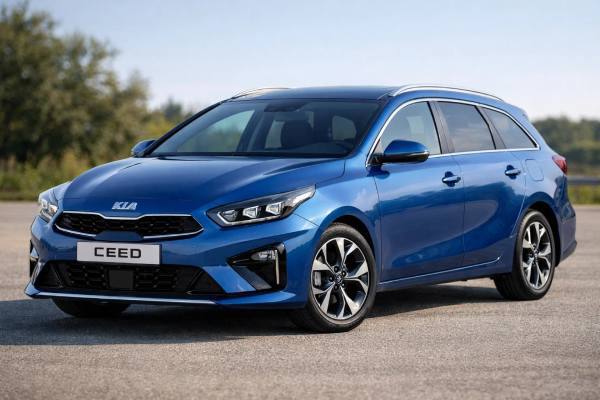
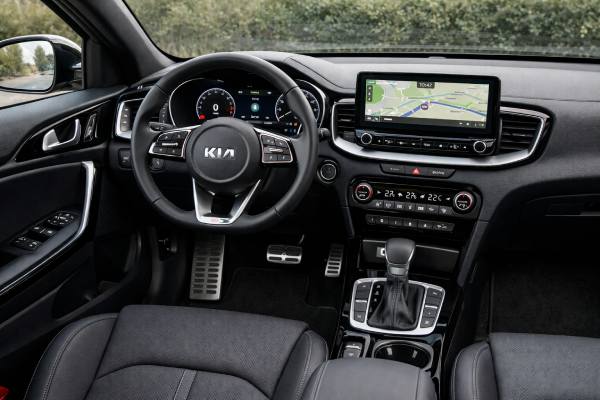
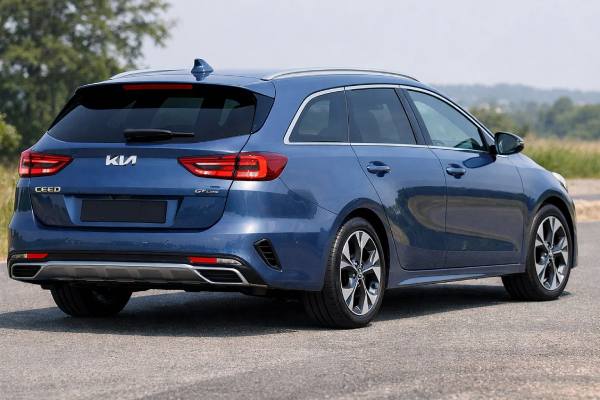
The facelifted Kia Ceed Sportswagon (CD) with the 1.5 T-GDi 158 hp engine is the “do-it-all” choice in the range: a compact estate that still feels light and efficient, but finally has enough torque to stay relaxed when fully loaded. Compared with smaller turbo options, the 1.5 is less stressed at motorway speeds and needs fewer downshifts on grades, which is where owners feel the real upgrade. It is also a modern direct-injection turbo, so long life depends on basics done well: the right oil specification, sensible warm-up habits, and keeping the cooling and ignition systems in top shape.
If you buy one with the trim and gearbox that match your commute, the 1.5 T-GDi Sportswagon can deliver the rare mix of family practicality, quiet highway cruising, and brisk real-world performance without the size, tyre costs, or fuel use of a comparable SUV.
Key Takeaways
- Strong everyday pace: the 1.5 turbo pulls confidently with passengers and luggage.
- Wagon practicality without SUV penalties: stable handling and efficient packaging.
- Better motorway ease than smaller engines, especially at 120 km/h with load.
- Ownership caveat: direct-injection turbo engines reward correct oil spec and conservative oil intervals.
- A sensible baseline is engine oil and filter every 15,000 km or 12 months (adjust to your market schedule and driving style).
Jump to sections
- Ceed Sportswagon 1.5 T-GDi profile
- Ceed Sportswagon 158 hp specs
- Ceed Sportswagon options and ADAS
- Common faults and service actions
- Upkeep plan and pre-purchase checks
- Road test and real mpg
- Rival wagons and alternatives
Ceed Sportswagon 1.5 T-GDi profile
The 2021–2026 facelift Ceed Sportswagon is a classic “smart wagon” formula: compact exterior footprint, long roof practicality, and car-like road manners. With the 1.5 T-GDi 158 hp, it becomes the range’s most balanced powertrain for mixed driving. The engine has enough displacement to feel smooth and composed at higher loads, and enough turbo torque to keep the car moving without constantly chasing revs. In ownership terms, that means fewer high-throttle events, fewer stress cycles when climbing hills, and a generally calmer driving experience than smaller turbo options when you are carrying people and gear.
This engine is typically paired with front-wheel drive and either a manual gearbox or a dual-clutch automatic (availability varies by market). The wagon body adds useful rear overhang, but it does not turn the car into a barge. The wheelbase and suspension tuning deliver stable straight-line tracking, predictable cornering balance, and confident braking feel. If you choose moderate wheel sizes, the Sportswagon is also one of the more comfortable ways to cover distance in the compact class.
From an engineering standpoint, the 1.5 T-GDi is a modern direct-injection (DI) turbo gasoline unit designed to hit efficiency and emissions targets while still offering strong mid-range torque. DI improves combustion control, but it changes what “good maintenance” looks like. You cannot treat it like an older naturally aspirated port-injection engine that tolerates long oil intervals and endless short trips with no consequences. Clean oil matters because the turbocharger is oil-cooled and oil-lubricated, and because DI engines can see more soot and fuel dilution in certain use patterns. Short trips are not forbidden, but they are a reason to be disciplined about oil and filters.
For the buyer, the 1.5’s main advantage is flexibility. It makes the Sportswagon feel like a genuine family car rather than an “efficient commuter with a big boot.” You can take long motorway holidays, do city errands, and carry heavy cargo without feeling that you chose the wrong engine. The trade-off is straightforward: higher complexity than a basic non-turbo engine, which puts a premium on service history, correct fluids, and careful diagnosis when warning lights appear.
Ceed Sportswagon 158 hp specs
Specifications vary by market, emissions calibration, wheels, and gearbox. The tables below reflect typical facelift-era Ceed Sportswagon (CD) 1.5 T-GDi 158 hp configurations in European-style trim mixes.
Powertrain and efficiency
| Item | Specification (typical) |
|---|---|
| Engine family | Smartstream 1.5 T-GDi |
| Engine layout and cylinders | Inline-4, DOHC, 4 valves per cylinder |
| Displacement | 1.5 L (approx. 1,482 cc) |
| Induction | Turbocharged, intercooled |
| Fuel system | Direct injection (DI) |
| Compression ratio | market dependent (commonly around 10:1) |
| Max power | 158 hp (116 kW) @ rpm varies by calibration |
| Max torque | commonly around 253 Nm (187 lb-ft) in mid-range rpm |
| Timing drive | typically chain |
| Rated efficiency | WLTP varies widely by wheels and gearbox (often mid-6 L per 100 km combined) |
| Real-world highway at 120 km/h | commonly mid-6 to low-7 L per 100 km, load and temperature dependent |
Transmission and driveline
| Item | Specification (typical) |
|---|---|
| Transmission | 6-speed manual or 7-speed dual-clutch automatic (market dependent) |
| Drive type | FWD |
| Differential | Open |
Chassis and dimensions (Sportswagon body)
| Item | Specification (typical) |
|---|---|
| Suspension (front and rear) | MacPherson strut front, multi-link rear (common Ceed setup) |
| Steering | Electric power steering |
| Brakes | 4-wheel discs (diameters vary by trim) |
| Popular tyre sizes | 205/55 R16, 225/45 R17, sometimes 235/40 R18 |
| Ground clearance | commonly around 140 mm (5.5 in), trim dependent |
| Length / Width / Height | about 4,600 / 1,800 / 1,465 mm (181.1 / 70.9 / 57.7 in) |
| Wheelbase | about 2,650 mm (104.3 in) |
| Turning circle | about 10.6 m (34.8 ft) |
| Kerb weight | typically mid-1,300 kg range (equipment dependent) |
| Fuel tank | commonly about 50 L (13.2 US gal / 11.0 UK gal) |
| Cargo volume | commonly about 625 L seats up and about 1,694 L seats down (method varies) |
Performance and capability
| Metric | Typical range |
|---|---|
| 0–100 km/h (0–62 mph) | roughly 8.5–9.5 s (gearbox and trim dependent) |
| Top speed | roughly 205–215 km/h (127–134 mph) |
| Braking 100–0 km/h | tyre dependent; expect low-40 m range in good conditions |
| Towing capacity | market dependent; commonly 1,200–1,500 kg braked where rated |
| Payload | varies significantly; check door-jamb label for your car |
Fluids and service capacities (decision-level overview)
| Fluid | What to verify |
|---|---|
| Engine oil | Exact specification and viscosity for your VIN and climate; capacity varies by engine version |
| Coolant | Long-life coolant type and mix ratio; do not mix incompatible coolants |
| Transmission fluid | Manual and dual-clutch units use different fluids and procedures |
| A/C refrigerant | Type and charge are listed on the under-hood label |
Safety and driver assistance (at-a-glance)
| Item | Notes |
|---|---|
| Euro NCAP | Ceed family ratings depend on safety equipment and test configuration |
| Core safety | Multiple airbags, ESC, ABS, ISOFIX on outer rear seats |
| ADAS | AEB, lane support, and additional features depending on trim and packs |
Ceed Sportswagon options and ADAS
Because trim names change by country, the smarter way to shop a 1.5 T-GDi Sportswagon is to focus on what materially changes the experience: wheel and tyre package, headlamp technology, seat comfort, and which driver-assistance systems are truly fitted (not just advertised for the model line). The 1.5 engine itself is usually consistent in feel, but equipment choices can turn the same car into either a relaxed long-distance wagon or a firmer, noisier one.
Trims and equipment themes (typical structure)
Most markets offer an entry grade with smaller wheels and the basics, a mid-grade with the best comfort-per-cost ratio, and a sport-styled grade that adds visual cues and larger wheels. For long-term satisfaction, the mid-grade often makes the most sense because it tends to bundle the features you use daily: better infotainment, upgraded climate control, and a more complete safety suite, without the ride penalty of the biggest wheels.
Options that matter more than they look
- Headlamps: LED systems often improve night visibility and can reduce driver fatigue, but replacement cost is higher if a unit is damaged.
- Wheel size: 18-inch packages can sharpen turn-in but also increase tyre cost and impact harshness. If your roads are rough, 16 or 17 inch wheels are usually the durability-friendly choice.
- Driver assistance packs: The difference between basic lane warning and more active lane keeping or lane following can be meaningful on motorways.
Safety ratings: interpret them like an owner
Ceed-family safety scores are often discussed in terms of stars, but the real-world difference usually comes from whether the car has the advanced active safety equipment. A wagon with the right options can better avoid crashes, not just survive them. When you read a listing, verify features visually and in the car’s menus rather than trusting a generic trim description.
ADAS features and what can go wrong
Modern ADAS relies on sensors that can be sensitive to windshield condition and front-end alignment. A cracked windshield, poor-quality glass replacement, or front bumper repair can affect camera view or radar alignment. Signs of trouble include repeated “camera blocked” messages in clear weather or lane detection that drops in and out on a well-marked road.
After certain repairs, calibration may be required. If the car has had any of these, ask for proof of proper calibration or plan to have it checked:
- Windshield replacement.
- Front bumper, grille, or radiator support repair.
- Major wheel alignment changes after suspension work.
Finally, remember that ADAS is a driver aid, not autonomy. A good system reduces workload, but it does not remove responsibility. The best ownership outcome comes from treating these features as an extra layer of safety, not a substitute for attention.
Common faults and service actions
The 1.5 T-GDi Sportswagon’s reliability story is usually positive when it has consistent oil services and a clean diagnostic history. Problems tend to follow predictable patterns: small issues in sensors or ignition first, and larger costs only when maintenance is stretched or when overheating and oil neglect are allowed to compound. Below is a practical way to map risks by prevalence and cost tier.
Common (usually low to medium cost)
- Ignition coils and spark plugs: Symptoms include misfire under load, rough idle, hesitation on boost, and a flashing malfunction light during hard acceleration. Likely cause is weak coils or plugs past service life. Remedy is correct plugs and coil replacement, followed by a check for oil contamination in plug wells.
- Boost and intake leaks: Whistling sounds, inconsistent power, or underboost fault codes. Likely cause is a loose clamp, split hose, or a leak at an intake joint. Remedy is smoke testing and clamp or hose replacement.
- Oil seepage at seals: Light sweating around the valve cover or timing cover area can happen over time. Remedy is early inspection and reseal if it becomes active leaking.
Occasional (medium cost, drivability impact)
- Turbo control faults: Intermittent power loss, limp mode, or unstable boost. Likely cause can include actuator issues, wastegate linkage wear, or sensor problems. Remedy ranges from actuator service to turbo replacement in severe cases.
- Cooling system small leaks: Slow coolant loss with no obvious puddle. Common causes are hose joints, radiator seams, or water pump seep. Remedy is pressure testing and targeted repair before overheating occurs.
Rare (high cost, prevention focused)
- Overheating events: A single overheating incident can shorten turbo and head-gasket life. Preventive action is simple: do not ignore coolant loss, and do not keep driving if temperature rises.
- Oil sludge or excessive oil dilution: Usually tied to long oil intervals and frequent short trips. Remedy is prevention: correct oil spec, realistic intervals, and occasional longer drives that fully warm the oil.
Software and calibration angle
Modern powertrains and safety systems use frequent software revisions. Updates can address shift logic, drivability, sensor plausibility faults, and infotainment stability. If a car has a history of repeated warning lights that were “cleared,” be cautious. A healthy car should show consistent behavior across multiple cold starts and drives, not a cycle of recurring faults.
Recalls, technical service bulletins, and verification
Do not rely on forum lists or assumptions. Always check recall status by VIN through official channels, and keep proof. For a used purchase, a “recall completed” invoice is as valuable as a stamped service book because it shows the car was in a dealer system and received required updates or repairs.
Upkeep plan and pre-purchase checks
A strong maintenance plan for the 1.5 T-GDi is less about exotic parts and more about doing ordinary work on time and to the correct specification. The engine is capable, but it expects clean oil, stable operating temperatures, and strong ignition. Owners who do these basics tend to experience quiet, consistent performance for years.
Practical maintenance schedule (baseline guidance)
Always prioritize your market’s official schedule, then adjust for your usage:
- Engine oil and filter: every 15,000 km or 12 months is a sensible baseline. If you do frequent short trips, cold starts, or heavy city use, many owners choose 10,000–12,000 km.
- Engine air filter: inspect at each service; replace around 30,000 km (earlier in dusty conditions).
- Cabin air filter: 15,000–30,000 km or yearly depending on air quality and allergies.
- Spark plugs: commonly 60,000 km in modern turbo engines, but confirm for your exact variant.
- Brake fluid: every 2 years is a strong safety habit.
- Coolant: long-life coolant intervals vary; many plans revolve around inspection annually and replacement around 5 years or as specified.
- Tyres: rotate every 10,000–12,000 km and check alignment if wear is uneven.
- 12 V battery: test yearly after year 3; expect replacement in a 4–6 year window depending on usage.
Fluid and parts discipline that pays off
- Use the correct oil specification for the engine and emissions system in your market. The “right viscosity” is not enough by itself.
- Replace filters with quality parts. A cheap oil filter is a false economy on a turbo engine.
- Do not ignore small coolant losses. Cooling health is a turbo engine’s insurance policy.
Buyer’s guide: what to check on a used 1.5 T-GDi Sportswagon
- Service history quality: Look for dated invoices that specify oil type and mileage, not just a stamp.
- Cold start behavior: It should settle quickly without persistent rattles, misfires, or hunting idle.
- Warm performance: After full warm-up, acceleration should be smooth and repeatable, without stutter when boost builds.
- Transmission behavior: Manual should shift cleanly without crunching; dual-clutch should pull away smoothly with no persistent shudder.
- Cooling system evidence: Check for dried coolant residue at hose joints and stable coolant level over time.
- Brake feel and stability: Pulsation may suggest warped rotors; a pulling sensation may indicate alignment or tyre issues.
- ADAS health: No warning lights, consistent lane detection on clear roads, and no repeated sensor faults.
Long-term durability outlook
With correct fluids and intervals, the 1.5 is well-suited to long ownership. The wagons that age best are the ones that see regular full warm-up drives, conservative oil intervals, and prompt repair of small leaks before they become overheating or lubrication events.
Road test and real mpg
The 1.5 T-GDi changes the Sportswagon’s personality in the ways most owners care about: it is quieter under load, it holds speed on hills with less effort, and it feels more confident when merging or overtaking with a full cabin. You still get the compact, easy-to-place wagon footprint, but you no longer need to plan passes as carefully as with smaller engines.
Ride, handling, and refinement
The Sportswagon remains car-like and composed. Steering is typically light at low speeds and stable on the motorway, with predictable self-centering. The multi-link rear setup common in this platform family helps the wagon feel planted over broken surfaces, especially when the cargo area is loaded. Wheel size is a major determinant: larger wheels can reduce sidewall flex and sharpen response, but they also increase impact harshness and tyre roar. For mixed road quality, moderate wheel sizes often provide the best “premium feel” over time.
Powertrain character and gearbox feel
The 1.5 turbo tends to deliver useful torque from low rpm, so it prefers short, clean throttle inputs rather than being revved hard everywhere. Turbo lag is usually modest, but it can appear if you request sudden acceleration from very low rpm in a high gear. The simple solution is to downshift earlier and let the engine sit in its mid-range.
If equipped with a dual-clutch automatic, smooth driving style matters at low speed. Dual-clutch systems behave like automated manuals, so creeping in heavy traffic can increase clutch heat. It is not a deal-breaker, but it is a reason to test-drive the car in slow traffic conditions and confirm take-off is smooth and consistent.
Real-world fuel economy
Fuel use depends strongly on speed, temperature, and tyre choice. In general, the 1.5 can be efficient in steady cruising, but it will use more fuel when pushed hard because boost increases airflow and fueling. Typical owner-style outcomes often look like this:
- City: roughly 7.0–9.0 L/100 km (34–26 mpg US / 40–31 mpg UK) depending on traffic and warm-up time.
- Highway 100–120 km/h: roughly 6.2–7.5 L/100 km (38–31 mpg US / 46–38 mpg UK).
- Mixed: roughly 6.5–8.0 L/100 km (36–29 mpg US / 43–35 mpg UK).
Cold weather can add a noticeable penalty due to warm-up enrichment and cabin heating demand. If your driving is mostly short trips, you may see consumption closer to the upper end until you adjust your routine and service interval strategy.
Load and towing behavior
Under moderate towing or heavy cargo, stability is generally good for the class, but consumption rises and downshifts become more frequent on grades. For long uphill pulls, proper cooling system health and conservative oil service intervals become even more important.
Rival wagons and alternatives
The compact wagon market is smaller than it used to be, but the remaining competitors are strong, and many buyers also cross-shop compact SUVs. The Ceed Sportswagon 1.5 T-GDi sits in a practical middle ground: more performance than entry-level engines, less cost and weight than premium or SUV options, and a packaging advantage that many people forget until they live with it.
Versus Volkswagen Golf Variant and Skoda Octavia Combi
These rivals often bring a polished powertrain feel and a wide range of trims. They can also offer strong resale in some markets. The Kia’s advantage is frequently value density: you can often find a Ceed Sportswagon with high equipment and modern safety features for a comparable price point. In real use, the deciding factor is usually cabin preference and suspension tune rather than outright capability.
Versus Ford Focus Estate
The Focus estate is often the handling benchmark, with sharper steering and more playful balance. The Kia counters with a calmer long-distance demeanor and an interior designed around straightforward controls and daily comfort. If your driving is mainly motorway and mixed commuting, the Kia’s stable, relaxed style can be the better match.
Versus Hyundai i30 Wagon
This is the closest “philosophy” match. Differences tend to come down to equipment packaging, pricing, infotainment layout, and warranty terms by country. When the cars are closely priced, shop the specific example: condition and service history matter more than the badge.
Versus compact SUVs
A compact SUV may offer a higher seating position, but it often brings higher fuel use at speed, more wind noise, and more expensive tyres. The Sportswagon typically delivers similar usable cargo volume with better aerodynamics and a lower center of gravity, which you feel as stability in crosswinds and on long motorway days.
Who should choose the 1.5 T-GDi wagon
Pick it if you want an estate that is genuinely capable with family loads, still efficient when driven sensibly, and comfortable for long trips. If your commute is constant stop-start crawling and you must have an automatic, prioritize a thorough test drive and strong service evidence to ensure the gearbox behavior and software state are exactly as they should be.
References
- Kia Car Owners Manual | Kia UK 2026 (Owner’s Manual)
- Official Kia Cee’d 2019 safety rating 2019 (Safety Rating)
- Car Safety Recalls | What They Are & What To Do | Kia UK 2025 (Recall Guidance)
- Check if a vehicle, part or accessory has been recalled – GOV.UK 2026 (Recall Database)
Disclaimer
This article is for informational purposes only and is not a substitute for professional inspection, diagnosis, or repair. Specifications, torque values, fluid capacities, service intervals, and procedures can vary by VIN, market, engine version, and installed equipment. Always verify details using your official owner’s manual and service documentation, and consult a qualified technician for safety-critical work.
If this guide helped you, please consider sharing it on Facebook, X (Twitter), or your preferred platform to support our work.