
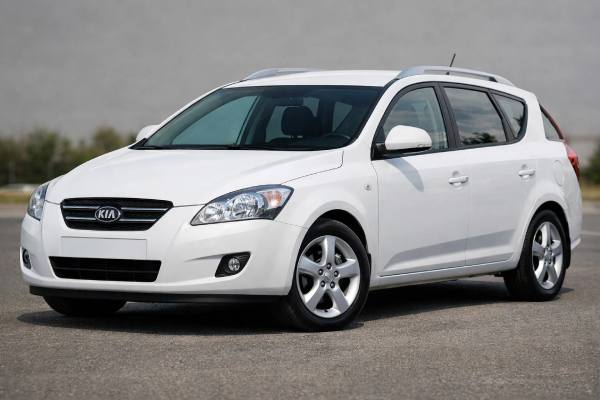
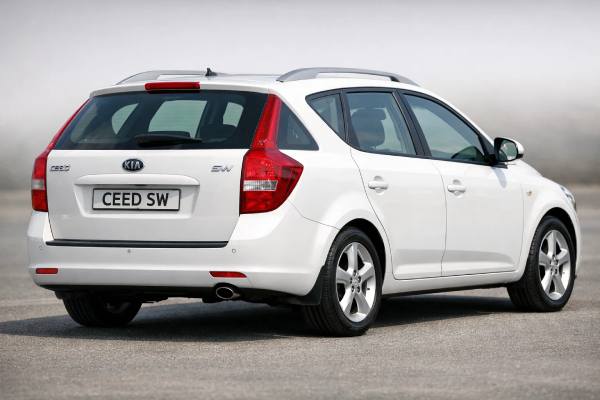
The 2007–2009 Kia Cee’d SW (ED) with the 1.6 CRDi 115 is a practical European estate built around a strong value proposition: generous cargo space, sensible running costs, and a diesel powertrain that suits high-mileage use. The D4FB common-rail engine pairs modest peak power with a useful mid-range torque band, making it well matched to motorway cruising and loaded family duties.
As with many diesels of this era, ownership quality depends heavily on maintenance habits. Short trips, skipped oil services, and ignored intake and EGR hygiene can turn a normally durable drivetrain into an expensive project. Treated properly, the Cee’d SW can be a dependable long-term wagon with predictable wear points, straightforward servicing access, and a parts ecosystem shared with related Hyundai models.
What to Know
- Strong everyday torque makes it feel more flexible than the 115 hp figure suggests, especially with a manual gearbox.
- Big, square boot and useful rear-seat fold make it a genuinely practical estate for families and trade-style use.
- Generally affordable parts and simple chassis layout keep routine repairs approachable.
- Caveat: diesel emissions hardware (EGR, intake soot, and DPF where fitted) punishes repeated short journeys.
- Plan on engine oil and filter service about every 20,000 km or 12 months (whichever comes first), adjusted for usage and oil spec.
Quick navigation
- Kia Cee’d SW ED diesel breakdown
- Kia Cee’d SW ED 1.6 CRDi specs
- Kia Cee’d SW ED trims and safety
- Reliability issues and service actions
- Maintenance plan and buying tips
- Real-world driving and economy
- Rivals and alternatives
Kia Cee’d SW ED diesel breakdown
In the ED generation, the Cee’d SW (Sportswagon) is the “do-it-all” body style: longer roofline, a deeper load bay, and a rear suspension tuned to carry weight without feeling loose. The 1.6 CRDi 115 (D4FB) sits in the sweet spot for many owners because it offers enough shove for motorway work without the fuel and tax penalties that sometimes come with larger diesels.
This engine is a turbocharged, intercooled common-rail diesel designed around mid-range torque. On the road, that matters more than peak horsepower. The Cee’d SW pulls cleanly from low revs in higher gears, so it’s less tiring in mixed driving than you might expect from a 115 hp badge. With a manual gearbox, it’s easy to keep the engine in its torque band for steady overtakes and hill work, even when the boot is full.
The wagon body is the other half of the ownership story. It’s not just “more liters on paper” — the cargo area is tall and usable, with a wide opening and sensible seat-fold geometry. That makes it good for strollers, sports gear, airport runs, and DIY store trips. If you choose a trim with roof rails and a proper spare solution, it’s also well suited to longer trips in places where roadside support may be limited.
Where this Cee’d SW rewards planning is usage pattern. The D4FB’s strengths show up at stable temperatures and longer runs. If your weekly routine is mostly short errands, the diesel may never fully heat-soak, and soot handling becomes a constant background issue. If you commute, travel between cities, or regularly do 30–60 km stretches, the package tends to feel “in its element.”
Bottom line: as a compact estate, the Cee’d SW ED 1.6 CRDi 115 is best viewed as a high-mileage tool with family practicality. Buy it for torque, boot space, and steady economy — and commit to correct fluids, warm-up habits, and periodic diesel-specific cleaning.
Kia Cee’d SW ED 1.6 CRDi specs
Below are practical, ownership-relevant specifications for the 2007–2009 Cee’d SW (ED) with the D4FB 1.6 CRDi 115. Exact figures can vary slightly by market, emissions equipment (notably DPF fitment), wheel package, and trim.
Powertrain and efficiency
| Item | Specification |
|---|---|
| Code | D4FB |
| Engine layout and cylinders | Inline-4, transverse, DOHC, 4 valves/cyl |
| Bore × stroke | 77.2 × 84.5 mm (3.04 × 3.33 in) |
| Displacement | 1.6 L (1582 cc) |
| Induction | Turbocharged (VGT) with intercooler |
| Fuel system | Common-rail direct injection |
| Compression ratio | ~17.3:1 |
| Max power | 115 hp (85 kW) @ ~4000 rpm |
| Max torque | 255 Nm (188 lb-ft) @ ~1900–2750 rpm |
| Timing drive | Chain |
| Rated efficiency (typical) | ~4.9–5.5 L/100 km (48–57 mpg US / 51–58 mpg UK) |
| Real-world highway @ 120 km/h | ~5.8–6.3 L/100 km (37–41 mpg US / 45–49 mpg UK) |
Transmission and driveline
| Item | Specification |
|---|---|
| Transmission | 5-speed manual (most common; verify by VIN) |
| Drive type | FWD |
| Differential | Open |
Chassis and dimensions
| Item | Specification |
|---|---|
| Suspension (front/rear) | MacPherson strut / multi-link (typical for SW) |
| Steering | Rack-and-pinion (assist varies by market) |
| Brakes | 4-wheel discs on many trims (sizes vary by package) |
| Popular tyre size | 195/65 R15 or 205/55 R16 (varies by trim) |
| Length / width / height | ~4470 / 1790 / 1495 mm (176.0 / 70.5 / 58.9 in) |
| Wheelbase | ~2650 mm (104.3 in) |
| Turning circle (kerb-to-kerb) | ~10.5–10.9 m (34.4–35.8 ft) |
| Kerb weight | ~1420–1500 kg (3130–3300 lb) |
| Fuel tank | ~53 L (14.0 US gal / 11.7 UK gal) |
| Cargo volume | ~534 L seats up / ~1664 L seats down (VDA method on many listings) |
Performance and capability
| Item | Specification |
|---|---|
| 0–100 km/h (0–62 mph) | ~11.5–12.0 s |
| Top speed | ~188 km/h (117 mph) |
| Towing capacity | Market-dependent; commonly ~1200–1500 kg braked (verify) |
| Payload | Trim- and tyre-dependent; check door-jamb plate |
Fluids and service capacities (decision-grade)
| Fluid | Typical spec |
|---|---|
| Engine oil | 5W-30 meeting the correct ACEA category for your emissions setup |
| Engine oil capacity | ~5.3 L (5.6 US qt) |
| Coolant | Long-life ethylene glycol mix (often 50/50); capacity varies by radiator and heater core |
| A/C refrigerant | Vehicle-specific label under bonnet (varies) |
Safety and driver assistance (typical for era)
| Item | Typical equipment |
|---|---|
| Crash ratings | Strong Euro NCAP result for the period and test protocol |
| Airbags | Usually front, side, and curtain (trim-dependent by market) |
| Stability systems | ABS and ESC common on many trims; confirm by VIN/option list |
| ADAS | Not a modern ADAS car; expect minimal automation beyond basic stability control |
Kia Cee’d SW ED trims and safety
Trim names vary widely across Europe (and even within the same country over time), so it’s more reliable to shop by features and identifiers than by badge. On the 2007–2009 Cee’d SW diesel, the functional differences you’ll most often see are wheel size and tyre package, climate control type, audio and infotainment tier, and whether stability control and side-curtain airbags are present as standard.
Trims and options that matter in real ownership
Key items worth prioritizing on a used example:
- ESC (stability control): Some early cars offered it as standard only on higher grades. On a diesel estate that may see winter roads and heavy loads, ESC is one of the most meaningful safety options.
- Side and curtain airbags: Many Cee’d models were well equipped for their time, but don’t assume every market delivered the same airbag count.
- Wheel size choices: Larger wheels can sharpen steering response but typically increase tyre costs and reduce ride comfort. For mixed roads, 15–16 inch wheels with a sensible sidewall often feel best.
- Heated mirrors and seats: Small comfort features that make winter use noticeably easier, and they tend to be reliable.
- Roof rails and luggage solutions: The SW body invites roof use; factory rails are usually the cleanest setup for bikes and boxes.
Quick ways to identify equipment:
- ESC typically reveals itself via a dashboard button (or an “ESC” indicator at key-on) and the presence of wheel-speed and yaw sensor hardware.
- Curtain airbags usually correspond to “SRS” tags along the A- or B-pillar trim.
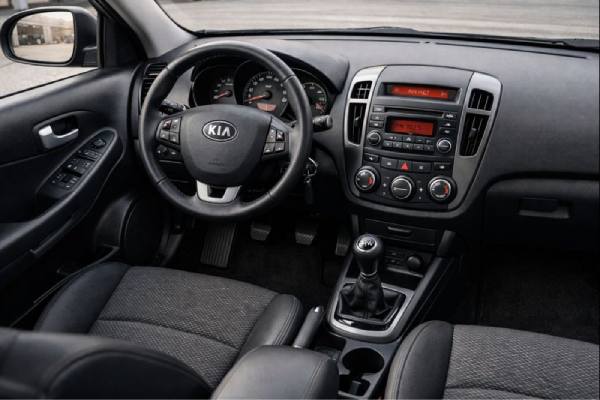
- Climate control: manual systems use rotary knobs; automatic climate often has a digital temperature display.
Safety ratings and what they mean today
The Cee’d earned a strong crash-test reputation in its era, which helped build Kia’s credibility in Europe. Still, it’s important to interpret that correctly: a top rating in a 2007-style protocol does not mean it matches the crash avoidance and pedestrian protection expectations of a modern 2020s car. Structure and restraint design can be excellent, while active safety features remain basic.
Safety systems you should confirm on a used car
- ABS operation: Look for a normal self-check at ignition and confirm no warning lamps remain on after start.
- ESC function: If fitted, confirm the system can be toggled and that warning lights behave normally.
- Seatbelt pretensioners and airbags: Any SRS light is a “stop and diagnose” issue, not a cosmetic annoyance.
- Child-seat readiness: ISOFIX/Top Tether availability can vary; physically verify the anchor points in the rear seats.
If you’re buying for family duty, prioritize a car with ESC, curtain airbags, and a clean SRS history over one with nicer wheels or cosmetic upgrades.
Reliability issues and service actions
The D4FB 1.6 CRDi is often a long-lived engine when it’s serviced on time and driven in a way that allows proper warm-up. Most “horror stories” trace back to oil neglect, chronic short-trip use, or running the wrong oil spec for the car’s emissions hardware. Think of reliability here as a triangle: correct oil, clean air and exhaust paths, and healthy fuel delivery.
Common issues (and how they present)
Common, low-to-medium cost
- EGR and intake soot buildup: Symptoms include sluggish response, inconsistent idle, smoke under load, or recurring fault codes. Remedy is inspection, cleaning, and making sure the engine regularly reaches full temperature.
- Boost leaks from hoses and clamps: A split intercooler hose can feel like turbo failure. Symptoms are whistling, oily mist near hoses, and sudden loss of power. Fix is usually hose replacement and clamp tightening.
- Glow plugs and relay wear: Cold starts become rough or slow, with a warning light on some cars. Replacement is routine, but seized glow plugs can raise labor cost.
Occasional, medium cost
- Injector sealing problems: A leaking injector seal can cause chuffing sounds, diesel smell, and soot buildup around the injector area. Catch it early to avoid hard carbon that complicates removal.
- Dual-mass flywheel (DMF) and clutch wear: Rattling at idle, vibration on take-up, or shuddering under load points to DMF/clutch aging. City use and aggressive launches accelerate it.
- Turbo actuator or variable vane sticking: Hesitation, limp mode under load, or inconsistent boost can appear, especially if the car has lived a low-RPM, short-trip life.
Less common but higher cost
- Diesel particulate filter issues (where fitted): Frequent regeneration, higher fuel use, and warning lights appear when the car can’t complete regens. Best prevention is periodic longer drives at steady load and correct low-ash oil when required.
- High-pressure fuel system sensitivity: Poor fuel quality or water contamination can damage expensive components. A history of regular fuel filter changes is valuable evidence.
Chassis and body aging points
- Suspension bushings and drop links: Typical wear items that show up as clunks over bumps or vague steering.
- Wheel bearings: Humming that rises with speed, sometimes mistaken for tyre noise.
- Corrosion hotspots: Check rear arches, underbody seams, subframe mounting points, and brake lines, especially on cars from salted-road regions.
Service actions, updates, and recalls
Because campaigns vary by VIN, market, and production period, treat recall status as a required check. Ask for dealer records and run an official VIN inquiry. If the seller cannot document completion, plan the first dealer visit as part of your purchase process.
Pre-purchase requests that reduce risk:
- Full service history with dates and mileage.
- Proof of correct oil spec and interval discipline.
- Evidence of recent fuel filter service.
- Scan for stored codes and confirm all warning lights behave normally.
Maintenance plan and buying tips
A good maintenance plan for the Cee’d SW 1.6 CRDi is less about “exotic” procedures and more about doing the basics on time — and doing diesel-specific basics consistently.
Practical maintenance schedule (distance/time)
Adjust intervals to usage. Heavy city use, short trips, and towing justify shorter intervals.
- Engine oil and filter: about every 20,000 km or 12 months, and sooner for severe use. Use the correct ACEA category for your emissions setup and climate-appropriate viscosity (commonly 5W-30).
- Air filter: inspect every 15,000 km; replace around 30,000 km (sooner in dusty areas).
- Cabin filter: every 15,000–20,000 km or annually (helps HVAC performance).
- Fuel filter: every 30,000–40,000 km (a major longevity item for common-rail systems).
- Coolant: typically every 5 years or 100,000 km, then at a shorter interval thereafter depending on coolant type.
- Brake fluid: every 2 years regardless of mileage.
- Brake pads and rotors: inspect at every seasonal tyre change or at least twice a year.
- Manual gearbox oil: often “lifetime” on paper, but a refresh around 120,000–150,000 km can improve shift quality and longevity.
- Timing chain: no routine replacement interval; inspect for rattle at cold start, persistent noise, and timing-related fault codes. Replace only if out of spec or symptomatic.
- Serpentine belt and tensioner: inspect annually; replace at signs of cracking, chirping, or tensioner wobble.
- DPF-equipped cars: ensure regular long drives to allow regeneration; don’t ignore rising oil level (possible fuel dilution during repeated regen attempts).
Fluids, capacities, and decision-grade notes
- Engine oil capacity: roughly 5.3 L with filter.
- Oil choice: match the car’s needs (DPF vs non-DPF) rather than picking oil purely by viscosity.
- Coolant and brake fluid: use correct standards; mixing types is a common mistake on older cars.
Essential torque values (verify by VIN/service manual)
Use these as planning numbers, not as a substitute for official documentation:
- Wheel nuts: ~88–108 Nm (65–80 lb-ft)
- Engine oil drain plug: ~35–45 Nm (26–33 lb-ft)
Buyer’s guide: what to inspect
- Cold start: should be quick with minimal smoke after the first seconds.
- Idle: stable, no hunting; listen for DMF rattle and injector “chuff.”
- Test drive: strong mid-range pull without limp mode; no boost surging.
- Underbody: look for rust at seams, brake lines, and rear suspension mounts.
- Paperwork: confirm oil services, fuel filter history, and recall status.
Durability outlook: buy a cared-for example and you’ll typically see predictable wear items, not constant surprises. Buy a neglected short-trip diesel and you may inherit a backlog of emissions and fuel-system work.
Real-world driving and economy
The Cee’d SW 1.6 CRDi 115 is not a fast estate by modern standards, but it’s an effective one. The powertrain’s character is built around torque delivery in everyday rev ranges, which is exactly where a wagon spends most of its life. In normal traffic, it feels calm and capable rather than quick.
Ride, handling, and NVH
For an older compact estate, the chassis balance is generally confidence-inspiring. The SW body adds a little mass over the rear axle, which often helps settled motorway tracking. On smaller wheels, ride comfort is typically better than you’d expect from a fully loaded family wagon, and the suspension can handle imperfect roads without constant harsh impacts.
Noise, vibration, and harshness (NVH) follows a typical diesel pattern:
- At idle and low speed, you’ll hear the diesel note and feel some vibration through the pedals.
- At steady cruise, the engine relaxes and the car becomes noticeably quieter.
- Tyre noise becomes the main soundtrack on coarse asphalt, especially with worn or budget tyres.
Powertrain behavior
Throttle response is strongest once boost arrives; below that, the car can feel slightly sleepy if you ask for sudden acceleration in a high gear. The fix is simple: downshift earlier than you would in a gasoline model and keep the engine in the torque band. The 5-speed manual suits this approach well, and once rolling, the engine pulls consistently.
If your car is DPF-equipped, be aware of regeneration behavior:
- Regens can raise idle speed, increase cooling fan activity, and nudge fuel consumption upward for a period.
- Frequent interrupted regens are a warning sign that the usage pattern doesn’t suit the car.
Real-world economy
Owner expectations are usually met when the car is used as intended:
- City-only: often ~6.5–7.8 L/100 km (30–36 mpg US / 36–43 mpg UK), depending on traffic and temperature.
- Motorway 100–120 km/h: commonly ~5.6–6.3 L/100 km (37–42 mpg US / 45–50 mpg UK).
- Mixed driving: often ~5.8–6.9 L/100 km (34–41 mpg US / 41–49 mpg UK).
Cold weather matters. Diesel warm-up takes longer, and cabin heat demand can raise consumption. Winter tyres and short trips can easily add 0.5–1.5 L/100 km to your usual numbers.
Load and towing notes
With passengers and luggage, the Cee’d SW stays composed, but plan for longer passing distances. If you tow (where permitted and rated), keep up with oil discipline and cooling system condition. Expect a noticeable consumption penalty under load, often 15–30% depending on speed and terrain.
Rivals and alternatives
The Cee’d SW 1.6 CRDi 115 competes in a crowded late-2000s estate field. Its best argument is a balanced “total cost of use” story: solid practicality, good safety reputation for the time, and manageable repair costs. Still, rivals can beat it in specific areas, so it helps to match the car to your priorities.
Volkswagen Golf Variant (TDI)
Why choose it: often feels more refined inside, with strong motorway manners and a wide specialist network.
Why not: parts and labor can cost more, and some TDI variants have their own emissions and injector-era pitfalls.
Verdict: better if you prioritize cabin feel and brand ecosystem and you accept potentially higher repair pricing.
Ford Focus Estate (TDCi)
Why choose it: sharp steering and handling, strong chassis tuning, and good parts availability.
Why not: some versions can feel noisier and more “fleet-grade” in materials, and diesel emissions hardware still demands correct use.
Verdict: a great choice for drivers who care about road feel more than interior calm.
Opel/Vauxhall Astra H Caravan (CDTi)
Why choose it: often good value on the used market, comfortable seats, and straightforward practicality.
Why not: age-related electrical and EGR-type issues can be common depending on engine and prior maintenance.
Verdict: can be a bargain if you buy carefully and budget for typical diesel cleaning and suspension wear.
Renault Mégane Grandtour (dCi)
Why choose it: efficient diesel options and comfortable ride; often well packaged for family use.
Why not: some years can be more sensitive to electrical and sensor issues, and resale values vary widely by region.
Verdict: worth considering if you find a well-documented example and prefer comfort-first tuning.
Where the Kia wins
- Practical boot and usable cabin packaging without feeling oversized.
- Honest torque-based performance that suits long-distance driving.
- Often predictable maintenance economics when service history is strong.
Where it can lose
- Not a modern safety-tech car; rivals from later generations may add more active safety.
- Diesel suitability is usage-dependent; city-only life can punish any of these cars, including the Kia.
If you want a compact estate primarily for longer trips and you can verify careful maintenance, the Cee’d SW 1.6 CRDi 115 remains a sensible, owner-friendly option in this era.
References
- Kia Recalls | Kia Europe 2026 (Recall Lookup)
- Engine Oil Grades and Capacities 2023 (Service Document)
- Service Intervals V25.1 2025 (Service Document)
- Kia cee’d wins 5-Star Euro NCAP safety rating – Kia Slovakia s.r.o. 2007 (Safety Rating)
- euroncap_kia_ceed_2007_5stars.pdf 2007 (Safety Rating)
Disclaimer
This article is for informational purposes only and is not a substitute for professional inspection, diagnosis, or repair. Specifications, torque values, service intervals, and procedures can vary by VIN, market, production date, and equipment; always verify details using official Kia service information for your exact vehicle.
If this guide helped, consider sharing it on Facebook, X, or your favorite forum to support our work.