

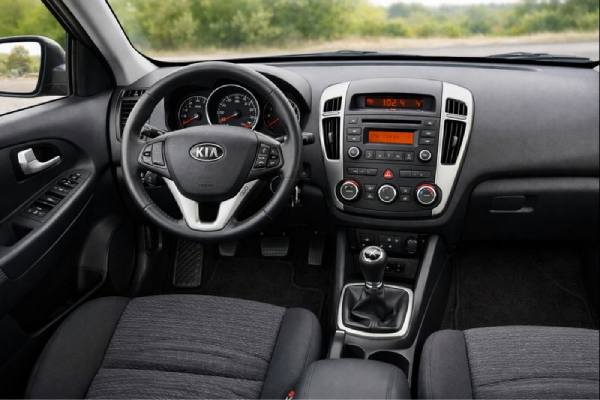
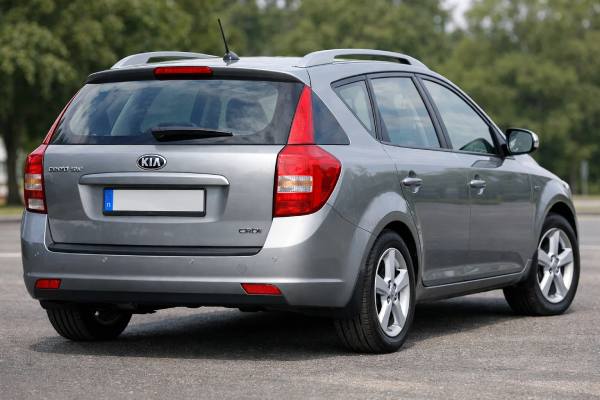
The facelift Kia Cee’d SW (ED) with the 2.0-litre G4GC is the “big petrol” option in the range—simple by modern standards, strong enough for motorway work, and practical in a way many newer wagons no longer match. You get a naturally aspirated, multi-point injected engine (no turbo, no direct injection) with predictable response and fewer high-cost systems to age out. The trade-off is straightforward: it will not sip fuel like the smaller 1.4/1.6 engines, and it rewards owners who stay on top of timing-belt planning and cooling-system health.
As an ownership proposition, this Cee’d SW suits drivers who want a dependable family estate with honest mechanicals, solid ergonomics, and easy servicing. Buy on condition and history, not mileage alone—because the right maintenance matters more than the odometer on this generation.
What to Know
- Strong, simple 2.0 MPI powertrain with predictable throttle response and fewer “modern” failure points than turbo or DI engines
- Big, usable estate cargo area and stable motorway manners for family and long-trip duty
- Generally affordable parts and straightforward servicing compared with newer compact wagons
- Plan timing-belt service by mileage and time; skipping it is the fastest route to major engine damage
- Typical oil service cadence: every 12 months or 12,500–15,000 km (7,500 km for heavy city use or short trips)
What’s inside
- Kia Cee’d SW ED facelift profile
- Kia Cee’d SW 2.0 G4GC specs tables
- Kia Cee’d SW equipment and safety setup
- Reliability, faults, recalls, and TSBs
- Maintenance plan and buyer’s checklist
- Driving character and real efficiency
- Rivals: how it stacks up
Kia Cee’d SW ED facelift profile
The 2009–2012 facelift Cee’d SW sits in a sweet spot for buyers who want a compact estate without modern complexity. The ED platform is conventional in the best ways: front-wheel drive, MacPherson struts up front, a multi-link rear suspension, and a body that was engineered for European roads. In the SW (estate) form, the longer roofline adds real utility without turning the car into a soft, floaty “cargo box.” It still tracks straight at speed, and the rear suspension is good at keeping the car composed when loaded.
The G4GC 2.0 is the key differentiator. It’s a naturally aspirated DOHC engine with multi-point fuel injection (MPI) and variable valve timing (CVVT). That combination matters: MPI engines typically avoid direct-injection carbon buildup issues, and there’s no turbocharger to overheat, coke up, or add expensive boost-control components. Power delivery is linear—no sudden surge—so it’s easy to drive smoothly and easy to modulate on wet or snowy roads with the right tyres.
Where the 2.0 model asks more of you is planning. This engine uses a timing belt, so maintenance is not “drive it until it rattles.” Treat the belt as a scheduled wear item with both mileage and time limits. Cooling-system condition also matters because an older aluminium-head engine does not tolerate overheating. Keep the coolant fresh, confirm the radiator fan and thermostat behave correctly, and don’t ignore slow leaks.
As a used purchase, the 2.0 SW tends to be bought by drivers who do longer trips, which can be good (less short-trip sludge, fewer DPF issues because it’s petrol), but it can mean higher motorway mileage and more wear on suspension and brakes. The best examples feel tight, stop straight, and idle cleanly without hunting. A slightly “busy” idle, vibration at rest, or clunks over potholes are usually fixable—just price them into the deal and avoid cars that show signs of chronic overheating or skipped timing-belt service.
Kia Cee’d SW 2.0 G4GC specs tables
Below are practical, owner-focused specifications for the facelift Cee’d SW (ED) with the 2.0 G4GC and 143 hp output. Values can vary by market, emissions calibration, and transmission choice, so treat these as baseline guidance and verify against your VIN plate and service documentation.
Powertrain and efficiency
| Item | Specification |
|---|---|
| Code | G4GC |
| Engine layout and cylinders | Inline-4 (I-4), DOHC, CVVT, 4 cylinders |
| Valves per cylinder | 4 |
| Bore × stroke | 82.0 × 93.5 mm (3.23 × 3.68 in) |
| Displacement | 2.0 L (1,975 cc) |
| Induction | Naturally aspirated (NA) |
| Fuel system | MPI (multi-point injection) |
| Compression ratio | 10.1:1 |
| Max power | 143 hp (105 kW) @ 6,000 rpm |
| Max torque | 186 Nm (137 lb-ft) @ 4,600 rpm |
| Timing drive | Belt |
| Rated efficiency (typical) | ~7.2–8.2 L/100 km (33–29 mpg US / 39–34 mpg UK) depending on transmission |
| Real-world highway @ 120 km/h | ~7.5–8.5 L/100 km (31–28 mpg US / 38–33 mpg UK) |
Transmission and driveline
| Item | Specification |
|---|---|
| Transmission (common) | 5-speed manual or 4-speed automatic (market-dependent) |
| Drive type | FWD |
| Differential | Open |
Chassis and dimensions (Cee’d SW baseline)
| Item | Specification |
|---|---|
| Suspension (front / rear) | MacPherson strut / multi-link |
| Steering | Electric or hydraulic assist depending on year/market; rack-and-pinion |
| Brakes | 4-wheel discs common; rear discs may vary by trim/market |
| Wheels and tyres (popular) | 195/65 R15, 205/55 R16, or 225/45 R17 (trim-dependent) |
| Ground clearance (typical) | ~145–152 mm (5.7–6.0 in) |
| Length / width / height | ~4,470 / 1,790 / ~1,490–1,525 mm (176.0 / 70.5 / 58.7–60.0 in) |
| Wheelbase | 2,650 mm (104.3 in) |
| Turning circle (kerb-to-kerb) | ~10.3 m (33.8 ft) |
| Kerb weight (typical) | ~1,350–1,480 kg (2,976–3,263 lb) |
| GVWR (typical) | ~1,840–1,920 kg (4,056–4,233 lb) |
| Fuel tank | 53 L (14.0 US gal / 11.7 UK gal) |
| Cargo volume | ~534 L seats up / ~1,664 L seats down (VDA method, commonly quoted) |
Performance and capability (typical)
| Item | Specification |
|---|---|
| 0–100 km/h (0–62 mph) | ~9.5–10.5 s (manual usually quicker than automatic) |
| Top speed | ~200–205 km/h (124–127 mph) |
| Braking distance 100–0 km/h | Typically ~38–41 m (varies strongly by tyres and brake condition) |
| Towing capacity | Often ~1,200–1,500 kg braked / ~550 kg unbraked (verify by VIN plate) |
| Payload | Commonly ~450–550 kg (trim-dependent) |
Fluids and service capacities (common guidance)
| Item | Specification |
|---|---|
| Engine oil | ACEA A3/B4 typically; 5W-30 or 5W-40 in most climates |
| Engine oil capacity | ~4.0 L (about 4.2 US qt) with filter (verify by sump and filter type) |
| Coolant | Ethylene glycol long-life coolant; 50/50 mix typical |
| Coolant capacity | ~6.5–7.0 L (about 6.9–7.4 US qt) (verify by radiator and heater spec) |
| Transmission fluid (manual) | MTF per Kia spec; quantity varies by gearbox |
| ATF (automatic) | ATF per Kia spec; quantity varies by service method |
| A/C refrigerant | R-134a; charge quantity varies—check under-hood label |
| Key torque specs | Wheel bolts commonly ~90–110 Nm (66–81 lb-ft) (confirm for your wheel type) |
Safety and driver assistance (period-correct)
| Item | Notes |
|---|---|
| Crash ratings | Euro NCAP pre-2009 style ratings apply; Cee’d achieved top-tier adult protection for its era |
| IIHS | Not typically applicable for EU-market model lineup |
| ADAS | No modern AEB/ACC/LKA on most trims; expect ABS and ESC/ESP depending on trim/market |
Kia Cee’d SW equipment and safety setup
Trim structure varies by country, but most facelift Cee’d SW lineups follow a familiar ladder: a value-focused base grade, a mid-grade with comfort features, and a higher grade that bundles wheels, lighting, and infotainment. For the 2.0 petrol specifically, availability can be more limited than the 1.4/1.6, so you’ll often see the engine paired with mid-to-upper trims rather than true “base spec.”
Trims and options that matter in real life
- Transmission choice: The 5-speed manual is the more engaging and typically more efficient option. The 4-speed automatic is smoother in traffic but can feel busy at motorway speeds and is less forgiving of neglected fluid.
- Wheel and tyre packages: Moving from 15″ to 16″ or 17″ can sharpen turn-in but increases tyre cost and can make the ride more abrupt on broken pavement. On used cars, mismatched tyres are a red flag for corner-cutting.
- Climate and cabin comfort: Automatic climate control is common on higher trims; check that the A/C blows cold quickly and the blower doesn’t squeal on lower speeds (a common sign of a tired blower motor or resistor).
- Infotainment: Factory audio systems vary from simple head units to multi-speaker setups. Functionally, the biggest ownership issue is failed backlighting, sticky buttons, or intermittent steering-wheel controls rather than the audio itself.
Quick identifiers when shopping
- Badging: “2.0” or engine designation cues vary. In many markets the easiest tell is the equipment level paired with the engine, plus the driving feel (the 2.0 pulls more cleanly beyond 3,500 rpm).
- Under-hood label and VIN decoding: Use these to confirm engine code and emissions family. That matters for parts like oxygen sensors, catalytic converters, and some ignition components.
- Brake hardware: Some trims use different disc sizes. Measure or visually confirm before ordering parts.
Safety ratings and what they mean here
This generation Cee’d earned strong crash-test results for its period, and the facelift did not fundamentally change the core structure. However, remember that crash-test protocols evolved. A “good” result in the pre-2009 Euro NCAP era does not mean the car has today’s driver-assistance safety net. Think of it this way: the body and restraints are competent, but avoidance tech is mostly down to tyres, brakes, and driver skill.
Safety systems and child-seat practicality
- Airbags: Expect front airbags and typically side and curtain airbags on most European-market cars; verify presence via the A-pillar or seat tags and dashboard indicators.
- ABS and stability control: ABS is widespread. ESC/ESP may be standard or optional depending on market and trim—confirm with the dash warning lamp on ignition and a scan tool check.
- ISOFIX/LATCH: Rear ISOFIX anchors are common. Check that the plastic guides are intact and that the top tether points (if fitted) are not corroded or damaged.
- Headlights: Halogen reflector units are common; hazed lenses reduce night safety more than many owners realize. Restoring lenses or replacing tired bulbs is a high-value upgrade.
Reliability, faults, recalls, and TSBs
The facelift Cee’d SW with the G4GC is generally dependable when maintained, but it’s old enough now that age-related failures matter as much as design weaknesses. Use the guide below to separate “annoying but manageable” issues from problems that can threaten the engine or your budget.
Common (high prevalence)
- Timing belt age-out (high severity)
- Symptoms: No warning until it’s too late; sometimes belt noise, cracks on inspection, or an unknown service history.
- Likely cause: Belt and tensioner beyond time or mileage limits.
- Remedy: Replace belt kit (belt, tensioner, idlers) on schedule; consider water pump replacement at the same time if access overlaps.
- Ignition coil and plug wear (low to medium severity)
- Symptoms: Misfire under load, flashing MIL, rough idle, higher fuel use.
- Likely cause: Age and heat cycling; plugs overdue.
- Remedy: Replace plugs to the correct spec and gap; replace failing coil(s); check for oil in plug wells from a leaking valve cover gasket.
- Valve cover gasket seepage (low severity)
- Symptoms: Oil smell, damp edges around the cover, oil in plug wells.
- Likely cause: Hardened gasket over time.
- Remedy: Replace gasket; clean PCV system so crankcase pressure doesn’t push oil past seals.
- Front suspension wear (low to medium severity)
- Symptoms: Clunks over bumps, vague steering, uneven tyre wear.
- Likely cause: Control-arm bushes, drop links, or strut mounts.
- Remedy: Replace worn joints and bushes; align after suspension work.
Occasional (depends on use and climate)
- Cooling system weak points (medium to high severity if ignored)
- Symptoms: Temperature creep in traffic, coolant smell, low coolant level, heater performance changes.
- Likely cause: Thermostat aging, radiator cap weakness, small hose leaks, tired radiator fans or fan resistors.
- Remedy: Pressure test, fix leaks early, replace thermostat preventively if there’s any doubt, and keep coolant fresh.
- Catalyst and oxygen sensor aging (medium severity)
- Symptoms: MIL, sluggish response, failed emissions test, rattling catalyst substrate.
- Likely cause: Normal aging or repeated misfires that overheat the catalyst.
- Remedy: Fix misfires immediately; replace sensors/catalyst as needed with correct emissions spec parts.
- Automatic transmission shift quality (medium severity)
- Symptoms: Harsh shifts, delayed engagement, flare on upshift.
- Likely cause: Old ATF, adaptation issues, worn solenoids over high mileage.
- Remedy: Correct fluid service using the right ATF; diagnose with live data before condemning the gearbox.
Rare (but worth screening)
- Rust hotspots (severity varies by region)
- Symptoms: Bubbling paint at arches, tailgate edge corrosion, subframe rust scaling.
- Likely cause: Road salt exposure, poor repairs.
- Remedy: Inspect underside and seams thoroughly; avoid structural corrosion unless priced as a project.
Recalls, TSBs, and verification
Recalls and service campaigns are market-specific. The right approach is procedural:
- Run an official VIN recall check for your country.
- Ask for dealer printouts or service invoices showing campaign completion.
- Scan the car for stored fault codes—especially if the seller has recently cleared codes.
Even if the car feels fine on a test drive, campaign completion can affect airbags, seatbelt pretensioners, or other safety-critical items, so verification is more than paperwork—it’s risk management.
Maintenance plan and buyer’s checklist
A simple engine stays simple only if you keep it on a predictable service rhythm. The schedule below is practical for long life on the G4GC and for keeping the Cee’d SW tight and quiet as it ages.
Practical maintenance schedule (distance and time)
- Engine oil and filter: every 12 months or 12,500–15,000 km; use 7,500 km intervals for short trips, heavy traffic, or very cold climates.
- Air filter (engine): inspect every service; replace about 30,000 km (sooner in dusty areas).
- Cabin filter: every 15,000–30,000 km or yearly if you have allergies or city pollution.
- Spark plugs: commonly 60,000–90,000 km depending on plug type; replace earlier if misfires appear.
- Brake fluid: every 2 years, regardless of mileage.
- Coolant: follow the official coolant type and interval; if history is unclear, refresh it and then keep a consistent schedule.
- Manual gearbox oil: inspect for leaks; many owners refresh at 90,000–120,000 km for smoother shifting.
- Automatic transmission fluid: service proactively around 60,000–80,000 km if you want the best chance of long life.
- Timing belt system: inspect and replace strictly by mileage and time; replace the full kit (belt, tensioner, idlers). If the water pump is driven by or serviced with the belt access, replace it as preventative maintenance.
- Aux belt and pulleys: inspect every service; replace at the first sign of cracking, squeal, or pulley noise.
- 12 V battery: test yearly after the 4–5 year mark; replace preventively if winter starting weakens.
Fluids and parts: how to choose without overthinking
- Oil viscosity: 5W-30 is a sensible year-round choice for most European climates; 5W-40 can be appropriate for hotter use or higher mileage if consumption appears.
- Coolant: use a compatible long-life ethylene glycol coolant and keep the mix consistent (typically 50/50).
- Brakes: quality pads and fresh fluid often improve braking feel more than “sport” parts.
Buyer’s guide: inspection checklist
Body and corrosion
- Check rear arches, tailgate edges, door bottoms, and the underside seams.
- Look for mismatched paint and overspray around the rear quarters—estates often get minor loading dents repaired.
Engine and cooling
- Cold start should be clean and stable within seconds.
- Check for coolant smell, staining near hose joints, and evidence of repeated top-ups.
- Inspect for oil in spark plug wells and for dampness around the valve cover.
Driveline
- Manual: feel for clutch slip in a high-gear pull; check for gearbox whine.
- Automatic: ensure smooth engagement from Park/Reverse and consistent upshifts when warm.
Suspension and tyres
- Uneven wear hints at alignment issues or tired bushes.
- Listen for front-end clunks and rear suspension knocks over sharp bumps.
Electrics
- Confirm A/C performance, window regulators, central locking, and instrument illumination.
- A scan tool check is worth it; it’s the fastest way to detect hidden issues.
Long-term durability outlook
A well-maintained G4GC Cee’d SW can be a “keep it for years” car. The durability story is less about exotic failures and more about discipline: timing belt on schedule, cooling system healthy, and suspension refreshed when it starts to loosen. Do those, and the car typically rewards you with predictable running costs.
Driving character and real efficiency
The Cee’d SW’s driving personality is defined by balance rather than drama. With the 2.0 G4GC, you get enough power to feel relaxed on the motorway and enough torque to avoid constant downshifts on hills, especially compared with the smaller petrol engines.
Ride, handling, and NVH
- Ride: On 15″ or 16″ wheels the car usually rides with a mature, controlled feel. With 17″ wheels, sharp edges come through more and tyre choice becomes more important.
- Handling: The multi-link rear helps the estate stay composed mid-corner and when the boot is loaded. It’s not a hot hatch, but it’s confidence-inspiring on wet roundabouts when tyres are good.
- Steering: Assistance varies by year/market, but the overall character is light-to-medium effort. What matters most is condition: tired bushes and alignment can make the steering feel vague.
- NVH (noise, vibration, harshness): Expect some road noise at motorway speeds—older compact estates rarely isolate like modern premium wagons. Excess vibration at idle often points to aging engine mounts.
Powertrain character
- Throttle response: Linear and easy to meter; no turbo lag.
- Mid-range pull: Best above ~3,500 rpm; it’s happier revving than lugging.
- Manual gearbox: Typically the better match for the engine’s character; it lets you keep the engine in its sweet spot.
- Automatic gearbox: Comfortable in town, but the wide ratios and fewer gears can make it feel less energetic and less efficient at speed.
Real-world fuel consumption (what owners usually see)
Real consumption depends heavily on tyres, load, and speed, but typical patterns look like this:
- City: ~9.0–10.5 L/100 km (26–22 mpg US / 31–27 mpg UK)
- Highway (100–120 km/h): ~7.5–8.5 L/100 km (31–28 mpg US / 38–33 mpg UK)
- Mixed: ~8.0–9.0 L/100 km (29–26 mpg US / 35–31 mpg UK)
Cold weather and short trips can add 10–20% to consumption. If you see dramatically worse numbers, suspect dragging brakes, underinflated tyres, tired oxygen sensors, or a thermostat that’s stuck open.
Selective performance metrics that matter
- 0–100 km/h: brisk enough for safe merging when healthy.
- Passing power: adequate in 80–120 km/h passing if you downshift; the engine likes revs.
- Braking feel: strong when brakes are maintained; soft pedals often improve dramatically after brake-fluid refresh and proper bleeding.
Load carrying and towing
The SW body is genuinely useful: it carries bulky cargo without forcing you into an SUV footprint. When towing, the main rule is thermal management—don’t ignore coolant or ATF condition, and keep speeds realistic on long grades.
Rivals: how it stacks up
In the compact estate class, the facelift Cee’d SW 2.0 competes less on “latest tech” and more on sensible ownership. Here’s how it typically compares to the rivals you’ll cross-shop in the same budget.
Volkswagen Golf Variant (Mk5/Mk6 era)
- Where the VW wins: Cabin materials, some drivetrain sophistication, and often a broader range of gearboxes and engines.
- Where the Kia wins: Simpler petrol powertrain options and often lower parts pricing. A naturally aspirated MPI Kia can feel less risky than a neglected turbo VW at the same age.
- Buying tip: If you choose the VW, prioritize evidence of correct oil spec and thorough service history—especially on turbo petrol engines.
Ford Focus Estate (Mk2)
- Where the Ford wins: Steering feel and chassis sharpness; it often feels more “alive” on a twisty road.
- Where the Kia wins: Straightforward engine bay packaging and typically calmer ownership if you find a well-kept example.
- Buying tip: Check rear suspension bushes and corrosion patterns; condition varies widely by climate.
Opel/Vauxhall Astra Caravan (H era)
- Where the Astra wins: Often good seats and long-distance comfort; plenty on the used market.
- Where the Kia wins: The 2.0 MPI’s simplicity can be a long-term advantage, and the Cee’d SW packaging is very efficient.
- Buying tip: As with any older estate, suspension refresh costs can surprise—budget for it if the ride feels loose.
Peugeot 307 SW / Renault Mégane Estate (same era)
- Where they win: Comfort tuning and sometimes equipment value.
- Where the Kia wins: Less electronic “personality,” generally straightforward diagnostics, and a more conventional mechanical layout.
- Buying tip: Electrical gremlins can be the deciding factor on older French rivals—verify everything works, including A/C and central locking.
The Cee’d SW verdict in today’s used market
Choose the Cee’d SW 2.0 if you want:
- An estate that is genuinely practical without SUV running costs
- A petrol drivetrain that avoids turbo and direct-injection complexity
- Predictable maintenance that rewards planning
Skip it if you need:
- Modern driver assistance (AEB/ACC/lane support)
- Class-leading fuel economy
- A “premium” cabin feel above all else
If you buy a clean, rust-light example with documented timing-belt work and a healthy cooling system, this Cee’d SW remains one of the more rational compact estates of its generation.
References
- cee’d_Manual_car_LHD.pdf 2010 (Owner’s Manual)
- cee’d product Guide 2007 (Technical Specifications)
- Service Intervals 2016 (Maintenance Schedule)
- Kia cee’d wins 5-Star Euro NCAP safety rating 2007 (Safety Rating)
- Recalls 2026 (Recall Database)
Disclaimer
This article is for informational purposes only and is not a substitute for professional inspection, diagnosis, or repair. Specifications, torque values, service intervals, and procedures can vary by VIN, market, model year, and equipment, so always confirm details using official Kia documentation for your exact vehicle and follow approved service methods.
If you found this guide useful, please consider sharing it on Facebook, X (Twitter), or your favourite forum to help others find reliable ownership information.