
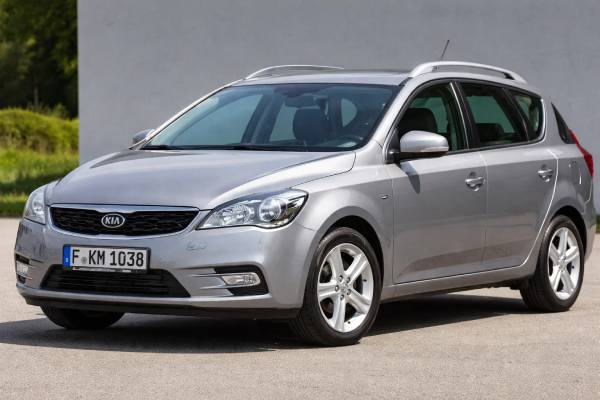
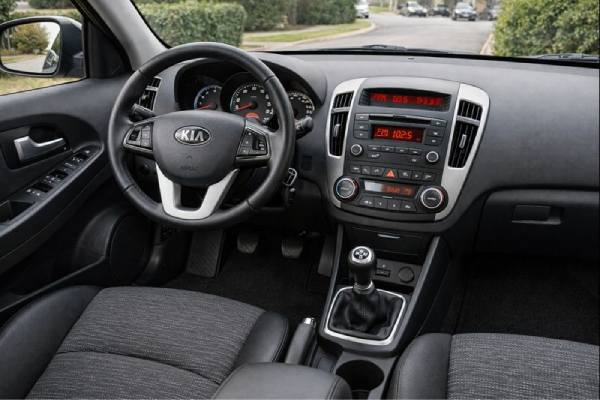
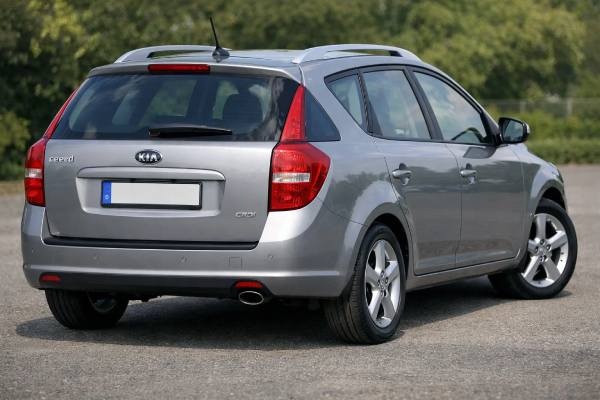
The facelift Kia Cee’d SW (ED) with the 1.6 CRDi D4FB in 90 hp tune is the “long-distance” choice in this generation: a practical wagon body, low fuel use when driven steadily, and a diesel that can cover big mileage if it is serviced like a diesel (not like a small petrol). This version is at its best on warm, mixed-to-highway use where the turbo, EGR (exhaust gas recirculation), and—if fitted—DPF (diesel particulate filter) stay clean and stable. Around town, it can still work well, but only if you plan for regular longer runs and keep up with filters and oil quality.
Ownership success usually comes down to three areas: clean fuel delivery (filters and injector sealing), healthy air management (MAF/EGR/intercooler hoses), and drivetrain condition (clutch and dual-mass flywheel on higher-mileage cars). Get those right and the Cee’d SW rewards with dependable daily usability and strong value.
Owner Snapshot
- Strong economy on steady motorway runs; 5–6 L/100 km at 120 km/h is realistic when healthy.
- Practical wagon packaging with a large, square cargo bay that stays useful even with the rear seats up.
- Diesel torque makes it relaxed with passengers and luggage, especially in higher gears.
- Short-trip use accelerates EGR/DPF soot loading and can trigger limp mode if ignored.
- Plan oil and filter service about every 10,000–15,000 km or 12 months (whichever comes first), depending on duty cycle.
Section overview
- Kia Cee’d SW ED diesel deep dive
- Kia Cee’d SW ED D4FB spec sheet
- Kia Cee’d SW ED trims and safety kit
- Common faults and service actions
- Maintenance plan and smart buying
- Driving feel and real-world economy
- How it stacks up against rivals
Kia Cee’d SW ED diesel deep dive
The facelifted Cee’d SW (ED) is a classic European C-segment wagon formula: simple, space-efficient, and built to do commuting and family duty without fuss. In 1.6 CRDi 90 hp form, it’s not a performance model—its appeal is low operating cost, long-range cruising, and a drivetrain that feels stronger than the horsepower number suggests once the turbo is on boost.
What the 90 hp D4FB is, in practice
This is a small-displacement common-rail turbodiesel designed around efficiency. It delivers its best work in the midrange, where you spend most of your time on typical roads. In healthy condition, it pulls cleanly from low rpm in higher gears, and it doesn’t need constant downshifts with a loaded wagon. The key is to drive it like a diesel: avoid lugging it at very low rpm under heavy throttle, but also don’t baby it so much that it never reaches operating temperature.
Why facelift years matter (2009–2012)
Facelift cars typically bring incremental improvements: updated trim and equipment mixes, more common ESC availability, and, depending on market, emissions changes (Euro 4 to Euro 5 calibrations; DPF fitment becomes more common). For buyers, that means you should treat “2009–2012” as a range with meaningful differences by VIN and country—especially for exhaust aftertreatment and gearbox pairing.
The wagon advantage
The SW body gives you a lower load lip than many small SUVs, a more stable feel at speed, and a cargo area that’s easy to pack efficiently. It also tends to wear better than you might expect: less “city abuse” than short-wheelbase hatchbacks, and often a higher share of motorway miles (which is good for this diesel).
Who this car suits best
- Drivers doing regular longer trips (commuter corridors, intercity driving).
- Owners who want diesel torque for a loaded cabin without jumping to a larger engine.
- People who value easy packing, roof bars, and an efficient family hauler.
Who should be cautious
If your use is mostly cold starts, short hops, and slow traffic, budget extra attention for EGR, intake soot, and DPF health (if equipped). The Cee’d SW can do it, but it needs maintenance discipline and occasional long drives to keep the emissions system happy.
Kia Cee’d SW ED D4FB spec sheet
Below are practical specifications for the facelift Kia Cee’d SW (ED) with the D4FB 1.6 CRDi in 90 hp tune. Exact figures can vary by market, emissions version (Euro 4/5), tyre size, and gearbox.
Powertrain and efficiency
| Item | Specification |
|---|---|
| Code | D4FB (1.6 CRDi) |
| Engine layout and cylinders | Inline-4 (I-4), DOHC, 16-valve (4 valves/cyl) |
| Bore × stroke | 77.2 × 84.5 mm (3.04 × 3.33 in) |
| Displacement | 1.6 L (1582 cc) |
| Induction | Turbocharged + intercooler |
| Fuel system | Common-rail direct injection |
| Compression ratio | ~17.0–17.3:1 (varies by version) |
| Max power | 90 hp (66 kW) @ ~4000 rpm |
| Max torque | ~235 Nm (173 lb-ft) @ ~1750–2500 rpm |
| Timing drive | Chain (inspect for noise/stretch symptoms rather than a fixed “belt interval”) |
| Rated efficiency (typical) | ~4.5–5.5 L/100 km (52–42 mpg US / 63–51 mpg UK) depending on spec cycle/market |
| Real-world highway @ 120 km/h | ~5.3–6.0 L/100 km (44–39 mpg US / 53–47 mpg UK) when healthy |
Transmission and driveline
| Item | Specification |
|---|---|
| Transmission | Typically 5- or 6-speed manual (market dependent) |
| Drive type | FWD |
| Differential | Open |
Chassis and dimensions
| Item | Specification |
|---|---|
| Suspension (front/rear) | MacPherson strut / multi-link (common on ED; verify by trim/market) |
| Steering | Electric or hydraulic assist depending on build; rack-and-pinion |
| Brakes | Front ventilated discs; rear discs or drums (trim dependent) |
| Wheels/tyres (common) | 195/65 R15 or 205/55 R16 (popular sizes vary by trim) |
| Ground clearance | ~140–155 mm (~5.5–6.1 in), market dependent |
| Length / width / height | ~4505 / 1790 / 1530 mm (177.4 / 70.5 / 60.2 in) |
| Wheelbase | ~2650 mm (104.3 in) |
| Turning circle (kerb-to-kerb) | ~10.6–11.0 m (34.8–36.1 ft) |
| Kerb weight | ~1300–1450 kg (2866–3197 lb) depending on equipment |
| GVWR | ~1850–1950 kg (4079–4300 lb), market dependent |
| Fuel tank | ~53 L (14.0 US gal / 11.7 UK gal) |
| Cargo volume | ~534 L (18.9 ft³) seats up / ~1664 L (58.8 ft³) seats down (method varies by market; often VDA) |
Performance and capability
| Item | Typical figure |
|---|---|
| 0–100 km/h (0–62 mph) | ~12.8–14.0 s |
| Top speed | ~170–175 km/h (106–109 mph) |
| Braking 100–0 km/h | Typically ~38–41 m (estimate; depends heavily on tyres and brake spec) |
| Towing capacity | ~1200–1400 kg (2646–3086 lb) braked / ~500–650 kg (1102–1433 lb) unbraked (market dependent) |
| Payload | ~450–550 kg (992–1213 lb) typical |
Fluids and service capacities (use VIN-specific documentation to confirm)
| Item | Typical specification |
|---|---|
| Engine oil | ACEA C3 (DPF-safe) 5W-30 is common; capacity ~5.3–5.7 L (5.6–6.0 US qt) with filter |
| Coolant | Long-life ethylene glycol mix (often 50/50); capacity ~6.0–6.5 L (6.3–6.9 US qt) |
| Manual gearbox oil | Usually GL-4 75W-85/75W-90; capacity ~1.8–2.2 L (1.9–2.3 US qt) |
| A/C refrigerant | R134a; charge often ~450–550 g (16–19 oz) |
| A/C compressor oil | PAG (type varies); often ~100–150 mL (3.4–5.1 fl oz) |
Key torque specs (typical decision-grade values; verify for your exact hardware)
- Wheel nuts: ~90–110 Nm (66–81 lb-ft)
- Engine oil drain plug: ~35–45 Nm (26–33 lb-ft)
- Front caliper bracket bolts: commonly ~75–95 Nm (55–70 lb-ft)
Kia Cee’d SW ED trims and safety kit
Trim names vary widely by country, but the pattern is consistent: a base comfort trim, a mid-grade with nicer wheels and convenience features, and a higher trim with climate control, upgraded audio, and additional safety or appearance options. When shopping, it’s more reliable to identify the car by wheel size, headlight type, climate controls, and steering wheel/audio controls than by the badge alone.
Trims and options that change how the car feels
Wheels and tyres
Going from 15-inch to 16- or 17-inch wheels sharpens turn-in but can make potholes and rough surfaces more noticeable. For a wagon that’s often loaded, a slightly taller tyre (15–16 inch setups) is usually the comfort-and-cost sweet spot.
Brakes and rear suspension details
Some trims use rear discs while others use drums; both can work fine, but rear discs tend to be easier to service consistently. Rear multi-link setups (where fitted) generally give better composure on broken roads and with a loaded boot.
Comfort equipment that matters long-term
- Automatic climate control vs manual A/C (repair costs differ).
- Heated seats and mirrors (great in winter; check they actually function).
- Parking sensors (useful on the SW; repairs can be simple, but wiring faults happen).
- Factory audio with steering-wheel controls (good for daily use; check for intermittent button operation).
Safety ratings and what they mean for this generation
The Cee’d (ED) earned a strong reputation for structural crash performance in its era. However, it’s important to separate structure from modern accident avoidance. The body and restraint systems can be very good, while the car lacks today’s driver-assistance tech.
Typical passive and active safety equipment
- Multiple airbags (commonly six: front, side, and curtains; verify by interior tags and dashboard marking).
- ABS with electronic brake-force distribution; brake assist may be present.
- ESC/ESP availability varies by year and market; later facelift cars tend to have it more often or as part of a package.
- ISOFIX/LATCH rear outboard anchors; check the plastic guides and anchor markings.
Driver assistance (ADAS): set expectations
This era generally predates widespread AEB (automatic emergency braking), lane-keep assist, and adaptive cruise control in mainstream wagons. If you see lane cameras or radar modules, treat them as the exception, not the rule. Your real safety upgrades come from:
- Choosing a car with working ESC (if available).
- Fitting quality tyres in the correct load rating.
- Keeping brakes and alignment in top condition.
After repairs, especially suspension work or steering components, confirm the car tracks straight and that ABS/ESC lights do a normal self-check and go out. If warning lights persist, don’t ignore them—diesel torque plus a loaded wagon can quickly overwhelm marginal tyres or brakes.
Common faults and service actions
A well-kept D4FB Cee’d SW can be very durable, but most problems follow predictable patterns. The smartest approach is to rank issues by how common they are and how expensive they become if ignored.
Common (expect to see on higher-mileage or city-driven cars)
EGR and intake soot buildup (medium cost, drivability impact)
- Symptoms: hesitation, uneven idle, reduced power, increased smoke, occasional limp mode.
- Likely cause: soot and oil vapor mix in the intake, sticking the EGR valve or clogging passages.
- Remedy: diagnostic scan, EGR clean/replace, intake cleaning where appropriate; verify boost control and MAF readings.
Boost leaks and intercooler hose issues (low-to-medium cost)
- Symptoms: whistle/hiss under load, weak acceleration, oily residue around hose joints, underboost codes.
- Cause: aging rubber hoses, clamps, intercooler end-tank seepage.
- Remedy: pressure test, replace hoses/clamps, clean and re-seat connections.
Clutch and dual-mass flywheel wear (high cost tier when due)
- Symptoms: judder on take-off, rattling at idle, slipping under load in higher gears, vibration through pedal.
- Cause: normal wear amplified by city driving or towing; diesel torque loads the system.
- Remedy: clutch kit and (often) DMF together; inspect starter ring gear area.
Occasional (depends on fuel quality, service history, and driving pattern)
Injector sealing and blow-by (medium cost, can become messy)
- Symptoms: diesel smell, chuffing sound, tar-like deposits around injectors, hard starting.
- Cause: injector washer failure or improper installation.
- Remedy: reseal with correct procedure, clean seat properly, torque to spec, and confirm leak-free operation.
DPF-related issues (where fitted) (medium-to-high)
- Symptoms: frequent regen, rising oil level (fuel dilution), limp mode, DPF warning light.
- Cause: repeated short trips, failed sensors, stuck thermostat preventing full warm-up.
- Remedy: fix root cause first (thermostat, sensors), then forced regen or professional cleaning; avoid deleting—legal and reliability risks.
Thermostat and cooling system aging (low-to-medium)
- Symptoms: slow warm-up, poor cabin heat, worse fuel economy, regen problems on DPF cars.
- Cause: thermostat stuck open or coolant leaks at housings.
- Remedy: replace thermostat/housing, refresh coolant, pressure test.
Rare but costly (worth screening before purchase)
Turbo control faults (high if turbo replacement is needed)
- Symptoms: persistent underboost/overboost codes, limp mode under load, smoke, abnormal noises.
- Cause: actuator issues, vacuum leaks, or turbo wear from poor oil change habits.
- Remedy: diagnose control system before condemning turbo; verify oil feed condition.
High-pressure fuel system damage (high)
- Symptoms: hard starting, metal debris in fuel filter, repeated injector faults.
- Cause: contaminated fuel or extended filter intervals.
- Remedy: professional assessment; can require pump/injector work—expensive.
Recalls, TSBs, and how to verify completion
Coverage differs by country. Your best practice is to:
- Run the VIN through an official recall lookup (and also check local Kia importer databases).
- Ask for dealer printouts or stamped service records showing recall completion.
- Confirm warning lights behave normally after key-on self-check.
Even if the car drives fine, unresolved campaigns can affect airbags, braking switches, or steering-related components—items you want confirmed, not guessed.
Maintenance plan and smart buying
Diesel wagons reward owners who treat maintenance as prevention, not repair. The schedule below is a practical baseline for the D4FB 90 hp Cee’d SW—then adjust based on your usage pattern.
Practical maintenance schedule (distance or time, whichever comes first)
| Item | Interval | Notes that matter |
|---|---|---|
| Engine oil and filter | 10,000–15,000 km or 12 months | Use ACEA C3 low-ash oil if DPF-equipped; shorter intervals for city driving |
| Air filter | 30,000 km or 2 years | Inspect sooner in dusty regions |
| Cabin filter | 15,000–20,000 km or 12 months | Keeps HVAC performance and reduces blower strain |
| Fuel filter | 30,000 km or 2 years | Critical for injector and pump life |
| Brake fluid | 2 years | Moisture lowers boiling point and increases corrosion risk |
| Coolant | 5 years (then every 3–5) | Confirm correct long-life spec and proper bleeding |
| Manual gearbox oil | 90,000–120,000 km | Helps synchros and bearings, especially on high-mileage cars |
| Serpentine belt and pulleys | Inspect every service; often 60,000–90,000 km | Noisy pulley bearings are common aging items |
| Glow plugs | Inspect around 100,000–160,000 km | Hard starts and rough cold idle are your clues |
| Timing chain | Inspect by symptoms | Listen for rattle on cold start; scan for timing correlation faults if suspected |
DPF-friendly driving habit (if equipped):
Plan a steady 20–30 minute drive at warm operating temperature every few weeks (or more often with heavy city use). The goal is stable exhaust heat so the system can do its job without repeated interrupted regens.
Fluids and “decision-grade” specs to ask about
When buying, you don’t need every torque value memorized—you need confidence that the previous owner used:
- Correct low-ash oil if DPF-equipped (and didn’t stretch intervals).
- Regular fuel filter changes.
- Quality coolant (not mixed randomly).
- Proper clutch/DMF replacement practices if already done (parts brand and receipts help).
Pre-purchase inspection checklist (diesel-focused)
- Cold start: should fire cleanly without extended cranking; excessive smoke or rough idle suggests injector or glow issues.
- Boost under load: test a full-throttle pull in 3rd/4th; listen for hiss and check for limp mode.
- Injector area: look for black deposits or diesel smell around injectors.
- Cooling behavior: warm-up should be reasonably quick; weak heat can point to thermostat issues.
- Clutch/DMF: feel for judder, pedal vibration, and idle rattle with clutch engaged/disengaged.
- Underbody: inspect sills, rear subframe areas, and brake lines for corrosion, especially in salted climates.
- Electrics: confirm all windows, locks, and instrument lights behave consistently; intermittent faults are time sinks.
Best-buy guidance (years, trims, and options)
For this generation, the “best” example is usually the one with:
- Documented service history, especially oil and fuel filter intervals.
- A healthy cooling system (thermostat done is a plus).
- ESC present and functioning (if available on that build).
- Sensible wheel size for your roads (15–16 inch often wins on durability).
Long-term outlook: if you keep the intake/boost system tight, protect the fuel system with clean filtration, and don’t postpone clutch/DMF symptoms, this wagon can stay economical well into high mileage.
Driving feel and real-world economy
The 90 hp D4FB Cee’d SW is tuned for usable torque and efficiency rather than speed. In daily driving, that usually feels “strong enough” as long as you work with the midrange and choose gears with intent.
Ride, handling, and NVH
Ride comfort:
On standard-size wheels, the Cee’d SW rides with a controlled, slightly firm European feel. With a load in the back, it tends to settle nicely and can actually feel more composed over rough patches. Higher-profile tyres help the car stay quiet and reduce sharp impacts through the cabin.
Handling balance:
This is a predictable front-wheel-drive wagon: safe, stable, and not eager to rotate unless pushed. The long roof and wagon rear don’t make it clumsy; it remains easy to place on the road, and body roll is reasonable for the class. The steering is generally light to medium, prioritizing easy commuting over detailed feedback.
Noise levels:
At city speeds, diesel clatter is the main signature—more noticeable when cold. At steady highway speeds, wind and tyre noise often become the dominant sounds. If cabin noise suddenly increases, suspect tyres (aggressive tread), worn suspension bushes, or a boost leak causing the engine to work harder.
Powertrain character and gearing
The turbo diesel delivers its “useful shove” in the low-to-mid rpm band. For smooth progress:
- Short-shift early in gentle driving, but don’t lug the engine at very low rpm under heavy throttle.
- On hills or with passengers, downshift sooner to keep the engine in the torque band rather than forcing it to climb on low rpm and high boost.
If your car has a taller top gear, it will feel calmer on the motorway and often more efficient. Shorter gearing makes it feel quicker around town but can raise rpm and noise at speed.
Real-world fuel economy (what owners typically see)
Economy depends heavily on temperature, tyre choice, and whether the car is asked to do short trips.
| Use case | Typical consumption | |
|---|---|---|
| City (warm engine, moderate traffic) | ~6.0–7.5 L/100 km (39–31 mpg US / 47–38 mpg UK) | |
| Highway 100–120 km/h | ~5.3–6.0 L/100 km (44–39 mpg US / 53–47 mpg UK) | |
| Mixed driving | ~5.5–6.8 L/100 km (43–35 mpg US / 51–42 mpg UK) | |
| Winter short trips | Often +10–25% higher | Slow warm-up and regen events can add fuel use |
Performance metrics that actually matter
You don’t buy this engine for 0–100 times, but it’s useful to know how it behaves:
- Merging and passing: best in 3rd/4th with the engine already in the midrange.
- Braking feel: typically solid if the rear brakes are kept clean and sliding pins aren’t seized.
- Turning circle: easy to manage in car parks, but the SW body benefits from parking sensors if fitted.
Bottom line: driven smoothly and maintained well, this Cee’d SW feels like a calm, efficient workhorse—especially for long trips where the diesel is happiest.
How it stacks up against rivals
In the used market, the facelift Cee’d SW 1.6 CRDi 90 hp competes with several well-known diesel wagons. The right comparison depends on what you value most: driving polish, parts costs, rust resistance, or long-distance comfort.
Versus Ford Focus Mk2 Wagon 1.6 TDCi
The Focus often wins on steering feel and chassis balance. The Kia counters with straightforward ownership and strong value-for-money equipment. Reliability can be similar, but both cars punish neglected oil and filter service. Choose the Focus for driving enjoyment; choose the Kia for practicality and often better purchase price for condition.
Versus VW Golf Variant Mk6 1.6 TDI
The Golf usually feels more refined inside and can hold resale value strongly. However, repair costs and parts pricing can be higher. If you want a “premium compact” experience, the Golf is attractive; if you want lower entry cost and simpler value, the Kia often makes more sense—especially when you find a well-documented service history.
Versus Opel/Vauxhall Astra H Caravan 1.7 CDTi
Astra wagons can be tough and practical, but some versions feel heavier and less efficient in everyday driving. The Kia’s cabin ergonomics and overall ease can be better, and the D4FB’s torque delivery is pleasant when healthy. The Astra is a good alternative if you find an exceptionally maintained example, but don’t assume it will be cheaper to keep.
Versus Hyundai i30 CW 1.6 CRDi
This is the closest cousin, often sharing powertrain DNA and many service needs. Differences come down to condition, trim level, and how the car was used. Shop the car, not the badge: pick the cleaner underbody, the better service evidence, and the tighter drivetrain.
Versus Renault Megane III Estate 1.5 dCi
The Renault can be very economical and comfortable, and many owners report excellent real-world consumption. The trade-off is that electrical quirks and component-specific issues can be more model-dependent. If you prioritize fuel economy above all, it’s worth a look; if you want a simpler “appliance wagon,” the Kia is often easier to live with.
The Kia’s core advantage in this group
The Cee’d SW ED diesel tends to offer:
- Strong practicality per euro spent.
- Simple, effective day-to-day usability.
- A drivetrain that holds up well when serviced thoughtfully.
The main drawback is that it’s an older-generation safety-and-tech package by modern standards—great structure for its time, but minimal driver assistance. If you’re comfortable driving without modern ADAS and you value long-range efficiency, it remains a smart used-wagon pick.
References
- Käyttöohjekirjat | Kia Finland 2026 (Owner’s Manual)
- Check for Recalls: Vehicle, Car Seat, Tire, Equipment | NHTSA 2026 (Recall Database)
- Kia cee’d wins 5-Star Euro NCAP safety rating – Kia Slovakia s.r.o. 2007 (Safety Rating)
- Adult occupant protection Child restraints Pedestrian protection Safety equipment 2007 (Safety Rating)
Disclaimer
- This article is for informational purposes only and is not a substitute for professional inspection, diagnosis, or repair.
- Specifications, torque values, service intervals, and procedures vary by VIN, market, and installed equipment. Always verify against your official Kia service documentation and the correct parts catalog for your vehicle.
If this guide helped, please consider sharing it on Facebook, X/Twitter, or your preferred forum/community to support our work.