
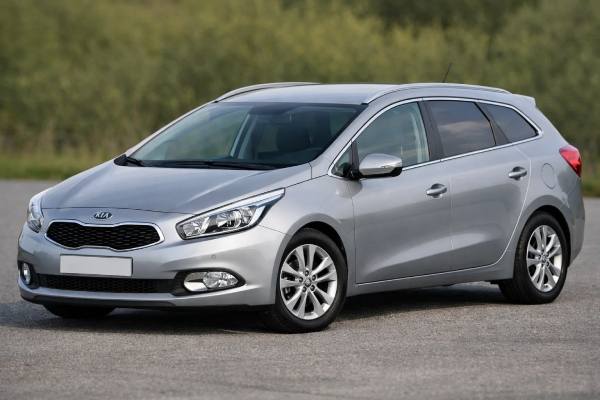
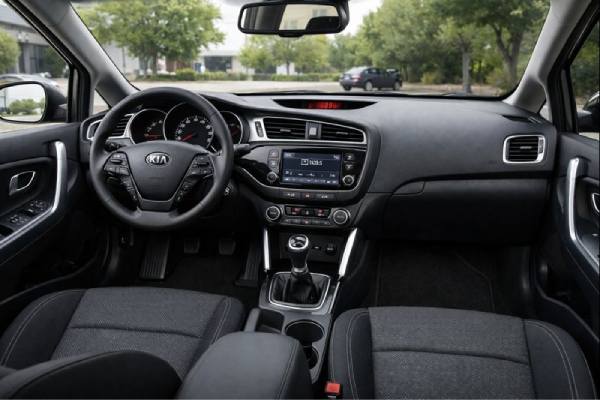
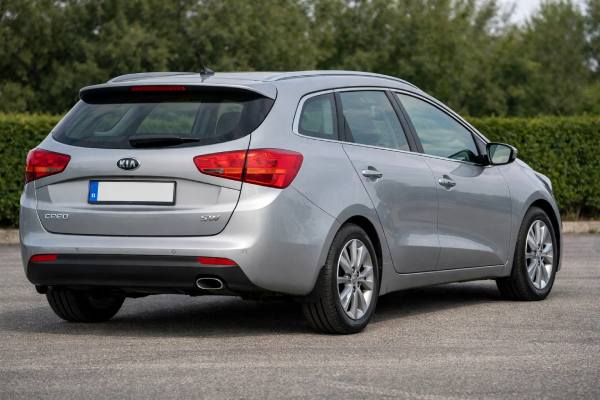
The 2012–2015 Kia Cee’d SW with the 1.6 CRDi (U-II) 110 hp diesel targets drivers who want wagon practicality without moving up to a larger, heavier estate. This engine’s strengths are its low-end torque, relaxed highway pace, and strong fuel economy when the car gets regular longer drives. Compared with the petrol variants, ownership feels more “systems-aware”: the turbocharger, EGR, and diesel particulate filter (DPF) reward the right driving pattern and maintenance choices. The SW body adds meaningful cargo space and a more settled ride at speed, but it also encourages loading—so suspension condition and brake servicing matter more than many buyers expect. If you keep a close eye on servicing history, use the correct low-ash oil, and confirm all recall and campaign work is complete, this Cee’d SW can be a durable, efficient family workhorse well into high mileage.
Top Highlights
- Strong mid-range pull makes it easy to drive in traffic and on grades, even when loaded.
- Wagon cargo space works well for strollers, tools, and long items without a roof box.
- Best economy comes from steady longer trips; frequent short runs can stress the DPF and EGR.
- Plan diesel-specific wear items over time (DMF/clutch, EGR/DPF cleaning) rather than treating it like a simple petrol.
- Use the correct low-ash oil and aim for oil and filter changes every 10,000–15,000 km (or 12 months) in mixed city use.
What’s inside
- Kia Cee’d SW diesel ownership brief
- Kia Cee’d SW 1.6 CRDi numbers
- Kia Cee’d SW trims and safety
- Diesel reliability hotspots
- Service routine and buyer checks
- Daily driving and efficiency
- Rivals worth cross-shopping
Kia Cee’d SW diesel ownership brief
Think of this Cee’d SW as a practical wagon wrapped around a modern small diesel. The U-II 1.6 CRDi (110 hp) is not a “hot” engine, but it is well matched to real-world driving: it builds useful torque early, holds speed on inclines without constant downshifts, and tends to feel calmer at 120–130 km/h than many small petrols. In day-to-day ownership, the big advantage is how little effort it takes to move a loaded car—especially if you choose the 6-speed manual, which suits the torque curve well.
Where owners get surprised is not performance, but operating pattern. Diesel emissions hardware is happiest when it reaches full operating temperature and stays there. If the car lives on short commutes, school runs, and stop-start traffic, soot loading rises and the DPF must regenerate more often. Regeneration itself is normal; the problem is repeated interrupted regens, which can dilute oil with fuel and accelerate EGR/DPF problems. That’s why this variant “likes” a weekly longer drive where the engine can run steadily for 20–30 minutes.
The SW body is a genuine usability upgrade. With the rear seats up, it carries bulky everyday items more easily than the hatch, and with seats folded it becomes a small van substitute. The trade-off is that wagons get used like wagons: child seats, dogs, bikes, and heavier cargo. That means rear suspension bushings, shocks, and rear brake servicing matter. If you’re shopping used, prioritize condition and documentation over low mileage. A diesel with excellent service history and consistent longer-trip use can be a better buy than a low-mileage “city-only” example.
Kia Cee’d SW 1.6 CRDi numbers
Below are practical, ownership-relevant specs for the 2012–2015 Cee’d SW (JD) with the 1.6 CRDi 110 hp diesel. Exact values can vary by market (emissions calibration, wheel size, gearing, and trim), so treat the numbers as typical ranges for this configuration.
Powertrain and efficiency (1.6 CRDi 110)
| Item | Typical spec |
|---|---|
| Engine family / code | U-II 1.6 CRDi (often listed as D4FB family) |
| Layout | Transverse front-mounted, inline-4 |
| Valvetrain | DOHC, 16 valves (4/cyl) |
| Displacement | 1.6 L (≈1582 cc) |
| Bore × stroke | ≈77.2 × 84.5 mm (3.04 × 3.33 in) |
| Induction | Turbocharged (VGT) + intercooler |
| Fuel system | Common-rail direct injection (diesel) |
| Compression ratio | Typically around 17:1 (market/version dependent) |
| Max power | 110 hp (81 kW) @ ~4,000 rpm (varies slightly by calibration) |
| Max torque | Typically 255–260 Nm (188–192 lb-ft) @ ~1,900–2,750 rpm |
| Timing drive | Chain (verify by engine number/service info for your VIN) |
| Emissions equipment | EGR + DPF (and oxidation catalyst; some markets add NOx hardware) |
| Rated combined economy | Often ≈4.0–4.7 L/100 km (≈50–59 mpg US / 60–70 mpg UK) depending on spec |
| Real-world highway @ 120 km/h | Commonly ≈5.0–5.8 L/100 km (≈41–47 mpg US / 49–56 mpg UK) |
Transmission and driveline
| Item | Typical spec |
|---|---|
| Drive type | FWD |
| Manual | 6-speed (most common) |
| Automatic | Some markets offer 6-speed auto; less common on 110 hp versions |
| Differential | Open (traction control manages wheelspin) |
Chassis and dimensions (SW / Sportswagon)
| Item | Typical spec |
|---|---|
| Front suspension | MacPherson strut |
| Rear suspension | Multi-link (common on this platform in many markets) |
| Steering | Electric power steering (EPS) |
| Brakes | 4-wheel discs on most trims; exact diameters vary |
| Popular tyre sizes | Often 205/55 R16 or 225/45 R17 (market/trim dependent) |
| Ground clearance | Around 140 mm (≈5.5 in), varies with wheels/loads |
| Length / width / height | ≈4505 / 1780 / 1485 mm (≈177.4 / 70.1 / 58.5 in) |
| Wheelbase | ≈2650 mm (≈104.3 in) |
| Turning circle | Typically ≈10.6–10.9 m (≈34.8–35.8 ft) |
| Kerb weight | Commonly ≈1350–1500 kg (≈2975–3307 lb) |
| Fuel tank | ≈53 L (≈14.0 US gal / 11.7 UK gal) |
| Cargo volume | Typically ≈528 L seats up; ≈1640 L seats folded (method varies by rating standard) |
Performance and capability (110 hp diesel)
| Item | Typical spec |
|---|---|
| 0–100 km/h (0–62 mph) | ≈11.5–12.5 s (manual; varies by wheels and gearing) |
| Top speed | ≈180–190 km/h (≈112–118 mph) |
| 100–0 km/h braking | Typically mid-to-high 30 m range on good tyres and brakes (test dependent) |
| Towing (braked) | Often ≈1300–1500 kg (≈2866–3307 lb), market/trim dependent |
| Payload | Commonly ≈450–550 kg (≈992–1213 lb), depends on GVWR |
Fluids, service capacities, and key torque specs (ownership-focused)
These are typical for this family and class—always confirm in official service documentation for your exact VIN.
| Item | Typical guidance |
|---|---|
| Engine oil spec | Low-ash ACEA C2/C3 recommended for DPF longevity |
| Engine oil viscosity | Commonly 5W-30 (climate dependent) |
| Engine oil capacity | About 5.3 L (≈5.6 US qt) with filter (VIN dependent) |
| Coolant | Ethylene glycol long-life coolant; mix ratio usually 50/50 |
| Manual gearbox oil | Typically 75W-85 GL-4 class; capacity often ~2.0 L range |
| Brake fluid | DOT 4 |
| A/C refrigerant | Usually R134a on these years (charge varies by system label) |
| Wheel nut torque | Often ~90–110 Nm (66–81 lb-ft) |
| Oil drain plug torque | Commonly ~35–45 Nm (26–33 lb-ft) |
Safety and driver assistance (market dependent)
| Item | Typical equipment |
|---|---|
| Structure | Strong passenger cell with multiple load paths |
| Stability systems | ESC stability control typically standard; traction control integrated |
| Airbags | Usually 6 airbags (front, side, curtain); verify trim and market |
| Child-seat provisions | ISOFIX/LATCH mounts (outer rear seats typical) |
| ADAS | Generally limited on 2012–2015; some markets offer rear parking sensors/camera; AEB and lane systems are not common on this generation/period |
Kia Cee’d SW trims and safety
Trim naming varies by country, but most Cee’d SW diesels in this era follow a familiar pattern: a value-focused base grade, one or two comfort trims, and a higher trim with bigger wheels, more infotainment, and convenience features. For used buyers, the most important trim differences are not cosmetic—they affect running costs and long-term satisfaction.
Typical trim ladder (examples, market dependent):
- Entry / “LX-style” grades: Often 16-inch wheels, simpler head unit, manual climate, and fewer parking aids. These can be excellent long-term buys because the smaller wheels ride better, tyres cost less, and suspension components last longer.
- Mid trims: Usually add dual-zone climate, upgraded infotainment, cruise control, better cabin materials, and parking sensors. Many owners find this is the sweet spot for daily comfort without expensive wheel packages.
- High trims: Often 17-inch wheels, more interior tech, sometimes a panoramic roof, xenon/HID or upgraded lighting (market dependent), and premium audio options. Great when kept in good condition, but the larger wheels can raise tyre and suspension costs.
How to identify trims quickly on a used car:
- Wheel size and brake feel: 16-inch setups usually ride softer and feel less “busy” on rough roads. 17-inch setups can feel sharper but transmit more impacts.
- Cabin clues: Dual-zone climate panel, steering-wheel controls, screen size, and presence of factory camera/sensors are often better indicators than badges.
- VIN/build sticker: A dealer parts desk can often decode the build spec; this is useful if you suspect “badge swapping.”
Safety ratings (what to know)
Euro NCAP crash testing for the Cee’d generation around 2012 awarded a five-star rating under the protocol at the time, with strong adult and child occupant scores and solid safety-assist performance for its era (notably stability control and seatbelt reminders). Keep in mind:
- Ratings can refer to a specific tested body style and equipment set. The SW shares core platform and safety structure, but you should treat the published result as the closest proxy rather than a perfect match for every market version.
- Test protocols evolve; a 2012 five-star car will not necessarily score five stars under modern testing.
Safety systems and what they mean in ownership
- ESC and traction control: On a torquey small diesel, ESC matters. If you test-drive in wet conditions, verify that traction events feel smooth, with no dash warnings that persist.
- Airbag system health: After any steering wheel work, seat work, or crash repair, ensure the airbag light turns on briefly at start and then goes out. Persistent lights often point to seat-belt pretensioner wiring, seat occupancy sensors, or crash module issues.
- ISOFIX usability: Bring your child seat when viewing. Some trims have easier access and better top tether routing; it matters day to day.
- After-service calibrations: These cars have fewer camera/radar systems than newer models, but they still rely on correct wheel alignment and working ABS/ESC sensors. If a car has uneven tyre wear or a steering wheel that is off-center, fix that early—ESC quality depends on clean sensor inputs.
Diesel reliability hotspots
The U-II 1.6 CRDi is generally capable of high mileage, but it has predictable diesel-era weak points. The key is separating “normal diesel upkeep” from neglect-driven failures.
Common (plan for it)
- DPF soot loading and frequent regenerations (medium cost over time):
Symptoms: Rising idle speed during regens, cooling fans running after shutdown, increased fuel use, occasional warning lights if interrupted often.
Root cause: Short trips, low exhaust temperature, interrupted regens, wrong oil (non low-ash), or failing sensors.
Remedy: Ensure correct low-ash oil, keep the car on regular longer drives, address faulty differential pressure/temperature sensors, and consider a professional DPF clean if ash loading is high. Avoid “delete” modifications—legal and inspection risks are substantial. - EGR valve and intake contamination (low to medium cost):
Symptoms: Hesitation, uneven idle, smoky acceleration, limp mode, fault codes.
Root cause: Soot and oil vapor mixing in the intake; city use accelerates deposits.
Remedy: Cleaning or replacing EGR components and checking related pipes and coolers; make sure boost hoses are sealed to keep air-fuel control stable. - Dual-mass flywheel (DMF) and clutch wear (medium to high cost):
Symptoms: Rattle at idle with clutch engaged, shudder on take-off, vibration under load, clutch slip at higher gears.
Root cause: High torque at low rpm, city driving, towing, and poor driving habits (lugging).
Remedy: Replace clutch and DMF as a set when symptoms are clear. Budgeting for this is smart if mileage is high and history is unknown.
Occasional (watch for patterns)
- Turbo and boost leaks (medium cost):
Symptoms: Whistle, reduced power, oily mist around hoses, underboost codes.
Root cause: Intercooler hose aging, loose clamps, split resonators, or a sticking VGT actuator.
Remedy: Pressure-test the charge system; replace suspect hoses; verify actuator movement and vacuum/solenoid health where applicable. - Injector sealing and fuel system sensitivity (medium cost):
Symptoms: Hard starting, diesel knock, strong fuel smell, rough idle, black smoke.
Root cause: Injector wear, sealing issues, contaminated fuel, overdue fuel filter.
Remedy: Use quality fuel, replace fuel filter on schedule, and address injector issues early to avoid piston/DPF damage.
Rare (but expensive if ignored)
- Cooling system neglect and overheating (high cost):
Symptoms: Coolant loss, high temps under load, heater performance changes.
Root cause: Aged hoses, thermostat issues, radiator leaks.
Remedy: Proactive coolant service and pressure testing; don’t ignore small leaks.
Recalls, TSBs, and campaign work
Rather than guessing by model year, verify by VIN. On this generation you may see campaigns related to airbags, seatbelt pretensioners, wiring, or diesel emissions components depending on country. Ask for:
- Proof of completed recall/campaign work (dealer printout or service record entry).
- Evidence of software updates if the car previously had drivability faults or persistent DPF warnings.
Service routine and buyer checks
A good maintenance plan for this diesel wagon is simple in structure but strict on a few diesel-specific details: correct oil, clean air supply, and a driving pattern that supports the DPF.
Practical maintenance schedule (distance/time)
Use official schedules for your market as the baseline, then adjust for how the car is actually used.
- Engine oil and filter: every 10,000–15,000 km or 12 months (short-trip use = shorter interval). If the car does frequent highway runs, some owners follow longer official intervals, but shortening is cheap insurance on a DPF-equipped diesel.
- Air filter: inspect every service; replace typically every 20,000–30,000 km (more often in dusty areas).
- Cabin filter: every 15,000–30,000 km or annually for comfort and HVAC performance.
- Fuel filter: typically every 30,000–60,000 km (market schedule varies). This is a big reliability item—don’t stretch it.
- Coolant: usually long-life; replace around 5 years / 100,000–150,000 km depending on spec.
- Brake fluid: every 2 years.
- Brake pads/rotors: inspect every service; wagons that haul loads can wear rears faster than expected.
- Gearbox oil (manual): not always listed as a routine item, but a change around 100,000–150,000 km can improve shift quality and longevity.
- Aux belt and tensioner: inspect regularly; replace at signs of cracking/noise.
- Glow plugs: not a fixed interval item; test if cold starts worsen or if fault codes appear.
- Battery (12 V): test annually after year 4; plan replacement around 5–7 years depending on climate and use.
Fluids and specs that matter most
- Oil: Use a low-ash ACEA C2/C3 oil (commonly 5W-30) to protect the DPF and turbo. Avoid “generic diesel oil” that lacks the right low-SAPS (sulfated ash, phosphorus, sulfur) profile.
- Coolant: Use the correct long-life coolant type; mixing types can gel or reduce corrosion protection.
- Brake fluid: DOT 4 is typical; keep it fresh for ABS/ESC performance.
Pre-purchase inspection checklist (diesel SW specific)
- DPF behavior: On a test drive, ensure the car reaches full temperature. If a warning light is present or the car feels restricted, don’t assume it’s “just a sensor.”
- Clutch/DMF test: In a higher gear at low rpm, accelerate firmly—watch for slipping (rpm rises without speed). Listen for rattles at idle.
- Boost leak check: Look for oil mist at intercooler hoses and listen for hissing under load.
- Cooling system: Check coolant level and look for dried residue at hose joints and radiator edges.
- Suspension and tyres: Uneven inner-edge tyre wear can point to alignment or worn bushings. Loaded wagons often show rear shock fatigue.
- Brake feel: A soft pedal can mean old brake fluid; vibration may mean warped rotors.
- Service history quality: Look for documented oil grade, fuel filter changes, and evidence of longer-trip use (not just annual low-mileage stamps).
Long-term durability outlook
With the right oil, timely fuel filtration, and a DPF-friendly use pattern, the 1.6 CRDi can remain smooth and efficient at high mileage. The “big-ticket” items tend to be DMF/clutch and emissions hardware maintenance—budgeting for those makes ownership predictable rather than stressful.
Daily driving and efficiency
In real use, the 110 hp 1.6 CRDi is defined less by horsepower and more by torque delivery. It pulls strongly from low rpm, which makes the wagon feel lighter than it is—especially in city traffic where you’re short-shifting and riding the torque wave. If you’re coming from a small petrol, you’ll notice you can hold higher gears on mild inclines and you need fewer downshifts to merge or pass.
Ride, handling, and NVH
- Ride quality: The SW tends to feel settled at speed, and the longer rear overhang can add a calm, touring character. On 16-inch tyres it’s usually the most comfortable. On 17-inch wheels the car often feels sharper but less forgiving over broken pavement.
- Steering feel: EPS steering is easy and consistent, though not “old-school” communicative. The car is predictable rather than sporty.
- Highway noise: Diesel clatter is most noticeable at cold start and low speed. At cruising speed, tyre noise often becomes the dominant sound—again, wheel/tyre choice matters.
Powertrain character
- Throttle response: Smooth once rolling, but not instant off idle like a petrol. Modern diesels can feel slightly delayed when you ask for a sudden surge below the turbo’s sweet spot.
- Best operating range: Typically 1,800–3,000 rpm is the “easy torque” zone. Lugging below that in high gear can increase soot and stress the DMF.
- Manual gearbox behavior: The 6-speed manual usually pairs well with the torque. A notchy shift can improve with fresh gearbox oil and correct clutch hydraulics, but persistent notchiness may point to wear.
Real-world fuel use (what owners actually see)
Your results depend heavily on trip length and speed:
- City / short trips: often ~6.0–7.5 L/100 km (31–39 mpg US / 38–47 mpg UK), with more frequent regens if trips are short.
- Highway 100–120 km/h: commonly ~5.0–5.8 L/100 km (41–47 mpg US / 49–56 mpg UK).
- Mixed driving: often ~5.3–6.5 L/100 km (36–44 mpg US / 43–53 mpg UK).
DPF-friendly driving habits (simple and effective)
- Give the engine time to warm fully before heavy throttle.
- Include one longer drive weekly (20–30 minutes steady speed) if your routine is mostly urban.
- Avoid repeated short shutdowns when a regeneration is likely underway (higher idle, fans running, slightly rougher feel).
- Don’t idle for long periods to “warm it up”—drive gently instead; exhaust heat matters more than coolant heat for DPF health.
For many owners, these habits are the difference between a diesel that feels dependable and one that becomes an expensive “warning light generator.”
Rivals worth cross-shopping
If you’re shopping a 2012–2015 Cee’d SW 1.6 diesel, you’re likely choosing between compact wagons that all promise economy and practicality. The smart comparison is not just “which is fastest,” but which one matches your usage pattern and local servicing support.
Volkswagen Golf Variant 1.6 TDI
- Why consider it: Strong resale, broad parts availability, efficient cruising, and a huge aftermarket.
- Where the Kia can win: Often better value for money on the used market, and some buyers prefer the Kia’s straightforward cabin ergonomics.
- Watch-outs: VW diesel emissions hardware can also be sensitive to short-trip use; check service history and campaign work carefully.
Ford Focus Estate 1.6 TDCi
- Why consider it: Excellent steering and chassis balance, comfortable long-distance ride in many trims.
- Where the Kia can win: The Kia often feels simpler to live with over time if you prioritize reliability predictability and prefer a calmer “touring” character.
- Watch-outs: Injector and turbo oil feed maintenance history matters; neglected examples can get expensive quickly.
Hyundai i30 CW 1.6 CRDi
- Why consider it: Closely related platform and powertrain philosophy; many ownership traits are similar.
- Where the Kia can win: Depending on market, equipment packaging and pricing may favor the Kia, and the SW interior/cargo layout may suit you better.
- Watch-outs: Because they are so similar, condition matters more than badge—buy the best maintained example you can find.
Opel/Vauxhall Astra Sports Tourer diesels
- Why consider it: Comfortable seats in many trims, good motorway refinement.
- Where the Kia can win: Often a more straightforward ownership profile if you have strong Kia specialist support locally.
- Watch-outs: DPF/EGR patterns are common here too; inspect for warning lights and inconsistent running.
The best “rival” might be a petrol wagon
If your driving is mostly short trips and cold starts, a petrol wagon (or a later mild-hybrid diesel with different emissions strategy) can be a better financial decision even if fuel use is higher. With this Kia diesel, the biggest cost surprises usually come from using it in a way it wasn’t optimized for.
References
- Engine Oil Grades and Capacities 2023 (Owner’s Guide)
- Kia Service Intervals 2023 (Service Schedule)
- Kia Recalls | Kia Europe 2026 (Recall Database)
- Kia C’eed – Crash Test 2012 2012 (Safety Rating)
- New-generation Kia cee’d awarded top safety score by EuroNCAP – Kia Slovakia s.r.o. 2012 (Safety Rating)
Disclaimer
This article is for informational purposes only and is not a substitute for professional inspection, diagnosis, or repair. Specifications, torque values, fluid capacities, and maintenance intervals can vary by VIN, market, emissions calibration, and equipment level. Always verify details against your official Kia owner’s manual and service documentation for your exact vehicle.
If you found this guide useful, please consider sharing it on Facebook, X (Twitter), or your favorite forum to help others find reliable ownership information.