
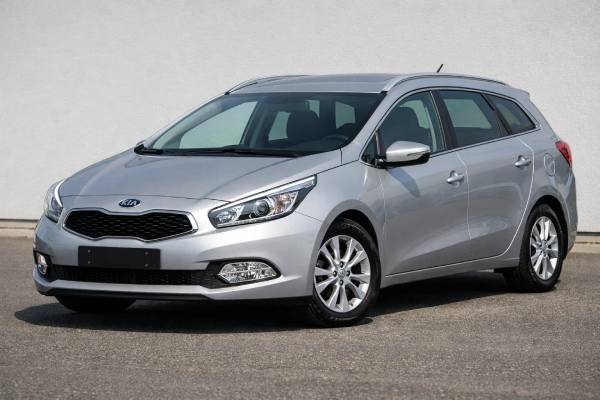
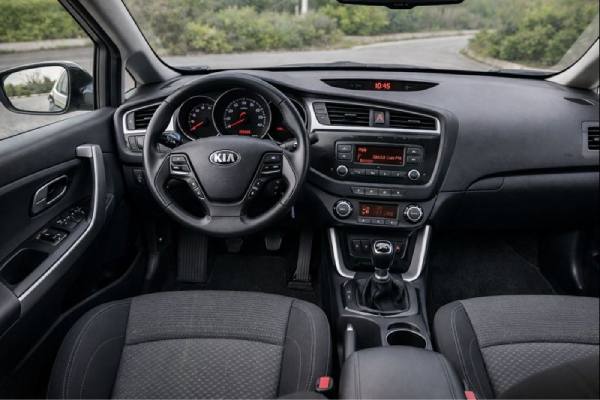
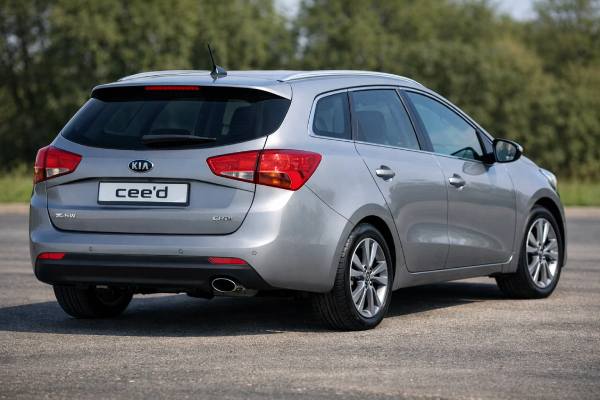
The 2012–2015 Kia Cee’d SW (JD) with the 1.6 CRDi “U-II” diesel in 128 hp tune is the version many long-distance owners quietly prefer. You get the same practical Sportswagon body and mature chassis as the petrol models, but with a broader torque band for relaxed motorway work and fewer downshifts when fully loaded. In the real world, the key engineering story is balance: a small-displacement common-rail turbo-diesel that can deliver strong midrange pull and good range, yet still needs the right oil specification and driving pattern to keep emissions hardware healthy over time.
If you service it on schedule, warm it properly, and avoid a life of short trips, this drivetrain can feel “bigger than it is.” Buy well, and it’s a calm family estate that sips fuel and carries a lot without drama.
Owner Snapshot
- Strong midrange torque makes it feel effortless with passengers and luggage, especially on hills and motorways.
- Long-legged cruising and typically excellent range suit high-mileage drivers and mixed commuting.
- The wagon body is genuinely useful: wide opening, low load lip, and flexible seats for bulky gear.
- Short-trip use can accelerate DPF and EGR-related problems; a weekly longer run helps.
- Plan for engine-oil changes at least every 12 months (or sooner under harsh use), even if mileage is low.
What’s inside
- Kia Cee’d SW JD 128 diesel tour
- Kia Cee’d SW 1.6 CRDi 128 spec sheet
- Kia Cee’d SW grades and crash protection
- Reliability issues and service actions
- Maintenance plan and buying tips
- Driving feel and real economy
- How the 128 diesel stacks up
Kia Cee’d SW JD 128 diesel tour
In Kia’s second-generation Cee’d (JD), the Sportswagon (SW) body adds meaningful practicality without turning the car into a “van with windows.” You still get the tidy driving position, controlled ride, and compact exterior footprint, but with the longer rear overhang used for cargo space rather than styling. For 2012–2015, the 1.6 CRDi in 128 hp tune sits in the sweet spot of the diesel range: more flexible than the lower-output version, but not as complex or expensive to own as larger diesels in other segments.
What owners notice first is how the torque changes daily driving. Around town, it pulls cleanly from low rpm and doesn’t need constant gear changes. On the motorway, it settles into a quiet cruise and maintains speed on grades with fewer downshifts than the petrol equivalents. With a full load—family, luggage, and a boot full of life—the 128 hp calibration matters. It’s not about 0–100 km/h hero numbers; it’s about staying in the midrange and keeping the car relaxed.
The SW’s utility is also more than a big number on a brochure. The load floor is usable, the opening is wide, and the rear seats fold in a way that makes trips to the DIY store or airport runs easy. For buyers choosing between hatch and SW, the wagon often feels like the “right” body once you live with it.
Where this model asks for respect is its diesel emissions hardware and service discipline. The engine is happiest when it reaches full operating temperature regularly. If it spends most of its life on short trips, soot-loading, EGR deposits, and oil dilution risk all rise. The good news is that a well-driven, well-serviced 1.6 CRDi can be a dependable long-term companion. The less good news is that neglected service history can turn a bargain into a repair list.
The best ownership profile is straightforward: you do a mix of commuting and longer drives, you keep maintenance simple and consistent, and you buy based on condition and history rather than trim badges alone.
Kia Cee’d SW 1.6 CRDi 128 spec sheet
Below are the core specifications most relevant to the 2012–2015 Kia Cee’d SW (JD) with the 1.6 CRDi 128 hp diesel. Exact figures can vary by market, emissions version, and gearbox, so treat these as the “typical” configuration you’ll see in Europe.
Powertrain and efficiency
| Item | Typical spec (2012–2015 1.6 CRDi 128) |
|---|---|
| Code | U-II CRDi (commonly listed as 1.6 CRDi VGT) |
| Engine layout and cylinders | Inline-4, DOHC, 16-valve (4 valves/cyl) |
| Bore × stroke | ~77.2 × 84.5 mm (3.04 × 3.33 in) |
| Displacement | 1.6 L (1,582 cc) |
| Induction | Turbocharged (often VGT) + intercooler |
| Fuel system | Common-rail direct injection (CRDi) |
| Compression ratio | ~17:1 (varies by version) |
| Max power | 128 hp (94 kW) @ ~4,000 rpm |
| Max torque | ~260 Nm (192 lb-ft) @ ~1,900–2,750 rpm |
| Timing drive | Chain (inspect for noise rather than routine replacement) |
| Rated efficiency (typical) | ~4.0–4.7 L/100 km (59–50 mpg US / 71–60 mpg UK) |
| Real-world highway @ 120 km/h | ~5.0–5.8 L/100 km (47–41 mpg US / 57–49 mpg UK) |
Transmission and driveline
| Item | Typical spec |
|---|---|
| Transmission | 6-speed manual common; some markets offered an automatic |
| Drive type | FWD |
| Differential | Open |
Chassis and dimensions (Sportswagon)
| Item | Typical spec (varies by wheels and suspension) |
|---|---|
| Suspension (front / rear) | MacPherson strut / multi-link |
| Steering | Electric power steering; ratio often ~15–16:1 (varies by rack) |
| Brakes | 4-wheel discs (front ventilated); diameters commonly ~280–300 mm (11.0–11.8 in) front, ~262–284 mm (10.3–11.2 in) rear |
| Wheels/tyres (popular) | 205/55 R16 or 225/45 R17 depending on trim |
| Ground clearance | ~140–150 mm (5.5–5.9 in) |
| Length / width / height | ~4,505 / 1,780 / 1,485 mm (177.4 / 70.1 / 58.5 in) |
| Wheelbase | ~2,650 mm (104.3 in) |
| Turning circle (kerb-to-kerb) | ~10.6 m (34.8 ft) |
| Kerb weight | ~1,350–1,520 kg (2,976–3,351 lb) depending on equipment |
| GVWR | ~1,900–2,050 kg (4,189–4,519 lb) typical range |
| Fuel tank | ~53 L (14.0 US gal / 11.7 UK gal) |
| Cargo volume | ~528 L (18.6 ft³) seats up / ~1,642 L (58.0 ft³) seats down (method varies by standard) |
Performance and capability
| Item | Typical spec |
|---|---|
| 0–100 km/h (0–62 mph) | ~10.5–11.5 s (gearbox and tyres matter) |
| Top speed | ~190–200 km/h (118–124 mph) |
| Braking 100–0 km/h | ~36–41 m (118–135 ft) with good tyres and brakes |
| Towing capacity | Often ~1,300–1,500 kg (2,866–3,307 lb) braked; ~500–650 kg (1,102–1,433 lb) unbraked (market-specific) |
| Payload | Commonly ~450–600 kg (992–1,323 lb) depending on GVWR |
Fluids, service capacities, and key torque specs
| Item | Typical guidance (verify by VIN) |
|---|---|
| Engine oil | Low-SAPS ACEA C2/C3 5W-30 common; capacity often ~5.3 L (5.6 US qt) with filter |
| Coolant | Long-life ethylene glycol; usually 50/50 mix; capacity commonly ~6–7 L (6.3–7.4 US qt) |
| Manual transmission oil | MTF per Kia spec; often ~1.8–2.1 L (1.9–2.2 US qt) |
| A/C refrigerant | R134a; charge often ~500–550 g (17.6–19.4 oz) |
| A/C compressor oil | PAG oil; quantity varies by compressor and service procedure |
| Wheel nuts | Commonly ~90–110 Nm (66–81 lb-ft) |
| Oil drain plug | Often ~35–45 Nm (26–33 lb-ft) |
| Brake caliper carrier bolts | Often ~85–110 Nm (63–81 lb-ft) |
Safety and driver assistance (core rating context)
- Euro NCAP (2012 Cee’d range): 5 stars
- Adult occupant: 89%
- Child occupant: 88%
- Pedestrian (VRU): 61%
- Safety assist: 86%
ADAS on 2012–2015 cars is generally limited compared with modern standards; think strong baseline structure and stability systems rather than today’s advanced automated braking and lane-centering.
Kia Cee’d SW grades and crash protection
Trim naming varies by market, but the equipment logic is consistent: the mechanical core is the same, and trims mostly change comfort, infotainment, and wheel/tyre packages. For buyers, the practical approach is to look for the features that affect long-term satisfaction and running cost, not just cosmetics.
Trims and options that matter in daily use
Common SW trims (names differ) typically bundle items like:
- Wheels and tyres: 16-inch setups usually ride better and cost less in tyres; 17-inch (or larger) looks sharper but can add road noise and make pothole impacts harsher.
- Lighting: projector or HID/LED upgrades (where available) improve night driving, but also raise replacement cost.
- Climate: dual-zone automatic climate can be a real quality-of-life feature if you keep the car long term.
- Infotainment: early JD systems range from basic radio units to navigation screens with Bluetooth; check that pairing, USB, and steering-wheel controls work correctly.
- Driver seat and parking aids: height adjustment, lumbar support, and parking sensors/camera are worth prioritizing on a wagon used in tight city spaces.
Mechanical differences between trims are usually minor, but do check these areas:
- Brake and wheel packages: larger wheels sometimes come with slightly larger brake hardware.
- Eco-focused variants: some cars use stop/start and low-rolling-resistance tyres; these help fuel numbers but can make low-speed behaviour feel different (and a weak battery can cause stop/start faults).
Quick identifiers when shopping
Because badges and trim names can be misleading, use simple checks:
- Look at the tyre size on the sidewall and match it to your ride-quality preference.
- Confirm the car has ISOFIX/LATCH points (most do) if you carry child seats.
- Verify whether it has factory parking sensors (clean integration) or aftermarket kits.
Safety ratings and what they mean today
The Cee’d platform’s major safety story is that it earned a strong Euro NCAP result for its era. The 2012 5-star rating reflects good occupant protection and solid “Safety Assist” scoring for features like electronic stability control and seatbelt reminders. It does not mean the car performs like a 2025 model with modern test protocols and standard automatic emergency braking.
Safety systems and ADAS availability
Typical 2012–2015 equipment includes:
- Multiple airbags (front, side, curtain) depending on trim
- ABS, stability control, traction control
- Hill-start assist on many versions
- Seatbelt reminders (often front and rear)
Advanced driver assistance is limited by year and market. If you see claims like lane-keeping assist or autonomous braking, verify carefully; those features are uncommon in this period and often confused with stability control or simple warning systems.
After any front-end repair or windshield replacement, confirm that braking and stability systems have no warning lights and that steering is centred—poor alignment can make a safe car feel nervous.
Reliability issues and service actions
The 1.6 CRDi 128 is generally robust when used as intended, but it has predictable “diesel ownership” weak points. Below is a practical map of issues by prevalence and cost. Mileage bands are approximate and depend heavily on driving pattern.
Common (plan for it)
- DPF loading (medium cost if ignored)
- Symptoms: frequent regen smell/fan run-on, reduced power, warning lights, rising oil level.
- Likely cause: repeated short trips, interrupted regenerations, clogged pressure lines/sensors.
- Remedy: confirm correct oil spec; forced regen and root-cause check (thermostat, sensors, driving pattern). If ash-loaded, DPF removal and professional cleaning or replacement.
- EGR valve/cooler deposits (medium cost)
- Symptoms: hesitation, rough idle, smoke, fault codes, sometimes coolant loss if an EGR cooler leaks.
- Cause: soot and oil vapour buildup, especially with low-load city use.
- Remedy: clean/replace EGR components; check intake tract and boost hoses.
- Boost leaks and intercooler plumbing (low-to-medium cost)
- Symptoms: whooshing, limp mode, low power, oily residue around hoses.
- Cause: split hose, weak clamps, intercooler end tank seepage.
- Remedy: smoke test, replace hoses/clamps, verify turbo control operation.
Occasional (watch with age)
- Injector sealing or fuel-system sensitivity (medium-to-high cost)
- Symptoms: hard starts, diesel smell, misfire-like shake, louder “chuffing” near injectors.
- Cause: seal leakage, injector wear, fuel contamination history.
- Remedy: leak-back testing, reseal or replace injectors as needed; keep fuel filter service current.
- Dual-mass flywheel (DMF) wear on manuals (medium-to-high cost)
- Symptoms: vibration at idle, clunk when shutting off, judder on take-off.
- Cause: normal wear accelerated by heavy city stop/start or slipping the clutch.
- Remedy: clutch/DMF replacement as a set when out of tolerance.
- Thermostat running cool (medium cost through knock-on effects)
- Symptoms: slow warm-up, weak cabin heat, more frequent DPF regens.
- Cause: thermostat stuck open.
- Remedy: replace thermostat; this can meaningfully reduce soot-related problems.
Rare but expensive (verify before buying)
- Turbocharger issues (high cost)
- Symptoms: persistent smoke, siren noise, oil consumption, repeated underboost/overboost codes.
- Cause: oil starvation from poor service history, contaminated oil, or chronic boost leaks overstressing the unit.
- Remedy: diagnose root cause first; don’t “throw a turbo” at a leak or sensor problem.
- Cooling system leaks (medium-to-high cost)
- Symptoms: coolant loss, overheating under load, sweet smell.
- Cause: radiator, hoses, water pump, or EGR cooler (where fitted).
- Remedy: pressure test, replace failing components, and bleed correctly.
Recalls, TSBs, and software updates
Rather than guessing by memory, the best method is to verify by VIN. Use the official Kia recall lookup for your region and request dealer documentation for completed campaigns. Pay attention to any update that improves drivability, cold-start behaviour, or warning-light logic, because diesel calibration changes can affect regeneration frequency and sensor thresholds.
Pre-purchase checks to request
- Evidence of correct oil spec and service intervals
- Records of DPF/EGR work (if any) with invoices, not just “cleaned” claims
- Clutch feel and DMF behaviour (idle vibration, take-off judder)
- No stored fault codes; scan it even if the dash is clear
- A proper warm test drive: steady cruise, then a few strong pulls in a higher gear to check boost control
Maintenance plan and buying tips
A good maintenance routine for the 1.6 CRDi 128 is less about exotic parts and more about consistency, correct fluids, and catching small problems before they become emissions-system faults.
Practical maintenance schedule (distance/time)
Use this as a conservative owner-focused plan; always follow the official schedule for your VIN and market.
- Engine oil and filter: every 10,000–15,000 km (6,000–9,000 mi) or 12 months
- If the car does many short trips, choose the shorter interval. Diesel soot and fuel dilution can shorten oil life even if mileage is low.
- Air filter (engine): inspect every service; replace every 20,000–30,000 km (12,000–18,000 mi) or sooner in dusty areas.
- Cabin filter: every 15,000–20,000 km (9,000–12,000 mi) or annually for best HVAC performance.
- Fuel filter: typically every 40,000–60,000 km (25,000–37,000 mi); important for injector life.
- Brake fluid: every 2 years regardless of mileage.
- Coolant: commonly 5 years then periodic replacement; verify the exact interval and coolant type for your car.
- Manual gearbox oil: not always listed as routine, but a preventive change around 100,000–120,000 km (62,000–75,000 mi) can help shift quality.
- Tyre rotation and alignment: rotate every 10,000–12,000 km (6,000–7,500 mi); check alignment if tyres show uneven wear.
- Battery (12 V): test annually after year 5; stop/start cars are more sensitive to battery condition.
Fluids and specs that matter
- Prioritize the correct low-SAPS diesel oil specification (commonly ACEA C2/C3 5W-30). This is important for DPF longevity.
- Use the correct coolant type and mix; mixing chemistries can shorten component life.
- For air conditioning, correct refrigerant charge matters; undercharge can reduce cooling and strain the compressor.
Buyer’s guide: what to inspect on a used example
- Cold start behaviour: it should start cleanly without extended cranking. Excess smoke or roughness may indicate glow plug, injector, or EGR issues.
- Warm-up rate: slow warm-up can point to a thermostat issue, which can also worsen DPF/EGR health.
- Boost behaviour: acceleration should feel smooth, not “surge then limp.” Any sudden power drop deserves a scan.
- Service history quality: look for itemized invoices, correct oil specification, and consistent intervals.
- Underside and corrosion points: inspect rear suspension mounts, subframe areas, and brake lines (regional climate matters).
- Wagon practicality checks: tailgate struts, water ingress signs in the spare-wheel well, and rear-seat folding function.
Recommended spec for long-term durability
- A manual gearbox can be very durable, but only if the clutch/DMF is healthy.
- Prefer 16-inch wheels if comfort and low running costs matter most.
- If you drive mostly short trips, consider whether a diesel is the right tool; the car can do it, but ownership becomes more maintenance-sensitive.
Overall durability outlook: as a platform, the JD SW holds up well. The highest-cost surprises usually come from neglected diesel emissions components or a car that never reaches operating temperature.
Driving feel and real economy
The Cee’d SW’s driving character is defined by composure rather than sportiness. It’s stable at speed, predictable in corners, and easy to place on narrow roads—useful traits for a family wagon.
Ride, handling, and NVH
- Ride: with 16-inch tyres, the car absorbs broken pavement well for its class. Larger wheels sharpen steering response but transmit more impact harshness.
- Handling: the rear multi-link setup gives consistent cornering and good mid-corner stability. It won’t feel playful like a hot hatch, but it’s confidence-inspiring.
- Steering: typically light in town and more settled at speed. Some drivers want more feedback, but the tuning suits long trips.
- NVH (noise, vibration, harshness): the diesel is audible on cold start and under load, then fades into the background at cruise. Wind and tyre noise depend heavily on tyre brand and wheel size.
Powertrain character
The 128 hp tune is about usable torque. In normal driving, it pulls from low rpm without the “wait, then rush” feel of some small turbos. Passing performance is best when you keep it in the torque band rather than revving it out. With the manual gearbox, it rewards early upshifts and steady throttle.
If your car has stop/start, judge it when warm with a healthy battery. A weak battery can cause inconsistent operation and nuisance warnings.
Real-world efficiency
Expect the best numbers on steady runs:
- City-heavy use: often ~5.5–7.0 L/100 km (43–34 mpg US / 51–40 mpg UK), depending on traffic and temperature.
- Highway 100–120 km/h: commonly ~5.0–5.8 L/100 km (47–41 mpg US / 57–49 mpg UK).
- Mixed driving: frequently ~5.0–6.2 L/100 km (47–38 mpg US / 57–46 mpg UK).
Cold weather matters more than many buyers expect. Short trips with heavy cabin heat can push consumption up and also increase soot loading. If your driving pattern is mostly short urban hops, you may spend more time managing diesel-related maintenance than enjoying diesel-level economy.
Key performance metrics that influence ownership
- 0–100 km/h: typically around the low 11-second range, but the more meaningful metric is how easily it holds speed on inclines with a load.
- Braking feel: usually consistent and easy to modulate; if the pedal feels long or spongy, check fluid age and rear brake condition.
Load use and towing
When towing is allowed in your market, this drivetrain’s torque helps. Still, respect temperature management: use the right gear on long grades, avoid lugging at very low rpm, and keep cooling and oil service in top shape. Expect a noticeable consumption increase under load—often 20–40% depending on speed, terrain, and trailer shape.
How the 128 diesel stacks up
To judge the Cee’d SW 1.6 CRDi 128 fairly, compare it with rivals that offer similar size, wagon utility, and diesel torque. The “best” choice depends on your driving pattern and how you value simplicity versus modern features.
Where the Cee’d SW shines
- Torque-per-euro value: the 128 hp diesel delivers strong everyday flexibility without requiring a large-displacement engine.
- Practical wagon packaging: it offers real cargo usefulness without oversized exterior dimensions.
- Ownership accessibility: parts availability and straightforward service access are generally good for the segment.
Where rivals may win
- More modern ADAS: many rivals from later model years (or late-cycle updates) offer more advanced safety tech than this 2012–2015 generation typically provides.
- Lower-emissions complexity in petrol alternatives: if your driving is mostly short trips, a petrol wagon (or a newer hybrid) can be lower stress than a diesel with a DPF.
- Cabin refinement: some competitors may offer quieter cabins on coarse asphalt, depending on tyres and sound insulation.
Diesel-versus-petrol reality check
If you routinely do longer drives, the diesel’s strengths are obvious: range, relaxed cruising, and midrange pull. If your use is mostly urban and cold starts, the diesel’s maintenance sensitivity becomes the main storyline. In that case, a petrol version (even with slightly higher fuel consumption) can be easier to live with.
Best-fit buyer profiles
- Ideal: mixed commuting plus regular motorway trips, drivers who keep service history tidy, and owners who want a practical wagon without paying for a premium badge.
- Less ideal: short-trip-only city use, owners who skip maintenance, or buyers who require modern AEB and lane-centering features as standard.
Bottom-line comparison
Among compact wagons of its era, the Cee’d SW 1.6 CRDi 128 is a sensible, torque-rich workhorse. Choose a well-documented example, keep the correct oil and service rhythm, and it rewards you with efficient long-distance comfort and everyday practicality.
References
- Engine Oil Grades and Capacities 2023 (Service Guide)
- Service Intervals 2026 (Service Schedule)
- Kia Recalls | Kia Europe 2026 (Recall Database)
- Kia C’eed – Crash Test 2012 2012 (Safety Rating)
- New-generation Kia cee’d awarded top safety score by EuroNCAP – Kia Slovakia s.r.o. 2012 (Manufacturer Release)
Disclaimer
This article is for informational purposes only and is not a substitute for professional diagnosis, inspection, or repair. Specifications, torque values, fluid capacities, service intervals, and procedures can vary by VIN, market, model year, and installed equipment. Always verify details using official Kia service documentation for your specific vehicle and follow qualified technician guidance when needed.
If you found this guide useful, consider sharing it on Facebook, X (Twitter), or your favorite forum group to help others keep their Cee’d SW in good shape.