
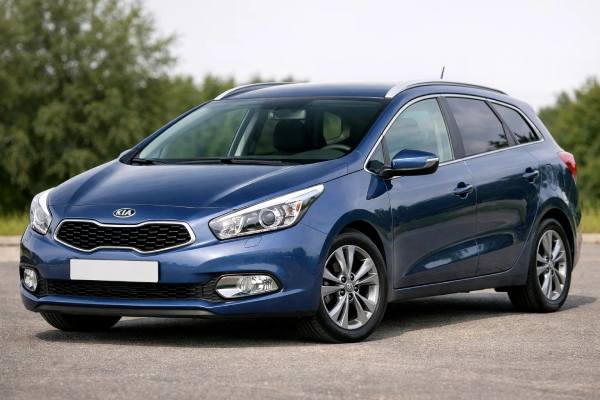
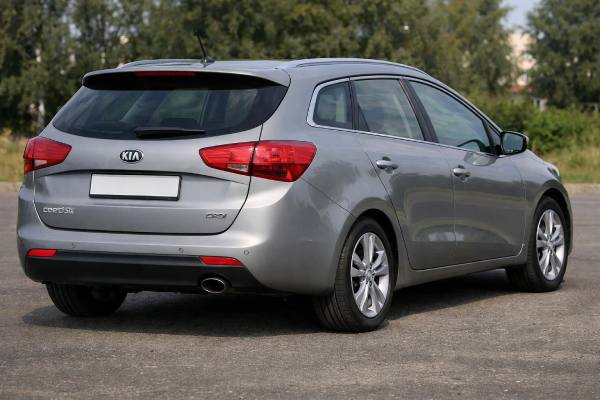
The 2012–2015 Kia Cee’d Sportswagon (JD) with the 1.6 Gamma MPi is a straightforward, naturally aspirated estate built around sensible engineering: a chain-driven DOHC four-cylinder, a practical multi-link rear suspension, and a body style that prioritizes usable cargo space over trend. In daily use, it tends to reward owners who value predictability—smooth cold starts, linear throttle response, and low drama in stop-and-go driving—more than outright speed.
Where this version shines is ownership balance. Parts availability is generally good, the drivetrain is familiar to many independent workshops, and the wagon format makes it an easy one-car solution for families or work gear. The key is buying and maintaining it like a long-life appliance: confirm service history, stay on top of fluids, and address small suspension or steering symptoms early—before they become tire wear or repeated repairs.
Owner Snapshot
- Strong everyday practicality with a genuinely useful wagon boot and flat load floor.
- Simple, non-turbo MPi engine character that stays consistent across seasons and fuel quality.
- Expect age-related chassis wear (links, bushes, alignment) more often than major engine failures.
- Plan on engine oil and filter service every 12 months or 20,000 km (shorten for frequent short trips).
- A careful pre-purchase check of steering feel, clutch take-up, and rear suspension noise pays off.
Navigate this guide
- Kia Cee’d SW JD deep look
- Kia Cee’d SW JD key specs
- Kia Cee’d SW JD trims and safety
- Reliability and common faults
- Maintenance and buying tips
- On-road performance feel
- Rivals and market alternatives
Kia Cee’d SW JD deep look
The JD-generation Cee’d Sportswagon is the “do the basics well” take on the compact estate formula. This 1.6 Gamma MPi version sits on the simpler end of the range: naturally aspirated petrol, multipoint injection, and an output around 130 hp. That combination matters because it shapes how the car ages. There’s no turbocharger, no high-pressure direct-injection pump, and usually fewer heat-related underhood stresses than some downsized turbo rivals of the same era.
From an engineering perspective, the Sportswagon body adds practical weight and a longer rear overhang, but the platform remains tidy. The rear multi-link suspension is a real advantage versus torsion-beam estates: it tends to ride more cleanly over broken surfaces and keeps rear tire contact more consistent when loaded. The trade-off is more wear items (links and bushes) that can age out over time—especially if the car spent years on rough city streets.
Ownership feel is typically defined by three things:
- Predictable drivetrain behavior: The 1.6 MPi likes to rev and delivers its best response in the midrange and above. It’s not a low-rpm torque engine, so it rewards smooth, early gear selection rather than lugging.
- Cabin and cargo usefulness: The wagon layout Practicality is the point—wide opening, decent load height, and family-friendly everyday packing.
- Age and maintenance history: By now, condition matters more than mileage. A 140,000 km car that has seen regular fluids, alignment checks, and quality tires can feel tighter than a neglected 90,000 km example.
If you want the “easy life” Cee’d SW, prioritize a car with clean service documentation, even tire wear, and a quiet underbody over a car with flashy wheels or a long options list.
Kia Cee’d SW JD key specs
Below are practical, ownership-relevant specifications for the 2012–2015 Cee’d SW (JD) with the 1.6 Gamma MPi. Exact figures can vary by market, transmission, wheel size, and emissions calibration, so treat these as a decision-making baseline and verify by VIN.
Powertrain and efficiency
| Item | Specification |
|---|---|
| Code (commonly used) | Gamma 1.6 MPi (often referenced as G4FC in many markets) |
| Engine layout and cylinders | Inline-4, DOHC, 16 valves (4 valves/cyl) |
| Displacement | 1.6 L (about 1,591 cc) |
| Induction | Naturally aspirated |
| Fuel system | MPi (multipoint port injection) |
| Max power | ~130 hp (about 96 kW) @ ~6,300 rpm (market-dependent) |
| Max torque | ~157 Nm @ ~4,850 rpm (market-dependent) |
| Timing drive | Chain |
| Rated efficiency (typical combined) | roughly mid-6 L/100 km (varies by test cycle and gearbox) |
| Real-world highway @ 120 km/h | typically ~7.0–7.8 L/100 km depending on load, tires, and wind |
Transmission and driveline
| Item | Specification |
|---|---|
| Transmission | Commonly 6-speed manual; some markets offered automatic |
| Drive type | FWD |
| Differential | Open |
Chassis and dimensions (Sportswagon body)
| Item | Typical value (approx.) |
|---|---|
| Suspension (front/rear) | MacPherson strut / multi-link |
| Steering | Electric assist (EPS); ratio varies by trim |
| Brakes | 4-wheel discs on many trims; exact sizes vary |
| Ground clearance | ~140 mm class (trim-dependent) |
| Length / Width / Height | about 4,505 / 1,780 / 1,485 mm (market-dependent) |
| Wheelbase | ~2,650 mm |
| Turning circle | ~10.6 m class (wheel/tire dependent) |
| Fuel tank | ~53 L |
| Cargo volume | ~528 L seats up, ~1,642 L seats down (measurement method varies) |
Performance (real-world expectations)
| Item | Typical range |
|---|---|
| 0–100 km/h (0–62 mph) | ~10.5–11.5 s (gearbox and test method dependent) |
| Top speed | ~190–195 km/h class |
| Towing capacity | Varies widely by market approval; confirm on VIN plate / manual |
| Payload | Usually adequate for family use; confirm by VIN plate |
Fluids and service capacities (most useful for owners)
These are the items that affect running costs and workshop decisions most. Confirm the exact spec for your region and VIN.
| Item | Practical guidance |
|---|---|
| Engine oil | Typically ACEA A5; common viscosity 5W-30 (confirm per VIN/market) |
| Engine oil capacity | Around 3.6 L (with filter) for JD 1.4/1.6 Gamma listings in some official service tables |
| Service interval (oil) | Often listed as up to 20,000 km / 12 months in some official schedules; shorten for severe use |
| Coolant | Use manufacturer-approved coolant; replace by time interval where specified |
| Brake fluid | Replace every 2 years is a sensible baseline |
| Spark plugs | Commonly 60,000–100,000 km depending on plug type; inspect service records |
Safety and driver assistance (era-correct)
- Multiple airbags, ESC stability control, ABS, and ISOFIX/LATCH anchor points are commonly present across trims.
- Advanced driver assistance (AEB/ACC/lane centering) is generally limited or not present on most 2012–2015 configurations compared with newer generations.
- Euro NCAP-era scoring for the model family is strong, but always consider the test protocol year and the car’s exact equipment.
Kia Cee’d SW JD trims and safety
Trims vary a lot by country, but the underlying approach is consistent: most versions share the same core body and suspension layout, while equipment changes come from infotainment, wheel size, climate controls, lighting, and convenience features. For buyers today, the goal is to identify what changes ownership cost or driving feel, not just what looks nicer.
Trims and options that matter in real life
Look for these differences because they influence tires, brakes, and long-term wear:
- Wheel and tire size: Larger wheels can sharpen steering response but often increase road noise, cost more in tires, and are less forgiving on potholes. If you prioritize comfort and durability, the more modest wheel sizes are usually the sweet spot.
- Braking hardware: Some markets pair higher trims with larger discs or different pad shapes. That can change brake part prices and availability.
- Comfort and convenience packages: Dual-zone climate, heated seats, parking sensors/camera, and upgraded audio are nice, but they can add repair points (switchgear, camera modules, head unit failures).
- Roof rails and cargo accessories: Common on Sportswagons and genuinely useful. Check for water leaks around roof rail mounts and tailgate seals if the car lived outdoors.
Quick identifiers when viewing a used car
- VIN plate and option sticker: Confirms axle loads, approved tire sizes, and sometimes paint/trim codes.
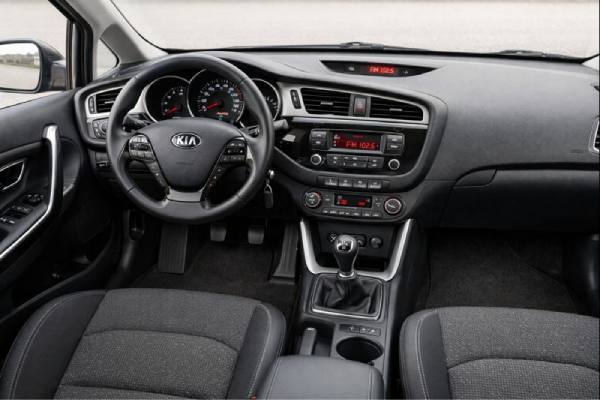
- Cluster and steering wheel controls: Often reveal whether the car has cruise control, trip computer features, or higher infotainment integration.
- Rear suspension glance: Multi-link is visible underneath; look for cracked bushings or fresh undercoat hiding corrosion.
Safety ratings and what they mean for a 2012–2015 used car
The Cee’d family achieved strong results in its era, but remember that safety ratings are partly about test protocol timing. A 5-star car from 2012 is still a fundamentally safe structure, yet it may lack modern crash-avoidance tech found on newer vehicles. For a used buyer, prioritize:
- ESC functioning and no warning lights: A stored ABS/ESC fault can disable stability control.
- Airbag system integrity: Ensure no airbag light, no signs of deployed airbags, and consistent panel fit.
- Child-seat practicality: ISOFIX points are typically present; check access and the condition of seat belts and buckles.
Driver assistance and calibration notes
If your car has parking sensors, a camera, or rain/light sensors, keep in mind that replacements and windshield work can require recalibration or careful installation. Even without modern ADAS, incorrect wheel alignment, mismatched tires, or weak 12 V battery voltage can trigger nuisance faults in stability control systems—so good basics still matter.
Reliability and common faults
The 1.6 Gamma MPi Cee’d SW is generally “low-drama,” but age brings patterns. The most helpful way to think about reliability is by prevalence and cost tier, with mileage/age bands where symptoms commonly show up.
Common (usually low to medium cost)
- Front and rear suspension wear (80,000–160,000 km typical window):
Symptoms: clunks over bumps, wandering on highways, uneven tire wear.
Likely causes: drop links, control arm bushes, rear multi-link bushes, worn top mounts.
Remedy: replace worn links/bushes, then perform a proper alignment (not just toe “set”). - Steering feel issues (age-related):
Symptoms: light knocking/clicking through the wheel at low speeds, vague on-center feel.
Likely causes: EPS coupling wear (where fitted), inner tie rods, or column-related play.
Remedy: diagnose precisely before replacing parts; many cars need a small coupling/bushing rather than a full rack. - Ignition maintenance sensitivity:
Symptoms: rough idle, hesitation under load, misfire codes.
Likely causes: old spark plugs, aging coils, air leaks, or tired battery voltage affecting ignition stability.
Remedy: correct plugs first, then test coils; don’t shotgun parts without confirming misfire counts.
Occasional (medium cost)
- Cooling system seepage:
Symptoms: coolant smell, slow level drop, crusty residue at hose joints or radiator seams.
Likely causes: aging hoses, thermostat housing seals, radiator end tanks.
Remedy: pressure test, replace the leaking component, and refill with correct coolant mix. - Clutch and flywheel wear (manual):
Symptoms: slipping in higher gears, judder on take-off, noisy release bearing.
Likely causes: city driving and repeated low-speed clutch work.
Remedy: clutch kit; inspect flywheel condition during the job.
Rare (higher cost, but worth screening)
- Timing chain system problems: Not a routine replacement item, but listen for persistent rattles at cold start and watch for timing correlation faults.
- Oil consumption: Not a hallmark of this MPi setup, but neglected oil changes can accelerate ring or PCV issues. If oil level history is unknown, monitor consumption over 1,000–2,000 km before committing to long trips.
Recalls, TSBs, and how to verify
Because recall scope depends on market and VIN, your best practice is simple: ask for documentation showing recall completion, and confirm through official channels (dealer system or the brand’s VIN check where available). If a seller cannot show records, assume you’ll spend time verifying and catching up on deferred service.
Maintenance and buying tips
A Cee’d SW that feels “tight” at 10+ years old is almost always one that followed fluids, filters, and alignment basics. Use this schedule as a practical baseline, then adjust to your usage.
Practical maintenance schedule (distance/time)
- Engine oil and filter: every 12 months or up to 20,000 km; shorten to 10,000–12,000 km if the car does frequent short trips, cold starts, or heavy city traffic.
- Air filter: inspect every oil service; replace about every 30,000 km (more often in dusty areas).
- Cabin filter: every 12 months (cheap comfort upgrade).
- Spark plugs: commonly 60,000–100,000 km depending on plug spec; replace earlier if misfires or roughness appear.
- Coolant: replace by the time interval specified for your market; many owners choose a 5-year refresh on older cars if history is unclear.
- Brake fluid: every 2 years.
- Brake pads/rotors: inspect at every tire rotation; replace based on thickness and condition, not just mileage.
- Transmission fluid:
- Manual: change if shift quality degrades or by long interval ownership (many do 100,000–150,000 km as preventive care).
- Automatic (if equipped): consider a drain-and-fill service around 60,000–100,000 km intervals if you want maximum longevity.
- Tire rotation and alignment: rotate every 10,000–12,000 km; align whenever new tires are installed or suspension parts are replaced.
- 12 V battery: test annually after year 4–5; replace proactively if cranking slows or voltage is unstable in winter.
Fluids, specs, and owner-useful torque values
- Engine oil spec: commonly listed as ACEA A5 for JD 1.4/1.6 Gamma petrol in some official tables; a 5W-30 is a frequent match, but confirm by VIN/region.
- Critical torque (decision-level, approximate): wheel nuts in the ~90–110 Nm class; spark plugs in the ~20 Nm class; always verify for your exact wheels and engine.
Buyer’s guide: what to inspect before purchase
- Cold start behavior: should fire quickly and idle steadily without hunting.
- Steering and suspension: drive over small bumps at low speed with the window down—listen for knocks.
- Tire wear pattern: uneven inner-edge wear often signals alignment or worn bushes.
- Clutch take-up (manual): check for slipping in a higher gear pull and for chatter when moving off.
- Cooling system: check coolant level, look for dried residue, and confirm the cabin heater gets properly hot.
- Cargo area water intrusion: lift the boot floor and check for dampness around the spare wheel well and tailgate seals.
- Service proof: prioritize documented oil intervals and recent brake fluid/coolant services over “just passed inspection.”
Long-term outlook: maintained examples can be excellent value as compact estates, with running costs dominated more by tires, brakes, and suspension refreshes than by drivetrain failures.
On-road performance feel
With ~130 hp in a practical wagon body, the 1.6 MPi Cee’d SW is best understood as “pleasantly adequate” rather than quick. The power delivery is smooth, predictable, and easy to modulate—qualities that matter more than peak numbers in real traffic.
Ride, handling, and NVH
- Ride quality: The multi-link rear helps the Sportswagon feel composed when the boot is loaded. On rougher roads, the car’s comfort depends heavily on wheel size and tire sidewall. Smaller wheels generally ride better and are less vulnerable to pothole damage.
- Handling balance: Neutral and confidence-building. It won’t feel sporty in stock form, but it is stable, especially at motorway speeds. If the car feels nervous in crosswinds or needs constant correction, suspect worn rear bushes or poor alignment.
- Noise levels: Expect moderate road noise typical of the class and era. Tire choice makes a bigger difference than many owners realize—an aggressive tread can make the cabin sound “older” than it is.
Powertrain character and gearbox behavior
- Throttle response: Linear. Because it’s naturally aspirated, the engine responds best when you keep it in the midrange rather than asking for big pull from very low rpm.
- Passing performance: Real-world overtakes are fine if you downshift early. Plan to use the top half of the rev range for confident merging or uphill passing.
- Transmission feel: The common manual pairing is generally easy to live with. If shifts feel notchy when cold, confirm gearbox oil condition and clutch hydraulics before assuming internal wear.
Real-world efficiency
Owners often see a wide spread depending on route:
- City-heavy use: frequently in the 7–9 L/100 km class depending on traffic and warm-up time.
- Highway cruising: often ~7.0–7.8 L/100 km at 120 km/h, with load, roof rails, and headwinds moving the number.
- Mixed driving: typically lands in the mid-6 to mid-7 L/100 km range.
Cold weather matters: short trips in winter can raise consumption sharply because warm-up time dominates. If economy is a priority, the biggest wins are maintenance basics (correct tire pressure, fresh filters, proper oil spec) and driving style (avoid lugging and avoid repeated short cold starts).
Rivals and market alternatives
The Cee’d SW (JD) 1.6 MPi competes with compact estates that often feel more complex than they look. The best choice depends on whether you value simple long-term ownership, sharp driving feel, or maximum interior flexibility.
Versus Volkswagen Golf Variant (Mk7-era equivalents)
- Golf advantages: often more refined interior touch points and strong drivetrain options.
- Cee’d SW advantage: this MPi setup is typically simpler than many turbocharged VW petrols of the period, and the wagon packaging is very competitive.
- What to watch on the VW side: turbo and direct-injection complexities depending on engine choice.
Versus Ford Focus Estate (Mk3)
- Focus advantage: steering feel and chassis engagement are usually class-leading.
- Cee’d SW advantage: calmer, more predictable powertrain behavior in basic petrol form and often a more “appliance-like” ownership experience.
- Buyer tip: Focus suspension and alignment condition can heavily affect tire wear—just like the Kia.
Versus Opel/Vauxhall Astra Sports Tourer (J-era)
- Astra advantage: comfortable long-distance cruising in many trims, wide availability.
- Cee’d SW advantage: generally straightforward servicing and good parts interchangeability across the Hyundai/Kia ecosystem.
- Buyer tip: compare real-world fuel economy honestly—engine choice matters more than brand.
Versus Hyundai i30 CW (platform cousin)
- i30 CW advantage: very similar mechanicals and ownership profile; sometimes better availability depending on local market.
- Cee’d SW advantage: trim/equipment combinations and pricing can favor Kia, and some buyers prefer the interior layout.
- Reality check: choose based on condition and history; they’re close enough that the best-kept example wins.
Verdict for shoppers
Choose the Cee’d SW 1.6 MPi if you want a compact wagon that stays reasonable with age: predictable engine behavior, practical cargo, and manageable repair risk. If you want a sportier drive, a Focus Estate is often more rewarding. If you want the most “premium” feel, a Golf Variant can deliver—just be selective about engine choice and service history.
References
- New-generation Kia cee’d awarded top safety score by EuroNCAP – Kia Slovakia s.r.o. 2012 (Safety Rating)
- Kia C’eed – Crash Test 2012 2012 (Safety Rating)
- Engine Oil Grades and Capacities 2023 (Service Information)
- Käyttöohjekirjat | Kia Finland 2026 (Owner’s Manual Portal)
- Kia Car Owners Manual | Kia UK 2026 (Owner’s Manual Portal)
Disclaimer
This article is for informational purposes only and is not a substitute for professional diagnosis, inspection, or repair. Specifications, torque values, service intervals, and procedures can vary by VIN, market, model year, and equipment. Always verify details using official Kia documentation for your specific vehicle and consult a qualified technician when needed.
If you found this guide useful, please consider sharing it on Facebook, X, or your favorite forum to support our work.