
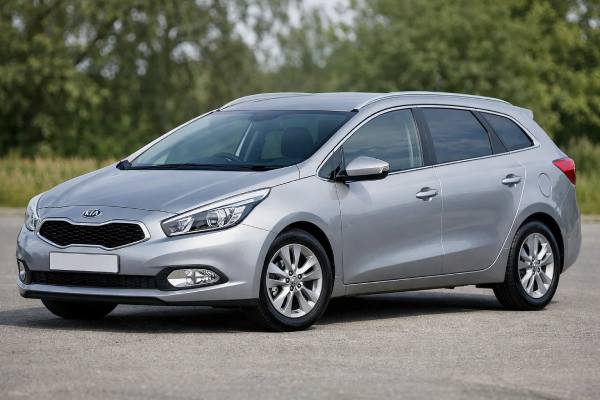
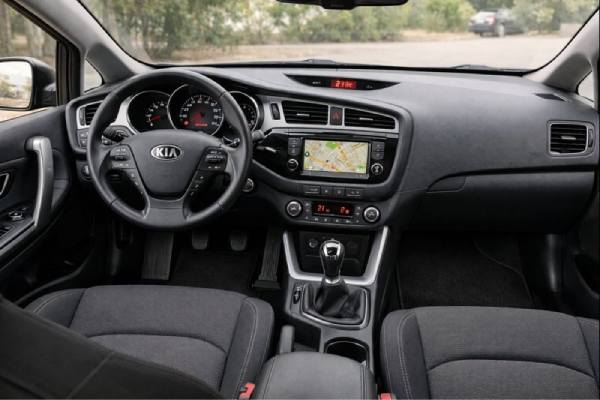
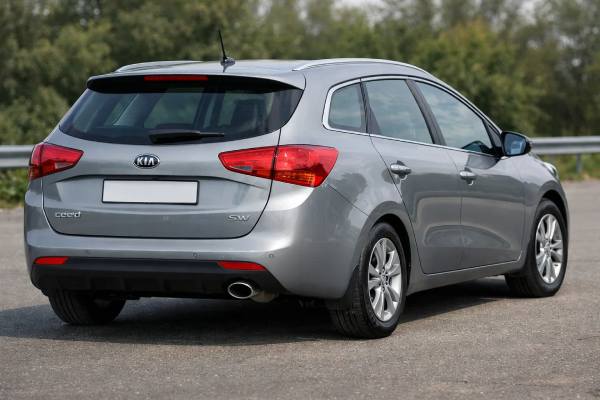
The 2012–2015 Kia Cee’d SW with the 1.6 Gamma GDi is a practical compact estate that blends a roomy cargo bay with a relatively simple, naturally aspirated powertrain. The GDi (gasoline direct injection) version feels a touch more eager at higher revs than the port-injected 1.6, but it also changes what “good ownership” looks like—oil quality, warm-up habits, and intake cleanliness matter more over time. In daily use, this Sportswagon’s strengths are straightforward: stable highway manners, predictable handling, and an interior that holds up well when it’s not abused. Most expensive surprises come from neglected maintenance or short-trip use, not from exotic hardware. If you shop carefully and keep service intervals sensible, the 1.6 GDi Cee’d SW can be an efficient, honest long-term workhorse.
Essential Insights
- Spacious cargo layout with a low loading lip makes it genuinely useful for family and hobby gear.
- The 1.6 GDi is smooth and responsive when revved, especially above mid-range rpm.
- Direct injection can mean intake-valve carbon buildup over time—short trips and cheap oil make it worse.
- Plan on engine oil and filter every 10,000–15,000 km (6,000–9,000 mi) or 12 months, whichever comes first.
- A well-kept manual gearbox setup is usually the lowest-risk, lowest-cost configuration.
Navigate this guide
- Kia Cee’d SW 1.6 GDi focus
- Kia Cee’d SW tech specs
- Kia Cee’d SW trims and safety
- Reliability patterns and fixes
- Maintenance plan and buying
- Road manners and economy
- Rival wagons and choices
Kia Cee’d SW 1.6 GDi focus
This version of the Cee’d Sportswagon sits in a sweet spot for many owners: compact outside, genuinely useful inside, and powered by a naturally aspirated 1.6 that avoids turbo heat and boost-related complexity. The “Gamma GDi” part matters because it changes how the engine makes power and how it ages. Direct injection sprays fuel straight into the cylinder, which improves charge cooling and efficiency potential, but it also means fuel no longer washes the back of the intake valves. Over years of stop-start driving, oil vapors from the PCV (positive crankcase ventilation) system can leave deposits on those valves. That deposit layer can gradually reduce airflow and cause rough cold starts, misfires under load, or a flat feeling at higher rpm.
In the real world, many cars never show dramatic symptoms—especially if they spend time on the highway, warm up fully, and get frequent oil changes. But it’s the ownership “style” that decides whether this GDi stays crisp. If you mostly do short trips, you’ll want to be stricter with oil intervals and pay attention to spark plugs and coil health.
On the chassis side, the Cee’d SW is tuned for stability rather than sharpness. It’s predictable on wet roads, doesn’t feel nervous at 120 km/h, and the estate body remains controlled when loaded—assuming the rear suspension bushings and dampers are still healthy. The cabin is also one of this generation’s quiet strengths: materials are hard-wearing, controls are simple, and the driving position suits long stints.
As a used buy, the best examples are the boring ones: full service history, clean cold start, no hesitation on acceleration, and evidence the car regularly did longer drives. That combination is what keeps the GDi advantage without inheriting the classic direct-injection downsides.
Kia Cee’d SW tech specs
Below are typical specs for the 2012–2015 Cee’d SW with the 1.6 Gamma GDi (often listed as 135 hp / 99 kW). Exact figures can vary by market, emissions calibration, wheel size, and transmission.
Powertrain and efficiency
| Item | Specification |
|---|---|
| Code | Gamma 1.6 GDi (commonly G4FD family) |
| Layout | Inline-4, NA (naturally aspirated) |
| Valvetrain | DOHC, 16-valve (4 valves/cyl) |
| Displacement | 1.6 L (1,591 cc) |
| Fuel system | GDi (direct injection) |
| Compression ratio | Typically ~11.0:1 (market-dependent) |
| Max power | 135 hp (99 kW) @ ~6,300 rpm |
| Max torque | ~165 Nm (122 lb-ft) @ ~4,850 rpm |
| Timing drive | Chain |
| Rated efficiency | Commonly ~5.8–6.3 L/100 km (41–49 mpg US / 45–53 mpg UK) depending on spec |
| Real-world highway @ 120 km/h | Often ~6.7–7.5 L/100 km (31–35 mpg US / 38–42 mpg UK) |
Transmission and driveline
| Item | Specification |
|---|---|
| Transmission | 6-speed manual (common); 6-speed automatic in some markets |
| Drive type | FWD |
| Differential | Open |
Chassis and dimensions (Sportswagon)
| Item | Typical specification |
|---|---|
| Suspension (front/rear) | MacPherson strut / multi-link |
| Steering | Electric power steering (EPS) |
| Brakes | 4-wheel discs; sizes vary with wheel package |
| Popular tyre size | Often 205/55 R16 (varies by trim) |
| Ground clearance | Approx. 140 mm (market/spec dependent) |
| Length / Width / Height | About 4,505 mm / 1,780 mm / 1,485 mm |
| Wheelbase | About 2,650 mm |
| Turning circle | About 10.6 m (kerb-to-kerb, typical) |
| Kerb weight | Roughly 1,300–1,400 kg (spec dependent) |
| Fuel tank | About 53 L (14.0 US gal / 11.7 UK gal) |
| Cargo volume | About 528 L seats up / ~1,642 L seats down (VDA method commonly quoted) |
Performance and capability
| Item | Typical specification |
|---|---|
| 0–100 km/h (0–62 mph) | ~9.8–10.7 s (transmission/spec dependent) |
| Top speed | ~190–195 km/h (118–121 mph) |
| Braking 100–0 km/h | Typically mid-to-high 30 m range (tyres and brakes matter) |
| Towing capacity | Market-dependent; commonly up to ~1,200–1,400 kg braked (check VIN plate) |
| Payload | Commonly ~450–550 kg (depends on trim and GVWR) |
Fluids and service capacities (common planning values)
| Item | Typical spec (verify by VIN/market) |
|---|---|
| Engine oil | ACEA A5 (often), viscosity commonly 5W-30; capacity ~3.6 L (with filter) |
| Coolant | Ethylene glycol OAT-type; mix 50/50; capacity often ~5.5–6.5 L |
| Manual gearbox oil | GL-4 75W-85/75W-90; fill often ~1.8–2.2 L |
| Automatic ATF | Hyundai/Kia SP-IV type; service method affects quantity |
| A/C refrigerant | Usually R134a; charge commonly ~450–550 g |
| Key torque specs | Wheel nuts often ~88–108 Nm; drain plug and spark plugs vary by engine variant |
Safety and driver assistance (what to expect)
| Category | Typical for this generation |
|---|---|
| Euro NCAP | 5-star era rating; high adult and child scores, mid-range pedestrian score (test protocol year matters) |
| Core stability systems | ESC/VSM, ABS, EBD, traction control |
| Airbags | Typically front, side, curtain (count varies by market/trim) |
| ADAS | Limited by today’s standards; later years and higher trims may add lane warning or blind-spot features in some regions |
Kia Cee’d SW trims and safety
Trim names vary widely across Europe and other markets (and can shift mid-year), so the most useful approach is to focus on what changes mechanically and what changes functionally.
Trims and options that matter in ownership
Common patterns for the 2012–2015 Sportswagon:
- Wheel and brake packages: Moving from 15/16-inch wheels to 17-inch usually brings wider tyres and sometimes larger front brakes. It looks better, but replacement tyres cost more and ride comfort can drop on rough roads.
- Infotainment tiers: Base audio units are simple and reliable; higher trims may add navigation, bigger displays, and steering-wheel controls. From a reliability standpoint, “simpler is safer,” but the upgrade may be worth it if you rely on factory navigation or a better sound system.
- Climate and convenience: Dual-zone climate, heated seats, and parking sensors/camera tend to be the most valuable daily upgrades. Check every function—repairs are rarely catastrophic, but they can be annoying and time-consuming.
- Seat and interior wear: Cloth seats typically age well. Leather (or leather-look) can crack if not conditioned, especially on outer bolsters.
Quick identifiers when shopping used
- VIN and build date: Use the door jamb plate and the VIN to confirm model year (registration year can mislead).
- Engine cover and badges: Some markets badge “GDi,” others don’t. Confirm by paperwork and engine code on official documents rather than trusting the tailgate.
- Cluster and switchgear: Higher trims often show cruise control and trip computer functions that base trims lack.
Safety ratings (and what they mean for this car)
This generation of Cee’d achieved a 5-star Euro NCAP result under the protocol of its time. The most important takeaway is that the structure, restraint design, and stability control calibration were competitive for the class. The detailed breakdown shows strong adult and child performance, plus a more moderate pedestrian (vulnerable road user) score—typical for early-2010s designs before widespread active hood systems and advanced AEB.
Safety systems and ADAS availability
Expect these to be common across many markets:
- ESC (electronic stability control) and traction control (often standard or widely fitted).
- ABS with electronic brake distribution.
- ISOFIX/LATCH on outboard rear seats (confirm the markings and anchor condition).
- Tyre pressure monitoring may be direct or indirect depending on year/market.
Optional or trim-dependent features can include:
- Rear parking sensors/camera, sometimes with guidance lines.
- Blind-spot monitoring on certain trims/markets.
- Lane departure warning (if equipped) is typically camera-based and can require calibration after windscreen replacement.
When inspecting a used example, safety “hardware” matters less than condition: check seatbelt retraction, airbag warning light behavior, and whether the car tracks straight under braking. A structurally safe design can still feel unsafe if tyres are mismatched or suspension geometry is worn.
Reliability patterns and fixes
Overall reliability for the Cee’d SW platform is usually good when maintenance is consistent. The 1.6 GDi’s biggest difference versus the MPi version is how sensitive it can be to usage patterns. Below is a practical way to think about issues by prevalence and cost.
Common (expect to see regularly)
- Intake valve carbon buildup (medium cost, gradually developing)
- Symptoms: rough cold start, intermittent misfire, loss of top-end pull, poorer fuel economy.
- Likely cause: direct injection + short trips + PCV oil vapor deposits.
- Remedy: professional intake cleaning (often walnut blasting) when symptomatic; reduce short-trip use where possible; keep oil intervals conservative.
- Ignition components (low to medium cost)
- Symptoms: misfire under load, hesitation, flashing MIL in severe cases.
- Likely cause: aging coils or worn spark plugs, sometimes made worse by carbon deposits.
- Remedy: replace plugs on schedule; replace coils as needed (often best done in matched sets if failures begin).
- Front suspension wear (low to medium cost)
- Symptoms: clunks over bumps, vague steering, uneven tyre wear.
- Likely cause: drop links, bushings, or ball joints aging—especially on poor roads.
- Remedy: replace worn links/bushings; do alignment after parts replacement.
Occasional (depends on climate and maintenance)
- Cooling system seepage (medium cost if ignored)
- Symptoms: coolant smell, low reservoir level, crusty residue near joints.
- Likely cause: aging hoses, clamps, or radiator end tanks.
- Remedy: pressure test, replace the weak component, refresh coolant with correct spec.
- A/C performance decline (low to medium cost)
- Symptoms: weak cooling, compressor cycling, oily residue at fittings.
- Likely cause: slow refrigerant leak, sometimes condenser damage from road debris.
- Remedy: leak test and correct recharge; avoid repeated “top-ups” without repair.
- Electrical annoyances (low cost, high irritation)
- Symptoms: window switch issues, sensor warnings, intermittent infotainment faults.
- Likely cause: moisture, connectors, tired battery.
- Remedy: start with battery/charging check; clean grounds; then diagnose per fault codes.
Rare (but higher impact)
- High-pressure fuel system faults (higher cost)
- Symptoms: hard starting, power loss, fuel pressure codes.
- Likely cause: GDi high-pressure pump or injector issues (less common, but possible).
- Remedy: proper diagnosis with pressure data; replace failed components, and confirm no contaminated fuel history.
Recalls, service actions, and software
For any used purchase, treat recall completion as a checklist item, not a “maybe.” Ask for dealer printouts or documented completion, and run an official VIN check where available in your market. Also remember that drivability complaints sometimes improve after ECU updates; if a car feels oddly flat or surgy, it may be behind on calibrations.
The key ownership insight: the Cee’d SW itself is rarely the problem—neglect is. The GDi rewards consistent maintenance and regular full-temperature driving.
Maintenance plan and buying
A smart maintenance plan for this car is less about exotic procedures and more about choosing intervals that fit real driving. If you do mostly short trips, adopt the “severe service” mindset even if the car’s original schedule looks generous.
Practical maintenance schedule (distance/time)
- Engine oil and filter: every 10,000–15,000 km or 12 months (short trips = closer to 10,000).
- Prioritize the correct ACEA/API spec and avoid bargain oil.
- Engine air filter: inspect every service; replace about 30,000 km (sooner in dusty areas).
- Cabin filter: every 15,000–30,000 km or yearly if you value HVAC performance.
- Spark plugs: typically 60,000–100,000 km depending on plug type and market; GDi engines often prefer not to stretch this.
- Coolant: commonly 5 years / 100,000 km as a planning baseline (verify exact spec and interval by VIN).
- Brake fluid: every 2 years regardless of mileage.
- Manual gearbox oil: optional on some schedules, but wise around 100,000–150,000 km if you plan to keep the car.
- Automatic ATF (if equipped): consider drain-and-fill intervals around 60,000–90,000 km for longevity (service method matters).
- Accessory belt and hoses: inspect yearly after 8–10 years; replace if cracked or noisy.
- Tyre rotation and alignment: rotate every 10,000–12,000 km; align whenever tyres show uneven wear.
- 12 V battery: expect 4–6 years typical life; test before winter.
Fluids, specs, and “decision values”
Use these as planning numbers, but verify for your exact engine/transmission:
- Oil capacity: around 3.6 L with filter on many 1.6 petrol variants.
- Common oil grade: 5W-30 (spec depends on market and climate).
- ATF spec: Hyundai/Kia SP-IV family for many 6-speed automatics of this era.
Buyer’s guide: inspection checklist
Bring a flashlight, an OBD scanner if possible, and enough time for a cold start.
- Cold start quality: listen for uneven idle, misfire shake, or a “hunting” idle—common clues for carbon or ignition wear.
- Acceleration test: in 3rd gear from low rpm to high rpm, note hesitation or surging.
- Cooling system: check reservoir level, staining near hose joints, and whether the heater is hot at idle.
- Underside and corrosion hotspots: look at subframe edges, suspension mounting points, brake lines, and rear hatch seam areas.
- Suspension noise: drive over sharp bumps at low speed; clunks often indicate links/bushings.
- Brake feel: a firm pedal matters; sponginess can mean old fluid or neglected calipers.
- Electrics: test every window, mirror, sensor, and HVAC mode—small faults add up.
- Service history and receipts: prioritize oil changes and plug history on GDi cars.
Best configuration tendencies
If you want lowest long-term cost, a manual gearbox with sensible wheel size (often 16-inch) is a strong bet. If you want comfort and equipment, a higher trim can be worth it—just budget for tyres and keep a reserve for occasional electronics fixes. With the 1.6 GDi, the real “best year” is the one with proof of careful servicing.
Road manners and economy
The Cee’d SW’s driving character is defined by stability and predictability rather than sportiness. That’s a compliment in an estate: it feels composed on long trips and doesn’t punish you when it’s loaded.
Ride, handling, and NVH
- Ride quality: On 15–16-inch wheels, the suspension does a good job rounding off broken pavement. With 17-inch wheels, impacts become sharper and road roar can increase.
- Highway stability: The platform tracks straight and feels calm at 120 km/h, especially with good tyres and fresh alignment.
- Cornering balance: Neutral and safe. The rear multi-link setup helps the wagon body feel controlled, but worn rear bushings can make it feel loose or slightly “steppy” mid-corner.
- Cabin noise: Wind noise is usually well-managed for the class; tyre choice has a bigger effect than many owners expect.
Powertrain feel: what the 1.6 GDi does well
This is not a torque monster at very low rpm. It’s smoother and more willing as revs rise, and it rewards clean throttle inputs rather than lazy short-shifting. The advantage over some small turbos is consistency: there’s no boost spike, no intercooler heat-soak behavior, and fewer heat-related parts to age. In traffic it’s easy to drive, but for confident overtakes you’ll often downshift and use the upper mid-range.
If you drive an automatic, pay attention to kickdown behavior. A healthy gearbox should shift decisively without flare (a brief rpm jump) or shudder.
Real-world efficiency expectations
Owner experience varies more with route than with the engine itself:
- City-heavy, short trips: often 7.5–9.0 L/100 km (26–31 mpg US / 31–38 mpg UK).
- Mixed driving: often 6.5–7.5 L/100 km (31–36 mpg US / 38–43 mpg UK).
- Steady highway 100–120 km/h: often 6.7–7.5 L/100 km (31–35 mpg US / 38–42 mpg UK).
Cold weather adds a noticeable penalty, especially if trips are too short for full warm-up. The simplest “efficiency mod” is behavioral: fewer cold starts, correct tyre pressures, and oil intervals that keep the engine internally clean.
Performance metrics that matter day to day
The headline 0–100 km/h time is fine, but passing performance is where you’ll feel the difference between a well-kept and a neglected GDi. If the car feels flat above mid-range rpm, treat that as a diagnostic clue—often plugs, coils, or carbon, not “that’s just how it is.”
Rival wagons and choices
In the 2012–2015 compact estate market, the Cee’d SW competes with cars that all look similar on paper but differ in long-term ownership “personality.” Here’s how the Kia typically stacks up.
Versus Hyundai i30 Wagon (same family DNA)
The closest rival is often its sibling. Expect broadly similar packaging and chassis feel. Your decision usually comes down to which specific car has the better history, trim, and condition. If one has a cleaner cold start, fresher suspension, and documented servicing, pick that one.
Versus Volkswagen Golf Variant (Mk7-era overlap)
The Golf Variant can feel more refined in steering precision and cabin detail, but it often brings higher parts prices and more complex option trees (especially if you land on turbo engines and DSG variants). If you want “set and forget” ownership and you’re not chasing brand feel, the Kia’s simpler setup can be an advantage.
Versus Ford Focus Estate
The Focus is frequently the handling benchmark: sharper turn-in and more playful balance. The tradeoff is that some engines and transmissions in this era can be more sensitive to maintenance specifics. If you value driving feel above all, the Focus is tempting. If you value predictable costs, the Kia can be the calmer choice.
Versus Opel/Vauxhall Astra Sports Tourer
Astra wagons often offer good value and comfortable seats. Ownership cost depends heavily on engine choice and prior care. Like the Kia, a basic petrol/manual combination tends to be the safest bet.
Versus Toyota Auris Touring Sports
If you’re comparing to an Auris Touring Sports hybrid, you’re comparing philosophies: Toyota’s hybrid system often excels in city efficiency and can be very durable, while the Kia is simpler and often cheaper to buy. If your driving is mostly urban and you can find a well-maintained hybrid, Toyota may win on fuel. If you do mixed driving and want straightforward repairs, the Kia remains attractive.
The practical verdict
The Cee’d SW 1.6 GDi wins when you want a compact estate that is easy to live with, stable on the highway, and not overloaded with high-cost complexity. Its main caveat is direct-injection hygiene: buy a good example and maintain it like you plan to keep it. Do that, and it compares very well to the class on total ownership stress.
References
- New-generation Kia cee’d awarded top safety score by EuroNCAP – Kia Slovakia s.r.o. 2012 (Safety Rating)
- Engine Oil Grades and Capacities 2016 (Service Guide)
- Service Intervals 2016 (Service Guide)
- Kia Car Owners Manual | Kia UK 2026 (Owner’s Manual Portal)
- euroncap_kia_ceed_2012_5stars.pdf 2012 (Safety Rating)
Disclaimer
This article is for informational purposes only and is not a substitute for professional inspection, diagnosis, or repair. Specifications, torque values, fluid capacities, service intervals, and procedures can vary by VIN, market, model year, and installed equipment. Always confirm details using official Kia service documentation for your exact vehicle and follow safe workshop practices.
If this guide helped you, consider sharing it on Facebook, X (Twitter), or your favorite forum to support our work.