
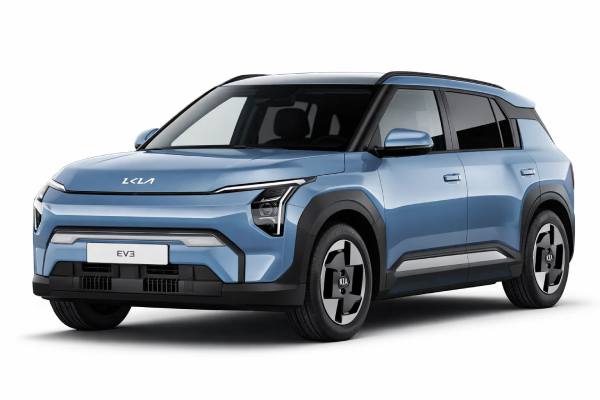
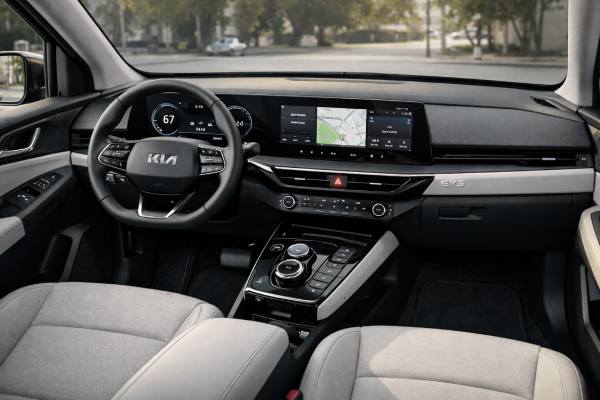
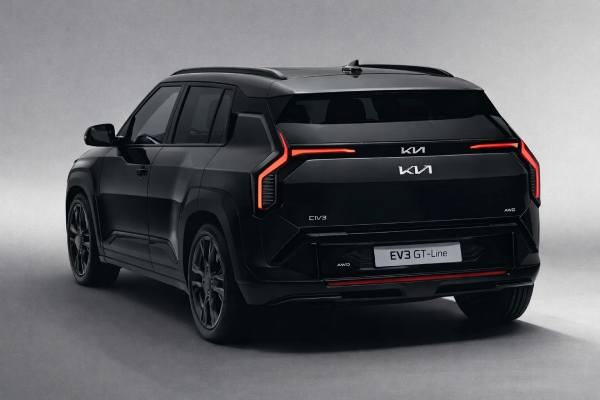
The Kia EV3 (SV) with the 81.4 kWh battery is the “long legs” version of Kia’s compact electric SUV formula. With a single front motor and a big, efficient pack for its size, it targets drivers who want fewer charging stops without moving up to a larger (and heavier) vehicle. The engineering story is mostly about efficiency: a relatively modest power output, aero tuned for real motorway use, and a thermal system designed to keep the battery in a friendly temperature window for both range and charging. For owners, the appeal is straightforward: strong everyday acceleration, one-pedal driving that’s easy to live with, and practical space in a footprint that still fits European cities. This guide focuses on the 81.4 kWh / 201 hp configuration—what it is on paper, what it tends to deliver in the real world, and what to watch as the first model years age.
Key Takeaways
- Prioritizes long-distance efficiency and fewer charging stops more than outright performance.
- Strong highway stability thanks to the low-mounted battery and a calm chassis tune.
- DC charging is quick enough for road trips when the battery is warm and you start at low state of charge.
- Plan for higher tyre and alignment sensitivity on larger wheel packages.
- Check the 12 V battery health at least every 12 months, especially if the car sits unused for long periods.
Quick navigation
- Kia EV3 SV long-range overview
- Kia EV3 SV specifications and data
- Kia EV3 SV trims and safety tech
- Reliability, common issues and service actions
- Maintenance and buyer’s guide
- Driving, range and charging behavior
- How it compares to rivals
Kia EV3 SV long-range overview
The EV3 (SV) long-range variant pairs a single front-mounted permanent-magnet motor with Kia’s larger 81.4 kWh battery. The headline number—201 hp—does not try to impress with brute force. Instead, this configuration is tuned to feel quick in normal driving while keeping energy demand low at steady speeds. In practice, that means strong step-off response, smooth mid-range pull, and a drivetrain that rarely feels strained, even when merging at motorway speeds.
The 81.4 kWh pack is the key differentiator. Compared with smaller-battery versions, it lets the EV3 spend more time in the battery’s “comfortable” middle state-of-charge band for daily use (roughly 30–80%), where both efficiency and charging behavior are typically best. For owners, this matters more than the lab range number: you can commute for several days without charging, and you can plan longer trips with fewer compromises around charger availability.
Platform-wise, EV3 sits in the compact SUV space but borrows lessons from larger EVs: a stiff floor structure around the pack, predictable body control from the low center of gravity, and a cabin layout that uses the EV packaging advantage (flat-ish floor, generous knee room for the footprint). It’s also the kind of EV that rewards “boring” habits: correct tyre pressures, avoiding unnecessary roof loads, and using navigation-linked battery preconditioning before fast charging.
Who is it for? Drivers who want a practical family EV with real motorway range, but who do not need dual motors or performance trims. Who is it not for? Anyone expecting rear-drive handling balance, heavy towing capability, or hot-hatch urgency. The EV3 long-range works best when you treat it like an efficient, calm daily tool that can also do long trips without drama.
Kia EV3 SV specifications and data
Powertrain, battery and efficiency
| Spec | Value |
|---|---|
| Motor type | Permanent-magnet synchronous motor (PMSM) |
| Motor count and axle | Single motor, front axle |
| Max power | 201 hp (150 kW) |
| Max torque | 283 Nm (209 lb-ft) |
| System voltage | 343 V |
| Battery chemistry | NMC (lithium-ion) |
| Traction battery (gross) | 81.4 kWh |
| Traction battery (usable) | 78.0 kWh |
| Battery layout | Underfloor |
| Number of cells | 279 |
| Thermal management | Liquid-cooled battery and power electronics |
| Heat pump | Optional (market and trim dependent) |
| Efficiency / test standard | WLTP (TEL/TEH) |
| Rated efficiency | 14.9 kWh/100 km (149 Wh/km) |
| Rated range | 605 km (TEL) |
| Real-world highway @ 120 km/h (75 mph) | 22.0 kWh/100 km (220 Wh/km); 355 km |
Driveline and charging
| Spec | Value |
|---|---|
| Transmission / drive unit | Single-speed reduction gear |
| Drive type | Front-wheel drive |
| Charging connector (AC) | Type 2 |
| Charging connector (DC) | CCS (Combo 2) |
| Charging port location | Right side, front |
| Onboard charger (AC) | 11 kW |
| DC fast-charge peak | 135 kW |
| Typical DC charging (10–80%) average | 105 kW |
| Replenishment time (DC 10–80%) | 33 min |
| Replenishment time (AC 0–100%) | 8h30m |
| Battery preconditioning for DC charging | Available (navigation-linked) |
| Plug and Charge | Supported (ISO 15118-2) |
| Vehicle-to-Load (V2L) | Supported (3.6 kW AC) |
Performance and capability
| Spec | Value |
|---|---|
| 0–100 km/h (0–62 mph) | 7.7 s |
| Top speed | 170 km/h (106 mph) |
| Towing capacity (braked) | 1000 kg (2205 lb) |
| Towing capacity (unbraked) | 750 kg (1653 lb) |
| Payload | 545 kg (1202 lb) |
Chassis and dimensions
| Spec | Value |
|---|---|
| Length | 4300 mm (169.3 in) |
| Width | 1850 mm (72.8 in) |
| Height | 1560 mm (61.4 in) |
| Wheelbase | 2680 mm (105.5 in) |
| Turning circle (kerb-to-kerb) | 10.4 m (34.1 ft) |
| Kerb weight | 1885 kg (4156 lb) |
| GVWR | 2355 kg (5192 lb) |
| Cargo volume (seats up) | 460 L (16.2 ft³) |
| Cargo volume (seats down) | 1251 L (44.2 ft³) |
| Frunk | 25 L (0.9 ft³) |
| Roof load | 80 kg (176 lb) |
Safety and driver assistance
| Spec | Value |
|---|---|
| Euro NCAP (stars) | 5 stars (with DriveWise ADAS Pack) |
| Adult occupant | 83% |
| Child occupant | 84% |
| Vulnerable road users | 78% |
| Safety assist | 67% |
Fluids and service capacities
| Spec | Value |
|---|---|
| Brake fluid | DOT 4 |
| A/C refrigerant | R-1234yf |
Kia EV3 SV trims and safety tech
Even when you focus on a single battery and motor output, EV3 equipment can change meaningfully by market and trim. For the 81.4 kWh / 201 hp configuration, most regions position it as the “Long Range” core model: the same motor output as the smaller-battery car, but with the larger pack and a stronger road-trip brief. If you are trying to identify the long-range hardware quickly, the most reliable real-world cues are the official battery designation in the car’s spec sheet, the range figure on the sales listing, and the charging-time claim (10–80% timing tends to be quoted on long-range marketing materials).
Options often matter more than “trim names.” Three packages typically change ownership the most:
- Thermal/efficiency equipment: A heat pump (where offered) reduces winter range loss when cabin heat demand is high. It does not remove cold-weather impact, but it usually lowers the penalty on short trips and stop-and-go use.
- Advanced driver assistance: Kia’s higher ADAS bundles (often branded as part of DriveWise) are where lane centering behavior, adaptive cruise smoothness, and highway assistance features become noticeably more capable. If you do long motorway drives, this is the option set that changes fatigue the most.
- Wheel and tyre packages: Larger wheels can look great, but they typically reduce range and can raise road noise. They can also increase sensitivity to alignment and tyre wear, which matters for long-term running costs.
For crash safety, the EV3 has been assessed in Euro NCAP with a split star outcome depending on equipment. With standard equipment it can score lower, while the car equipped with the optional safety pack (DriveWise ADAS Pack) reaches the higher star rating. As an owner or buyer, that means you should treat ADAS equipment as part of safety value—not only convenience. If you are buying used, verify the presence of the relevant package in the original build spec, not by relying on a sales listing’s generic “driver assist” wording.
On active safety systems, expect the modern baseline: autonomous emergency braking (vehicle, pedestrian and cyclist scenarios), lane support functions, blind-spot monitoring (where fitted), rear cross-traffic alert, and traffic sign recognition. The practical point is calibration and condition: camera and radar-based systems can be affected by windscreen replacements, bumper repairs, wheel alignment changes, and even incorrect tyre sizes. After any significant front-end repair or a windscreen replacement, insist on documented ADAS calibration to avoid “phantom” warnings or degraded performance.
Reliability, common issues and service actions
Because the EV3 is a newer model line, reliability assessment is less about long-term failure rates and more about early patterns: software maturity, component sealing, and how the car behaves in edge cases (cold weather, repeated DC fast charging, heavy urban use). A sensible way to think about EV3 reliability is by separating hardware durability (motors, pack structure, cooling system) from systems integration (battery management, charging logic, infotainment, ADAS).
Common (low to medium cost)
- Infotainment and connectivity glitches: Symptoms include intermittent app pairing, dropped connections, or delayed boot-up. Likely root cause is software integration rather than failing hardware. Remedy is typically an OTA update or dealer software campaign.
- Charge-session quirks: Occasional “handshake” failures with certain public chargers can present as repeated retries or reduced initial power. Root causes vary (charger firmware compatibility, cable temperature sensors, vehicle-side protocol handling). Recommended remedy: update vehicle charging software first, then test on multiple charger brands before replacing hardware.
- 12 V battery sensitivity: Modern EVs rely heavily on the 12 V system for control modules and wake/sleep logic. If the car is left parked for long periods or used mostly for short trips with frequent wake cycles, a weak 12 V battery can cause strange warnings. Remedy is testing the 12 V battery under load and replacing it if it fails capacity tests.
Occasional (medium cost)
- HVAC/heat-pump performance complaints: Symptoms include weaker-than-expected cabin heat in very cold weather or unusual compressor noise. Root causes can include refrigerant charge issues, valve calibration, or software logic that prioritizes battery conditioning over cabin comfort. Remedy ranges from software updates to refrigerant service using the correct equipment and procedure.
- Brake noise or surface corrosion: EVs can underuse the friction brakes due to regenerative braking. Symptoms are squeal, scraping, or roughness after rain or long periods of gentle driving. Remedy is periodic firm brake applications in a safe area to clean discs, plus inspection of slider pins and pad condition.
Rare (higher cost, higher severity)
- Coolant leaks or thermal control faults: Symptoms are repeated “power limited” messages, reduced fast-charge rates, or overheating warnings. Root causes can be hose connections, radiator damage, or valve failures. Remedy requires pressure testing and proper coolant type refilling.
- Isolation faults from moisture ingress: EV high-voltage systems monitor insulation resistance. Water ingress in connectors or a compromised seal can trigger warnings and limp-home behavior. Diagnosis involves insulation testing and careful inspection of charging-port seals and underbody connectors.
Recalls, TSBs, and coverage
For a new model, official actions can appear quickly. Always run an official VIN check and compare dealer records with the vehicle’s service history. Treat “software-only” campaigns as important: updates can materially change charging behavior, thermal strategy, and ADAS performance.
Maintenance and buyer’s guide
The EV3’s maintenance needs are lighter than an equivalent petrol SUV, but it is not “service-free.” A practical schedule focuses on tyres, brakes, cabin filtration, cooling systems, and the 12 V battery—plus periodic checks that protect battery health and charging performance.
Practical maintenance schedule (typical use)
- Every 10,000–15,000 km or 12 months
- Tyre rotation (if sizes allow) and tread inspection
- Tyre pressure check and alignment check if you see uneven wear
- Brake inspection: pad thickness, disc condition, slider lubrication
- Visual inspection of underbody covers and cooling inlets (debris buildup)
- Every 20,000–30,000 km or 24 months
- Cabin air filter replacement
- Brake fluid test; replace if moisture content is high or per market schedule
- Air-conditioning performance check (important for battery comfort in some strategies)
- Every 3–5 years (time-based)
- 12 V battery: test annually after year 2; many owners see replacement in this window depending on use pattern and climate
- Coolant system inspection for leaks, hose condition, and radiator fin damage
Fluids, specs, and key torque values (decision-useful)
- Brake fluid: DOT 4
- A/C refrigerant: R-1234yf
- Wheel fasteners: follow the value on the vehicle’s placard/service documentation (wheel fastener torque is safety-critical and can differ by wheel type)
Because official service capacities and some torque specs can be market-specific, treat your regional Kia service documentation as the final authority—especially for high-voltage service points.
Buyer’s guide for used EV3 long-range
- Traction battery health
- Ask for a battery state-of-health report or dealer diagnostic printout if available.
- Verify real-world range on a test drive: note consumption and estimated range at a known state of charge (e.g., 60–80%) and compare to what similar owners report in your climate.
- Check DC fast-charging behavior if possible: a healthy car should ramp power well at low SOC when the battery is warm.
- Charging hardware
- Inspect the charge port for latch smoothness, seal condition, and evidence of moisture intrusion.
- Confirm both AC and DC charging work without repeated interruptions.
- Cooling and thermal management
- Listen for normal operation of pumps and fans after a drive or during preconditioning.
- Check for coolant smell, dampness under the car, or repeated “limited power” warnings in the cluster history.
- Chassis, tyres, and brakes
- Uneven tyre wear is a clue: it can indicate alignment issues or a car that has hit potholes hard.
- Look for brake disc lip and pad glazing; light surface rust is normal, but heavy pitting is not.
- Electronics and ADAS
- Confirm the car is on current software.
- After any windscreen or bumper work, ask for proof of ADAS calibration.
Long-term outlook: the EV3’s biggest ownership variables are not “engine problems” but charging behavior, tyre consumption, and software maturity. A well-maintained car with healthy thermal management and a strong 12 V system should age predictably.
Driving, range and charging behavior
On the road, the EV3 long-range feels intentionally calm. The 201 hp output is enough to make it brisk, but the tuning prioritizes smoothness: it steps off cleanly in traffic, and it delivers power in a linear way that makes it easy to modulate in wet conditions. Because the battery mass sits low, the body stays composed over crests and during lane changes. Steering feel is typically light-to-medium, with a stable on-center zone that suits motorway use more than aggressive corner carving.
Ride, handling, and NVH
Expect a comfort-biased ride that can become firmer and noisier as wheel size increases. Road noise is the dominant sound at higher speeds, which is normal for a compact EV SUV. The best long-distance setup is usually the smallest wheel offered with the long-range pack, because it reduces impact harshness and improves efficiency.
Regenerative braking and one-pedal driving
The EV3’s regen calibration aims to feel predictable at low speeds and stable during lift-off at higher speeds. One-pedal driving is most useful in city traffic, but it pays to occasionally use the friction brakes firmly to keep discs clean. The handoff between regen and friction should feel smooth; if it becomes grabby or inconsistent, it is worth checking tyre condition and having brake hardware inspected for sticking sliders.
Real-world efficiency and range
The long-range version earns its name when you drive at steady speeds. In mixed driving, many owners will see consumption that supports a realistic “useful” range well below the WLTP headline but still comfortably road-trip capable. At 120 km/h, efficiency drops as it does for any EV, and that is the speed band where the larger battery delivers the most everyday benefit: you can maintain motorway pace without turning a trip into a charging hunt.
Cold weather matters. Cabin heating, battery warming, and higher rolling resistance all compound. A heat pump (where equipped) helps most on shorter winter trips and in stop-start traffic, while steady-speed winter motorway driving still carries a meaningful penalty.
Charging performance
For home charging, an 11 kW AC onboard charger is the sweet spot in Europe: it can comfortably refill overnight on three-phase supply and still works well on single-phase at lower power. For public DC charging, the experience depends on starting SOC and battery temperature. The EV3 typically charges fastest when you arrive warm and low (roughly 10–20% SOC). As the battery fills, power tapers—so the practical road-trip strategy is often repeated 10–80% sessions rather than pushing to 100% on DC unless you truly need it.
Preconditioning matters: route to a fast charger using the car’s navigation so it can warm the pack when conditions require it. Without preconditioning—especially in cool weather—you may see slower initial power and a shorter “high power” window.
How it compares to rivals
In the compact electric SUV space, the EV3 long-range competes on a simple promise: strong motorway usability without stepping into a larger, more expensive class. Its closest “intent rivals” include vehicles that offer a similar blend of practical size, modern ADAS, and a battery large enough to make long trips routine.
Where the EV3 long-range tends to win
- Efficiency-first tuning: A modest power output paired with a large pack often produces excellent real-world trip planning results. You are less reliant on perfect chargers because you need them less often.
- Usable packaging: The EV3 aims for “everyday practical” rather than sporty compromises. Cargo volume and cabin space are strong for the footprint, and the driving position suits long stints.
- Modern charging experience features: Items like navigation-linked preconditioning and Plug and Charge support can reduce friction on long journeys, depending on your charging network.
Where rivals can do better
- Peak DC charging and sustained high-speed performance: Some competitors with higher-voltage architectures or more aggressive thermal strategies can hold higher charge power longer, which can matter on repeated motorway legs.
- AWD availability and traction: If a rival offers a dual-motor option in the same price band, it may be a better pick for steep winter climates or drivers who prioritize traction over efficiency.
- Ride refinement on premium brands: Higher-priced competitors can deliver quieter cabins and more sophisticated damper tuning, especially on poor road surfaces.
Choosing smartly
If your priority is long-range commuting and frequent motorway trips in a compact footprint, the EV3 long-range is compelling. If you routinely tow, drive in deep snow, or want a more performance-led chassis, look for alternatives that offer AWD or higher-performance variants—even if their efficiency is slightly worse. As always, match the battery size to your real use: the 81.4 kWh version makes the most sense for drivers who regularly do longer routes or want to reduce charging frequency in winter.
References
- Kia EV3 Specifications 2025 (Manufacturer Specifications)
- Kia EV3 Long Range (2024-2026) price and specifications 2025 (Specifications Database)
- Kia EV3 2025 (Safety Rating)
- euro ncap 2025 kia ev3 datasheet 2025 (Safety Rating Datasheet)
- Kia EV3 awarded five-star Euro NCAP safety rating 2025 (Manufacturer Release)
Disclaimer
This article is for informational purposes only and is not a substitute for professional diagnosis, inspection, or repair. Specifications, torque values, service intervals, and procedures can vary by VIN, market, and equipment, so always verify details using your official Kia service documentation and the vehicle’s build data.
If this guide helped you, please consider sharing it on Facebook, X/Twitter, or your favorite forum—your support helps us keep publishing practical, research-driven content.