
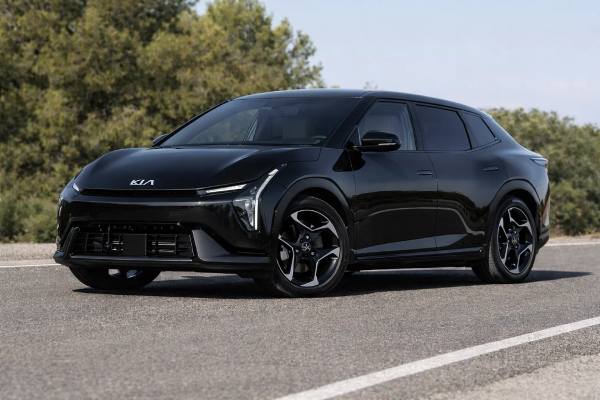
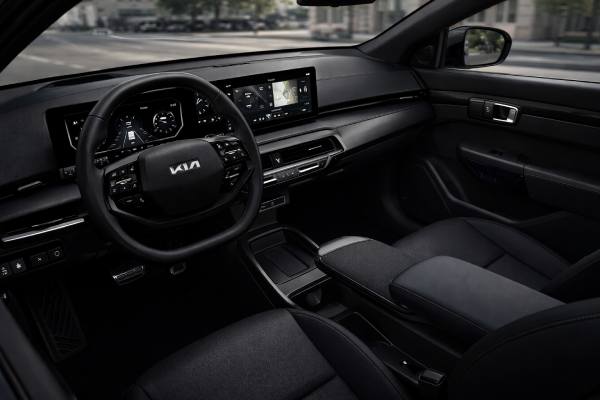
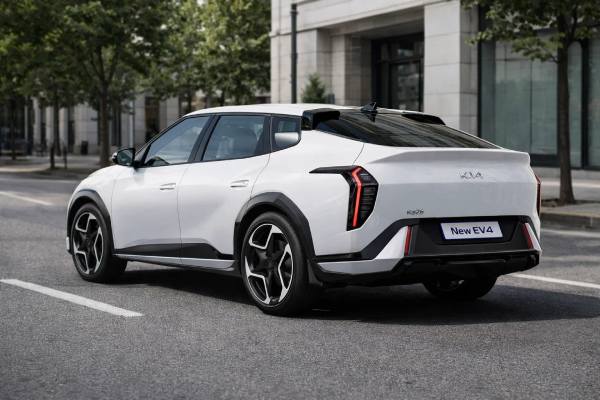
The Kia EV4 GT AWD (CT1) takes the efficient, long-range EV4 formula and adds the hardware enthusiasts actually feel: dual motors, all-wheel drive traction, and GT-focused chassis tuning. The headline 288 hp output comes from a stronger front motor backed up by a smaller rear unit, which changes the car’s personality from “quick commuter” to “confident hot hatch” without jumping to supercar-level running costs.
From an ownership angle, the GT’s main story is balance. You get better grip in wet and cold conditions, stronger mid-range pull for overtakes, and a more planted feel when the road gets messy. In exchange, you take on extra complexity: two drive units, more cooling demand under repeated hard use, and likely higher tire and brake spend—especially with the GT’s larger wheel and performance-rubber approach. If you shop smart, the best EV4 GT experience comes down to thermal features, wheel choices, and staying current on software updates that shape charging, stability control, and driver assistance behavior.
Owner Snapshot
- Dual-motor AWD traction makes the EV4 GT feel more secure in rain and winter tires, especially on hills and exits.
- GT chassis tuning and 20-inch wheels prioritize response and cornering over maximum comfort on rough surfaces.
- Expect higher tire wear than 2WD versions; alignment checks matter after potholes and curb strikes.
- Plan a routine inspection cadence of about 30,000 km or 24 months for brakes, suspension joints, and underbody protection panels.
- Coolant replacement is commonly scheduled at 180,000 km or 120 months, then 30,000 km or 24 months thereafter.
Section overview
- Kia EV4 GT AWD CT1 detailed breakdown
- Kia EV4 GT AWD CT1 specifications and technical data
- Kia EV4 GT AWD CT1 trims, options, and driver assistance
- Reliability, common issues, and service actions
- Maintenance schedule and buyer’s guide
- Driving, range, and charging in the real world
- How it stacks up against rivals
Kia EV4 GT AWD CT1 detailed breakdown
The EV4 GT AWD (CT1) is the version for drivers who like the EV4’s size and efficiency goals, but want a more serious grip-and-response package. The difference is not just power; it’s how the car manages traction, weight transfer, and repeatable performance when you drive harder than “commute pace.”
Powertrain layout: why the GT feels different. The EV4 GT uses a dual-motor AWD system rated at 288 hp (215 kW). Importantly, the system isn’t symmetrical: the front motor is the stronger one and the rear motor adds support. That usually gives the car a front-led character in normal driving, with the rear motor stepping in to stabilize traction, reduce wheelspin, and add torque when you demand it. For owners, that can mean calmer wet-weather takeoffs, more confident overtakes, and less reliance on traction control cutting power.
Chassis focus: grip costs money somewhere. GT models typically earn their cornering stability through three things: (1) higher tire grip, (2) firmer damping or active suspension logic, and (3) stability control tuning that allows more yaw before intervention. On the EV4 GT, the 20-inch wheel fitment and GT-specific suspension approach point to sharper response, but you should also expect more road noise on rough asphalt and a higher chance of impact damage if your roads are pothole-heavy. This is where ownership reality shows up: larger wheels look great and respond quickly, yet they can be less forgiving of broken pavement.
The battery remains the “trip planner.” The EV4 GT keeps the 81.4 kWh pack that makes the long-range versions attractive. However, AWD plus performance tires and larger wheels usually increase consumption in real driving. You will still have excellent usable range for the class, but the GT’s best value is not chasing maximum kilometers; it’s having enough buffer to drive briskly without constantly thinking about the next plug.
Where the EV4 GT fits best.
- Drivers in mixed climates who want extra traction without moving up to a taller SUV.
- People who enjoy a responsive chassis but still want a practical, everyday interior and hatchback utility.
- Owners who road-trip and want stable high-speed manners with fewer traction surprises.
Where it may not be ideal.
- If your priority is the quietest ride and lowest tire spend, a smaller-wheel 2WD version will likely be cheaper to run.
- If you expect repeated track-style abuse, the GT’s cooling strategy and brake hardware will matter more than the badge; you’ll want to confirm brake spec, pad availability, and thermal protections in your market.
Think of the EV4 GT AWD as a “usable performance” EV: it’s built to feel more confident and more engaging, but it still rewards the same EV habits—good tires, smart charging routines, and keeping software up to date.
Kia EV4 GT AWD CT1 specifications and technical data
Powertrain, battery, and efficiency
| Spec | Value |
|---|---|
| Powertrain type | Battery electric vehicle (BEV) |
| Motor count and axle | Dual motor, front and rear axles |
| Max power (system) | 288 hp (215 kW) |
| Front motor power | 194 hp (145 kW) |
| Rear motor power | 94 hp (70 kW) |
| Drive type | AWD |
| Battery capacity (gross) | 81.4 kWh |
| Battery usable capacity | 78.0 kWh |
| Battery chemistry (cathode) | NMC |
| Battery architecture | 400 V |
| Nominal battery voltage | 343 V |
Performance and capability
| Spec | Value |
|---|---|
| 0–100 km/h (0–62 mph) | 6.0 s |
| Top speed | 180 km/h (112 mph) |
| Towing capacity (braked) | 1,000 kg (2,205 lb) |
| Towing capacity (unbraked) | 750 kg (1,653 lb) |
| Payload | 540 kg (1,190 lb) |
Driveline and charging
| Spec | Value |
|---|---|
| Transmission / drive unit | Single-speed reduction gear (front and rear) |
| Charging connector (AC) | Type 2 |
| Charging connector (DC) | CCS |
| Charging port location | Right side, front |
| Onboard charger (AC) | 11 kW |
| DC fast-charge peak | 135 kW |
| DC average power (10–80%) | 105 kW |
| DC 10–80% time | 33 min |
| Battery preconditioning for DC charging | Yes (navigation-triggered) |
| Plug and Charge | Supported (ISO 15118-2) |
| Vehicle-to-Load (V2L) | 3.6 kW AC |
Chassis and dimensions
| Spec | Value |
|---|---|
| Front suspension | MacPherson strut |
| Rear suspension | Multi-link |
| Wheels | 20 in |
| Length | 4,430 mm |
| Width | 1,860 mm |
| Height | 1,485 mm |
| Wheelbase | 2,820 mm |
| Cargo volume (seats up) | 435 L |
| Cargo volume (max) | 1,415 L |
Safety and driver assistance
| Spec | Value |
|---|---|
| Crash rating body | Euro NCAP |
| Publication date | Dec 2025 |
| Star rating (standard equipment) | 4 stars |
| Star rating (with safety pack) | 5 stars |
| Adult occupant | 84% |
| Child occupant | 85% |
| Vulnerable road users | 77% |
| Safety assist | 78% |
Kia EV4 GT AWD CT1 trims, options, and driver assistance
Because “GT” already implies a higher equipment baseline, the real trim decision often becomes a question of packs and hardware rather than nameplates. On an EV like the EV4 GT AWD (CT1), the options that matter most are the ones that affect (1) traction and ride, (2) winter efficiency, (3) driver assistance capability, and (4) charging convenience.
Trim and equipment cues that identify a true GT. The EV4 GT is defined by its dual-motor AWD system and GT chassis content. In practice, the easiest real-world tells are wheel size and suspension behavior. The GT’s 20-inch wheels and performance tire intent usually stand out immediately, and the driving feel tends to be more tied down over quick direction changes than the standard car. If you’re checking a used listing, confirm that it’s not just a “GT-Line” appearance trim by verifying dual-motor AWD in the drivetrain description and build documentation.
Option packages that change ownership, not just comfort.
- Safety and ADAS packs: Euro NCAP published a two-tier outcome for the EV4 depending on standard equipment versus an optional safety pack. For buyers, that’s a signal to verify the exact ADAS content on the car you’re considering rather than assuming every EV4 GT is identically equipped.
- Thermal features for winter: Many EV ownership complaints trace back to winter heating and cold-battery charging limits. If your market offers heat-pump or winter-thermal packages, they typically pay dividends in real range stability and faster DC charging consistency during cold months.
- Charging and route planning software: Look for navigation-linked battery preconditioning and a charge planner that factors temperature and speed. The hardware matters, but software determines whether the car arrives at a fast charger ready to accept power or spends the first minutes “warming itself up.”
Safety ratings and what they mean day to day. Euro NCAP’s EV4 results show strong core protection scores, and the two-star-rating presentation emphasizes how much modern safety depends on the full sensor and assistance suite. For owners, the practical benefit of higher ADAS specification is not just the rating label; it’s reduced fatigue on long drives (adaptive cruise plus lane centering) and fewer “near-miss” moments in dense urban traffic (AEB and blind-spot coverage).
ADAS features to prioritize in a performance-flavored EV. The EV4 GT’s extra traction can encourage brisker driving, so it’s wise to prioritize the systems that prevent the most common real-world crashes:
- AEB for vehicles, pedestrians, and cyclists for city and suburban risk.
- Adaptive cruise control with smooth stop-and-go behavior for commuting.
- Lane keeping and lane centering support for motorway monotony.
- Blind-spot monitoring and rear cross-traffic alert for aggressive lane changes and parking lots.
Service and calibration implications (important for used buyers). Driver assistance systems often require calibration after windshield replacement, bumper repairs, and sometimes after suspension work or significant alignment changes. With 20-inch wheels and lower-profile tires, the GT is more likely to see pothole impacts that knock alignment out. When alignment shifts, lane-keeping behavior can feel “off” even if nothing is technically broken—so it’s worth treating calibration and alignment as part of GT ownership, not an afterthought.
The short version: choose the EV4 GT you want by verifying drivetrain and the safety/thermal packs, then treat wheel condition, alignment history, and ADAS calibration as core buying criteria.
Reliability, common issues, and service actions
The EV4 GT AWD is new enough that the most honest reliability guidance focuses on (1) what’s typically robust in modern EVs, (2) what becomes higher-risk with dual motors and performance tuning, and (3) how to protect yourself with records, VIN checks, and software currency.
What tends to hold up well. EV drive units (motor plus reduction gear) often prove durable when kept within normal thermal limits. There are fewer wear cycles than combustion drivetrains, and regenerative braking reduces friction-brake consumption in normal use. For many owners, the largest day-to-day reliability driver is actually software stability and 12 V system health, not the traction battery.
Common (low to medium severity) watch areas.
- Software and connectivity glitches: infotainment freezes, phone-key pairing issues, or occasional charging handshake failures at certain public chargers.
Typical pattern: symptom appears after an update or a phone change → resolved by OTA update, dealer reflash, or updated charging-network firmware. - 12 V battery sensitivity: EVs rely on the 12 V system to power control modules, locks, and wake-up behavior.
Typical pattern: warnings, intermittent no-start, repeated low-voltage alerts → test 12 V battery and charging logic, replace if weak.
Occasional (medium severity) GT-specific risks.
- Tire wear and alignment drift: 20-inch wheels and higher grip can accelerate wear, and pothole hits can introduce toe or camber changes that scrub tires quickly.
Symptom → likely cause → remedy: uneven tread, steering pull, increased noise → alignment shift or bent component → alignment and inspection, replace damaged parts early. - AWD driveline noises under load: dual-motor cars can expose half-shaft or mount noises sooner because torque application changes with traction events.
Symptom → cause → remedy: click on tight turns, vibration under hard acceleration → joint or mount wear → inspect shafts and mounts, correct torque and alignment. - Thermal limits during repeated hard use: a GT badge invites harder driving, and repeated high-power pulls can raise coolant and inverter temperatures.
Symptom → cause → remedy: reduced power after repeated acceleration or long climbs → thermal protection strategy → allow cooldown, confirm cooling system health, keep radiator areas clear.
Rare but important (high severity) categories.
- High-voltage isolation faults or moisture ingress in connectors: uncommon, but they can disable charging or trigger warning lights.
Typical response: isolation tests, inspection of seals and harnesses, and replacement of affected components if a leak path is found.
Service actions: what matters most early in the model cycle. New EVs often receive updates that refine battery state-of-charge estimation, charging curves, preconditioning triggers, and stability-control behavior. If the car feels inconsistent—charging slower than expected, traction control overly intrusive, or ADAS warnings appearing without clear cause—software updates are frequently the first step before hardware replacement.
How to protect yourself (especially when buying used).
- Confirm completion of recalls and field actions using official VIN-based checks and dealer records.
- Request proof of software update history where available.
- Inspect wheel condition closely and look for signs of prior impact repairs.
- Scan for fault history with a proper diagnostic tool during a pre-purchase inspection.
The EV4 GT’s reliability outlook should be strong if you treat it like a performance daily driver: protect it from heat abuse, keep tires and alignment in check, and stay current on updates that refine charging and stability behavior.
Maintenance schedule and buyer’s guide
A GT AWD EV does not ask for oil changes, but it does ask for discipline in the areas that actually determine long-term cost: tires, brakes, cooling health, and electrical checks. A practical schedule keeps the EV4 GT dependable without over-servicing it.
A practical maintenance schedule (normal use).
- Every 15,000–20,000 km or 12 months
- Tire inspection and rotation strategy (as tread pattern allows), with a focus on front-to-rear wear balance.
- Brake inspection and cleaning in wet or salty climates (regen reduces pad use, which can allow corrosion to build).
- Cabin air filter check and replacement as needed, especially for dusty regions or allergy seasons.
- Check underbody shields and fasteners (important after winter debris or pothole impacts).
- Every 30,000 km or 24 months
- Full chassis inspection: ball joints, tie rods, bushings, wheel bearings, and damper leaks.
- Alignment check (high value on a 20-inch wheel car).
- Diagnostic scan for stored faults and software updates (powertrain, charging, ADAS, infotainment).
- Charging port inspection: latch operation, pin condition, and seal integrity.
- Long-interval coolant service
- Coolant replacement is commonly listed at 180,000 km or 120 months, then every 30,000 km or 24 months thereafter. Treat this as a must-follow item because thermal management reliability depends on correct coolant chemistry and bleeding procedures.
Severe-use adjustments (when to shorten intervals). If you frequently DC fast charge, drive repeated high-speed runs, tow (if equipped and approved in your market), or live in extreme heat/cold, shorten these checks:
- Alignments and tire inspections (wear accelerates with torque and temperature swings).
- Brake inspections and lubrication checks (corrosion risk rises in winter and coastal environments).
- Cooling-system inspections (debris-blocked radiators and bent fins hurt performance and charging).
Buyer’s guide: what to check before purchase. The best used EV4 GT buys are the ones with boring, complete records.
- Traction battery health
- Compare real driving range at a known state-of-charge (such as 80%) against the car’s typical use history.
- Test DC charging behavior from a low starting point (around 10–20% state of charge) to see whether it ramps smoothly and maintains strong power through the main window.
- Ask for a battery health or state-of-health report if your market supports it.
- Charging hardware
- Inspect the charge port carefully: damage, looseness, cracked plastics, or water intrusion signs.
- Verify the supplied cables and adapters match your home setup.
- Confirm battery preconditioning works through navigation if you plan frequent fast charging.
- Cooling and thermal management
- Look for evidence of correct coolant servicing when due.
- Confirm cabin heating and air conditioning performance (poor heat output in winter can point to thermal issues).
- Chassis and wheels
- Check for bent wheels, sidewall bubbles, and uneven wear that signals alignment or suspension damage.
- Test for vibrations under acceleration and braking, which can hint at wheel balance, axle issues, or brake rust buildup.
- Electronics and ADAS
- Ensure all cameras, radar-based features, and parking sensors function without warnings.
- Ask about windshield replacement history (calibration matters) and verify lane and cruise systems behave smoothly.
Long-term durability outlook. Expect low routine costs compared with combustion hot hatches, but plan for higher tire spend and occasional calibration/alignment work. The biggest “high-cost” risks remain battery-related issues and advanced electronics—both of which are best managed with warranty awareness and documented service history.
Driving, range, and charging in the real world
The EV4 GT AWD’s appeal is how it changes the EV4’s confidence level on real roads. AWD is not only about snow; it’s also about stability on cold tires, wet roundabouts, and uneven surfaces where a single driven axle can feel busy.
Ride, handling, and noise. With 20-inch wheels and performance-focused tuning, the GT should feel sharper in initial turn-in and more controlled in quick transitions. The trade-off is that low-profile tires transmit more harshness over sharp edges, and they often generate more road roar on coarse pavement. If your roads are rough, the GT may still be comfortable, but it will likely feel “sport firm” rather than “soft touring.”
Power delivery and traction behavior. Dual-motor AWD typically improves the first half-second of acceleration—the part where 2WD cars can waste energy in wheelspin or traction control intervention. The EV4 GT’s front-led layout should feel familiar and predictable, while the rear motor adds stability under throttle. On wet roads, that often translates to cleaner exits from corners and fewer moments where the steering wheel feels tugged by torque.
Regen and brake feel: the quality test. EV performance is enjoyable when the brake pedal is consistent. The best setups blend regenerative braking with friction braking smoothly, especially during the final meters of a stop. If you test-drive one, pay attention to low-speed stopping consistency and how the car behaves when you lift off the accelerator mid-corner—some EVs apply regen strongly and can unsettle the chassis if calibration is aggressive.
Real range: useful planning numbers. Kia lists the 81.4 kWh EV4 family with a range envelope that can reach the low-600 km WLTP class in certain versions, but the GT’s AWD system and 20-inch performance tires usually reduce real-world efficiency. A practical way to plan is to use the long-range 81.4 kWh EV4 baseline as your reference and then subtract a buffer for GT hardware:
- For steady motorway driving, plan roughly 10–15% less range than a comparable 81.4 kWh 2WD on smaller wheels.
- In cold weather, plan additional margin for cabin heat and a colder battery, especially on short trips.
This approach is more useful than chasing a single number because range varies sharply with speed, temperature, wind, and tire choice. If you drive briskly, your effective range will drop first; if you drive smoothly, the battery will feel “big.”
Charging behavior: how to make trips easy. The EV4’s 400 V charging approach rewards good habits:
- Navigate to fast chargers to trigger battery preconditioning when available.
- Arrive with a low starting state-of-charge (around 10–20%) for the best charging window.
- Avoid pushing beyond 80% on road trips unless you truly need it, because charging typically slows in the upper band.
For home charging, an 11 kW AC setup is a sweet spot: it replenishes meaningful range overnight without stressing the pack the way frequent fast charging can. If you road-trip often, the GT is most enjoyable when you treat charging as short, repeatable sessions and let the AWD confidence make the driving part more relaxing.
How it stacks up against rivals
The EV4 GT AWD competes with a growing set of “daily-usable performance EVs.” The key is understanding what kind of performance you value: straight-line speed, repeatable charging, cornering feel, or year-round traction.
If you want the strongest traction ecosystem and trip simplicity. Tesla’s AWD models often lead in route planning integration and charging network convenience in many regions. That can reduce friction on long trips, but you should compare ride comfort, cabin controls, and insurance/repair dynamics in your local market.
If you want sharper chassis feel and a more premium edge. Polestar 2 and similar rivals can deliver a more performance-oriented steering and damping feel, often with a heavier, more planted character. The trade-off can be higher running costs on tires and a different software ecosystem. Compare driver assistance behavior and winter efficiency if you live in a cold climate.
If you want aero efficiency over “hot hatch” attitude. Streamlined sedan-shaped EVs can return excellent motorway consumption, which can offset a smaller battery in real trip time. However, some of these alternatives may not offer the same playful traction feel as a GT AWD hatchback, and wheel choices can still erode the efficiency advantage quickly.
If you prioritize value and practicality first. A non-GT long-range EV4 variant may offer more kilometers per charge and lower tire costs, while still being quick enough for most drivers. This is worth considering if you rarely exploit AWD traction and prefer quieter ride comfort.
Where the EV4 GT AWD tends to stand out.
- Year-round confidence: AWD traction helps in real-world weather, not just in performance demos.
- Balanced power: 288 hp is enough to feel quick without pushing running costs into extreme territory.
- GT hardware focus: chassis tuning and wheel package signal a car designed to feel more responsive, not just look sporty.
Where a rival may fit better.
- You want an 800 V-class charging architecture with stronger sustained fast-charging behavior.
- You prioritize the quietest ride and lowest tire spend over responsiveness.
- You want a proven long-term track-use platform rather than a performance-flavored daily driver.
A sensible shopping method is to compare the EV4 GT AWD against one “charging-and-network champion” and one “chassis-feel champion.” If the EV4 GT already meets your trip needs and you like its traction confidence, it’s often the most balanced ownership choice in the group.
References
- The Kia EV4 2025 (Manufacturer Overview)
- Kia EV4 2025 (Safety Rating)
- Kia EV4 – Euro NCAP 2025 Results – standard equipment 4 stars and with safety pack 5 stars 2025 (Safety Rating)
- Scheduled maintenance service 2026 (Owner’s Manual)
- The Kia EV4 GT is a new 288bhp AWD hot hatch! | Top Gear 2026 (Model Details)
Disclaimer
This article is for informational purposes only and is not a substitute for professional diagnosis, inspection, or repair. Specifications, torque values, service intervals, and procedures can vary by VIN, market, model year, software version, and installed equipment. Always verify details using your vehicle’s official owner information and service documentation, and consult a qualified technician for safety-critical work.
If this guide helped you, please consider sharing it on Facebook, X (Twitter), or your preferred community—your support helps us keep publishing detailed, practical ownership resources.