
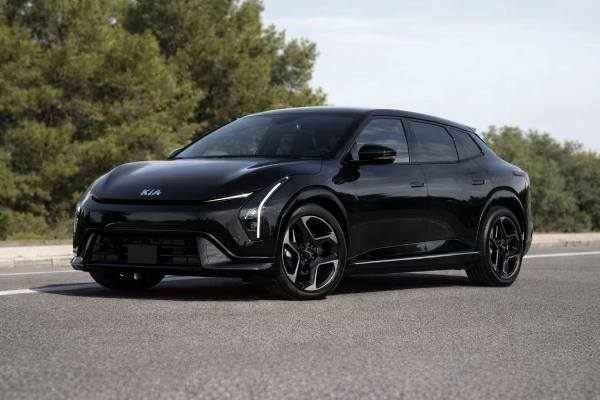
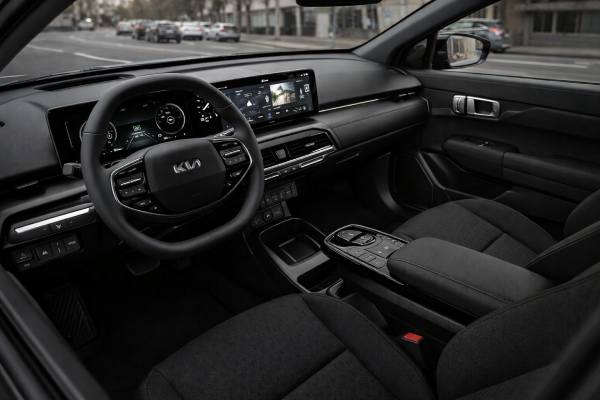
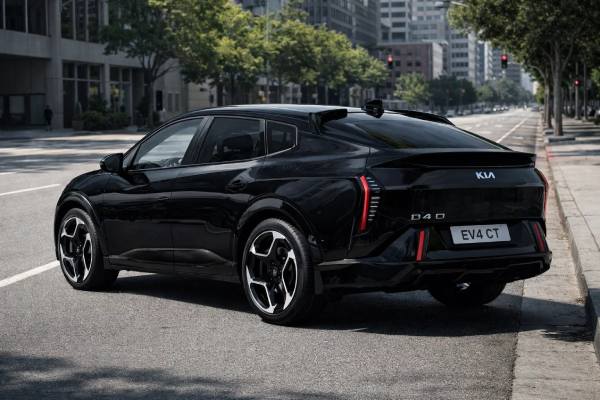
The Kia EV4 (CT) with the 81.4 kWh battery and 201 hp motor aims for a sweet spot: long real-world usability without chasing extreme power. Its single front-mounted permanent-magnet motor keeps packaging efficient and costs contained, while the 400-volt battery system focuses on consistent, repeatable charging rather than headline peak numbers. In practice, the EV4’s ownership story is about efficiency and predictability—especially on mixed routes—plus the comfort benefits of a low, floor-mounted battery that calms body motions.
For day-to-day drivers, the biggest engineering wins are the EV4’s balanced thermal strategy (helping winter range and DC charging consistency) and a chassis layout tuned for stable highway tracking. If you’re shopping smart, the key is matching wheel size, heat-pump availability, and ADAS packs to your climate and commute, because those choices shape range, cabin noise, and long-trip convenience more than badges do.
What to Know
- Strong long-range efficiency for a 201 hp, front-drive EV—best results come with smaller wheels and steady speeds.
- Fast, repeatable DC sessions are realistic when the battery is warm and you start near 10% state of charge.
- Plan for extra winter buffer: cabin heat and higher speeds can trim usable range quickly on long motorway runs.
- Routine service checks are typically every 30,000 km or 24 months, with inspections covering brakes, charging port, and underbody.
- Coolant service is a long-interval item at 180,000 km or 120 months, then 30,000 km or 24 months afterward.
Navigate this guide
- Kia EV4 CT ownership overview
- Kia EV4 CT specs and data
- Kia EV4 CT trims and safety tech
- Reliability issues and service actions
- Maintenance plan and buying tips
- Real driving and charging performance
- Rivals and alternatives
Kia EV4 CT ownership overview
The EV4 (CT) 81.4 kWh / 201 hp version is best understood as an efficiency-first long-range EV with a calm, modern driving feel. You’re not buying it for neck-snapping acceleration or all-wheel-drive traction; you’re buying it because it makes long daily distances easy, with charging and range behavior that’s easier to plan around than many “fast on paper” alternatives.
Powertrain character and layout. This configuration uses a single front-mounted permanent-magnet synchronous motor (PMSM). Front drive simplifies the driveline and typically reduces moving parts compared with dual-motor systems. For owners, that can translate to fewer axle-related components, slightly better efficiency, and a predictable traction profile—especially on dry roads. In wet or snow, the EV4’s traction and stability systems matter more than raw power, so tires become the “real drivetrain upgrade.”
Battery strategy: usable range over hype. The 81.4 kWh pack’s appeal is not just capacity; it’s how the car converts energy into distance. With the right wheel-and-tire setup, the EV4 can deliver strong mixed-route consumption, which is what most owners feel as “less charging drama.” The trade-off is that a 400-V architecture tends to favor steady charging rather than ultra-high peaks; the EV4’s best long-trip rhythm comes from arriving low (around 10–15% state of charge), charging into the mid range (often 60–80%), then driving again—rather than trying to “fill it up.”
Comfort and practicality cues. A low battery floor generally helps ride control: less pitch under braking, less squat under acceleration, and more planted highway behavior. The EV4’s everyday usefulness also hinges on interior and software features—route planning that understands charging stops, preconditioning triggers, and an interface that doesn’t make climate control a chore. Those details matter because EV ownership is often about small, repeated interactions.
Who it fits best. This EV4 variant is ideal for commuters who rack up kilometers, drivers who want long range without moving into larger, heavier SUVs, and owners who value low running costs over performance bragging rights. If you frequently tow, live on steep unplowed roads, or insist on AWD traction, you’ll want to compare alternatives carefully. But if your goal is an efficient, long-range EV you can run for years with mostly tires, brake fluid checks, and cabin filters, the EV4 CT long-range setup is conceptually in the right lane.
Kia EV4 CT specs and data
Powertrain, battery, and efficiency
| Spec | Value |
|---|---|
| Powertrain type | Battery electric vehicle (BEV) |
| Motor type | Permanent Magnet Synchronous Motor (PMSM) |
| Motor count and axle | Single motor, front axle |
| Max power | 201 hp (150 kW) |
| Max torque | 283 Nm (209 lb-ft) |
| Drive type | FWD |
| Battery nominal (gross) capacity | 81.4 kWh |
| Battery usable capacity | 78.0 kWh |
| Battery chemistry (cathode) | NMC |
| Nominal battery voltage | 343 V |
| Electrical architecture | 400 V class |
| Battery cells (count) | 279 |
| Battery capacity (Ah) | 237.3 Ah |
| Battery weight | 470 kg (1,036 lb) |
| Official range (WLTP, up to) | 630 km (391 mi) |
| WLTP range (EVKX basic trim) | 590 km (367 mi) |
| Real-world highway @ 120 km/h (75 mph) | 20.0 kWh/100 km (322 Wh/mi) |
| Real-world highway @ 120 km/h (75 mph) range | 390 km (242 mi) |
| Real-world mixed “real range” reference | 475 km (295 mi) |
| WLTP consumption (example) | 13.22 kWh/100 km (212 Wh/mi) |
Driveline and charging
| Spec | Value |
|---|---|
| Transmission / drive unit | Single-speed reduction gear |
| Charging connector (AC) | Type 2 |
| Charging connector (DC) | CCS |
| Charging port location | Right side, front |
| Onboard charger (AC) | 11 kW |
| AC charge time (10–100%, typical) | 7h 15m |
| DC fast-charge peak | 135 kW |
| Typical DC average (10–80%) | 105 kW |
| DC 10–80% time | 31–33 min |
| Battery preconditioning for DC | Yes (navigation-triggered) |
| Plug and Charge | Supported (ISO 15118-2) |
| Vehicle-to-Load (V2L) | 3.6 kW AC |
Performance and capability
| Spec | Value |
|---|---|
| 0–100 km/h (0–62 mph) | 7.7 s |
| Top speed | 170 km/h (106 mph) |
| Tow rating (braked) | 1,000 kg (2,205 lb) |
| Tow rating (unbraked) | 750 kg (1,653 lb) |
| Max payload | 540 kg (1,190 lb) |
Chassis and dimensions
| Spec | Value |
|---|---|
| Front suspension | MacPherson strut |
| Rear suspension | Multi-link |
| Wheels/tyres (example) | 215/50 R19 |
| Length | 4,430 mm (174.4 in) |
| Width | 1,860 mm (73.2 in) |
| Height | 1,485 mm (58.5 in) |
| Wheelbase | 2,820 mm (111.0 in) |
| Curb weight | 1,890 kg (4,167 lb) |
| GVWR | 2,355 kg (5,192 lb) |
| Turning circle | 10.9 m (35.8 ft) |
| Cargo volume (seats up) | 435 L (15.4 ft³) |
| Cargo volume (max) | 1,415 L (50.0 ft³) |
Safety ratings and driver assistance
| Spec | Value |
|---|---|
| Euro NCAP publication | Dec 2025 |
| Euro NCAP rating (standard equipment) | 4 stars |
| Euro NCAP rating (with safety pack) | 5 stars |
| Adult occupant | 84% |
| Child occupant | 85% |
| Vulnerable road users | 77% |
| Safety assist | 78% |
Fluids and service capacities
| Spec | Value |
|---|---|
| Wheel nuts torque | 107–127 Nm (79–94 lb-ft) |
Kia EV4 CT trims and safety tech
Even when the motor and battery stay the same, trims matter on EVs because wheels, driver assistance packages, and thermal equipment can change comfort, range, and charging consistency. For the EV4 CT long-range (81.4 kWh, 201 hp), think in three practical layers: the core powertrain, the rolling hardware (wheels/tires), and the software-and-sensors layer that shapes safety and daily ease.
Trim structure and quick identifiers. In markets such as the UK, EV4 trim naming commonly includes Air, GT-Line, and GT-Line S, with additional body-style variants (for example, fastback-themed trims). The easiest real-world identifiers tend to be wheel size and exterior styling cues: base-oriented trims often wear smaller wheels (usually the efficiency pick), while sport-styled trims step up to 19-inch packages that can look sharper but typically raise road noise and energy use at motorway speeds.
Options that materially change ownership.
- Heat pump (if equipped/selected): This can be the difference between “winter is fine” and “winter requires planning.” A heat pump reduces the energy penalty of cabin heating and can also support battery conditioning strategies depending on the system design.
- Advanced ADAS packs: These are not just convenience features; they can affect insurance, fatigue on long trips, and safety ratings. If a safety pack is optional, the presence of that pack can also change the vehicle’s published crash rating outcome in some test programs.
- Charging and route-planning software: Look for navigation-linked battery preconditioning and a charging planner that adjusts for speed and temperature. These features reduce slow charging sessions caused by arriving with a cold pack.
Crash-test results and what they mean. Euro NCAP evaluated the Kia EV4 with a two-rating outcome: one score for standard equipment and another when equipped with an optional safety pack. Practically, that signals the structure is solid, but the highest rating depends on the full sensor and assistance suite being present. If you’re buying used, it’s worth verifying whether the car has the pack hardware (radar/camera set, the specific “DriveWise” content) rather than assuming all EV4s are identical.
ADAS content to look for (and why). At minimum, most buyers should prioritize:
- AEB (autonomous emergency braking) with pedestrian and cyclist detection for urban safety.
- ACC (adaptive cruise control) for long motorway drives.
- Lane keeping and lane centering support for fatigue reduction.
- Blind-spot monitoring and rear cross-traffic alerts for dense parking lots and city merging.
Service and calibration implications. Modern ADAS requires correct calibration after windshield replacement, bumper repairs, some alignments, and certain suspension work. If you plan to run winter wheels, lowered springs, or non-standard tire sizes, expect additional attention to alignment and possibly sensor calibration to keep lane and distance systems behaving correctly.
Bottom line: for the EV4 CT 81.4 kWh, the “best” trim is usually the one that matches your climate and speed profile—often smaller wheels for range, plus the safety pack if you value top-tier safety scoring and long-distance driver assistance.
Reliability issues and service actions
Because the EV4 line is still early in its life cycle, the most responsible way to think about reliability is in layers: proven EV fundamentals, known risk areas common to modern EVs, and campaign-driven fixes (software updates, service actions, and recalls) that can appear quickly after launch.
What tends to be reliable in EVs like this. The basic electric motor and single-speed reduction gear are usually durable because they avoid the heat and friction cycles of internal combustion engines. Routine wear items also drop: no engine oil, no spark plugs, and less brake wear thanks to regenerative braking. That said, EV reliability often hinges on “support systems” rather than the motor itself.
Common vs occasional vs rare—what to watch.
- Common (low to medium severity):
- Software quirks: intermittent infotainment glitches, phone-key pairing oddities, or charging-session handshake failures.
Symptom → likely cause → remedy: slow UI / random disconnects → software bug or communication timeout → OTA update or dealer reflash. - 12 V battery sensitivity: EVs still rely on a 12 V system for control modules and wake-up logic.
Symptom → cause → remedy: no-start / repeated low-voltage warnings → parasitic draw or weak 12 V battery → battery test, firmware update where applicable, replace battery if failing. - Occasional (medium severity):
- Charging port and latch wear or sealing issues: particularly in wet climates or with frequent public charging.
Symptom → cause → remedy: connector won’t lock, water ingress warnings, inconsistent DC initiation → worn latch actuator or seal → adjust/replace latch components, inspect seals, update charging logic if available. - Thermal-management faults: sensors, pumps, or valves can create “charging is slow” complaints.
Symptom → cause → remedy: DC power limited despite warm weather → coolant flow or temp sensor issue → diagnostic scan, repair component, bleed coolant circuit per procedure. - Rare (high severity/cost):
- High-voltage isolation faults or moisture ingress in HV connectors: uncommon but important due to safety and drivability impact.
Symptom → cause → remedy: HV warning, reduced power, charging disabled → insulation fault or moisture path → isolation test, connector/service plug inspection, repair sealing, replace affected harness/component.
Battery health and degradation patterns. For a long-range NMC pack, the usual degradation story is modest early drop, then a slower curve—heavily influenced by high average state-of-charge, repeated deep fast charging, and heat. Owners who keep daily charging in a mid-band (for example, not living at 100%) and reserve frequent DC fast charging for trips typically see steadier long-term capacity retention. The EV4’s best durability strategy is behavioral: avoid unnecessary heat, and don’t store the car at very high state-of-charge for long periods.
Software and calibration updates that matter. In modern EVs, the most meaningful updates usually touch:
- BMS (battery management system): improves range prediction, charging limits, and cell balancing behavior.
- Charging control: better Plug and Charge behavior, reduced session failures, improved taper logic.
- ADAS calibration: improves lane centering stability, reduces false warnings, or updates sensor fault thresholds.
Recalls, TSBs, and how to verify completion. The most reliable approach is VIN-based checking through official channels and dealer service records. Before purchase (especially used), request proof of:
- Completed recall/service actions
- Charging-system software updates (when applicable)
- Any high-voltage repairs documented by an authorized workshop
If you can only do one reliability check, make it this: confirm campaigns by VIN, then scan the car for fault history and update status. That single step catches the majority of “hidden” early-life EV problems.
Maintenance plan and buying tips
The EV4 CT long-range model keeps routine maintenance simple, but it’s not “maintenance-free.” The smart plan is to follow the factory service cadence, then add EV-specific checks that protect the battery, charging system, and underbody.
Core service interval (baseline). A practical ownership rhythm is a scheduled inspection service around every 30,000 km or 24 months. That interval aligns well with the kind of checks EVs benefit from: brake hardware condition (even if pads last), underbody fasteners and covers, suspension joints, tire wear patterns, charging port condition, and diagnostic scans for stored faults and software updates.
A practical maintenance schedule (normal use).
- Every 30,000 km or 24 months
- Diagnostic scan for errors and software updates (powertrain, charging, ADAS, infotainment).
- Inspect brakes: calipers, pads, hoses, and parking brake operation (regen can hide corrosion until it’s advanced).
- Inspect tires and rotate if wear patterns suggest it (front-drive EVs can wear fronts faster).
- Inspect suspension and steering: ball joints, tie rod ends, bushings, wheel bearings.
- Inspect cooling system: hoses, radiator area, signs of seepage.
- Inspect charging port and sealing cap condition (water ingress prevention).
- Top up washer fluid and check wipers, lights, and exterior hardware.
- Every 4 years
- Replace the eCall battery (where specified for the vehicle’s equipment package).
- Coolant service
- Replace coolant at 180,000 km or 120 months, then every 30,000 km or 24 months afterward (per the published schedule in some markets).
Severe-use adjustments (what changes in the real world). If you do frequent DC fast charging, drive repeated high-speed motorway runs, operate in extreme cold/heat, or carry heavy loads often, add:
- More frequent tire rotations and alignments (torque + weight can scrub tread quickly).
- More frequent brake cleaning/inspection (to reduce rust buildup from low friction-brake use).
- Extra attention to cooling airflow (clear debris from intake areas and radiators).
Fluid specifications and torque essentials (decision-focused). EV ownership still includes critical fasteners. Wheel hardware torque matters because EV torque and regen loads can stress improper wheel installation. Use the manufacturer-specified wheel-nut torque range and recheck after wheel swaps.
Buyer’s guide: what to inspect before purchase (used or ex-demo).
- Traction battery health
- Compare displayed range at a known state-of-charge (for example, 80%) against expected real-world patterns for your climate.
- Test DC charging behavior: does it ramp quickly from low state-of-charge and hold strong power through the main window?
- Request a battery health or state-of-health report if available through service tools.
- Charging hardware
- Inspect the charge port for cracked plastics, bent pins, or damaged seals.
- Confirm the supplied cables/adapters match your home setup (Type 2 for AC; CCS for DC public networks).
- Verify Plug and Charge behavior if you plan to rely on it.
- Cooling and thermal management
- Check for coolant service history when applicable and confirm correct coolant type through dealer records.
- If equipped with a heat pump, confirm it produces heat efficiently and doesn’t trigger fault codes.
- Chassis and body
- Inspect underbody covers and fasteners; EVs can suffer damage from curb strikes that later cause rattles or water paths.
- Look for corrosion hotspots: suspension hardware, subframes, battery housing edges, and exposed fasteners.
- Electronics and ADAS
- Confirm all cameras and sensors work without warnings.
- Ask about windshield replacement history (camera calibration matters).
- Check that OTA updates function and connectivity subscriptions (if needed) are active.
Which versions to seek or avoid. For most owners, the best long-term value is typically:
- Smaller wheels + heat pump (if available) for range consistency and lower tire costs.
- Safety/ADAS pack if you want the highest crash-score configuration and strong highway assistance.
A realistic durability outlook: treat the EV4 CT as a low-maintenance EV with “big-ticket” risks concentrated in the battery, charging hardware, and electronics. Good service records and verified campaign completion reduce those risks dramatically.
Real driving and charging performance
On the road, the EV4 CT long-range configuration feels less like a “performance EV” and more like a well-sorted daily driver that happens to be electric. The 201 hp output is enough to make merging and passing stress-free, but the real win is how smoothly the car meters torque in normal driving.
Ride, handling, and NVH. The battery’s low mounting point helps the EV4 feel planted at speed. Expect stable straight-line tracking and controlled body movement over larger undulations. The main trade-off is wheel-and-tire choice: 19-inch packages tend to sharpen initial response but can add impact harshness and road noise on coarse asphalt. If your priority is quiet comfort and range, smaller wheels usually pay off twice—less noise and lower consumption.
Power delivery and regen behavior. A single front motor delivers immediate step-off response, but not in a way that feels aggressive. In everyday traffic, that’s a benefit: predictable acceleration makes it easier to drive smoothly and efficiently. Regenerative braking feel is a key quality marker—what you want is a consistent transition from regen to friction braking during the final meters of a stop. If you notice grabby low-speed stops or inconsistent pedal feel, it’s often a software calibration issue, tire grip mismatch, or brake-hardware condition rather than a fundamental flaw.
Real-world range: what to expect. The EV4’s range depends heavily on speed and temperature. A useful real-world anchor for motorway planning is the 120 km/h (75 mph) scenario: about 20 kWh/100 km and roughly 390 km of range in favorable conditions. That’s a strong showing for long-distance driving, but it’s not a promise—cold weather, headwinds, heavy rain, and winter tires can meaningfully reduce it. For mixed use, many drivers will see higher efficiency than motorway-only runs, while sustained high speed will be the most demanding case.
Charging: the “easy” way to travel. The EV4’s 400-V fast-charging behavior rewards good habits:
- Arrive at the charger with a warm pack when possible (use navigation-linked preconditioning).
- Start low (around 10–15% state-of-charge) to hit the strongest charging window.
- Leave earlier rather than “overfilling” beyond 80% on the road, because charging power typically tapers.
In practical terms, a 10–80% stop in roughly 31–33 minutes is a realistic planning number when conditions are right. The EV4’s long-range battery also supports sensible home charging: an 11 kW AC setup can replenish the pack overnight for most use cases, and that’s the healthiest day-to-day charging method for long-term battery wellbeing.
Traction, stability, and tires. With FWD, traction is primarily a tire story. Good all-season or winter tires make a bigger difference than drive modes for real-world confidence. If you drive in snow often, prioritize tire quality and consider the smallest compatible wheel size for better sidewall compliance and winter grip.
The takeaway: the EV4 CT long-range is a planning-friendly EV. It’s at its best when you drive smoothly, precondition before DC charging, and choose wheels and thermal options that match your climate.
Rivals and alternatives
The EV4 CT 81.4 kWh / 201 hp configuration competes in a crowded space where small differences—charging behavior, efficiency at motorway speeds, safety pack content, and cabin usability—matter more than raw horsepower.
If you want the most charging infrastructure and app ecosystem: the Tesla Model 3 remains the benchmark in many regions for route planning integration and charging convenience. The trade-off is that trim pricing, ride comfort, and interior controls may not match what every driver prefers, and insurance or repair costs can vary widely by market.
If you value a premium feel and strong highway stability: Polestar 2 and similarly positioned alternatives can feel more “grown up” at speed, often with a more performance-oriented chassis. However, efficiency and running costs depend heavily on wheel choice and powertrain variant, and some versions prioritize speed over consumption.
If your priority is practical hatchback packaging and familiar controls: Volkswagen ID.3 (where available) and related models can be appealing for urban maneuverability and a straightforward cabin. Compare charging curves and real motorway efficiency carefully, because long-trip time can hinge on sustained power, not peak kW.
If you want a sedan-shaped aero advantage: Hyundai Ioniq 6 and other streamlined sedans can deliver excellent efficiency at speed. But price and trim availability may move you into a different budget tier compared with an EV4 positioned for broader affordability.
If you care most about safety scoring and ADAS completeness: the EV4’s split Euro NCAP outcome makes the comparison simple: ensure you’re comparing vehicles with equivalent ADAS packs. A rival with “top safety” claims may only reach that level with optional equipment too.
Where the EV4 CT tends to stand out.
- Efficient long-range usability without requiring a high-power dual-motor setup.
- Predictable charging planning when you use preconditioning and stay within the main fast-charge window.
- Value-through-simplicity: FWD, single motor, and sensible power output can be a durability-friendly formula.
Where a rival may fit better.
- You need AWD traction for frequent snow, steep gravel drives, or towing in poor conditions.
- You want faster sustained charging from an 800-V-class architecture.
- You prioritize sport dynamics over range efficiency.
A smart shopping method is to test-drive two categories: (1) an efficiency-first EV like this EV4 CT configuration, and (2) a faster, pricier alternative. If the EV4 already meets your passing, comfort, and charging needs, it’s often the more rational long-term pick.
References
- The Kia EV4 2025 (Manufacturer Overview)
- The Kia EV4 Specifications | Kia UK 2025 (Specifications)
- Kia EV4 2025 (Safety Rating)
- EV4 (CT1 & SZ1) MY26 maintenance sheet.xlsx 2025 (Maintenance Schedule)
- Check for Recalls: Vehicle, Car Seat, Tire, Equipment 2026 (Recall Database)
Disclaimer
This article is for informational purposes only and is not a substitute for professional diagnosis, inspection, or repair. Specifications, torque values, service intervals, and procedures can vary by VIN, market, model year, software version, and installed equipment. Always verify details using your vehicle’s official owner information and service documentation, and consult a qualified technician for safety-critical work.
If you found this guide useful, please consider sharing it on Facebook, X (Twitter), or your favorite forum—your support helps us keep publishing detailed, practical ownership resources.