
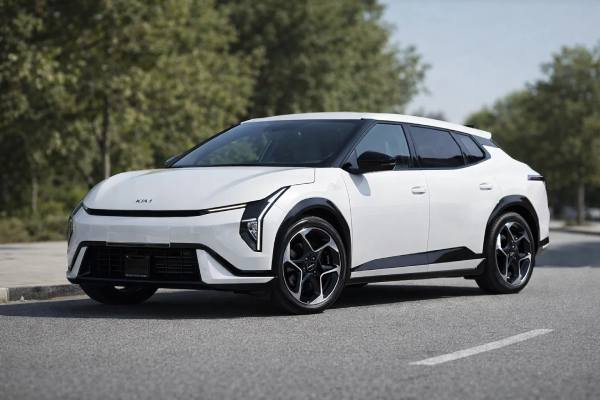
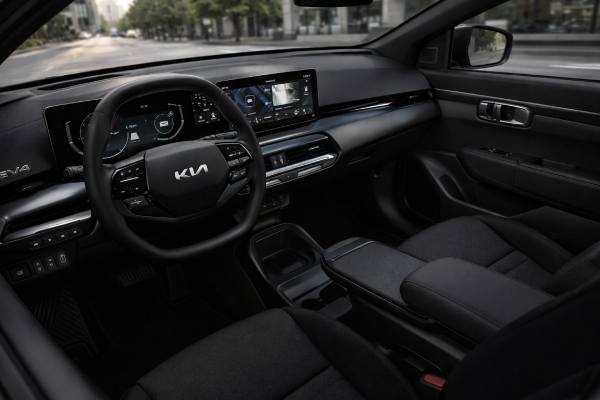
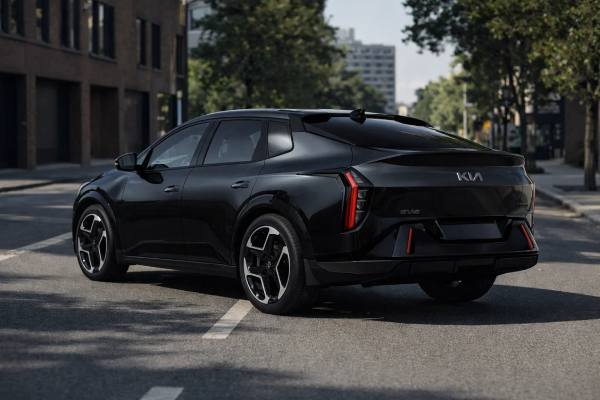
The Kia EV4 (CT) with the 58.3 kWh battery and 201 hp motor is the “standard-range” configuration aimed at drivers who want modern EV tech without paying for maximum battery size. Its strengths are predictable: strong everyday acceleration, a flat floor that helps packaging, and fast DC charging that makes short stops practical. Where owners tend to notice differences versus larger-battery versions is highway range at higher speeds and cold-weather performance—both depend heavily on temperature, wheel size, and how often you fast-charge. This guide focuses on what matters in real ownership: verified core specifications, what range you can reasonably expect, how the car drives, what early reliability risks to watch for, and a maintenance plan that keeps costs and downtime low.
Core Points
- Expect the best efficiency in city and mixed driving; steady high-speed cruising is where range drops fastest.
- DC charging is quick enough for road trips when you plan stops around 10–80% use.
- Keep an eye on 12 V battery health and software updates early in ownership.
- Rotate tyres about every 10,000–12,000 km (6,000–7,500 mi) to control wear and noise.
- Brake fluid service is still time-based on EVs: plan for about every 24 months.
Jump to sections
- Kia EV4 CT ownership overview
- Kia EV4 CT key specifications
- Kia EV4 CT trims and safety
- Reliability watchlist and service actions
- Maintenance plan and buying strategy
- Driving feel, range, and charging
- How it stacks up against rivals
Kia EV4 CT ownership overview
Think of this EV4 (CT) as the “daily-driver first” setup: one motor, one battery size, and an efficiency-leaning mission. The 201 hp output is enough to feel confident merging and overtaking, and the torque delivery you get from an electric motor makes it feel stronger around town than the headline horsepower suggests. The standard-range battery can be a sweet spot for owners who mostly charge at home and only road-trip occasionally, because you’re carrying less battery mass than long-range variants, which typically helps responsiveness and real-world efficiency.
Where expectations should be calibrated is long-distance cruising. Any EV with a mid-size battery will show a larger gap between city range and motorway range, especially in winter. If your routine includes frequent 120 km/h (75 mph) travel, you’ll plan stops more often than you would in an 80+ kWh EV, and you’ll want to become comfortable with charging strategy: arriving at fast chargers low, charging through the strongest part of the curve, then leaving once charging slows down.
The good news is that this EV4 configuration is built around the kind of ownership details that matter: practical charging times, a straightforward drive layout, and service intervals that are more time-based than mileage-based. Reliability-wise, early production years of any new model are usually about software maturity and supplier “teething” issues rather than catastrophic mechanical faults. The smart approach is to treat updates and basic inspections as part of the first-year routine, especially anything related to charging behavior, driver assistance calibration, and the 12 V system that powers the car’s computers.
If you’re choosing this version on purpose, it’s typically because your charging access is strong (home, work, or both), your commute is moderate, and you value cost and efficiency more than maximum road-trip range. In that use case, the EV4 (CT) 58.3 kWh can feel like an EV that’s “right-sized” rather than compromised.
Kia EV4 CT key specifications
Powertrain, battery, and efficiency
| Spec | Value |
|---|---|
| Drive type | FWD |
| Motor type | Permanent Magnet Synchronous Motor (PMSM) |
| Max power | 201 hp (150 kW) |
| Max torque | 283 Nm (209 lb-ft) |
| Battery type | Li-ion Polymer |
| Battery capacity | 58.3 kWh |
| Battery nominal voltage | 369 V |
| Battery cells (count) | 200 |
| Battery capacity (Ah) | 158.2 Ah |
| WLTP combined range | 273 mi |
Charging and replenishment
| Spec | Value |
|---|---|
| DC 10–80% (50 kW) | 55 min |
| DC 10–80% (350 kW) | 29 min |
| AC 0–100% (7 kW) | 9 h 50 min |
| AC 0–100% (11 kW) | 6 h 15 min |
Performance and capability
| Spec | Value |
|---|---|
| 0–62 mph (0–100 km/h) | 7.5 s |
| Top speed | 105 mph (169 km/h) |
| Braked towing capacity | 500 kg (1,102 lb) |
| Roof load | 80 kg (176 lb) |
Dimensions
| Spec | Value |
|---|---|
| Length | 4,430 mm (174.4 in) |
| Width | 1,860 mm (73.2 in) |
| Height | 1,485 mm (58.5 in) |
| Wheelbase | 2,820 mm (111.0 in) |
| Turning circle (kerb-to-kerb) | 10.4 m (34.1 ft) |
Safety ratings
| Spec | Value |
|---|---|
| Euro NCAP (Adult Occupant) | 84% |
| Euro NCAP (Child Occupant) | 87% |
| Euro NCAP (Vulnerable Road Users) | 76% |
| Euro NCAP (Safety Assist) | 78% |
Service interval
| Spec | Value |
|---|---|
| Routine service interval | 20,000 mi / 24 months |
Kia EV4 CT trims and safety
With EVs, trims are less about the powertrain and more about comfort, charging convenience, and driver assistance. For a standard-range EV4 (CT), the practical trim questions usually boil down to: which wheels are fitted, whether you get a heat pump, what level of adaptive cruise and lane support is included, and whether the lighting package is the basic setup or the one you’d prefer for night driving. Wheels matter more than many buyers expect because they influence three things at once: ride comfort, tyre cost, and real-world efficiency. A larger wheel-and-tyre package can look great and sharpen turn-in, but it can also increase road noise and reduce range at motorway speeds.
On the safety side, the key is separating crash performance from driver-assistance convenience. The Euro NCAP scoring shows a strong baseline structure and restraint performance along with a solid suite of assistance features. In everyday use, owners most often care about how smoothly the car applies adaptive cruise, whether lane centering feels natural, and how well the car handles poor lane markings or heavy rain. A system can be “feature-rich” yet still feel tiring if it nags too often or brakes too abruptly for slower traffic.
When evaluating equipment, focus on what changes real driving outcomes and ownership cost:
- Headlights: better lighting can reduce fatigue and improve reaction time on dark rural roads.
- Driver assistance: adaptive cruise plus reliable lane support is a daily quality-of-life upgrade, not just a spec-sheet item.
- Parking tech: cameras and automated parking features can help, but the best value is often simple: good visibility, a clear camera, and predictable sensors.
- Thermal features: heated seats and an efficient cabin heating strategy can reduce winter energy use compared with blasting resistive heat.
Finally, pay attention to year-to-year equipment changes. Automakers often reshuffle standard and optional features after launch, sometimes adding useful hardware and sometimes simplifying. The clean way to confirm is by comparing the official specification sheet for the exact model year you’re buying and checking the car in person: the badge may be the same while the equipment isn’t.
Reliability watchlist and service actions
A new EV model typically has two reliability stories running in parallel. The first is hardware durability—motors, reduction gears, suspension joints. The second is software maturity—battery management, charging logic, driver-assistance calibration, and infotainment stability. For early ownership of an EV4 (CT), the most realistic approach is to expect the hardware to be generally robust while remaining alert for software and charging-related quirks that are often solved through updates.
Common (annoying, usually low-to-medium cost):
- Charge-session inconsistency: a session starts strong, then power drops earlier than expected.
- Symptoms: slower-than-expected charging, more tapering, inconsistent times.
- Likely causes: battery temperature, conservative charging strategy, station communication issues.
- Remedy: confirm preconditioning behavior (if equipped), update software, try a known-good charger brand, and log the conditions (SOC, temperature, charger power).
- Infotainment glitches: reboots, slow navigation, or intermittent connectivity.
- Remedy: software updates; ensure 12 V battery health is good because weak 12 V voltage can trigger odd behavior.
Occasional (can be medium cost if ignored):
- 12 V battery sensitivity: EVs still rely on a small 12 V battery to power computers and close high-voltage contactors.
- Symptoms: warning messages, car won’t “ready,” repeated resets, intermittent key or lock behavior.
- Likely causes: 12 V battery aging, repeated short trips with high accessory use, failed charging logic, or parasitic draw.
- Remedy: test the 12 V battery, check charging behavior, and treat any repeat failures as a diagnostic issue—not “just another battery.”
- Brake noise or corrosion: strong regenerative braking means friction brakes may be used lightly, so surface rust can build.
- Symptoms: scraping sounds after rain, vibration, uneven braking feel when friction brakes engage.
- Remedy: periodic firm brake applications in a safe area, regular brake inspections, and cleaning service if needed.
Rare (high cost, but low probability):
- Drive unit noise: whining or rumbling that changes with speed and load.
- Remedy: early documentation and dealer evaluation; drive units are typically covered under longer powertrain warranties in many markets.
Recalls, TSBs, and campaigns:
Treat campaigns as part of normal EV ownership rather than a red flag. The important thing is verification. Ask for proof that software updates and service actions were completed, and check official VIN tools where available. If you buy used, get a printout of the dealer service history and confirm the latest control-module updates were applied, especially those tied to charging behavior, thermal control, and driver assistance.
Pre-purchase, request a battery health report if the car has meaningful mileage. For a newer EV, you’re not expecting major degradation, but you do want to confirm the pack is behaving evenly (no unusual cell imbalance) and that DC fast charging works normally across the typical 10–80% window.
Maintenance plan and buying strategy
EV maintenance is simpler than combustion-car maintenance, but it’s not “no maintenance.” The winning strategy is consistency: small, predictable checks prevent the expensive surprises (tyres, suspension wear, brake issues, 12 V failures) that can sour ownership.
A practical schedule you can actually follow:
- Every 10,000–12,000 km (6,000–7,500 mi) or 6–12 months: tyre rotation, tyre wear check (inner shoulders), and alignment check if the steering wheel is off-center or tyres show uneven wear.
- Every 20,000 km (12,000 mi) or 12 months: cabin air filter (especially if you drive in dusty cities), brake inspection (pads, slides, rotor condition), suspension bushings check, and a general underbody inspection for fasteners and splash shields.
- Every 24 months: brake fluid replacement is the big time-based service item on many EVs; it protects the braking system from moisture contamination.
- Every 2–4 years: coolant inspection and service as specified for the battery/power electronics loop (follow the official schedule for your VIN and market).
- 12 V battery: test annually after year two, and be proactive if you see repeated low-voltage warnings or odd electrical behavior.
Severe-use adjustments matter on EVs too. If you do frequent DC fast charging, repeated high-speed motorway travel, or you live in very hot or very cold climates, plan more frequent tyre checks and keep a closer eye on charging consistency. The goal is not to avoid fast charging; it’s to keep the battery within reasonable temperature ranges and avoid living at very high state of charge when you don’t need it.
Buyer’s guide for used examples (or even nearly-new):
- Battery behavior: check the displayed range at a known state of charge (e.g., ~80%) and compare to what’s typical for the season and tyre setup. One number isn’t proof; you’re looking for “does this make sense.”
- Fast charging sanity check: if possible, do a short DC session and confirm the car ramps to a strong initial rate and behaves consistently.
- Charging hardware: inspect the charge port for damage, dirt, or poor door sealing; check that AC charging works reliably at home.
- Brakes and tyres: EVs are heavier and torque-rich; tyres can wear faster than buyers expect, and alignment matters.
- Software/OTA history: confirm updates are current and that driver assistance functions calibrate properly (no persistent camera/radar warnings).
Long-term durability outlook is mainly about wear items and software support. Battery packs typically age well when kept out of extreme heat and not stored at high charge for long periods, but the cost of tyres and occasional brake service is real. Budget for tyres sooner than you would on a lighter car, and treat the 12 V battery as a planned replacement item over the life of the vehicle.
Driving feel, range, and charging
In day-to-day driving, the EV4 (CT) standard-range setup should feel brisk and easy. The 201 hp motor delivers instant response at low speeds, which makes city traffic less stressful and reduces the need for aggressive throttle inputs. Expect the car to feel most energetic from 0–60 km/h, with a smooth, quiet build of speed beyond that. The published acceleration figure (0–100 km/h in 7.5 seconds) suggests performance that’s genuinely usable rather than “headline fast,” and it’s usually easier to modulate than high-output dual-motor cars that can feel abrupt on wet roads.
Ride and handling will be shaped strongly by wheel and tyre choice. A comfort-oriented wheel package typically gives better isolation over broken pavement and less cabin roar at motorway speeds. Larger wheels can sharpen steering response, but they often add noise and can reduce efficiency. Because the battery sits low in the chassis, EVs usually feel stable in corners, with less body roll than you’d expect for the weight. The trade-off is that you can feel sharp impacts more distinctly if the suspension is tuned firmly.
Real range expectations: the WLTP figure (273 miles) is a useful reference, but treat it as a “best-case mixed-cycle” number. In real life:
- City and mixed driving: tends to be the most favorable for EV efficiency.
- Cold weather: cabin heating and a colder battery reduce efficiency and may limit charging speed until the pack warms.
- Motorway cruising: steady high speeds increase energy use; range drops faster than many first-time EV owners expect.
Charging behavior that works well:
For road trips, the practical plan is to operate between roughly 10–80% on DC charging. The published 10–80% time at a high-power station (29 minutes on a 350 kW unit) tells you the car can take advantage of fast DC hardware when conditions are right. In reality, you’ll see the best results when the battery is warm and you arrive at low SOC. If you arrive at 60–70% and try to “top up,” you’ll spend a lot more time per added kilometer because charging slows as the battery fills.
At home, charging is about routine, not speed. The 11 kW AC time (about 6 hours 15 minutes from 0–100%) is a reminder that overnight charging is the natural pattern. Many owners rarely need 100%; charging to a lower daily target is often more convenient and can be gentler on the battery over the long run.
How it stacks up against rivals
The EV4 (CT) standard-range configuration sits in a competitive space: buyers want modern design, strong tech, and charging that doesn’t feel like a compromise, but they also want a price and running cost that make sense. The best comparison depends on your real priority—range, charging speed, interior space, or driving feel.
If your priority is road-trip ease:
Look at rivals known for strong, consistent DC charging behavior and efficient high-speed cruising. Some EVs are excellent in town but fall behind on motorway consumption, which forces more stops. If you regularly travel long distances, consider whether a long-range battery variant in another model may reduce your total travel time even if the car costs more upfront.
If your priority is daily running cost:
A standard-range EV like this can be the smarter buy when you have dependable home charging and your daily miles are modest. The car you can charge cheaply and consistently is usually “better” than the car with more range that you rarely use. In this scenario, focus on wheel size (tyre cost), insurance group, and cabin heating strategy (heat pump availability can matter).
If your priority is driving feel:
Some rivals emphasize sharp steering and firm suspension; others prioritize quiet comfort. Test drive on your normal roads. Pay attention to low-speed ride over patched pavement, motorway noise at 100–120 km/h, and brake feel when the car transitions from regeneration to friction braking.
If your priority is software and assistance systems:
The difference between “good on paper” and “good every day” is how smoothly adaptive cruise and lane support behave in real traffic. Compare how systems react to cut-ins, tight bends, and worn lane markings. Also consider update support—stable software improves ownership over time.
A final practical point: because EVs deliver torque instantly, tyres and alignment matter more than many buyers expect. If two cars feel similar in performance, the one with cheaper tyre sizes and better real-world efficiency can be the better long-term choice, even if the badge isn’t the most fashionable.
References
- The Kia EV4 | Kia UK 2026 (Model Page)
- Kia Brochures and Price Lists | Kia UK 2026 (Pricing Guide)
- Kia_EV4_Pricing_Guide.pdf 2026 (Pricing Guide PDF)
- Kia_EV4_Technical_Specification.pdf 2026 (Technical Specification)
- euroncap-2025-kia-ev4-datasheet.pdf 2025 (Safety Rating)
Disclaimer
This article is for informational purposes only and is not a substitute for professional diagnosis, repair, or official service guidance. Specifications, torque values, service intervals, and procedures vary by VIN, market, and equipment; always verify details using the vehicle’s official service documentation and your dealer’s service system.
If you found this guide useful, please consider sharing it on Facebook, X/Twitter, or your favorite forum to help others discover it.