


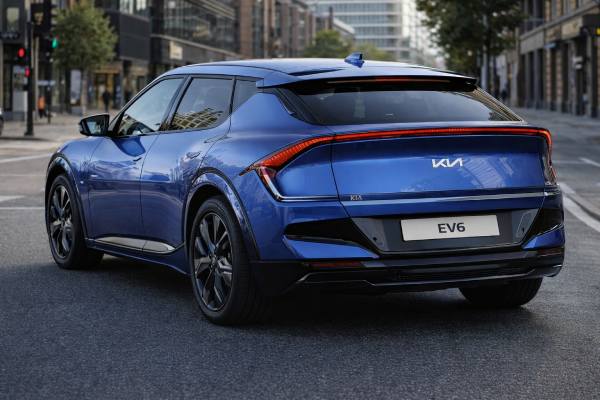
The 2025–present Kia EV6 AWD facelift keeps the same core idea that made the EV6 popular—strong charging performance and everyday usability—while sharpening the details that matter to owners. The dual-motor AWD layout gives confident traction and brisk response without turning the car into a harsh “performance trim.” The updated 84.0 kWh battery brings more usable energy for longer trips, but the real story is how consistently the EV6 manages temperature, charging speed, and power delivery across seasons.
If you are cross-shopping modern electric crossovers, focus on three ownership levers: real highway range at typical speeds, fast-charge repeatability on long drives, and software support (charging logic and driver assistance calibration). This guide breaks down the specs, what you can expect on the road, and the service items that actually affect long-term satisfaction.
Top Highlights
- Rapid DC charging can make long trips feel shorter than many higher-range rivals.
- Dual-motor AWD traction is strong in wet and winter driving without needing aggressive tires.
- Heat-pump-equipped cars tend to hold range better in cold weather with cabin heat running.
- Watch for campaign and software history on early build cars; updates can change charging and warning behavior.
- Rotate tires every 10,000–12,000 km (or 6–12 months) to control wear on torque-heavy EVs.
Guide contents
- Kia EV6 AWD facelift explained
- Kia EV6 AWD key specifications
- Kia EV6 AWD trims and safety tech
- Known faults, recalls, and updates
- Maintenance plan and buying tips
- Real driving range and feel
- EV6 AWD vs main competitors
Kia EV6 AWD facelift explained
The facelifted EV6 AWD sits in a sweet spot: it feels quick and modern, but it is still designed around daily comfort and repeatable charging on long trips. The dual-motor system places one motor on each axle, giving instant torque at low speeds and stable traction when roads are wet, cold, or broken. Unlike some AWD EVs that chase maximum acceleration at the cost of efficiency, the EV6 tends to feel “easy-fast”—strong step-off response, smooth midrange pull, and predictable power even when you are already rolling at highway speed.
The updated 84.0 kWh battery is the ownership upgrade you notice most. Bigger capacity does not automatically mean better real-world range, because range depends on aerodynamics, tire choice, temperature, and speed. What it does give you is more buffer: you can run a comfortable state-of-charge window (for example, 20–80%) and still cover meaningful distance without constantly chasing chargers. That reduces stress and can improve battery longevity over the years by avoiding frequent 100% charging when you do not need it.
Charging is where the EV6 remains a standout. The EV6 platform is built around fast DC charging when conditions are right. In real use, “conditions are right” means a warm-enough battery, a capable charger, and a sensible starting state of charge. When those line up, the EV6 can add hundreds of kilometers during a typical rest stop. For families, that changes trip rhythm: fewer long waits, more consistent arrival times, and less planning anxiety in winter.
The facelift also matters in quieter ways: software maturity, cabin usability, and driver assistance behavior. Small updates—charging preconditioning logic, improved route planning, better sensor performance—often do more for satisfaction than a headline horsepower number. When you evaluate this model, treat it as a system: battery, thermal control, charging curve, and software support all work together.
Kia EV6 AWD key specifications
Powertrain, battery, and efficiency
| Spec | Value |
|---|---|
| Powertrain layout | Dual-motor, AWD (front + rear) |
| Max power | 320 hp (239 kW) |
| Max torque | 605 Nm (446 lb-ft) |
| Traction battery (gross) | 84.0 kWh |
| Traction battery (usable) | 80.0 kWh |
| Efficiency test standard | WLTP |
| Rated efficiency | 17.7 kWh/100 km |
| Rated range (WLTP) | 522 km |
Charging and connectors
| Spec | Value |
|---|---|
| Charging connector (AC) | Type 2 |
| Charging connector (DC) | CCS |
| Charging port location | Right side (driver-side on LHD markets) |
| Onboard charger (AC) | 11 kW |
| DC fast-charge peak | 258 kW |
| Replenishment time (DC 10–80%) | 18 min |
| Real-world highway at 120 km/h | 23.5 kWh/100 km; 340 km (approx.) |
Performance and capability
| Spec | Value |
|---|---|
| 0–100 km/h | 5.3 s |
| Top speed | 188 km/h (117 mph) |
| Towing capacity (braked) | 1,800 kg (3,968 lb) |
Chassis, dimensions, and weights
| Spec | Value |
|---|---|
| Body type | 5-door crossover |
| Suspension (front) | MacPherson strut |
| Suspension (rear) | Multi-link |
| Kerb weight | 2,105 kg |
| Length | 4,695 mm |
| Width | 1,890 mm |
| Height | 1,545 mm |
| Wheelbase | 2,900 mm |
| Cargo volume (seats up) | 480 L |
| Cargo volume (seats down) | 1,260 L |
Safety ratings and core driver assistance
| Spec | Value |
|---|---|
| Euro NCAP | 5 stars |
| IIHS small overlap front | Good |
| IIHS headlights | Good |
| IIHS front crash prevention (pedestrian, day) | Superior |
| Standard ADAS (typical) | AEB, ACC, lane keep/assist, blind-spot monitoring |
Kia EV6 AWD trims and safety tech
Kia typically structures the EV6 range so the AWD dual-motor setup appears on higher trims (often GT-Line–style grades) or as an option package. The exact naming varies by market, but you can usually spot the AWD cars by a combination of wheel size, exterior trim details, and the equipment list rather than a simple badge. If your market supports it, the most reliable identifier is the build sheet or VIN-based dealer equipment report, which also confirms heat pump, battery preconditioning behavior, and the active safety bundle.
Common trim and option differences that change ownership:
- Wheels and tires: Larger wheels often look better but can cost real range and add road noise. If two cars share the same battery and motors, wheels can be the biggest “hidden” difference in highway efficiency.
- Heat pump and thermal pack: In colder climates, a heat pump usually reduces winter range loss because it moves heat more efficiently than resistive heating. It also tends to support smarter battery conditioning for fast charging.
- Audio and cabin tech: Upgraded audio, head-up display, surround cameras, and parking assist improve daily convenience more than they improve resale value—buy them because you will use them.
- Seating and interior materials: Ventilated seats and a good defrost strategy matter in real climates. Heated steering and seat heaters are often more range-friendly than blasting cabin heat.
Safety ratings and what they mean in practice:
The EV6 platform has performed strongly in third-party safety testing for structure and crash avoidance. The key thing to watch is not just the star rating, but whether your trim includes the full sensor set that enables advanced driver assistance. Some markets bundle features like highway lane centering, blind-spot camera views, and more capable parking automation into option packs rather than making them universal.
ADAS behavior and calibration implications:
Modern EVs rely on camera and radar alignment. After windshield replacement, bumper repairs, wheel alignment changes, or suspension work, the car may require recalibration. A well-calibrated system feels smooth: adaptive cruise maintains distance without harsh braking, lane support nudges rather than yanks, and emergency braking does not trigger false alarms in normal traffic. If you test-drive a used EV6 AWD, pay attention to warnings, lane-centering stability on well-marked roads, and whether the steering wheel hands-on detection behaves consistently.
Child-seat and family practicality:
Expect ISOFIX/LATCH anchors and a flat floor that helps center-seat comfort. Rear door opening and roofline matter for installing child seats. The EV6’s shape is sportier than boxy rivals, so tall rear-facing seats can reduce front passenger legroom—worth checking with your actual seat.
Known faults, recalls, and updates
No EV is immune to early-life issues, and the EV6’s long-term story is shaped as much by software and campaign history as by mechanical wear. The facelift years benefit from accumulated learnings, but used buyers will still encounter cars with different update states and service histories.
Common to occasional issues (what owners notice first)
- 12 V battery drain symptoms (common/medium): Slow cranking “click,” intermittent warning lights, or the car failing to “wake.” Root causes can include software behavior, accessory load, or charging-system components. Remedy is often a diagnostic check, software updates, and in some cases hardware replacement tied to campaigns.
- Charging interruptions (occasional/medium): DC fast charging that starts strong then drops early, or AC charging that stops unexpectedly. Causes can include battery temperature, charger communication, charge-port latch behavior, or thermal management limits. Remedy can be as simple as preconditioning use and updated charging logic.
- Infotainment and connectivity glitches (common/low): Bluetooth dropouts, navigation lag, or app connection issues. Updates frequently improve stability, but a factory reset and module update can be needed after 12 V events.
Rare but higher-cost areas to understand
- High-voltage charging control components (rare/high): Failures here can present as repeated 12 V problems, inability to charge, or warning messages that force reduced power. If a car has had these replaced, that is not automatically bad—what matters is whether the root cause was addressed with the latest software and correct parts.
- Coolant loop leaks or valve issues (rare/high): The EV6 uses multiple thermal loops to control battery and power electronics. Leaks are uncommon but important because correct coolant type and proper bleeding procedures matter for high-voltage safety and long-term reliability.
Driveline, chassis, and NVH watchpoints
- Front axle hardware (occasional/medium): AWD adds front driveline components. Some cars develop clicks on full lock, vibration under load, or minor clunks over sharp bumps. These can be normal characteristics, but persistent noise deserves inspection of half-shafts, mounts, and suspension bushings.
- Brake corrosion and noise (common/low): Heavy regenerative braking means the friction brakes may not get used enough, especially in wet climates. That can lead to surface rust, noise, or uneven feel. The remedy is regular “brake cleaning” use—controlled firm stops—and periodic inspection.
Software and campaigns: why they matter
On the EV6, software can change charging speed consistency, warning thresholds, and even how the car manages battery temperature before a fast charge. When you shop, ask for proof of completed campaigns and the most recent software level for battery management, charging control, and ADAS. A clean update history is often more valuable than a low odometer reading.
Maintenance plan and buying tips
EV maintenance is simpler than combustion cars, but it is not “no maintenance.” The EV6 AWD rewards basic consistency: tire care, brake health, and keeping cooling systems and software in good shape.
Practical maintenance schedule (typical ownership plan)
- Every 10,000–12,000 km or 6–12 months: Tire rotation; inspect tread depth and inner-edge wear; check alignment if you see uneven wear or steering pull. AWD torque can hide misalignment until tires are already damaged.
- Every 15,000 km or 12 months: Replace cabin air filter (more often in dusty cities); inspect brake pads and rotors for corrosion; check suspension joints and bushings; verify wiper condition and washer fluid.
- Every 24 months: Brake fluid replacement is a smart default because moisture contamination reduces braking performance and can corrode components.
- Every 12 months: Test the 12 V battery under load. Many EV electrical “weirdness” complaints trace back to weak 12 V batteries. Plan for replacement around 4–6 years depending on climate and usage.
- As needed (use-based): Clean and lubricate brake hardware if you drive in salted winter roads; perform periodic firm braking to keep rotors clean.
Fluids and essential torque values (decision-making level)
- Brake fluid: Use the factory-specified DOT grade for your market.
- Coolant loops: Only use the specified coolant type for the EV thermal system; mixing coolants is a common and expensive mistake.
- Wheel fasteners: Typical wheel nut torque is 110–130 Nm on many Kia passenger vehicles; confirm your exact wheel torque spec for your VIN and wheel type.
Buyer’s guide: what to check before you commit
Battery health and real range
- Ask for an EV health report if available (state-of-health or capacity estimate).
- During a test drive, watch consumption at steady speed. A car that is dramatically inefficient at gentle highway pace may have tire, alignment, or thermal issues.
- Check fast-charge behavior if you can: the car should ramp quickly when the battery is warm and taper smoothly rather than “falling off a cliff” early.
Charging hardware
- Inspect the charge port area for damage, misalignment, or weak latch action.
- Verify the included cables and adapters match your home setup. A missing OEM cable is not a deal-breaker, but it is a bargaining point.
Thermal management and HVAC
- Make sure cabin heat and A/C work smoothly with no unusual smells or fan noises.
- If equipped, verify heat pump behavior in mild cold: it should warm the cabin efficiently without constant high fan noise.
Chassis and underbody
- Look for underbody cover damage and signs of impact near the battery enclosure.
- In salted climates, inspect fasteners, brake lines, and exposed suspension parts for corrosion.
Strategy: which setups to seek
- If you road-trip often: prioritize heat pump, battery preconditioning, and the fastest charging configuration offered in your market.
- If your driving is mostly urban: smaller wheels and tires can improve comfort and reduce tire cost over time.
- If you tow: confirm the exact tow rating and that a factory-rated hitch solution is available.
Long-term durability outlook: expect the EV6 battery to hold up well under normal use if you avoid constant 100% charging and repeated back-to-back fast charging in extreme heat. The most common “big” costs in EV ownership tend to be tires, 12 V batteries, and occasional cooling or charging-component work—so buy the best-maintained example, not just the cheapest.
Real driving range and feel
The EV6 AWD’s driving character is defined by instant torque and a low center of gravity. The battery pack sits under the floor, so the car feels planted through quick lane changes and steady in crosswinds. Compared with rear-drive variants, the AWD version adds front-axle pull that helps in rain and snow and makes acceleration feel more “effortless” at any speed. The tradeoff is efficiency: the extra motor and hardware usually reduce range versus comparable RWD trims.
Ride, handling, and NVH (noise and vibration)
On the right wheels, the EV6 is composed and quiet for an EV crossover. Larger wheels can add sharpness over potholes and increase tire roar on rough asphalt. Steering is precise rather than chatty; you place the car easily, but you do not get sports-car feedback. Braking feel is generally strong, but like most EVs it depends on how regenerative braking is blended with the friction brakes. In stop-and-go driving, the smoothest experience comes from learning the regen settings and avoiding last-second pedal stabs, which force the car to transition from regen to friction.
Real-world efficiency and range
Expect real range to vary widely with speed and temperature:
- City driving: Often the best case. Regen recovers energy, and average speeds are lower. Many drivers see consumption that beats official numbers in mild weather.
- Highway at 100–120 km/h: This is the true test. Aerodynamic drag rises quickly with speed, so range drops. For many owners, a realistic highway range window is roughly 320–400 km depending on wheels, wind, and temperature.
- Cold weather: Cabin heat and a colder battery increase consumption. A heat pump helps, but winter range reductions of 15–30% are still normal in freezing conditions, especially on short trips where the car never fully warms up.
Charging performance in daily use
Home charging: With an 11 kW AC onboard charger, a full charge from low state of charge is typically an overnight job. For day-to-day life, charging from 20% to 80% is usually more practical and can fit easily into evening hours.
Public DC charging: The EV6’s strong point is how quickly it can add meaningful distance. Real results depend on battery temperature and how low you arrive. If you arrive warm and around 10–20% state of charge, the car can charge very quickly early in the session, then taper as it approaches 80%. If you arrive cold, the same charger may deliver much less until the battery warms, which is why preconditioning matters.
Traction and control
AWD makes the EV6 feel secure in poor conditions, especially when paired with proper seasonal tires. Stability control is typically well judged: it allows confident acceleration without feeling intrusive. On slick surfaces, power delivery remains smooth, and the car’s weight helps it track steadily—though it also means stopping distances depend heavily on tire choice.
EV6 AWD vs main competitors
The EV6 AWD competes in one of the busiest EV segments. The best rival for you depends on whether your priority is charging speed, efficiency, space, software, or long-distance convenience.
Where the EV6 AWD stands out
Fast-trip practicality: The EV6’s charging capability can outweigh a range deficit versus ultra-efficient rivals. If you can add a large chunk of energy quickly and reliably, road trips become less about finding the perfect charger and more about taking normal breaks.
Balanced performance: With 320 hp, the EV6 AWD is quick enough to feel special without the harshness of a dedicated performance model. Passing power is immediate, and AWD traction helps it put power down cleanly.
Everyday usability features: Vehicle-to-load capability in many markets, strong driver assistance availability, and a comfortable driving position make it a good “only car” EV.
Where rivals can be stronger
Efficiency and software ecosystem: Tesla Model Y–type rivals often deliver better highway efficiency and an integrated charging network experience in regions where that network is strongest. If you drive long highway distances frequently, efficiency can mean fewer stops.
Cargo and rear headroom: Boxier crossovers (and some platform siblings) can feel more spacious in the second row and offer a taller cargo area. The EV6’s sportier roofline is a style win but can be a packaging compromise.
Ride comfort on big wheels: Some competitors isolate rough roads better on large wheels. With the EV6, choosing smaller wheels often improves both comfort and range.
Key matchups (how to choose quickly)
- Versus Tesla Model Y Long Range AWD: Choose EV6 if you value fast charging behavior and cabin refinement; choose the Tesla if you prioritize efficiency and a tightly integrated charging-and-software experience.
- Versus Hyundai Ioniq 5 AWD (platform relative): The Ioniq 5 often emphasizes interior space and a more upright shape; the EV6 often feels sportier and more planted.
- Versus VW ID.4 GTX / Skoda Enyaq AWD: These can feel very refined and comfortable. The EV6 often counters with stronger charging performance and a more engaging drive.
- Versus Ford Mustang Mach-E AWD: Often a strong driving feel and good performance; charging behavior and efficiency vary by version, so compare the exact trim and battery.
If you want a modern electric crossover that road-trips confidently, the EV6 AWD’s blend of quick charging, stable handling, and mature safety tech makes it a strong pick—especially when you prioritize the right options (heat pump, preconditioning behavior, and wheel choice) for your climate.
References
- 2024 Kia EV6 2024 (Safety Rating)
- Electric Crossover SUV – 2025 EV6 | Kia 2025 (Manufacturer Specs)
- Prijslijst en specificaties. EV6. Januari 2026 2026 (Specifications PDF)
Disclaimer
This article is for informational purposes only and is not a substitute for professional diagnosis, repair, or safety inspection. Specifications, torque values, service intervals, charging performance, and procedures can vary by VIN, market, software version, and equipment. Always verify details using your official Kia owner’s literature, service documentation, and dealer records for the specific vehicle you own or plan to buy.
If this guide helped you, please consider sharing it on Facebook, X/Twitter, or your favorite forum to support our work.