

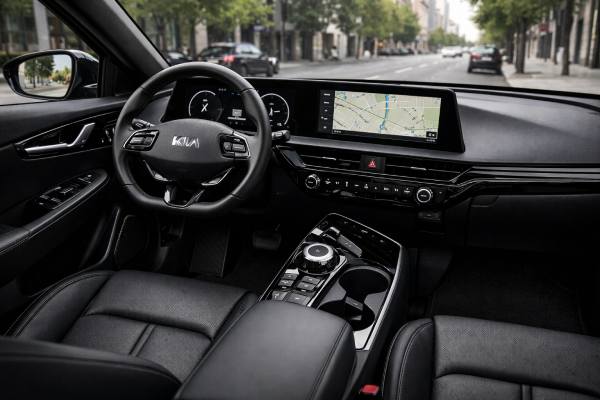

The Kia EV6 (CV) with the 58.0 kWh battery and ~167 hp rear-motor layout is the “sweet-spot” version for drivers who want the EV6 platform’s fast-charging strengths without paying the weight and cost penalty of the larger pack. It uses the E-GMP architecture that prioritizes high-voltage charging, strong thermal control, and a low battery placement that helps stability and body control. In ownership terms, this variant is usually about daily efficiency, predictable range, and lower tire and brake wear thanks to regenerative braking. The trade-off is straightforward: you get less buffer for high-speed winter highway travel, and the car becomes more sensitive to wheel/tire choice, HVAC use, and charging strategy. If you treat it like a modern EV—precondition for fast charging, manage speed on long trips, and keep software up to date—it can be an unusually capable small-battery crossover.
Owner Snapshot
- Rapid DC charging capability is a real advantage on long trips compared with many 400 V rivals.
- Rear-drive balance and one-pedal driving make it easy to drive smoothly and efficiently in traffic.
- Expect a noticeable range drop in cold weather and sustained high-speed use; plan charging stops earlier.
- Rotate tires every 10,000–12,000 km to keep wear even and reduce road-noise growth.
- Budget for a 12 V battery test yearly after year 3, especially if you do frequent short trips.
Guide contents
- Kia EV6 CV standard-range explained
- Kia EV6 CV 58 kWh specifications
- Kia EV6 CV trims, options, and safety tech
- Reliability issues, recalls, and service actions
- Maintenance plan and used-buying playbook
- Driving performance and real range
- How EV6 standard-range stacks up
Kia EV6 CV standard-range explained
Think of the 58 kWh EV6 as the “engineering core” of the lineup: the same chassis, charging architecture, and cabin concept as the bigger-battery versions, but with a smaller energy tank. That matters because the EV6’s personality is heavily shaped by two things: its low, wide battery pack (which improves stability and reduces pitch) and its fast-charge design philosophy (which reduces the time penalty of stopping more often). With the standard-range pack, the car tends to feel a touch lighter on its feet, and you can often see slightly better efficiency at urban and mixed speeds—especially if you keep wheel size sensible.
The rear-motor layout is also part of the appeal. Rear-wheel drive in an EV doesn’t just mean “sportier”; it often means simpler packaging up front, a cleaner steering feel under power, and predictable traction behavior when you modulate torque on slippery surfaces. In daily use, the EV6’s regen system does a lot of work: it reduces brake pad usage, makes stop-and-go smoother, and helps you “drive by energy flow” rather than by constant pedal corrections.
Where owners need to be realistic is highway math. A 58.0 kWh pack has less margin for sustained 120 km/h cruising, steep elevation, headwinds, or cold-weather heating. That doesn’t make the EV6 a poor road-trip car—it just changes the strategy. The best pattern is: arrive at a fast charger warm (or preconditioned), charge in the fastest part of the curve (often the mid-state-of-charge window), then drive the next leg at a pace the battery can support comfortably. If you try to charge from very high state of charge on DC, you’ll wait longer for less added distance—an annoyance that grows as battery size shrinks.
The upside is that the standard-range EV6 can be a very rational ownership proposition: less battery mass, strong charging capability, and a platform that was designed around modern EV safety and structure from the start. For many households, it’s the EV6 that behaves most like a “normal car” Monday to Friday—then leans on its charging advantage when you need to travel.
Kia EV6 CV 58 kWh specifications
Powertrain, battery, and efficiency
| Spec | Value |
|---|---|
| Drivetrain layout | Single rear motor (RWD) |
| Max power | 167 hp (125 kW) |
| Max torque | 350 Nm (258 lb-ft) |
| Battery chemistry | Lithium-ion (NMC) |
| Battery nominal capacity | 58.0 kWh |
| Battery usable capacity | 54.0 kWh |
| Battery pack configuration | 144s2p |
| Cell count | 288 (pouch) |
| Architecture class | 800 V |
| Nominal battery voltage | 523 V |
| Efficiency (EVDB) | 177 Wh/km (285 Wh/mi) |
| Official range (WLTP) | 394 km (245 mi) |
| Real range (EVDB) | 305 km (190 mi) |
| Real-world highway @ 120 km/h | 20 kWh/100 km (322 Wh/mi); 270 km (168 mi) |
Charging hardware and timings
| Spec | Value |
|---|---|
| AC connector | Type 2 (Mennekes) |
| DC connector | CCS Combo 2 |
| Charge port location | Rear side – right |
| Onboard AC charging (max) | 11 kW AC |
| DC fast-charge peak (vehicle limit) | 175 kW DC |
| Typical DC average (10–80%) | 140 kW |
| DC 10–80% time | 17 min (data); 18 min (claimed) |
| AC 0–100% time (11 kW) | 6:00 (h:min) |
| Battery preconditioning | Yes (navigation-triggered) |
| Plug and Charge (ISO 15118) | No |
| Autocharge | Yes |
| Vehicle-to-Load (V2L) | Yes (3.6 kW AC) |
Performance and capability
| Spec | Value |
|---|---|
| 0–100 km/h (0–62 mph) | 8.5 s |
| Top speed | 185 km/h (115 mph) |
| Seats | 5 |
Dimensions, weights, and practicality
| Spec | Value |
|---|---|
| Length | 4,680 mm (184.3 in) |
| Width | 1,880 mm (74.0 in) |
| Height | 1,550 mm (61.0 in) |
| Wheelbase | 2,900 mm (114.2 in) |
| Kerb (unladen) weight (EU) | 1,875 kg (4,134 lb) |
| GVWR | 2,340 kg (5,159 lb) |
| Max payload | 540 kg (1,190 lb) |
| Cargo volume (seats up) | 511 L (18.0 ft³) |
| Cargo volume (max) | 1,291 L (45.6 ft³) |
| Front trunk (“frunk”) | 52 L (1.8 ft³) |
| Roof load | 80 kg (176 lb) |
| Towing capacity (braked) | 750 kg (1,653 lb) |
| Towing capacity (unbraked) | 750 kg (1,653 lb) |
Safety ratings and highlights
| Spec | Value |
|---|---|
| Euro NCAP (publication) | May 2022 |
| Euro NCAP adult occupant | 90% |
| Euro NCAP child occupant | 86% |
| Euro NCAP vulnerable road users | 64% |
| Euro NCAP safety assist | 87% |
| IIHS award context | Top Safety Pick+ (applies only to vehicles built after Aug 2022) |
Kia EV6 CV trims, options, and safety tech
For the 58.0 kWh EV6, trims vary a lot by market, but the pattern is consistent: this powertrain is usually the entry point, and the key decisions are about thermal comfort features, wheel/tire packages, and driver assistance content. In many regions, you’ll see “base” trims (often with smaller wheels) that maximize efficiency, and mid trims that add convenience and styling while nudging consumption upward.
How to identify the 58 kWh variant quickly (without guessing from badges):
- Infotainment or cluster EV menu: most EV6s will show battery capacity context and charging details that make the smaller pack obvious after a short look.
- Charging behavior: the standard-range pack can still charge very fast, but its usable energy window is smaller; you’ll see meaningful percentage jumps in a short session.
- Registration documents / build sheet: many markets list the battery capacity explicitly; it’s the most reliable way to avoid confusion with 77.4 kWh cars.
Options and packages that change real ownership outcomes
- Heat pump / winter package (market-dependent): If available, it’s the single most meaningful comfort/efficiency option for cold climates because it reduces the energy cost of cabin heat and can help keep the battery in a happier temperature band.
- Wheel size: Larger wheels often look better, but they commonly reduce range and add road noise. On a small-battery EV, that penalty matters more because you have less buffer.
- Advanced driver assistance (ADAS) bundles: Depending on year and region, features like Highway Driving Assist (HDA), lane centering, blind-spot camera views, or remote parking can be bundled rather than standard.
Safety ratings (what they mean in practice)
Euro NCAP’s EV6 results are strong across adult and child occupant protection, with a weaker relative score in vulnerable road user metrics (common across many modern vehicles because the bar is high and testing is strict). For owners, the bigger takeaway is that the EV6 platform is designed around modern crash structures and restraint strategies, and it supports a deep set of crash-avoidance tech.
IIHS results add an important nuance: EV6 can qualify for Top Safety Pick+ in certain configurations and build dates, and lighting performance is often the deciding factor. When you’re buying used, treat headlights as a safety feature, not a styling detail—especially if you do rural or winter driving.
ADAS and driver assistance: what to expect
Most EV6 models include core systems like:
- Automatic emergency braking (AEB) with pedestrian/cyclist detection (feature naming varies)
- Adaptive cruise control with stop-and-go
- Lane keeping and lane centering functions
- Blind-spot monitoring and rear cross-traffic alert
When servicing a used EV6, remember that camera/radar calibration can be required after windshield replacement, bumper work, or alignment changes. A car can “drive fine” and still have degraded ADAS accuracy if calibration is skipped—so ask for documentation when repairs involve sensors.
Reliability issues, recalls, and service actions
The EV6 is generally well-engineered, but like many modern EVs it is software- and power-electronics-heavy, so reliability is often a story of control modules, charging behavior, and a few high-impact recall campaigns. The right way to think about it is: most issues are either (1) annoyances fixed by software, or (2) a small set of serious items that you should verify by VIN.
Common vs occasional vs rare: what owners report and what it usually means
Common (annoying, usually low–medium cost)
- 12 V battery low-voltage events: Symptoms include warning messages, failure to “ready,” or intermittent electronics glitches. Root causes can range from a weak 12 V battery to charging-control logic that doesn’t maintain it properly under certain patterns (short trips, long parking, accessory use). Remedy is often battery testing/replacement plus ensuring recall/software status is current.
- Charging session interruptions (AC or DC): Symptoms: charger stops, reduced power, or repeated handshake failures. Root causes can be charge port latch/switch behavior, temperature limits, or firmware updates that change how the car negotiates with chargers. Remedy may be software updates, inspection of the port, and using preconditioning correctly for DC.
Occasional (medium cost potential, more inconvenient)
- Noises from driveline/axle components: EVs make some normal high-frequency sounds, but persistent clunks, clicking under load changes, or growling at steady speed can indicate axle, bearing, or mount issues. Because regen and instant torque load parts differently, early detection matters.
- HVAC performance quirks: Weak heat, inconsistent defrost, or loud compressor behavior can appear, especially after refrigerant service. EV HVAC is a system, not just a compressor—controls, sensors, and valves matter.
Rare but high-severity (verify recall/TSB status)
- ICCU-related campaigns (loss of drive power / 12 V charging interruption): This is the most important ownership checkpoint because it can progress from warnings to limited power or shutdown behavior. Official remedies typically involve inspection, software updates, and sometimes hardware replacement.
- Shift-by-wire / park engagement concerns (campaign dependent): A small subset of vehicles may be affected by safety campaigns involving how park is commanded/confirmed.
Recalls, TSBs, and extended coverage: how to treat them
For EV6 buyers, the practical approach is:
- Run a VIN recall check on the official database.
- Ask the seller for dealer completion paperwork (or service history screenshots).
- Confirm the car’s behavior: stable charging, no persistent warning lights, and consistent 12 V health.
Two extra points matter for EVs:
- Software is a repair. If the official remedy is a control-unit update, treat it like replacing a part. It can meaningfully change charging curves, warning thresholds, and thermal behavior.
- Battery and charging systems interact. Repeated DC fast charging isn’t “bad” by itself, but it can expose weak cooling performance, poor preconditioning habits, or out-of-date control logic.
Pre-purchase checks to request (high value, low effort)
- Battery health evidence: Ask for a state-of-health report or dealer diagnostic printout if available. If not, do a practical check: compare displayed consumption and usable range against your local climate expectations.
- Charging demonstration: Even a short DC session can reveal major issues (unstable power, port errors, excessive throttling when the pack is warm enough to accept power).
- 12 V test: A simple battery test is cheap and can prevent “mystery” faults.
- Underbody inspection: Look for damage to undertrays and fasteners; EV aerodynamics and cooling depend on intact underbody panels.
Done right, this turns EV6 reliability from “internet anecdotes” into a checklist you can actually verify.
Maintenance plan and used-buying playbook
Maintenance on a battery EV is lighter than on an ICE car, but it is not “no maintenance.” The EV6’s real wear items are tires, brake fluid, cabin filtration, suspension joints, and the 12 V battery that supports the low-voltage network. Your goal is to keep efficiency stable, prevent corrosion-related brake issues, and avoid the cascading weirdness that happens when 12 V voltage dips.
Practical maintenance schedule (normal use)
Use this as a planning baseline, then match it to your market’s official schedule:
- Tire rotation: every 10,000–12,000 km or 12 months. EV torque and weight can wear rears quickly on RWD cars if you don’t rotate.
- Alignment check: every 20,000 km (or immediately if you see uneven wear). Efficiency and road noise are strongly alignment-dependent.
- Cabin air filter: every 15,000–20,000 km or 12 months (more often in dusty cities). HVAC efficiency and window fogging improve when filters are fresh.
- Brake inspection (pads/rotors): every 20,000 km or 12 months. Heavy regen can leave rotors under-used; you’re checking for corrosion and slider freedom, not pad thickness alone.
- Brake fluid: every 2 years is a common modern target because fluid absorbs moisture over time. It’s a safety item, not a wear item.
- 12 V battery test: yearly after year 3, and proactively before winter. If the car has had repeated low-voltage warnings, treat replacement as preventive maintenance.
- Coolant system checks: inspect condition and leaks at every service. Replacement intervals vary by market and coolant type, so verify by VIN/service manual.
Severe-use adjustments (do these if they apply)
- Frequent DC fast charging, repeated high-speed travel, extreme heat/cold, mountain driving, or towing: shorten tire rotation and brake inspections, and pay closer attention to charging consistency and cooling fan behavior.
Fluid specifications and “decision-grade” details
Even when the car doesn’t need oil changes, EVs still rely on:
- Brake fluid meeting the specified DOT rating for your market.
- HV coolant that matches the manufacturer spec (mixing types can cause corrosion or reduced thermal performance).
- A/C refrigerant and compressor oil that match the EV6 system requirements.
Because specs and capacities can vary by VIN and market, the most professional approach is to verify these in the official service documentation before any refill or flush—especially for HV cooling circuits.
Used buyer’s checklist (the EV-specific version)
Traction battery health
- Check range stability over a few days, not just one drive.
- Look for rapid DC behavior: the car should ramp power consistently when warm/preconditioned, then taper naturally at higher SOC.
- Ask about usage: frequent 100% charges aren’t automatically harmful, but they matter if the car sits at 100% often.
Charging hardware
- Inspect the charge port: latch feel, flap operation, rubber seals, and evidence of water ingress.
- Confirm AC charging at home and DC charging publicly at least once before purchase if possible.
Thermal management and HVAC
- Verify defrost performance and steady cabin heat output.
- Listen for unusual compressor noise and confirm there are no repeated HVAC error messages.
Chassis and body
- Underbody and battery area: look for impact marks, missing panels, and corrosion on fasteners/subframes.
- Test drive over rough surfaces for suspension knocks; EV weight loads bushings and ball joints.
Electronics and updates
- Confirm ADAS features work cleanly: lane centering should be stable, and radar cruise should not drop out randomly.
- Ask whether updates have been performed by a dealer, and keep receipts.
Long-term durability outlook
For most owners, the battery will outlast the “typical ownership window” if heat is managed and the car isn’t routinely stored at extreme states of charge. The more likely big-ticket costs over time are tires, suspension components, 12 V battery replacements, and—if recall actions are ignored—potential charging-control issues. Buy the best-maintained example you can, verify recall completion, and the EV6 standard-range can be a low-drama EV.
Driving performance and real range
The 58 kWh, rear-motor EV6 is not the fastest EV6, but it’s often the most satisfying at sane speeds because its torque delivery is clean and predictable, and it doesn’t feel overpowered for its tire package. The 0–100 km/h time in the mid-8-second range is quick enough to make merging effortless, and the car’s stability at speed benefits from the battery’s low mounting and the platform’s wide stance.
Ride, handling, and NVH (what you feel day to day)
- Ride quality: The EV6 generally feels planted, with good control over body motions. On larger wheels, you’ll notice sharper impacts and more road roar—important because noise fatigue is real on long trips.
- Steering and balance: Rear drive keeps the front end calmer under power. You can place the car confidently in corners, and it feels more “car-like” than many tall crossovers.
- Braking feel: Like many EVs, there’s a handoff between regenerative braking and the friction brakes. The EV6 is easy to adapt to, but the smoothest stops come from consistency—keep your pedal inputs progressive and let regen do the first part of the work.
Regen and one-pedal driving (how to get the best results)
The EV6’s regen modes can significantly change how the car behaves:
- In heavy regen or one-pedal style, you’ll reduce brake wear and often improve efficiency in city driving.
- In light regen/coast modes, the car can feel smoother on highways and rolling roads, but you may give up some energy recovery.
A practical tip: use stronger regen in town, lighter regen on open roads, and avoid constant micro-corrections with the accelerator. Smooth inputs are the “hidden range extender.”
Real-world efficiency: what changes the outcome
For this model, the critical truth is that the battery size magnifies the impact of conditions:
- Speed: Highway consumption rises quickly above ~110 km/h. If you want to arrive with comfortable reserve, a small speed reduction often saves a full charging stop over a long day.
- Temperature: Cold weather increases consumption through cabin heat, battery heating, and higher rolling resistance. Preconditioning (when available) helps DC charging performance and consistency.
- Wheels/tires: Wider, stickier tires can cost meaningful range. On a standard-range EV6, that can be the difference between “one stop” and “two stops.”
Charging performance (how it behaves in the real world)
This is where the EV6 platform earns its reputation. With a warm battery and the right charger, the EV6 can add range rapidly in the 10–80% window. The key is to arrive low enough to benefit from high power early, then leave before charging slows sharply at higher SOC. On home AC charging, an 11 kW setup is the most convenient “fully reset overnight” option, but even lower AC power is workable if your daily driving fits inside the smaller battery.
What the numbers mean for trip planning
A useful anchor figure for motorway use is the 120 km/h result: around 20 kWh/100 km and roughly 270 km of range in favorable conditions. That’s not a promise—it’s a planning tool. Use it to decide where you want your stops, then build in buffer for wind, rain, elevation, and cold. If you plan like that, the standard-range EV6 stops feeling “small battery” and starts feeling “fast charging with smart pacing.”
How EV6 standard-range stacks up
The EV6 standard-range competes in a crowded space: practical crossovers from mainstream brands, plus a few efficiency-focused outliers. Its identity is clearest when you compare how it travels, not just its headline range.
Where the EV6 58 kWh is strong
Fast-charge advantage (for the price class)
Many rivals still lean on 400 V charging systems that deliver good peak numbers on paper but lower average power in the real 10–80% window. The EV6’s charging capability can make it feel like a “bigger battery” car on road trips because stops are shorter and more predictable—assuming you charge in the right SOC window.
Driver feel and stability
Compared with softer, taller crossovers, the EV6 often feels lower and more composed. Against close platform relatives (like the Ioniq 5), it usually reads as the sportier interpretation: slightly more “driver” and slightly less “lounge.”
Packaging and daily usability
Cargo space is competitive, the cabin is modern, and features like V2L can genuinely help (camping, tools, emergency power). These are not gimmicks if you actually use them.
Where rivals can beat it
Bigger-battery variants of the same class
If you regularly do cold high-speed highway travel, the 77.4 kWh versions of the EV6 (and rivals like the Ioniq 5/6 long range, ID.4/Enyaq larger packs, or Model Y variants) simply give you more buffer and fewer planning constraints.
Efficiency champions
Some EVs are tuned more aggressively for low consumption at motorway speeds, especially with narrow tires and optimized aerodynamics. The EV6 is efficient, but it’s also a performance-capable platform; wheels and tires can move it away from “best possible” efficiency.
Ride comfort on larger wheels
If the used market example you’re considering has larger wheels, compare it directly with rivals on smaller wheels. The EV6 can be quiet and comfortable, but tire choice has an outsized effect.
What to choose depending on your use case
- Mostly city/suburban driving, occasional trips: EV6 58 kWh is a smart, enjoyable daily EV—fast enough, efficient, and easy to live with.
- Frequent long motorway travel (especially winter): consider a long-range pack EV6 or a rival with a larger battery, unless your charging network is excellent and you’re comfortable stopping more often.
- Value-focused used buying: the standard-range EV6 can be a great deal because many buyers chase maximum range; if your daily needs fit, you can benefit from that market bias.
In short: the EV6 58 kWh wins when you want a modern, well-balanced crossover with unusually strong charging behavior for its class—and you’re willing to drive and charge like an EV owner, not like a fuel-tank owner.
References
- Kia EV6 Standard Range 2WD (2021-2024) price and specifications – EV Database 2026 (Specs and Charging Data)
- Kia EV6 Standard Range 2WD range & consumption | EVKX.net 2026 (Real-World Range Data)
- Official Kia EV6 2022 safety rating 2022 (Safety Rating)
- 2022 Kia EV6 2022 (Safety Rating)
- Check for Recalls: Vehicle, Car Seat, Tire, Equipment | NHTSA 2026 (Recall Database)
Disclaimer
This article is for informational purposes only and is not a substitute for professional diagnosis, inspection, or repair. Specifications, torque values, service intervals, software remedies, and procedures can vary by VIN, market, production date, and equipment level—always confirm details using official manufacturer service documentation and recall records for your specific vehicle.
If you found this guide useful, please consider sharing it on Facebook, X (Twitter), or your favorite forum to support our work.