
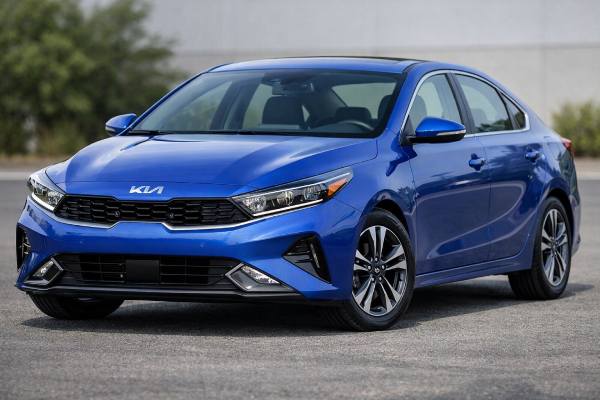
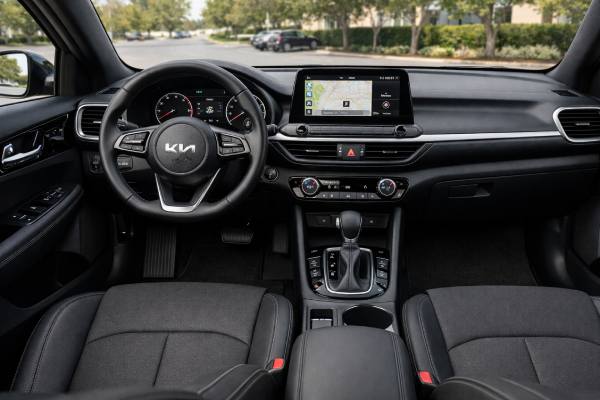
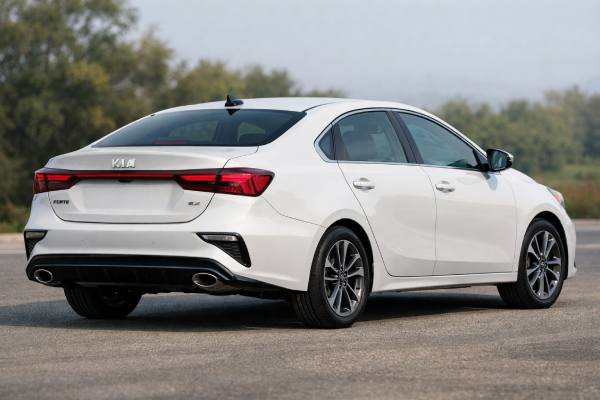
The 2022–2024 facelift Kia Forte (BD) with the 2.0-liter Nu MPI engine is the “practical core” of the lineup: simple, efficient, and easy to live with. It focuses on smooth daily driving rather than outright speed, pairing a naturally aspirated four-cylinder with a continuously variable transmission in many markets. That combination works best when you value predictable response, low running costs, and a cabin that feels modern after the facelift updates. The Forte’s strengths are also engineering choices: multi-point fuel injection (MPI) is generally less sensitive to fuel quality than direct injection, and the power output is tuned for durability and everyday torque rather than high stress. To own one long-term, the main priorities are consistent oil service, CVT/IVT fluid discipline, and keeping the cooling system healthy—small habits that protect the components that cost the most.
Quick Specs and Notes
- MPI 2.0 L engine favors smoothness and lower complexity over maximum output
- Typically efficient on highway cruising when tire pressures and alignment are correct
- Facelift brings refreshed styling and updated driver-assist availability in many trims
- CVT/IVT longevity depends on correct fluid and avoiding repeated high-heat abuse
- Plan engine-oil service about every 8,000–10,000 km (5,000–6,000 mi) or 6–12 months, depending on use
On this page
- Kia Forte BD facelift overview
- Kia Forte BD specs and tech data
- Kia Forte BD trims and safety tech
- Reliability patterns and common issues
- Maintenance plan and buyer’s guide
- Driving feel and real-world economy
- Forte BD competition and alternatives
Kia Forte BD facelift overview
The facelifted 2022–2024 Forte (BD) with the 2.0 Nu MPI is best understood as a compact sedan engineered to be dependable under normal life: commuting, school runs, mixed weather, and long motorway trips. The naturally aspirated 2.0-liter engine is tuned for predictable throttle response and reasonable fuel use, not dramatic top-end power. With 147 hp, it feels adequate rather than quick, but it avoids the “peaky” behavior some small turbo engines can have when you ask for sudden acceleration.
A key ownership advantage is the fueling system. Multi-point injection sprays fuel upstream of the intake valves, which generally reduces intake-valve deposit buildup compared with direct-injected (DI) engines. That doesn’t make it maintenance-free—oil quality still matters, and PCV (positive crankcase ventilation) systems can still contribute to deposits—but it often means fewer drivability complaints as mileage climbs, especially for drivers who do many short trips.
Most 2022–2024 cars in this configuration use a CVT-type transmission (often marketed as an IVT in some regions). It’s calibrated to keep engine speed low at steady cruise and to mimic “steps” under heavier throttle so it feels more like a conventional automatic. The trade-off is that a CVT is sensitive to heat and fluid condition. If the car spent its life in dense urban traffic, towing, or aggressive stop-and-go acceleration, you want proof of correct fluid servicing and a clean driving feel (no shudder, no delayed engagement, no droning flare that feels excessive).
The facelift changes are mostly about ownership experience: refreshed exterior styling, improved lighting and infotainment on many trims, and broader availability of driver-assistance features. This matters because compact sedans are often kept for many years. Features that reduce fatigue—lane support, better headlights, and a more stable highway tune—tend to be more valuable than a small bump in horsepower.
If you want the most “set-and-forget” Forte, the 2.0 MPI is usually the best fit. It rewards routine maintenance, conservative warm-up habits, and sane tire choices. In return, it provides the kind of uncomplicated transport that stays pleasant beyond the warranty period.
Kia Forte BD specs and tech data
The tables below focus on the 2022–2024 facelift Forte (BD) with the 2.0-liter Nu MPI engine rated around 147 hp. Specifications can vary by market, emissions calibration, wheels/tires, and trim, so confirm exact values by VIN when ordering fluids, parts, or brake components.
Powertrain and efficiency
| Item | 2.0 Nu MPI (147 hp) |
|---|---|
| Code | Nu 2.0 MPI (market naming varies) |
| Engine layout and cylinders | Inline-4, DOHC, 4 valves/cyl |
| Bore × stroke | ~81.0 × 97.0 mm (~3.19 × 3.82 in) |
| Displacement | 2.0 L (1,999 cc) |
| Induction | Naturally aspirated (NA) |
| Fuel system | MPI (multi-point injection) |
| Compression ratio | ~10.3:1 (varies by calibration) |
| Max power | 147 hp (110 kW) @ ~6,200 rpm |
| Max torque | ~179 Nm (132 lb-ft) @ ~4,500 rpm |
| Timing drive | Chain |
| Rated efficiency (typical) | ~6.8–7.6 L/100 km combined (31–35 mpg US / 37–42 mpg UK) |
| Real-world highway @ 120 km/h | Often ~6.2–7.0 L/100 km (34–38 mpg US) in mild conditions |
Transmission and driveline
| Item | Details |
|---|---|
| Transmission | CVT / IVT (market naming) |
| Drive type | FWD |
| Differential | Open (traction controlled by brakes and stability system) |
Chassis and dimensions
| Item | Typical figure (varies by wheels/market) |
|---|---|
| Suspension (front/rear) | MacPherson strut / torsion beam (common on non-GT) |
| Steering | Electric assist rack-and-pinion |
| Brakes | Disc front; rear disc or rear drum depending on market/trim |
| Front brake diameter | Often ~280 mm (~11.0 in) |
| Rear brake diameter | Often ~262 mm (~10.3 in) where rear discs fitted |
| Wheels/tyres (most common) | 205/55 R16 or 225/45 R17 (trim dependent) |
| Ground clearance | ~140 mm (~5.5 in) |
| Length / width / height | ~4,640 / 1,800 / 1,435–1,450 mm (182.7 / 70.9 / ~56.5–57.1 in) |
| Wheelbase | ~2,700 mm (~106.3 in) |
| Turning circle (kerb-to-kerb) | ~10.6 m (~34.8 ft) |
| Kerb weight | ~1,260–1,340 kg (~2,778–2,954 lb) |
| GVWR | Often ~1,700–1,760 kg (~3,748–3,880 lb) |
| Fuel tank | ~53 L (14.0 US gal / 11.7 UK gal) |
| Cargo volume | ~433 L (~15.3 ft³) seats up (method varies by market) |
Performance and capability
| Metric | Realistic expectation |
|---|---|
| 0–100 km/h (0–62 mph) | ~9.5–10.7 s (conditions and tires matter) |
| Top speed | ~185–195 km/h (~115–121 mph), market dependent |
| Braking 100–0 km/h | Often ~38–42 m (tire and test dependent) |
| Towing | Usually limited or not a focus; check your handbook |
| Payload | Often ~400–500 kg depending on curb weight and GVWR |
Fluids and service capacities (verify by VIN)
| System | Specification (typical) |
|---|---|
| Engine oil | Full-synthetic meeting required API/ILSAC spec; common grades 0W-20 or 5W-20 (climate dependent) |
| Engine oil capacity | ~4.0–4.5 L (~4.2–4.8 US qt) with filter |
| Coolant | OEM long-life coolant; correct mix ratio for your climate |
| Coolant capacity | ~6.0–6.8 L (~6.3–7.2 US qt) |
| Transmission fluid | OEM CVT/IVT fluid only (do not use “universal ATF”) |
| A/C refrigerant | Often R-1234yf on newer models (market dependent) |
| A/C charge | Commonly ~450–550 g (~16–19 oz), verify under-hood label |
Key torque specs (critical fasteners only, verify)
| Fastener | Typical range |
|---|---|
| Wheel lug nuts | ~90–110 Nm (~66–81 lb-ft) |
| Engine oil drain plug | ~30–40 Nm (~22–30 lb-ft) |
Safety and driver assistance (availability varies)
| Item | Notes |
|---|---|
| Euro NCAP | Not always tested for this exact model/market; verify locally |
| IIHS / NHTSA | Ratings vary by year and equipment (notably headlights and ADAS packages) |
| ADAS suite | AEB, lane support, blind-spot monitoring, and adaptive cruise may be standard or optional by trim |
Kia Forte BD trims and safety tech
For the 2022–2024 facelift years, the 2.0 MPI Forte is usually offered in several trims that share the same basic powertrain but differ meaningfully in daily use. When shopping—especially used—focus on the equipment that affects comfort, safety, and long-term hassle, not just cosmetic upgrades.
Trims and options that change the experience
Even if trim names differ by region, you’ll often see a pattern:
- Base or value trims: smaller wheels, simpler seats, and fewer driver-assist features. These can be excellent reliability buys because they have fewer sensors and fewer expensive modules, but they may have weaker headlights and less sound insulation.
- Mid trims: the sweet spot for most owners. They typically add better infotainment, more convenience features, and the most useful safety tech without an overly complex feature set.
- Top trims (non-GT): add larger screens, premium audio, more cameras/sensors, and sometimes a more complete ADAS package. These are comfortable, but they cost more to repair after minor accidents because sensors and calibration are part of the job.
Year-to-year changes worth knowing (2022–2024 facelift)
Facelift years often bring “quiet” improvements: revised bumpers, lighting changes, and software updates for infotainment and driver assistance. These matter because:
- Headlights can change safety outcomes. If one year/trim has better beam pattern and brightness, it reduces fatigue and improves reaction time at speed.
- Infotainment updates improve compatibility. Phone connection stability and microphone quality are daily wins and reduce frustration.
- ADAS can become more consistent. AEB and lane support may be smoother in later software versions and can be more tolerant of lane markings.
Safety structure and child-seat practicality
Most modern compact sedans provide multiple airbags (front, side, and curtain), plus stability control, ABS, and brake-force distribution. For families, check:
- ISOFIX/LATCH lower anchors and top tether points.
- Rear seat cushion condition (a sagging cushion can affect child-seat installation angle).
- Door seals and rear belt retractors (sticky retractors are a practical annoyance and a safety issue).
ADAS: what to prioritize and how to verify it
If you want the biggest real-world safety benefit, prioritize:
- Forward collision avoidance (AEB): reduces rear-end crash risk in urban traffic.
- Lane keeping and lane following support: reduces fatigue on long highway runs.
- Blind-spot monitoring and rear cross-traffic alert: valuable in tight parking areas and multi-lane merges.
- Adaptive cruise control (if available): comfort feature that also reduces speed variance.
During a test drive, confirm the system behaves normally: no constant warning chimes, no “camera blocked” messages in clear weather, and no persistent sensor faults. After windshield replacement, front bumper work, or alignment changes, some systems require calibration. If you see signs of recent collision repairs, ask for documentation that calibrations were performed properly.
In short, trims matter less for the engine and more for the ownership life around it. Pick the best headlights and the ADAS package you’ll actually use, and you’ll notice the benefits every day.
Reliability patterns and common issues
The 2.0 Nu MPI Forte is generally a straightforward car, and its most common problems are usually “wear-and-care” items rather than dramatic engine failures. Still, patterns show up as the miles stack up, and knowing the symptoms helps you act early—when fixes are cheaper.
Common issues (high prevalence)
- CVT/IVT drivability complaints
- Symptoms: shudder on light acceleration, delayed takeoff, excessive engine revs with little speed change, or a “rubber-band” feel that worsens over time.
- Likely causes: fluid degradation from heat, incorrect fluid type, or adaptive learning that hasn’t been reset after service.
- Remedy: confirm correct OEM CVT/IVT fluid, consider more frequent fluid service for city use, and ensure the transmission is healthy before buying used.
- Ignition-related roughness
- Symptoms: intermittent rough idle, light misfire, reduced fuel economy.
- Likely causes: aging spark plugs, coil wear, or vacuum leaks.
- Remedy: replace plugs at the correct interval, address vacuum leaks promptly, and avoid ignoring early misfire signs (misfires can damage catalysts).
- Brake and tire wear from city use
- Symptoms: vibration under braking, squeal, uneven tire wear, pulling.
- Likely causes: warped rotors from repeated heat cycles, seized slide pins, or alignment drift.
- Remedy: regular brake inspections, cleaning and lubricating slide pins, and aligning the car when tire wear looks uneven.
Occasional issues (medium prevalence)
- Oil seepage and gasket aging
- Symptoms: oil smell, dampness around the valve cover area, minor oil spots on undertray.
- Likely causes: gasket hardening with heat cycles.
- Remedy: fix seepage early; small leaks can become messy and can soften rubber components over time.
- Cooling-system weak points
- Symptoms: sweet coolant smell, slow coolant loss, or overheating in traffic.
- Likely causes: hose clamp seepage, aging radiator cap, or minor leaks at plastic junctions.
- Remedy: pressure test, correct coolant mix, and immediate repair of seepage. Overheating is what turns small problems into large ones.
- Sensor and camera annoyance faults
- Symptoms: intermittent ADAS warnings, lane camera unavailable messages, false “blocked sensor” alerts.
- Likely causes: dirty camera area, minor windshield distortion, weak 12 V battery, or calibration needed after repairs.
- Remedy: clean sensors, test battery health, and verify calibrations after glass or bumper work.
Rare but higher-cost risks
- Catalyst damage from extended misfire
- Symptoms: persistent check-engine light, loss of power, sulfur smell, poor economy.
- Root cause: repeated misfires sending raw fuel into the catalyst.
- Remedy: treat flashing MIL as urgent; fix the misfire before the catalyst overheats.
- Chronic CVT overheating behavior
- Symptoms: reduced power after long climbs or heavy traffic, warnings in extreme conditions.
- Root cause: heat load exceeding cooling capacity, sometimes combined with old fluid.
- Remedy: preventative fluid service, gentle driving style in extreme heat, and ensuring cooling airflow paths are intact.
Recalls, service bulletins, and updates
Modern cars often have software updates that improve drivability, sensor behavior, or infotainment stability. When shopping used, verify:
- Recall completion by VIN through official recall databases.
- Dealer service history for any ECU/TCU updates.
- Documentation after collision repairs confirming ADAS calibrations.
Overall, the Forte’s reliability depends less on exotic failures and more on routine care. A well-maintained example should feel smooth, consistent, and quiet—especially at light throttle where many neglected cars reveal problems.
Maintenance plan and buyer’s guide
The most cost-effective way to own a 2022–2024 Forte 2.0 MPI is to maintain it like a long-term appliance: consistent fluids, preventative inspections, and quick response to early symptoms. The schedule below is practical for real-world conditions and can be adjusted based on your climate and driving style.
Maintenance schedule (distance/time)
- Engine oil and filter: every 8,000–10,000 km (5,000–6,000 mi) or 6–12 months. Use the shorter interval for short trips, heavy traffic, hot climates, or high-speed motorway use.
- Engine air filter: inspect every 15,000 km (10,000 mi); replace around 30,000 km (20,000 mi) (sooner in dusty conditions).
- Cabin air filter: every 15,000–20,000 km (10,000–12,000 mi) or annually.
- Coolant: follow the official long-life interval; if you keep the car long-term, consider a proactive service around 5 years depending on coolant type.
- Spark plugs: commonly 90,000–160,000 km (60,000–100,000 mi) depending on plug design and market interval; shorten if you notice roughness or poor economy.
- Brake fluid: every 2 years (time-based).
- Brake inspection: at every tire rotation; clean and lubricate slide pins as needed.
- CVT/IVT fluid: follow official guidance, but for city-heavy use consider servicing around 50,000–70,000 km (30,000–45,000 mi). Always use the exact OEM fluid spec.
- Tire rotation: every 8,000–10,000 km (5,000–6,000 mi).
- Alignment check: annually or any time you see uneven wear or after pothole impacts.
- 12 V battery test: annually after year 3; many batteries last 4–6 years depending on climate.
“Do this, not that” ownership habits
- Do check oil level between changes—especially before long trips.
- Do let the engine reach full temperature on at least one longer drive each week if you do many short trips.
- Don’t treat a CVT like a performance automatic: repeated full-throttle launches generate heat.
- Don’t ignore minor shudder or hesitation; early action is cheaper than late action.
Buyer’s guide: inspection checklist
- Cold start and idle: should settle quickly with no persistent shaking.
- CVT behavior: smooth takeoff, no shudder, and no harsh engagement when moving from stop.
- Steady cruise: at 90–120 km/h, engine speed should be calm and consistent, not hunting.
- Braking: straight stops with no steering wheel shake.
- Tires: even wear across tread; feathering or inner-edge wear suggests alignment issues.
- Cooling system: no coolant smell, no low coolant level, and no dried residue around hoses.
- Electronics and ADAS: confirm warnings clear; test camera operation and lane/forward safety alerts if equipped.
- Service records: look for oil changes on time, CVT/IVT fluid history (especially for higher mileage), and proof of recall completion.
Best years, trims, and options to seek
For long-term durability, mid trims are often the best value: they tend to have better lighting and useful safety tech without maximum sensor complexity. If you prioritize simplicity and lowest repair risk, a lower trim can be a strong choice—just confirm the headlights meet your expectations for night driving.
A well-bought Forte is one with clean records and a smooth transmission feel. If you find one that drives “tight,” with even tires and consistent throttle response, it’s usually a good sign the prior owner followed the basics.
Driving feel and real-world economy
The 2.0 MPI facelift Forte is tuned for calm, predictable driving. It doesn’t feel fast, but it feels coherent: throttle response is linear, steering is light but accurate, and the suspension is set up to absorb typical city road damage without crashing over every bump. This is the kind of car that becomes more impressive after an hour behind the wheel than during a short test drive—because it’s easy to place in traffic and easy to drive smoothly.
Ride, handling, and noise (NVH)
Ride quality depends heavily on wheel size. On 16-inch wheels with taller tires, the Forte tends to feel supple over rough urban pavement and expansion joints. On 17-inch wheels, it gains a bit of steering sharpness but transmits more road texture into the cabin. The rear torsion-beam suspension on many non-GT models is stable and space-efficient, but it can feel slightly less composed over mid-corner bumps compared with a multi-link setup. For normal driving, it remains predictable and safe.
Cabin noise is generally reasonable for a compact sedan. At motorway speeds, tire choice makes the biggest difference. Touring-focused all-season tires can noticeably reduce hum compared with budget or performance-leaning tires. If you’re shopping used, listen for wheel-bearing growl and check for wind noise around the A-pillars—often a sign of prior windshield replacement or damaged seals.
Powertrain character
With a naturally aspirated engine and CVT, the Forte’s best driving style is smooth and steady. Under light throttle, the CVT keeps engine speed low and the car feels relaxed. Under heavy throttle, the transmission may raise revs and hold them while speed builds, which can sound busy even if the car is accelerating normally. That behavior is typical of CVTs, but it’s also where you can spot problems: a healthy unit should feel smooth, not shuddery.
Passing performance is adequate. For the best response, use a decisive throttle input rather than a gradual squeeze—this encourages the transmission to select a ratio that provides stronger acceleration. If you often drive on steep grades or carry heavy loads, expect to hear the engine working harder.
Real-world fuel economy
Real-world results vary with climate, speed, and traffic density, but typical ranges look like this:
- City-heavy commuting: 7.8–9.0 L/100 km (26–30 mpg US / 31–36 mpg UK)
- Highway at 100–120 km/h: 6.2–7.0 L/100 km (34–38 mpg US / 40–46 mpg UK)
- Mixed use: 6.8–7.8 L/100 km (30–35 mpg US / 36–42 mpg UK)
Cold weather can raise consumption noticeably, especially with short trips where the engine never fully warms. If you want the best economy, focus on three simple levers: correct tire pressure, clean air filter, and a driving style that avoids repeated heavy acceleration from low speed.
What changes the verdict
For most owners, the Forte’s value is how little effort it takes to drive well. It won’t thrill you, but it also won’t punish you with harsh ride, complicated turbo needs, or expensive premium-fuel habits. If you want a compact that stays easy to own and easy to drive, this powertrain fits the brief.
Forte BD competition and alternatives
The facelift Forte 2.0 MPI competes in the “sensible compact” class—cars that prioritize low running costs, predictable reliability, and good safety equipment for the money. Comparing it well means comparing ownership experience, not just horsepower.
Versus Toyota Corolla 2.0 (or 1.8 in some markets)
Corolla models often lead on long-term reputation and can feel extremely polished in controls and hybrid integration (where available). The Forte’s advantage is usually value: comparable features for less money and a straightforward, naturally aspirated setup in many trims. If you want maximum resale stability, Corolla is often strong. If you want more equipment per euro/dollar and you plan to keep the car, the Forte can be the smarter buy.
Versus Honda Civic (non-turbo or base turbo trims)
Civic typically feels sharper dynamically, with more steering precision and a chassis that encourages enthusiastic driving. The Forte counters with a calmer ride in some wheel configurations and often a friendlier price for similar tech. If you care about handling feel, Civic tends to win. If you care about comfort, cost, and straightforward maintenance, the Forte holds its own.
Versus Mazda3
Mazda3 often delivers the richest interior feel and strong cabin refinement, but it can cost more to buy and sometimes to insure. The Forte is usually the practical choice: good space, modern features, and easier budgeting. If you want “near-premium” ambience, Mazda3 is attractive. If you want “simple and modern,” Forte fits better.
Versus Hyundai Elantra (same corporate family, different flavor)
Elantra and Forte share many engineering philosophies. The decision often comes down to seat comfort, infotainment preference, and how the car feels on your local roads. If you find one with better service history and better tires, choose the better-kept example rather than chasing a badge.
Who should choose the Forte 2.0 MPI facelift
This model is ideal for:
- commuters who want low surprise costs and easy day-to-day driving,
- buyers who value safety tech but don’t want the complexity of performance trims,
- owners planning to keep the car long enough that maintenance habits matter more than spec-sheet bragging rights.
If you want more speed, the GT or turbo variants make sense. If you want a balanced, lower-complexity compact sedan with modern features and good everyday manners, the 2022–2024 Forte 2.0 MPI is one of the most rational picks in the segment—especially when you buy based on service history and transmission feel, not just mileage.
References
- Recalls 2026 (Recall Database)
- Find a Car – FuelEconomy.gov 2026 (Fuel Economy Database)
- Vehicle Ratings 2026 (Safety Rating)
- Owner’s Manuals 2026 (Owner’s Manual)
Disclaimer
This article is for informational purposes only and is not a substitute for professional inspection, diagnosis, or repair. Specifications, torque values, fluid types, capacities, maintenance intervals, and procedures can vary by VIN, market, model year, and installed equipment. Always verify details using your official owner’s manual and service documentation for your exact vehicle.
If this guide was useful, please consider sharing it on Facebook, X (Twitter), or your favorite community to support our work and help other owners.