
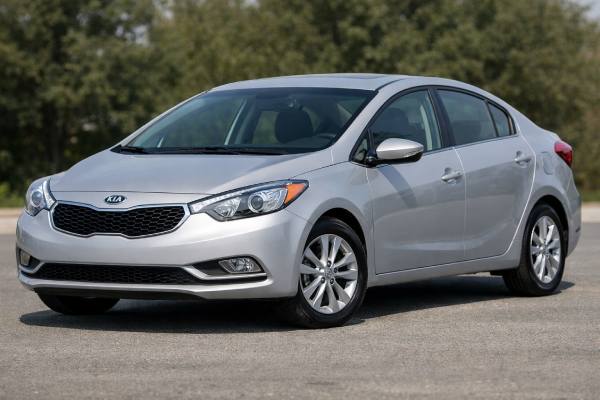

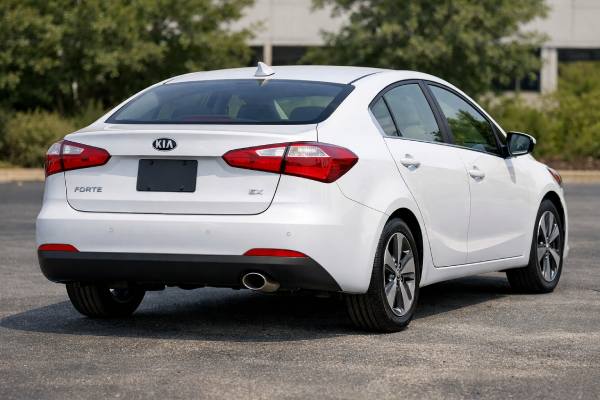
The 2014 Kia Forte (YD) with the 1.8-liter Nu MPI engine is a straightforward compact sedan built around simple, proven hardware: a naturally aspirated, multi-port-injected four-cylinder paired with either a 6-speed manual or 6-speed automatic. That “MPI” detail matters for long-term ownership—this engine avoids many of the carbon build-up concerns associated with direct injection, and it tends to reward consistent maintenance rather than special tricks.
As a daily driver, the Forte’s strengths are practical: usable cabin space, stable highway manners, and a chassis that feels more substantial than many budget compacts of its era. The trade-off is that it is not a fast car, and it benefits from preventive attention to fluids, rubber components, and a few known wear items as mileage climbs. If you shop carefully, it can be a low-drama commuter with predictable costs and easy parts availability.
Fast Facts
- Smooth, low-effort commuting powertrain; MPI fueling favors long-term cleanliness and simple service.
- Strong space efficiency for a compact sedan, with adult-friendly rear legroom for the class.
- Highway stability and steering consistency are better than many base-trim rivals on similar tires.
- Watch for deferred fluid services (ATF, brake fluid, coolant) on higher-mileage cars—catch-up maintenance adds up.
- Plan engine oil changes every 10,000 km (6,000 mi) or 12 months (earlier for short trips or heavy city use).
On this page
- Kia Forte YD 1.8 in context
- Kia Forte YD 1.8 specs sheet
- Kia Forte YD trims and safety tech
- Reliability watchlist and recalls
- Maintenance schedule and buying tips
- Road feel and real economy
- Rivals and value comparison
Kia Forte YD 1.8 in context
The 2014 Forte (YD) is part of the generation shift where the model grew up: a stiffer-feeling body, a more mature ride, and packaging that makes the cabin feel closer to mid-2000s midsize sedans than older “cheap compact” norms. In most markets this car’s mission was clear—deliver comfort and features at a price point—so the 1.8-liter Nu MPI sits at the center of the lineup as the sensible, low-risk engine choice.
The Nu 1.8 is an aluminum-block, aluminum-head inline-four with dual overhead cams and variable valve timing. Most importantly for owners, MPI (multi-port injection) sprays fuel onto the back of the intake valves rather than directly into the cylinder. That helps keep the intake tract cleaner over time and usually makes cold-start behavior and part-throttle drivability less finicky than early direct-injected competitors. It also means your long-term reliability picture is more about basic maintenance discipline than “special services.”
From an ownership standpoint, the 2014 one-year scope matters: you are typically evaluating cars that have had enough time for maintenance patterns to show. A well-kept Forte will have evidence of routine oil services, a clean cooling system, and transmission fluid that is not burnt or neglected. A poorly kept one may still drive “okay,” but it will often reveal itself through noisy suspension over bumps, tired mounts, lazy shifting (automatic), or electrical annoyances that come from age rather than design.
Who is it best for?
- Commuters who want predictable running costs and easy service access.
- Buyers who value cabin and trunk space without stepping up to a larger class.
- Owners who prefer simpler engines over turbocharged or direct-injected alternatives.
Who should think twice?
- Drivers expecting quick acceleration or sporty feedback on base tires.
- Buyers who cannot verify service history—catch-up maintenance can erase the “good deal.”
Kia Forte YD 1.8 specs sheet
Below is a practical spec sheet for the 2014 Forte sedan with the 1.8 Nu MPI (148 hp). Exact figures can vary slightly by market, emissions package, and trim, so treat these as the correct baseline and verify against your VIN-equipment data when ordering parts.
Powertrain and efficiency
| Item | Specification |
|---|---|
| Code | Nu 1.8 MPI (commonly Nu G4NB in many markets) |
| Engine layout and cylinders | Inline-4; DOHC; 4 cylinders; 4 valves/cyl |
| Bore × stroke | 81.0 × 87.2 mm (3.19 × 3.43 in) |
| Displacement | 1.8 L (1,797 cc) |
| Induction | Naturally aspirated |
| Fuel system | MPI (multi-port injection) |
| Compression ratio | ~10.3:1 (market dependent) |
| Max power | 148 hp (110 kW) @ ~6,500 rpm |
| Max torque | ~178 Nm (131 lb-ft) @ ~4,700 rpm |
| Timing drive | Chain |
| Rated efficiency (typical, automatic) | ~8.4 L/100 km (28 mpg US combined / ~34 mpg UK) |
| Real-world highway @ 120 km/h | ~6.8–7.6 L/100 km (31–35 mpg US), tire and wind dependent |
Transmission and driveline
| Item | Specification |
|---|---|
| Transmission | 6-speed manual or 6-speed automatic |
| Drive type | FWD |
| Differential | Open |
Chassis and dimensions
| Item | Specification |
|---|---|
| Suspension (front/rear) | MacPherson strut / torsion beam |
| Steering | Electric power steering (EPS), rack-and-pinion |
| Brakes (typical) | Front vented discs; rear discs (some markets/trims may differ) |
| Brake diameters | Front ~279 mm (11.0 in); rear ~262 mm (10.3 in) |
| Wheels/tyres (common) | 195/65 R15 (base) or 205/55 R16 (mid trims) |
| Ground clearance | ~140 mm (5.5 in) |
| Length / width / height | ~4,554 / 1,781 / 1,435 mm (179.3 / 70.1 / 56.5 in) |
| Wheelbase | ~2,700 mm (106.3 in) |
| Turning circle (kerb-to-kerb) | ~10.6 m (34.8 ft) |
| Kerb (curb) weight | ~1,200–1,275 kg (2,647–2,808 lb) |
| Fuel tank | ~50 L (13.2 US gal / 11.0 UK gal) |
| Cargo volume (trunk) | ~422 L (14.9 ft³), method varies by market |
Performance and capability (typical, stock tires)
| Metric | Typical result |
|---|---|
| 0–100 km/h (0–62 mph) | ~10.0–11.2 s (transmission and conditions dependent) |
| Top speed | ~190 km/h (118 mph) |
| Braking 100–0 km/h | ~39–42 m (128–138 ft), tire dependent |
| Towing capacity | Often not rated or very limited in many markets; check your owner information |
| Payload | Varies by trim; confirm door-jamb label |
Fluids and service capacities (verify by VIN/market)
| Fluid | Specification (typical) |
|---|---|
| Engine oil | API SN/SN+ (or newer); 5W-20 or 5W-30; capacity ~4.0 L (4.2 US qt) |
| Coolant | Ethylene glycol long-life coolant; 50/50 mix; capacity ~6.0–6.5 L |
| Automatic transmission | Manufacturer-specified ATF; capacity varies with service type |
| Manual transmission | Specified MTF gear oil; capacity varies |
| A/C refrigerant | R-134a (most markets for 2014); charge varies |
Key torque specs (decision-grade, verify before final tightening)
| Fastener | Torque (typical range) |
|---|---|
| Wheel lug nuts | ~88–108 Nm (65–80 lb-ft) |
| Engine oil drain plug | ~35–45 Nm (26–33 lb-ft) |
| Spark plugs | ~18–25 Nm (13–18 lb-ft) |
Kia Forte YD trims and safety tech
Trim naming varies by region, but the 2014 Forte sedan typically followed a familiar ladder: an entry trim focused on value, a mid trim adding comfort and convenience, and an upper trim layering on wheels, infotainment, and appearance upgrades. The key is to separate “cosmetic” differences from the few choices that actually affect ownership costs and daily satisfaction.
Trims and options that matter
Look for these high-impact differences:
- Transmission choice (6MT vs 6AT): The manual can be cheaper to maintain long-term if the clutch is healthy, while the automatic rewards regular fluid service and smooth driving.
- Wheel and tire package: Larger wheels can improve response but raise tire cost and road noise. Base 15-inch tires are usually the quietest and least expensive to replace.
- Tech package features: Depending on market, higher trims may add a larger infotainment screen, upgraded audio, push-button start, and sometimes a sunroof. These add comfort but also add electrical complexity as cars age.
- Cold-weather and convenience items: Heated seats and mirrors are genuinely useful in winter climates and tend to age well if switches and connectors stay dry.
Quick identifiers you can use during a walk-around:
- Wheel size often correlates strongly with trim level.
- Headunit layout (basic radio vs integrated screen) is a fast interior tell.
- Steering wheel controls and cluster display features often differentiate mid/high trims.
- Badging is not always reliable—some cars have swapped trunk lids or trim add-ons.
Safety ratings and what they mean
Safety results depend on the test body and the exact test version. In the U.S., the 2014 Forte sedan received strong scores in several IIHS crashworthiness categories, which is a good sign of structure and restraint design. Still, remember two practical points:
- A great crash structure cannot compensate for worn tires and tired brakes.
- Driver assistance depends on equipment. A base trim without advanced features can still protect you well in a crash, but it will not help you avoid one.
Safety systems and driver assistance
Common equipment on this generation typically includes:
- Front airbags plus side and curtain airbags (exact count can vary by market)
- ABS (anti-lock braking system) and ESC (electronic stability control) on many trims/markets
- Tire pressure monitoring (TPMS) in many regions
- Child-seat anchors (LATCH/ISOFIX), usually outboard rear seating positions
Advanced driver assistance (ADAS) on 2014 compacts is limited compared with modern cars. If your Forte has optional lane or collision systems, treat them as “early generation” assistance: useful when calibrated correctly, but sensitive to windshield replacement quality, sensor alignment, and correct tire sizing. After any front-end repair or steering/suspension work, verify the car tracks straight and stability control behaves normally.
Reliability watchlist and recalls
Overall, the 1.8 Nu MPI powertrain is not exotic and can be durable, but 10+ years of use changes the conversation. The most important reliability pattern is not a single catastrophic defect—it is how the car was used and maintained. Short trips, cheap oil, and skipped fluid services create the majority of expensive “mystery problems” on otherwise simple cars.
Below is a practical watchlist organized by prevalence and typical cost tier.
Common (usually low to medium cost)
- Ignition coils and plugs (misfire under load):
Symptoms: rough idle, flashing check-engine light, loss of power.
Likely cause: coil degradation, worn plugs, or moisture intrusion.
Remedy: scan for cylinder-specific misfire codes, swap-test coils, replace plugs with correct heat range and torque. - EVAP purge valve issues (fuel smell or hard start after refuel):
Symptoms: long crank after fueling, EVAP codes, occasional rough idle.
Likely cause: purge valve sticking open.
Remedy: replace purge valve, inspect hoses and charcoal canister lines. - EPS/steering noises (clunk over small bumps):
Symptoms: light “knock” through steering at low speed.
Likely cause: coupler or bushing wear in the steering column assembly (varies by build).
Remedy: confirm source before replacing parts; alignment check afterward.
Occasional (medium cost)
- Engine mount wear (vibration in gear):
Symptoms: vibration at idle, harshness on throttle tip-in.
Likely cause: aged hydraulic mounts or torque mount bushing wear.
Remedy: replace worn mounts as a set if multiple are tired; re-check idle speed and misfire history first. - Cooling system aging (thermostat, water pump seep):
Symptoms: slow warm-up, temp fluctuations, coolant smell, small puddles.
Likely cause: thermostat fatigue, gasket seep, or pump wear.
Remedy: pressure test, replace weak parts proactively, renew coolant with correct spec. - Automatic transmission shift quality (flare or hesitation):
Symptoms: delayed engagement, flare between gears, rough downshift.
Likely cause: old ATF, adaptation drift, or solenoid wear.
Remedy: verify fluid condition and level, service with the correct ATF spec, then reassess before chasing hardware.
Rare but higher cost risks (shop carefully)
- Oil consumption patterns:
MPI Nu engines are not “known” for extreme oil consumption the way some designs are, but any high-mileage engine can start using oil if maintenance was poor.
Symptoms: low oil between changes, smoke on start-up, oily plugs.
Remedy: verify PCV function, look for leaks, document usage over 1,000–2,000 km before major work. - Electrical network problems from water intrusion:
Symptoms: intermittent warning lights, random sensor codes, infotainment glitches.
Likely cause: battery weakness, corroded grounds, or moisture at connectors.
Remedy: start with battery test and charging voltage, then clean grounds and inspect fuse box areas.
Recalls, TSBs, and service actions
Use official VIN-based tools to confirm recall completion. A car can feel “fine” and still have open campaigns. When you find a relevant campaign:
- Record the campaign number and remedy
- Ask for dealer printout showing completion date
- Verify any updated parts (especially in safety systems) were installed correctly
For this age bracket, recall completion history is often the difference between a worry-free car and one that surprises you later.
Maintenance schedule and buying tips
A 2014 Forte rewards boring, consistent maintenance. The goal is to prevent small issues (fluid breakdown, clogged filters, corrosion in brake hydraulics) from turning into drivability complaints and expensive catch-up work. Use the schedule below as a practical baseline, then tighten intervals if you drive short trips, sit in traffic, or see extreme heat/cold.
Practical maintenance schedule (distance or time, whichever comes first)
- Engine oil and filter: every 10,000 km (6,000 mi) or 12 months; severe use every 6,000–8,000 km (4,000–5,000 mi).
- Engine air filter: inspect every 15,000 km; replace ~30,000 km (dusty regions sooner).
- Cabin air filter: 15,000–20,000 km (or yearly for allergies).
- Spark plugs: typically 160,000 km (100,000 mi) if iridium; earlier if misfire history or unknown parts.
- Coolant: first replacement often around 10 years/160,000 km, then every 5 years/80,000 km (confirm your coolant type).
- Brake fluid: every 2 years regardless of mileage.
- Brake pads/rotors: inspect every 15,000 km; replace based on thickness and vibration.
- Automatic transmission fluid: every 60,000–96,000 km depending on use; earlier for heavy city driving or heat exposure.
- Manual transmission fluid: every 80,000–120,000 km, especially if shifts feel notchy.
- Serpentine/aux belt: inspect yearly; replace at cracking, glazing, or noise.
- Alignment and tire rotation: rotate every 8,000–10,000 km; alignment check yearly or after pothole hits.
- 12 V battery: test yearly after year 4; many batteries last 4–6 years in real use.
Fluids and “buy once, cry once” choices
- Use the correct oil grade for your climate; prioritize meeting the correct API/ILSAC standard over chasing “thicker is better.”
- Do not mix coolant types unless the spec allows it; coolant chemistry conflicts can create sludge.
- For the automatic, correct ATF matters. If service history is unknown, a cautious drain-and-fill approach is often safer than aggressive flushing.
Buyer’s guide: what to check before purchase
Bring a flashlight, an OBD scan tool, and a skeptical mindset.
- Cold start behavior: listen for rattles, unstable idle, or misfires.
- Transmission engagement: from Park to Drive/Reverse should be prompt and smooth.
- Cooling system health: check for dried coolant residue near hoses, radiator end tanks, and water pump area.
- Oil leaks and seepage: valve cover area and lower engine perimeter.
- Suspension and steering: clunks over small bumps, uneven tire wear, wandering at highway speed.
- Brakes: pulsation, pulling, and soft pedal feel (could indicate old fluid).
- Electronics: confirm windows, locks, HVAC modes, infotainment, and steering wheel controls all work consistently.
- Service records: prioritize cars with documented oil changes and at least one transmission and brake-fluid service.
Best “durability setup” in many cases: modest wheel size (15–16 inch), clean service history, and no evidence of hard curb strikes or lowered suspension. A simpler trim in excellent condition is usually a better long-term bet than a higher trim with neglected maintenance.
Road feel and real economy
The 2014 Forte 1.8 is tuned for normal life: commuting, errands, and highway miles at sane speeds. It will not feel quick, but it often feels composed, which is what many owners actually notice day to day.
Ride, handling, and NVH
- Ride: On 15–16 inch tires, the Forte typically absorbs sharp edges better than you’d expect for a compact. Bigger wheels can add impact harshness and tire noise on coarse asphalt.
- Steering: The EPS system is light and consistent, with decent on-center stability. Feedback is limited (common for the era), but the car tracks predictably when alignment and tires are correct.
- Cornering balance: Safe and neutral at normal speeds, with understeer arriving first if pushed. A fresh set of quality tires changes the personality more than almost any “mod.”
- Braking feel: Generally easy to modulate. If the pedal feels soft or the car pulls, suspect old brake fluid, sticking slide pins, or uneven pad deposits before assuming major hardware issues.
- Cabin noise: Expect moderate road noise on rough surfaces and a noticeable engine note at high rpm. At steady highway speed, it usually settles into a livable rhythm.
Powertrain character
The 1.8 Nu MPI is happiest between low- to mid-range revs. It is smooth, but it does not produce much torque off idle.
- Throttle response: Predictable rather than punchy; the car benefits from planning merges.
- Automatic behavior: The 6-speed automatic typically aims for low rpm and economy. If it hunts gears on hills, check for tired spark plugs, weak coils, or overdue ATF before blaming “transmission problems.”
- Manual behavior: The manual can make the car feel more responsive because you choose the rev range. Clutch feel should be progressive; a high grab point can hint at wear.
Real-world efficiency
EPA-style ratings (automatic) often land around 8.4 L/100 km combined (28 mpg US), with ~6.7 L/100 km highway (35 mpg US) and ~9.8 L/100 km city (24 mpg US) under typical test conditions. In real driving:
- City-heavy, short trips: ~9.0–10.5 L/100 km (22–26 mpg US)
- Highway 100–120 km/h: ~6.8–7.6 L/100 km (31–35 mpg US)
- Mixed commute: ~7.8–9.0 L/100 km (26–30 mpg US)
Cold weather can add 10–20% fuel use, mainly from longer warm-up time and winter tire rolling resistance.
Rivals and value comparison
In the 2014 compact-sedan landscape, the Forte 1.8 competes less on outright performance and more on comfort, packaging, and cost-to-own. Here is how it generally stacks up against common alternatives when you compare like-for-like condition and maintenance history.
Against the “reliability first” picks
- Toyota Corolla 1.8 (similar era): Often edges the Forte in long-run reputation and resale, but can feel more basic in cabin design. If both cars are equally maintained, the Corolla’s advantage is usually predictability; the Forte’s advantage is value and space/features per dollar.
- Honda Civic 1.8: Typically feels more eager to rev and can deliver a sportier driving impression. However, pricing can be higher for similar mileage and condition. A well-kept Forte can be the better buy if you prioritize comfort and price.
Against the “driver’s choice” compacts
- Mazda Mazda3 2.0: Often wins on steering feel and chassis polish. The Forte counters with a calmer ride and, frequently, lower purchase cost. If you want a more connected drive, Mazda is hard to beat; if you want a quieter commute value play, Forte is compelling.
- Ford Focus (varies by transmission): Dynamics can be excellent, but ownership risk depends heavily on the transmission type. The Forte 1.8’s appeal is fewer “known big-ticket surprises” when maintained.
Against close cousins
- Hyundai Elantra (similar powertrain families): The comparison often comes down to trim, condition, and service history. The Forte may offer different packaging and feature mixes, so buy the best-maintained example rather than chasing badges.
When the Forte 1.8 is the smarter buy
Choose the Forte when you find:
- A clean service record with consistent oil changes
- Evidence of brake-fluid and transmission-fluid service (or budget to do it immediately)
- Even tire wear and a straight, quiet suspension on test drive
- No unresolved warning lights and stable charging voltage
Pass (or negotiate hard) when you see:
- Burnt-smelling ATF, harsh shifting, or delayed engagement
- Overheating history or coolant residue that suggests chronic leaks
- Multiple cheap mismatched tires (often a sign of corner-cutting maintenance)
- Electrical glitches paired with corrosion at battery terminals or grounds
Bottom line: the 2014 Forte 1.8 is rarely the “best” at any one headline metric, but it can be one of the best overall values when you buy a cared-for example and keep maintenance boring.
References
- 2014 Kia Forte Specifications 2014 (Manufacturer Specifications)
- 2014 Kia Forte 4-door sedan 2014 (Safety Rating)
- Gas Mileage of 2014 Kia Forte 2014 (Fuel Economy Data)
- Recalls 2026 (Recall Database)
- Airbag Clock Spring Warranty Extension 2022 (TSB)
Disclaimer
This article is for informational purposes only and is not a substitute for professional diagnosis, inspection, or repair. Specifications, torque values, service intervals, and procedures can vary by VIN, market, and equipment; always verify details using your official owner information and service documentation for the exact vehicle you are working on.
If this guide helped you, please consider sharing it on Facebook, X (Twitter), or your favorite forum to support our work.