

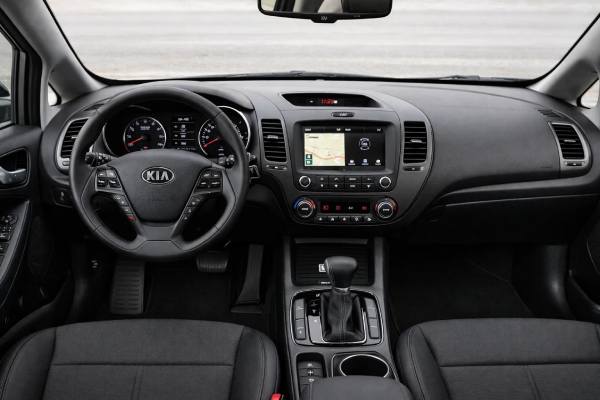
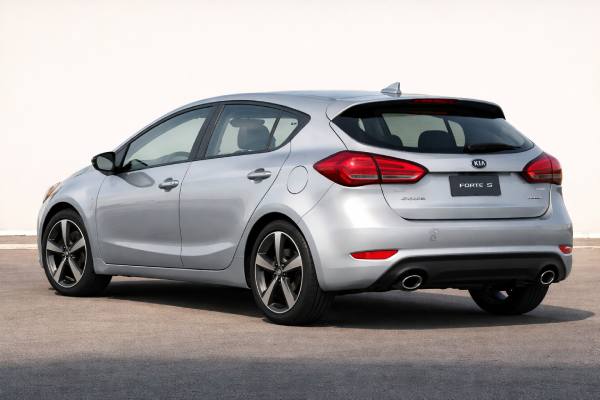
The 2017–2018 facelift Kia Forte5 (YD) with the 2.0 Nu GDI is the “sensible hot hatch” option in the compact class: a practical hatchback body, straightforward mechanicals, and enough power (164 hp) to keep daily driving relaxed without adding turbo complexity. The Nu GDI’s direct injection helps response and economy, but it also changes what “good maintenance” looks like—short-trip use and long oil intervals can accelerate intake-valve deposits and PCV-related oil vapor buildup. Chassis tuning is comfort-first, with predictable grip and easy maneuvering in city traffic. The Forte5’s biggest ownership strengths are parts availability, uncomplicated packaging, and an interior that ages well if it’s kept clean and dry. Buy smart, service on time, and this model rewards you with low drama and useful cargo space.
What to Know
- Strong day-to-day usability: hatch practicality with compact parking footprint.
- 2.0 GDI feels responsive at light throttle and stays simple (no turbo hardware).
- Good value in the used market when service history is complete and consistent.
- Direct injection can mean intake-valve carbon over time—short trips make it worse.
- Plan oil changes around 8,000–10,000 km (5,000–6,000 mi) or 12 months (sooner for severe use).
Navigate this guide
- Kia Forte5 YD GDI hatchback
- Kia Forte5 YD specs and sizes
- Kia Forte5 YD trims and safety
- Reliability hotspots and recalls
- Maintenance plan and buying guide
- Driving feel and efficiency
- Forte5 rivals and alternatives
Kia Forte5 YD GDI hatchback
The facelifted 2017–2018 Forte5 takes the practical YD platform and sharpens the ownership proposition: you get compact-car running costs with hatchback utility, and the 2.0 Nu GDI adds a bit more punch than older MPI versions without moving into turbo territory. This specific 164 hp configuration is best understood as a “strong commuter” setup—quick enough to merge confidently, smooth at cruising speeds, and easy to service in most markets.
Engineering-wise, the Nu GDI’s strengths are its broad usability and fairly modern combustion design (direct injection, dual cam phasing, chain timing). The tradeoff is that direct injection doesn’t wash the intake valves with fuel, so oil vapor and blow-by residues can accumulate on the intake side over long mileage—especially with short trips, extended idling, or infrequent oil changes. That doesn’t make it fragile; it just makes maintenance habits more important than the brochure suggests.
As a hatchback, the Forte5’s daily advantages show up in the “small things”: a square opening that swallows strollers, bags, and flat-pack furniture; a rear seat that actually folds into a meaningful cargo bay; and a driving position that works for a wide range of body sizes. Cabin ergonomics are intentionally simple—physical buttons for frequent tasks, an intuitive dash layout, and controls that don’t demand a learning curve.
The facelift years also tend to be the sweet spot for refinements that matter quietly over time: better sound isolation than earlier years in many trims, updated infotainment hardware depending on market, and incremental improvements to occupant protection and driver aids (which vary heavily by trim and build date). In other words: the same basic car, but slightly more “finished.”
If you’re shopping this exact model, the big decision usually isn’t “Is it good?”—it’s which condition and maintenance story you’re buying. A clean service record and evidence of sensible oil intervals matter more here than chasing the lowest price.
Kia Forte5 YD specs and sizes
Below are practical, owner-relevant specs for the Forte5 (YD) facelift with the 2.0 Nu GDI. Some items can vary by market, emissions package, and transmission; treat capacities and torque values as “decision-grade” and confirm on the under-hood label or service manual for your VIN.
Powertrain and efficiency
| Item | Specification |
|---|---|
| Code | Nu GDI (commonly G4NC) |
| Engine layout and cylinders | Transverse I-4, DOHC, 4 cyl, 4 valves/cyl |
| Bore × stroke | 81.0 × 97.0 mm (3.19 × 3.82 in) |
| Displacement | 2.0 L (1,999 cc) |
| Induction | Naturally aspirated (NA) |
| Fuel system | GDI (direct injection) |
| Compression ratio | ~11.5:1 |
| Max power | 164 hp (122 kW) @ ~6,200 rpm |
| Max torque | 205 Nm (151 lb-ft) @ ~4,000 rpm |
| Timing drive | Chain |
| Rated efficiency (automatic, typical) | 9.4 / 7.1 / 8.4 L/100 km (25 / 33 / 28 mpg US; 30.0 / 39.6 / 33.6 mpg UK) city/hwy/comb |
| Real-world highway @ 120 km/h | typically ~7.2–8.0 L/100 km (33–29 mpg US), weather and tyres matter |
Transmission and driveline
| Item | Specification |
|---|---|
| Transmission | 6-speed manual (where offered) or 6-speed automatic |
| Drive type | FWD |
| Differential | Open (traction managed by brake-based stability/traction control) |
Chassis and dimensions
| Item | Specification |
|---|---|
| Suspension (front/rear) | MacPherson strut / torsion-beam rear (typical for this model) |
| Steering | Electric assist (MDPS); ratio varies by market/trim |
| Brakes | Front vented discs; rear solid discs |
| Brake diameters | Front 279 mm (11.0 in) LX/EX; 300 mm (11.8 in) on some higher trims; rear 262 mm (10.3 in) |
| Wheels and tyres (common) | 205/55 R16 (base) or 225/40 R18 (sport packages) |
| Ground clearance | ~140 mm (5.5 in) |
| Length / width / height | ~4,351 / 1,781 / 1,450 mm (171.3 / 70.1 / 57.1 in) |
| Wheelbase | ~2,700 mm (106.3 in) |
| Turning circle (kerb-to-kerb) | ~10.6 m (34.8 ft) |
| Kerb (curb) weight | ~1,328–1,387 kg (2,928–3,058 lb), equipment-dependent |
| GVWR | ~1,800 kg (3,968 lb) |
| Fuel tank | ~50.0 L (13.2 US gal / 11.0 UK gal) |
| Cargo volume | ~657 L (23.2 ft³) seats up / ~1,597 L (56.4 ft³) seats down (method differs by region) |
Fluids and service capacities (confirm for your VIN)
| Item | Typical spec to request at service |
|---|---|
| Engine oil | API SN/SP (or later) / ILSAC GF-5/6; 0W-20 or 5W-20 commonly used; capacity ~4.0 L (4.2 US qt) with filter |
| Coolant | Long-life ethylene glycol; 50/50 mix; capacity often ~6–8 L |
| Transmission/ATF (6AT) | Kia/Hyundai ATF spec (commonly SP-IV family); drain/fill is partial—capacity depends on procedure |
| A/C refrigerant | Usually R-134a; charge varies—verify under-hood label |
Safety and driver assistance (availability varies)
| Item | Notes |
|---|---|
| Crash ratings | Euro NCAP: not typically listed for this model name/market; IIHS: ratings apply to tested body style and build dates |
| ADAS suite | Commonly: ESC, traction control, ABS, brake assist; optional BSD/RCTA on some trims; AEB/LKA availability depends on market and package |
Kia Forte5 YD trims and safety
Because “Forte5” naming and equipment vary by region, treat trims as equipment groupings rather than universal labels. In many markets, the 2.0 Nu GDI hatchback sits below the turbo sport variant, so the focus is comfort, practicality, and value.
Trims and options that matter for ownership
Look first for features that change day-to-day satisfaction and long-term costs:
- Wheels and tyres: 16-inch packages ride softer and cost less to re-tire; 18-inch packages sharpen steering response but increase tyre expense and pothole vulnerability.
- Lighting: projector or HID/LED options (where offered) can improve night visibility; confirm replacement cost and lens condition.
- Infotainment tier: higher systems add camera quality and connectivity features but may increase replacement cost if screens fail.
- Convenience equipment: heated seats, keyless entry/start, and dual-zone climate (where fitted) are “high joy, low downside” options.
Quick identifiers when you’re inspecting a used car:
- Wheel size and brake feel can hint at the original package level.
- Rear bumper sensors, mirror turn indicators, and camera hardware often signal higher option groups.
- Verify the tyre size placard and compare it to what’s mounted—mismatched tyre specs can indicate cheap reconditioning.
Safety ratings and what they really mean here
Safety results depend on body style, build date, and equipment. Some crash-test organizations rate sedans and hatchbacks separately even when they share a platform. If you see strong results for a “Forte sedan,” don’t automatically assume the same rating applies to the Forte5 hatchback—use it as a clue, then verify what was actually tested.
Also pay attention to qualifiers like:
- “Applies only to vehicles built after [month/year]”
- “With optional front crash prevention”
- “With specific headlights”
These phrases matter because two cars with the same badge can have different headlight performance or optional crash-avoidance technology.
Safety systems and ADAS practicality
Baseline safety is solidly conventional: multiple airbags (front, side, curtain), ABS, stability control, and child-seat anchors. Optional systems you may find depending on trim/package include:
- Blind-spot detection (BSD) and rear cross-traffic alert (RCTA), helpful in dense parking lots.
- Lane features and AEB can be present in some markets/option groups, but don’t assume they’re fitted—confirm through the cluster icons, camera/radar hardware, and the original window sticker (or dealer build sheet).
After windshield replacement, alignment work, or collision repairs, always confirm that any camera- or sensor-based systems operate correctly and that warning lights clear without “tape-and-trade” shortcuts.
Reliability hotspots and recalls
The 2.0 Nu GDI Forte5 is generally a low-to-medium risk compact car when serviced on time. Most expensive surprises come from neglected fluids, ignored warning lights, or cars that lived a hard urban life (short trips, lots of cold starts, long idle time).
Below is a practical issue map by prevalence and cost tier. Mileage bands are approximate.
Common (low to medium cost)
- Intake-valve carbon buildup (60,000–140,000 km):
Symptoms: rough cold starts, slight misfire at idle, reduced response.
Likely cause: direct injection + oil vapor deposits.
Remedy: intake cleaning (chemical or walnut blasting depending on severity), plus PCV inspection and better oil interval discipline. - Ignition coils or plugs (80,000–160,000 km):
Symptoms: misfire under load, flashing MIL, fuel smell.
Cause: coil breakdown or worn plugs.
Remedy: replace coils as needed; use correct plug heat range and gap. - PCV valve and crankcase ventilation (varies):
Symptoms: oil consumption changes, oily intake piping, unstable idle.
Cause: stuck PCV or restricted hoses.
Remedy: replace PCV and inspect hoses; check for vacuum leaks. - Brake hardware wear (urban use):
Symptoms: vibration, uneven pad wear, dragging brakes.
Cause: seized slide pins, cheap pads, infrequent servicing.
Remedy: clean and lubricate slide pins, replace pads/rotors as a set, flush brake fluid on schedule.
Occasional (medium cost)
- Cooling system seepage (age-related):
Symptoms: sweet smell, low coolant, damp hose ends.
Cause: hose fatigue, thermostat housing seals, radiator end tanks.
Remedy: pressure test, replace weak components early to avoid overheating. - Automatic transmission shift quality issues:
Symptoms: hesitation, harsh 2–3 shift, delayed engagement.
Cause: old ATF, adaptation drift, mounts.
Remedy: correct ATF service method (often drain/fill cycles), inspect mounts, scan for codes and update calibrations if applicable.
Rare but higher consequence (higher cost)
- Bottom-end noise or persistent knock:
Symptoms: metallic knock that follows RPM, persistent fault codes, oil pressure concerns.
Cause: can range from low oil events to internal wear.
Remedy: stop driving, verify oil level/pressure, scan data, and document service history before deeper diagnosis.
Recalls, TSBs, and how to verify
Don’t rely on memory or seller claims. Do this instead:
- Run the car through an official VIN recall check and compare results to dealer service history.
- Ask for paperwork showing completion dates and mileage.
- During a pre-purchase inspection, scan all modules for stored codes and look for “pending” faults that a seller may have recently cleared.
Software updates matter most when they address drivability (idle stability, shift logic) or safety systems. If a car has a history of repeated warning lights, treat a dealer software update as a normal first step—then re-evaluate.
Maintenance plan and buying guide
This Forte5 rewards owners who treat maintenance as a schedule, not a reaction. Below is a practical plan you can actually follow, with “normal” and “severe” use guidance (short trips, extreme temperatures, heavy city traffic = severe).
Practical maintenance schedule
| Item | Interval (time/distance) | Notes |
|---|---|---|
| Engine oil and filter | 12 months / 8,000–10,000 km (severe: 6,000–8,000 km) | GDI engines benefit from conservative intervals |
| Tyre rotation and pressure check | 8,000–10,000 km | Helps wear, noise, and braking consistency |
| Engine air filter | 20,000–30,000 km | Sooner in dusty areas |
| Cabin air filter | 15,000–20,000 km | Also protects HVAC fan and evaporator |
| Brake fluid | 2 years | Moisture control protects ABS and calipers |
| Coolant | 5 years then every 3–5 years | Verify coolant type; don’t mix chemistries |
| Spark plugs | 100,000–160,000 km | Many are long-life iridium; confirm spec |
| ATF (6AT) | 60,000–90,000 km (severe: 50,000–60,000 km) | Prefer drain/fill cycles over “power flush” unless specified |
| Serpentine belt and pulleys | Inspect at 60,000 km; replace if cracked/noisy | Listen for cold-start squeal |
| Alignment | Check yearly or after pothole impacts | Protects tyres and steering feel |
| 12 V battery test | Yearly after 3–4 years | Replace proactively if weak in winter |
Fluids and torque values (decision-grade)
- Oil viscosity: commonly 0W-20 or 5W-20; use the grade on the oil cap/owner label for your climate.
- Lug nuts: typically ~90–110 Nm (66–81 lb-ft) depending on wheel type.
- Oil drain plug: commonly ~35–40 Nm (26–30 lb-ft) (verify for your pan/plug style).
Buyer’s guide: what to inspect before purchase
Bring a checklist and be picky:
- Cold start behavior: should settle quickly; prolonged stumble suggests deposits, vacuum leaks, or ignition issues.
- Oil level and condition: low oil or burnt smell is a red flag; check for fresh oil as a “cover.”
- Transmission behavior (6AT): confirm smooth engagement, no delayed “Drive,” and predictable kickdown.
- Cooling system: look for dried residue near hose joints and radiator seams; confirm heater works steadily.
- Suspension and steering: listen for front-end clunks over small bumps; inspect bushings and end links.
- Brakes: confirm even pad wear and that the parking brake holds firmly.
- Hatch area leaks: lift the cargo floor; look for moisture, mildew smell, or rust at seams.
- Electronics: verify camera, sensors, locks, and window regulators—small failures add up fast.
Best-value choice is usually the trim with the comfort and safety options you’ll use daily, paired with smaller wheels and clean service history. Avoid “mystery maintenance” cars with no documentation, no matter how shiny the paint looks.
Driving feel and efficiency
The 2.0 Nu GDI Forte5 is tuned for predictability and comfort, not sharp-edge sportiness. Steering is light at parking speeds and stable on the highway, making it easy to place in traffic. On rough surfaces, the hatchback body can transmit a bit more road texture than some rivals, especially on 18-inch tyres, but the overall ride remains commuter-friendly.
Powertrain character
Expect a clean, linear power build rather than a “punch.” The engine responds well to small throttle inputs and feels strongest in the midrange where daily driving lives. Under full acceleration, it’s more “steady pull” than “surge.” That’s a good match for owners who value smoothness and consistency.
- Automatic (6AT): generally relaxed and well-matched, though it may downshift eagerly on hills. If it hunts gears, check tyres (size match), fluid condition, and adaptation health.
- Manual (where offered): the car feels livelier because you can keep it in the sweet spot, but clutch feel and shifter quality vary by wear and prior driving habits.
Ride, handling, and NVH
Cornering balance is safe and mild-understeer by design. The Forte5 doesn’t demand corrections mid-corner, and stability control typically intervenes smoothly. Braking feel is confidence-inspiring when the pads and slide pins are maintained; neglected brake hardware can make pedal feel inconsistent.
Road noise is highly tyre-dependent. Many “this car is loud” complaints trace back to worn, cheap, or mismatched tyres. If you want the car to feel more mature, invest in a good touring tyre and keep pressures correct.
Real-world efficiency expectations
Your real-world fuel use depends on speed, temperature, and trip length:
- City-heavy short trips: often 9.5–11.0 L/100 km (25–21 mpg US).
- Mixed driving: commonly 8.0–9.0 L/100 km (29–26 mpg US).
- Highway 120 km/h: typically 7.2–8.0 L/100 km (33–29 mpg US).
Cold weather and frequent idle time can add a noticeable penalty. For best results, keep tyres aligned, avoid carrying unnecessary weight, and don’t stretch oil intervals—efficiency and engine cleanliness go together over the long run.
Forte5 rivals and alternatives
Shopping a Forte5 usually means you want a hatchback that’s affordable to own, easy to park, and not complicated. Here’s how it tends to compare to key rivals in the same “practical compact hatch” space.
Where the Forte5 stands out
- Value per feature: In many used markets, you can buy a newer or better-equipped Forte5 for the same money as an older “brand halo” rival.
- Straightforward mechanics: A naturally aspirated 2.0 with a conventional automatic is often cheaper to maintain than small turbo engines with more complex cooling and boost hardware.
- Cargo usefulness: The hatch opening and fold-down rear seats make the Forte5 feel like a small wagon for everyday tasks.
Where rivals may beat it
- Mazda3 hatch: typically stronger interior materials and a more engaging steering feel; often a touch noisier on aggressive tyres but more “driver focused.”
- Honda Civic hatch (where comparable years exist): excellent packaging and resale strength; can be pricier, and some trims add turbo complexity.
- Volkswagen Golf: refined road manners and solid ergonomics; ownership costs can vary more depending on parts pricing and service access.
- Toyota Corolla iM: tends to be “set and forget” reliable with conservative tuning; often slower and less flexible on power delivery.
- Hyundai Elantra GT: very similar ownership logic; your decision often comes down to condition, price, and equipment.
The smart way to choose
Pick based on your priorities:
- If you want lowest drama ownership, prioritize clean history, conservative tyre sizes, and a car that was maintained on time—brand matters less than care.
- If you want best driving feel, test-drive Mazda3 and Golf back-to-back with the Forte5 on the same roads.
- If you want maximum space-per-length, compare the cargo area shapes, not just the published litres.
In most real-world cases, a well-kept Forte5 beats a neglected “better” rival. The best deal is the car that needs the fewest catch-up services in the first 12 months.
References
- 2018 Kia Forte5 Specifications 2018
- 2018 Kia Forte5 Features & Options 2018
- 2018 Kia Forte5 Overview 2018
- 2018 Kia Forte 2018 (Safety Rating)
- Check for Recalls: Vehicle, Car Seat, Tire, Equipment | NHTSA 2026 (Recall Database)
Disclaimer
This article is for informational purposes only and is not a substitute for professional diagnosis, inspection, or repair. Specifications, torque values, fluid capacities, service intervals, and procedures can vary by VIN, market, model year, transmission, and equipment level. Always verify details using the official owner’s manual and service documentation for your exact vehicle, and consult a qualified technician when diagnosing faults.
If this guide helped, please consider sharing it on Facebook, X (Twitter), or your favorite forum to support our work.