
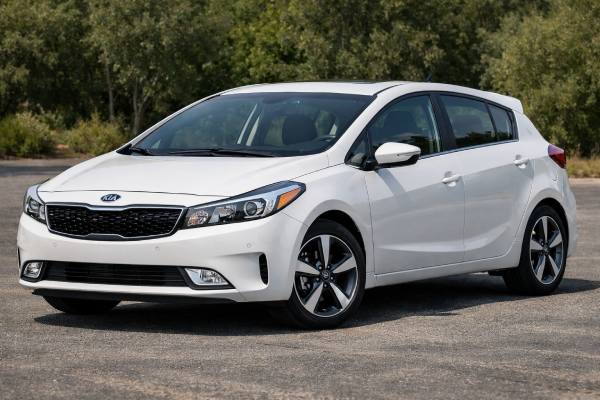

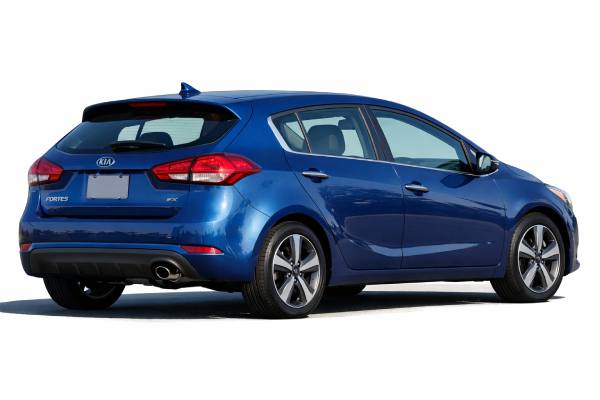
The 2017–2018 facelift Kia Forte5 (YD) with the 1.6 T-GDi is the “fast hatch” version of the Forte family: a practical compact with a torque-rich turbo engine and a more focused chassis setup than the 2.0-liter models. The Gamma 1.6 T-GDi (often listed as a 1,591 cc turbo GDI inline-four) delivers strong midrange pull that makes everyday driving easier—especially on short highway merges and quick passing.
Ownership is typically straightforward if you keep up with high-quality oil changes, protect the turbo from heat abuse, and stay realistic about direct-injection maintenance needs. The hatchback body adds real usability, but the sporty trim’s larger wheels and performance tires can raise running costs. If you want a compact that feels lively without becoming complicated, this is one of the more sensible ways to get it—provided you buy carefully and service it on time.
What to Know
- Strong low-rpm torque makes city driving and passing feel effortless compared with the 2.0-liter cars.
- Hatchback packaging is genuinely useful: large opening, fold-flat seats, and easy daily loading.
- Sportier trim hardware (tires, brakes) improves feel but increases tire cost and road-noise potential.
- Direct injection means you should plan for intake-valve deposit management over time, especially with short trips.
- Change engine oil every 8,000–10,000 km (5,000–6,000 mi) or 6 months if you do frequent short trips.
Navigate this guide
- Forte5 YD 1.6T character
- Forte5 YD 1.6T specs sheet
- Forte5 YD turbo trims and safety
- Known 1.6T issues and campaigns
- Service schedule and buying checks
- Real driving and economy
- How Forte5 turbo stacks up
Forte5 YD 1.6T character
In facelift form (2017–2018), the Forte5 YD with the 1.6 T-GDi is best understood as a compact hatch tuned around real-world torque rather than headline horsepower. The 201 hp peak figure matters less than where the engine works: the turbo four makes useful shove at low and mid rpm, so the car feels “awake” with modest throttle. That changes the day-to-day personality versus the 2.0-liter cars, which tend to require higher rpm to feel quick.
The hatchback layout is also central to the appeal. You get a big, square rear opening and a load floor that’s easy to use—ideal for strollers, groceries, small furniture boxes, and sports gear. With the rear seats folded, the cargo bay becomes long and flat enough for many bulky items without moving the front seats. It’s the kind of practicality that makes a sporty compact easier to live with.
Facelift-era turbo trims typically add a more planted setup: wider tires, larger brakes, and (in many markets) a sport-tuned suspension calibration. The payoff is tighter body control and more confidence when you increase pace, but it comes with tradeoffs. Low-profile tires are more sensitive to potholes, and some owners notice more road noise on rough surfaces. It’s not harsh by “hot hatch” standards, but it’s definitely a step away from pure comfort tuning.
From an engineering and ownership standpoint, the key theme is heat and fuel quality management. Turbo engines run hotter around the turbine and catalytic converter area, and they can punish neglected oil. If you do frequent short trips, cold starts, or stop-and-go driving, the oil sees more fuel dilution and moisture. If you drive hard and shut the engine off immediately, you can bake oil in the turbo bearing housing over time. Neither issue is hard to avoid: use correct oil, shorten oil intervals for harsh use, and give the car a short cooldown after sustained boost.
Finally, set expectations correctly: this is a brisk, enjoyable compact—more “quick and capable” than “wild.” If you want a practical hatch that feels stronger than its size suggests, the 1.6 T-GDi Forte5 is exactly in that sweet spot.
Forte5 YD 1.6T specs sheet
Below are technical specs focused on the 2017–2018 facelift Forte5 YD turbo configuration. Exact details can vary by market, emissions certification, and transmission choice, so treat these as the most common published specifications for the 1.6 T-GDi trim.
Powertrain and efficiency
| Item | Specification |
|---|---|
| Code | Gamma 1.6 T-GDi (1,591 cc turbo GDI inline-4) |
| Engine layout and cylinders | I-4, DOHC, D-CVVT, 16 valves (4 valves/cyl) |
| Bore × stroke | 77.0 × 85.0 mm (3.03 × 3.35 in) |
| Displacement | 1.6 L (1,591 cc) |
| Induction | Turbocharged |
| Fuel system | GDI (gasoline direct injection) |
| Compression ratio | 9.5:1 |
| Max power | 201 hp (150 kW) @ 6,000 rpm |
| Max torque | 265 Nm (195 lb-ft) @ 1,500–4,500 rpm |
| Timing drive | Chain |
| Recommended fuel | Unleaded gasoline, regular 87 AKI minimum (use higher only if your market calibrates for it) |
| Rated efficiency (typical) | ~7.8–8.7 L/100 km combined (27–30 mpg US combined), depending on transmission and test cycle |
| Real-world highway @ 120 km/h (75 mph) | Often ~7.0–8.5 L/100 km (28–34 mpg US), strongly dependent on tires, wind, temperature, and speed stability |
Transmission and driveline
The turbo hatch was commonly offered with either a manual or dual-clutch automatic, depending on trim and region.
| Item | Specification |
|---|---|
| Transmission | 6-speed manual (dry single plate clutch) or 7-speed dual-clutch (dry friction double clutch), market-dependent |
| Drive type | Front-engine, FWD |
| Differential | Open (traction control manages wheelspin) |
Chassis and dimensions
| Item | Specification |
|---|---|
| Suspension (front/rear) | MacPherson strut / coupled torsion beam axle (CTBA) |
| Steering | Rack and pinion, electric assist |
| Steering ratio | ~15.1:1 (sportier tune varies by trim) |
| Turning circle (kerb-to-kerb) | 10.6 m (34.8 ft) |
| Brakes | 299 mm (11.8 in) front discs; 262 mm (10.3 in) rear discs (typical turbo trim) |
| Wheels/tires (popular size) | 225/40 R18 (18 in rim) on turbo sport trims |
| Ground clearance | 140 mm (5.5 in) |
| Length / width / height | 4,351 mm (171.3 in) / 1,781 mm (70.1 in) / 1,450 mm (57.1 in) |
| Wheelbase | 2,700 mm (106.3 in) |
| Fuel tank | ~50 L (13.2 US gal / 11.0 UK gal) |
| Cargo volume | 657 L (23.2 ft³) seats up (SAE); 1,596 L (56.4 ft³) seats down (SAE) |
Performance and capability
Published performance varies with transmission, tires, and test method. Typical real-world ranges:
| Item | Typical range |
|---|---|
| 0–100 km/h (0–62 mph) | ~7.0–7.7 s (DCT often quickest) |
| Top speed | ~210–225 km/h (130–140 mph), market and limiter dependent |
| Braking 100–0 km/h | ~36–40 m (118–131 ft), tire dependent |
| Towing capacity | Often not rated for towing (check your market handbook) |
| Payload | Varies by market; check door jamb label |
Fluids and service capacities
Use these as planning numbers; always confirm against the correct service manual for your VIN and transmission.
| Item | Specification |
|---|---|
| Engine oil | Full synthetic meeting current API/ILSAC spec used in your market; common viscosity 5W-30 (0W-30/5W-40 may be specified by climate/approval) |
| Engine oil capacity | ~4.0 L (4.2 US qt) with filter (typical) |
| Coolant | Ethylene glycol-based long-life coolant; typical 50/50 mix with distilled water |
| Coolant capacity | ~6.0–7.0 L (6.3–7.4 US qt), varies by system design |
| Manual transmission fluid | Manufacturer-specified MTF (often 75W-85 class), verify by VIN |
| Dual-clutch fluid | Manufacturer-specified DCTF for 7-DCT, verify by VIN (do not substitute ATF) |
| A/C refrigerant | R-134a in many markets for these years; charge varies by equipment |
| Key torque specs | Wheel lug nuts commonly ~88–108 Nm (65–80 lb-ft) depending on wheel and market; verify for your wheels |
Safety and driver assistance
Availability depends heavily on trim and region. Many examples include core stability and brake systems, with some advanced driver assistance features optional.
| Item | Typical equipment notes |
|---|---|
| Crash ratings | Vary by body style, market, and test year; check the exact model page for your region |
| Core safety | ABS, ESC, traction control, multiple airbags |
| Child seats | ISOFIX/LATCH anchors (usually outboard rear) |
| ADAS | Some trims offer AEB/forward collision warning and lane features; many rely on conventional safety tech only |
Forte5 YD turbo trims and safety
Most buyers encounter the turbo hatch as the “top” Forte5 trim in its market—often the version with sport styling cues and the 18-inch wheel package. That usually means you’re not just buying the 1.6 T-GDi engine; you’re also buying a bundle of hardware and comfort features that change the ownership experience.
Trims and options that matter for ownership
Even within 2017–2018 facelift cars, equipment can vary. These are the practical differences to watch for:
- Transmission choice (6MT vs 7-DCT): This is the biggest “feel” difference. The manual is simpler long-term and avoids dual-clutch shudder concerns, while the DCT is quicker and often more efficient in gentle highway use.
- Wheel and tire package: Turbo trims commonly run 225/40 R18 tires. They sharpen response and braking grip, but they are more vulnerable to pothole damage and usually cost more than 16–17-inch sizes.
- Lighting: Some trims offer upgraded headlamps (including HID/Xenon in certain packages). Better lighting can be a major safety upgrade for night driving, but replacement costs can be higher.
- Infotainment and audio tiers: Higher trims may add upgraded audio, larger screens, and navigation. These systems are usually reliable, but budget for a battery in good condition—weak 12 V batteries cause many “mystery” infotainment issues.
- Seat and climate upgrades: Heated (and sometimes ventilated) seats and dual-zone climate improve daily comfort. If you live in a hot climate, working A/C performance matters more than most people expect—test it thoroughly.
Quick identifiers when shopping used:
- Exterior cues: dual exhaust finishers, sport bumper accents, 18-inch wheels, and “SX” or sport badges (market-specific).
- Interior cues: sport seats, metal pedals (some trims), larger infotainment screen, and steering-wheel controls for drive modes.
Safety ratings and what they mean here
Safety scores can be confusing because results may differ between sedan and hatch, and between different testing years or agencies. When you check ratings, confirm:
- Body style: Forte5 hatch vs Forte sedan can be listed separately.
- Test year/version: small test changes can shift results without the car changing much.
- Headlights: some agencies score headlights by trim; a “good structure” car can still score poorly if headlamps are weak.
Safety systems and ADAS considerations
On most examples, you can count on conventional safety systems: airbags, ABS, stability control, and traction control. Advanced driver assistance (AEB, lane support, blind-spot features) depends on trim and region. Two ownership notes matter:
- Calibration after repairs: If your car has camera- or radar-based systems, windshield replacement, front-end repairs, and wheel alignment can require calibration. Ask for proof of correct calibration if the vehicle had bodywork.
- Tire matching: Stability and traction control assume similar tire sizes and grip front-to-rear. Mixed tire brands or uneven wear can cause more frequent intervention or odd behavior.
If safety is a top priority, look for a turbo trim with the best lighting package available in your market, and verify that all airbags, seatbelt pretensioners, and warning lights self-test correctly at startup.
Known 1.6T issues and campaigns
The 1.6 T-GDi Forte5 is generally robust when serviced correctly, but it has predictable patterns. Below is a practical “prevalence and cost” map so you can prioritize inspection and budgeting.
Common (check every car)
- Direct-injection intake deposits (low to medium cost):
- Symptoms: rough idle, reduced response, occasional misfire codes as mileage rises.
- Root cause: GDI fuel sprays into the cylinder, not over the intake valves, so oil vapor can leave deposits. Short trips and lots of idling accelerate it.
- Remedy: periodic intake cleaning (chemical or walnut blasting depending on severity), strict oil maintenance, and a healthy PCV system.
- Ignition coils and spark plugs (low to medium cost):
- Symptoms: misfire under boost, flashing check-engine light, hesitation on acceleration.
- Root cause: turbo cylinder pressures stress ignition components more than naturally aspirated engines.
- Remedy: use correct heat-range plugs, replace coils as needed (often best done in sets if failures repeat).
- PCV valve and oil control (low cost, big impact):
- Symptoms: increased oil consumption, idle quality changes, oil in intake piping.
- Root cause: a tired PCV valve increases crankcase vapor flow and deposit formation.
- Remedy: inexpensive replacement at sensible intervals; inspect hoses for softening and cracks.
Occasional (depends on use and maintenance)
- Turbo wastegate rattle or boost control issues (medium cost):
- Symptoms: rattling noise near turbo, inconsistent boost, underboost codes, reduced power.
- Root cause: wastegate actuator wear or linkage play; sometimes boost control solenoid issues.
- Remedy: confirm boost leaks first; repair actuator/linkage or related control parts if diagnosed.
- Cooling system seepage (medium cost if ignored):
- Symptoms: slow coolant loss, sweet smell after driving, damp areas around hoses or radiator.
- Root cause: heat cycling ages plastic tanks and hoses.
- Remedy: pressure test, replace weak components early, maintain correct coolant mix.
- 7-DCT low-speed shudder (medium to high cost if severe):
- Symptoms: judder in traffic, rough takeoff, hesitation, or “gear hunting.”
- Root cause: dry clutch behavior can be sensitive to heat, creeping, and stop-start driving; software calibration also influences feel.
- Remedy: ensure ECU/TCU updates are applied; adapt driving style (avoid long creep); if persistent, clutch/actuator service may be needed.
Rare but important (high consequence)
- Oil neglect leading to turbo bearing wear (high cost):
- Symptoms: whining turbo, smoke, oil consumption increase, power loss.
- Root cause: extended oil intervals, wrong oil, or repeated hot shutoffs after hard driving.
- Remedy: prevention is everything—shorter intervals for harsh use, correct oil, and cooldown habits.
Recalls, TSBs, and how to verify work
Because recall and bulletin coverage can vary by country and even by production month, treat this as a process rather than a list:
- Run the official VIN check for your region and print the results.
- Ask the seller for dealer repair history or service invoices showing completion.
- Scan for software updates during a pre-purchase inspection—engine and transmission calibrations can materially change driveability.
If you’re buying without complete records, assume you will do baseline fluids, spark plugs (if due), filters, and a careful inspection of the turbo plumbing and cooling system. That “reset” approach prevents many first-year ownership surprises.
Service schedule and buying checks
A turbocharged direct-injection hatch rewards owners who treat maintenance as a strategy, not a reaction. Below is a practical schedule you can follow even if you don’t have perfect prior records. Use distance or time—whichever comes first.
Maintenance schedule you can actually keep
Every 8,000–10,000 km (5,000–6,000 mi) or 6 months (harsh use):
- Engine oil and filter (turbo engines like clean oil)
- Quick inspection: coolant level, oil level, turbo plumbing clamps, and visible leaks
Every 15,000 km (9,000–10,000 mi) or 12 months:
- Tire rotation; inspect tire inner shoulders (18-inch setups can wear edges)
- Brake inspection (pad thickness, rotor condition)
- Cabin air filter (sooner in dusty cities)
Every 30,000 km (18,000–20,000 mi) or 24 months:
- Engine air filter
- Brake fluid (especially if you drive spiritedly or live in humid climates)
- Battery test (voltage and load test)
Every 60,000–80,000 km (37,000–50,000 mi):
- Spark plugs (turbo engines are less forgiving of worn plugs)
- Cooling system inspection (hoses, radiator, thermostat function)
Transmission service (depends on type and usage):
- 6MT: change manual transmission fluid around 60,000–100,000 km (37,000–62,000 mi) depending on climate and shifting feel.
- 7-DCT: follow your market’s DCT fluid schedule precisely; if you drive heavy traffic daily, earlier service is often wise.
Coolant:
- Many long-life coolants run 5 years/100,000–160,000 km in ideal conditions. If you don’t know what’s in the system, consider an earlier change to establish the correct coolant chemistry.
Key “do this before you buy” checklist
Bring this list to your pre-purchase inspection and test drive:
- Cold start behavior: listen for abnormal ticking beyond normal injector noise; confirm steady idle.
- Boost test: from ~2,000 rpm, accelerate smoothly in a higher gear—power should build cleanly with no stutter.
- Misfire scan: ask for an OBD scan even if there’s no warning light; check stored/pending codes.
- DCT behavior (if equipped): in slow traffic, feel for excessive shudder; check for delayed engagement from stop.
- Cooling system integrity: look for dried coolant residue, inspect reservoir level, confirm radiator fans work.
- Oil quality and level: very dark oil alone isn’t proof of neglect, but low oil level is a red flag.
- Tire and wheel condition: bent rims and sidewall bubbles are common on low-profile tires; budget accordingly.
- Brake feel: firm pedal, no vibration under hard braking, and even pad wear side-to-side.
Long-term durability outlook
If you buy a well-kept example and adopt short, consistent oil intervals for harsh use, the Forte5 1.6T can be a durable daily driver. The biggest long-term cost risks usually come from skipped maintenance (oil, plugs), heat-related wear (turbo area), and transmission behavior on DCT cars used in constant stop-and-go. Address those proactively and the platform tends to behave like a normal compact—just faster.
Real driving and economy
The driving experience of the Forte5 1.6T is defined by midrange torque and a tidy footprint. Around town, it feels confident without needing to be pushed. Light throttle response is typically strong, and the engine’s boost comes in early enough that you don’t have to “plan” gaps in traffic. That’s a big difference compared with naturally aspirated compacts, where the same maneuver can require higher rpm and more noise.
Ride, handling, and NVH
With the sport-oriented wheel/tire package, the car usually rides firmly but not punishingly. You’ll notice sharper impacts over potholes, especially with 18-inch wheels, and some road texture makes its way into the cabin. Steering is quick enough to feel responsive, and the chassis stays composed in lane changes. The rear torsion-beam layout is simple and space-efficient; it’s stable on smooth roads, but sharp mid-corner bumps can make the rear feel a bit more “busy” than an independent setup.
Braking feel is generally reassuring when the system is in good condition. The key is tire grip—fresh, quality tires do more for stopping distances and stability than many owners expect. If braking feels inconsistent, check for glazed pads, uneven rotor wear, or old brake fluid.
Powertrain character and transmission behavior
- Turbo engine: best between about 1,800 and 4,500 rpm, where it pulls strongly without drama.
- Manual: more engaging and predictable in low-speed situations, and typically cheaper to maintain long-term.
- 7-DCT: quick shifts when rolling, but can feel hesitant if you creep forward repeatedly in heavy traffic. Smooth driving inputs help: avoid feathering the throttle and limit prolonged creeping when possible.
Drive modes (where fitted) usually change throttle mapping and shift logic, not the engine’s core output. In sportier modes, the car feels more eager, but fuel economy can drop if the transmission holds lower gears.
Real-world efficiency
Expect fuel economy to depend heavily on speed and tire choice:
- City: turbo torque can help you use lower rpm, but short trips and cold starts hurt efficiency.
- Highway (100–120 km/h): the car can be quite reasonable when cruising steadily, but aerodynamic drag rises fast above 120 km/h.
- Mixed driving: many owners see results close to official combined numbers when tires are properly inflated and the engine is warmed up regularly.
Cold weather typically reduces economy because the engine runs richer during warmup and you use cabin heat and defrost more often. Short, winter city trips are the hardest case; that’s also the scenario where shorter oil intervals make the most sense.
Performance metrics that matter
Rather than chasing a single acceleration number, focus on passing performance. The Forte5 1.6T’s torque band means it often feels quicker from 60–110 km/h (or 40–70 mph) than some higher-horsepower cars that lack low-end pull. If you test drive, try a safe, brief passing-style acceleration on an open road. You’re looking for smooth boost, clean shifts, and no hesitation—those are better indicators of health than a stopwatch.
How Forte5 turbo stacks up
When comparing the 2017–2018 Forte5 1.6T to rivals, separate the discussion into three categories: driving feel, practicality, and ownership risk.
Versus mainstream compact hatches
Against typical compact hatchbacks of the era, the Forte5 turbo’s advantage is easy torque and a “grown-up” highway feel. Many competitors require more revs to deliver similar passing response. The Kia’s hatch packaging is also a strong point: the cargo opening is wide and the seats fold in a straightforward way, making it more useful than some sport-styled liftbacks with smaller apertures.
Where it can fall behind is refinement on rough pavement (especially on 18-inch tires) and the availability of advanced driver assistance features—some rivals offered broader ADAS availability earlier, depending on market.
Versus sport compacts and hot hatches
Compared with true hot hatches, the Forte5 1.6T is more conservative. It’s quick, not extreme. That’s a feature for many owners: you get a lively powertrain without paying “full hot hatch” costs in tires, brakes, and insurance. Handling is secure and predictable rather than razor sharp. If your roads are rough, the Forte5 may actually be easier to live with than stiffer, more aggressive options.
If you want maximum performance tuning and sharper chassis rotation, you may prefer a more dedicated performance hatch. If you want a single car that can commute, road trip, and still feel fun on a back road, the Forte5 1.6T is usually the more balanced choice.
Versus compact sedans with the same engine
If you’re cross-shopping the Forte sedan with the turbo engine, the hatch’s practical advantage is obvious. The sedan may be slightly quieter at speed and may have different suspension tuning, but the Forte5’s versatility is hard to beat if you use the cargo area regularly.
Who should choose this model
Pick the 2017–2018 Forte5 1.6T if you:
- Want turbo response for daily driving, not just peak power
- Need hatchback utility but don’t want crossover size
- Are willing to maintain a turbo GDI engine properly
Consider alternatives if you:
- Drive heavy stop-and-go traffic all day and prefer a conventional automatic (avoid DCT stress)
- Need the most advanced driver assistance suite available in the segment
- Want a softer ride on poor roads (look for smaller wheel packages where possible)
In short: the Forte5 turbo is a smart “fun practical” choice. It’s not the most extreme, but it’s often one of the most usable ways to get real turbo torque in a compact hatch of this era.
References
- 2017 Kia Forte5 Specifications 2017 (Manufacturer Specifications)
- 2017 Kia Forte5 Features & Options 2017 (Manufacturer Equipment Guide)
- 2018 Kia Forte5 Specifications 2018 (Manufacturer Specifications)
- Gas Mileage of 2017 Kia Forte 2017 (Official Fuel Economy Data)
- 2017 Kia Forte 2017 (Safety Rating)
Disclaimer
This article is for informational purposes only and is not a substitute for professional diagnosis, inspection, or repair. Specifications, torque values, service intervals, fluids, and procedures can vary by VIN, market, production date, and installed equipment. Always verify details using your vehicle’s official service documentation and labels before purchasing parts or performing maintenance.
If you found this guide helpful, please consider sharing it on Facebook, X (Twitter), or your favorite forum to support our work.