


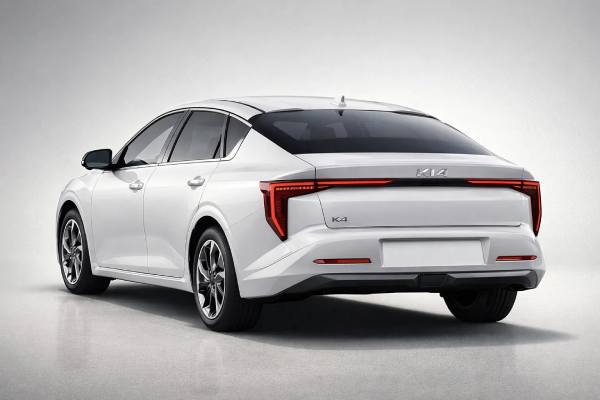
The Kia K4 (CL4) 1.0 T-GDi Hybrid is best understood as a 48-volt mild hybrid (MHEV): it keeps the familiar feel of a turbo petrol compact while adding a small electric assist system that improves stop-start smoothness, low-speed response, and real-world efficiency. Unlike a full hybrid, it does not drive on electricity alone for meaningful distances. Instead, it uses a belt-driven starter-generator and a compact 48-V battery to recover energy during braking and support the engine when pulling away or re-accelerating.
For ownership, this powertrain has three standout traits: useful mid-range torque for daily traffic, lower fuel use in mixed driving when the system is working as intended, and a maintenance plan that stays conventional as long as you respect oil quality and keep up with software updates. The key caveat is transmission choice—DCT-equipped MHEV cars reward correct service history and gentle low-speed technique.
Owner Snapshot
- Mild-hybrid assist makes stop-start and pull-away smoother than a non-hybrid 1.0 turbo in heavy traffic.
- Strong mid-range torque suits urban and commuter driving without frequent downshifts.
- 48-V system supports coasting and energy recovery, helping efficiency on mixed routes.
- Caveat: DCT versions can shudder if driven in constant “creep” traffic or if fluid service is ignored.
- Typical interval: change engine oil and filter every 10,000 km (6,000 mi) or 12 months under city/short-trip use.
Contents and shortcuts
- Kia K4 CL4 MHEV powertrain explained
- Kia K4 CL4 1.0 MHEV specs and tables
- Kia K4 CL4 equipment, safety, and ADAS
- Reliability trends and service actions
- Maintenance schedule and buyer’s checklist
- Real driving performance and economy
- K4 MHEV rivals and buying position
Kia K4 CL4 MHEV powertrain explained
The K4 (CL4) 1.0 T-GDi Hybrid in European-style trim is a mild hybrid electric vehicle (MHEV) built around a small turbocharged three-cylinder petrol engine and a 48-volt electrical system. The “hybrid” label here doesn’t mean EV driving in the way a full hybrid does. Instead, the 48-V system focuses on three practical jobs:
- Smoother stop-start: A belt-driven starter-generator can restart the engine quickly and quietly. In traffic, that matters more than a brochure claim—less vibration at restarts makes the car feel more refined.
- Torque support in the low and mid range: The system can briefly assist during pull-away and short re-acceleration events. You still rely on the turbo engine for sustained power, but the assist can reduce that “small-engine working hard” sensation.
- Energy recovery and coasting: When you lift off or brake, the system can recover energy and store it in the 48-V battery. Some versions also enable extended coasting strategies where the engine decouples or shuts off more readily under the right conditions.
Two transmission paths commonly appear with this setup:
- 6-speed manual with intelligent features (often described as iMT in some Kia markets): This can allow clever coasting behavior while keeping the maintenance profile familiar.
- 7-speed dual-clutch transmission (DCT): Typically paired with higher trims and designed for quick, efficient shifts. It can be excellent when driven cleanly, but it’s more sensitive to heat and low-speed creeping than a torque-converter automatic.
Chassis tuning is the other half of the ownership story. The K4 is positioned as a modern compact with a stable footprint, and in several European specifications it’s marketed with a roomy cabin and a practical boot around the 438-litre class depending on body style and equipment. That “family hatch practicality” matters because the MHEV system is meant to reduce running costs without forcing you into a smaller car.
Bottom line: the K4 1.0 MHEV is a commuter-focused setup that adds refinement and efficiency without turning your maintenance routine into an EV ownership program—provided you choose the right transmission for your driving pattern and keep up with fluids and updates.
Kia K4 CL4 1.0 MHEV specs and tables
The tables below focus on the 1.0 T-GDi 48-V MHEV (113 hp) configuration. Exact figures can vary by market, trim, tyres, and body style, so treat these as “VIN-checked targets” rather than universal constants.
Powertrain and efficiency
| Item | Specification |
|---|---|
| Powertrain code (manual literature) | Smartstream G1.0 T-GDi 48V HEV (48-V MHEV naming in service tables) |
| Engine layout and cylinders | Inline-3, transverse; DOHC; 4 valves/cyl |
| Bore × stroke | 71.0 × 84.0 mm (2.80 × 3.31 in) |
| Displacement | 1.0 L (998 cc) |
| Induction | Turbocharged, intercooled |
| Fuel system | Direct injection (DI) |
| Max power | 113 hp (84 kW) @ ~6,000 rpm |
| Max torque | 200 Nm (148 lb-ft) @ ~2,000–3,000 rpm |
| Timing drive | Chain |
| 48-V motor type | Belt-driven starter-generator (BSG), assist + regeneration |
| Motor count and axle | Single unit, engine belt drive (not an e-axle) |
| System voltage | 48 V (plus conventional 12 V network via DC-DC conversion) |
| Battery chemistry | Typically lithium-ion for 48-V packs (exact spec depends on market) |
| Rated efficiency | Market dependent; commonly high-5 to low-6 L/100 km class |
| Real-world highway @ 120 km/h | Often ~6.3–7.2 L/100 km (driving conditions and wheels dominate) |
Transmission and driveline
| Item | Specification |
|---|---|
| Drive type | FWD |
| Manual option | 6-speed manual / intelligent manual features in some markets |
| Automatic option | 7-speed DCT (dual-clutch) on selected trims |
| Differential | Open (traction managed by ESC/TC) |
Chassis, dimensions, and practicality
| Item | Typical K4 value (market dependent) |
|---|---|
| Suspension (front / rear) | MacPherson strut / multi-link |
| Brakes | 4-wheel discs on most trims (diameters vary with wheel package) |
| Wheels and tyres (popular) | 205/55 R16 on efficiency trims; 225/45 R17–R18 on sport trims |
| Length class | ~4.4 m compact footprint (body dependent) |
| Cargo volume | Around 438 L seats up in several European spec listings (equipment can change this) |
| Fuel tank | 45 L (11.9 US gal / 9.9 UK gal) in common service tables |
Performance and capability
| Metric | Typical target |
|---|---|
| 0–100 km/h (0–62 mph) | ~12 seconds class (manual or DCT, trim dependent) |
| Top speed | ~185 km/h (115 mph) class |
| Towing | Often offered, but limits vary strongly by gearbox and market—verify with VIN data |
| Payload | Door-jamb label is the only reliable number for your specific car |
Fluids and service capacities
These values are useful for planning and sanity checks. Always follow the official procedure for filling and level-check steps.
| Fluid | Specification highlight | Capacity (typical) |
|---|---|---|
| Engine oil (drain/refill) | SAE 0W-20 meeting API SN PLUS/SP or ILSAC GF-6 (market dependent) | 3.6 L (3.8 US qt) |
| Coolant | Ethylene glycol base for aluminum radiator | 5.9 L (6.2 US qt) (common 6MT/DCT tables) |
| Manual transmission fluid | GL-4, SAE 70W class | ~1.5–1.6 L (1.6–1.7 US qt) |
| DCT fluid (where fitted) | Dedicated DCTF spec (do not substitute) | ~1.6–1.7 L (1.7–1.8 US qt) |
| Brake fluid | DOT-4 low-viscosity class | ~0.7–0.8 L |
| iMT actuator fluid (where fitted) | DOT-4 LV class | ~0.082 L |
Kia K4 CL4 equipment, safety, and ADAS
Trims differ by country, but the equipment strategy for the K4 MHEV tends to follow a predictable ladder: a value-focused entry grade, a comfort/tech middle trim, and a sport-flavored top trim (often similar in spirit to a GT-Line). For the 1.0 MHEV, the most important trim differences are not aesthetic—they affect day-to-day feel, long-term cost, and safety capability.
Trims and options that matter on the MHEV
- Transmission pairing: Some markets reserve the 7-speed DCT for higher trims. If you want the hybrid smoothness benefits without DCT ownership risk, hunt specifically for the manual MHEV configuration (where offered).
- Wheel and tyre packages: Larger wheels can sharpen steering response, but they usually increase tyre cost and can reduce comfort. For mixed city and motorway use, the “comfort” wheel package is often the sweet spot for ride quality and rim protection.
- Headlights and camera placement: Advanced headlight units and the windshield-mounted camera hardware can differ by trim. This matters because it influences both night driving comfort and the capability of some driver-assistance functions.
Safety ratings: how to interpret them
Safety results can be tricky when a model launches across regions. In the U.S., the K4 sedan has strong results in contemporary crash-test programs and has earned high recognition in certain build periods and configurations. In Europe, a published star rating may not exist for every body style and model year yet. If your local K4 variant is “not rated,” treat that as “not tested in that program,” not “unsafe.” What you can do immediately is check:
- WhetherIHS-style crashworthiness summaries when available for your region/version
- Whether your specific trim includes the full suite of standard active safety features (see below)
- Whether headlights and AEB are configured as standard, not optional
Driver assistance (ADAS) and what’s standard vs optional
Most K4 trims are expected to offer a modern baseline suite, often branded as a package family:
- AEB (autonomous emergency braking): car and pedestrian detection; some versions add cyclist or junction support.
- Lane support: lane keeping assist (LKA) and lane following/centering assistance depending on trim.
- Adaptive cruise control (ACC): a major fatigue reducer on motorway driving; the calibration quality matters as much as the feature list.
- Blind-spot and rear cross-traffic alerts: especially valuable in tight urban parking; some trims add intervention braking.
- Parking sensors and camera upgrades: higher trims may offer better resolution and wider views, which improves daily usability more than many buyers expect.
Calibration and repair reality
One practical ownership note: ADAS can require recalibration after windshield replacement, bumper repairs, alignment changes, or some suspension work. When shopping used, look for invoices that explicitly mention camera/radar calibration—not just “windshield replaced.” That documentation often separates a well-kept car from a future warning-light headache.
Reliability trends and service actions
Because the K4 (CL4) is a newer nameplate in several markets, reliability is best assessed through two lenses: early-life build and software actions and the well-known long-term behavior of small turbo DI engines paired with mild-hybrid and DCT systems. The good news is that none of the MHEV hardware is exotic, but modern complexity changes what “good maintenance” looks like.
Common (low to medium cost) issues
- Oil dilution in short-trip use: Small turbo DI engines can accumulate fuel in the oil when they rarely reach full temperature. Signs include a fuel smell on the dipstick, rising oil level, or rougher cold starts. Remedy: shorten oil intervals and prioritize full warm-ups a few times a week.
- Battery and low-voltage sensitivity: Even with a 48-V system, the 12-V battery still matters because it powers modules and wake-up logic. Low voltage can trigger strange warnings that disappear after charging. Remedy: battery health checks after year three and avoid long storage without a maintainer.
Occasional (medium cost) issues
- DCT creep shudder and heat stress (where equipped): Dual-clutch gearboxes are efficient but dislike prolonged inching forward on a slipping clutch. Symptoms: judder in stop-and-go traffic, hesitation on take-off, or inconsistent engagement when hot. Remedies include software updates, adaptation resets, and—if ignored too long—clutch service.
- Boost and sensor-related drivability quirks: Turbo engines rely on accurate readings from boost pressure, airflow, and oxygen sensors. Intermittent faults may show up as hesitation or limp-mode events. Remedy: proper diagnostic scanning and addressing the root cause rather than swapping parts.
Rare (higher cost) issues to understand
- 48-V hardware faults: The mild-hybrid system includes a starter-generator, power electronics, and DC-DC conversion to support the 12-V network. Failures are not common, but when they happen they can be expensive. Symptoms may include persistent charging warnings, stop-start disabling, or unusual belt noise if the belt-driven unit is under stress.
- Cooling system neglect consequences: Turbo engines are heat-sensitive. Old coolant, trapped air after improper service, or a weak thermostat can push operating temperatures higher. The turbo and catalyst don’t like that long-term.
Software and calibrations are real maintenance
On modern Kias, a “problem” is often a calibration issue:
- ECU updates can improve throttle mapping and stop-start smoothness.
- TCU updates can refine DCT engagement strategy and reduce low-speed harshness.
- ADAS and infotainment updates can reduce nuisance alerts and connectivity instability.
If you’re buying used, ask for a dealer printout showing completed campaigns. If you’re the first owner, request software checks at every annual service.
Pre-purchase checks that reduce surprises
- Confirm recalls and service actions by VIN using official tools and dealer records.
- For DCT MHEV cars: test drive in slow traffic, do a gentle hill start, and check for consistent engagement.
- Look for evidence of annual oil service (or more frequent in city use). On a small turbo, that history often predicts long-term health better than mileage alone.
Maintenance schedule and buyer’s checklist
A mild-hybrid K4 still lives and dies by the basics: clean oil, clean air, correct fluids, and correct procedures. The MHEV hardware doesn’t add frequent “hybrid-only” services, but it does raise the importance of battery health and software currency.
Practical maintenance schedule
Use the shorter interval if you drive short trips, heavy city traffic, or see very cold winters or very hot summers.
- Engine oil and filter: every 10,000–15,000 km (6,000–9,000 mi) or 12 months. For mostly short trips, 10,000 km is a sensible target.
- Engine air filter: inspect every 15,000 km; replace around 30,000 km or sooner in dusty conditions.
- Cabin filter: 15,000–30,000 km depending on air quality and allergies.
- Spark plugs: typically 60,000–100,000 km depending on plug type and market schedule—verify for your VIN.
- Coolant: often 5 years / 100,000 km class intervals, but follow the official schedule for your region.
- Brake fluid: every 2 years (moisture control is the goal).
- Manual transmission fluid (if manual): consider service around 80,000–120,000 km to support shift quality and synchro life.
- DCT fluid (if DCT): follow the official interval strictly and use the correct DCTF. Incorrect fluid or procedure can cause shift problems.
- Tyres: rotate every 10,000–12,000 km; check alignment yearly or after pothole impacts.
- 12-V battery: test annually after year 3; replacement is commonly 4–6 years depending on climate and use.
Hybrid-related care that owners overlook
- Accessory belt condition matters more: The belt-driven starter-generator adds load and duty cycle. Replace belts on time and inspect for cracking, glazing, or noise.
- Don’t ignore “stop-start disabled” patterns: Occasional disablement is normal (battery temp, cabin demand), but persistent disablement can indicate battery aging, a sensor issue, or a software calibration need.
- Brake service still matters: Regeneration is limited on mild hybrids, so friction brakes still do real work. Keep calipers clean, especially in winter-salt climates.
Buyer’s checklist: what to look for
- Evidence of annual oil service with the correct spec oil.
- Proof of campaign/recall completion and software updates.
- On DCT cars: no persistent judder, no hesitation when hot, and smooth engagement on gentle hill starts.
- Tyre wear patterns that suggest alignment is healthy (inner-edge wear can hint at curb/pothole damage).
Long-term durability outlook
If you maintain it like a modern turbo—shorter oil intervals in city use, correct fluids, and proactive belt/battery checks—the K4 1.0 MHEV should be a dependable long-range compact. If you ignore oil quality or buy a DCT car with unclear service history, the ownership curve can get steeper and more expensive.
Real driving performance and economy
In daily driving, the K4 1.0 MHEV’s value is less about peak horsepower and more about how it behaves in the moments you experience most: pulling away from a junction, merging into a fast lane, and creeping through traffic without feeling strained.
Powertrain character: what it feels like
- Low-speed response: The mild-hybrid assist can make take-offs feel cleaner, especially when the engine has just restarted. That can reduce the “turbo delay” feeling you sometimes get in small displacement engines.
- Mid-range torque: With 200 Nm available in the low-to-mid rpm band, the car typically feels strongest from around city speeds up to motorway merging pace. It’s the reason the K4 can feel more relaxed than its displacement suggests.
- High rpm behavior: Like most three-cylinder turbos, it’s not built for sustained high-rpm running. It will do it, but it’s usually louder and less efficient there. A driver who short-shifts and uses the torque band will enjoy it more.
Manual vs DCT: choosing the right experience
- Manual MHEV: Best for drivers who want predictable behavior and long-term simplicity. It also tends to be more tolerant of constant stop-and-go because there’s no clutch pack being managed by software—your left foot controls it.
- DCT MHEV: Crisp shifts and good efficiency potential, but it rewards a particular style: avoid long creeping, be deliberate with throttle, and use the brake to hold the car rather than feathering the accelerator to “crawl.” If you drive it like a torque-converter automatic, you can create heat and wear.
Real-world efficiency: what changes it most
You can think of the mild hybrid as a “small helper,” not a fuel-economy miracle. The biggest real-world factors are still:
- Wheel/tyre choice: wider tyres and larger wheels tend to increase consumption.
- Speed: steady 120–130 km/h cruising will raise fuel use notably versus 100–110 km/h.
- Temperature: cold starts and heater demand can increase consumption by 10–20% in winter.
- Traffic density: stop-and-go traffic is where the MHEV features can help most, but it’s also where a DCT can be stressed if driven in constant creep.
As a planning range, many owners of similar 1.0 MHEV setups see:
- City-heavy mixed use: mid-6 to high-7 L/100 km depending on congestion and temperature
- Motorway cruising: low-6 to low-7 L/100 km depending on speed and wheels
Selective performance metrics that matter
The K4 1.0 MHEV sits in the “about 12 seconds to 100 km/h” class, which is modest on paper but workable in reality because the torque arrives early. For safety and comfort, what matters more is consistent pull from 50–90 km/h—good gearing and smooth boost control are what make the car feel confident in everyday overtakes.
K4 MHEV rivals and buying position
The K4 1.0 MHEV competes in a crowded segment where “efficient compact” can mean three very different things: small turbo mild hybrids, full hybrids, and increasingly, entry-level EVs in some markets. The right rival comparison depends on your driving pattern and what you value most.
Against other 1.0–1.2 mild hybrids
This is the closest match: similar displacement, similar power, similar intent.
Where the K4 MHEV can stand out:
- Refinement in traffic: A well-calibrated start/stop system and torque assist can make it feel more expensive than a basic non-hybrid turbo.
- Cabin and practicality: In many European-style listings, the K4 is positioned as spacious for the class with competitive luggage capacity depending on body style.
- Chassis confidence: If your version uses a rear multi-link setup, it can feel more composed over imperfect roads than torsion-beam rivals.
Where rivals can win:
- Proven longevity of a specific gearbox: Some competitors pair small turbos with torque-converter automatics or very mature DCT calibrations. If your commute is a daily stop-and-go grind, transmission behavior matters as much as fuel economy.
- Dealer network familiarity: In some regions, certain mild-hybrid systems have been on sale longer, which can mean more technician familiarity and more used-market data.
Against full hybrids
Full hybrids often win on city economy and low-speed smoothness, because they can operate in EV-like modes and rely less on turbo boost during gentle driving.
Choose a full hybrid if:
- You do mostly urban miles
- You value smooth creeping and parking-lot behavior
- You want the strongest city fuel savings
Choose the K4 1.0 MHEV if:
- You want a more conventional driving feel (especially with a manual option)
- You want modern safety tech and compact practicality without full-hybrid complexity
- Your driving is mixed (city + motorway) rather than almost entirely urban
Against entry EVs (where pricing overlaps)
EVs can be compelling for short daily routes and home charging, but they bring a different ownership logic (charging access, winter range, depreciation patterns). If you cannot reliably charge at home or work, the K4 MHEV remains the more flexible “anywhere, anytime” solution.
The simple decision rule
- Pick manual MHEV for the simplest long-term ownership story.
- Pick DCT MHEV if your driving is mostly flowing traffic and you’re disciplined about service history and low-speed technique.
- Pick a full hybrid rival if your driving is mostly city and you want maximum low-speed smoothness and fuel savings.
References
- Specifications of the new Kia K4 | Kia Ireland 2026 (Specification Sheet)
- Recommended lubricants and capacities 2026 (Owner’s Manual)
- 2025 Kia K4 4-door sedan 2025 (Safety Rating)
- Vehicle Detail Search – 2025 Kia K4 | NHTSA 2025 (Recall Database)
Disclaimer
This article is for informational purposes only and is not a substitute for professional diagnosis or repair. Specifications, torque values, fluid capacities, service intervals, and procedures can vary by VIN, market, model year, and equipment. Always verify details using the official owner’s manual and the manufacturer’s service documentation for your exact vehicle.
If this guide helped you, please consider sharing it on Facebook, X (Twitter), or other platforms to support our work.