


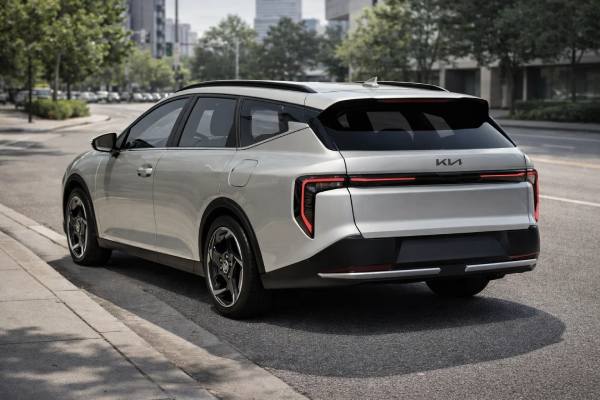
The Kia K4 Sportswagon (CL4) with the 1.0 T-GDi is built for people who want wagon practicality without moving up to a heavier, thirstier powertrain. In most European-spec paperwork you’ll see this engine listed as 115 PS (about 113 hp), paired primarily with a 6-speed manual and front-wheel drive. The key engineering story is balance: a small turbocharged three-cylinder tuned for usable mid-range torque, matched to a long-roof body that keeps day-to-day loading easy and family trips realistic.
For owners, the “wins” are predictable running costs, a surprisingly roomy cargo bay for the footprint, and a modern safety/driver-assistance stack. The “watch-outs” are also familiar for a direct-injected turbo: oil quality matters, short-trip use can be hard on the engine and emissions hardware, and early-life software updates can meaningfully affect drivability and ADAS behavior.
Quick Specs and Notes
- Strong cargo flexibility for a compact wagon, with up to 604 L (21.3 ft³) seats up and 1,439 L (50.8 ft³) seats folded (VDA).
- 200 Nm (148 lb-ft) gives the 1.0 T-GDi decent pull in everyday speeds despite modest peak power.
- Standard-style modern ADAS can reduce fatigue, but sensor calibration after windshield or bumper work is critical.
- Plan oil changes at 12 months or 10,000–15,000 km (6,000–9,000 mi) depending on your driving pattern.
- If you do mostly short trips, expect more frequent maintenance attention (oil, plugs, intake cleanliness) than highway-heavy users.
Explore the sections
- Kia K4 Sportswagon CL4 ownership picture
- Kia K4 Sportswagon 1.0 T-GDi specs
- Kia K4 Sportswagon trims and ADAS
- Reliability issues and service actions
- Maintenance plan and buying tips
- Real driving and fuel use
- K4 Sportswagon vs key rivals
Kia K4 Sportswagon CL4 ownership picture
If you want a wagon that feels current but doesn’t demand premium fuel bills, the K4 Sportswagon 1.0 T-GDi is the “steady choice” in the range. It’s not a hot version and it doesn’t try to be; instead, it’s aimed at drivers who value space, calm long-distance manners, and predictable maintenance. The body is long enough to be genuinely useful (nearly 4.7 m overall) but still manageable in European parking and tight streets, helped by a tight turning circle for the class.
The 1.0 T-GDi’s character is torque-led. Peak output is modest, but 200 Nm arrives in the low-to-mid rpm band, which is where most commuting and secondary-road driving lives. That means fewer downshifts than you’d expect from “1.0 liter,” and it’s also why this version can feel more relaxed than its displacement suggests—provided you drive it like a small turbo (smooth throttle, avoid lugging it at very low rpm in high gears).
As a wagon, the real payoff is usability. The cargo area is large for the segment, and the “tall box” nature of the rear makes it easier to load bulky items than a fastback. If you frequently carry strollers, flat-pack furniture, sports gear, or a big dog crate, you’ll feel the difference immediately.
Two ownership realities to keep in mind:
- Small direct-injected turbos thrive on clean oil and good warm-up habits. Repeated cold starts and short trips can accelerate deposits and oil dilution.
- On a new model line, early software revisions can matter. A dealer visit for ECU/infotainment/ADAS updates can turn minor annoyances (idle behavior, assist timing, false warnings) into non-issues.
Kia K4 Sportswagon 1.0 T-GDi specs
Below are the key specifications for the Kia K4 Sportswagon (CL4) with the 1.0 T-GDi output commonly listed as 115 PS / ~113 hp, based on market documentation. Treat these as baseline values—equipment, wheels, and local homologation can shift numbers slightly.
Powertrain and efficiency
| Item | Spec |
|---|---|
| Code | 1.0 T-GDi (turbocharged gasoline, DI) |
| Engine layout and cylinders | Inline-3, DOHC, 4 valves/cyl |
| Bore × stroke | 71.0 × 84.0 mm (2.80 × 3.31 in) |
| Displacement | 1.0 L (998 cc) |
| Induction | Single-scroll turbo |
| Fuel system | Direct injection (DI) |
| Compression ratio | 11.5:1 |
| Max power | 115 PS / 84.6 kW @ 6,000 rpm (≈ 113 hp) |
| Max torque | 200 Nm (148 lb-ft) @ 2,000–3,000 rpm |
| Emissions standard | Euro 6e (market-dependent wording) |
| Rated efficiency (WLTP combined) | 6.2 L/100 km (≈ 37.9 mpg US / 45.6 mpg UK) |
| Real-world highway @ 120 km/h (75 mph) | Typically ~6.8–7.6 L/100 km depending on wind, tyres, load, and temperature |
Transmission and driveline
| Item | Spec |
|---|---|
| Transmission | 6-speed manual (primary pairing for 1.0 T-GDi) |
| Drive type | FWD |
| Differential | Open (traction managed via brake-based systems) |
Chassis and dimensions
| Item | Spec |
|---|---|
| Suspension (front/rear) | MacPherson strut / multi-link rear |
| Steering | Electric assist, rack-and-pinion; 2.41 turns lock-to-lock |
| Turning circle (kerb-to-kerb) | 10.72 m (35.2 ft) |
| Brakes | Front ventilated discs / rear discs (sizes vary by powertrain/wheels) |
| Popular tyre sizes | 205/55 R16 or 225/45 R17 (market and trim dependent) |
| Ground clearance | 140 mm (5.5 in) |
| Length / width / height | 4,695 / 1,850 / 1,435 mm (184.8 / 72.8 / 56.5 in) |
| Wheelbase | 2,720 mm (107.1 in) |
| Curb weight (range) | ~1,455–1,535 kg (3,208–3,384 lb) |
| GVWR | ~1,910 kg (4,211 lb) |
| Fuel tank | 47 L (12.4 US gal / 10.3 UK gal) |
| Cargo volume (VDA) | 604 L (21.3 ft³) seats up / 1,439 L (50.8 ft³) seats down |
Performance and capability (typical for this variant)
| Item | Spec |
|---|---|
| 0–100 km/h (0–62 mph) | 12.0 s |
| Top speed | 186 km/h (116 mph) |
| Towing (where permitted) | Up to ~1,010 kg (2,227 lb) braked; unbraked often ~500 kg (1,102 lb) (market rules apply) |
| Payload (approx) | Up to ~455 kg (1,003 lb) depending on equipment |
Fluids and service capacities (verify by VIN)
Because official service-fill tables can vary by VIN, gearbox, and cooling package, use these as decision ranges rather than absolute numbers.
| Fluid | Typical spec and notes | Typical capacity range |
|---|---|---|
| Engine oil | Modern low-viscosity full synthetic (often 0W-20 or 5W-30, approval depends on market) | ~3.5–4.0 L (3.7–4.2 US qt) with filter |
| Coolant | Long-life OAT/P-OAT type, typically 50/50 mix | ~5–7 L (5.3–7.4 US qt) |
| Manual gearbox oil | GL-4 class gear oil (spec varies) | ~1.8–2.2 L (1.9–2.3 US qt) |
| A/C refrigerant | Refrigerant type and charge depend on system label | Check under-hood label |
Key torque specs (common targets, verify per service manual)
| Fastener | Typical torque |
|---|---|
| Wheel nuts/bolts | ~110 Nm (81 lb-ft) (common Kia/Hyundai passenger-car spec) |
| Engine oil drain plug | ~30–40 Nm (22–30 lb-ft) depending on pan design |
| Spark plugs | ~15–25 Nm (11–18 lb-ft) depending on plug and head |
Kia K4 Sportswagon trims and ADAS
On the K4 Sportswagon, trims usually change the things you feel every day—seats, lights, wheels, driver-assistance scope—more than they change the mechanical core of the 1.0 T-GDi. That’s good news for buyers: you can often pick your comfort and tech level without worrying you’re getting a “lesser” chassis.
Trims and options: what tends to differ
Expect a structure similar to:
- Base/comfort-oriented trim: smaller wheels (often 16-inch), cloth seats, simpler lighting, and the best ride compliance on rough roads.
- Mid trims: more convenience tech (keyless, upgraded infotainment, extra USB-C), improved cabin materials, and more ADAS features bundled as standard.
- Sport styling trims (often called GT-Line or similar): larger wheels, firmer tyre sidewalls, sport seats/trim, and a sharper look. The trade-off is usually slightly more road noise and a firmer feel over broken surfaces.
Quick identifiers that help when shopping:
- Wheel size and tyre spec on the sidewall (16 vs 17 vs 18 in).
- Headlight signatures (base reflectors vs higher trims with more advanced LEDs).
- Parking sensors/camera presence and the UI layout inside the cluster.
Safety ratings: what you can and cannot assume
For a brand-new model line, crash-test information may lag the market launch. In that situation, the safest approach is:
- Treat ratings as trim- and test-protocol specific (a 5-star in one program doesn’t automatically mean 5-star everywhere).
- Focus on structural fundamentals and restraint hardware: airbag count and placement, seatbelt pretensioners, load limiters, and rear-seat child-seat anchors.
Where ratings exist, look for:
- Adult occupant score
- Child occupant score
- Vulnerable road user score (pedestrian/cyclist)
- Safety assist score (AEB, lane support, speed assistance)
ADAS and calibration realities
This generation of Kia driver aids typically includes:
- AEB (car/pedestrian/cyclist): automatic emergency braking triggered by camera/radar inputs.
- ACC with Stop and Go (where equipped): adaptive cruise that can brake to a stop and resume.
- Lane keeping and lane following: lane centering support within a speed window.
- Blind-spot and rear cross-traffic support (trim dependent).
Two practical notes owners often learn late:
- Windshield replacements matter. If the forward camera sits behind the windshield, replacement glass and camera alignment affect lane and AEB reliability.
- Bumper repairs matter. Even minor radar misalignment can cause false warnings or “system unavailable” messages.
If you buy used later, ask for proof that camera/radar calibrations were completed after any bodywork.
Reliability issues and service actions
For a 2026–present model, “reliability” is less about long-term statistics and more about understanding known patterns of a small turbocharged direct-injection engine and the supporting electronics. Think in terms of prevalence and severity—and make your maintenance choices accordingly.
Common (low to medium cost) patterns to watch
- Oil sensitivity and service spacing
- Symptoms: rougher idle, noisy startup, higher oil consumption, sluggish turbo response.
- Likely causes: extended drain intervals, short-trip oil dilution, incorrect oil spec.
- Remedy: shorten intervals, confirm the correct oil approval, and document changes.
- GDI intake deposit build-up (especially short-trip use)
- Symptoms: hesitation, misfire under load, reduced efficiency.
- Likely causes: direct injection doesn’t wash intake valves with fuel; deposits build faster with cold starts and low-load driving.
- Remedy: periodic intake cleaning if symptoms appear; avoid constant low-temperature operation.
- Ignition coils and plugs (turbo engines demand healthy spark)
- Symptoms: misfire codes, stumble on acceleration.
- Likely causes: coil aging, plug wear, heat range mismatch after incorrect replacements.
- Remedy: replace plugs on time; use correct spec plugs.
Occasional (medium cost) issues
- Turbo control and boost leaks
- Symptoms: reduced power, whoosh noises, underboost codes.
- Likely causes: loose clamps, small charge-pipe leaks, wastegate control issues.
- Remedy: pressure test intake tract; repair leaks; update control software if applicable.
- Cooling system seepage
- Symptoms: coolant smell, low coolant warning, crusting at hose joints.
- Likely causes: hose clamp relaxation, reservoir cap issues, early gasket seepage.
- Remedy: identify source early; overheating is what turns a small leak into a big repair.
Rare (high cost) risks
- Severe overheating events
- Symptoms: repeated high temps, coolant loss, steam, misfire after overheating.
- Likely causes: ignored leak, stuck thermostat, fan control fault.
- Remedy: stop driving; diagnose immediately. Overheating is where head gaskets and warped components become possible.
Software, calibrations, and “service actions”
Modern cars can improve noticeably with updates. For the K4 Sportswagon, ask the dealer to check for:
- ECU updates that refine throttle mapping, idle stability, cold-start behavior, and boost control.
- Infotainment updates that resolve Bluetooth dropouts, camera glitches, or navigation stutter.
- ADAS updates that reduce false alerts or improve lane-centering behavior.
When buying used later, prioritize cars with documented update history and completed recalls (where applicable). Even when no major recall exists, “campaigns” and software updates can matter for everyday satisfaction.
Maintenance plan and buying tips
The best way to keep a small turbo three-cylinder happy is simple: keep the oil clean, keep the cooling system healthy, and don’t ignore early warning signs. Below is a practical schedule that fits most owners; adjust toward the conservative end if you drive mostly in town, in cold climates, or with frequent short trips.
Practical maintenance schedule (distance or time, whichever comes first)
- Engine oil and filter: every 10,000–15,000 km (6,000–9,000 mi) or 12 months
If you do frequent short trips, choose the shorter interval. - Tyre rotation and inspection: every 10,000–12,000 km (6,000–7,500 mi)
Also check alignment if you see uneven wear. - Cabin air filter: 15,000–30,000 km (9,000–18,000 mi) or yearly in dusty/pollen-heavy areas.
- Engine air filter: 30,000–45,000 km (18,000–28,000 mi); sooner in dusty regions.
- Brake fluid: every 2 years regardless of mileage.
- Spark plugs: typically 60,000 km (37,000 mi) (turbo engines often prefer earlier rather than late).
- Coolant: commonly ~160,000 km (100,000 mi) or 6–8 years (verify your exact coolant spec and interval).
- Manual transmission oil: inspect for seepage; consider replacement around 100,000–120,000 km (62,000–75,000 mi) if you keep the car long-term.
- Timing system: timing chain is usually “life-of-engine,” but inspect for abnormal noise, timing-correlation faults, or stretched-chain symptoms—replace if out of spec.
Consumables and specs that matter
- Use the correct oil approval and viscosity for your market. A turbo GDI engine is not the place to “guess.”
- Keep the cooling system filled with the correct long-life coolant type; mixing coolant families can cause sludge and heater-core issues.
- Brake pads and rotors: prioritize quality friction material; cheap pads can create vibration and longer stops.
Buyer’s guide: what to check before purchase
- Service history: evidence of regular oil changes (not just “variable” long intervals).
- Cold start behavior: listen for abnormal rattles, rough idle, or persistent ticking.
- Boost and drivability: a smooth pull from ~2,000 rpm without surging suggests healthy boost control.
- Cooling system: check coolant level, look for dried residue around hose joints.
- Electronics and sensors: verify ADAS warnings are absent and cameras are functioning.
- Tyres and alignment: uneven tyre wear can hint at curb impacts or neglected alignment.
Long-term outlook: if you keep up with oil quality and don’t let small cooling or boost issues linger, the 1.0 T-GDi should be a sensible long-term companion. Neglect and short-trip abuse are what usually turn “small turbo” into “big bill.”
Real driving and fuel use
The K4 Sportswagon 1.0 T-GDi is best understood as a torque-focused commuter wagon rather than a fast estate. With a listed 0–100 km/h time around 12 seconds, it’s adequate for modern traffic, and the mid-range torque (200 Nm) does most of the work. The driving experience depends heavily on how you use the gearbox: keep the engine in its torque band and it feels smooth; lug it below that and it can feel strained.
Ride, handling, and NVH (noise, vibration, harshness)
- Ride: On 16-inch wheels, expect the most compliant setup—better for potholes and patched roads. Larger wheels typically bring more road texture into the cabin.
- Handling: Multi-link rear suspension usually helps stability and keeps the rear planted over mid-corner bumps. Don’t expect “sports car” rotation; expect predictable grip and safe responses.
- Steering: Electric steering is typically light-to-medium, tuned for ease rather than heavy feedback.
- Cabin noise: At steady motorway speeds, tyre choice matters as much as trim. Wagon body shapes can also introduce a little more rear-area resonance on coarse asphalt.
Powertrain feel and transmission behavior
- Throttle response: Small turbos can feel slightly delayed if you ask for full boost from very low rpm. A smooth pedal and one downshift often feels better than flooring it in a tall gear.
- Manual gearbox: A good match for this engine—simple, efficient, and usually cheaper to maintain than more complex dual-clutch units.
- Drive modes (if equipped): If selectable modes exist, “Eco” can soften throttle mapping; “Normal” usually feels most natural.
Real-world economy expectations
WLTP combined figures are a useful baseline, but owners should expect real-world spread:
- City-heavy, short trips: often 7.2–8.5 L/100 km depending on warm-up time and traffic.
- Highway 100–120 km/h: commonly ~6.8–7.6 L/100 km, higher with roof loads or strong headwinds.
- Mixed driving: ~6.5–7.5 L/100 km is a realistic planning range for many owners.
If you routinely carry heavy cargo or tow (where permitted), plan for a noticeable consumption increase—often +10–25% under sustained load.
K4 Sportswagon vs key rivals
Compact wagons are a “smart buyer’s” corner of the market: you often get near-SUV usability with better efficiency and road manners. The K4 Sportswagon 1.0 T-GDi competes most directly with other small-turbo estates and a few hybrid wagons.
Where the K4 Sportswagon tends to win
- Cargo packaging: A large VDA cargo figure and wagon-shaped opening can beat many hatchbacks and fastbacks in real usability.
- Modern ADAS availability: If your chosen trim includes lane support, adaptive cruise, and robust AEB, it can feel like a class above older rivals still selling with limited assist features.
- Running-cost logic: A small-displacement turbo with manual transmission is often one of the cheapest “new wagon” combinations to fuel and maintain—if you stick to sensible service intervals.
Where rivals may be stronger
- Hybrid efficiency leaders: Full hybrids (especially Toyota-style systems) often beat small turbos in stop-and-go city use, especially in winter where short trips punish gasoline turbos.
- Higher-power estates: Some rivals offer stronger 1.5–2.0 turbo options with faster overtakes and better high-speed reserve.
- Long-term track record: Established nameplates sometimes have clearer long-run reliability patterns simply because they’ve been around longer.
How to choose quickly
Pick the K4 Sportswagon 1.0 T-GDi if you want:
- Maximum wagon usefulness without stepping up to a larger engine
- Manual simplicity
- A modern safety/assist feature set
Consider a hybrid wagon rival if you:
- Drive mostly urban stop-and-go
- Want the best possible city fuel economy and low-speed smoothness
Consider a larger turbo rival if you:
- Regularly carry full loads at high speed
- Drive in hilly regions and want stronger overtaking without planning downshifts
The K4 Sportswagon’s core value is balance: it’s a practical long-roof with sensible performance and modern systems, as long as you respect what a small turbo engine needs to stay healthy.
References
- Der neue Kia K4 Sportswagon. Preise/Daten 2026 (Official Specifications PDF)
- Kia K4 2025 (Safety Rating)
- Car Safety Recalls | What They Are & What To Do 2026 (Recall Information)
- Rückrufe 2026 (Recall Database)
Disclaimer
This article is for informational purposes only and is not a substitute for professional diagnosis, repair, or official service instructions. Specifications, torque values, fluid types, capacities, maintenance intervals, and procedures can vary by VIN, market, model year, and installed equipment. Always verify details using your vehicle’s official documentation and service information before performing maintenance or repairs.
If you found this guide useful, please consider sharing it on Facebook, X (Twitter), or your favorite forum to support our work.