


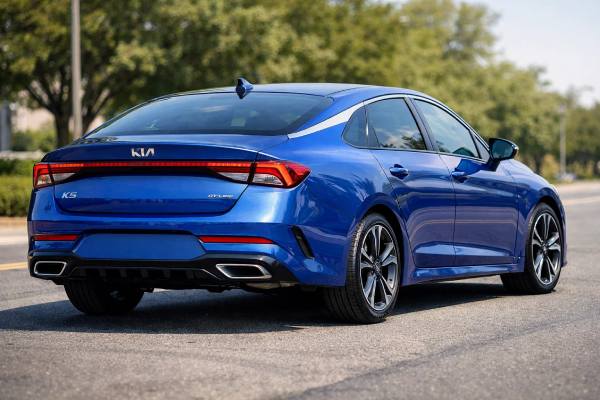
The 2021–2024 Kia K5 AWD (DL3) with the 1.6T G4FP is a practical midsize sedan that adds real all-weather confidence without turning the car into a heavy, inefficient crossover. Mechanically, it’s a front-biased, on-demand all-wheel-drive system paired with an 8-speed automatic—simple to live with, and usually invisible in normal driving. The 1.6-liter turbo engine focuses on usable torque rather than top-end drama, which makes the K5 feel relaxed in daily traffic while still pulling cleanly for highway merges.
Ownership-wise, this version is best understood as “a normal K5 plus a few extra driveline parts.” That means you get better wet-and-snow traction and more stable launches, but you also inherit additional fluid services, tighter tire matching requirements, and a little extra curb weight. If you maintain it like an AWD car—not a basic FWD sedan—it can be a strong long-term daily driver.
What to Know
- Confident traction in rain and snow without a big penalty in ride comfort or cabin space.
- Smooth, low-stress power delivery for commuting; turbo torque arrives early and stays usable.
- AWD adds maintenance: budget for rear driveline fluid service and stricter tire matching.
- Plan oil changes every 8,000–10,000 km (5,000–6,000 mi) or 6 months if you do short trips.
- If you hear a “pop” near the fuel tank or smell fuel, treat it as urgent and get it checked promptly.
Contents and shortcuts
- K5 AWD DL3: the big picture
- K5 AWD DL3 specs and measurements
- K5 AWD DL3 trims and safety tech
- Known problems, recalls, and fixes
- Maintenance plan and buying advice
- How it drives and what it costs in fuel
- Rivals: where K5 AWD fits
K5 AWD DL3: the big picture
Think of the K5 AWD (DL3) 1.6T as a traction upgrade, not a different car. In steady cruising it behaves like a front-wheel-drive sedan, and when conditions demand it—cold tires, wet roundabouts, slushy intersections—the system can send some torque rearward to help the car stay composed. That’s the real advantage: you don’t buy it for off-road ability, you buy it to reduce “one bad moment” risk in winter weather and heavy rain.
The 1.6T G4FP engine’s character suits that mission. It’s tuned for early torque and calm, consistent response rather than sporty high-rpm power. In daily use you’ll feel that as fewer downshifts and less strain on grades. The 8-speed automatic tends to keep revs low and avoids the rubber-band feel some drivers dislike in CVTs. If you drive mostly in traffic and highway flow, this is a comfortable powertrain match.
Where owners sometimes misjudge the AWD K5 is maintenance. AWD adds a rear drive module and coupling hardware, plus extra seals and bearings. None of that is inherently fragile, but it does mean you must treat tires and fluids as part of the drivetrain—not just consumables. Mismatched tire circumference (uneven tread depth across axles, or one new tire paired with three worn ones) can keep the system working harder than designed, raising heat and wear over time.
The other ownership reality is weight. AWD typically adds a few hundred pounds versus comparable FWD trims, which slightly reduces fuel economy and can make the car feel a touch less “light on its feet.” The tradeoff is traction you can actually use—especially with good all-season or winter tires—and that’s what most buyers are after.
If your climate is mild and you prioritize maximum mpg, a FWD K5 can be the smarter tool. But if you routinely face wet highways, freezing rain, steep driveways, or unplowed side streets, the AWD version is one of the more sensible “winter-proof” sedans in the segment.
K5 AWD DL3 specs and measurements
Below are practical, ownership-relevant specifications for the K5 AWD (DL3) with the 1.6T G4FP and 8-speed automatic. Exact details can vary by market and trim, so use these as a working baseline and verify with your build sheet or service documentation.
Powertrain and efficiency (1.6T AWD)
| Item | Specification |
|---|---|
| Code | G4FP |
| Layout | Front-engine, transverse |
| Cylinders / valvetrain | Inline-4, DOHC, 16 valves |
| Displacement | 1.6 L (1,598 cc) |
| Induction | Turbocharged |
| Fuel system | Gasoline direct injection (GDI) |
| Max power | 180 hp (134 kW) @ ~5,500 rpm |
| Max torque | ~264 Nm (195 lb-ft) @ ~1,500–4,500 rpm |
| Timing drive | Chain |
| Rated efficiency (US EPA-est.) | about 25–28 mpg combined (varies by year/trim) |
| Real-world highway @ 120 km/h (75 mph) | commonly ~7.5–8.5 L/100 km (28–31 mpg US) with good tires and mild weather |
Transmission and driveline (AWD)
| Item | Specification |
|---|---|
| Transmission | 8-speed automatic |
| Drive type | On-demand AWD (front-biased, rear engagement via coupling) |
| Differential | Open (traction managed by brake-based stability/traction control) |
Chassis and dimensions (typical US-market figures)
| Item | Specification |
|---|---|
| Suspension (front / rear) | MacPherson strut / multi-link |
| Steering | Electric power steering |
| Brakes | 4-wheel discs (sizes vary by trim) |
| Popular tire size (common) | 235/45 R18 (trim-dependent) |
| Ground clearance | not usually emphasized; treat as sedan-typical |
| Length / Width / Height | approx. 4,905 / 1,860 / 1,445 mm (193.1 / 73.2 / 56.9 in) |
| Wheelbase | approx. 2,850 mm (112.2 in) |
| Turning circle | around 11.2 m (36–37 ft), trim-dependent |
| Kerb (curb) weight | ~1,570 kg (3,465 lb) in AWD form (trim-dependent) |
| Fuel tank | ~60 L (15.8 US gal / 13.2 UK gal) |
| Cargo volume | sedan-typical; varies by measurement method and options |
Performance and capability (real-world expectations)
| Metric | Typical outcome |
|---|---|
| 0–100 km/h (0–62 mph) | roughly 7.8–8.8 s depending on traction and conditions |
| Top speed | market-limited; generally not a buying factor |
| Braking 100–0 km/h | highly tire-dependent; expect midsize-sedan norms |
| Towing | generally not a focus; follow your market’s rating (often low or not recommended) |
Fluids and service capacities (decision-useful guidance)
Because capacities and fluids can vary by VIN, treat this as a “what to ask for” list when buying parts or booking service:
| System | What to verify in service info |
|---|---|
| Engine oil | API/SP-class oil, commonly 0W-20 or 5W-30 depending on market; confirm capacity by VIN |
| Coolant | Long-life ethylene glycol coolant; confirm spec and mix ratio |
| Automatic transmission | Correct ATF specification for the 8AT; do not assume “universal” ATF |
| Rear drive module / AWD coupling | Correct gear oil/fluid and service interval for your market |
| A/C refrigerant | Type and charge amount on under-hood label |
| Key torque specs | Wheel lug torque and drain/fill plug torque for engine/transmission/rear drive |
Safety and driver assistance (what matters in practice)
| Category | Notes |
|---|---|
| Crash ratings | US-market safety results are commonly published by Insurance Institute for Highway Safety; European ratings may not exist for this model in some markets |
| Headlights | Can vary by trim and option; verify if you care about night-road performance |
| ADAS suite | AEB, lane support, blind-spot monitoring, and rear cross-traffic alert are common; availability and sophistication vary by year/trim |
If you only take one thing from the specs: this AWD K5 is a “normal midsize sedan” for space and comfort, but it requires AWD-minded tire discipline and a few extra fluid checks to stay healthy long term.
K5 AWD DL3 trims and safety tech
AWD availability is usually tied to specific trims and packages rather than offered across the entire range. In many North American configurations, AWD shows up most often on trims like LXS or GT-Line equipped with the 1.6T. The key takeaway for shoppers is that “AWD” is not just a drivetrain checkbox—it often changes your equipment mix, wheel/tire package, and sometimes your comfort features.
Trims and option packages: what to look for
When comparing AWD examples, prioritize these practical identifiers:
- Badging and wheel size: Many AWD-equipped trims use 18-inch wheels with 235/45 tires, though you can see other sizes depending on year and package. Wheel size matters because it changes ride comfort, road noise, and replacement tire costs.
- Cold-weather features: Heated steering wheel and heated seats are common adds on higher trims and can be standard or packaged depending on year. If you live in a cold climate, these features can matter as much as AWD itself.
- Tech tiers: Infotainment screen size, audio upgrades, and driver-assistance sophistication often jump with trim. If you plan to keep the car long-term, make sure the cabin tech is what you want now—retrofitting later is rarely cost-effective.
Year-to-year changes (2021–2024)
Across 2021–2024, equipment changes tend to be evolutionary: packaging shifts, more standard driver assistance, and occasional comfort or trim-content updates. The bigger ownership-relevant change is that late-model refreshes often bring different headlight hardware and revised ADAS calibration. That matters after windshield replacement, bumper work, or front-end repairs—camera and radar alignment procedures may be required to restore proper function.
Safety ratings: how to interpret them
In the US, many K5 safety details are tracked by National Highway Traffic Safety Administration and IIHS. Ratings can differ by test protocol year. That’s not “the car got worse,” it’s often the tests getting stricter (new side-impact barriers, updated front overlap evaluations, and more demanding rear-seat injury metrics). So, when you compare a 2021 result to a 2024 result, confirm you’re looking at the same test version.
ADAS and what’s typically included
Most K5 trims offer some mix of:
- AEB (automatic emergency braking): usually vehicle and pedestrian detection, with cyclist detection more dependent on year/trim.
- Lane keeping / lane centering: lane-keeping assist is common; lane-following assist may require higher trims or packages.
- Blind-spot monitoring and rear cross-traffic alert: especially relevant on an AWD commuter that sees winter visibility and spray.
- Rear automatic braking or parking sensors: often trim-dependent.
After any windshield replacement, front bumper removal, wheel alignment, or suspension work, ask the shop whether camera/radar calibration is needed. Skipping calibration can produce nuisance alerts—or worse, reduced system performance when you actually need it.
Known problems, recalls, and fixes
No car is issue-proof, and the most useful reliability view is: what fails, how often, and how expensive it is when it does. For the 2021–2024 K5 AWD 1.6T, the major difference versus FWD is that you now own additional driveline hardware—so you watch tires and driveline fluids more closely.
Common (higher prevalence) items
- Battery and charging-system sensitivity (low cost / nuisance): Modern sedans with always-on telematics can be harder on a weak 12V battery. Symptoms: slow cranking, random warning lights, or infotainment resets. Remedy: proper battery test (CCA and load), then replacement if weak.
- Brake noise and rotor wear (low to medium): Often driven by driving conditions and pad material. Symptoms: squeal, vibration under braking. Remedy: pad/rotor service and correct bedding-in; check rear brakes for corrosion in salty climates.
- Wind noise and trim fit (low): More of a quality-of-life issue; check door seals, window trim, and mirror caps.
Occasional (moderate prevalence) items
- Turbo plumbing and intake leaks (medium): Small boost leaks can cause reduced power and intermittent fault codes. Symptoms: whooshing under load, sluggish acceleration, occasional check-engine light. Remedy: pressure test intake tract; inspect clamps, hoses, and intercooler connections.
- AWD-related vibration (medium): If tires are mismatched or badly worn, you can feel a low-frequency vibration or driveline shudder. Remedy: match tire brand/model and tread depth; verify wheel balance; inspect prop shaft and rear coupler mounts if symptoms persist.
Rare but high-impact items (treat seriously)
- Fuel-tank pressure / EVAP system recall-related risk (high severity): There is a safety recall affecting certain 2021–2024 K5 models with the 1.6T involving the purge control system check valve. If it deteriorates, pressure can build in the fuel tank, potentially leading to tank expansion and—in worst cases—contact with hot exhaust components. Symptoms noted for owners include a popping sound near the fuel tank, a check engine light, rough running, or fuel odor. Remedy is typically dealer inspection and replacement of the improved valve, tank inspection (replace if needed), and ensuring the latest ECU software is installed. If you suspect fuel odor or tank-related abnormal noises, don’t delay diagnosis.
Software and calibration considerations
Even when hardware is fine, modern drivability can depend on software updates:
- Engine and transmission control: Updates may address shift quality, idle stability, or fault-detection thresholds.
- ADAS calibration: After windshield replacement or front-end repairs, correct calibration is essential for reliable AEB and lane support.
How to verify recall and service completion
Do not rely on seller statements alone. For a pre-purchase check, request:
- A printed service history showing recall completion.
- A VIN-based recall status check through official channels.
- A test drive that includes steady highway cruising and multiple low-speed turns (listen for driveline clunks, pops, or persistent vibration).
Reliability is less about fear and more about process: buy a well-documented car, keep tires matched, and stay proactive on driveline fluids. That approach prevents most “AWD surprises.”
Maintenance plan and buying advice
A good maintenance routine for the K5 AWD 1.6T is straightforward: keep the engine clean internally, keep the transmission fluid healthy, and treat the AWD hardware as a serviceable system—not a “lifetime” black box.
Practical maintenance schedule (distance/time)
Use the more frequent end of these ranges if you do short trips, cold starts, heavy traffic, or hot climates:
- Engine oil and filter: every 8,000–10,000 km (5,000–6,000 mi) or 6 months. Turbo engines reward clean oil; it’s the cheapest longevity tool you control.
- Engine air filter: inspect every 15,000 km (10,000 mi); replace ~30,000 km (20,000 mi) or sooner in dusty areas.
- Cabin air filter: every 15,000–30,000 km (10,000–20,000 mi), depending on air quality.
- Coolant: follow official interval; if unknown, test coolant condition and confirm correct spec before topping off.
- Spark plugs: typically 60,000–100,000 km (40,000–60,000 mi) depending on plug type and market schedule.
- Automatic transmission fluid: conservative owners often service around 60,000–80,000 km (40,000–50,000 mi) for long-term smoothness, especially with frequent stop-and-go use.
- Rear driveline fluid (AWD rear drive module/coupling): verify the official interval and fluid spec; many AWD systems benefit from periodic fluid replacement to reduce wear debris accumulation.
- Brake fluid: every 2 years is a sensible safety baseline.
- Brake pads/rotors: inspect at each tire rotation; replace as needed.
- Tire rotation: every 8,000–10,000 km (5,000–6,000 mi). Keep tread depths close across all four corners.
- Alignment check: yearly, after pothole strikes, or if steering wheel is off-center.
Tire discipline (AWD-specific and very important)
AWD systems dislike uneven rolling circumference. Do this:
- Replace tires as a matched set when possible.
- If you must replace a single tire, match brand/model and ensure tread depth is within the manufacturer’s allowed difference (many owners use shaving to match depth—verify if appropriate in your region).
- Keep pressures correct; under-inflation increases heat and rolling mismatch.
Buyer’s guide checklist (fast and effective)
- Service records: oil changes, transmission service, and any AWD fluid documentation.
- Recalls: verify completion with VIN-based lookup and dealer paperwork.
- Test drive:
- Low-speed tight turns in a parking lot (listen for binding or clunks).
- Smooth highway cruise at 90–120 km/h (55–75 mph) (feel for vibration).
- A few strong accelerations from low speed (note shift quality and boost delivery).
- Underbody inspection: look for leaks around driveline housings and signs of impact damage.
- Electronics check: verify all driver aids, cameras, and parking sensors function; calibration problems can be expensive.
Long-term durability outlook: the engine/transmission pair can age well if oil changes are consistent and the car isn’t tuned or abused. For AWD cars specifically, tire matching and driveline fluid servicing are the habits that separate “trouble-free” from “mystery vibration” ownership.
How it drives and what it costs in fuel
In daily driving, the K5 AWD feels like a refined, slightly sporty midsize sedan—quiet enough for commuting, stable on the highway, and predictable when roads get slick. The chassis tuning typically leans toward a controlled ride rather than a floaty one, and the multi-link rear suspension helps it settle over mid-corner bumps better than older sedan designs.
Ride, handling, and NVH
- Ride quality: With 18-inch wheels, impacts are more noticeable than on smaller wheels, but the structure usually feels solid. If you want maximum comfort, prioritize tire choice (a quieter touring all-season can transform the car).
- Steering: Light-to-moderate effort with consistent response. It’s tuned for confidence rather than deep feedback.
- Braking feel: Generally easy to modulate; in winter climates, rear brake corrosion can affect smoothness if the car sits.
Powertrain character (1.6T + 8AT)
The 1.6T’s strength is midrange torque. Around town you don’t need to rev it hard; it builds speed without feeling strained. The 8-speed automatic usually upshifts early in gentle driving, which keeps noise down. Under load it’s willing to downshift, but you may notice a short pause as it chooses the right gear—normal for torque-converter automatics tuned for efficiency.
What AWD adds on the road
This is not a full-time performance AWD system. It’s designed to help you launch and maintain composure when grip is limited:
- Wet intersections: better traction off the line and fewer wheelspin events.
- Snowy hills: less drama, especially with proper winter tires.
- Highway stability in heavy rain: the car can feel more planted when traction is inconsistent across lanes.
The system can’t cheat physics, though. AWD helps you go and helps you stay stable; it does not shorten stopping distances. Tires remain the most important safety upgrade.
Real-world efficiency
Expect a modest fuel-economy penalty versus FWD equivalents due to extra weight and driveline drag. In mixed driving, many owners see something like:
- City-heavy use: higher consumption, especially in cold weather and short trips.
- Highway cruising: surprisingly reasonable if speeds are moderate and tires are properly inflated.
Cold weather can push consumption up noticeably because the engine runs richer during warm-up, the transmission and AWD fluids are thicker, and cabin heat increases load. If your driving is mostly short hops, prioritize more frequent oil changes and don’t chase the longest possible intervals.
The bottom line: the K5 AWD doesn’t feel “slow” in normal use, and it trades a little efficiency for a real traction advantage that you can feel when conditions are poor.
Rivals: where K5 AWD fits
The K5 AWD occupies a useful niche: midsize-sedan space and comfort with a traction advantage that many competitors either don’t offer or reserve for higher trims. Your best comparison depends on what you value most.
If you want AWD confidence first
- Nissan Altima AWD: Often the closest direct alternative for “sedan + AWD.” It may deliver strong economy depending on configuration, but driving feel and powertrain preferences vary widely by driver.
- **Toyota Camry AWD (where available): Typically emphasizes efficiency and resale value. If you want a conservative, low-drama ownership profile, it’s a benchmark.
- **Subaru Legacy (AWD standard): The “AWD-first” sedan choice. If you want AWD all the time and have lots of winter driving, it’s worth cross-shopping.
If you care most about driving feel and interior tech
- **Mazda6 (mostly FWD): Often praised for steering and cabin feel, but it won’t match the K5 AWD’s traction advantage.
- **Honda Accord (mostly FWD): Strong all-around choice in many markets, typically emphasizing efficiency and space; AWD availability depends heavily on region and model year.
Where the K5 AWD is strong
- Balanced daily-driver mission: A comfortable cabin, modern driver assistance availability, and good highway stability.
- Traction without SUV compromises: You keep sedan aerodynamics and handling while gaining useful winter ability.
- Feature-per-money value: Depending on incentives and trim packaging, the K5 can deliver a lot of tech for the price.
Where it can lose ground
- AWD adds complexity: More parts, more fluid services, stricter tire rules.
- Not an off-road solution: Ground clearance and underbody protection remain sedan-grade.
- Efficiency edge goes to FWD rivals: If mpg is your top priority and winters are mild, FWD alternatives may make more sense.
Verdict: Choose the K5 AWD if you want a midsize sedan that stays calm when conditions are ugly, and you’re willing to maintain tires and driveline fluids with more care than the average commuter car.
References
- 2024 Kia K5 Specifications 2024 (Specifications)
- 2024 Kia K5 2024 (Safety Rating)
- Part 573 Safety Recall Report 25V794 2025 (Recall Database)
Disclaimer
This article is for informational purposes only and is not a substitute for professional diagnosis, inspection, or repair. Specifications, torque values, fluid types, capacities, service intervals, and procedures can vary by VIN, market, and installed equipment. Always verify details using official service information for your exact vehicle and consult a qualified technician when needed.
If this guide helped, please consider sharing it on Facebook, X (Twitter), or your favorite forum to support our work.