
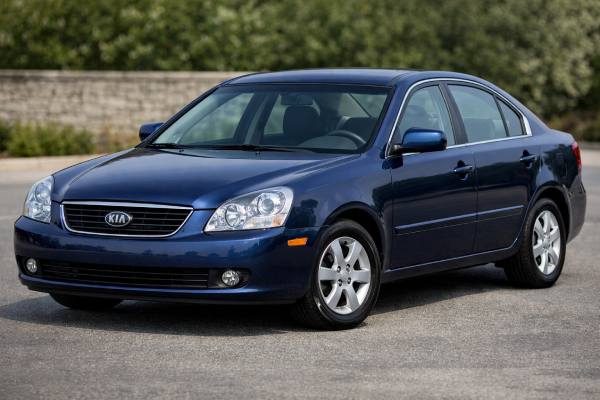
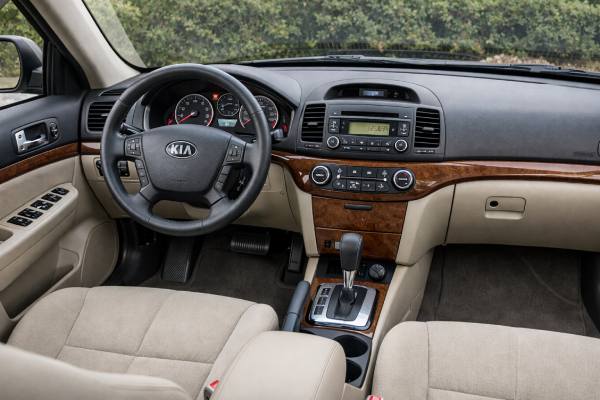

The Kia Magentis (MG) with the G6EA 2.7-litre V6 sits in a sweet spot of the mid-2000s family-sedan market: simple, smooth, and largely conventional. This engine’s biggest ownership value is refinement—six cylinders, a naturally aspirated intake, and predictable throttle response that suits relaxed commuting. The trade-off is running cost. Compared with the four-cylinder versions, the V6 asks for more fuel, more front-end brake and tyre wear, and stricter attention to cooling and timing-belt service.
For 2006–2008 cars, condition matters more than trim badges. A well-kept Magentis feels solid at speed, rides comfortably on average roads, and avoids many “high-tech aging” problems because it has few complex electronics by modern standards. This guide focuses on the exact V6 setup: key specs, real-world performance, known weak points, and a maintenance plan you can actually follow.
Owner Snapshot
- Smooth V6 power delivery and quieter highway cruising than the four-cylinder models
- Simple, conventional drivetrain (FWD + automatic) that’s usually easy to service
- Spacious cabin and long wheelbase ride comfort for daily use
- Budget for higher fuel use and more frequent brake service than the 2.0-litre versions
- Replace the timing belt kit about every 90,000 km (60,000 mi) or 5–6 years (whichever comes first)
Quick navigation
- Kia Magentis MG V6 in context
- Kia Magentis MG 2.7 specs and measurements
- Kia Magentis MG trims, options, and safety tech
- Reliability watchlist and service campaigns
- Ownership maintenance roadmap
- Road performance and fuel use
- Magentis 2.7 vs key rivals
Kia Magentis MG V6 in context
In the 2006–2008 window, the Kia Kia Magentis (also sold in many markets as the Kia Optima) was built around a straightforward recipe: a long wheelbase, front-wheel drive, and a comfort-first suspension tune. The V6 version exists for buyers who wanted the same practical shell but with less strain at motorway speeds and smoother acceleration when fully loaded.
What the G6EA V6 changes in day-to-day driving
A naturally aspirated V6 doesn’t need turbo boost to feel responsive. In practice, that means:
- More consistent pull from low-to-mid rpm, especially when merging or climbing.
- Less harshness at higher rpm than many four-cylinders of the era.
- Fewer “busy” gear changes because the engine can carry speed with less downshifting.
The downside is that the car’s character stays comfort-oriented. You do not buy this Magentis to chase sporty steering feel. You buy it because it remains composed on uneven pavement and feels “grown up” on long trips.
What owners should prioritize when shopping
For this generation and engine, the biggest ownership swings come from maintenance history:
- Timing-belt documentation (belt + tensioners + idlers, and ideally the water pump).
- Cooling-system health (stable temperature under load, clean coolant, no oil contamination).
- Transmission behavior (clean shifts when warm, no flare, no harsh engagement into Drive/Reverse).
- Front-end condition (engine mounts, control-arm bushes, and brake vibration checks).
Because the platform is shared across multiple markets, parts availability is usually decent. The real question is whether the car was kept on schedule. A neglected V6 can quickly become “cheap to buy, expensive to put right,” mainly due to timing-belt neglect, overheating events, and deferred fluid services.
Ownership strengths that still hold up
Even today, the Magentis V6 has a few advantages for the right buyer:
- Comfortable ride from the long wheelbase and conservative spring/damper tuning.
- Predictable mechanical layout with fewer complicated driver-assist systems to age poorly.
- Good highway manners—stable tracking, reasonable wind noise for the era, and relaxed engine note.
If you want a simple, roomy sedan with a smooth engine and you’re willing to stay disciplined on service, the 2.7 V6 is the “most mature-feeling” version of the MG lineup.
Kia Magentis MG 2.7 specs and measurements
Below are practical specs for the 2006–2008 Magentis (MG) with the G6EA 2.7 V6. Exact values can vary by market, wheel size, and build date, so treat these as a configuration guide—not a VIN-level certificate.
Powertrain and efficiency
| Item | Specification (typical) |
|---|---|
| Code | G6EA |
| Engine layout and cylinders | V6, 6 cylinders; DOHC; 4 valves/cyl |
| Displacement | 2.7 L (≈2656 cc) |
| Induction | Naturally aspirated (NA) |
| Fuel system | Multi-point injection (MPFI) |
| Compression ratio | ~10.0:1 (market-dependent) |
| Max power | 185 hp (≈138 kW) @ ~6000 rpm |
| Max torque | ~240–247 Nm (≈177–182 lb-ft) @ ~4000 rpm |
| Timing drive | Belt |
| Rated efficiency | ~9.5–11.5 L/100 km (25–19 mpg US / 30–25 mpg UK), depending on cycle/market |
| Real-world highway @ 120 km/h | Often ~8.5–10.0 L/100 km if mechanically healthy and tyres aligned |
Transmission and driveline
| Item | Specification (typical) |
|---|---|
| Transmission | 5-speed automatic (market-dependent) |
| Drive type | FWD |
| Differential | Open |
Chassis and dimensions
| Item | Specification (typical) |
|---|---|
| Suspension (front/rear) | MacPherson strut / multi-link (or strut-type rear, market-dependent) |
| Steering | Hydraulic power steering (typical for era) |
| Brakes | Front ventilated discs / rear discs |
| Brakes diameter | Front ~280 mm (11.0 in); rear ~262 mm (10.3 in) (common fitments) |
| Wheels and tyres (popular) | 215/50 R17 (common), with 16-inch packages also seen |
| Ground clearance | ~160 mm (6.3 in) |
| Length / Width / Height | ~4735 / 1805 / 1480 mm (186.4 / 71.1 / 58.3 in) |
| Wheelbase | ~2720 mm (107.1 in) |
| Turning circle (kerb-to-kerb) | ~10.8–11.2 m (35–37 ft), market-dependent |
| Kerb weight | ~1465–1565 kg (3230–3450 lb), equipment-dependent |
| GVWR | ~2000–2050 kg (4400–4520 lb), market-dependent |
| Fuel tank | ~62 L (16.4 US gal / 13.6 UK gal) |
| Cargo volume | ~420–500 L seats up (method varies); seats-down figures vary by seatback shape |
Performance and capability
| Item | Typical figure |
|---|---|
| 0–100 km/h (0–62 mph) | ~8.7–9.5 s (tyres, temperature, and transmission condition matter) |
| Top speed | ~210–220 km/h (131–137 mph) |
| Braking distance | Expect ~39–42 m from 100–0 km/h with quality tyres and fresh brakes (test-dependent) |
| Towing capacity | Market-specific; often modest or not officially rated in some regions |
| Payload | Typically ~400–500 kg, depending on GVWR and equipment |
Fluids and service capacities (verify by VIN/market)
| Item | Typical spec guidance |
|---|---|
| Engine oil | 5W-30 or 5W-40 meeting API SL/SM (and ACEA A3/B4 where used); capacity often ~4.0–4.5 L (4.2–4.8 US qt) |
| Coolant | Ethylene-glycol long-life coolant, 50/50 mix; capacity often ~7–8 L (7.4–8.5 US qt) |
| ATF | Kia/Hyundai-spec ATF (market-specific); service fill varies; total capacity commonly ~7–8 L |
| A/C refrigerant | R134a; charge varies by market (label under hood) |
| Key torque specs | Wheel nuts commonly ~90–110 Nm (66–81 lb-ft); brake-caliper bracket bolts are higher (verify in service data) |
Kia Magentis MG trims, options, and safety tech
Trim structure varies by country, but the 2006–2008 Magentis/Optima family usually followed a simple ladder: base comfort trim, a mid-grade with convenience upgrades, and a higher trim with leather, larger wheels, and more audio features. For the V6, the practical differences worth caring about are wheels/tyres, brake hardware, and stability-control availability.
Trims and options: what changes the driving and upkeep
Common equipment patterns you’ll see:
- 16-inch wheels: usually a softer ride, cheaper tyres, and slightly better real-world efficiency.
- 17-inch wheels: sharper response but more impact harshness and higher tyre cost; can amplify suspension wear noises if bushings are tired.
- Audio and infotainment tiers: mostly durability-neutral, but check for failing speakers, dim displays, and intermittent buttons.
- Climate control: automatic climate systems add comfort but require the A/C to be kept in good shape (compressor load and condenser condition matter).
Quick identifiers on used cars:
- Larger front brakes and 17-inch wheels often appear together on higher trims.
- Leather and heated seats commonly signal a higher-grade package, but don’t guarantee stability control.
- VIN plate/build sticker details vary by market; use them mainly to confirm engine and transmission pairing.
Safety ratings: what to interpret correctly
This era sits in an awkward middle ground: structures were improving quickly, but test protocols also evolved. A car rated “good for its time” may not match modern expectations. For the Magentis/Optima platform:
- Expect front-impact performance that was competitive for mid-2000s standards, especially when airbags and belt pretensioners are intact.
- Side-impact performance depends heavily on whether the car has side torso airbags and curtain airbags (not always standard in all markets).
Safety systems (typical for 2006–2008)
Most cars include:
- Front airbags; ABS
- Seatbelt pretensioners and load limiters (common)
- ISOFIX/LATCH child-seat anchors (market-dependent placement details)
Often optional or trim-dependent:
- ESC/ESP (Electronic Stability Control) and traction control
- Curtain airbags
- Rear parking sensors (later years/upper trims)
No modern ADAS should be expected. Features like AEB, adaptive cruise control, and lane-keeping were generally not part of this generation’s mainstream offering. That makes the car simpler—but it also means tyres, brakes, and driver attention do more of the safety work.
After any suspension, steering, or brake repair, insist on:
- A proper alignment (protects tyres and stability)
- A scan for ABS/ESC fault codes if warning lights appear
- Correct tyre sizes and load ratings—mismatched tyres can upset ABS/ESC calibration and braking balance.
Reliability watchlist and service campaigns
The G6EA 2.7 V6 is not an exotic engine, but it is unforgiving of missed basics. Use the guide below as a “risk map” by prevalence and cost tier, focusing on what tends to show up as these cars age.
Common (watch closely)
- Timing belt aging (high severity / high cost if ignored)
Symptoms: ticking or slapping noises near timing cover, unknown belt history, coolant seep near water pump area.
Likely cause: overdue belt, worn tensioner/idlers, aging water pump.
Remedy: replace belt kit (belt + tensioners + idlers). Strongly consider the water pump at the same time because labor overlaps. - Cooling system weak points (medium–high severity / medium cost)
Symptoms: temperature needle creep in traffic, sweet smell after shutdown, dried coolant residue at radiator seams, heater performance changes.
Likely cause: radiator end-tank aging, thermostat sticking, hoses and clamps aging, neglected coolant.
Remedy: pressure test, replace weak parts proactively, refresh coolant on schedule, and verify both radiator fans operate correctly. - Engine mount wear (medium severity / medium cost)
Symptoms: thump on gear engagement, vibration at idle, harshness under acceleration.
Likely cause: hydraulic mount collapse or torn rubber mounts.
Remedy: replace the worst mount(s) first; re-check after 500–1000 km.
Occasional (depends on use and maintenance)
- Oil seepage from seals and covers (low–medium severity / low–medium cost)
Symptoms: oil smell, wetness around valve covers or front of engine.
Remedy: fix leaks early; oil on rubber bushings and belts accelerates deterioration. - Automatic transmission shift quality decline (medium severity / medium–high cost)
Symptoms: delayed engagement when warm, flare on 2–3 shift, harsh downshift, shudder under light throttle.
Likely cause: aged ATF, adaptive shift behavior after neglect, worn solenoids (less common).
Remedy: correct-spec ATF service (often multiple drain-and-fills), then evaluate. Avoid “universal” fluid guessing.
Rare but costly (screen during inspection)
- Overheating history (high severity / high cost)
Even one serious overheating event can warp heads or weaken gaskets.
Inspection clues: new radiator with old hoses, inconsistent heater output, oil that smells burnt, bubbling in expansion tank.
Recalls, TSBs, and how to verify completion
Campaigns vary by market and VIN range. Your best approach:
- Run the VIN through an official recall portal (where available).
- Ask a dealer to print the completed campaign history.
- Treat “I think it was done” as not done until you see proof.
Because this platform was sold globally under multiple names, a recall described for an Optima in one country may correspond to a Magentis elsewhere. Verification by VIN is the only clean way to avoid confusion.
Ownership maintenance roadmap
A 2006–2008 Magentis V6 becomes very manageable when you shift from “fix when broken” to “replace before failure” on a few key systems. Below is a practical schedule that balances age-related wear with mileage-based items.
Core service schedule (distance/time)
Every 10,000–12,000 km (6,000–7,500 mi) or 12 months
- Engine oil and filter (shorten interval for city-only driving)
- Inspect coolant level/condition and radiator fans
- Inspect belts, hoses, and visible oil leaks
- Brake inspection (pad thickness, rotor condition, slider pin movement)
Every 20,000–30,000 km (12,000–18,000 mi) or 2 years
- Engine air filter; cabin air filter
- Brake fluid flush (2 years is a good rule for safety and ABS longevity)
- Wheel alignment check and tyre rotation (especially on 17-inch setups)
Every 60,000 km (37,000 mi) or 4 years
- Coolant refresh (unless a verified long-life coolant interval applies in your market)
- Inspect spark plugs; replace if standard nickel plugs are fitted
- Inspect suspension bushings, ball joints, and sway-bar links
Every 90,000 km (60,000 mi) or 5–6 years (critical)
- Timing belt kit (belt + tensioner + idlers)
- Water pump (recommended “while you’re there”)
- Inspect crank/cam seals and replace if weeping
Every 60,000–90,000 km (37,000–56,000 mi)
- Automatic transmission fluid service using the correct specification (often multiple drain-and-fills are safer than a single aggressive flush)
Fluids and parts choices that reduce long-term risk
- Use a quality oil filter with correct bypass characteristics; cheap filters can increase startup noise and wear.
- Don’t gamble on ATF. If you can’t confirm spec, get dealer or specialist confirmation first.
- For cooling parts, choose reliable brands. A bargain radiator or thermostat can undo the whole system’s stability.
Buyer’s guide: inspection checklist
Bring this list to a pre-purchase inspection:
- Cold start: listen for belt-area noise and lifter tick; watch for smoke.
- Warm drive: confirm stable temperature in traffic and on a sustained uphill.
- Transmission: check engagement into Drive/Reverse, and feel for flare or harsh shifts.
- Brakes: test for steering-wheel shake under firm braking (warped rotors or sticky calipers).
- Suspension: listen for clunks over small bumps (links/bushes) and check tyre wear pattern.
- Underside: check for corrosion on subframes, brake lines, and fuel tank straps (region-dependent).
- Electronics: confirm windows, HVAC modes, and A/C performance.
Long-term durability outlook
A maintained V6 Magentis can be a dependable, comfortable daily driver. The ownership “make or break” items are the timing belt, cooling stability, and correct fluid services. If those are handled on schedule, most remaining issues are typical aging-car wear rather than catastrophic design flaws.
Road performance and fuel use
The V6 Magentis is best understood as a calm, torque-friendly sedan rather than a sporty one. Its performance is “quietly adequate,” and the way it delivers speed is often more satisfying than the raw numbers suggest.
Ride, handling, and NVH (noise, vibration, harshness)
- Ride comfort: The long wheelbase helps the car settle on uneven pavement. With 16-inch wheels, it tends to feel more forgiving; 17-inch packages can transmit sharper impacts.
- Steering feel: Expect light-to-moderate effort with a comfort bias. On-center feel is usually stable at highway speeds, but not communicative in a modern sporty sense.
- Braking feel: When the calipers slide freely and the fluid is fresh, pedal feel is predictable. If the car pulls, vibrates, or the pedal feels inconsistent, sticky sliders or tired rotors are common culprits.
- Cabin noise: The V6 typically reduces “engine busy-ness” at speed. Wind and road noise depend more on tyres, door seals, and wheel size than on the engine.
Powertrain character
The 2.7 V6’s strengths show up in real driving:
- Smooth step-off from low speed and less strain with passengers onboard.
- Midrange confidence for overtakes—often fewer kickdowns than a four-cylinder.
- Automatic transmission logic usually favors comfort. If it hunts between gears, suspect old ATF, incorrect tyre sizes, or a throttle body/airflow maintenance issue.
Real-world efficiency
Expect fuel use to vary widely by route:
- City-heavy driving: often ~11–13.5 L/100 km (21–17 mpg US / 26–21 mpg UK)
- Highway (100–120 km/h): often ~8.5–10.0 L/100 km (28–24 mpg US / 33–28 mpg UK)
- Mixed use: commonly ~9.5–11.5 L/100 km (25–19 mpg US / 30–25 mpg UK)
What moves the needle most:
- Tyre pressure and alignment (big effect on these cars)
- Sticky brake calipers or dragging parking brake
- Aging oxygen sensors and tired plugs (subtle but real)
- Short-trip use where the engine rarely reaches full operating temperature
Select performance metrics that matter
- 0–100 km/h: around the high-8 to mid-9 second range when healthy
- Top speed: around the low-200s km/h, depending on market gearing and limiter behavior
- High-speed stability: generally good for its era, assuming suspension bushings and tyres are in good shape
If you want relaxed power delivery and comfortable cruising, the V6 delivers. If you want maximum economy, the four-cylinder versions will be easier to live with.
Magentis 2.7 vs key rivals
To judge the Magentis 2.7 fairly, compare it to other mid-2000s D-segment sedans with optional V6 engines. The car’s strongest argument is value and simplicity, not brand prestige or cutting-edge tech.
Where the Magentis V6 wins
- Smoothness per dollar: A naturally aspirated V6 in this price class can feel more premium than many four-cylinder rivals, especially on long trips.
- Lower tech burden: Fewer advanced driver-assistance systems means fewer sensors and cameras to age badly. For owners keeping an older car, that can be a genuine advantage.
- Comfort-first tuning: If your priority is ride comfort and stable highway behavior, the Magentis often feels calmer than some firmer-handling competitors.
Where it gives up ground
- Fuel economy: Many rivals with smaller engines (or later direct-injection four-cylinders) will beat it easily in mixed use.
- Resale and parts pricing in some regions: Depending on your local market, certain wear parts can be cheaper for high-volume models from other brands.
- Cabin design and infotainment aging: Even when everything works, the interior can feel dated next to rivals that had stronger material quality and better audio/nav options.
Practical rival comparisons (how to choose)
- If you prioritize lowest running cost, consider a four-cylinder competitor (or a four-cylinder Magentis) with strong service history.
- If you prioritize smooth highway cruising and do your own maintenance planning, the Magentis V6 is often a strong value pick.
- If you prioritize safety tech and modern driver aids, you’ll be better served by a newer generation vehicle rather than any mid-2000s sedan.
The “right buyer” summary
Choose the Magentis 2.7 if you want:
- Comfortable ride
- Smooth, naturally aspirated engine feel
- A straightforward car you can keep going with disciplined maintenance
Skip it if you want:
- Best-in-class fuel economy
- Modern active safety systems
- A car that feels sporty on a twisty road
In the used market, a clean, documented V6 Magentis can be a surprisingly satisfying daily driver—provided you buy on condition and service history, not on price alone.
References
- Kia Recalls | Kia Europe 2026 (Recall Database)
- Check for Recalls: Vehicle, Car Seat, Tire, Equipment | NHTSA 2026 (Recall Database)
- 2006 Kia Optima 2006 (Safety Rating)
- Fuel Economy of the 2007 Kia Optima 2007 (Official Fuel Economy Data)
- Magentis earns the highest safety rating – Kia Slovakia s.r.o. 2006 (Safety Rating)
Disclaimer
This article is for informational purposes only and is not a substitute for professional inspection, diagnosis, or repair. Specifications, torque values, service intervals, and procedures can vary by VIN, market, model year, and equipment. Always verify details against official service documentation for your exact vehicle and follow manufacturer procedures.
If this guide helped, please consider sharing it on Facebook, X (Twitter), or your favorite forum/community to support our work.