
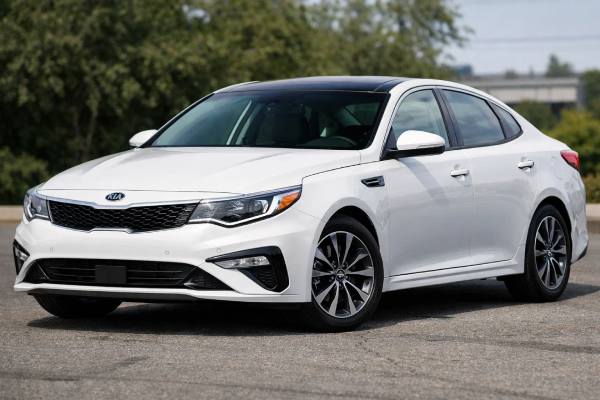
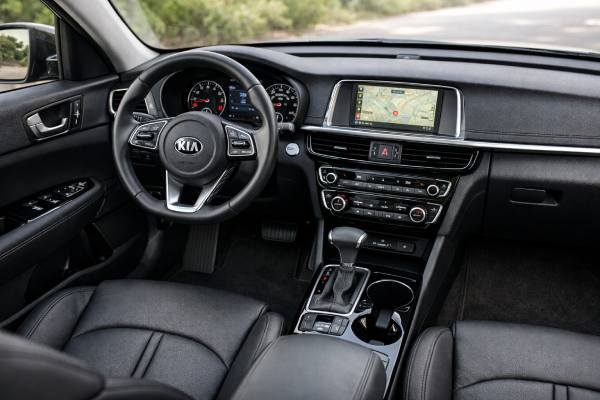
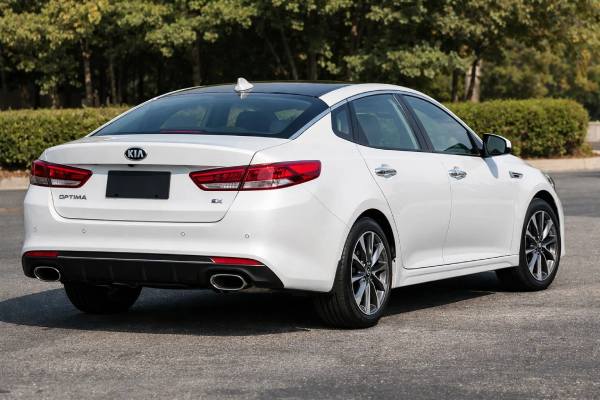
The 2019–2020 facelift Kia Optima (JF) with the G4NC 2.0-liter gasoline engine sits in the “simple, predictable sedan” sweet spot. It is not the quickest Optima, but it leans into smooth daily drivability, reasonable running costs, and straightforward service needs—especially compared with the turbo and electrified variants. The G4NC is a naturally aspirated inline-four, so power delivery is linear, throttle response is easy to meter in traffic, and under-hood heat management is typically less demanding than on turbo models.
For owners, the big themes are: keep up with oil quality and cooling-system health, watch for age-related gasket seepage and ignition wear, and verify recall/TSB work based on VIN. If you buy on condition and maintenance history (not just mileage), this Optima configuration can be a calm long-term companion.
What to Know
- Smooth, linear acceleration and less heat stress than turbo Optimas—good for short urban trips and hot climates.
- Typically lower mechanical complexity than HEV/PHEV models, which can reduce long-term diagnostic costs.
- Cabin comfort and highway stability are strong points for the class, especially on 17–18 inch wheels.
- Ownership caveat: service records matter—deferred oil changes and old coolant raise risk of oil consumption and overheating.
- Practical interval: change engine oil every 10,000–15,000 km (6,000–9,000 mi) or 12 months (shorter for severe use).
Contents and shortcuts
- Kia Optima JF 2.0 G4NC in context
- Kia Optima G4NC specs and capacities
- Kia Optima trims, safety, and ADAS
- Known issues, recalls, and fixes
- Service schedule and buying checks
- Road manners and real mpg
- How it stacks up
Kia Optima JF 2.0 G4NC in context
Within the facelifted JF range, the 2.0 G4NC is best understood as the “baseline comfort” powertrain. It favors consistency over drama: you get predictable throttle response, an engine that doesn’t rely on boost to make torque, and a driving experience that feels the same on a cold morning as it does after a long highway run. On paper, 163 hp positions it below the 1.6 turbo and well below the 2.0 turbo, but for normal commuting it rarely feels strained unless the car is heavily loaded or driven at sustained high speeds with frequent overtakes.
The 2019–2020 facelift typically brought design and equipment updates (lighting, infotainment/driver-assist packaging, trim reshuffles) more than fundamental platform changes. That matters because chassis fundamentals—wheelbase, suspension layout, and cabin packaging—remain the same strengths: the Optima generally tracks straight at speed, filters rough pavement well on mid-size wheels, and offers a back seat that works for adults rather than “in a pinch.”
Where this engine choice can be a real advantage is ownership rhythm. Naturally aspirated engines often tolerate varied driving patterns better than small turbos when maintenance is imperfect—though “tolerate” is not a license to neglect service. The G4NC’s long-term health is closely tied to oil quality (viscosity and change discipline), keeping the cooling system fresh, and addressing small leaks or ignition misfires early so they do not cascade into catalytic-converter damage.
As a used buy, this Optima configuration also rewards careful trim selection. Some markets paired the 2.0 with comfort-focused suspensions and smaller wheels; others bundled it with basic infotainment. Either way, your best outcome comes from matching the car’s strengths: steady daily mileage, timely fluid services, and modest expectations about outright speed. If you want effortless passing power at any speed, the turbo models fit better; if you want calm, simple, and serviceable, the G4NC is the quiet value pick.
Kia Optima G4NC specs and capacities
Below are the core specifications owners shop for and technicians actually use. Because the Optima (JF) was sold with market-specific equipment, treat these as typical values for the 2019–2020 facelift 2.0 NA configuration and verify by VIN when ordering parts or fluids.
Powertrain and efficiency
| Item | Specification |
|---|---|
| Code | G4NC |
| Engine layout and cylinders | Inline-4, DOHC, 16 valves (4 valves/cyl) |
| Displacement | 2.0 L (1,999 cc) |
| Induction | Naturally aspirated (NA) |
| Fuel system | MPI (multi-port injection) |
| Compression ratio (ICE) | Market dependent (verify by VIN) |
| Max power | 163 hp (120 kW) @ ~6,200 rpm (market dependent) |
| Max torque | ~196 Nm (145 lb-ft) @ ~4,200 rpm (market dependent) |
| Timing drive | Chain |
| Rated efficiency | Typically ~7.0–8.5 L/100 km (34–28 mpg US / 40–33 mpg UK), depending on gearbox and test cycle |
| Real-world highway @ 120 km/h (75 mph) | Often ~7.0–8.0 L/100 km (34–29 mpg US) when tires and alignment are healthy (varies with wind/grades) |
Transmission and driveline
| Item | Specification |
|---|---|
| Transmission | Commonly 6-speed automatic or 6-speed manual (market dependent) |
| Drive type | FWD |
| Differential | Open |
Chassis and dimensions
| Item | Specification |
|---|---|
| Suspension (front/rear) | MacPherson strut / multi-link (typical JF layout) |
| Steering | Electric power steering (EPS), ratio market dependent |
| Brakes | 4-wheel discs (front ventilated), sizing varies by wheel package |
| Wheels/tyres (common) | 205/65 R16 or 215/55 R17 (trim dependent) |
| Ground clearance | Market dependent; verify by trim/wheel package |
| Length / Width / Height | ~4,855 / 1,860 / 1,465 mm (191.1 / 73.2 / 57.7 in), market dependent |
| Wheelbase | ~2,805 mm (110.4 in) |
| Turning circle (kerb-to-kerb) | ~11.0 m (36 ft), market dependent |
| Kerb weight | ~1,420–1,540 kg (3,130–3,395 lb), equipment dependent |
| GVWR | Market dependent; check door-jamb label |
| Fuel tank | Often ~70 L (18.5 US gal / 15.4 UK gal), market dependent |
| Cargo volume | Market dependent by spare tire and rear-seat design; verify by market method (VDA/SAE) |
Performance and capability
| Item | Typical value |
|---|---|
| 0–100 km/h (0–62 mph) | ~9.5–11.0 s (gearbox, tires, and altitude matter) |
| Top speed | ~205–210 km/h (127–131 mph), market dependent |
| Braking distance (100–0 km/h) | Varies strongly by tire compound and brake spec; test on your exact wheel package |
| Towing capacity | Often limited or market-specific; confirm by VIN and owner documentation |
| Payload | Check door sticker; varies by trim and wheel package |
Fluids and service capacities (common workshop targets)
| Fluid | Typical spec (verify by market) |
|---|---|
| Engine oil | API SN/SP class equivalent; commonly 5W-30 or 5W-20 depending on climate; capacity often ~4.0–4.3 L (4.2–4.5 US qt) |
| Coolant | Long-life ethylene glycol coolant, 50/50 mix typical |
| Transmission/ATF | OEM-specified ATF for the 6-speed automatic (do not guess with “universal” fluid) |
| A/C refrigerant | Verify under-hood label (varies by market/year) |
Key torque specs (critical fasteners only)
- Wheel lug nuts: verify by wheel type; many mid-size sedans fall around 90–110 Nm (66–81 lb-ft)
- Spark plugs: verify by plug type and head material; always start by hand and torque correctly
- Drain plugs: verify; over-torquing damages threads and sealing surfaces
Kia Optima trims, safety, and ADAS
For the 2019–2020 facelift period, trims on the Optima (JF) often split into three practical groups: value-oriented, comfort-focused, and tech-lux. Names vary by region, but the equipment pattern is similar. The 2.0 G4NC most commonly appears in the first two groups—sometimes as the entry gasoline engine above fleet-spec, sometimes as the “smart buy” paired with mid-level comfort features.
How to identify trims quickly (useful on used listings):
- Wheels and tire size: 16-inch packages tend to signal value trims; 17–18 inch wheels often appear on comfort/tech grades. Check tire sidewall (e.g., 205/65 R16 vs 215/55 R17).
- Headlights: halogen reflector housings usually indicate lower trims; projector or LED signatures typically indicate higher grades.
- Cabin cues: dual-zone climate controls, heated rear seats, premium audio branding, and larger infotainment screens usually track with upper trims.
- Driver-assist buttons: steering-wheel lane buttons, cruise spacing controls, and camera-based settings menus suggest ADAS fitment.
Options and functional differences that matter
Even when the engine is the same, the “feel” of an Optima can change with equipment:
- Wheel size and tire type affect ride quality and cabin noise more than most buyers expect. Smaller wheels with taller tires generally ride better and cost less to replace.
- Brake hardware can vary by wheel package; larger wheels may be paired with slightly larger rotors and different pads.
- Infotainment tier matters for ownership because higher trims may integrate more cameras and sensors—great when working, costly if neglected or damaged.
Safety ratings: how to interpret them
Crash-test results depend on test body, year, and equipment. A rating on one trim does not automatically transfer to another if headlights or specific crash-prevention systems differ. When shopping used, treat safety ratings as a starting point, then confirm that your exact trim has the same safety package and lighting configuration that the rating was based on.
ADAS suite: what’s usually included, and what can bite you later
Common systems you may encounter:
- AEB (automatic emergency braking): can be camera-only or camera+radar; windshield replacement may require recalibration.
- Lane keeping / lane following: camera-based; sensitive to windshield condition and alignment.
- Blind-spot and rear cross-traffic: radar in rear corners; bumper repairs can upset sensor alignment.
- Adaptive cruise control (ACC): if fitted, verify smooth operation and no warning lights during a long test drive.
For used shopping, do a simple ADAS check: confirm no warning lights, test lane markings on a clear road, and ensure the forward camera area (behind the mirror) is clean and free of aftermarket tint.
Known issues, recalls, and fixes
A well-kept G4NC Optima can be dependable, but recurring patterns show up as the cars age. The most useful way to think about reliability is to separate prevalence (how often it happens) from severity (how expensive it becomes).
Common (low to medium cost if addressed early)
- Ignition coil or spark plug wear (60,000–120,000 km / 40,000–75,000 mi):
Symptoms: rough idle, hesitation, flashing MIL under load.
Likely cause: plug gap growth or coil breakdown.
Remedy: replace plugs with correct heat range; replace coils if misfires follow the coil. Delay can damage the catalytic converter. - Oil seepage from valve cover or front cover (age-related):
Symptoms: oil smell, light wetness near gasket seams.
Cause: gasket hardening from heat cycles.
Remedy: reseal before it becomes a drip that contaminates belts or mounts. - Cooling-system maintenance drift:
Symptoms: slow temperature creep in traffic, weak heater, crust around radiator/hoses.
Cause: old coolant loses corrosion protection; small leaks become bigger.
Remedy: pressure test, refresh coolant, replace weak caps/hoses proactively.
Occasional (medium to high cost)
- Oil consumption (often linked to long oil intervals or poor oil quality):
Symptoms: low dipstick level between services, blue puff on start, oily plugs.
Cause: ring deposit build-up and wear patterns that accelerate with neglect.
Remedy: document consumption rate; step up oil-change discipline; diagnose PCV function; escalate to mechanical repair only if consumption is severe and verified. - Drivability deposits (short-trip pattern):
Even MPI engines can suffer from varnish and deposits with repeated cold starts and short trips. Symptoms include lazy throttle response and inconsistent idle. Remedy starts with correct plugs, clean air filtration, and periodic longer drives; targeted cleaning is optional if symptoms persist.
Rare (but worth screening)
- Timing chain noise or correlation faults: uncommon when oil is maintained, but if you hear persistent rattling on cold starts or see correlation codes, treat it seriously.
Recalls, service actions, and verification
Your first step on any used Optima is recall verification by VIN and dealer history. This prevents you from inheriting a safety issue or a known defect with an official remedy.
Pre-purchase checks to request
- Full service history (oil, coolant, transmission service if automatic).
- Proof of recall completion (dealer printout is ideal).
- A scan for stored/pending codes and readiness monitors.
- A cold start video if buying remotely—listen for chain rattle, lifter noise, or unstable idle.
Service schedule and buying checks
A realistic maintenance plan for the G4NC Optima is about preventing “small” problems from turning into expensive ones. Most failures that sour ownership—overheating events, catalyst damage, chronic oil consumption—start with skipped basics.
Practical maintenance schedule (distance/time)
Use this as a conservative, owner-friendly baseline:
- Engine oil and filter: every 10,000–15,000 km (6,000–9,000 mi) or 12 months; every 7,500–10,000 km (4,500–6,000 mi) for severe use (short trips, extreme heat/cold, heavy traffic).
- Engine air filter: inspect every 15,000 km (9,000 mi); replace typically 30,000–45,000 km (18,000–28,000 mi) depending on dust.
- Cabin air filter: every 15,000–30,000 km (9,000–18,000 mi) or annually for allergy control.
- Coolant: commonly 5 years / 100,000 km (60,000 mi), then shorter intervals; replace sooner if contamination or corrosion is found.
- Spark plugs: commonly 60,000–100,000 km (40,000–60,000 mi) depending on plug type; inspect earlier if misfires occur.
- Brake fluid: every 2 years, regardless of mileage—cheap insurance for ABS/ESC components.
- Automatic transmission fluid (if fitted): a drain-and-fill around 60,000–90,000 km (40,000–55,000 mi) is a sensible target for many owners, sooner for heavy city use. Use only the specified ATF.
- Accessory belt and hoses: inspect at every oil service; replace when cracking, glazing, or seepage appears.
- Tires: rotate every 8,000–10,000 km (5,000–6,000 mi); alignment check annually or after pothole impacts.
- 12 V battery: test annually after year 3; many batteries last 4–6 years in moderate climates.
Buyer’s checklist (quick but effective)
- Look under the engine for fresh oil, coolant crust, and wet hose ends.
- Confirm stable idle and smooth acceleration with no misfire behavior.
- Test A/C performance: quick cold air, no compressor cycling chatter.
- Check steering for on-center looseness (alignment and tie-rod wear show up here).
- Inspect front suspension for bushing cracks and ball-joint play—common wear items on heavier sedans.
- Budget for “catch-up service” after purchase unless records are perfect: oil, filters, brake fluid, and tires are the usual first spend.
Road manners and real mpg
On the road, the 2.0 G4NC Optima feels tuned for calm. The engine’s naturally aspirated character means you do not get a sudden midrange surge; instead, power builds steadily with rpm. Around town that’s a benefit: low-speed modulation is easy, and the car is less likely to feel jumpy in stop-and-go traffic. The tradeoff appears during quick highway passes—plan an extra beat, and expect a downshift if you’re in an automatic.
Ride, handling, and NVH
- Ride quality: generally composed, especially on 16–17 inch wheels. Larger wheels can sharpen impacts and add tire roar on coarse asphalt.
- Steering: typically light to medium effort with a stable on-center feel. If it wanders, suspect alignment, uneven tire wear, or tired front-end bushings.
- Braking feel: predictable pedal response. If the pedal feels soft, old brake fluid or caliper slide issues are common culprits.
- Cabin noise: at 100–120 km/h (60–75 mph), wind noise is usually more noticeable than engine noise; loud humming often points to cupped tires or wheel bearings.
Powertrain behavior
- Throttle response: smooth and progressive; best results come from moderate throttle rather than sudden full throttle.
- Automatic shift logic (if equipped): should be clean and consistent. Harsh shifts can indicate overdue fluid service or adaptation issues; always rule out engine misfires first because they can mimic transmission shudder.
- Drive modes: if your trim has them, “Eco” often softens throttle mapping; “Normal” is usually the best everyday setting.
Real-world efficiency (what owners usually see)
Official test-cycle numbers vary by market, but real-world results tend to cluster into three patterns:
- City-heavy driving: ~8.5–10.5 L/100 km (28–22 mpg US / 33–27 mpg UK), depending on traffic and A/C use.
- Highway 100–120 km/h: ~7.0–8.0 L/100 km (34–29 mpg US / 40–35 mpg UK).
- Mixed commuting: ~7.8–9.0 L/100 km (30–26 mpg US).
Cold weather typically adds consumption because the engine runs richer during warm-up and the cabin heater demands more from the cooling system. If winter numbers are dramatically worse than expected, check tire pressures, thermostat function, and whether the engine is reaching normal operating temperature.
How it stacks up
Comparing the 2.0 G4NC Optima to rivals is really a question of priorities: simplicity and comfort versus performance or latest tech.
Against mainstream mid-size sedans
- Versus Toyota Camry (2.0/2.5 where offered): rivals may feel more efficient and may carry stronger resale in some regions, but the Optima can match comfort and cabin space. The Kia’s value is strongest when purchase price is meaningfully lower and service history is clear.
- Versus Honda Accord (engine offerings vary by market): rivals often lead on chassis sharpness and powertrain response, but the Optima can ride softer and feel calmer on the highway with the right tires.
- Versus Mazda6: rivals often win steering feel and engagement. The Optima counters with a more relaxed ride and often lower day-to-day running costs in some markets.
Against turbocharged Optimas
If you are cross-shopping within the Optima family:
- 2.0 NA (this car): easiest to live with, least demanding under-hood temperatures, and fewer turbo-related unknowns.
- 1.6T: stronger low-end torque and often more effortless passing, but turbo heat and oil discipline matter more.
- 2.0T: clearly quicker, but consumables (tires, brakes) and heat-related aging can cost more over time.
Against hybrids and plug-ins
HEV/PHEV Optimas can be excellent in heavy traffic and for short commutes, but they add systems that change the ownership equation: traction battery health, power electronics cooling loops, and specialized diagnostic needs. If you want “one engine, one 12 V battery, one fuel system,” the G4NC stays attractive.
Best-fit owner profile
Choose the 2.0 G4NC Optima if you want:
- A comfortable sedan for commuting and trips where predictability matters more than speed.
- Lower complexity than turbo and electrified variants.
- A used buy where you can verify maintenance history and budget for catch-up service.
Skip it if you need frequent high-speed overtaking with a full load or you simply enjoy a stronger midrange punch—the turbo models will feel more effortless.
References
- 170207_KIA-Optima.pdf 2017 (Press Kit)
- RMISC-20V519-1447.pdf 2020 (Recall Document)
- RENOTIFICATION IMPORTANT SAFETY RECALL … 2022 (Recall Notice)
Disclaimer
This article is for informational purposes only and is not a substitute for professional inspection, diagnosis, or repair. Specifications, torque values, service intervals, and procedures vary by VIN, market, model year, and installed equipment. Always confirm details using your vehicle’s official owner information and service documentation before purchasing parts, selecting fluids, or performing repairs.
If this guide helped you, please consider sharing it on Facebook, X (Twitter), or your preferred platform—it supports our work and helps other owners make better decisions.