
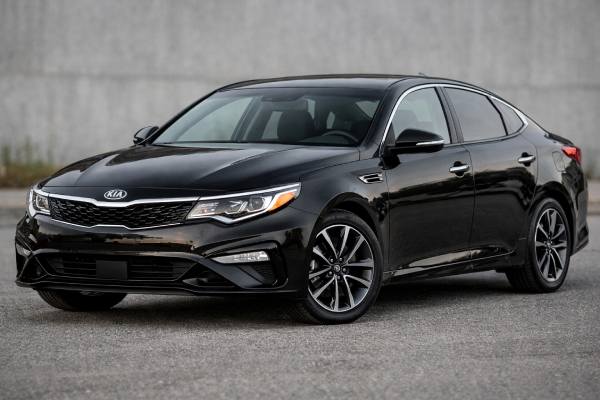

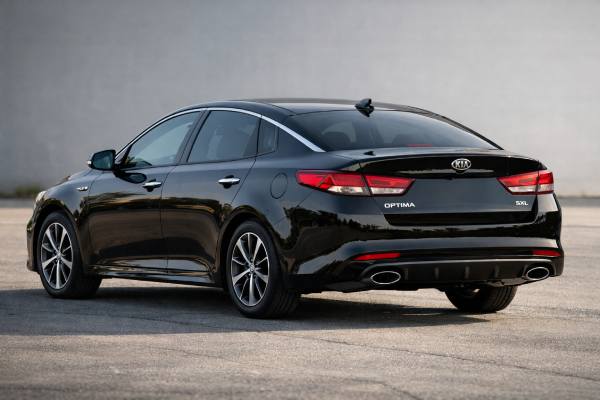
The facelift 2019–2020 Kia Optima (JF) with the G4KH 2.0-liter turbo is the “top-petrol” choice for drivers who want midsize comfort without giving up passing power. Its direct-injected turbo four delivers strong low-rpm torque for easy highway merges, while the chassis stays tuned for everyday stability rather than sharp-edged sportiness. As an ownership proposition, this Optima tends to reward people who keep up with fluids, use high-quality fuel, and treat turbo heat management seriously (cool-down habits and correct oil matter here). The big question is reliability: the car can be solid when maintained, but the Theta-family turbo/GDI layout means you should be alert to known oiling, carbon, and boost-control wear patterns—especially if service history is vague. This guide focuses on what changes your real experience: exact specs, common issues, safety results, and a practical maintenance plan.
What to Know
- Strong torque makes highway passing and short on-ramps easy compared with the base engines.
- Facelift cabin tech is generally intuitive, and higher trims add meaningful driver-assistance features.
- Turbo GDI ownership is happiest on frequent oil changes and careful warm-up habits.
- Budget for intake-valve cleaning around 80,000–120,000 km (50,000–75,000 mi) if used mostly in town.
- A sensible oil interval for this powertrain is 8,000–10,000 km (5,000–6,000 mi) or 12 months, whichever comes first.
Navigate this guide
- Kia Optima JF 20T facelift profile
- Kia Optima JF 20T specs and measurements
- Kia Optima JF 20T trims and safety tech
- Reliability hotspots and service campaigns
- Maintenance plan and smart buying
- Driving feel and real-world economy
- Rivals and value versus competitors
Kia Optima JF 20T facelift profile
This 2019–2020 facelift Optima pairs a midsize sedan body with the G4KH 2.0-liter turbocharged, gasoline direct-injection (GDI) engine. In everyday terms, it’s the Optima that feels effortless at 60–120 km/h (37–75 mph): the turbo’s midrange torque arrives early, so you do less downshifting and spend less time “waiting” for acceleration than in the naturally aspirated 2.4. The tradeoff is complexity—turbo heat, high fuel pressure, and GDI deposits add maintenance sensitivity.
The facelift years matter because they often brought refined infotainment, more driver assistance availability, and detail improvements in NVH (noise, vibration, harshness). Mechanically, you still have a classic front-drive midsize formula: MacPherson strut front suspension, multi-link rear, and a torque-converter automatic transmission. That’s a positive for long-term comfort and predictability; it’s also easier to service than a dual-clutch setup.
Ownership “fit” is straightforward:
- Best for: commuters, highway drivers, and anyone who wants strong passing power without jumping to a premium badge.
- Less ideal for: drivers who do only very short trips in cold weather, skip maintenance, or chase maximum fuel economy over performance.
If you’re shopping used, treat this trim like a performance powertrain in a family sedan shell. Look for consistent oil changes, correct spark plug intervals, and evidence the cooling system and PCV (crankcase ventilation) system were kept healthy. Also plan on higher tire and brake wear than base trims if the car has been driven aggressively—power is addictive, and the Optima’s weight means brakes do real work.
Finally, don’t underestimate how much trim and equipment change the experience. The same engine can feel “just quick” or genuinely strong depending on wheel/tire package, curb weight, and how the transmission calibration behaves in your market.
Kia Optima JF 20T specs and measurements
Below are the key technical specs owners actually use. Note: values can vary by market, emissions standard, and trim; treat the tables as the correct baseline for the 245 hp facelift Optima and verify against your VIN documentation.
Powertrain and efficiency
| Item | Specification |
|---|---|
| Code | G4KH |
| Engine layout & cylinders | Inline-4, DOHC, 4 valves/cyl |
| Bore × stroke | 86 × 86 mm (3.39 × 3.39 in) |
| Displacement | 2.0 L (1,998 cc) |
| Induction | Turbocharged (intercooled) |
| Fuel system | GDI |
| Compression ratio | ~9.5:1 (market-dependent) |
| Max power | 245 hp (183 kW) @ ~6,000 rpm |
| Max torque | ~353 Nm (260 lb-ft) @ ~1,400–3,200 rpm |
| Timing drive | Chain |
| Rated efficiency | Typically 8.5–10.5 L/100 km (27–20 mpg US) depending on test cycle and trim |
| Real-world highway @ 120 km/h | Often 7.5–9.0 L/100 km (31–26 mpg US) with conservative throttle; higher if loaded or in winter |
Transmission and driveline
| Item | Specification |
|---|---|
| Transmission | 6-speed torque-converter automatic (market code varies) |
| Drive type | FWD |
| Differential | Open |
Chassis and dimensions
| Item | Specification |
|---|---|
| Suspension (front/rear) | MacPherson strut / Multi-link |
| Steering | Electric power steering (EPS); ratio varies by trim |
| Brakes | 4-wheel discs; diameters vary by trim package |
| Wheels/Tyres (popular) | 235/45 R18 (some trims use 235/40 R19) |
| Ground clearance | ~145 mm (5.7 in) (typical) |
| Length / Width / Height | ~4,855 / 1,860 / 1,465 mm (191.1 / 73.2 / 57.7 in) |
| Wheelbase | ~2,805 mm (110.4 in) |
| Turning circle (kerb-to-kerb) | ~11.0 m (36.1 ft) |
| Kerb (curb) weight | ~1,550–1,650 kg (3,417–3,638 lb) |
| GVWR | Market/trim dependent |
| Fuel tank | ~70 L (18.5 US gal / 15.4 UK gal) |
| Cargo volume | ~425–450 L (15.0–15.9 ft³) (method varies) |
Performance and capability
| Item | Typical result |
|---|---|
| Acceleration 0–100 km/h (0–62 mph) | ~6.8–7.4 s |
| Top speed | ~230–240 km/h (143–149 mph) (often limited by market/tires) |
| Braking 100–0 km/h | ~36–40 m (tires and pads matter) |
| Towing capacity | Usually not rated / minimal for many markets |
| Payload | Market dependent |
Fluids and service capacities (decision-useful)
| Item | Specification (typical) |
|---|---|
| Engine oil | API SN+/SP class; often 5W-30 or 5W-40 (climate dependent); ~5.0 L (5.3 US qt) with filter |
| Coolant | Long-life ethylene glycol; 50/50 mix typical; ~7–8 L (7.4–8.5 US qt) |
| Transmission/ATF | Typically SP-IV family fluid; capacity varies by service method |
| A/C refrigerant | R-134a on many versions; charge varies by market |
| Key torque specs | Lug nuts commonly ~88–108 Nm (65–80 lb-ft) depending on wheel/market |
Safety and driver assistance (high-level)
- Crash ratings and headlight performance can be trim-dependent; see the dedicated safety section for what that means in practice.
- Common available ADAS: AEB (vehicle), lane keeping support, blind-spot monitoring, rear cross-traffic alert, and adaptive cruise control on higher trims.
Kia Optima JF 20T trims and safety tech
Because “245 hp Optima” usually signals an upper trim, you’ll often see the engine bundled with equipment that changes day-to-day ownership: larger wheels, upgraded lighting, stronger infotainment, and more driver assistance. Start by confirming you’re looking at the true 2.0T variant (not a rebadged 1.6T). Fast checks:
- Badging: “GT” or “SX/GT-Line” language varies by region; some markets label the sporty exterior package separately from the powertrain.
- Wheels: 18–19 inch wheels are common on the 2.0T trims. Smaller wheels can mean a different engine or a de-optioned fleet spec.
- Under-hood cues: Intercooler plumbing and turbo hardware are obvious; also check for a high-pressure fuel pump mounted on the cylinder head (GDI hallmark).
Trim and option differences that matter
Even within 2019–2020, trims can differ in ways that affect cost:
- Headlights: LED projector or upgraded LED systems often test better and reduce night-driving stress. They also cost more to replace.
- Brake package: Some trims get larger rotors and different pad shapes; confirm before ordering parts.
- Driver assistance: AEB, adaptive cruise, and lane centering/keeping may be standard on one trim but optional on another, even in the same model year.
Safety ratings: how to interpret them
Safety results are not just “stars.” They can depend on:
- Test protocol year (criteria can tighten over time).
- Headlight configuration (a car can score great in crash tests but only average at night if the lights are weak).
- Optional vs standard AEB (some rating bodies require the system to be fitted to qualify for top awards).
For the Optima, the key ownership takeaway is practical: if you care about the very best safety outcome, you should seek the trim with the stronger headlight rating and the fitted front-crash-prevention system, rather than assuming all Optimas perform the same.
Airbags, child seats, and day-to-day safety features
Most facelift Optimas include:
- Dual front airbags and side/curtain protection, plus stability control and traction control.
- ISOFIX/LATCH anchors for outboard rear seats; check that the anchor covers are intact and that the lower anchors aren’t bent (common in family use).
- Tire pressure monitoring and strong brake assist calibration.
If the car has ADAS, plan for calibration realities after service:
- Windshield replacement may require camera recalibration.
- Front radar alignment can be sensitive after bumper repairs.
- Wheel alignment changes can influence lane-keeping behavior.
A quick buyer tip: if an Optima seller advertises “all the safety tech,” ask for a photo of the steering-wheel buttons and the sensor locations. It’s the fastest way to confirm which ADAS suite is actually present.
Reliability hotspots and service campaigns
The G4KH 2.0T Optima can be dependable, but it’s less forgiving than the base engines. Below is a practical map of what tends to show up, when, and how expensive it can get. Think in terms of “patterns,” not certainties—condition and maintenance history dominate outcomes.
Common issues (higher prevalence)
- GDI intake-valve carbon build-up (medium cost)
Symptoms: rough idle, hesitation, misfire codes, reduced fuel economy.
Root cause: fuel doesn’t wash intake valves in GDI; oil vapors deposit on hot valves.
Remedy: intake cleaning (chemical or walnut blasting). Reduce short-trip operation; keep PCV system healthy. - PCV and crankcase ventilation problems (low to medium cost)
Symptoms: elevated oil consumption, oily intercooler piping, whistle noises, idle instability.
Root cause: PCV valve sticking, hoses softening, blow-by under boost.
Remedy: replace PCV valve/hoses; verify correct oil spec and change interval. - Ignition coil/spark plug sensitivity (low to medium cost)
Symptoms: misfires under load, stumble during boost, check engine light.
Root cause: turbo cylinder pressures punish weak coils and worn plugs.
Remedy: correct heat-range plugs at the right interval; replace coils as needed.
Occasional issues (moderate prevalence)
- Turbo boost-control wear (medium cost)
Symptoms: underboost codes, slow spool, rattles, inconsistent acceleration.
Root cause: wastegate actuator wear, vacuum/solenoid issues, boost leaks.
Remedy: pressure test charge piping, inspect actuator, replace faulty solenoids. - Cooling-system leaks and thermostat issues (medium cost)
Symptoms: coolant smell, low reservoir, overheating in traffic, weak cabin heat.
Root cause: aging plastic fittings, hose clamps, thermostat sticking.
Remedy: pressure test, replace weak components proactively, refresh coolant on time.
Rare but high-impact (low prevalence, high severity)
- Internal engine damage related to lubrication or bearing wear (high cost)
Symptoms: knocking, metal in oil, low oil pressure warning, sudden loss of power.
Root cause: multiple possible contributors—oil starvation, contaminated oil, past overheating, or unresolved known defects.
Remedy: immediate diagnosis; do not continue driving. Verify whether any recall/service action applies and whether required inspections were completed.
Recalls, TSBs, and extended coverage: how to handle it
Rather than memorize bulletins, use a repeatable process:
- Run an official VIN check and request dealer service history printouts.
- Confirm powertrain software updates were applied (engine/transmission calibrations can address drivability and fault logic).
- If the car has ADAS, confirm sensor and camera updates and calibrations were performed after any bodywork.
A final reliability reality: the same engine can feel flawless at 120,000 km (75,000 mi) with disciplined maintenance, and problematic at half that mileage if oil changes were stretched, the wrong oil was used, or the car lived on short trips.
Maintenance plan and smart buying
A good maintenance plan for the 2.0T Optima is less about “doing everything early” and more about doing the right items consistently. Turbo heat and GDI deposits punish neglect, so focus on oil quality, correct ignition parts, and cooling health.
Practical maintenance schedule (distance/time)
Every 8,000–10,000 km (5,000–6,000 mi) or 12 months
- Engine oil and filter (use the correct spec for your climate).
- Visual check for boost leaks (loose clamps, oily couplers).
- Check coolant level and look for seepage around hoses and thermostat housing.
Every 15,000–20,000 km (9,000–12,000 mi) or yearly
- Engine air filter inspection (replace if dirty).
- Cabin air filter replacement (comfort and HVAC performance).
- Brake inspection (pads, rotor lip, slide pins).
Every 30,000–40,000 km (19,000–25,000 mi)
- Brake fluid inspection; replace by time if not mileage.
- Alignment check (bigger wheels are sensitive to toe changes).
- PCV valve inspection/replacement if oil vapors seem excessive.
Every 60,000 km (37,000 mi)
- Spark plugs (turbo engines often need shorter intervals than NA engines).
- Transmission fluid service (earlier if heavy city driving or hot climate).
- Coolant hose condition check; replace soft/swollen hoses.
Every 5 years (or per official interval)
- Coolant replacement with correct long-life coolant.
- Accessory belt and tensioner inspection (replace if cracked/noisy).
Every 80,000–120,000 km (50,000–75,000 mi)
- Intake-valve cleaning consideration, especially for mostly city use.
- Turbo inlet and intercooler pipe inspection for oil pooling.
Fluid specs, capacities, and decision torque values
- Oil: prioritize the correct quality standard; in hot climates or sustained high-speed use, a manufacturer-approved higher-viscosity grade can reduce consumption, but only if approved for your exact market.
- ATF: use the specified fluid family (often SP-IV). Mixing fluids is a common cause of shift quality complaints.
- Wheel fasteners: tighten with a torque wrench; uneven torque can warp brake rotors over time.
Buyer’s guide: what to inspect before purchase
Use a structured checklist:
- Cold start: listen for abnormal knock, ticking that doesn’t fade, or unstable idle.
- Boost behavior: on a test drive, do one clean pull from 2,000 rpm—power should build smoothly without surging.
- Transmission: shifts should be decisive but not harsh; repeated flare or shudder suggests fluid neglect or calibration issues.
- Cooling system: check for dried coolant residue near joints and around the radiator end tanks.
- Oil condition: look for metal glitter on the dipstick and ask for oil-change receipts (not just a stamped book).
- Electronics and ADAS: confirm warning lights are off and lane/ACC functions actually engage.
Durability outlook: when maintained like a turbo sedan (short oil intervals, clean air filtration, timely plugs), this Optima can be a satisfying long-term daily. When treated like a “normal” appliance car with extended oil intervals and mostly short trips, it becomes riskier than the slower trims.
Driving feel and real-world economy
The 245 hp Optima’s personality is best described as confident and calm. It’s quick enough to feel genuinely fast in normal traffic, but it’s still tuned as a midsize sedan first: stable tracking, predictable steering, and a ride that prefers smoothness over sharp responses.
Ride, handling, and NVH
- Ride: On 18-inch tires, the Optima typically absorbs broken pavement well for the class. On 19s, impacts become sharper and tire noise rises—still acceptable, but you’ll notice it more on coarse asphalt.
- Handling balance: Front-drive limits corner-exit traction if you mash the throttle mid-turn, but the chassis is composed. The car feels heavier than a compact sport sedan, yet it stays planted at highway speeds.
- Steering: EPS tends to be light at parking speeds and firmer at speed. Feedback is “filtered,” but accurate enough for confident lane placement.
- Brakes: Pedal feel is usually progressive. If you feel vibration under light braking, suspect rotor runout or uneven pad deposits rather than assuming “bad brakes.”
Powertrain character
This engine’s advantage is torque delivery. In everyday driving, it feels strongest from roughly 2,000–4,500 rpm—exactly where you live when merging, passing, or climbing grades. Turbo lag is modest, but you can feel a brief pause if you request full throttle from low rpm. The automatic transmission usually masks this by downshifting quickly; however, some calibrations “hunt” between gears on rolling hills. If that bothers you, a transmission fluid refresh and software updates (where applicable) can improve behavior.
Real-world economy (what owners actually see)
Expect fuel economy to depend heavily on speed and boost use:
- City: often 10.5–12.5 L/100 km (22–19 mpg US), especially with short trips.
- Highway 100–120 km/h (60–75 mph): often 7.5–9.0 L/100 km (31–26 mpg US).
- Mixed: commonly 8.8–10.8 L/100 km (27–22 mpg US).
Cold weather can add a noticeable penalty because enrichment and cabin heat demands increase, and the engine may spend more time warming up. If your driving is mostly short trips, your best “mod” is not a part—it’s combining errands to reduce cold starts.
Performance metrics that matter
0–100 km/h in the high-6 to low-7 second range means the Optima 2.0T can out-accelerate many family sedans, but tire choice and traction matter more than most owners expect. If you want the car to feel its best, prioritize high-quality tires and keep them correctly inflated.
Rivals and value versus competitors
In the 245 hp midsize-sedan space, the Optima 2.0T faces two kinds of rivals: “performance mainstream” sedans and “comfort-first” sedans with strong top trims. The Optima’s advantage is that it often bundles power with a generous equipment list, so you’re not forced into expensive option stacking.
Versus turbo midsize competitors
- Honda Accord 2.0T (where available): Often feels lighter and more responsive, with a sharper chassis. The Optima counters with a quieter, more relaxed ride in many setups and a typically simpler automatic (market dependent).
- Mazda6 2.5T: Mazda leans into steering feel and cabin materials. The Optima tends to offer a more “easygoing” power delivery and can feel roomier in day-to-day use depending on seating and trim.
- Volkswagen Passat 2.0T (markets vary): The Passat often emphasizes comfort and interior space. The Optima can feel more modern in tech and driver assistance depending on year and region.
Versus naturally aspirated V6 or “big engine” alternatives
- Toyota Camry V6 (some years): Strong top-end power and a long-running reliability reputation. The Optima’s turbo torque can feel punchier at normal speeds, but the Camry may win for low-drama ownership if you prioritize simplicity.
- Hyundai Sonata (related platform years vary): Similar strengths and ownership logic. The decision often comes down to trim equipment, service history, and which car offers the better-maintained example.
What the Optima does particularly well
- Highway usability: torque + stable chassis makes long trips easy.
- Feature value: higher trims often include comfort and safety tech that would cost more elsewhere.
- Parts and service familiarity: many independent shops understand this powertrain layout well, which helps outside the dealer network.
When a rival is the better pick
Choose a competitor if:
- You want the sharpest handling feel (often Accord or Mazda6).
- You want maximum simplicity and are willing to trade torque (often NA engines).
- You drive mostly short trips in cold climates and don’t want turbo/GDI maintenance sensitivity.
Bottom line: a well-maintained Optima 2.0T is a satisfying “grown-up quick sedan.” It’s not the cheapest-to-neglect option, but it can be a strong value when bought carefully and maintained with turbo realities in mind.
References
- 2020 Kia Optima 2020 (Safety Rating)
- Vehicle Detail Search – 2020 KIA OPTIMA | NHTSA 2020 (Recall Database)
- Gas Mileage of 2020 Kia Optima 2020 (Fuel Economy)
- Manuals 2026 (Owner’s Manual Portal)
- Kia Optima | Safety Rating & Report | ANCAP 2015 (Safety Rating)
Disclaimer
This article is for informational purposes only and is not a substitute for professional inspection, diagnosis, or repair. Specifications, torque values, fluid types, and service intervals can vary by VIN, market, model year, and installed equipment. Always verify details using official manufacturer service information for your exact vehicle and consult a qualified technician for safety-critical work.
If this guide helped, please consider sharing it on Facebook, X/Twitter, or your favorite forum to support our work.