
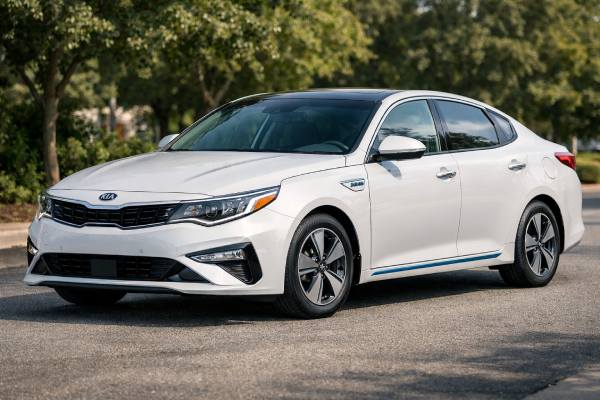
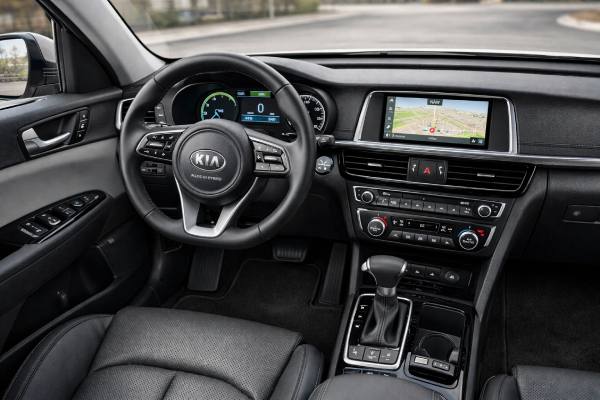
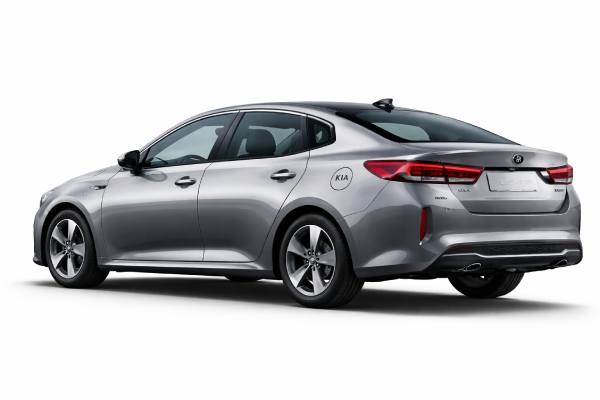
The facelifted 2019–2020 Kia Optima Plug-in Hybrid (JF) is a “two cars in one” sedan: an everyday midsize cruiser that can run many short trips on electricity, yet still behaves like a familiar gasoline car on longer drives. Its 2.0-liter direct-injection engine works with a 50 kW traction motor and a larger battery than a standard hybrid, giving you true EV-style starts, quiet low-speed commuting, and regenerative braking that saves wear on pads and rotors. The key ownership story is balance—reasonable performance, stable highway manners, and lower fuel use when you charge regularly. The trade-offs are mostly practical: you’ll carry extra weight, give up some trunk space to the battery packaging, and you must maintain both the engine side (oil, plugs, cooling) and the high-voltage side (coolant loops, charging hardware) with the right fluids and procedures.
At a Glance
- Smooth EV-first driving in town when the battery is charged, with predictable blended power on the highway.
- Lower running costs for short commutes, especially with regular home charging.
- Strong standard safety basics for a midsize sedan, with available driver-assistance depending on trim and market.
- Trunk space is reduced versus non-PHEV models, and curb weight is higher.
- Plan an engine-oil service about every 10,000–12,000 km (6,000–7,500 miles) or 12 months (market-dependent).
Navigate this guide
- Kia Optima PHEV JF facelift explained
- Kia Optima PHEV JF spec sheet
- Kia Optima PHEV equipment and safety
- Reliability risks and service campaigns
- Maintenance plan and buying advice
- Real-world range and driving feel
- Plug-in rivals and alternatives
Kia Optima PHEV JF facelift explained
Think of the facelifted Optima Plug-in Hybrid as a conventional midsize sedan with a larger “electric assist” system that can actually carry the car on electricity for meaningful distances. In day-to-day use, it behaves in three distinct phases.
First is EV driving: with usable battery charge, the car can pull away and cruise at city speeds using the traction motor. This is where a PHEV feels different from a regular hybrid—less engine cycling in stop-and-go traffic, less idling, and noticeably calmer cabin noise at low speeds. Second is blended operation: under stronger acceleration or at higher speeds, the 2.0 GDI engine joins in, and the control system decides how to split torque between the engine and motor for efficiency and smoothness. Third is charge-sustaining mode: once the battery reaches its lower operating window, the car behaves more like a conventional hybrid, using regeneration and the engine to maintain a small buffer rather than depleting the pack.
The facelift years matter because many owners shop these cars for modernized lighting, updated infotainment and driver-assistance availability, and incremental refinement. The underlying advantage remains the same: if your routine includes charging at home or work, you can dramatically reduce gasoline use without committing to full EV-only ownership.
Packaging is the other big story. The battery and power electronics add curb weight and typically reduce trunk volume versus a non-hybrid Optima. That extra mass can slightly soften acceleration feel at highway speeds, but it also contributes to a planted ride when the suspension is in good shape. The braking system blends regenerative braking (motor acting as a generator) with friction brakes; when tuned well, it is smooth and consistent, but it does mean you should pay attention to brake fluid condition and rotor corrosion if the car spends long stretches relying heavily on regen.
For buyers, the best outcomes usually come from matching the car to the right routine: regular charging, frequent short-to-medium trips, and highway travel that isn’t dominated by high speeds in very cold weather. If you can’t charge reliably, a conventional hybrid may deliver similar real-world economy with fewer compromises in space and complexity.
Kia Optima PHEV JF spec sheet
Below are the core specifications to focus on for the facelift-era Optima Plug-in Hybrid. Exact figures can vary by VIN, market, and wheel/tire package, so treat the tables as a practical reference and verify against your local documentation.
Powertrain and efficiency
| Item | Specification |
|---|---|
| Powertrain type | Plug-in hybrid (PHEV), parallel layout |
| Engine code | 2.0 GDI (market-dependent coding) |
| Engine layout and cylinders | Inline-4, DOHC, 16 valves |
| Displacement | 2.0 L (1,999 cc) |
| Induction | Naturally aspirated |
| Fuel system | Direct injection (GDI) |
| Compression ratio | Varies by engine version/market |
| Motor (traction) | 1× electric motor, front axle |
| Motor output | 50 kW (approx. 67 hp) |
| System voltage | Around 360 V class (typical for this system) |
| Battery chemistry | Lithium-ion polymer (common for this model line) |
| Battery capacity | Around 9.8 kWh class (market-dependent) |
| System output | 202 hp (varies slightly by rating method/market) |
| Rated efficiency | Strongly dependent on charging frequency and test cycle |
| Real-world highway @ 120 km/h (75 mph) | Expect consumption to rise notably once the engine runs steadily |
Transmission and driveline
| Item | Specification |
|---|---|
| Transmission | 6-speed automatic (hybrid-tuned control logic) |
| Drive type | Front-wheel drive (FWD) |
| Differential | Open |
Chassis and dimensions
| Item | Specification |
|---|---|
| Platform class | Midsize sedan |
| Suspension (front/rear) | MacPherson strut / multi-link (typical for Optima) |
| Steering | Electric power steering |
| Brakes | 4-wheel discs with regen blending |
| Popular tire size | Commonly 215/55 R17 or 235/45 R18 (varies by trim/market) |
| Length / width / height | Market-dependent; midsize sedan footprint |
| Wheelbase | Market-dependent; typical midsize sedan wheelbase |
| Turning circle | Typically around 11 m class (varies) |
| Curb weight | Higher than non-hybrid Optima; varies by equipment |
| Fuel tank | Similar to non-hybrid in many markets, but verify locally |
| Cargo volume | Reduced vs non-PHEV due to battery packaging |
Performance and capability
| Item | Specification |
|---|---|
| 0–100 km/h (0–62 mph) | Typically high-9s to low-10s seconds range (varies) |
| Top speed | Market-dependent; generally adequate for highway use |
| Braking distance | Strongly tire- and surface-dependent; keep tires matched and fresh |
| Towing capacity | Often limited or not recommended; verify for your market |
| Payload | Reduced vs non-hybrid due to curb weight |
Fluids and service capacities (typical guidance)
| Item | Specification |
|---|---|
| Engine oil | 0W-20 or 5W-20 class (market dependent); use the required OEM standard |
| Engine oil capacity | Typically ~4.0–4.5 L (verify by engine variant) |
| Engine coolant | OEM long-life coolant; correct mix ratio per manual |
| Transmission fluid | OEM-specified ATF only; capacity varies with service method |
| Brake fluid | DOT 3 / DOT 4 class depending on market; change by time interval |
| A/C refrigerant | Use the specified type and charge; hybrid systems require correct compressor oil |
Key torque specs (critical fasteners, typical ranges)
| Fastener | Typical torque |
|---|---|
| Wheel lug nuts | ~90–110 Nm (66–81 lb-ft), confirm for your wheels |
| Spark plugs | Usually ~15–25 Nm (11–18 lb-ft), confirm by plug type |
| Drain plug | Varies; confirm to avoid pan/thread damage |
Safety and driver assistance (what to confirm on the car)
| Item | Notes |
|---|---|
| Crash ratings | Depend on year, region, and test body; confirm your market’s results |
| Headlights | LED availability varies by trim; aim for the best-rated setup in your region |
| ADAS | AEB, ACC, lane support, blind-spot features can be standard or optional |
If you want the most accurate “final answer” spec sheet for a specific car, decode the VIN, confirm the exact trim, then cross-check tire placard, under-hood labels, and the service manual/owner documentation for that market.
Kia Optima PHEV equipment and safety
Trim structure varies widely by region, so the best approach is to treat “Optima PHEV” as the powertrain, then verify the equipment set. Many facelift-era cars were sold in a small number of well-equipped grades, but packages and standard features differ depending on whether the car was aimed at fleet buyers, private owners, or incentive-focused plug-in markets.
Trims and options that change the experience
Key options you should actively look for (or avoid) because they change the ownership feel:
- Heat management features (cold climates): seat heaters, heated wheel, and efficient cabin heating strategy matter because winter HVAC can cut EV range sharply. If your market offers a heat pump (rare on many PHEVs of this era), it’s a meaningful upgrade.
- Charging convenience: some cars include better charge scheduling menus or a more complete set of charging cables/adapters from new. Missing portable charging equipment is common on used cars—budget to replace it.
- Wheel and tire package: smaller wheels usually ride better and can improve real-world efficiency, while larger wheels can sharpen steering response but cost range and comfort on rough roads.
- Infotainment and audio tiers: upgraded audio and navigation units often bring better integration and sometimes improved menu access for EV data and charge timers.
Quick identifiers when inspecting a used example:
- Look for PHEV badging, a charge-port door (typically on the front fender area), and EV-related menu screens.
- Confirm whether the car has radar hardware in the grille (often tied to adaptive cruise) and a windshield camera module (often tied to lane and AEB features).
- Check the tire placard and the build label for axle loads and tire size; mismatched tires can confuse stability control and regen blending.
Safety ratings and what they really mean
Safety ratings depend on (1) the test organization, (2) the exact year/test protocol, and (3) equipment like headlights and advanced driver assistance. A midsize sedan may score very well structurally yet lose points for headlight performance or the availability of automatic emergency braking (AEB). For a plug-in hybrid, the body structure is usually shared with the non-PHEV model, but you should still verify whether your region lists the PHEV separately.
Practical safety checks that matter more than a headline score:
- Tire age and quality: safety systems can’t overcome poor tire grip.
- Brake condition: PHEVs can hide brake wear because regen does so much work; inspect pads, rotors, and caliper slide condition.
- ADAS calibration history: windshield replacement or front-end repairs often require camera/radar calibration. Ask for documentation.
Driver assistance to prioritize
If available on your market/trim, these features offer real day-to-day value:
- AEB (front) with pedestrian detection where fitted.
- Adaptive cruise control (ACC) for highway fatigue reduction.
- Lane-keeping support that is smooth and not overly intrusive.
- Blind-spot monitoring and rear cross-traffic alert for dense urban use.
The best “safety upgrade” on a used Optima PHEV is usually not an accessory—it’s selecting a car with the right factory lighting and the driver-assistance package, then keeping tires and brakes in excellent condition.
Reliability risks and service campaigns
Reliability on a plug-in hybrid is best understood as two overlapping systems: the familiar engine/transmission side and the high-voltage (HV) electric side. Most owners experience solid day-to-day dependability, but when problems happen, diagnosis quality matters more than parts-swapping.
Common issues (higher prevalence)
- 12 V battery weakness (low to medium cost):
Symptoms: intermittent no-start behavior, warning lights after sitting, strange infotainment resets.
Root cause: the 12 V battery ages like any other car, and short-trip EV-heavy use can still leave it undercharged if the system doesn’t top it up as expected.
Remedy: load-test the 12 V battery, check charging behavior, clean grounds, and replace proactively if marginal. - Brake rotor corrosion from heavy regen (low to medium cost):
Symptoms: vibration, scraping noises after rain, reduced smoothness during friction-brake engagement.
Root cause: regen braking reduces friction-brake use, so rotors may not get cleaned regularly.
Remedy: periodic firm stops using friction brakes, proper pad bedding, and rotor service/replacement if pitting is advanced. - Charge-port and charging-cable wear (low to medium cost):
Symptoms: charging interruptions, charge door issues, inconsistent connection.
Root cause: physical wear, moisture exposure, bent pins, or latch misalignment.
Remedy: inspect connectors, keep seals clean, replace worn inlet components if needed, and always use an EVSE in good condition.
Occasional issues (moderate prevalence)
- Cooling system sensitivity (medium cost):
Symptoms: overheating warnings, weak cabin heat, odd temperature swings, or warning lights tied to cooling loops.
Root cause: PHEVs may have multiple coolant circuits (engine and power electronics). Air pockets, incorrect coolant type, or deferred service can create problems.
Remedy: service with the correct OEM coolant, bleed procedures, and pressure testing; avoid mixing coolant types. - Software/calibration needs (low to medium cost):
Symptoms: rough engine-to-EV transitions, inconsistent charging timers, warning messages that clear intermittently.
Root cause: control modules (ECU/TCU/BMS) rely on software logic that can be updated over time.
Remedy: check for official updates during dealer-level diagnostics; don’t ignore repeat warnings.
Rare but higher-impact concerns
- High-voltage component faults (high cost):
Symptoms: “check hybrid system” alerts, reduced power, failure to charge, or isolation/contactor-related faults.
Root cause: HV contactors, DC–DC converter issues, onboard charging hardware faults, or wiring/connector problems.
Remedy: proper HV diagnostic workflow is essential—fault codes, insulation tests, and targeted replacement rather than guessing.
Service actions, recalls, and how to verify
Because campaigns differ by region and VIN range, the only reliable method is verification:
- Run a VIN-based recall check and save the results.
- Ask for dealer service history showing recall completion and software updates.
- On a pre-purchase inspection, request a scan of hybrid control modules for stored codes (even if the dash is clear).
For plug-in hybrids, also request a battery health readout if your market supports it. Many packs remain healthy when treated well, but repeated deep cycling without charging discipline—or long storage at high state-of-charge in hot climates—can accelerate capacity loss.
Maintenance plan and buying advice
A good maintenance plan for the Optima Plug-in Hybrid is not complicated—it just needs to be consistent. You are maintaining an engine vehicle and an electric drivetrain at the same time, so skipping “simple” items tends to create expensive downstream problems.
Practical maintenance schedule (typical, adjust to your market)
Every 10,000–12,000 km (6,000–7,500 miles) or 12 months
- Engine oil and filter (use the correct OEM spec and viscosity for your climate).
- Rotate tires; inspect tread depth evenly across the axle.
- Inspect brakes, especially rotor surface condition and caliper slide movement.
- Check coolant levels (engine and any separate electronics loops if equipped).
Every 20,000–30,000 km (12,000–18,000 miles)
- Cabin air filter replacement (keeps HVAC efficient, which helps EV range).
- Inspect engine air filter; replace if dirty or operating in dusty conditions.
- Inspect suspension bushings and alignment; heavy curb weight makes alignment important.
Every 60,000–100,000 km (40,000–60,000 miles)
- Spark plugs (interval varies by engine and market—DI engines often prefer timely plug changes).
- Brake fluid change by time (often every 2 years) regardless of mileage.
- Consider transmission fluid service if your market recommends it for severe use (city, heat, hills).
Every 5 years (time-based)
- Coolant service per OEM interval. Use only the specified coolant and correct bleeding method.
Electrified-system checks that pay off
- Charge-port inspection: look for discoloration, looseness, or damaged seals.
- 12 V battery test: many “hybrid” complaints are actually 12 V issues.
- Regen-brake exercise: occasionally perform safe, firm braking to keep friction brakes healthy.
- HV cooling performance: ensure fans and coolant pumps behave normally; unusual noises deserve diagnosis.
Buyer’s guide: what to check before you commit
Paperwork and history
- Confirm the car’s trim and options by VIN/build sheet where possible.
- Look for consistent oil services even if the car ran many EV miles.
- Verify recall/service actions are completed.
Physical inspection
- Check underbody corrosion points: subframes, brake lines, and suspension mounts.
- Inspect tires for uneven wear (alignment or suspension wear).
- Examine trunk area and under-liners for water intrusion (bad seals can affect electrical components).
Test drive
- Start in EV mode (if charge is available): listen for clunks, harsh engagement, or vibration.
- In blended mode: watch for shuddering or erratic shifts that could suggest mount wear or calibration issues.
- Verify charging function with an EVSE if the seller allows.
Long-term durability outlook is generally favorable when maintenance is steady and charging is done with care. The “cheap-to-own” versions are the ones with documented updates, clean charging hardware, and evidence the owner didn’t neglect the engine just because it was a plug-in.
Real-world range and driving feel
On the road, the facelift Optima PHEV feels like a refined midsize sedan first, and a plug-in second—exactly what many owners want. Steering is typically light-to-moderate in effort, stability is confident at highway speeds, and the car carries its extra weight without feeling clumsy when suspension and tires are in good condition.
Powertrain character
In EV operation, response is smooth and immediate at low speeds, which is ideal for city driving. Under moderate acceleration, the system transitions to blended operation, and the best examples do this with minimal drama—no sudden surges, just a gradual change in sound as the engine joins. Under hard throttle, expect the engine to be clearly present; this is not a performance plug-in, but it is strong enough for everyday merging and overtakes.
The 6-speed automatic is part of what makes this car feel “normal” compared with eCVT hybrids. When calibrated well, it shifts cleanly and avoids the elastic feel some drivers dislike in eCVT systems. The trade-off is that shift logic and clutch behavior become important; neglected transmission fluid or poor calibration can show up as hesitation or shudder.
Real-world efficiency and range
Your outcomes depend mainly on charging discipline and climate:
- EV-only range: Best in mild temperatures with gentle speeds and limited HVAC demand. Cold winters can reduce EV range significantly due to battery chemistry and cabin heating.
- Charge-sustaining fuel economy: Once operating like a hybrid, economy remains competitive for a midsize sedan, but it will not match the best dedicated hybrids if you rarely charge.
- Highway at 120 km/h (75 mph): The engine tends to run steadily; EV contribution drops, and consumption rises. This is the least favorable use case for any PHEV.
A practical way to think about it: if your daily drive fits within the car’s EV capability and you charge at home, you can use far less gasoline over a month. If your driving is mostly high-speed highway, you will still benefit from hybridization, but the plug-in advantage shrinks.
Charging performance (typical for this era)
Most Optima PHEVs of this generation charge on AC power and do not rely on DC fast charging. Typical patterns:
- Level 1 (120 V): overnight-and-then-some for a full charge (often 8–10 hours class).
- Level 2 (240 V): commonly a few hours for a full charge (often ~3 hours class).
Because charge behavior can differ by market and onboard charger rating, confirm the onboard AC charging capacity for your specific VIN/trim. Also check that the car consistently schedules and completes charges—interrupted charging is often a sign of cable, inlet, or control issues.
Plug-in rivals and alternatives
The Optima Plug-in Hybrid sits in a particular niche: a conventional midsize sedan experience with plug-in capability, rather than a dedicated EV platform. To choose wisely, compare it against three rival “types,” not just nameplates.
1) Other midsize PHEV sedans (closest match)
If your market offers other midsize plug-in sedans, compare:
- EV range consistency in winter
- Charging speed and reliability of the charge port
- Trunk space loss and rear-seat packaging
- Dealer support for hybrid diagnostics
Some rivals may offer longer EV range or stronger acceleration, but check whether they achieve it with a more complex transmission or higher-cost battery components.
2) Full hybrids (best choice if you can’t charge)
If home/work charging is uncertain, a conventional hybrid often wins on simplicity:
- No need to plug in
- Often better trunk packaging
- Fewer high-voltage charging components to maintain
In that scenario, the Optima PHEV’s advantage becomes smaller, and you may be carrying extra weight without using the main benefit.
3) Used EVs (best for true EV-first living)
If your routine is 95% local driving and you have reliable charging, a used EV can reduce complexity (no engine oil, plugs, or timing-related concerns). However, EV ownership brings its own questions: fast-charging condition, battery thermal management design, and long-trip charging access.
Quick decision guide
- Choose the Optima PHEV if you want a familiar sedan feel, you can charge most days, and you value a blended “no-range-anxiety” setup.
- Choose a full hybrid if you want strong fuel economy without charging and prefer fewer plug-in-specific components.
- Choose a used EV if you have consistent charging and want to eliminate engine maintenance entirely.
For many owners, the Optima PHEV’s real advantage is not maximum EV range—it’s flexibility. It can reduce fuel use dramatically for the right lifestyle while keeping the comfort and long-trip behavior of a traditional midsize sedan.
References
- Gas Mileage of 2020 Kia Optima 2020 (Official Economy Data)
- Check for Recalls: Vehicle, Car Seat, Tire, Equipment | NHTSA 2026 (Recall Database)
- 2020 Kia Optima 4-door sedan 2020 (Safety Rating)
- 2018 Optima PHEV Specifications 2018 (Manufacturer Specifications)
Disclaimer
This article is for informational purposes only and is not a substitute for professional diagnosis, inspection, or repair. Specifications, torque values, service intervals, and procedures can vary by VIN, market, powertrain version, and installed equipment; always confirm details using official owner and service documentation for your specific vehicle.
If you found this guide helpful, please consider sharing it on Facebook, X (Twitter), or your favorite forum to support our work.