
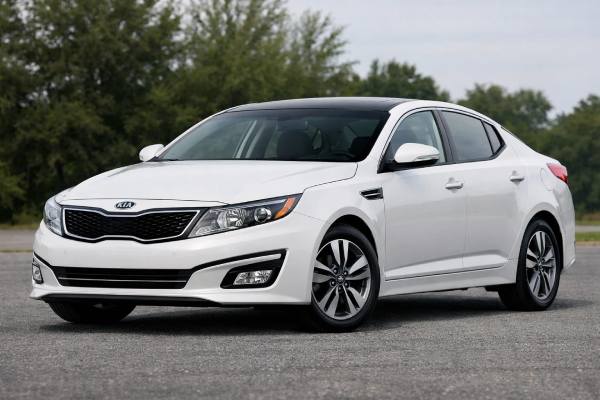
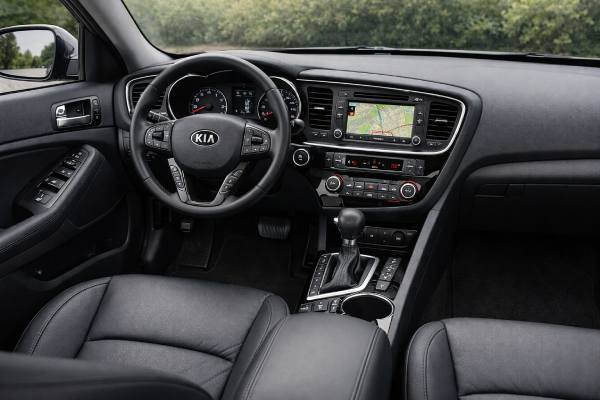
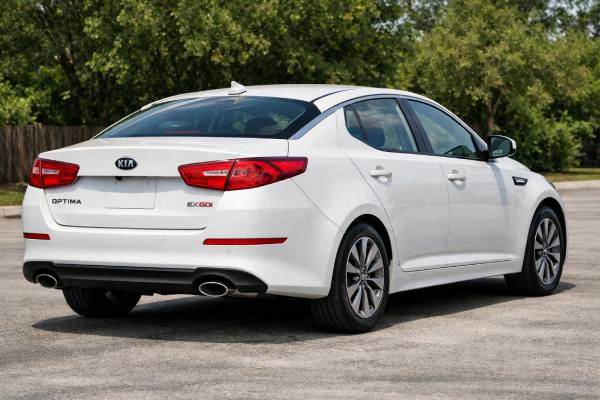
The 2014–2015 facelift of the Kia Optima (TF) with the 2.4-liter G4KJ direct-injection engine is the “grown-up” version of the early TF: quieter at speed, better-equipped, and generally easier to live with day to day. It’s also a model where details matter. This powertrain is smooth and responsive for a naturally aspirated four-cylinder, but it is still a modern GDI (gasoline direct injection) engine—so oil quality, service intervals, and calibration updates play a bigger role in long-term outcomes than they do on simpler port-injection designs.
If you’re shopping, focus less on mileage and more on history: documented oil changes, campaign completion, and clean behavior under load. If you already own one, the best “upgrade” is disciplined maintenance and smart diagnostics before small symptoms become expensive surprises.
Owner Snapshot
- Strong highway comfort and stability for a midsize sedan, with a mature ride in the facelift years.
- 2.4 GDI delivers good real-world passing power without turbo complexity.
- Parts availability is generally good, and most routine service is straightforward.
- Caveat: direct injection and known Theta-family wear patterns make oil quality and updates non-negotiable.
- Typical interval: change engine oil every 8,000–12,000 km (5,000–7,500 mi) or 6–12 months, depending on use.
Section overview
- Optima TF facelift: what it is
- Optima TF facelift 2.4 specs and measurements
- Optima TF facelift trims and safety features
- Common faults and service campaigns
- Maintenance plan and buying tips
- Real-world driving and efficiency
- Rivals and better alternatives
Optima TF facelift: what it is
The 2014–2015 Kia Optima (TF) facelift sits in a sweet spot for buyers who want a modern midsize sedan without the complexity (or cost) of later hybrid and turbo-heavy lineups. The design refresh brought subtle exterior tweaks, but the bigger ownership story is refinement: calmer highway manners, more mature cabin tuning, and a broader spread of equipment depending on market and trim.
This guide focuses on the 2.4-liter G4KJ gasoline direct injection (GDI) version rated at 192 hp. In most markets it’s paired with a conventional 6-speed automatic and front-wheel drive. The engine’s character is a key reason this configuration remains appealing: it’s flexible at city speeds, it doesn’t require turbo spool to move confidently, and it typically feels more linear than the smaller turbo options when you’re just commuting.
That said, the Optima TF facelift is also a “maintenance honesty” car. It generally rewards owners who do basics consistently—oil changes on time, correct oil specification, clean cooling system, and prompt attention to warning lights. This is particularly important with GDI engines, which run higher pressures and temperatures at the injector and combustion chamber. Those conditions help efficiency and response, but they can amplify issues when oil quality slips, the PCV (positive crankcase ventilation) system is neglected, or software updates are ignored.
From an ownership standpoint, the best way to think about this Optima is as a comfortable long-distance sedan with a more modern engine than its badge sometimes suggests. If you keep service records tight and verify campaign completion, it can be a satisfying daily driver. If maintenance history is vague, you should treat the purchase like a mechanical inspection project—not a simple “mileage and price” decision.
What it’s best at:
- Calm highway cruising, stable straight-line behavior, good cabin ergonomics.
- Practical running costs when maintained correctly.
- A balanced “family sedan” package without unusual driveline hardware.
Where it demands more from you:
- GDI-specific upkeep (oil discipline, intake cleanliness awareness).
- Paying attention to software updates and campaign history.
- Not ignoring early symptoms (noise under load, misfires, oil level drop).
Optima TF facelift 2.4 specs and measurements
Specifications can vary by region (US-built vs Korea-built), emissions standard, and trim weight. The tables below reflect the typical 2014–2015 Optima TF facelift with the 2.4 GDI (G4KJ) and 6AT, using practical ranges where markets differ.
Powertrain and efficiency
| Item | Spec |
|---|---|
| Code | G4KJ (Theta-family 2.4 GDI) |
| Engine layout and cylinders | Inline-4, DOHC, 4 valves/cyl |
| Bore × stroke | 88.0 × 97.0 mm (3.46 × 3.82 in) |
| Displacement | 2.4 L (2359 cc) |
| Induction | Naturally aspirated (NA) |
| Fuel system | GDI (gasoline direct injection) |
| Compression ratio | ~11.3:1 (varies by market) |
| Max power | 192 hp (143 kW) @ ~6300 rpm |
| Max torque | ~245 Nm (181 lb-ft) @ ~4000 rpm |
| Timing drive | Chain |
| Rated efficiency (typical) | ~8.7 L/100 km (27 mpg US / 32 mpg UK) combined equivalent |
| Real-world highway @ 120 km/h (75 mph) | ~7.5–8.8 L/100 km (27–31 mpg US) depending on tyres, wind, load |
Transmission and driveline
| Item | Spec |
|---|---|
| Transmission | 6-speed automatic (typical), manual rare by market |
| Drive type | FWD |
| Differential | Open (traction control manages wheelspin) |
Chassis and dimensions
| Item | Spec |
|---|---|
| Suspension (front/rear) | MacPherson strut / multi-link |
| Steering | Electric power steering (EPS) |
| Brakes | 4-wheel discs (sizes vary by trim) |
| Brake diameters (typical) | Front ~300 mm (11.8 in) / Rear ~284 mm (11.2 in) |
| Wheels/tyres (common) | 215/55 R17 or 225/45 R18 (popular) |
| Ground clearance | ~140–150 mm (5.5–5.9 in) |
| Length / width / height | ~4845 / 1830 / 1455 mm (190.7 / 72.0 / 57.3 in) |
| Wheelbase | ~2795 mm (110.0 in) |
| Turning circle (kerb-to-kerb) | ~11.0 m (36 ft) |
| Kerb (curb) weight | ~1450–1600 kg (3197–3527 lb) |
| GVWR | Market-dependent; typically ~1950–2100 kg (4299–4630 lb) |
| Fuel tank | ~70 L (18.5 US gal / 15.4 UK gal) |
| Cargo volume | ~440 L (15.5 ft³) seats up (method varies by region) |
Performance and capability
| Item | Spec |
|---|---|
| 0–100 km/h (0–62 mph) | ~9.0–10.0 s (trim/tyres/altitude dependent) |
| Top speed | ~205–215 km/h (127–134 mph) |
| Braking distance 100–0 km/h | ~38–42 m (tyres dominate the result) |
| Towing capacity | Often not rated in some markets; where rated, modest (check handbook) |
| Payload | Typically ~450–550 kg (992–1213 lb) |
Fluids and service capacities (typical)
These are “decision-grade” values; always verify by VIN/market because manuals and sump designs vary.
| Item | Spec |
|---|---|
| Engine oil | API/ILSAC spec per market; common grades 5W-20 or 5W-30 |
| Engine oil capacity | ~4.5–5.0 L (4.8–5.3 US qt) with filter |
| Coolant | Ethylene glycol long-life; typical mix 50/50 |
| Coolant capacity | ~6.5–7.5 L (6.9–7.9 US qt) |
| Transmission/ATF | Hyundai/Kia ATF (SP-IV family common) |
| ATF capacity | ~7.0–8.0 L (7.4–8.5 US qt) total; drain/refill less |
| A/C refrigerant | R-134a (most markets) |
| Refrigerant charge | ~500–650 g (17.6–22.9 oz) (system/market dependent) |
Key torque specs (critical fasteners only)
| Fastener | Torque |
|---|---|
| Wheel lug nuts | ~90–110 Nm (66–81 lb-ft) |
| Engine oil drain plug | ~35–45 Nm (26–33 lb-ft) |
| Spark plugs (if removed) | ~15–25 Nm (11–18 lb-ft) |
Optima TF facelift trims and safety features
Trim names vary widely (LX/EX/SX in some regions, or numbered “grades” elsewhere), so the most useful approach is to identify what changes the car mechanically and what changes the ownership experience.
Trims and options that matter
Common equipment splits you’ll see in 2014–2015 facelift cars:
- Wheels and tyres: 17-inch setups prioritize comfort and pothole tolerance; 18-inch packages look sharper but can ride firmer and cost more in tyres.
- Brakes: higher trims may use slightly larger discs and different pad shapes. This matters for replacement cost and parts matching.
- Lighting: projector headlights and LED accents appear on higher trims; some markets offered HID/LED variations. Verify bulb type before ordering parts.
- Infotainment: base units are simple but reliable; premium systems add navigation, larger screens, and sometimes better amplifiers—but can be costly if the head unit fails.
- Comfort packages: heated seats, ventilated seats, memory functions, and panoramic roof are the “high-impact” comfort items. The panoramic roof is also one of the more expensive repair items if drains clog or mechanisms wear.
Quick identifiers when you’re inspecting:
- Wheel size usually signals the trim tier immediately.
- Seat upholstery (cloth vs leather), presence of seat ventilation, and dual-zone climate often track with higher packages.
- Rear camera and parking sensors are common on mid/high trims; check functionality and image quality.
Year-to-year changes that commonly matter:
- Minor infotainment revisions and option reshuffles.
- Some markets updated steering calibration and noise insulation improvements.
Safety ratings and structure
Safety ratings can differ by testing body and model-year test protocol. For 2014–2015 Optima TF facelift cars, you’ll typically see strong results in traditional crash structures (frontal, side, roof strength), but results in newer test formats can vary.
IIHS-style testing themes (what owners feel in real life):
- Good performance in side impacts and roof strength tends to align with a solid cabin feel and stable structure.
- Small-overlap style impacts are harder for older platform designs; if you’re safety-shopping, look up the exact model year rating in your region.
Euro NCAP note: not every market’s facelift configuration is rated in the same way; treat Euro NCAP as region-specific rather than universal for all TF facelift cars.
Safety systems and driver assistance
Most 2014–2015 Optima TF facelift cars are “pre-ADAS heavy.” Expect strong fundamentals, but limited automated intervention compared with newer sedans.
Typical standard systems:
- Multiple airbags (front, side, curtains; count varies by market)
- ABS, electronic brake-force distribution, brake assist
- ESC (stability control) and traction control
- Hill-start assist on many trims
- ISOFIX/LATCH child-seat anchors (usually outboard rear seats)
Common optional systems (market/trim dependent):
- Blind-spot monitoring and rear cross-traffic alert
- Rear parking sensors and camera
- Adaptive headlights are uncommon; true AEB/ACC systems are generally not part of this era’s Optima package
Service implication: if your car has radar/camera-based assistance (rare on this variant), windshield replacement or bumper repair can require recalibration. For most 2014–2015 2.4 models, you’re dealing with simpler sensors—easier to service and cheaper to keep correct.
Common faults and service campaigns
A reliable ownership experience with the G4KJ Optima TF facelift comes down to recognizing the difference between nuisance issues and engine-protection issues. Below is a practical map of what tends to show up, how serious it is, and what to do.
Common (more frequent)
1) Oil level drop and oil consumption (medium to high severity)
- Symptoms: dipstick level falls between services, oily tailpipe, occasional smoke on startup, rough idle.
- Likely root causes: ring wear, PCV system problems, extended oil intervals, or repeated short-trip operation that contaminates oil.
- Remedy: shorten oil interval, verify PCV operation, inspect for leaks, and document consumption rate (e.g., per 1,000 km/mi). If consumption is high, pursue a professional test procedure rather than guessing.
2) Direct-injection intake deposits (medium severity)
- Symptoms: cold-start stumble, random misfires, loss of smoothness, reduced fuel economy.
- Root causes: fuel does not wash intake valves on GDI engines; oil vapor from PCV deposits carbon.
- Remedy: targeted intake valve cleaning when symptoms appear, plus PCV checks and high-quality oil.
3) Knock-sensor related limp mode / warning behavior (high severity if ignored)
- Symptoms: blinking MIL, reduced power, stored fault codes (often tied to knock-sensor logic).
- Root causes: ECU logic designed to detect bearing-wear vibration patterns and protect the engine.
- Remedy: confirm completion of applicable campaigns/updates; do not keep driving hard in limp mode. A proper diagnostic path matters here—this is not a “clear the code and see” situation.
Occasional (depends on mileage, climate, and use)
4) Cooling system wear (medium severity)
- Symptoms: slow coolant loss, sweet smell, overheating in traffic, weak cabin heat.
- Root causes: radiator seepage, hose aging, water pump wear, thermostat issues.
- Remedy: pressure test, replace weak components proactively; keep coolant fresh to protect the aluminum engine and heater core.
5) 6-speed automatic shift quality changes (medium severity)
- Symptoms: delayed engagement, flare on upshift, harsh downshift when cold.
- Root causes: old ATF, adaptation drift, solenoid wear in higher-mileage cars.
- Remedy: correct-spec ATF service (often drain/fill cycles), then reassess. Avoid “universal ATF.”
Rare (but worth knowing)
6) Electrical convenience issues (low to medium severity)
- Symptoms: door lock actuators, window regulators, infotainment glitches.
- Remedy: generally fixable without major mechanical work, but use OEM-quality parts to avoid repeats.
Recalls, TSBs, and how to verify completion
For this engine family and era, updates can be as important as physical parts. When inspecting a car:
- Request dealer campaign history printout.
- Verify completion of engine-protection updates where applicable.
- Confirm the car has not been repeatedly driven with warning lights ignored (service notes often tell this story).
Pre-purchase checks to request (high value, low hassle):
- Complete oil change history (timestamps matter as much as mileage)
- Proof of campaign/TSB completion where applicable
- Cold start test + warmed drive test (listen under load)
- Scan for stored and pending codes, not just active lights
- Check dipstick level and oil condition before the test drive
Maintenance plan and buying tips
A simple rule for the 2014–2015 Optima TF facelift 2.4 GDI: if you maintain it like a basic port-injection engine, it may still run—but it’s more likely to develop expensive habits. Maintain it like a modern GDI engine, and it usually rewards you with stable performance.
Practical maintenance schedule (distance/time)
Use the shorter interval if you do short trips, cold starts, heavy city driving, or hot-weather idling.
- Engine oil and filter: every 8,000–12,000 km (5,000–7,500 mi) or 6–12 months
- Tip: check level monthly. The cost of topping up is trivial compared with engine wear risk.
- Engine air filter: every 20,000–30,000 km (12,000–18,000 mi); sooner in dusty areas
- Cabin air filter: every 15,000–20,000 km (9,000–12,000 mi) or yearly
- Spark plugs (iridium typically): around 160,000 km (100,000 mi), earlier if misfires occur
- Coolant: commonly 160,000 km (100,000 mi) or 10 years, then every 80,000 km (50,000 mi) / 5 years (verify by market)
- ATF (6AT): conservative plan is 60,000–90,000 km (40,000–60,000 mi) depending on heat and driving style
- Brake fluid: every 2 years regardless of mileage
- Brake pads/rotors: inspect every 15,000 km (9,000 mi); replace by wear, not guesswork
- Tyre rotation and alignment: rotate every 10,000–12,000 km (6,000–7,500 mi); align if uneven wear appears
- Serpentine belt and hoses: inspect yearly; replace if cracking, glazing, or seepage appears
- 12 V battery: test yearly after year 4; typical replacement window 4–6 years (climate dependent)
Fluids and specs that prevent mistakes
- Use the correct oil specification for your market (API/ILSAC ratings can differ).
- Avoid universal fluids when the transmission calls for a specific ATF family.
- Use proper coolant type (mixing can reduce corrosion protection).
Buyer’s guide: what to seek, what to avoid
Seek:
- Documented oil changes at sensible intervals (time-based, not just mileage)
- Evidence of ECU/campaign updates where applicable
- A car that cold-starts cleanly and pulls smoothly under load
- Service receipts that show correct fluids and real part numbers (not generic “oil service”)
Be cautious with:
- Unknown history cars priced “too well”
- Any example with repeated misfire codes, limp mode history, or unexplained oil loss
- Heavily modified intake/exhaust setups (they can complicate diagnostics)
- Panoramic roof cars without evidence of drain cleaning (water leaks can damage electronics)
Common reconditioning items after purchase:
- Fluids baseline (oil, brake fluid, ATF service strategy)
- Filters, spark plugs if history is unclear
- Tyres (correct load rating matters for stability and braking)
- Suspension bushings/links if the ride feels loose or noisy
Long-term durability outlook:
- With tight maintenance, these cars can deliver long service life.
- The most expensive outcomes usually come from ignoring oil level, pushing long intervals, or dismissing warning behaviors as “sensor issues.”
Real-world driving and efficiency
The facelift TF Optima with the 2.4 GDI is at its best when you drive it like a midsize sedan should be driven: steady, composed, and confident rather than frantic. It’s not a sports sedan, but it’s not a penalty box either.
Ride, handling, and NVH
- Ride: The suspension generally absorbs rough pavement well on 17-inch tyres. On 18-inch packages, sharp edges (potholes, expansion joints) are more noticeable, but body control improves slightly.
- Handling balance: Neutral and predictable. The car prefers smooth inputs—turn-in is safe, not eager, and the rear stays settled in normal driving.
- Steering: EPS is light to moderate with a consistent on-center feel. Feedback is limited, but accuracy is usually good once tyres and alignment are healthy.
- Braking feel: Strong enough for daily use, with pedal feel that improves noticeably on higher-quality pads/tyres. If the pedal feels inconsistent, check tyre quality and brake fluid age before blaming calipers.
- Cabin noise: At highway speeds, the facelift tends to feel quieter than earlier TF years, especially if door seals and tyres are in good condition. Tyre choice can change perceived noise more than most owners expect.
Powertrain character
- Throttle response: Clean and linear for an NA engine. GDI tends to give a crisp initial response when everything is healthy.
- Low-rpm torque: Adequate rather than muscular; it’s happiest once rolling.
- Transmission logic: The 6-speed automatic is generally well-matched. It aims for low RPM in gentle cruising, then downshifts decisively for passing. If it hunts or feels indecisive, ATF condition and software adaptations can be contributors.
Real-world efficiency
Expect real-world numbers to move with speed. At 120 km/h (75 mph), aerodynamic drag is the main cost driver.
Typical owner-observed ranges (healthy car, correct tyres, moderate weather):
- City: ~9.5–11.5 L/100 km (20–25 mpg US / 24–30 mpg UK)
- Highway 100–120 km/h: ~7.5–8.8 L/100 km (27–31 mpg US / 32–37 mpg UK)
- Mixed: ~8.5–10.0 L/100 km (24–28 mpg US / 29–34 mpg UK)
Cold-weather delta:
- Short trips in winter can increase consumption dramatically because the engine spends more time warming up and running richer. If your winter city economy seems “too high,” confirm the thermostat is working properly and the engine reaches normal temperature.
Useful performance metrics
- Passing: The Optima’s real strength is midrange passing from a rolling start rather than off-the-line drama.
- Turning circle: Practical for a midsize sedan, but tyre width and alignment can make parking feel heavier.
If you want the car to feel its best, prioritize:
- good tyres,
- fresh fluids,
- correct alignment,
- no unresolved engine codes.
Rivals and better alternatives
The 2014–2015 Optima TF facelift 2.4 sits among some very strong midsize sedans. Choosing well depends on what you value: long-term simplicity, driving feel, interior comfort, or fuel economy.
Versus Honda Accord 2.4 (same era)
Accord advantages:
- Often sharper steering and a more “light on its feet” feel.
- Strong reputation for drivetrain durability when maintained.
Optima advantages:
- Typically more features for the money (comfort and infotainment).
- Cabin ambience can feel more upscale at similar price points.
Who should choose the Optima: buyers who value equipment, comfort, and a calm highway feel more than sporty steering response.
Versus Toyota Camry 2.5
Camry advantages:
- Usually the easiest “set and forget” ownership path.
- Strong resale and broad service familiarity.
Optima advantages:
- More design flair and often more features at the same used price.
- Road feel can be more engaging than the most comfort-focused Camry setups.
Verdict: if you want the lowest-drama long-term ownership, the Camry often wins. If you want more features and a more styled cabin, the Optima is compelling—provided history checks out.
Versus Mazda6 2.5
Mazda6 advantages:
- Best-in-class steering feel and chassis engagement in many trims.
- Often excellent brake and body control tuning.
Optima advantages:
- Softer ride comfort for long commutes (especially on 17s).
- Interior packaging and features can be more family-oriented.
Verdict: Mazda6 for the driver; Optima for the comfort-and-features buyer.
Versus Ford Fusion / Mondeo 2.5 (market dependent)
Fusion/Mondeo advantages:
- Some trims drive very well and feel solidly built.
Optima advantages:
- Often simpler to maintain in the long run versus some Ford powertrain combinations.
- Parts sourcing may be easier depending on region.
The practical takeaway
Choose the Optima TF facelift 2.4 if you want:
- A comfortable, stable midsize sedan with strong value
- Linear NA power and a conventional automatic
- Good equipment without premium-brand costs
Choose a rival instead if you want:
- Maximum “no surprises” ownership (Camry)
- The most engaging drive (Mazda6)
- A slightly more performance-oriented chassis with strong parts ecosystem (Accord, depending on region)
In every case, condition beats reputation. A well-maintained Optima is a better buy than a neglected “safer” rival.
References
- Gas Mileage of 2014 Kia Optima 2014 (Official Fuel Economy Data)
- 2015 Kia Optima 2015 (Safety Rating)
- Kia Global Information System – TSB 2020 (TSB)
Disclaimer
This article is for informational purposes only and is not a substitute for professional diagnosis, inspection, or repair. Specifications, torque values, service intervals, and procedures can vary by VIN, market, production date, and equipment. Always verify details using your vehicle’s official service information and documentation before ordering parts or performing work.
If this guide helped you, please consider sharing it on Facebook, X (Twitter), or your favorite forum/community to support our work.