

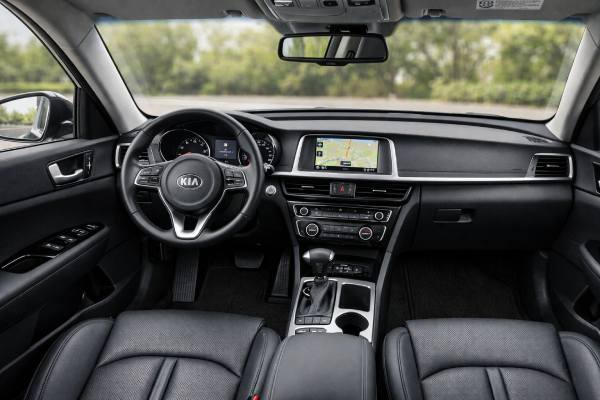
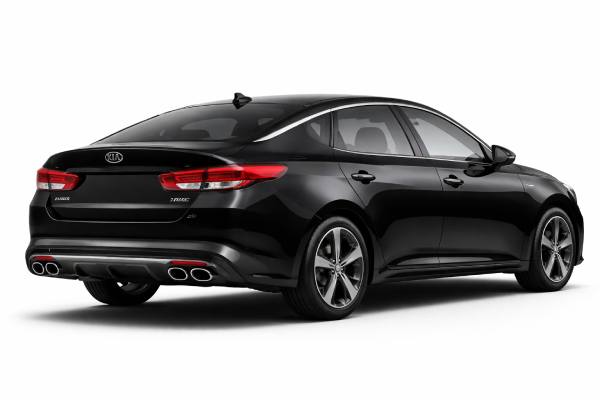
The 2016–2018 Kia Optima (JF) with the 1.7 CRDi diesel (engine code D4FD) is a practical long-distance sedan built around a clear mission: low fuel use at real highway speeds without giving up the comfort and cabin space that make the Optima easy to live with. The headline numbers are modest power and strong mid-range torque, but the way it delivers matters more. Peak torque arrives early, so the car feels relaxed in normal traffic and stable on motorways, especially with the dual-clutch automatic.
Ownership is mostly about keeping emissions hardware healthy (EGR and DPF), using the right low-ash oil, and giving the engine regular warm, steady runs. Do that, and the 1.7 diesel Optima can be a dependable commuter with a mature ride, good standard safety tech in many markets, and towing ability that is better than most people expect from a front-wheel-drive diesel sedan.
Owner Snapshot
- Strong low-rpm pull (340 Nm) makes motorway merging and overtakes easy without revving hard.
- Efficient on steady-speed trips: about 4.2–4.6 L/100 km combined depending on transmission and stop-start spec.
- Comfortable chassis with a long wheelbase; stable, calm ride at higher speeds.
- Budget for diesel emissions upkeep: DPF and EGR health depends heavily on driving style and oil choice.
- Plan oil and filter service every 12 months or 15,000 km (short-trip use benefits from shorter intervals).
Contents and shortcuts
- Kia Optima JF diesel ownership notes
- Kia Optima JF 1.7 CRDi specs tables
- Kia Optima JF trims, safety, and ADAS
- Common issues and service actions
- Maintenance plan and buying checklist
- Driving character and real economy
- Rivals and realistic alternatives
Kia Optima JF diesel ownership notes
If your priorities are economy, comfort, and predictable running costs, the 1.7 CRDi Optima is one of the more sensible picks in the segment. Its best feature is not peak power, but torque delivery: the engine produces 340 Nm across a broad band, so the car feels cooperative at 1,800–2,500 rpm where most daily driving happens. That matters on long inclines, when passing at motorway speeds, and when the car is loaded with passengers.
The engineering story is also about refinement. The diesel is turbocharged with common-rail direct injection and is tuned for usable response rather than drama. In many markets the 1.7 diesel could be paired with either a 6-speed manual or a 7-speed dual-clutch automatic, and your choice changes the car’s personality. The manual is simple and predictable, while the dual-clutch (DCT) adds a “geared” feel with quick shifts once moving, but it expects clean maintenance and correct fluid.
Where owners get caught out is not the bottom end of the engine, but the emissions side. Modern diesels rely on an exhaust gas recirculation (EGR) system to cut NOx and a diesel particulate filter (DPF) to trap soot. Short trips, lots of idling, or repeated cold starts can prevent the DPF from cleaning itself properly. The result is rising back-pressure, frequent regeneration attempts, and eventually warning lights. This is a car that rewards steady use: if your weekly pattern includes a 20–30 minute warm run at stable speed, ownership is typically smoother.
Another real-world advantage is the platform’s long wheelbase and mature suspension layout. It’s tuned to feel calm at speed and soak up rough surfaces without constant fidgeting. That makes it a strong “commuter-plus” car: easy in town, better on highways, and comfortable enough for cross-country trips.
Finally, think like a buyer, not just a driver. A well-maintained diesel Optima is usually obvious: clean service history, correct low-ash oil, no overdue fuel filter changes, and evidence it hasn’t lived its whole life in stop-start traffic. Those details matter more than a small mileage difference.
Kia Optima JF 1.7 CRDi specs tables
Below are key specifications for the 2016–2018 Optima (JF) with the 1.7 CRDi diesel in common European configuration. Note that power is often listed as 141 PS (104 kW); in some listings you’ll see about 139 hp depending on the hp standard used. Always confirm with the VIN-specific data for your market.
Powertrain and efficiency
| Item | Specification |
|---|---|
| Engine code | D4FD (1.7 CRDi) |
| Layout | Inline-4, DOHC, turbocharged diesel |
| Valvetrain | 16 valves (4 per cylinder) |
| Displacement | 1.7 L (1,685 cc) |
| Bore × stroke | 77.2 × 90.0 mm (3.04 × 3.54 in) |
| Fuel system | Common-rail direct injection |
| Compression ratio | 15.7:1 |
| Max power | 141 PS (104 kW) @ 4,000 rpm |
| Max torque | 340 Nm (251 lb-ft) @ 1,750–2,500 rpm |
| Transmission | 6-speed manual or 7-speed dual-clutch automatic (DCT) |
| Drive type | FWD |
Performance
| Metric | 6MT | 7DCT |
|---|---|---|
| 0–100 km/h (0–62 mph) | 10.0 s | 11.0 s |
| Top speed | 203 km/h (126 mph) | 203 km/h (126 mph) |
Fuel economy and CO₂ (typical official figures on 16-inch wheels)
| Metric | 6MT | 6MT with stop-start | 7DCT |
|---|---|---|---|
| Combined | 4.6 L/100 km | 4.2 L/100 km | 4.4 L/100 km |
| Urban | 5.6 L/100 km | 5.1 L/100 km | 5.1 L/100 km |
| Extra-urban | 4.1 L/100 km | 3.7 L/100 km | 4.1 L/100 km |
| CO₂ | 121 g/km | 110 g/km | 116 g/km |
Chassis and dimensions
| Item | Specification |
|---|---|
| Suspension (front) | MacPherson strut, anti-roll bar |
| Suspension (rear) | Double wishbone, anti-roll bar |
| Steering | Electric rack-and-pinion |
| Steering ratio | 13.29:1 |
| Turns lock-to-lock | 2.6 |
| Turning circle | 5.45 m (kerb-to-kerb) |
| Brakes | Front ventilated discs 280–300 mm; rear solid discs 262 mm |
| Wheels and tyres | 16-inch: 215/60 R16 (common); optional 17-inch: 215/55 R17; 18-inch: 235/45 R18 |
| Ground clearance | 135 mm (5.3 in) |
| Length / width / height | 4,855 / 1,860 / 1,465 mm (191.1 / 73.2 / 57.7 in) |
| Wheelbase | 2,805 mm (110.4 in) |
| Fuel tank | 70 L (18.5 US gal / 15.4 UK gal) |
| Luggage volume (VDA) | 510 L (18.0 ft³) |
Weights and capacities
| Item | 6MT | 7DCT |
|---|---|---|
| Curb weight | 1,515 kg (3,340 lb) | 1,530 kg (3,373 lb) |
| GVWR (gross weight) | 2,070 kg (4,564 lb) | 2,080 kg (4,586 lb) |
| Towing (braked) | 1,800 kg (3,968 lb) | 1,500 kg (3,307 lb) |
| Towing (unbraked) | 750 kg (1,653 lb) | 750 kg (1,653 lb) |
Fluids and service capacities (practical guidance)
Exact capacities vary by VIN, oil pan design, and cooling package, so treat the following as decision-making ranges, not workshop absolutes:
| System | What to use | Typical capacity guidance |
|---|---|---|
| Engine oil | Low-SAPS oil suitable for DPF (commonly ACEA C2/C3); often 5W-30 in Europe | ~5.0–5.7 L with filter (verify by dipstick) |
| Coolant | OEM-spec ethylene glycol coolant; common mix 50/50 unless climate requires otherwise | ~6–7 L total system (verify at service data) |
| DCT fluid (7DCT) | OEM-specified dual-clutch fluid only | Capacity varies; many services are partial drains |
| Brake fluid | DOT 4 (or OEM equivalent) | Flush by time, not by “looks” |
Key torque specs are also VIN-dependent, but two you can use for planning are: wheel fasteners typically 90–110 Nm (66–81 lb-ft), and engine undertray fasteners are usually low torque (hand-tight plus small angle). Always confirm the exact values in the official service data.
Kia Optima JF trims, safety, and ADAS
Trims and equipment vary more by country than by model year, so the fastest way to identify what you are looking at is to focus on functional hardware: transmission type (6MT vs 7DCT), wheel size, and the presence of camera and radar modules for driver assistance. On the 1.7 CRDi, the 7DCT is often paired with higher equipment grades, but not always.
Trims and options that matter in daily use
Common equipment differences that change the ownership experience include:
- Headlights: halogen vs HID/LED (and whether the car has auto high beam). Better headlights are a real safety upgrade on rural roads.
- Infotainment and camera: basic head unit vs navigation with a higher-resolution reverse camera. Check screen response and Bluetooth stability on a test drive.
- Seats: cloth vs leather, heated and ventilated front seats in some markets. Ventilation adds complexity but improves comfort if you drive long hours.
- Wheels: 16-inch wheels typically ride better and can be cheaper to tyre. 18-inch wheels sharpen turn-in but can add impact harshness and increase tyre cost.
Quick identifiers when viewing a used car
- 7DCT cars often have a distinct gear selector and may show a DCT indicator in the cluster menus.
- ADAS-equipped cars usually have a forward-facing camera near the rear-view mirror and a radar unit behind the grille emblem area (design varies by market).
- Stop-start (ISG) typically has an indicator light and a menu setting; it often correlates with the lowest CO₂ variant.
Safety ratings and what they mean for this model
Safety results can differ between rating bodies because of test protocol versions and market equipment. For example:
- In Europe, the Optima achieved a five-star result in the mid-2010s test cycle, with strong adult and child occupant scores reported publicly by the manufacturer.
- In Australia and New Zealand, ANCAP reports a five-star rating for the Optima range tested in that period, with detailed sub-scores for adult occupant, child occupant, pedestrian protection, and safety assist.
Driver assistance and calibration reality
Depending on market and trim, you may find:
- AEB (autonomous emergency braking): city and higher-speed functions; effectiveness depends on sensor cleanliness and correct calibration.
- ACC (adaptive cruise control): excellent for long motorway runs; verify it tracks smoothly and does not “hunt” the brakes.
- Lane support: lane keeping assist (LKAS) or lane support system behavior varies; some versions are gentle, others are more “hands-on.”
- Blind spot monitoring and rear cross-traffic alert: valuable in daily traffic, but check for false alerts after bumper repairs.
If the car has radar/camera-based systems, treat bodywork history seriously. A bumper replacement or windshield change can require calibration, and a “cheap fix” can become expensive if sensors are misaligned.
Common issues and service actions
The Optima JF 1.7 diesel’s reliability profile is generally better when it’s used as intended: warmed up, driven steadily, and serviced on schedule with correct fluids. Most costly surprises come from emissions hardware, driveline wear items, or neglect rather than from catastrophic engine design flaws.
Common, lower-cost issues (annoying more than dangerous)
- Glow plugs and glow control faults
Symptoms: hard starting in cold weather, engine light, rough idle for 10–30 seconds.
Likely cause: aging glow plugs or a tired control module.
Remedy: test plugs individually, replace as a set when access is reasonable. - Boost leaks from intake hoses
Symptoms: soft acceleration, whistling, occasional underboost codes.
Cause: split hose, loose clamp, or intercooler connection seepage.
Remedy: smoke test, replace the offending hose, clean MAP sensor if contaminated. - Thermostat running cool
Symptoms: slow warm-up, weak cabin heat, higher fuel use.
Cause: thermostat stuck slightly open.
Remedy: replace thermostat and verify coolant bleed procedure.
Common, medium-cost issues (ownership-defining)
- EGR valve and cooler soot buildup
Mileage pattern: often appears with frequent short trips and extended idling.
Symptoms: hesitation, rough idle, reduced power, fault codes, higher regen frequency.
Remedy: inspection and cleaning where appropriate, or replacement if sticking returns quickly. - DPF loading and incomplete regeneration
Pattern: repeated cold starts, short commutes, low-speed city cycles.
Symptoms: warning lights, fans running after shutdown, oil level rising (fuel dilution), limp mode in severe cases.
Remedy: correct the driving pattern first (steady run at operating temperature), then diagnose sensors (differential pressure, EGT). Forced regen is a last step, not the first. - Dual-mass flywheel (manual) or clutch behavior (DCT)
Manual symptoms: vibration at idle, rattling during shutdown, shudder on take-off.
DCT symptoms: low-speed judder, hesitation when creeping, harsh engagement when hot.
Remedy: for manual, inspect DMF and clutch together; for DCT, confirm software updates, correct fluid, and evaluate clutch adaptation where supported.
Occasional, higher-cost risks (watch closely)
- Turbocharger control problems (actuator or vane sticking)
Symptoms: inconsistent boost, sudden loss of power, overboost/underboost codes.
Cause: soot-related vane friction or actuator wear.
Remedy: targeted diagnosis; avoid “parts cannon” repairs. - Injector sealing and fuel system sensitivity
Symptoms: diesel smell, hard start, rough running, higher correction values on diagnostics.
Remedy: proper leak-off testing and sealing procedures; always use clean fuel and change filters on time.
Recalls, TSBs, and how to verify
Recalls and service campaigns vary by country and VIN. The practical approach is universal:
- Run the official VIN check for your market and confirm “closed” remedies in dealer history.
- Ask for proof of any software updates affecting drivability, transmission behavior, or safety systems.
- If ADAS is present, confirm calibration after windshield or bumper work.
Treat missing paperwork as a negotiation point, not a deal-breaker, but price the risk honestly.
Maintenance plan and buying checklist
A diesel Optima can be very cost-effective if you stay ahead of preventive maintenance. The goal is not just to “change oil,” but to protect the DPF, turbo, and fuel system while keeping the chassis tight and quiet.
Practical maintenance schedule (distance or time, whichever comes first)
Every 10,000–15,000 km or 12 months
- Engine oil and filter (use the correct low-ash oil suited for DPF-equipped diesels).
- Visual inspection: coolant level, charge-air hoses, oil leaks, and underbody damage.
- Tyre rotation and pressure check; inspect inner tyre wear.
Every 20,000–30,000 km
- Engine air filter (sooner in dusty areas).
- Cabin air filter (often yearly is sensible).
- Brake inspection: pad thickness, rotor condition, slider lubrication, and parking brake function.
Every 40,000–60,000 km
- Fuel filter replacement (important for injector life).
- Brake fluid flush every 2 years regardless of mileage.
- Alignment check, especially if tyre wear is uneven.
Every 90,000–120,000 km (or as condition demands)
- Accessory belt inspection and replacement if cracked or noisy.
- Suspension wear check: front control arm bushings, ball joints, rear links.
Cooling system
- Coolant change interval depends on the factory fill; many long-life coolants are 5 years or 100,000–150,000 km, but verify the exact spec for your VIN.
DPF health habit
- If your driving is mostly urban, schedule a steady-speed run: 20–30 minutes fully warm at open-road speeds once every week or two. It is a simple habit that prevents expensive problems.
Buyer’s guide: what to inspect before purchase
Paperwork and history
- Confirm oil type and service intervals (wrong oil is a red flag on a DPF diesel).
- Verify recall and campaign completion by VIN.
- Look for recent fuel filter, brake fluid, and transmission service evidence.
On the test drive
- Cold start: listen for uneven idle, excessive smoke, or prolonged cranking.
- Warm driving: check for flat spots, boost inconsistency, or repeated fan operation after stopping.
- DCT behavior (if equipped): slow-speed creep should be smooth; harsh engagement suggests adaptation or wear.
Under the hood and under the car
- Inspect charge pipes for oil misting (a light film can be normal; heavy wetness suggests issues).
- Check coolant condition and signs of pressure leaks.
- Look for exhaust tampering: missing sensors, altered software, or non-standard welds are avoid signals.
Long-term outlook
With correct oil, clean fuel, and a driving pattern that supports DPF regeneration, the D4FD Optima is often a strong high-mileage choice. If your usage is mostly short trips in cold weather, budget for more frequent service and expect emissions-related work sooner.
Driving character and real economy
The 1.7 CRDi Optima is not a performance sedan, but it is an easy car to drive quickly in the real world because the torque arrives early and stays consistent. That trait matters more than the 0–100 time when you are overtaking a truck at motorway speeds or climbing a long grade with passengers.
Ride, handling, and NVH
- Ride quality: The long wheelbase helps the Optima settle over expansion joints and rough patches. On 16-inch tyres, it tends to feel more compliant and quieter than on 18s.
- Handling balance: It is tuned for stability and predictability. The front end is secure, and the rear suspension design helps it feel planted at speed, not “floaty.”
- Steering: Light to moderate effort with quick-enough response for daily use. It is not chatty, but it tracks cleanly on the highway.
- Brakes: Strong and consistent in normal driving. Like many modern cars, pedal feel depends heavily on pad choice; cheap pads can make the car feel less refined.
Powertrain character: manual vs DCT
- 6-speed manual: The best match for drivers who want simplicity and direct control. It also tends to deliver the most consistent low-speed behavior in traffic.
- 7-speed DCT: Efficient and quick once rolling. In stop-and-go traffic, it can feel less smooth than a torque-converter automatic because a dual-clutch behaves like two automated clutches rather than a fluid coupling. Smoothness improves when the car is driven with steady inputs rather than constant micro-changes.
Real-world fuel use at motorway speeds
Official combined figures are in the mid-4 L/100 km range, and the Optima can get close to that on gentle mixed routes. In real life, the two biggest variables are speed and temperature:
- At steady 120 km/h, many owners see economy drift upward versus the official combined number, especially in winter with higher rolling resistance and more regen activity.
- Short cold trips can push consumption much higher and also increase the risk of DPF issues. If your typical drive is under 10 km, this is not the ideal diesel use case.
Towing and load behavior
For a front-wheel-drive sedan, the Optima’s towing numbers are respectable, but towing is also a stress test for cooling, clutch systems, and brakes. If you tow:
- Prefer the correct tyre load rating and keep pressures set for load.
- Shorten oil intervals and watch for more frequent regenerations.
- Expect a noticeable fuel-use penalty under load.
Rivals and realistic alternatives
Cross-shopping the 1.7 CRDi Optima usually comes down to a few familiar competitors: similar-size family sedans with efficient diesels (in Europe) or efficient gasoline options (in other regions). The Optima’s value proposition is comfort and equipment for the money, but it is not automatically the best match for every driving pattern.
Where this Optima tends to win
- Long-distance comfort: The cabin space and calm chassis tuning make it a strong motorway car.
- Efficiency with torque: The diesel’s low-end pull suits relaxed driving, especially when the car is loaded.
- Safety tech availability: Many examples offer strong active safety coverage for the era.
Where rivals can be a better fit
- Mostly-city drivers: If you rarely warm the car fully, a gasoline alternative (or a hybrid where available) may be cheaper to own than a modern diesel with a DPF.
- Drivers who hate low-speed DCT behavior: A traditional torque-converter automatic in some competitors can feel smoother in stop-start traffic.
Shortlist comparisons
- Volkswagen Passat (diesel era models): often strong highway refinement, but maintenance and emissions hardware considerations are similar.
- Škoda Superb: huge interior and strong value; can feel more “executive” depending on trim.
- Toyota Avensis (where available): typically strong durability reputation, sometimes less modern in tech and cabin design versus the Optima.
Bottom line verdict
Choose the 1.7 CRDi Optima if your driving includes regular longer runs and you want a comfortable, efficient sedan with strong everyday torque. If your life is mostly short, cold trips and congestion, pick the best-maintained example you can find, but seriously consider a non-diesel alternative to avoid DPF-related ownership stress.
References
- Microsoft Word – Kia Optima (Europe) JF PETD – Final – 30 Oct.doc 2015 (Technical Specifications PDF) ([Kia Press][1])
- Five-star safety ratings for all-new Kia Optima and Sportage 2015 (Euro NCAP Summary) ([Kia Press][2])
- Kia Optima | Safety Rating & Report | ANCAP 2015 (Safety Rating) ([ANCAP][3])
- Check for Recalls: Vehicle, Car Seat, Tire, Equipment | NHTSA 2026 (Recall Database) ([NHTSA][4])
Disclaimer
This article is for informational purposes only and is not a substitute for professional inspection, diagnosis, or repair. Specifications, torque values, service intervals, fluids, and procedures can vary by VIN, market, model year, and installed equipment, so always verify details using official manufacturer service documentation for your exact vehicle.
If you found this guide useful, please consider sharing it on Facebook, X (Twitter), or your favorite forum to help others find reliable ownership information.