
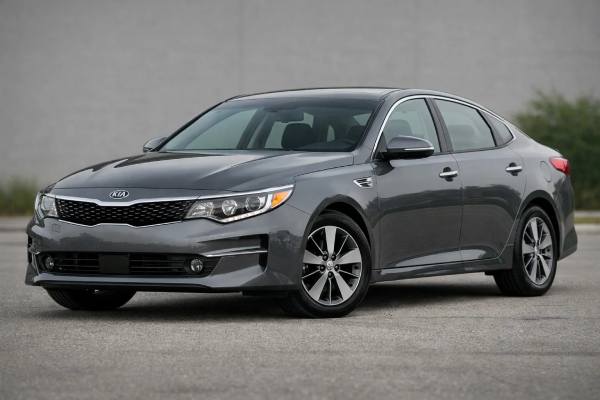
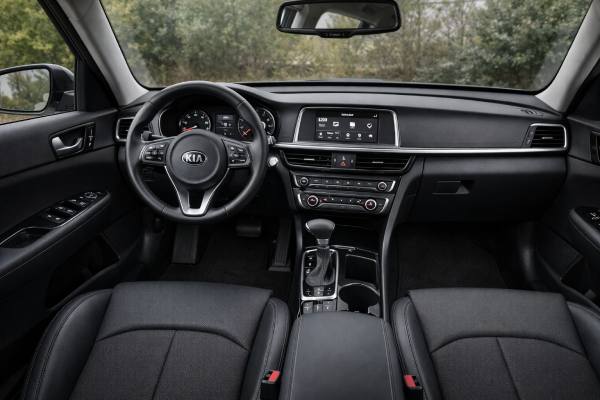
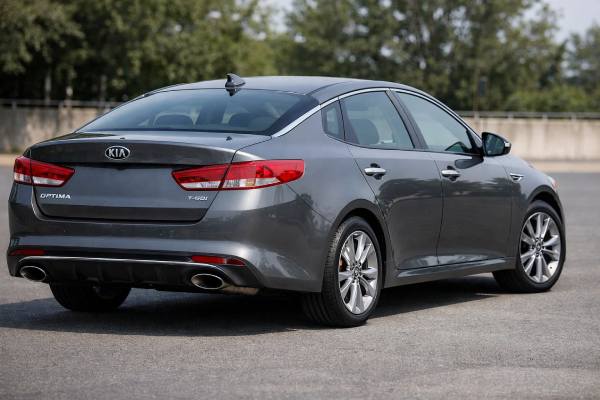
If you’re shopping for the 2016–2018 Optima JF with the 1.6 turbo (G4FJ), you’re looking at the “smart” powertrain in the range: strong mid-range pull, decent fuel economy, and enough torque to make the Optima feel lighter than it is. It also tends to avoid some of the big-ticket reputation issues tied to larger, hotter-running engines in this era—though it brings its own turbo-DI (direct injection) realities and, on many markets, a dual-clutch transmission that rewards correct servicing.
This guide focuses on what matters to owners: the real specifications, how the car drives day to day, the most common failure patterns by mileage, and a maintenance plan you can actually follow. Where specs vary by VIN, trim, or market, I’ll call it out clearly so you can verify before buying or ordering parts.
Owner Snapshot
- Strong low-to-mid torque makes it an easy daily driver, especially in traffic and on hills.
- Efficient for a midsize sedan; highway economy can be excellent with conservative speeds and correct tyres.
- Good safety record in most configurations, but headlight and ADAS availability depends heavily on trim and market.
- Turbo-DI engines dislike long oil intervals—shorter changes reduce timing and turbo wear risk.
- Plan an engine-oil service every 8,000–10,000 km (5,000–6,000 mi) or 12 months, whichever comes first.
Section overview
- Kia Optima JF 1.6T profile
- Kia Optima JF specs and measures
- Kia Optima JF trims and safety tech
- Known faults and updates
- Service plan and buying tips
- On-road feel and economy
- Rivals and value verdict
Kia Optima JF 1.6T profile
The 1.6T Optima JF sits in a sweet spot: it keeps the cabin space and long-wheelbase stability that make the Optima a calm family sedan, but it trims running costs compared with the larger petrol engines. The G4FJ is a small-displacement, turbocharged, direct-injection four-cylinder designed to make usable torque early. In normal driving you feel that in two places: (1) pulling away from junctions without needing high rpm, and (2) passing on the motorway with fewer downshifts than you’d expect from a 1.6.
Mechanically, think of the package as “efficient but sensitive.” Turbo-DI engines run hotter in the oil and tend to load the intake tract with soot and oil vapour over time. That doesn’t mean they’re fragile—only that maintenance style matters. When owners stick to shorter oil intervals with the correct spec oil, let the engine warm before hard throttle, and avoid shutting down immediately after sustained boost, these engines generally age well.
The other defining trait is transmission choice. Many 1.6T cars are paired with a 7-speed dual-clutch transmission (DCT). It delivers crisp shifts and good economy, but it behaves differently from a traditional torque-converter automatic at parking speeds. Light shuddering, hesitation on steep creep, or clutch smell after heavy stop-and-go abuse are warnings that the DCT needs inspection—sometimes as simple as software adaptation, sometimes clutch wear.
Overall, the 2016–2018 1.6T Optima is best for drivers who want a relaxed midsize sedan that can still feel responsive, and who are willing to maintain it like a turbo engine—because that’s exactly what it is.
Kia Optima JF specs and measures
Below are the most commonly referenced specifications for the 2016–2018 Optima JF 1.6T (G4FJ). Exact figures can vary by market, emissions package, wheel size, and trim (especially brakes, kerb weight, and fuel economy).
Powertrain and efficiency
| Item | Specification |
|---|---|
| Code | G4FJ |
| Engine layout and cylinders | I-4, DOHC, 16 valves (4 valves/cyl) |
| Bore × stroke | 77.0 × 85.4 mm (3.03 × 3.36 in) |
| Displacement | 1.6 L (1,591 cc) |
| Induction | Turbocharged |
| Fuel system | Gasoline direct injection (GDI) |
| Compression ratio | ~10.0:1 (varies by calibration) |
| Max power | 178 hp (133 kW) @ ~5,500 rpm |
| Max torque | 264 Nm (195 lb-ft) @ ~1,500–4,500 rpm (typical range) |
| Timing drive | Chain (inspect by noise/correlation faults) |
| Rated efficiency (EPA-style reference) | ~7.6 L/100 km combined (31 mpg US / 37 mpg UK) |
| Real-world highway @ 120 km/h (75 mph) | Typically ~7.0–8.0 L/100 km depending on tyres, wind, and traffic |
Transmission and driveline
| Item | Specification |
|---|---|
| Transmission | 7-speed DCT (common on 1.6T; market-dependent) |
| Drive type | FWD |
| Differential | Open |
Chassis and dimensions (typical sedan)
| Item | Specification |
|---|---|
| Suspension (front/rear) | MacPherson strut / multi-link |
| Steering | Electric power steering |
| Brakes | 305 mm (12.0 in) vented front / 284 mm (11.2 in) rear (typical) |
| Wheels and tyres (popular sizes) | 225/45 R18 (common on higher trims) or 205/65 R16 (base trims) |
| Ground clearance | 135 mm (5.3 in) |
| Length / width / height | 4,854 / 1,859 / 1,466 mm (191.1 / 73.2 / 57.7 in) |
| Wheelbase | 2,804 mm (110.4 in) |
| Turning circle (kerb-to-kerb) | 10.9 m (35.8 ft) |
| Kerb (curb) weight | ~1,460 kg (3,224 lb) for a typical 1.6T configuration |
| Fuel tank | ~70.0 L (18.5 US gal / 15.4 UK gal) |
| Cargo volume | ~450 L (15.9 ft³) seats up (method varies by market) |
Performance and capability (real-world typical)
| Item | Typical result |
|---|---|
| Acceleration 0–100 km/h (0–62 mph) | ~7.8–8.6 s (trim and traction dependent) |
| Top speed | ~205–215 km/h (127–134 mph) |
| Braking 100–0 km/h | Often ~38–41 m on good tyres (test dependent) |
| Towing capacity | Market-dependent; many petrol Optima variants are not rated for heavy towing |
| Payload | VIN- and tyre-dependent; check door placard |
Fluids and service capacities (verify by VIN/market)
These values are the most useful for planning, but always verify against your official service data because sump pans, coolers, and transmission variants can change totals.
| Item | Specification (typical) |
|---|---|
| Engine oil | Full-synthetic meeting the required API/ACEA spec; common viscosity 5W-30 (climate dependent) |
| Engine oil capacity | ~4.3–4.8 L (4.5–5.1 US qt) with filter |
| Coolant | Ethylene glycol long-life coolant, 50:50 mix unless otherwise specified |
| Coolant capacity | Often ~6.5–7.5 L (6.9–7.9 US qt) including heater core |
| DCT / gearbox fluid | Manufacturer-specified fluid only (DCT type varies); capacity varies with unit and service method |
| A/C refrigerant | Usually R-134a on this era (market dependent); charge is sticker-specific |
Key torque specs (common planning values, verify before final tightening):
- Wheel lug nuts: ~90–110 Nm (66–81 lb-ft)
- Engine oil drain plug: ~30–40 Nm (22–30 lb-ft)
- Spark plugs (small-thread, typical): ~20–25 Nm (15–18 lb-ft)
Safety and driver assistance (high-level)
| Item | Notes |
|---|---|
| Euro NCAP crash rating | Often 5-star for this generation in European testing context; check test year and equipment |
| IIHS | Ratings depend on headlights and front crash prevention availability |
| ADAS suite (market/trim dependent) | AEB, ACC, lane support, blind-spot monitoring, rear cross-traffic alert may be optional |
Kia Optima JF trims and safety tech
Because the Optima JF was sold globally with different trim naming, it helps to think in “equipment tiers” rather than badges. The 1.6T is often positioned as an efficiency-focused upgrade (sometimes called “Turbo,” “T-GDI,” or similar). What changes from 2016 to 2018 is usually not the engine output, but the feature packaging—especially headlights, infotainment revisions, and which driver-assistance functions became standard.
Trims and options that actually change ownership
Look for these items because they affect running costs and satisfaction more than cosmetic packages:
- Headlights: Halogen vs HID/LED (and whether the beam pattern is well-rated). Poor headlights can drag down safety ratings and night comfort.
- Wheels and tyres: 16 vs 17 vs 18 inches. Larger wheels sharpen steering response but raise tyre cost and can reduce real-world economy on rough roads.
- Infotainment tier: Basic vs premium audio, navigation, and smartphone integration. Replacement screens and amplifiers are expensive, so test everything.
- Driver assistance package: Forward collision warning/AEB, adaptive cruise, lane support, blind-spot monitoring, and rear cross-traffic alert. These packages tend to be bundled—one missing feature can indicate the whole suite is absent.
Quick identifiers when you’re inspecting a car
- Radar/camera presence: A radar sensor in the lower grille or a camera module near the rear-view mirror suggests AEB/ACC capability.
- Steering wheel buttons: Lane and cruise-related icons often indicate the ADAS tier.
- Headlamp housing: Projector-style lamps and LED signatures usually correlate with higher trims.
- Tyre placard and VIN build data: The door-jamb label helps confirm wheel size and load ratings; VIN decoding (or dealer build sheet) confirms option packages.
Safety ratings and what they mean in practice
Safety scores can be excellent, but they’re configuration-sensitive. If a testing body scores “good structure” but marks headlights or front crash prevention as weaker, you’ll feel that in real ownership: less confident night driving or fewer active safety interventions. Treat safety ratings like a checklist:
- Body structure and airbags: generally consistent within the generation.
- Restraints and head restraints: verify seat condition; worn foam can change occupant position.
- Headlights: test at night; look for hazing and aim issues.
- ADAS functionality: confirm no warning lights; calibrations after windscreen replacement matter.
Core safety systems to expect
Most Optima JF cars include multiple airbags, ABS, stability control, and ISOFIX/LATCH points. ADAS, however, can be absent even when the car looks “high spec.” If you want AEB and adaptive cruise specifically, confirm by function testing—not just by badges.
Known faults and updates
No used car is perfect; the key is knowing which issues are common (and cheap), which are occasional (and annoying), and which are rare but costly. Below is a practical map for the Optima JF 1.6T.
Common: low cost to medium cost
- Ignition coils and plugs (60,000–120,000 km / 40,000–75,000 mi)
Symptoms: misfire under load, flashing MIL, rough idle.
Likely cause: plug wear, coil breakdown, heat cycling.
Remedy: replace plugs with correct heat range and gap; replace the failing coil(s). Avoid “one step colder” plugs unless tuned. - PCV valve and crankcase ventilation issues (80,000–150,000 km)
Symptoms: oil seepage, whistling, idle instability, increased oil vapour.
Cause: clogged PCV or aged hoses.
Remedy: replace PCV and inspect hoses; it’s cheap prevention for turbo seal stress. - Brake hardware noise and rear wear patterns
Symptoms: squeal, uneven pad wear.
Cause: slider pin corrosion or cheap pads.
Remedy: clean and lubricate hardware; use quality pads and rotors.
Occasional: medium cost
- Turbo control and boost leaks
Symptoms: soft acceleration, underboost codes, whoosh noises.
Cause: split charge hose, loose clamp, diverter/wastegate control issues.
Remedy: pressure test intake, repair leaks, then confirm commanded vs actual boost. - Direct-injection intake carbon build-up (100,000–180,000 km)
Symptoms: cold-start stumble, reduced efficiency, sluggish response.
Cause: DI lacks fuel wash over intake valves; oil vapour deposits bake on.
Remedy: walnut blasting or approved cleaning procedure; shorten oil intervals and ensure PCV system health. - Cooling system plastics and thermostat aging
Symptoms: slow warm-up, temperature fluctuation, coolant smell.
Cause: thermostat fatigue or small seepage at plastic housings.
Remedy: replace thermostat/housing if symptoms appear; use correct coolant mix and bleed procedure.
Higher-cost risk (less common, but important)
- 7-speed DCT shudder or clutch wear (city-heavy use, 60,000–140,000 km)
Symptoms: judder on takeoff, hesitation, overheating messages, harsh engagement.
Cause: clutch wear, adaptation drift, or mechatronic control issues (varies by unit).
Remedy: start with software updates and adaptation; if persistent, clutch service may be required. - Oil dilution and turbo heat stress (short trips + long intervals)
Symptoms: rising oil level, fuel smell in oil, timing noise.
Cause: short trips and DI fuel wash; extended oil intervals.
Remedy: shorten oil intervals, verify correct oil spec, and ensure the engine reaches operating temperature regularly.
Updates, recalls, and how to verify
Software updates can improve shift logic, sensor fault handling, and warning thresholds—especially for transmissions and ADAS. For recalls and campaigns, don’t rely on seller claims alone:
- Check recall completion by VIN using the official database (and confirm with dealer service history where possible).
- During inspection, scan for stored codes (even if the dash is clear) and confirm that all driver-assistance functions initialize correctly after a short drive.
Service plan and buying tips
A maintenance plan for the 1.6T Optima should be built around three priorities: protecting the turbo and timing system (oil quality), keeping combustion stable (plugs/filters), and preventing expensive drivability issues (cooling and transmission service).
Practical maintenance schedule (distance/time)
Use whichever comes first: distance or time.
- Engine oil and filter: every 8,000–10,000 km (5,000–6,000 mi) or 12 months
Turbo-DI engines reward shorter intervals. If you do mostly short trips, lean toward the shorter end. - Engine air filter: inspect every 15,000 km; replace 30,000 km (20,000 mi) typical
Dusty climates cut this interval. - Cabin filter: 15,000–30,000 km depending on pollen and city use.
- Spark plugs: inspect by 60,000 km (40,000 mi); replace 90,000–100,000 km (55,000–60,000 mi) typical for turbo applications
Misfires under boost can damage the catalytic converter, so don’t stretch plug life. - Coolant: replace every 5 years / 100,000 km unless your market spec differs
Any overheating event is a reason to refresh sooner. - Brake fluid: every 2 years
Especially important if the car sees mountains or heavy braking. - Transmission service (DCT/AT, market dependent): inspect and service fluid at 60,000–80,000 km intervals where applicable
Use only the specified fluid for your exact transmission code. - Tyre rotation and alignment: rotate 10,000–12,000 km; align yearly or after pothole impacts.
- 12 V battery: test annually after year 4; many last 4–6 years depending on climate.
Fluids and specs (what owners should insist on)
- Choose an oil that meets the required manufacturer spec for your market, not just “a 5W-30.”
- For turbo longevity, prioritize a high-quality synthetic with strong high-temperature stability.
- Use the correct coolant type; mixing incompatible coolants can create sludge and heater-core restriction.
Buyer’s guide: inspection checklist
Bring a scan tool, a torch, and enough time for a proper cold start.
- Cold start behaviour: listen for timing-chain rattle, rough idle, or misfire.
- Boost response: on a safe road, roll into throttle from 2,000 rpm—power should build smoothly without surging.
- Transmission feel: in a DCT, mild “manual-like” creep is normal; repeated shudder, banging into gear, or warnings are not.
- Cooling system: check for dried coolant at housings and hoses; verify the radiator fan operates.
- Suspension and steering: listen for front-end clunks over small bumps (bushings/links).
- Electronics: test every window, mirror, camera, parking sensor, and infotainment function.
- Tyres: uneven wear can indicate alignment issues or worn suspension.
Best ownership match
Choose the 1.6T Optima if you value efficiency and midrange torque and you’re willing to follow a turbo-friendly maintenance style. If you cannot commit to regular oil service or you drive only short trips in cold weather, budget for extra preventive work (PCV, intake cleaning, and more frequent oil changes).
On-road feel and economy
The Optima JF’s driving personality is built around stability and quiet progress. The long wheelbase helps it track straight on motorways, and the multi-link rear suspension (on most versions) gives it a planted feel through fast curves compared with simpler torsion-beam rivals. It’s not a sports sedan, but it doesn’t feel floaty when the dampers are healthy and the tyres match the chassis.
Ride, handling, and NVH
- Ride: Generally compliant on 16–17 inch wheels. On 18s, sharp edges can come through more, especially with low-profile tyres.
- Handling: Neutral and predictable. The front end resists sudden roll, and the rear feels secure rather than lively.
- Steering: Light to medium effort. Feedback is limited, but the car responds consistently—important for relaxed daily use.
- Braking feel: Usually progressive. If you feel a long pedal, suspect old brake fluid or pad glazing.
- Cabin noise: Wind and tyre noise depend heavily on tyre brand and wear. A good set of touring tyres can make the car feel one class quieter.
Powertrain character
The 1.6T shines in real traffic. It produces useful torque early, so you don’t need to rev it to make progress. Under full load, it will still climb into higher rpm smoothly, but most owners will live in the midrange, where the engine feels energetic without being loud.
With a DCT, the car often feels “direct”—almost like a manual with quick automated shifts. The trade-off is low-speed behaviour: creeping in traffic, reversing uphill, or feathering the throttle in a parking garage can feel less silky than a torque-converter automatic. Smoothest technique is gentle, decisive throttle inputs rather than constant micro-adjustments.
Real-world efficiency
Expect fuel economy to vary more with usage than many owners anticipate:
- City: short trips and cold starts can push consumption to 9.0–11.0 L/100 km (21–26 mpg US).
- Mixed: many drivers see 7.5–8.8 L/100 km (27–31 mpg US).
- Highway (100–120 km/h): often 7.0–8.0 L/100 km (29–34 mpg US) if tyres and alignment are right.
Cold weather matters. Turbo engines often run richer when cold, and cabin heat demand increases engine load. If your winter use is mostly short trips, plan on higher consumption and shorten oil intervals.
Performance metrics that matter day to day
Straight-line speed is “plenty” for this class. More important is passing response: in the 80–120 km/h range, the 1.6T usually feels eager, especially if the transmission is in the right gear and the engine is already warm. Keep tyres and brakes in top condition; they influence confidence more than a small difference in horsepower.
Rivals and value verdict
The 2016–2018 Optima JF 1.6T competes in a crowded midsize space. Its best argument is balance: big-car comfort with smaller-engine running costs. Here’s how it stacks up against the most common cross-shops.
Against Hyundai Sonata (same era)
These cars share a lot of engineering DNA. The Optima often wins on styling and a slightly “tighter” road feel, while the Sonata can match or exceed value depending on trim and local pricing. For the 1.6T buyer, the deciding factors are usually:
- Which one has the better maintenance history
- Which one has the ADAS and headlight spec you want
- Which one has the smoother transmission behaviour in your daily route
Against Toyota Camry (2.0/2.5 petrol)
The Camry’s advantage is long-term simplicity, especially with a conventional automatic and naturally aspirated engines. The Optima’s advantage is torque-rich response and feature value at the same purchase price. If you buy the Optima, you’re trading some simplicity for better midrange feel and often better equipment per dollar—provided you keep up on oil service.
Against Honda Accord (1.5T/2.0T)
The Accord tends to feel sportier and more responsive in steering and chassis tuning. The Optima often feels calmer and more insulated. On the maintenance side, both are turbo-DI in many trims, so both reward shorter oil intervals and proper servicing.
Against Mazda6
Mazda typically wins for steering feel and driver engagement. The Optima often wins for cabin calmness, rear-seat comfort, and long-distance cruising ease. If your priorities are family use and motorway stability, the Optima’s personality fits well.
Value verdict for the 1.6T Optima
Pick the 1.6T Optima if you want:
- A comfortable midsize sedan with genuinely useful turbo torque
- Strong feature value (especially when optioned with safety tech)
- Acceptable running costs without going to a hybrid
Be cautious if:
- Your use is almost all short trips and you won’t shorten oil intervals
- The DCT shows shudder, hesitation, or warning messages
- The car lacks the headlight/ADAS equipment you expect from its trim badge
The best 1.6T cars are the ones that were serviced on time, driven regularly (not only short hops), and kept on quality tyres. Find that example, and the Optima can be a quietly satisfying long-term daily.
References
- 2016 Kia Optima Specifications 2016 (Specifications)
- 2016 Kia Optima 2016 (Safety Rating)
- Vehicle Detail Search – 2016 KIA OPTIMA 2026 (Recall Database)
- Gas Mileage of 2016 Kia Optima 2026 (Fuel Economy)
- Five-star safety ratings for all-new Kia Optima and Sportage 2015 (Press Release)
Disclaimer
This article is for informational purposes only and is not a substitute for professional diagnosis, inspection, or repair. Specifications, torque values, service intervals, and procedures can vary by VIN, market, engine calibration, and installed equipment—always confirm details using your official owner’s manual and service documentation for your specific vehicle.
If this guide helped, please consider sharing it on Facebook, X/Twitter, or your preferred platform to support our work.