
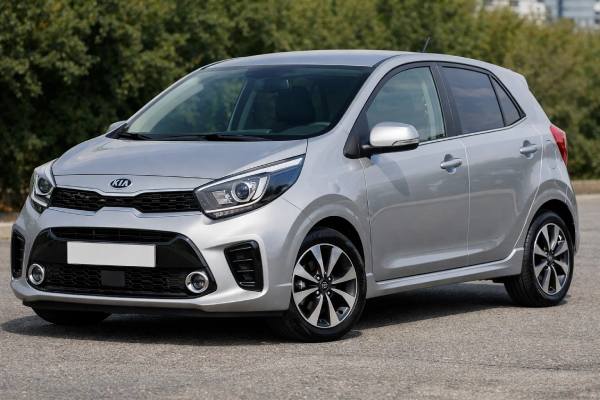
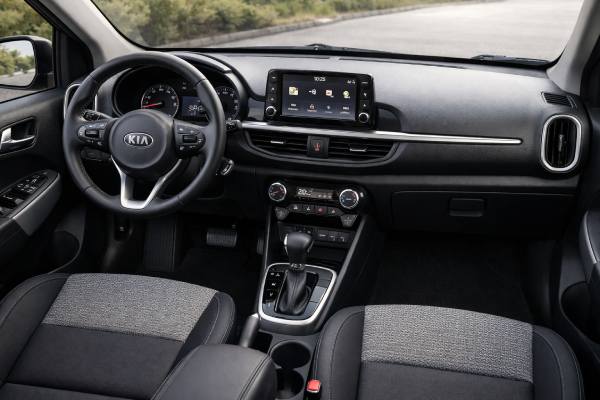
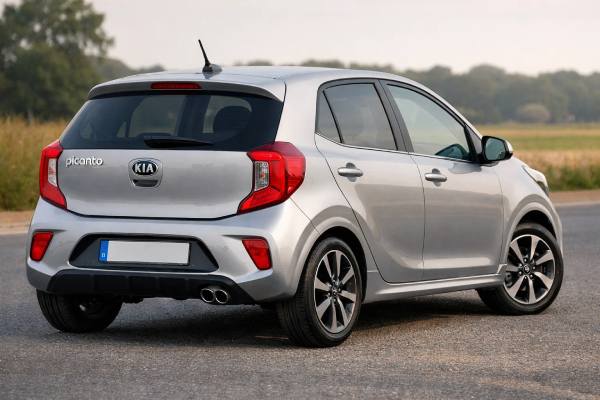
The facelifted Kia Picanto (JA) with the G3LE 1.0-litre turbo is the “small car, grown-up powertrain” version of the range. It pairs light weight and short gearing with a punchier mid-range than the non-turbo engines, which matters in real traffic—merges, short overtakes, and hilly commutes feel less strained. The 2020–2022 update also sharpened the value proposition: more modern infotainment in many markets, refreshed trim structure, and wider availability of active safety tech depending on grade.
Ownership is usually straightforward when the basics are done on time: clean oil, correct spark plugs, and good fuel habits. Where owners get caught out is treating it like a naturally aspirated city runabout—lots of short trips, long oil intervals, and low-quality fuel can accelerate turbo and direct-injection grime. Kept on a sensible schedule, it’s a lively, efficient supermini that’s easy to live with.
What to Know
- Strong in-gear pull for an A-segment car; the turbo makes hills and motorway joins less stressful.
- Compact footprint and tight turning circle suit dense city parking and narrow streets.
- Good equipment value in higher trims (often better lights, camera, and infotainment).
- Caveat: repeated short trips + extended oil intervals can increase intake deposits and turbo wear over time.
- Plan on engine oil and filter service about every 10,000–15,000 km (6,000–9,000 mi) or 12 months (whichever comes first), depending on duty cycle.
Section overview
- Picanto JA facelift turbo in brief
- Picanto JA G3LE specs and dimensions
- Picanto JA 2020–2022 trims and safety tech
- Trouble spots and official fixes
- Service routine and buying checklist
- Real-world driving and economy
- A-segment rivals and alternatives
Picanto JA facelift turbo in brief
The 2020–2022 facelift version of the Picanto JA with the 1.0 turbo (G3LE) is best understood as the “small car that doesn’t feel small when you ask for speed.” The key difference versus the base 1.0 MPi is not peak horsepower on paper—it’s how the car delivers usable torque in the mid-range. In day-to-day driving, that means fewer full-throttle moments, less gear stirring on grades, and a calmer feel when you need to keep pace with faster traffic.
Mechanically, the package is simple: front-wheel drive, a compact three-cylinder turbo engine, and typically a 5-speed manual or an automated manual transmission (market-dependent). There’s no heavy hybrid system or complicated AWD hardware. That keeps running costs closer to a basic supermini than to a larger turbo hatchback—provided maintenance matches the realities of a turbocharged, often direct-injected small engine.
The facelift tends to matter more for cabin experience and equipment than for core hardware. Many markets saw infotainment revisions (screen size, software, smartphone integration), refreshed interior materials, and a revised trim walk that made certain comfort and safety features easier to find without hunting through option packs. You’ll also notice subtle exterior changes—bumpers, lighting signatures, wheel designs—while the platform’s fundamentals remain the same.
Who is it for?
- Urban drivers who still do ring-road and motorway stints. The turbo helps most above ~50 km/h where the non-turbo cars can feel breathless.
- Drivers who value easy parking but dislike “slow-car stress.” You’re still in a short-wheelbase A-segment hatch, but you’re not stuck planning every overtake.
- Buyers shopping used who want a modern-feeling interior. The facelift’s tech updates often deliver the biggest perceived “newness.”
What it is not:
- A hot hatch with track stamina. It’s quick for its class, but cooling capacity, tyre width, and brake size still reflect city-car priorities.
- A neglect-tolerant beater. It will survive normal life, but turbo engines respond poorly to skipped oil services and chronic short-trip sludge.
If you want the best blend of easy ownership and the extra shove the chassis can handle, the G3LE facelift cars are the sweet spot—just verify history and equipment carefully.
Picanto JA G3LE specs and dimensions
Specs vary slightly by market, transmission, and trim, but the tables below capture the typical configuration for the facelifted 1.0 turbo (101 hp class). Use them as a decision guide, then confirm with your VIN-specific documentation.
Powertrain and efficiency
| Item | Typical spec (market-dependent) |
|---|---|
| Code | G3LE |
| Engine layout and cylinders | Inline-3, front transverse; DOHC; 4 valves/cyl |
| Displacement | 1.0 L (998 cc) |
| Induction | Turbocharged |
| Fuel system | Direct injection (market dependent) |
| Compression ratio | Varies by calibration/market |
| Max power | 101 hp (74 kW) @ rpm (varies by market) |
| Max torque | Commonly ~170 Nm (varies by market) |
| Timing drive | Chain |
| Rated efficiency | Typically ~5.0–6.0 L/100 km combined (WLTP-style ranges vary) |
| Real-world highway @ 120 km/h | Often ~6.0–7.0 L/100 km depending on tyres, load, wind, and gearing |
Transmission and driveline
| Item | Typical spec |
|---|---|
| Transmission | 5-speed manual (common); automated manual in some markets |
| Drive type | FWD |
| Differential | Open |
Chassis and dimensions
| Item | Typical spec (range) |
|---|---|
| Suspension (front/rear) | MacPherson strut / torsion beam |
| Steering | Electric assist; ratio varies by market |
| Brakes | Front discs / rear drums (some trims rear discs in select markets) |
| Wheels and tyres (popular) | 175/65 R14 or 185/55 R15; sport trims may use 195/45 R16 |
| Ground clearance | Typically ~140–160 mm |
| Length / width / height | ~3,595 mm / ~1,595 mm / ~1,485 mm |
| Wheelbase | ~2,400 mm |
| Turning circle (kerb-to-kerb) | Often ~9.4–9.6 m |
| Kerb weight | Roughly ~950–1,070 kg (trim/transmission dependent) |
| Fuel tank | Typically ~35 L |
| Cargo volume | Around ~255 L seats up; up to ~1,000+ L seats down (method varies) |
Performance and capability
| Metric | Typical figure (range) |
|---|---|
| 0–100 km/h (0–62 mph) | ~10–11 s (transmission/tyres dependent) |
| Top speed | ~175–180 km/h |
| Braking 100–0 km/h | Not consistently published; depends heavily on tyres |
| Towing capacity | Often not rated or very limited in many markets |
| Payload | Typically modest; check door-jamb label |
Fluids and service capacities (common guidance)
| Fluid | Typical spec to look for | Typical capacity notes |
|---|---|---|
| Engine oil | API/SP (or latest equivalent), ACEA per market; common viscosity 0W-20 or 5W-30 | Capacity depends on sump/pan; verify by engine label/manual |
| Coolant | Long-life OAT/HOAT per Kia spec | Capacity varies; verify by manual |
| Transmission | Manual gear oil per Kia spec; AMT uses its own specified fluid | Fill quantity varies; verify by manual |
| A/C refrigerant | R-1234yf or R-134a depending on market/year | Charge weight is label-specific |
Safety and driver assistance (high-level)
| Item | Typical availability (trim/market dependent) |
|---|---|
| Crash ratings | Euro NCAP ratings published for Picanto (test year/version matters) |
| Core safety | ESC, ABS, multiple airbags, ISOFIX/LATCH points |
| ADAS | AEB, lane support, speed assist, driver attention alerts on some trims/optional packs |
A practical takeaway: the Picanto’s small footprint and low mass help efficiency and city agility, while the turbo engine largely determines “how adult” it feels on faster roads. When comparing cars, prioritise tyres (size/brand), transmission type, and whether the car has the safety pack you care about—those change the experience more than minor spec-sheet differences.
Picanto JA 2020–2022 trims and safety tech
Trim naming differs by country, but the facelift era commonly groups cars into a value-focused base line, a mid-spec comfort line, and sport- or crossover-styled versions (often “GT-Line” and “X-Line” style themes). With the G3LE turbo, you’ll usually find it bundled into higher trims or paired with specific option packs. That matters for two reasons: equipment level affects daily satisfaction, and the presence (or absence) of a safety pack can change both the feature set and the car’s resale appeal.
Trims and options that change the car mechanically
Most differences are comfort and appearance, but watch for a few functional items:
- Wheel and tyre packages: 14-inch comfort tyres ride softer and are cheaper; 15–16 inch packages improve response but can increase road noise and kerb-damage risk.
- Lighting: projector/LED upgrades improve night driving more than most people expect in an A-segment car.
- Rear braking hardware: many markets keep rear drums; if you find rear discs, it’s usually tied to specific trims and can improve feel under repeated stops (tyres still dominate ultimate distance).
- Transmission choice: a 5-speed manual tends to feel more direct and predictable with the turbo. Automated manuals can be fine in the city but may feel hesitant in stop-start traffic if calibration or clutch condition is poor.
Quick identifiers when shopping used
- Exterior cues: GT-Line typically has sportier bumpers and detailing; X-Line usually has contrasting cladding and “crossover” touches.
- Cabin clues: higher trims often include a reversing camera, larger infotainment display, and steering wheel buttons for driver-assistance menus.
- Build-year checks: late 2020-on cars may have updated infotainment software and sometimes revised option structures. Always check the equipment list by VIN rather than trusting badges.
Safety ratings and what they really mean
The Picanto has published crash-test results from Euro NCAP, including outcomes that depend on whether the car is assessed with standard equipment or an added safety pack. The crucial point for buyers is that the rating reflects the tested configuration and protocol of that time—not an evergreen guarantee. For a facelift-era used car, treat the rating as context, then focus on what the specific car actually has:
- Airbag coverage: confirm front, side, and curtain airbags (counts vary by market/trim).
- ISOFIX/LATCH: check rear outer seats; confirm top tether points where relevant.
- ESC and tyre condition: stability control is only as good as the tyres and alignment under it.
ADAS: what to seek (and what to verify after repairs)
If you want modern assistance features, look for:
- AEB (car and pedestrian): best city-safety upgrade; verify warning lights are off and the system can be toggled in menus.
- Lane support (LKA/LFA-style): helps on monotonous roads; verify camera calibration after windscreen replacement.
- Speed assistance/traffic sign recognition: useful but can be noisy; confirm it can be configured to your preference.
After any front-end damage, windscreen replacement, or suspension geometry work, insist on documentation for sensor aiming/calibration when the car is equipped. These cars are simpler than high-end ADAS platforms, but incorrect calibration can still trigger faults or reduce system reliability.
Trouble spots and official fixes
Overall reliability for the facelift Picanto is usually solid, but the G3LE turbo changes the ownership pattern: it rewards good oil discipline and clean operating habits, and it penalises chronic short-trip life. Below is a practical issue map by prevalence and cost tier. Think of it as “what to watch” rather than “what will happen.”
Common (low to medium cost)
- Ignition coils and spark plugs (symptoms: misfire, rough idle, flashing MIL): small turbo engines run high cylinder pressures, and plugs matter. Use the correct heat range and type specified for the turbo application, and don’t stretch intervals.
- 12 V battery weakness (symptoms: stop-start issues, slow cranking, random warning lights): city use and short journeys reduce charge recovery. Test before winter; replace proactively if it fails a load test.
- Brake noise and rear brake wear patterns (symptoms: squeal, uneven feel): rear drums can glaze with light use; occasional firm stops (when safe) help keep surfaces clean. Inspect hardware during services.
Occasional (medium cost)
- Turbo control/wastegate or boost leaks (symptoms: flat acceleration, underboost codes, whistle/hiss): split hoses or loose clamps are the cheapest cause; actuator or turbo hardware is costlier. A proper smoke test can save money.
- Direct-injection intake deposits (symptoms: hesitant cold running, reduced efficiency over time): DI can leave intake valves without fuel washing action. Lots of short trips increase buildup. Prevent with frequent oil services, quality fuel, and periodic longer runs to full temperature.
- Cooling system seepage (symptoms: coolant smell, slow level drop): small leaks at clamps, radiator end tanks, or water pump weep points show up with age. Address early to avoid overheating stress.
Rare (higher cost)
- Timing chain noise or correlation faults (symptoms: rattling at start-up, cam/crank correlation codes): not common, but any persistent rattle deserves diagnosis. Oil quality and change intervals play a role in long-term chain health.
- Turbocharger bearing wear (symptoms: smoke, high oil use, persistent underboost): typically linked to poor oil history, long drain intervals, or repeated hot shutdowns after hard driving.
Software, calibrations, and service actions
On modern small cars, “reliability” can include calibration updates. Even if you never hear the phrase “ECU update,” dealers may apply revisions that address:
- idle stability and cold-start behaviour
- stop-start logic and battery management
- infotainment bugs and phone connectivity drops
- ADAS camera fault codes after voltage events
When buying used, ask for a printout of dealer service history or campaign completion status. If the seller cannot provide it, you can verify completion through official recall/campaign lookup tools by VIN and by contacting a dealer.
Pre-purchase checks that prevent expensive surprises
- Cold start test: listen for abnormal rattles; verify idle settles smoothly.
- Full-throttle pull in 3rd gear: check for consistent boost and no hesitation.
- Scan for codes: even if the dash is clear, stored history can reveal misfires or underboost events.
- Oil history: turbo engines should not have vague “when I remember” servicing.
- Front-end inspection: look for radiator/intercooler damage and non-OE clamps or hoses.
A well-maintained G3LE Picanto is rarely troublesome; a neglected one can turn “cheap and cheerful” into “death by small bills.”
Service routine and buying checklist
A turbo Picanto can be inexpensive to run, but only if you treat maintenance as a system: oil quality supports the turbo and timing chain, correct plugs protect combustion stability, and clean filters keep airflow predictable. The schedule below is a practical baseline; always defer to VIN-specific documentation where it differs.
Practical maintenance schedule (distance or time)
- Engine oil and filter: every 10,000–15,000 km or 12 months. If the car does frequent short trips, cold starts, or heavy city traffic, lean toward the shorter interval.
- Air filter (engine): inspect every service; replace about 20,000–30,000 km depending on dust conditions.
- Cabin filter: every 12 months (or sooner for allergies/urban pollution).
- Spark plugs (turbo): commonly 40,000–60,000 km (check your exact spec). Don’t downgrade plug type to save money.
- Coolant: typically 5 years / 100,000 km as a common long-life interval, but confirm the exact coolant type and schedule.
- Brake fluid: every 2 years (humidity, ABS modules, and pedal feel all benefit).
- Manual gearbox oil: often “inspect” in basic schedules, but a preventive change around 80,000–120,000 km can improve shift quality long-term.
- Tyres: rotate every 10,000–12,000 km; align if you see uneven wear or after suspension work.
- 12 V battery: test yearly after year 3; replacement often lands around 4–6 years depending on climate and usage.
Fluids and specifications (what to confirm)
- Engine oil: use the exact viscosity and performance standard required for your market. Turbo small engines are sensitive to oil quality; “close enough” is not a bargain.
- Coolant: match the factory chemistry (OAT/HOAT type). Mixing types can shorten corrosion protection.
- Transmission fluid: use the OEM-specified fluid—especially for automated manual systems.
Essential torque values (decision-grade, verify before wrenching)
Use these only as context for planning; confirm the exact figures for your variant before doing work:
- Wheel nuts/bolts: commonly in the 85–110 Nm range depending on wheel type
- Spark plugs: torque varies widely by plug design; follow the plug/OEM spec
- Drain plugs: correct torque prevents stripped threads and leaks
Buyer’s guide: what to seek, what to avoid
Seek:
- Documented oil services at sensible intervals
- Smooth boost delivery with no hesitations
- Clean cooling system history (no chronic top-ups)
- Correct tyre size and a matched set of good-quality tyres
- Safety pack/ADAS features if they matter to you (verify in menus)
Be cautious with:
- Cars that lived on ultra-short trips with long service gaps
- Modified or “mapped” cars without supporting maintenance proof
- Evidence of repeated underboost/misfire issues without clear fixes
- Automate-manual cars that shudder or hunt (could be clutch wear or calibration)
Long-term durability outlook
In stock form, the Picanto’s light weight and simple chassis help it age well. The G3LE turbo engine can also age well, but it is less tolerant of neglect than the non-turbo units. If you keep oil services frequent, use correct plugs, and let the engine reach full temperature regularly, it can remain a dependable, easy-to-own city car for the long haul.
Real-world driving and economy
The facelift Picanto with the 101 hp-class turbo feels like a car from one size up when you’re already moving. Around town, it stays easy and light: narrow body, good visibility, and quick steering response make it comfortable in tight spaces. On faster roads, the turbo’s mid-range torque is the real benefit—you don’t need to floor it as often, and the car feels less “busy” when joining a motorway or climbing a long grade.
Ride, handling, and NVH (noise, vibration, harshness)
- Ride: short wheelbase means sharp edges still register, especially on 16-inch tyres. On smaller wheels, it’s noticeably more forgiving over broken city surfaces.
- Handling: predictable and tidy. The torsion-beam rear keeps things simple; you get stable cornering rather than playful rotation.
- Steering: light at parking speeds, slightly weighted as speed rises. It’s not a feedback-rich system, but it’s accurate enough for quick lane placement.
- NVH: three-cylinder thrum is present under load, but the turbo reduces the need to rev hard. Wind noise becomes the dominant sound at motorway speeds; tyre choice can swing cabin noise more than you’d expect.
Powertrain character
Turbo small engines can feel “all or nothing,” but the Picanto’s tuning is generally friendly:
- Throttle response: decent in the mid-range; from very low rpm, it can feel soft until boost builds.
- Gearbox: the manual typically suits the engine best. If you’re in an automated manual, expect occasional pauses during shifts; smoothness depends on calibration and clutch condition.
- Drive modes: where offered, modes usually adjust throttle mapping and steering weight rather than transforming the car.
Real-world efficiency (what owners tend to see)
Expect economy to depend strongly on speed and temperature:
- City: often efficient when traffic flows, but repeated cold starts can push consumption up quickly.
- Highway (100–120 km/h): the turbo helps avoid constant high-rpm operation, but aerodynamic drag still dominates.
- Cold weather: short trips with heater use reduce efficiency more than many owners anticipate.
A realistic planning range for many drivers is roughly 5.5–7.0 L/100 km overall, with careful driving occasionally doing better and high-speed runs doing worse. Tyre pressure, wheel size, and headwinds matter on such a light car.
Key performance metrics that affect the verdict
- 0–100 km/h: typically around the low-10-second range, which is meaningfully quicker than non-turbo variants.
- Passing response (80–120 km/h): feels more confident than the base engines; you’ll still want a downshift for the cleanest pull.
Traction and control
With FWD and modest width tyres, traction is usually fine. In snow or heavy rain, tyre quality is the deciding factor. Stability control is a useful safety net, but it cannot overcome poor tyres or worn suspension joints.
If your driving is mostly urban with occasional fast-road work, the turbo Picanto is one of the few A-segment cars that can cover both without feeling compromised.
A-segment rivals and alternatives
The turbo Picanto sits in a niche: A-segment dimensions with performance that can overlap weaker B-segment cars. When you compare it to rivals, it helps to decide what you value most—ride comfort, cabin tech, safety kit, or outright urge.
Closest internal rival: the non-turbo Picanto
Within the same model family, the non-turbo engines win on simplicity and often on slightly lower running-cost risk, especially for drivers who do only short urban trips. The G3LE turbo wins if you regularly face hills, motorway joins, or you just prefer a calmer power reserve.
Key external rivals
- Hyundai i10: often the most direct competitor. Depending on market, it can match the Picanto on packaging and may offer strong value. Compare safety-pack availability and real-world noise levels on the tyres you’ll actually run.
- Volkswagen up! (where available used): a benchmark for solidity and mature road manners, but availability and pricing vary, and some markets have phased it out.
- Toyota Aygo / Aygo X (market dependent): strong city ease and generally good ownership experience. Powertrains may feel less punchy than the turbo Picanto on faster roads.
- Suzuki Ignis: more upright stance and a different “mini crossover” vibe. Great visibility; ride and handling priorities differ.
- Renault Twingo (where applicable): unique feel and packaging (market dependent). Not always directly comparable on drivetrain layout and availability.
- Fiat 500 (used): style-forward alternative; ownership experience depends heavily on maintenance history and engine choice.
How the turbo Picanto typically wins
- Mid-range performance: feels less strained at 90–120 km/h than most A-segment alternatives.
- Easy-to-live size: genuinely small footprint with enough power to avoid frustration.
- Equipment concentration: higher trims can bring surprisingly premium-feeling touches (lights, infotainment, camera).
Where rivals may beat it
- Ride softness: some competitors on smaller wheels and taller sidewalls can feel calmer on poor surfaces.
- Cabin width: many A-segment cars are narrow; some rivals feel slightly roomier in shoulder space.
- Safety tech availability: depending on market, a competitor may bundle more ADAS as standard.
Bottom line: if you want an A-segment car that can confidently do motorway duty without feeling like it’s working overtime, the 101 hp-class turbo Picanto is a strong pick. If your life is 95% short urban hops, a simpler non-turbo alternative may be the more forgiving long-term bet.
References
- picanto-specification.pdf 2023 (Specification Sheet)
- Official Kia Picanto safety rating 2017 (Safety Rating)
- Kia Recalls | Kia Europe 2026 (Recall Database)
- Kia Car Owners Manual | Kia UK 2026 (Owner’s Manual Portal)
Disclaimer
This article is for informational purposes only and is not a substitute for professional inspection, diagnosis, or repair. Specifications, torque values, service intervals, and procedures can vary by VIN, market, model year, and equipment. Always verify details using official Kia documentation for your exact vehicle and follow approved service procedures.
If you found this guide helpful, please consider sharing it on Facebook or X to support our work.