
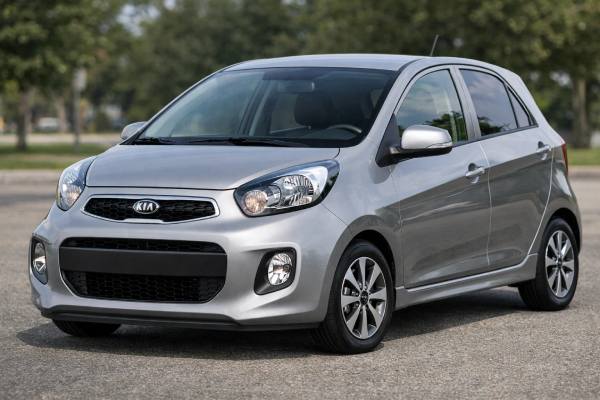
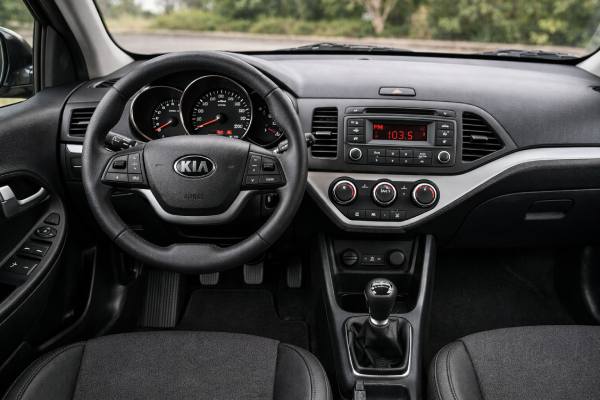

The facelifted Kia Picanto (TA) with the 1.0-liter B3LA engine targets a very specific sweet spot: low running costs, easy city packaging, and simple mechanicals that stay affordable long after warranty years are over. In 2015–2017 form, it gained tidier styling and, in many markets, small refinements to cabin materials and equipment while keeping the same straightforward formula—front-wheel drive, a lightweight hatch body, and a naturally aspirated three-cylinder built for economy rather than speed.
For owners, the appeal is how predictable it feels to service and live with. The engine’s modest output suits urban driving, and the car’s low mass reduces brake and tire wear compared with heavier superminis. The key is maintenance discipline: small engines work harder, so clean oil, a healthy cooling system, and attention to ignition and intake parts matter more than many buyers expect.
What to Know
- Expect very low routine running costs when you stay on top of oil changes and basic filters.
- Best as a city-first car: light steering, compact footprint, and easy parking visibility.
- Simple naturally aspirated 1.0 layout means fewer expensive turbo-related surprises.
- Watch for age-related rubber and cooling issues (hoses, thermostat, radiator cap) once mileage climbs.
- Change engine oil about every 10,000 km (6,000 mi) or 12 months, whichever comes first, for long-term durability.
Quick navigation
- Kia Picanto TA facelift basics
- Kia Picanto TA 1.0 specs table
- Kia Picanto TA trims and safety
- Known issues and fixes
- Maintenance schedule and buying tips
- Real-world driving and economy
- Rivals: which one fits
Kia Picanto TA facelift basics
The 2015–2017 facelift Picanto (TA) is a classic “small car done the simple way.” You get a short wheelbase, light curb weight, and a basic front-engine/front-wheel-drive layout designed to be inexpensive to build and inexpensive to keep. The B3LA-coded 1.0-liter engine (market naming varies) is the entry point in many regions. It trades outright performance for smooth daily usability and fuel economy, especially in mixed city driving where short distances and repeated cold starts are common.
A helpful way to understand this Picanto is to think in systems:
- Powertrain: a naturally aspirated three-cylinder that makes its power higher in the rev range, with modest low-end torque. That means it rewards clean ignition parts (plugs and coils) and an intake tract free of vacuum leaks. When those basics are correct, it starts cleanly, idles steadily, and pulls as expected for its size.
- Chassis: light weight is the “secret advantage.” At the same speed, a lighter car asks less of brakes and tires. That reduces consumable costs over time, and it’s why many Picantos feel mechanically “fresh” longer than heavier cars with the same mileage.
- Packaging: the cabin is tall for its footprint. You can fit adults up front comfortably, and the rear seats are usable for shorter trips or smaller passengers. Cargo space is modest with the seats up, but the hatch opening and fold-down rear seat make it practical for shopping runs.
For ownership, the biggest theme is that the Picanto is easy to keep healthy if you avoid neglect. Small engines run warmer and at higher average throttle openings than larger engines, particularly on highways. That does not mean the engine is fragile—it means oil quality, coolant condition, and airflow (clean filters and an unblocked radiator) matter more than buyers assume.
If you drive mostly short trips, your best “upgrade” is not an aftermarket part. It’s a routine that includes proper warm-up (gentle load for the first few minutes), regular oil changes, and occasional longer drives to fully heat-soak the oil and evaporate moisture. Do that, and the Picanto’s core strengths show: predictable repairs, low fuel use, and a car that stays pleasant to maneuver even as it ages.
Kia Picanto TA 1.0 specs table
The exact specification set depends on market, emissions standard, and gearbox choice, but the facelift TA 1.0 models are usually consistent in layout and sizing. Use the tables below as a practical reference, and verify final numbers by VIN/trim when ordering parts.
Powertrain and efficiency
| Item | Specification |
|---|---|
| Engine code | B3LA (market-dependent designation) |
| Layout | Front, transverse |
| Cylinders / valvetrain | Inline-3, DOHC (typical), 4 valves/cyl |
| Displacement | 1.0 L (≈998 cc) |
| Induction | Naturally aspirated |
| Fuel system | MPI (multi-point injection) |
| Timing drive | Chain (typical for this family) |
| Max power | 66 hp (≈49 kW) @ ~5,500–6,000 rpm* |
| Max torque | ~90–95 Nm (66–70 lb-ft) @ ~3,000–3,500 rpm* |
| Rated efficiency | Typically ~4.2–5.0 L/100 km (56–67 mpg UK / 47–56 mpg US)* |
| Real-world highway @ 120 km/h | Typically ~5.5–6.2 L/100 km (38–43 mpg US / 46–51 mpg UK)* |
*Figures vary by emissions calibration and transmission. Treat them as typical ranges.
Transmission and driveline
| Item | Specification |
|---|---|
| Drive type | FWD |
| Manual gearbox | Commonly 5-speed manual |
| Automatic gearbox | Some markets: 4-speed automatic (less efficient) |
| Differential | Open |
Chassis and dimensions
| Item | Specification |
|---|---|
| Front suspension | MacPherson strut |
| Rear suspension | Torsion beam |
| Steering | Electric power steering (EPS) |
| Brakes (front / rear) | Disc / drum (common on 1.0 trims) |
| Wheel and tire (typical) | 165/60 R14 or 175/50 R15* |
| Turning circle | ~9.6 m (kerb-to-kerb)* |
*Depends on trim and wheel package.
Exterior sizing and capacities
| Item | Typical value |
|---|---|
| Length | ~3,595 mm |
| Width | ~1,595 mm |
| Height | ~1,480–1,490 mm |
| Wheelbase | ~2,385 mm |
| Curb weight | ~860–980 kg (trim and gearbox dependent) |
| Fuel tank | ~35 L |
| Cargo volume | ~200 L seats up / ~870 L seats down (method varies) |
Performance (realistic expectations)
| Metric | Typical value |
|---|---|
| 0–100 km/h (0–62 mph) | ~14–16 s (manual), slower with 4AT |
| Top speed | ~155–165 km/h |
| Braking feel | More “light car” than “sporty car” — stable if tires and alignment are correct |
Fluids and service capacities (typical)
Because these vary by engine family and market, confirm with your service documentation before filling. The values below are practical approximations used for planning service.
| Fluid | Specification | Capacity (typical) |
|---|---|---|
| Engine oil | API/ACEA spec per market; common viscosity 5W-30 or 5W-40 | ~3.0 L (with filter) |
| Coolant | Ethylene glycol long-life coolant, 50/50 mix | ~4.0–4.5 L |
| Manual transmission oil | GL-4 gear oil (often 75W-85) | ~1.6–1.9 L |
| Brake fluid | DOT 3 / DOT 4 | Fill to system requirement |
| A/C refrigerant | R134a (most TA years) | Label value on vehicle |
Key torque specs (critical fasteners only, typical)
| Fastener | Typical torque |
|---|---|
| Wheel nuts/bolts | ~88–108 Nm (65–80 lb-ft) |
| Spark plugs | ~20–25 Nm (15–18 lb-ft) |
| Engine oil drain plug | ~30–40 Nm (22–30 lb-ft) |
These numbers are here to support decision-making and safe planning, not to replace the exact spec for your VIN.
Kia Picanto TA trims and safety
Trims on the facelift Picanto TA vary widely by country, but the pattern is consistent: the 1.0-liter model is often the “value core,” and higher trims add convenience and styling rather than major mechanical changes. When shopping, it helps to focus on the few items that truly change day-to-day ownership—gearbox type, tire size, and safety equipment level.
Trims and options that matter
Common trim themes include:
- Base / entry trims: usually steel wheels (often 14-inch), simpler audio, manual climate controls, and fewer cabin comfort features. The benefit is lower replacement cost for wheels/tires and often a lower curb weight.
- Mid trims: often add Bluetooth, steering wheel controls, better seat fabrics, and sometimes rear parking sensors or a reversing camera (market-dependent).
- Style trims: alloy wheels, body-color exterior add-ons, and more infotainment. These trims can look better, but they may increase tire cost and ride firmness.
Mechanical differences to watch:
- Manual vs automatic: a 4-speed automatic (where offered) typically increases fuel use and softens acceleration. It can still be reliable, but fluid condition becomes more important and you should expect slower passing performance.
- Wheel size: larger wheels can sharpen turn-in but often add road noise and cost more per tire. On a small hatch, comfort usually improves with the smaller wheel and taller sidewall.
Quick identifiers when inspecting
- Wheel and tire label: driver’s door jamb gives the factory tire size and pressures. It’s the fastest clue to what the car was originally built with.
- ABS/ESC lights at key-on: when you turn the ignition on, warning lights should illuminate briefly and then go out after starting. Missing lights can indicate a removed bulb or cluster issue.
- Seat-belt tags and ISOFIX/LATCH points: check the rear seat area for ISOFIX/LATCH anchors if you need child-seat compatibility.
Safety ratings and what they mean here
Safety ratings can be confusing because they are tied to the test year and the exact variant tested. For the Picanto TA generation, many safety discussions trace back to tests around the early 2010s, and facelift updates do not always trigger a new full test. The practical approach is:
- Use official test results as a baseline for structure and restraint design (airbags, belt pretensioners, load limiters).
- Verify what your specific car has in real hardware—airbags, ABS, ESC—because equipment levels can differ by market and trim.
Safety systems you may see (trim dependent)
- Airbags: front airbags are common; side and curtain airbags depend on trim and market.
- ABS: common, but confirm it’s present if you’re in a market where base cars could be simpler.
- ESC (stability control): sometimes standard in later years or higher trims, sometimes optional.
- ISOFIX/LATCH: commonly present, but confirm anchor locations and top tether points.
This model pre-dates widespread advanced driver assistance systems (ADAS) in the A-segment. If you see features like lane support or automatic emergency braking advertised on a used listing, verify carefully—those are more typical of newer generations or higher segments.
Known issues and fixes
The facelift Picanto TA 1.0 is generally straightforward, but age, mileage, and driving pattern shape what actually breaks. Below is a practical “shop-floor” view: what tends to happen, when it happens, and what you do about it.
Common, low-to-medium cost issues
- Ignition wear (plugs/coils)
- Symptoms: rough idle, hesitation, misfire under load, flashing check-engine light in severe cases.
- Likely cause: worn plugs, moisture intrusion, or aging coil packs.
- Remedy: replace spark plugs at the correct interval, and test coils before replacing. If one coil fails, consider replacing as a set if mileage is high.
- Throttle body and intake deposits
- Symptoms: unstable idle, sticky throttle response, occasional stalling when coming to a stop.
- Cause: deposits around the throttle plate, plus short-trip usage.
- Remedy: clean throttle body correctly, inspect intake hose for cracks, and confirm there are no vacuum leaks.
- Cooling system “small leaks”
- Symptoms: slow coolant loss, sweet smell, heater performance changes, temperature creeping in traffic.
- Cause: aging hoses, radiator cap, thermostat housing seepage.
- Remedy: pressure-test the cooling system, replace weak hoses/clamps, refresh coolant on schedule.
Occasional, medium cost issues
- Engine mounts
- Symptoms: vibration at idle, clunk on take-off, increased NVH (noise/vibration/harshness).
- Cause: rubber mount aging, especially on cars used in heavy stop-start traffic.
- Remedy: replace the worn mount(s) and re-check exhaust hangers; mounts often fail as a set over time.
- Front suspension wear
- Symptoms: knocking over bumps, wandering steering, uneven tire wear.
- Cause: worn drop links, bushings, or ball joints.
- Remedy: inspect systematically; replace worn components and do a proper alignment afterward.
Rare but higher-cost scenarios (still uncommon)
- Automatic transmission neglect (where fitted)
- Symptoms: harsh shifts, delayed engagement, flare between gears.
- Cause: old fluid, overheating, internal wear accelerated by neglect.
- Remedy: service with correct ATF at sensible intervals; if symptoms persist, diagnose before “flush” attempts that can worsen a failing unit.
- Catalyst or oxygen sensor faults
- Symptoms: check-engine light, reduced fuel economy, failed emissions test.
- Cause: aging sensors, exhaust leaks, or prolonged misfire damaging the catalyst.
- Remedy: fix misfires immediately, repair leaks, test sensors with live data rather than replacing blindly.
Service actions, recalls, and verification
Because recalls and service campaigns differ by country, the best practice is procedural:
- Run a VIN-based recall check through your market’s official channels or dealer network.
- Ask for proof of campaign completion on receipts or service history.
- If the car has had a cluster, ECU, or immobilizer-related repair, confirm you receive all working keys and that the security system behaves normally.
A well-maintained Picanto usually stays “small-car simple.” Most problems are not exotic; they’re basic wear, old fluids, and neglected ignition or cooling items. That’s good news for buyers—if you inspect carefully, you can avoid the expensive examples.
Maintenance schedule and buying tips
If you want this Picanto to be cheap for years, your maintenance plan should be conservative rather than bare-minimum. The engine is small and often driven hard (higher rpm, more throttle), so “fresh fluids and clean airflow” is the winning formula.
Practical maintenance schedule (distance or time)
Use whichever comes first:
- Engine oil and filter: every 10,000 km (6,000 mi) or 12 months.
- If you do mostly short trips, consider 7,500 km (4,500 mi) intervals.
- Engine air filter: inspect every 10,000–15,000 km; replace about every 20,000–30,000 km depending on dust.
- Cabin air filter: every 12 months (or sooner in dusty cities).
- Spark plugs: typically 40,000–60,000 km (confirm plug type; iridium lasts longer).
- Coolant: every 4–5 years (or per official coolant type). Replace sooner if contamination is present.
- Brake fluid: every 2 years regardless of mileage.
- Brakes (pads/rotors/drums): inspect every service; rear drums can last long but still need cleaning and adjustment checks.
- Manual transmission oil: every 60,000–100,000 km (earlier if shifting becomes notchy).
- Automatic transmission fluid (if equipped): about every 50,000–80,000 km in hot climates or heavy traffic use.
- Accessory belt and hoses: inspect yearly after 5+ years; replace at the first sign of cracking or glazing.
- 12 V battery: test annually after year 3; many last 3–5 years depending on heat and usage.
Fluid specs and what to buy
- Oil viscosity: many markets allow 5W-30; hotter climates often tolerate 5W-40. Prioritize the correct quality standard over chasing a brand.
- Coolant: use the correct long-life type and a 50/50 mix unless local guidance differs.
- Gear oil: use the correct GL rating; wrong oil can make shifting worse.
Buyer’s guide: inspection checklist
Bring a flashlight and take your time:
- Cold start behavior: it should start promptly and settle into a stable idle within seconds. Rough idle suggests ignition or vacuum issues.
- Cooling system: check for dried coolant residue around hose joints, radiator end tanks, and thermostat area. Confirm the radiator fan cycles normally.
- Transmission feel: manual should shift cleanly without crunching; clutch engagement should be smooth with no slip under load. Automatic should engage promptly and shift consistently.
- Suspension and steering: listen for knocks over small bumps; check for uneven tire wear that hints at alignment or worn bushings.
- Brakes: pedal should be firm, not spongy; rear drums should not squeal excessively.
- Electrics: confirm windows, central locking, A/C performance, and that warning lights behave correctly at key-on.
What to seek (and what to avoid)
- Seek: cars with documented oil changes, coolant service evidence, and consistent tire wear (sign of alignment and suspension health).
- Be cautious with: cars that have been “cheap-serviced” with unknown fluids, or cars with overheating history—small engines do not tolerate repeated heat stress well.
- Trim advice: if you value comfort, a mid-trim with smaller wheels is often the best compromise. If you value simplicity and cost control, base trims can be excellent if safety equipment meets your needs.
Long-term outlook is good when maintenance is steady. Most high bills come from neglect, not from a fundamentally problematic design.
Real-world driving and economy
In daily use, the facelift Picanto TA 1.0 feels like what it is: a light, narrow car that was engineered for city movement first and highway work second. If you set expectations correctly, it’s a satisfying little machine.
Ride, handling, and NVH
- Ride quality: on smaller wheels, the Picanto absorbs sharp edges better than many expect. The torsion-beam rear is simple but predictable. On larger wheels with lower-profile tires, you’ll hear more road texture and feel more sharp impacts.
- Handling balance: the car turns in quickly at low speeds, largely because it is light. At higher speeds, it can feel more sensitive to crosswinds than a larger supermini—normal for an A-segment hatch.
- Steering: EPS is light, which helps parking. Feedback is limited, but the system is consistent and easy to judge in tight spaces.
- Cabin noise: engine note becomes prominent under acceleration because three-cylinder engines have a distinct sound and must rev to make power. At a steady cruise, tire choice and road surface dominate noise levels.
Powertrain character
The naturally aspirated 1.0 does not deliver strong low-rpm shove. To merge cleanly or pass safely, you often downshift and let it rev. That’s not abuse; it’s how the engine is designed to work. Owners who keep the engine lugging at low rpm tend to feel it’s “weak,” while owners who use the gearbox properly find it responsive enough for its role.
Manual gearboxes suit this engine well because you can keep it in the middle of the rev range. A 4-speed automatic (where fitted) is smoother in traffic but can feel reluctant on hills and usually costs you fuel economy.
Real-world economy (what owners typically see)
Your results depend on speed, wind, and tire pressure, but these are realistic expectations when the car is healthy:
- City-heavy driving: often the best-case scenario for this Picanto because of low mass—typically around 5.0–6.0 L/100 km.
- Mixed driving: often 4.7–5.7 L/100 km.
- Highway at 100–120 km/h: often 5.5–6.2 L/100 km, with higher figures in strong headwinds or hilly routes.
Cold weather and short trips can raise consumption significantly. The engine warms up quickly, but frequent cold starts increase enrichment time and can cause moisture buildup in oil. That’s why shorter oil intervals make sense for short-trip drivers.
Key performance metrics that matter in practice
- 0–100 km/h: not quick, but consistent. It feels more willing above mid-range rpm.
- Braking confidence: solid when tires are good and the rear drums are adjusted properly.
- Turning circle: a genuine advantage in crowded cities—tight turns and parking maneuvers are easy.
If you want a calm commuter that feels small and light rather than “cheap,” focus on tire quality, correct pressures, and keeping suspension bushings and alignment in shape. Those factors do more for the driving experience than chasing engine mods.
Rivals: which one fits
The Picanto TA 1.0 competes in a crowded A-segment space, where the best choice depends less on horsepower and more on ride comfort, safety equipment, and long-term parts cost. Here’s a practical comparison framework.
If you want the simplest ownership
- Picanto 1.0 vs similar city hatches: the Picanto’s advantage is the “known quantity” feel—straightforward drivetrain, common service parts, and no exotic technology. In many markets, independent workshops know it well.
- Look for: a rival that also avoids complex turbo systems if your priority is predictable servicing.
If you want the best highway composure
Many city cars feel busy at higher speeds. For frequent motorway drivers, prioritize:
- better sound insulation,
- a longer wheelbase where available,
- and gearing that keeps rpm calmer at cruise.
In this category, some larger B-segment superminis can feel more relaxed than any A-segment car. If you can accept slightly higher running costs, stepping up a class can be worth it.
If you want the most safety tech
The facelift TA era sits at an awkward time: many cars had ABS and airbags, but widespread AEB and lane support were not yet common in the segment. Newer rivals (or newer generations) are more likely to offer modern ADAS.
Practical advice:
- Compare actual equipment on the car, not just the model name.
- If ESC is important to you, confirm it on the specific trim and year in your market.
If you care most about fuel cost
A naturally aspirated 1.0 can be very efficient in urban driving, but efficiency differences between rivals often come from:
- transmission choice (manual vs old-style automatic),
- tire width and rolling resistance,
- and driver speed.
If your local fuel prices are high and you drive mostly in traffic, the Picanto’s light weight is a real advantage. If you drive fast highways daily, some rivals with taller gearing may match or beat it in real fuel use.
Value verdict
Choose the Picanto TA 1.0 if you want:
- low-cost consumables,
- easy maneuvering,
- and a powertrain that stays serviceable without specialist tools.
Choose a rival (or a higher class) if you prioritize:
- high-speed comfort,
- the newest driver assistance features,
- or maximum cabin quietness.
In short, the Picanto is strongest when used as intended: a practical urban hatch that remains financially sensible when maintained properly.
References
- Check if a vehicle, car seat, or tyre has been recalled 2024 (Recall Database)
- Euro NCAP | The European New Car Assessment Programme 2025 (Safety Rating)
- INFORMAZIONI TECNICHE – Nuova Picanto 2017 (Technical Specifications)
- KIA PICANTO SPECIFICATIONS 2015 (Technical Specifications)
Disclaimer
This article is for informational purposes only and is not a substitute for professional diagnosis, inspection, or repair. Specifications, torque values, service intervals, and procedures vary by VIN, market, and equipment, so always verify details against your official owner’s manual and factory service documentation before ordering parts or performing work.
If you found this guide useful, please consider sharing it on Facebook or X/Twitter to help others find reliable maintenance and ownership information.