
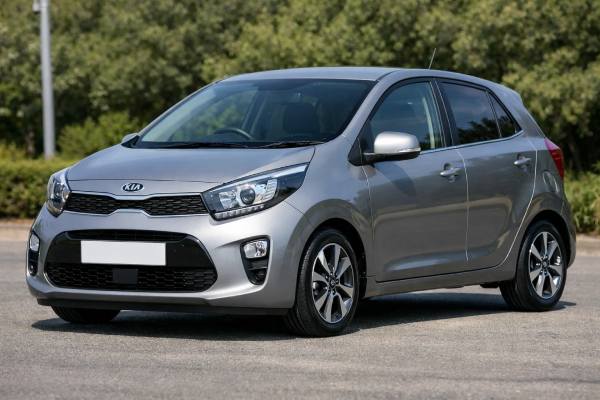

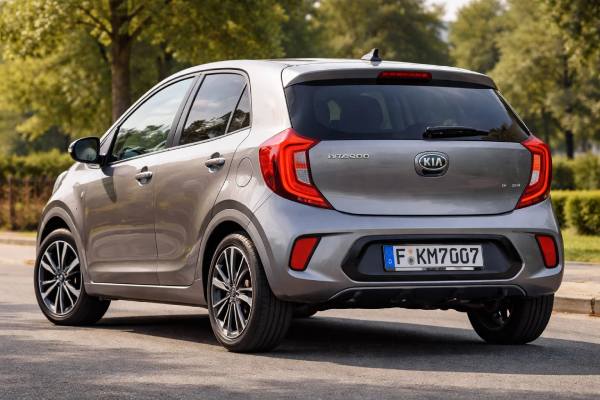
If you like the idea of a city car but dislike the “worked hard” feel of many 1.0-litre engines, the 2017–2020 Kia Picanto (JA) with the 1.2-litre G4LA (often sold as a 1.25 MPi) is the more relaxed choice. The extra cylinders and torque don’t turn it into a hot hatch, but they do make everyday driving smoother—especially with passengers, air conditioning, or a hill on your route. It’s still a simple naturally aspirated, port-injected petrol setup, which tends to be forgiving when maintained on schedule.
The key to buying well is understanding how widely equipment varies. Two Picantos of the same year can differ in braking hardware, wheel and tyre packages, and—most importantly—active safety features such as autonomous emergency braking (AEB). Choose the best-maintained car with the safety and comfort features you’ll actually use.
Owner Snapshot
- Smoother and more flexible than the 1.0 in real traffic, with fewer “must downshift” moments.
- Strong value when paired with sensible wheel sizes and a complete service record.
- Naturally aspirated MPi design is typically tolerant of short-trip use if oil changes stay consistent.
- Verify whether AEB is fitted; availability depends heavily on trim and optional packs.
- Expect routine servicing at 12 months / 10,000 miles (16,000 km) (whichever comes first), unless your local schedule differs.
Navigate this guide
- Kia Picanto JA 1.2 explained
- Kia Picanto JA 1.2 specifications
- Kia Picanto JA trims and ADAS
- Common faults and fixes
- Service schedule and buying
- Road manners and economy
- Picanto vs i10 and up
Kia Picanto JA 1.2 explained
The 1.2-litre Picanto (JA) sits at the “grown-up city car” end of the A-segment. You still get the core benefits—compact parking footprint, low tyre and brake costs, light steering—but the four-cylinder engine changes the car’s character. The biggest difference isn’t peak horsepower; it’s how often you can hold a taller gear without the engine feeling strained. In stop-and-go traffic, that means fewer rev spikes. On ring roads and motorways, it means a steadier cruise with less thrash when the road rises or you meet a headwind.
Mechanically, this version is also appealing because it avoids the complexity that sometimes comes with small turbo engines. The G4LA/1.25 MPi layout is naturally aspirated and uses multi-point injection (MPi), so it generally runs cleanly on normal fuel and doesn’t depend on high boost pressures or delicate charge-air plumbing. For owners who do short trips, that simplicity can translate into fewer expensive “secondary failures” (for example, heat-related hose issues or turbo oil-feed problems). The trade is that you don’t get a big torque surge; acceleration is linear, and you plan overtakes rather than expecting instant shove.
This generation’s platform is predictable and easy to place on the road. The Picanto’s short wheelbase and torsion-beam rear suspension are tuned for stability and agility rather than plush isolation. In practice, the ride quality depends heavily on wheel size: the smallest wheels usually deliver the most comfortable result on broken urban surfaces, while larger wheels can sharpen response but add impact harshness and road noise.
From a buyer’s point of view, “Picanto” is not a single spec. Some cars have rear drums, others rear discs, and safety equipment can range from basic stability control to a more modern AEB-equipped setup. If you care about safety tech, shop by feature, not by trim badge. If you care about running costs, prioritize a complete service record and matching tyres over cosmetic condition—because a neglected cooling system or cheap tyre set can undo the savings of a small car very quickly.
Kia Picanto JA 1.2 specifications
The tables below focus on the 2017–2020 Picanto (JA) with the 1.2-litre G4LA family engine, commonly marketed as 1.25 MPi in many regions. Figures can vary by market approval cycle (NEDC vs WLTP), wheel/tyre package, and gearbox, so treat these as a solid baseline and verify by VIN where possible.
Powertrain and efficiency
| Item | Specification |
|---|---|
| Code | G4LA (often sold as 1.25 MPi) |
| Engine layout and cylinders | Inline-4, 4 cylinders; DOHC; 4 valves/cyl (16V) |
| Bore × stroke | 71.0 × 78.8 mm (2.80 × 3.10 in) |
| Displacement | 1.25 L (1,248 cc) |
| Induction | Naturally aspirated (NA) |
| Fuel system | MPi (multi-point/port injection) |
| Compression ratio | 10.5:1 |
| Max power | 84 hp (62 kW) @ 6,000 rpm |
| Max torque | 122 Nm (90 lb-ft) @ 4,000 rpm |
| Timing drive | Chain (typical for this engine family) |
| Rated efficiency (example, manual) | 4.6 L/100 km (61.4 mpg US / 73.7 mpg UK) combined (cycle-dependent) |
| Rated efficiency (example, 4AT) | 5.4 L/100 km (52.3 mpg US / 62.8 mpg UK) combined (cycle-dependent) |
| Real-world highway @ 120 km/h (75 mph) | Typically ~5.8–6.8 L/100 km depending on load, tyres, wind, and temperature |
Transmission and driveline
| Item | Specification |
|---|---|
| Transmission | 5-speed manual (common) or 4-speed automatic (market-dependent) |
| Drive type | FWD |
| Differential | Open |
Example gear ratios (UK-market sheet):
| Gear | 5-speed manual | 4-speed automatic |
|---|---|---|
| 1st / 2nd / 3rd / 4th / 5th | 3.545 / 1.895 / 1.192 / 0.906 / 0.719 | 2.919 / 1.551 / 1.000 / 0.713 / n/a |
| Reverse | 3.636 | 2.480 |
| Final drive | 4.235 | 4.587 |
Chassis, dimensions, and capacity
| Item | Specification |
|---|---|
| Suspension (front/rear) | MacPherson strut / torsion beam |
| Steering | Electric power steering (ratio varies) |
| Brakes | Front ventilated discs; rear drums or discs depending on trim/market |
| Wheels and tyres (popular sizes) | 175/65 R14, 185/55 R15, 195/45 R16 (trim-dependent) |
| Length / width / height | 3,595 / 1,595 / ~1,485 mm (141.5 / 62.8 / 58.5 in) |
| Wheelbase | 2,400 mm (94.5 in) |
| Turning circle | ~4.7–4.8 m radius (about 9.4–9.6 m kerb-to-kerb) |
| Kerb weight (range) | ~939–1,058 kg (2,070–2,333 lb) depending on gearbox and trim |
| GVWR (example) | 1,400 kg (3,086 lb) |
| Fuel tank | 35 L (9.2 US gal / 7.7 UK gal) |
| Cargo volume | 255 L (9.0 ft³) seats up; 1,010 L (35.7 ft³) seats down (method varies by source) |
Performance and capability
| Item | 5-speed manual (example) | 4-speed automatic (example) |
|---|---|---|
| 0–60 mph acceleration | ~11.6 s | ~13.2 s |
| Top speed | ~107 mph (172 km/h) | ~100 mph (161 km/h) |
| Payload | Check door-jamb label; varies by trim and country |
Fluids, service capacities, and key torques
| Item | Specification (typical guidance) |
|---|---|
| Engine oil | ACEA C2 0W-20 in some markets; capacity ~3.5 L (service fill guidance varies by documentation) |
| Coolant | Long-life OAT-type common; mix ratio and capacity vary by climate pack |
| ATF (if 4AT) | Use the exact approved spec for your region; capacity varies with drain vs overhaul |
| A/C refrigerant | Check under-hood label for type and charge amount |
Common critical torque examples (verify for your VIN):
- Wheel nuts: typically ~88–108 Nm (65–80 lb-ft)
- Oil drain plug: commonly ~25–40 Nm (18–30 lb-ft)
Kia Picanto JA trims and ADAS
The Picanto’s trim structure is best understood as “equipment families,” because trim names differ across countries and can be reused in confusing ways. For shopping and ownership decisions, focus on three buckets: wheel/tyre package, comfort tech, and safety/driver assistance.
Trims and options that change how the car feels
Wheel and tyre packages:
This is the hidden lever that shapes comfort, noise, and running costs.
- 14-inch setups (often 175/65 R14) usually ride best over potholes and expansion joints, and tyres are cheapest.
- 15-inch setups can add a little precision without a big comfort penalty if the tyre sidewall remains sensible.
- 16-inch setups (often 195/45 R16 on sport-styled trims) can feel sharper but transmit more impact harshness and raise tyre costs.
Gearbox choices:
The 5-speed manual is typically the most efficient and responsive pairing for the 1.25 MPi. A 4-speed automatic, where offered, prioritizes ease in traffic but can feel busier at speed and uses more fuel. If you test-drive an automatic, pay attention to how it handles gentle inclines and whether it “hunts” between gears.
Infotainment tiers:
Larger touchscreens, smartphone mirroring, and better audio are common step-ups on mid and higher grades. These options matter because they also tend to bring convenience features like a reversing camera—useful in a small car not because it’s hard to park, but because the camera reduces bumper scuffs over time.
Safety ratings and what “pack vs standard” means
In 2017 Euro NCAP testing, the Picanto was assessed in two forms: one with standard equipment and another with an advanced safety pack. The difference is not a small detail. The “pack” rating reflects extra driver-assistance features such as AEB, which can lift the Safety Assist score considerably. If you’re comparing used cars, prioritize the presence of AEB and stability-control functionality over cosmetic trim upgrades.
Safety systems and ADAS you should verify
On a used Picanto, confirm these items in person:
- Airbags and restraints: front airbags, side airbags, curtain airbags (varies), and working seatbelt reminders.
- Child-seat provisions: ISOFIX/LATCH points and top tether anchors; check access with your child seat installed.
- Core stability systems: ABS and ESC (electronic stability control) are foundational; confirm no warning lights and that tyres match as a set.
- AEB availability: ask specifically whether it’s fitted and test that the dashboard indicator behaves normally at key-on.
- After-repair implications: if the car uses camera-based systems, windshield replacement quality matters. Poor glass or incorrect mounting can cause sensor faults or reduce effectiveness.
Year-to-year changes are often subtle in this model: small infotainment revisions, lighting updates, or broader availability of driver-assistance on later cars in certain markets. That’s why the best approach is simple: make a checklist of must-have features, then verify them against the VIN build and physical car—not just the seller’s trim label.
Common faults and fixes
The Picanto JA 1.25 MPi is generally a dependable package, but it’s still a small car living a hard life: short trips, curb strikes, potholes, and stop-start cycles. The most useful way to view reliability is by prevalence and cost tier, because many issues are cheap early and expensive late.
Common and usually low-cost
- 12 V battery and voltage sensitivity (common, low/medium):
Symptoms: slow cranking, intermittent infotainment resets, warning lights that clear after driving.
Root cause: repeated short trips and long idle periods reduce charge; older batteries sag under load.
Remedy: load-test the battery, clean terminals, confirm alternator output; replace proactively after year 4–6 in heavy city use. - Brake hardware wear and slider corrosion (common, low/medium):
Symptoms: squeal, uneven pad wear, dragging feel, or vibration.
Root cause: moisture and road salt, plus gentle braking habits that never heat the discs.
Remedy: service slide pins, replace pads/rotors if worn, and flush brake fluid on schedule. - Tyre-related vibration and tramlining (common, low):
Symptoms: steering shimmy at a specific speed, wandering on grooves, increased road noise.
Root cause: budget tyres, uneven wear from skipped rotations, or bent wheels after potholes.
Remedy: rotate tyres regularly, balance properly, and inspect wheel runout after impacts.
Occasional issues that can become costly if ignored
- Cooling system seepage (occasional, medium):
Symptoms: coolant level slowly dropping, sweet smell, dampness around hose joints, or temperature creep in traffic.
Root cause: aging hose clamps, minor radiator seepage, or stress from repeated heat cycles.
Remedy: pressure-test and fix early. Overheating is the event that turns “minor leak” into major engine risk. - Engine mount fatigue (occasional, medium):
Symptoms: vibration at idle, thump on take-off, more drivetrain movement during shifts.
Root cause: rubber mount wear accelerated by frequent stop-start and curb bumps.
Remedy: inspect mounts and torque reaction link; replace the worn mount rather than chasing “mystery vibrations.” - Automatic gearbox shift quality (occasional, medium):
Symptoms: delayed engagement, flare between gears, harsh downshift when warm.
Root cause: old ATF, adaptation issues, or wear from neglected service.
Remedy: confirm the correct service procedure for your region (some units prefer drain-and-fill cycles); avoid aggressive flushing unless specified.
Rare but important screening items
- Timing drive noise or correlation faults (rare, medium/high):
Symptoms: persistent rattle beyond a brief cold-start moment, fault codes, rough running.
Root cause: chain/tensioner/guide wear or oil maintenance neglect.
Remedy: diagnose promptly; address the root cause and avoid extended driving with timing faults. - ADAS and camera faults (rare/occasional, medium):
Symptoms: AEB/ESC warnings, camera errors, lane-related alerts (where fitted).
Root cause: low battery voltage, windshield/camera mounting issues, or misalignment after a front-end repair.
Remedy: start with battery health and wiring checks, then verify calibration requirements.
Recalls, TSBs, and service actions
Campaigns vary by region and VIN range, so the best practice is universal: run an official VIN check, ask for proof of completion, and treat missing documentation as a negotiating point. For a small car, a clean history and correct tyres often predict ownership satisfaction better than chasing a long list of “possible issues.”
Service schedule and buying
A well-maintained Picanto is cheap to own; a neglected one becomes death-by-a-thousand-cuts. The goal is to keep fluids fresh, protect the cooling system, and prevent small chassis wear from turning into noisy, unpleasant driving. Use your local owner’s manual as the authority, but this schedule is a practical baseline for most 2017–2020 1.25 MPi cars.
Maintenance schedule you can actually follow
| Item | Interval (distance/time) | Why it matters |
|---|---|---|
| Engine oil and filter | 10,000 miles (16,000 km) / 12 months | Short trips contaminate oil faster than mileage suggests |
| Tyre rotation and pressure check | 5,000–8,000 miles (8,000–13,000 km) | Prevents uneven wear and keeps braking consistent |
| Cabin air filter | 12 months | HVAC performance and demisting depend on it |
| Engine air filter | 20,000–30,000 miles (32,000–48,000 km) | Protects the engine from dust; inspect yearly |
| Brake fluid | Every 2 years | Prevents corrosion and maintains boiling point |
| Coolant | Per long-life interval for your market | Keeps corrosion inhibitors active; prevents overheating |
| Spark plugs | Commonly 40,000–60,000 miles (64,000–96,000 km) | Maintains smooth idle and fuel economy |
| Alignment check | Annually or after hard impacts | Saves tyres and preserves straight-line stability |
| Battery test | Annually after year 3 | Avoids intermittent electrical issues and no-start events |
Fluid specifications that prevent expensive mistakes
- Engine oil: many markets specify ACEA C2 with a modern low-viscosity grade such as 0W-20 for this engine family; follow the exact approval and interval in your documentation. The “right oil on time” is more important than chasing a boutique brand.
- Brake fluid: stick to the correct DOT specification; replace on time rather than topping up repeatedly.
- Coolant: use the correct long-life coolant type and mix ratio. Mixing incompatible coolants is a common cause of sludge and heater-core issues in older cars.
Buyer’s guide: what to inspect before you commit
1) Evidence of care
- Stamped service book or invoices matching the interval pattern
- Matching tyres with even wear (mismatched tyres often signal cheap upkeep)
- Clean coolant with stable level
2) Mechanical quick checks
- Cold start: steady idle, no persistent rattles
- Clutch: smooth engagement, no slip in a high-gear pull
- Brakes: consistent pedal feel and straight stops
3) Electronics and safety
- No warning lights (ABS/ESC/AEB if equipped)
- Camera and sensors function correctly
- A/C blows cold and changes temperature smoothly
Which versions age best
In most markets, the best long-term bet is a mid-trim 1.25 MPi with sensible wheels, a complete service history, and (ideally) AEB. Sport-styled trims can still be excellent, but budget for higher tyre costs and be stricter about suspension condition. If you do mostly motorway miles, the manual gearbox often feels more in control and more efficient than the 4-speed automatic.
Road manners and economy
The 1.25 MPi Picanto is at its best when driven like a light, efficient car—not a fast one. It rewards smooth throttle inputs and early anticipation, and it feels more composed than many 1.0-litre rivals when you add passengers or luggage. The chassis is nimble, but the way it rides and sounds is closely tied to wheel size and tyre quality.
Ride, handling, and NVH (noise, vibration, and harshness)
- Ride: On 14-inch wheels, the suspension deals with potholes and sharp edges more gracefully, which matters in real city use. On 16-inch wheels, you often feel more “impact” over broken tarmac and hear more tyre roar.
- Handling: Steering is light and predictable, making tight streets easy. In faster corners, the rear torsion beam is stable, and the car tends toward safe understeer. Quality tyres make a bigger difference here than any “sport” badge.
- Highway comfort: The 1.25’s extra flexibility reduces the need for frequent downshifts, which helps fatigue. Wind noise and road noise remain A-segment-normal, but a good touring tyre can noticeably calm the cabin.
Powertrain character and gearbox behavior
The 1.25 MPi delivers power in a smooth, linear way. You won’t get a turbo-style surge, but you do get usable response in the mid-range. For daily driving:
- In a manual, the gearing typically allows you to short-shift in gentle traffic, then rev out cleanly for merges.
- In a 4-speed automatic, the car prioritizes ease and can feel a bit busy at higher speeds, especially on grades. On a test drive, pay attention to whether it holds gears smoothly or repeatedly shifts up and down.
Driving technique that improves real-world results:
- Let the engine warm gently; avoid high load at cold temperatures.
- Use steady throttle at speed; small engines lose efficiency when you demand full power repeatedly.
- Keep tyres at correct pressure; underinflation is a hidden fuel and tyre-life penalty.
Real-world efficiency expectations
Using cycle figures as a reference point, the manual version can look impressively efficient on paper. In reality, most owners see:
- City: ~5.7–7.0 L/100 km depending on traffic, trip length, and temperature
- Highway (100–120 km/h): ~5.3–6.8 L/100 km depending on wind and tyre choice
- Mixed: often in the mid-5s to mid-6s L/100 km
Cold weather is the main swing factor. Short winter trips can push consumption up because the engine spends a larger share of time warming, and cabin heat demands add load. If your usage is mostly short trips, consider slightly shorter oil-change intervals than the maximum schedule and prioritize battery health checks—both reduce the “small car nuisance problems” that frustrate owners.
Picanto vs i10 and up
The Picanto’s closest rivals are other A-segment hatchbacks that target the same mission: cheap to run, easy to park, and durable in city life. The best choice is rarely about one headline spec; it’s about how the car fits your routes and what equipment you can find in good condition.
Against the Hyundai i10
The Hyundai i10 is the most direct cross-shop because it often shares similar engineering philosophy and, in some markets, comparable powertrains. Your decision usually comes down to:
- Availability and spec mix: whichever brand offers more cars with AEB, better tyres, and documented servicing in your area often wins.
- Ride tuning: minor differences can matter on rough roads—test the exact wheel size you’re considering.
- Interior ergonomics: both are good for the class, but controls, seat comfort, and noise levels vary by trim.
Against the Volkswagen up!
The up! often appeals to drivers who want a more “solid” highway feel and a slightly more mature cabin presentation. Depending on market and year, it can be quieter at speed. The trade can be higher parts pricing and a different reliability profile, especially as mileage rises. If you do more motorway work, the up! may feel calmer; if you do mostly city work, the Picanto’s cost profile and straightforward mechanical layout can be a stronger fit.
Against Toyota Aygo-class competitors
Aygo-class cars can be excellent for pure city use, but pay attention to engine character and equipment levels. Some are extremely light and efficient but noisier at speed. If your driving includes frequent fast roads, the Picanto 1.25’s extra flexibility can make it feel less strained.
A quick decision framework
- Choose the best-maintained car first: service history, coolant condition, matching tyres, and healthy battery.
- Choose the safety-equipped car second: AEB (if available in your market) is the feature most likely to matter day-to-day.
- Choose the right wheel size third: smaller wheels often deliver the best comfort and lowest running costs.
Value verdict: a well-kept 2017–2020 Picanto 1.25 MPi is a strong, sensible buy for city-heavy life with occasional highway work. The bad deals are the neglected cars—especially those with mismatched tyres, deferred fluids, or unresolved warning lights—because small cars only stay cheap when they’re kept on schedule.
References
- picanto_2017-specification.pdf 2017 (Technical Specification)
- Official Kia Picanto safety rating 2017 (Safety Rating) ([euroncap.com][1])
- Official Kia Picanto (full safety package) safety rating 2017 (Safety Rating) ([euroncap.com][2])
- Kia Recalls | Kia Europe 2026 (Recall Database) ([Kia][3])
- Engine Oil Grades and Capacities 2023 (Technical Guide)
Disclaimer
This article is for informational purposes only and is not a substitute for professional diagnosis, inspection, or repair. Specifications, torque values, service intervals, and procedures vary by VIN, market, model year, and equipment level. Always verify details using the official owner’s manual and service documentation for your specific vehicle.
If this guide helped you, please consider sharing it on Facebook, X (Twitter), or your preferred community space to support our work.