
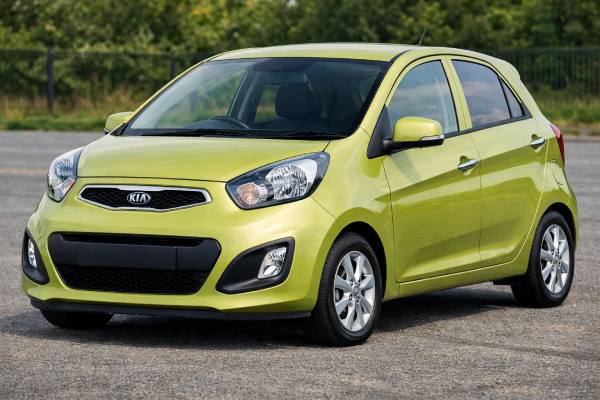
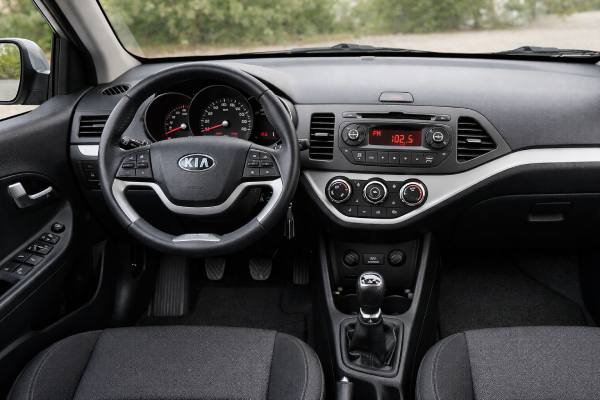
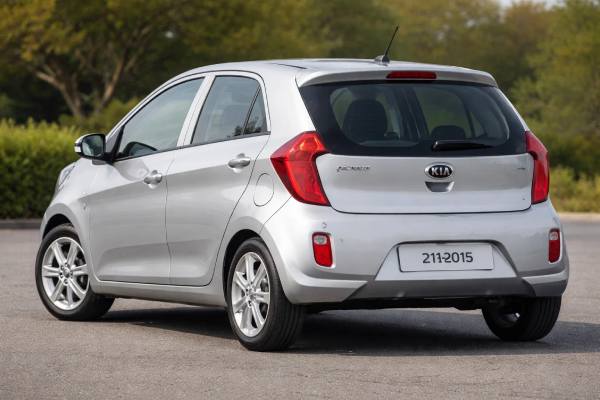
The second-generation Kia Picanto (TA) with the 1.2-liter G4LA engine is the “grown-up” choice in the city-car class: still compact and easy to park, but with enough torque and gearing to feel relaxed on faster roads. This four-cylinder petrol setup is simple by modern standards, which is a plus for long-term ownership—fewer high-cost systems, straightforward servicing, and good parts availability in most markets.
Where it rewards careful ownership is routine maintenance and heat management. Short-trip life can be tough on any small engine, so oil quality, coolant condition, and ignition health matter more than people expect. If you buy one today, condition and service history outweigh badge or trim. A well-kept Picanto TA 1.2 can be a dependable commuter with low running costs and easy DIY-friendly jobs.
Quick Specs and Notes
- Strong “city plus” powertrain for a small hatch; the 1.2 is noticeably less strained than most 1.0 options.
- Simple, mostly mechanical ownership experience—few expensive driver aids to fail.
- Light weight keeps tyres, brakes, and fuel spend modest when maintenance is current.
- Watch for neglected oil changes and weak ignition components on higher-mileage cars.
- Plan for engine oil and filter service every 15,000 km (10,000 mi) or 12 months, sooner in severe use.
Guide contents
- Picanto TA 1.2 ownership brief
- Picanto TA G4LA technical specs
- Picanto TA equipment and safety
- Reliability patterns and fixes
- Maintenance plan and buying tips
- Driving character and real mpg
- Rivals: which one to choose
Picanto TA 1.2 ownership brief
The 2011–2015 Picanto TA was a meaningful step forward from earlier Picantos: a stiffer body structure, more mature suspension tuning, and a cabin that feels less “basic appliance” than many rivals from the same years. With the G4LA 1.2 petrol engine, it also avoids the most common complaint about small city cars—feeling overworked the moment you leave town.
In real ownership terms, this version tends to be at its best for:
- Daily commuting with mixed speeds (urban plus ring roads or short motorway stretches).
- New drivers who need predictable controls and low operating costs.
- High-density parking thanks to tight turning and compact overhangs.
The G4LA’s character is friendly: it revs willingly but does not require constant high rpm to keep pace with traffic. That matters because sustained high rpm is where small engines amplify noise, vibration, and fuel consumption. The 1.2 also pairs better with air conditioning and a full cabin than most 1.0-liter alternatives of the period.
That said, the Picanto TA 1.2 is not a “set-and-forget” car. It stays reliable when it gets the basics:
- Correct oil grade and on-time changes.
- A cooling system that is kept full, clean, and leak-free.
- Ignition components (plugs and coils) replaced before they start misfiring.
Think of it as a simple car that rewards simple discipline. When service is skipped, the symptoms show up quickly—rough idle, higher fuel use, weak heater output, and “mystery” warning lights caused by tired sensors or low battery voltage. Buy on condition, not on trim badges.
Picanto TA G4LA technical specs
Below are the most useful specs for the Picanto (TA) 1.2 G4LA. Exact figures can vary slightly by market, emissions calibration, and gearbox. Where owners see small differences (for example, 84 vs 85 hp), it is often rounding between PS, hp, and kW.
Powertrain and efficiency
| Item | Specification |
|---|---|
| Code | G4LA |
| Engine layout and cylinders | Inline-4, DOHC, 4 cylinders, 4 valves/cyl |
| Displacement | 1.2 L (1,248 cc) |
| Bore × stroke | typically ~71.0 × 78.8 mm (2.80 × 3.10 in) |
| Induction | Naturally aspirated (NA) |
| Fuel system | Multi-point injection (MPI) |
| Compression ratio | typically ~10.5:1 (market dependent) |
| Max power | 85 hp (63 kW) @ ~6,000 rpm* |
| Max torque | ~121 Nm (89 lb-ft) @ ~4,000 rpm* |
| Timing drive | Chain (typical for this engine family) |
| Rated efficiency | commonly ~4.8–5.5 L/100 km (49–59 mpg US / 51–65 mpg UK)** |
| Real-world highway @ 120 km/h (75 mph) | ~5.8–6.6 L/100 km (36–41 mpg US / 43–49 mpg UK) |
*Output and rpm points vary by market and emissions tune.
**Official test cycles differ (NEDC vs later reporting methods), so treat this as a typical range.
Transmission and driveline
| Item | Specification |
|---|---|
| Transmission | 5-speed manual (most common); 4-speed automatic in some markets |
| Drive type | FWD |
| Differential | Open |
Chassis and dimensions (typical TA hatchback)
| Item | Specification |
|---|---|
| Suspension (front/rear) | MacPherson strut / torsion beam |
| Steering | Electric power steering (EPS), rack and pinion |
| Brakes | Front discs, rear drums (many trims); some markets offer rear discs |
| Wheels and tyres (popular) | 175/50 R15 or 165/60 R14 (varies by trim) |
| Length / width / height | ~3,595 mm (141.5 in) / 1,595 mm (62.8 in) / 1,480 mm (58.3 in) |
| Wheelbase | ~2,385 mm (93.9 in) |
| Turning circle (kerb-to-kerb) | ~9.4–9.8 m (30.8–32.2 ft) |
| Kerb (curb) weight | ~900–1,000 kg (1,984–2,205 lb) |
| Fuel tank | ~35 L (9.2 US gal / 7.7 UK gal) |
| Cargo volume | typically ~200 L (7.1 ft³) seats up; varies by method |
Performance (realistic expectations)
| Metric | Typical |
|---|---|
| 0–100 km/h (0–62 mph) | ~11.0–12.5 s (manual generally quicker than 4AT) |
| Top speed | ~165–175 km/h (103–109 mph) |
| Braking distance 100–0 km/h | strongly tyre-dependent; often ~38–42 m (125–138 ft) on good tyres |
Fluids and service capacities (common planning values)
| Item | Typical specification (verify by VIN) |
|---|---|
| Engine oil | 5W-30 or 5W-20 (market dependent); API and ACEA spec per handbook |
| Engine oil capacity | ~3.3–3.8 L (3.5–4.0 US qt) with filter |
| Coolant | Ethylene glycol long-life coolant; 50:50 mix typical |
| Coolant capacity | ~4.5–5.5 L (4.8–5.8 US qt) |
| Manual transmission oil | GL-4 75W-85 (common); capacity ~1.5–2.0 L (1.6–2.1 US qt) |
| Brake fluid | DOT 3 or DOT 4 depending on market |
| A/C refrigerant | R134a (typical for the era); charge varies by system |
| Key torque specs (critical fasteners) | Wheel nuts typically ~90–110 Nm (66–81 lb-ft); spark plugs often ~18–25 Nm (13–18 lb-ft) |
Picanto TA equipment and safety
Trim structures for the Picanto TA vary widely by country, but the practical differences usually cluster into three areas: wheels and tyres, comfort equipment, and safety hardware. When shopping, focus on what changes ownership outcomes—tyre size, stability control presence, and the number and placement of airbags.
Trims and options (what commonly changes)
Most markets offered a base trim plus one or two higher grades. Typical “tell-tales” you can verify quickly:
- Wheel size: 14-inch setups often ride better and cost less in tyres; 15-inch may sharpen steering response but can feel firmer on rough roads.
- Air conditioning: manual A/C is common; climate control is less common but exists in some higher trims.
- Infotainment: early cars may have basic radio/CD; later or higher trims may add Bluetooth and steering-wheel controls.
- Seat and interior wear: higher trims can include better cloth, leather wheel, and more sound insulation—useful on faster roads.
If you are comparing two cars in similar condition, the most ownership-relevant upgrade is usually ESC (electronic stability control) if the base car lacks it. ESC can also influence insurance pricing in some markets.
Safety ratings and what they mean
Independent crash-test results for this era generally reflect a decent small-car structure, with limitations typical of early-2010s city cars. ANCAP published documentation indicating the Picanto achieved a 4-star outcome under its referenced testing context, and this aligns with the common public positioning of the model’s safety for the time.
Important nuance: a star rating is not timeless. Test protocols evolve, so a 4-star result from 2011 does not equal a 4-star result in later years under stricter tests. Use the rating as a relative indicator versus same-era rivals, not as a modern benchmark.
Safety systems and driver assistance
For the TA generation, you should expect:
- Front airbags as standard in most markets; side and curtain airbags depend on trim and year.
- ABS (anti-lock braking) commonly standard; ESC may be standard or optional depending on market and year.
- ISOFIX/LATCH child-seat anchor points are commonly present; always verify the rear seat anchor layout and top-tether availability if you carry child seats.
- ADAS (automatic emergency braking, adaptive cruise, lane keeping) is generally not part of this era’s Picanto TA equipment. If you see claims of modern ADAS, treat them carefully—many are aftermarket systems, not integrated OEM safety functions.
For practical safety, tyres matter as much as equipment. A Picanto on high-quality tyres can brake shorter, steer more predictably, and trigger stability control less often than the same car on budget tyres with hardened rubber.
Reliability patterns and fixes
The Picanto TA 1.2’s reliability story is mostly positive: it is a simple naturally aspirated petrol car with conventional cooling, fueling, and drivetrain layouts. Problems tend to be age-and-maintenance related rather than “design fatal flaws.” The best way to think about issues is by prevalence and cost tier.
Common (low to medium cost)
- Ignition misfires (coils or spark plugs)
Symptoms: rough idle, flashing engine light, hesitation under load.
Likely cause: worn plugs, weak coil pack(s), moisture intrusion, or poor-quality replacements.
Remedy: install correct-spec plugs, replace the failing coil(s), check for oil in plug wells, and confirm charging voltage. - Battery and charging sensitivity
Symptoms: random warning lights, slow cranking, unstable idle after start.
Cause: aging 12 V battery or weak alternator output; small cars are sensitive to low voltage.
Remedy: battery test (CCA and voltage drop), alternator load test, clean grounds. - Brake wear and rear drum adjustment
Symptoms: long pedal travel, uneven braking feel, squeaks.
Cause: rear drums out of adjustment, cheap friction parts, seized slider pins on front calipers.
Remedy: service sliders, refresh fluid, adjust rear brakes properly.
Occasional (medium cost)
- Cooling system seepage (hoses, radiator end tanks, water pump area)
Symptoms: low coolant, sweet smell, weak cabin heat, temperature creeping in traffic.
Cause: age-hardening hoses, small leaks, neglected coolant.
Remedy: pressure test, replace suspect hoses/clamps, refresh coolant with correct mix. - Suspension knocks (bushings, drop links, top mounts)
Symptoms: clunks over bumps, vague steering, uneven tyre wear.
Cause: worn anti-roll bar links or bushings, tired strut mounts.
Remedy: replace worn components and do alignment. - Manual gearbox feel (synchros or linkage wear)
Symptoms: notchiness, reluctance into a gear when cold.
Cause: old gear oil, linkage wear, clutch drag.
Remedy: correct gear oil, inspect clutch hydraulics/cable system (market dependent), adjust linkage where applicable.
Rare (higher cost)
- Timing chain noise or correlation faults (not common, but possible with poor oil history)
Symptoms: rattling at cold start, check engine light with timing correlation codes.
Cause: stretched chain or weak tensioner from poor lubrication.
Remedy: diagnose properly before parts; if confirmed, replace chain set components, not only the chain.
Recalls, service actions, and how to verify
Because recall scope varies by country and VIN, the only safe approach is to verify by VIN:
- Use an official recall lookup where available and cross-check dealer service records.
- If a car has incomplete history, budget time for a dealer to run the VIN and confirm outstanding actions.
Even when there is no open recall, many “service actions” are really maintenance catch-up: fluids, tyres, brakes, and fixing small leaks before they become big ones.
Maintenance plan and buying tips
A Picanto TA 1.2 can be inexpensive to keep, but only if you avoid the classic trap: skipping small maintenance until it causes larger repairs. Treat the schedule below as a practical baseline and adjust for “severe use” (short trips, extreme heat or cold, heavy traffic, or lots of idle time).
Practical maintenance schedule (distance or time, whichever comes first)
- Engine oil and filter: every 15,000 km (10,000 mi) or 12 months; severe use: 8,000–10,000 km (5,000–6,000 mi).
- Engine air filter: inspect every oil change; replace every 30,000–45,000 km (19,000–28,000 mi) depending on dust.
- Cabin filter: every 15,000–30,000 km (10,000–19,000 mi) or yearly for allergies.
- Spark plugs: standard plugs often 45,000–60,000 km (28,000–37,000 mi); long-life iridium can be 90,000–120,000 km (56,000–75,000 mi) (verify type installed).
- Coolant: commonly 5 years initially, then every 2–3 years (market dependent).
- Brake fluid: every 2 years regardless of mileage.
- Manual gearbox oil: every 90,000–120,000 km (56,000–75,000 mi) or if shifting quality degrades.
- Aux belt and tensioner: inspect annually; replace at first signs of cracking or noise (often ~90,000–120,000 km).
- Tyre rotation and alignment: rotate every 10,000–12,000 km (6,000–7,500 mi); align whenever tyres wear unevenly or after suspension work.
- 12 V battery: test annually after year 4; many last 4–6 years depending on climate.
Fluids and parts: what to buy (decision-level guidance)
- Oil: pick the handbook-approved viscosity (often 5W-30 or 5W-20). Use a reputable filter with the correct bypass valve spec.
- Coolant: use the correct long-life coolant type for your market; avoid mixing unknown types.
- Brake fluid: DOT 4 is a safe choice where permitted; flush until clear and bubble-free.
- Tyres: prioritize wet braking and predictable handling over “lowest price.” It is the biggest real safety upgrade.
Buyer’s guide: inspection checklist that saves money
- Cold start test: listen for rattles, check idle stability, verify no misfire.
- Cooling system check: correct level, no oily residue, heater blows hot at idle after warm-up.
- Underside inspection: oil seepage at sump area, wet gearbox casing, and CV boot condition.
- Suspension and steering: clunks over bumps, steering self-centers smoothly, no vibration under braking.
- Brakes: consistent pedal, no pulling, parking brake holds firmly (rear drums can be neglected).
- Electrics: windows, central locking, HVAC fan speeds, and charging voltage (roughly 13.8–14.5 V running).
- Service evidence: invoices matter more than stamps; confirm oil interval discipline.
If you want the lowest long-term hassle, prioritize a car with clear oil service records, recent tyres, and proof of brake-fluid changes. Those three items strongly correlate with how the rest of the car was treated.
Driving character and real mpg
The Picanto TA 1.2 feels like a “complete” small car rather than a bare-minimum runabout. Its light weight gives it an easy, nimble nature in town, and the steering is typically quick enough to place the car confidently in traffic. What changes the experience most is tyre choice and wheel size: smaller wheels with taller sidewalls often ride better and keep noise down.
Ride, handling, and NVH (noise, vibration, and harshness)
- Ride: generally compliant at city speeds, though sharp bumps can still be felt due to the short wheelbase.
- Handling: safe and predictable; it prefers smooth inputs rather than aggressive corner entry.
- Steering: EPS is light at parking speeds; feedback is modest but consistent.
- Braking feel: good when pads and fluid are fresh; neglected rear drums can make the pedal feel long.
- Cabin noise: acceptable in town; at motorway speeds, tyre roar and engine note are the main contributors.
Powertrain character
The 1.2’s advantage is not outright speed, but reduced strain. It pulls more cleanly from low to mid rpm, so you shift less often and the car feels calmer with passengers or A/C on. With a 5-speed manual, gearing is usually spaced for urban flexibility; motorway cruising rpm will be higher than in larger cars, but still reasonable.
If your car has the 4-speed automatic, expect:
- Smoother city driving but slower acceleration and higher fuel use at speed.
- More sensitivity to correct ATF condition and cooling, especially in hot climates.
Real-world economy (what owners typically see)
Real consumption depends heavily on tyres, traffic, and driving style, but these ranges are realistic for a healthy manual car:
- City: ~6.5–7.8 L/100 km (30–36 mpg US / 36–43 mpg UK)
- Highway 100–120 km/h: ~5.2–6.6 L/100 km (36–45 mpg US / 43–54 mpg UK)
- Mixed: ~6.0–7.0 L/100 km (34–39 mpg US / 40–47 mpg UK)
Cold weather, short trips, and frequent idling can raise consumption by 10–25%. If you see a sudden jump, suspect tyre pressure, a sticky brake, a tired oxygen sensor, or misfires from worn ignition parts.
Performance metrics that matter
For real-world usability, the key metric is passing flexibility, not 0–100 bragging rights. The 1.2 generally has enough midrange to merge confidently, especially compared with many 1.0-liter rivals. Keep expectations honest: it is still a small naturally aspirated engine, so it rewards smooth acceleration rather than “floor it everywhere” driving.
Rivals: which one to choose
Cross-shopping the Picanto TA 1.2 usually means comparing it to other small hatchbacks that balance low costs with real-road usability. Here is how it stacks up against the common alternatives.
Against Hyundai’s sibling: Hyundai i10 (same era)
The i10 is often the closest match in concept. Many buyers will choose based on local pricing, condition, and service history rather than engineering differences. In general:
- Choose the i10 if you find a better-maintained example or prefer its interior layout.
- Choose the Picanto if you want a slightly “tighter” feel and better availability of certain trims in your market.
Against ultra-simple city cars: Toyota Aygo and siblings
Aygo-type cars tend to be lighter and very cheap to run, but often use smaller engines and may feel busier at speed. If most of your driving is strictly urban, they can make sense. If you do regular faster-road driving, the Picanto 1.2’s extra torque is usually worth it.
Against the premium-feeling choice: Volkswagen Volkswagen up!
The up! can feel more solid and refined, depending on spec, but parts and repairs may cost more in some regions. The Picanto typically wins on straightforward servicing and overall “no drama” ownership if maintained.
Against value-oriented small hatches: Fiat Panda
The Panda can offer great practicality and a distinctive driving feel, but ownership satisfaction depends heavily on engine choice and local support. A well-maintained Picanto 1.2 is often the safer “buy it and forget it” decision.
Which one should you choose?
Pick the Picanto TA 1.2 if you want:
- A simple petrol drivetrain with good everyday flexibility
- Manageable running costs without feeling underpowered
- Easy-to-source wear parts and straightforward repairs
Choose a rival instead if:
- You prioritize modern driver assistance features (you will need a newer generation)
- You want lower cruising rpm and more long-distance comfort (a larger class may suit better)
In this class, the best car is almost always the one with the best maintenance history, best tyres, and cleanest cooling and braking systems—not the one with the fanciest trim badge.
References
- Microsoft Word – picanto11 2011 (Safety Rating)
- 7.2 Kia Service Intervals.xlsx 2026 (Service Schedule)
- Check if your vehicle is affected by a recall – GOV.UK 2026 (Recall Database)
- Kia Recalls | Kia Europe 2026 (Recall Checker)
Disclaimer
This article is for informational purposes only and is not a substitute for professional diagnosis, inspection, or repair. Specifications, torque values, fluid types, and service intervals can vary by VIN, market, emissions calibration, and equipment. Always verify details and procedures using the official documentation for your specific vehicle and consult a qualified technician when needed.
If this guide helped you, consider sharing it on Facebook, X (Twitter), or your favorite forum to support our work.