
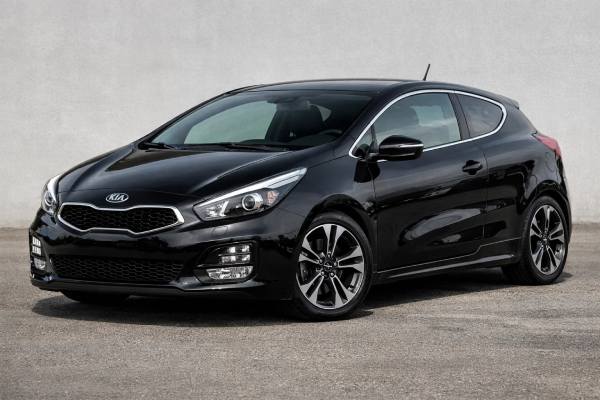
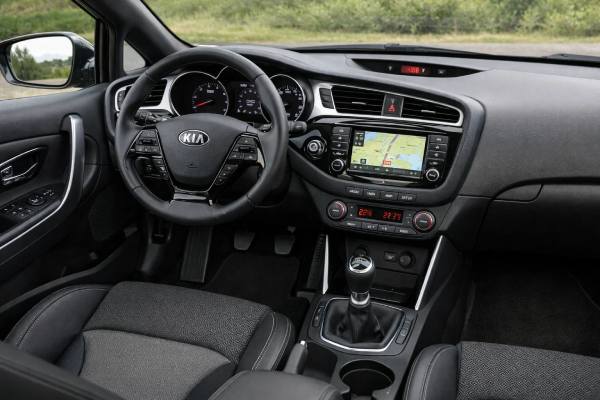
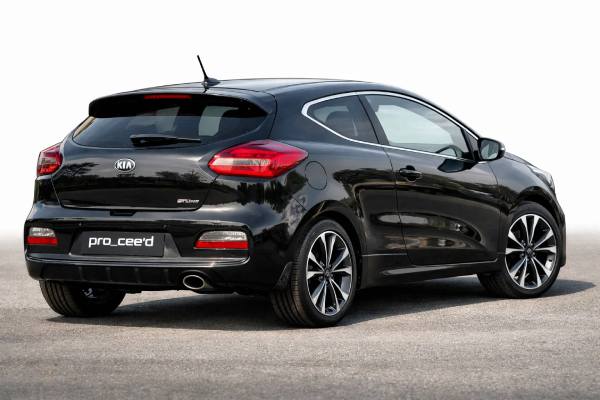
The facelifted Kia Pro Cee’d JD with the 1.0-litre Kappa II T-GDi is the kind of car that rewards owners who like smart engineering more than outright size. With 118 hp (120 PS) from a small, direct-injection turbo three-cylinder, it delivers useful mid-range pull without the tax and fuel penalties of larger petrol engines. The chassis is a mature, European-focused setup—MacPherson struts up front and a multi-link rear—so it stays composed on real roads, not just smooth highways.
Where this model really stands out is the ownership balance: practical hatch packaging, strong standard equipment in many trims, and service intervals that are easy to plan around. The flip side is that a small turbo DI engine asks for correct oil, warm-up discipline, and timely maintenance to stay crisp over time. Buy the right example and maintain it well, and it’s a genuinely satisfying daily driver.
Owner Snapshot: Pro Cee’d JD 1.0 T-GDi
- Strong everyday torque for a 1.0 l, with useful pull from low rpm once the turbo is on boost.
- Stable, confidence-inspiring handling thanks to a multi-link rear suspension layout.
- Good fuel economy potential on steady runs when driven smoothly and kept in the right gear.
- Plan for more frequent oil services if you do short trips or heavy city use, even if the book interval is longer.
- Typical baseline service cadence: engine oil and filter every 10,000 miles (16,000 km) or 12 months, whichever comes first.
Navigate this guide
- Kia Pro Ceed JD facelift profile
- Kia Pro Ceed JD 1.0 T-GDi specs
- Kia Pro Ceed JD trims and safety
- Reliability issues and service actions
- Maintenance plan and buyer’s checklist
- Driving feel and real-world economy
- How it stacks up against rivals
Kia Pro Ceed JD facelift profile
This 2015–2018 facelift version of the Pro Ceed (three-door) sits in a sweet spot: modern enough to feel current inside and on the road, but still simple compared with newer cars overloaded with complex driver-assistance hardware. The 1.0 T-GDi powertrain was introduced to give the range a lighter, lower-emissions petrol option without turning the car into a slow commuter special. In practice, it works because the engine’s torque output is strong for its size, so you’re not constantly revving it to keep up with traffic.
From an engineering standpoint, the main appeal is how well the components match the mission. The turbocharged three-cylinder keeps mass down over the front axle and helps the car feel eager at city speeds. The Pro Ceed’s European chassis tuning and independent rear suspension give it a planted, predictable attitude—especially on uneven roads where some rivals with simpler rear axles can feel skittish. It is not a hot hatch, but it has a confident, tidy footprint.
Ownership-wise, the car is usually easy to live with: straightforward FWD layout, a conventional manual gearbox in this configuration, and widely available service parts. Most complaints you’ll hear are not “big design flaws,” but patterns common to small turbo direct-injection engines: sensitivity to oil quality and change frequency, the occasional sensor or ignition issue, and the need to let the engine reach full operating temperature regularly.
If you’re shopping today, prioritize condition and history over a specific badge on the tailgate. A clean, correctly serviced 1.0 T-GDi will generally feel smooth, boost cleanly, and idle evenly. A neglected one often shows it through hesitation, rough cold starts, or a turbo that doesn’t build boost consistently.
Kia Pro Ceed JD 1.0 T-GDi specs
Below are model-appropriate specs for the facelift Pro Ceed JD with the 1.0 Kappa II T-GDi around 118 hp (120 PS). Always verify against your VIN and market handbook, because equipment and test standards can vary.
Powertrain and efficiency
| Item | Specification |
|---|---|
| Code | Kappa II 1.0 T-GDi (market naming varies) |
| Engine layout and cylinders | Inline-3, turbocharged, DOHC, 4 valves/cyl (12 valves total) |
| Bore × stroke | 71.8 × 84.0 mm (2.83 × 3.31 in) |
| Displacement | 1.0 L (998 cc) |
| Induction | Turbocharged |
| Fuel system | Direct injection (DI) |
| Compression ratio | 10.0:1 |
| Max power | 118 hp (88 kW) @ 6,000 rpm |
| Max torque | 171 Nm (126 lb-ft) (broad mid-range band; market reporting varies by rpm window) |
| Timing drive | Timing chain (typical for this engine family; confirm by engine label/service data) |
| Rated efficiency (combined) | 4.9 L/100 km (57.6 mpg UK / ~48.0 mpg US) on common wheel setups |
| Real-world highway @ 120 km/h (75 mph) | Commonly ~5.8–6.6 L/100 km (~40–49 mpg US) depending on tyres, load, and wind |
Transmission and driveline
| Item | Specification |
|---|---|
| Transmission | 6-speed manual (this covered variant) |
| Drive type | FWD |
| Differential | Open |
Chassis and dimensions
| Item | Specification |
|---|---|
| Suspension (front/rear) | MacPherson strut / multi-link |
| Steering | Electric power steering (MDPS); rack and pinion |
| Brakes | Disc brakes front and rear (diameter varies by wheel/trim; GT models use larger hardware) |
| Wheels/tyres (most common) | 205/55 R16 or 225/45 R17 (trim dependent) |
| Ground clearance | 140 mm (5.5 in) |
| Length / width / height | 4,310 / 1,780 / 1,430 mm (169.7 / 70.1 / 56.3 in) |
| Wheelbase | 2,650 mm (104.3 in) |
| Kerb (curb) weight | ~1,271–1,389 kg (2,802–3,063 lb), equipment dependent |
| GVWR | ~1,820 kg (4,012 lb) |
| Fuel tank | 53 L (14.0 US gal / 11.7 UK gal) |
| Cargo volume | 362–380 L seats up; 1,207–1,225 L seats down (method varies by market) |
Performance and capability
| Item | Specification |
|---|---|
| Acceleration | Typically ~11.0–12.0 s (0–100 km/h / 0–62 mph), equipment and test method dependent |
| Top speed | ~190 km/h (118 mph) |
| Towing capacity | Up to ~1,200 kg braked / ~600 kg unbraked (market dependent) |
| Payload (calculated) | Often ~430–550 kg depending on curb weight and GVWR |
Fluids and service capacities (decision-useful)
| System | What to use |
|---|---|
| Engine oil | ACEA C2 with a 0W-30 grade listed for this application in some markets; capacity ~3.6 L (~3.8 US qt) |
| Service interval baseline | 10,000 miles (16,000 km) / 12 months for the 1.0 T-GDi in certain market service schedules |
For coolant, gearbox oil, and A/C refrigerant charges, the most reliable values come from the vehicle’s official service information for your exact VIN and HVAC system. If you’re planning DIY work, check the under-hood labels and the service manual rather than relying on generic numbers.
Safety and driver assistance (headline)
- Euro NCAP: the cee’d family of this generation achieved a 5-star result in its test era, with strong adult/child scores and solid safety-assist performance (test-year methodology matters when comparing across eras).
- ADAS: most cars in this generation rely on stability control, ABS/EBD/BAS, TPMS, and lane-departure warning on higher trims; advanced AEB/ACC features are not as common as on newer models.
Kia Pro Ceed JD trims and safety
Trim naming varies by country, but the facelift Pro Ceed JD typically follows a ladder approach: a value-oriented base grade, a mid-trim with comfort features, and sport-styled trims (often “GT-Line” style branding) that add wheels, exterior detailing, and convenience upgrades. For the 1.0 T-GDi specifically, you’ll usually see it paired with sensible equipment rather than the full performance-focused GT hardware.
Practical trim identifiers you can spot quickly
- Wheels/tyres: 16-inch setups (often 205/55 R16) tend to signal lower or mid trims; 17-inch (225/45 R17) often appears on sport-styled trims.
- Lighting: projector headlights and LED running lights are common on higher trims; xenon/adaptive lighting appears on some upper packages.
- Cabin cues: dual-zone climate, heated seats/steering wheel, and upgraded infotainment/navigation tend to cluster together in higher equipment lines.
Options and packages that change the day-to-day experience
- Infotainment and nav pack: larger screen navigation, better Bluetooth integration, and reverse camera. These age better than older basic head units and help resale.
- Comfort pack: heated seats and wheel, rear vents (in some versions), auto-dimming mirror, and rain-sensing wipers—useful in cold climates.
- Driver support add-ons: lane-departure warning and traffic sign recognition appear in some markets as package items; they’re typically camera-based and require windshield/sensor calibration if the glass is replaced.
Safety ratings: what they mean here
The cee’d platform’s strong Euro NCAP performance is a real plus, but it’s important to read it the right way. Euro NCAP continually updates its scoring rules, so a 5-star result from an earlier test year does not equal a 5-star from a much later year. For this car, the takeaway is structural competence and well-rounded core safety—airbags, stability systems, and occupant protection—rather than cutting-edge automated avoidance.
Safety equipment you should confirm on a used car
- Airbags: confirm presence and warning-light self-test at startup (no lingering SRS light).
- ISOFIX/LATCH: check the rear ISOFIX points and top tethers if you’ll fit child seats.
- ESC/ABS functionality: look for consistent brake pedal feel and ensure no ABS/ESC warning lights remain on.
- TPMS: verify it reports correctly after a tyre change; mismatched sensors can create nuisance warnings.
Calibration note after repairs: if your car has lane-departure warning or sign recognition, windscreen replacement and some front-end repairs can require camera calibration. It’s not difficult for a qualified shop, but it is worth budgeting for.
Reliability issues and service actions
The facelift Pro Ceed JD is generally durable when serviced properly, but the 1.0 T-GDi’s reliability depends heavily on oil quality, warm-up habits, and timely attention to small symptoms. Think of it as “low displacement, higher specific output”: it can last, but it does not like neglect.
Common issues (higher prevalence)
- Ignition coils or spark plugs (low to medium cost):
- Symptoms: misfire under load, rough idle, flashing engine light.
- Likely cause: coil degradation or plug wear/heat stress.
- Remedy: replace plugs at the correct interval and use the correct heat range; replace coils as needed, often as a set if multiple are weak.
- Turbo control or boost leaks (medium cost):
- Symptoms: weak acceleration, inconsistent boost, whistle/hiss, occasional underboost codes.
- Likely cause: loose/aged charge piping, clamp issues, or a tired boost control solenoid.
- Remedy: smoke-test the intake tract, repair leaks, and verify wastegate/actuator operation.
- Carbon build-up on intake valves (medium cost over time):
- Symptoms: gradual loss of crispness, hesitation, rougher cold running, poorer economy.
- Why it happens: direct injection sprays fuel into the cylinder, not over the intake valves, so oil vapors can deposit on the valves.
- Remedy: periodic intake cleaning (method depends on shop practice); more highway use and fewer cold starts help slow it down.
Occasional issues (moderate prevalence)
- PCV/breather system sensitivity (low cost):
- Symptoms: oil mist in intake plumbing, idle instability, increased oil consumption.
- Remedy: inspect the PCV valve and breather hoses; address leaks early to avoid chasing false air and boost issues.
- Cooling system small leaks (low to medium cost):
- Symptoms: coolant smell, small level drop, residue near hoses or radiator.
- Remedy: pressure test the system; replace aging clamps/hoses before an overheat event.
Rare but higher-impact risks
- Turbocharger wear (higher cost):
- Symptoms: persistent smoke, oil consumption, loud turbo noise, low boost that doesn’t respond to leak fixes.
- Risk factors: long oil intervals, wrong oil spec, repeated hard driving from cold.
- Remedy: diagnose properly—many “turbo failures” are actually plumbing or control faults; replace only after confirming shaft play/leakage.
- Timing correlation faults (higher cost if ignored):
- Symptoms: rattle at cold start, timing-related fault codes, rough running.
- Remedy: investigate promptly; while timing chains are designed for life, tensioner wear or poor lubrication can shorten that life.
Recalls, TSBs, and how to verify
Recalls and service campaigns are market-specific. The smart approach is procedural:
- Run an official recall check using your registration/VIN where supported.
- Ask a dealer to confirm completion in the service record system.
- Keep proof—it matters for resale and for troubleshooting later.
Software updates can also matter, even when there is no recall: drivability calibration updates, infotainment stability fixes, and sensor logic refinements are common across modern vehicles. On a test drive, a clean, predictable throttle and stable idle are good signs; erratic behavior can sometimes be solved by updated calibration, but you should still inspect for mechanical causes first.
Maintenance plan and buyer’s checklist
A disciplined maintenance routine is the best “mod” you can do to this engine. The 1.0 T-GDi works hard, so fresh oil and correct spark plug timing are not optional if you want long-term smoothness.
Practical maintenance schedule (mixed-use owner)
Use the manufacturer schedule as your baseline, then adjust to your usage. For many markets, the 1.0 T-GDi baseline is:
- Engine oil and filter: every 10,000 miles (16,000 km) or 12 months.
- If you do mostly short trips, cold starts, or heavy traffic, consider 5,000–7,500 miles (8,000–12,000 km).
- Use the specified oil standard for your market (commonly ACEA C2 with 0W-30 listed in some schedules).
- Engine air filter: inspect every service; replace typically every 20,000–30,000 miles (32,000–48,000 km) (sooner in dusty areas).
- Cabin filter: every 12 months or as needed for airflow and odor.
- Spark plugs: replace at 70,000 km (about 43,500 miles) where specified for a 1.0 T-GDi in some maintenance schedules.
- Brake fluid: every 2 years is a sensible rule in most climates.
- Coolant: follow the service book for your VIN; long-life coolants can be extended, but only if the correct type is used and the system stays sealed.
- Manual gearbox oil: many schedules list inspection rather than frequent replacement, but a preventive change around 60,000–100,000 miles (100,000–160,000 km) can improve shift feel and longevity.
- Tyres: rotate every 6,000–8,000 miles (10,000–13,000 km); check alignment annually or after impacts.
- 12 V battery: test annually after year 4; many last 4–6 years depending on climate and usage.
Essential “buyer’s guide” checks (what actually predicts headaches)
Service history and fluids
- Verify oil services were done on time and with the correct spec. A stack of receipts beats a verbal promise.
- Check for oil leaks around the turbo plumbing and undertray area.
- Inspect coolant level and look for dried residue at hose joints.
Powertrain behavior on the test drive
- Cold start should be clean, with no extended stumbling or loud metallic rattles.
- Boost should build smoothly; a sudden flat spot can mean leaks or control issues.
- In higher gears at low rpm, it should pull without shuddering (some lugging is normal—downshift rather than forcing it).
Chassis and brakes
- Listen for knocks over sharp bumps (bushings or drop links are common wear items).
- Check for vibration under braking (warped discs or uneven pad transfer).
Electronics and trim
- Confirm all keys are present (replacement smart keys can be expensive).
- Test infotainment, camera, and parking sensors if fitted.
- Ensure there are no warning lights—especially ESC/ABS/TPMS.
Best version to target
For most buyers, the sweet spot is a mid-to-high trim with:
- 16-inch or 17-inch wheels (better ride/tyre cost than ultra-low-profile setups),
- proven service history,
- and the equipment you’ll actually use (camera, climate, heated features if you’re in a cold climate).
Avoid cars with unclear maintenance history, repeated misfire complaints, or signs of chronic short-trip use with stretched oil intervals. Those patterns cost more to “reset” than the purchase price discount usually saves you.
Driving feel and real-world economy
On the road, the 1.0 T-GDi Pro Ceed feels more grown-up than its displacement suggests. The car’s weight and wheelbase give it stability, and the independent rear suspension helps it track cleanly through mid-corner bumps. It’s not trying to be dramatic; its strength is that it feels predictable and easy to place.
Ride, handling, and NVH
- Ride: generally composed at speed, with a slightly firmer edge on larger wheels. If you value comfort, 16-inch tyres often ride best.
- Handling: neutral and confidence-building. The rear multi-link setup tends to keep the car calm over uneven pavement.
- Steering: light to medium effort, tuned for daily driving. It’s not a classic hydraulic “feel” system, but it’s accurate.
- Noise and vibration: three-cylinder thrum is present if you rev it out, but at steady cruising it can be pleasantly subdued—especially when the engine is warm.
Powertrain character (what it’s like day to day)
The key is how you drive it:
- Below low rpm in a tall gear, it can feel sleepy.
- Once you’re in the torque band, it pulls confidently for normal passing.
- The best results come from using the gearbox proactively—downshift early rather than demanding boost from too low rpm.
Turbo lag is modest, but you’ll feel a short “gathering” phase if you go from light throttle to a big request in a high gear. If you keep it in the mid-range, it feels eager and efficient.
Real-world economy expectations
Official combined figures around 4.9 L/100 km translate well on steady commutes, but real results depend on speed and trip length:
- City-heavy, short trips: often 6.5–8.0 L/100 km (about 29–36 mpg US).
- Mixed driving: often 5.5–6.8 L/100 km (35–43 mpg US).
- Highway 100–120 km/h (60–75 mph): often 5.8–6.6 L/100 km (36–41 mpg US) in typical conditions.
Cold weather and repeated short runs can swing economy noticeably because the engine spends more time in warm-up enrichment. That’s another reason shorter oil intervals make sense for urban-only use.
How it stacks up against rivals
The Pro Ceed JD sits in an interesting competitive set because it’s a three-door hatch with a European ride/handling feel, but it’s also priced and equipped like a practical mainstream car. When comparing, focus on what you value: low running costs, driving feel, cabin tech, or long-term durability.
Versus Ford Focus 1.0 EcoBoost (similar concept)
- Focus strengths: sharp steering feel, lots of parts support, strong driving dynamics in many trims.
- Pro Ceed advantages: multi-link rear plus Kia’s straightforward ownership vibe; often strong standard equipment for the money.
- What to watch: both are small turbo engines—service history matters more than the badge.
Versus VW Group three-door hatches (Leon SC / older Golf-based options)
- VW group strengths: refined powertrains, strong highway manners, broad specialist knowledge base.
- Pro Ceed advantages: often better equipment value and a less “optioned-up” buying experience on the used market.
- What to watch: DSG-equipped cars can be great, but they add complexity and service needs; this Pro Ceed variant’s manual simplicity appeals to many long-term owners.
Versus Peugeot 308 1.2 PureTech (efficiency-focused rival)
- 308 strengths: efficient engines, modern interiors in later years, comfortable ride bias in many setups.
- Pro Ceed advantages: reassuring chassis balance and a robust-feeling platform with strong safety credentials for its era.
- What to watch: compare real maintenance records; small turbo engines across brands all need correct oil and timely servicing.
Who should choose the Pro Ceed 1.0 T-GDi?
Pick this model if you want:
- a daily driver that feels stable and well-sorted at speed,
- a turbo petrol that doesn’t require constant high rpm,
- and a car that can be economical without feeling underpowered.
Look elsewhere if you need maximum rear-seat access (three-door practicality limits you), or if you want modern, widespread AEB/ACC driver assistance as standard—newer cars will serve that goal better.
Overall, the Pro Ceed JD facelift with the 1.0 T-GDi is a smart “middle ground” used buy: enjoyable enough to appreciate, efficient enough to justify, and simple enough to keep running—provided you treat maintenance as part of the ownership plan, not an afterthought.
References
- SPECIFICATION 2017 (Specification Sheet)
- Distinctive looks, new engines and more dynamic performance for upgraded Kia cee’d 2015 (Press Release)
- New-generation Kia cee’d awarded top safety score by EuroNCAP – Kia Slovakia s.r.o. 2012 (Safety Rating)
- Engine Oil Grades and Capacities 2023 (Service Data)
- Check if a vehicle, part or accessory has been recalled – GOV.UK 2026 (Recall Database)
Disclaimer
This article is for informational purposes only and is not a substitute for professional diagnosis, inspection, or repair. Specifications, torque values, service intervals, and procedures can vary by VIN, market, model year, and installed equipment. Always confirm details using your vehicle’s official owner’s manual and service documentation before purchasing parts or performing work.
If you found this guide useful, please consider sharing it on Facebook, X (Twitter), or your favorite forum to help others find reliable ownership information.