
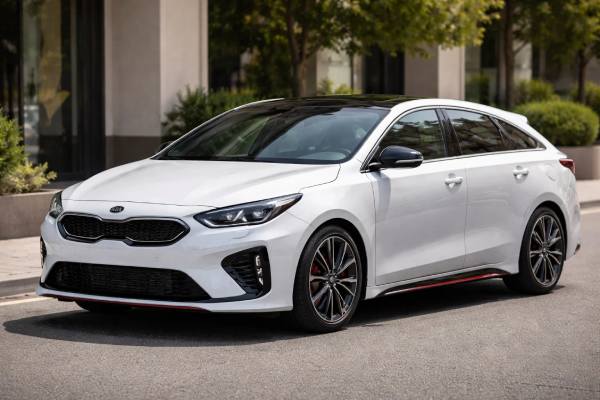
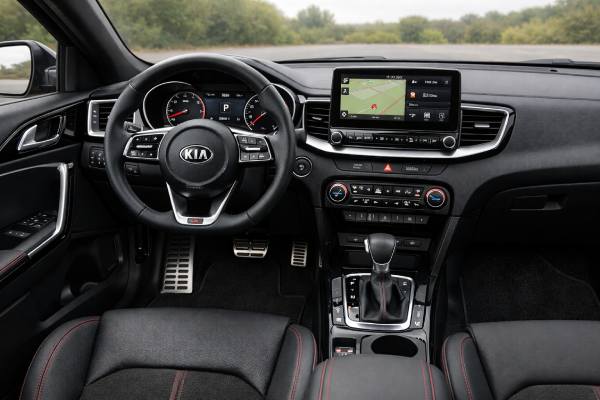
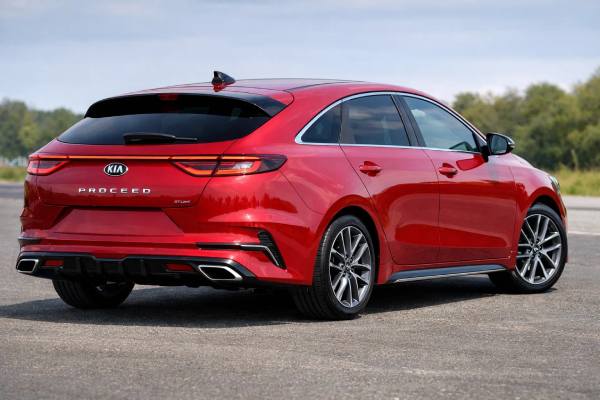
The 2019–2021 Kia Proceed (CD) with the 1.4 T-GDi turbo-petrol is the “sweet spot” powertrain for many owners: quick enough for motorway work, light over the nose, and generally simpler than the hotter GT options. In most European specs it’s marketed as 140 PS (about 138 hp) and it pairs well with either a 6-speed manual or a 7-speed dual-clutch (DCT). The Proceed’s shooting-brake body gives you real everyday cargo flexibility without losing the low, planted feel that made the CD platform popular.
Ownership hinges on two things: how well the direct-injection turbo engine is maintained (oil quality and heat management matter), and whether the transmission choice matches your driving (DCT in heavy stop-start needs extra sympathy). Get those right and this Proceed can be a durable, efficient long-distance tool.
What to Know
- Strong mid-range pull for its size; feels effortless from ~1,500 rpm in higher gears.
- Practical shooting-brake cargo shape without the “tall wagon” driving feel.
- Stable high-speed chassis; confident brakes and motorway manners on good tyres.
- If it’s a DCT car, budget for earlier fluid service and avoid creeping in traffic to reduce clutch wear.
- Plan oil and filter service every 10,000–15,000 km (6,000–9,000 mi) or 12 months, depending on usage.
Jump to sections
- Kia Proceed CD 1.4 T-GDi explained
- Kia Proceed CD 1.4 specs table
- Kia Proceed CD trims and safety gear
- Common faults and recalls
- Service schedule and buying checklist
- Driving feel and fuel use
- Rivals and best alternatives
Kia Proceed CD 1.4 T-GDi explained
This version of the Proceed (CD) sits in a very specific niche: it looks like a sporty estate, but it drives closer to a well-sorted hatchback. The body is longer than the standard Ceed hatch, and the roofline stays low, so you get a more planted feel than most compact wagons. If you want a car that can do commuting, school runs, and long motorway trips—while still feeling tidy on a back road—this configuration is often the most balanced in the range.
The 1.4 T-GDi is a small-displacement, turbocharged, direct-injection petrol engine. In real use it behaves like a larger naturally aspirated motor once you’re rolling: the turbo helps it build torque early, so you don’t need to constantly chase revs. That matters in the Proceed because the car’s “grand touring” character shows up at speed—quiet enough (on decent tyres), stable, and confident in crosswinds.
Two transmission choices define the ownership experience:
- 6-speed manual: simplest long-term, predictable clutch feel, and generally the best match if you do lots of low-speed manoeuvring, hill starts, or tight urban traffic.
- 7-speed DCT: quick shifts and good efficiency when moving, but it’s a clutch-based dual-clutch system. In heavy stop-start traffic, clutch heat and “creep” behaviour can increase wear if the driver treats it like a conventional torque-converter automatic.
For most buyers, the Proceed’s core advantages are practical: a wide hatch opening, a long load floor, and a cabin that feels more premium than older Kias. The trade-off is that a low, sloping roof can make rear headroom tighter than a boxier estate, and the sporty tyre/wheel packages can raise tyre costs.
Who is this car for? Drivers who want a stylish long-roof compact that still feels light on its feet—and who will actually follow maintenance basics for a turbo direct-injection engine (oil quality, warm-up habits, and cooling system health).
Kia Proceed CD 1.4 specs table
Below are the key specifications that matter for owners and shoppers. Exact figures can vary slightly by market, gearbox, wheel size, and emissions calibration, but these are representative for the 2019–2021 Proceed CD with the 1.4 T-GDi.
Powertrain and efficiency
| Item | Specification |
|---|---|
| Code | 1.4 T-GDi (turbo, direct injection) |
| Engine layout and cylinders | I-4, DOHC, 4 valves/cyl |
| Displacement | 1.4 L (1,353 cc) |
| Bore × stroke | 71.6 × 84.0 mm (2.82 × 3.31 in) |
| Induction | Turbocharged |
| Fuel system | DI (direct injection) |
| Max power | 138 hp (103 kW) @ ~6,000 rpm (often marketed as 140 PS) |
| Max torque | 242 Nm (178 lb-ft) @ ~1,500–3,200 rpm |
| Timing drive | Chain |
| Rated efficiency (typical EU range) | ~6.0–6.7 L/100 km (≈39–47 mpg UK / 35–39 mpg US) |
| Real-world highway @ 120 km/h (75 mph) | ~6.5–7.5 L/100 km (≈38–43 mpg UK / 31–36 mpg US) |
Transmission and driveline
| Item | Specification |
|---|---|
| Transmission | 6-MT or 7-DCT (market-dependent) |
| Drive type | FWD |
| Differential | Open |
Chassis and dimensions
| Item | Specification |
|---|---|
| Suspension (front/rear) | MacPherson strut / multi-link (common EU spec) |
| Steering | Electric power steering |
| Brakes | 4-wheel discs (diameter varies by trim) |
| Wheels/tyres (popular sizes) | 225/40 R18 or 225/45 R17 (varies by trim/market) |
| Length / width / height | ~4605 / 1800 / 1422 mm (181.3 / 70.9 / 56.0 in) |
| Wheelbase | ~2650 mm (104.3 in) |
| Turning circle (kerb-to-kerb) | ~10.6 m (34.8 ft) |
| Kerb weight | ~1,300–1,450 kg (2,866–3,197 lb) depending on trim/gearbox |
| Fuel tank | ~50 L (13.2 US gal / 11.0 UK gal) |
| Cargo volume | ~594 L seats up (VDA) / ~1,545 L seats down (VDA) |
Performance and capability
| Item | Specification |
|---|---|
| 0–100 km/h (0–62 mph) | ~8.9–9.5 s (gearbox/market dependent) |
| Top speed | ~210 km/h (130 mph) |
| Braking distance (100–0 km/h) | Typically ~35–39 m (depends heavily on tyres) |
| Towing capacity | Often ~1,200–1,400 kg braked (check market plate) |
| Payload | Typically ~450–550 kg (varies by trim) |
Fluids and service capacities (owner-relevant)
| Item | Specification |
|---|---|
| Engine oil | 0W-20 or 5W-30 (market/spec dependent); capacity ~4.2 L (4.4 US qt) with filter |
| Coolant | Ethylene glycol-based; capacity ~7.4 L (7.8 US qt) |
| Brake fluid | DOT 3 or DOT 4 |
| A/C refrigerant | R-134a or R-1234yf (market dependent) |
| Key torque specs | Wheel nuts: 107–127 Nm (79–94 lb-ft) |
Safety and driver assistance (high-level)
| Item | Specification |
|---|---|
| Crash ratings | Euro NCAP: 5-star family (Ceed/Proceed platform-tested variant) |
| Typical ADAS availability | AEB, lane support, driver attention alert, rear camera/sensors (varies by trim/pack) |
If you’re comparing listings, focus on the items that change costs: wheel size (tyre price), DCT vs manual (service and driving style), and whether the car has the safety pack (adds sensors and calibration considerations after a windscreen replacement).
Kia Proceed CD trims and safety gear
Proceed trims vary by country, but most markets follow a familiar pattern: a well-equipped base line, a mid trim that adds comfort and infotainment, and a higher trim that bundles styling, larger wheels, and more driver assistance. When you’re shopping used, it’s smarter to verify equipment from the car itself (or a VIN build sheet) rather than trusting the badge on the tailgate.
Trims and options that change the car
Common “value” differences usually fall into these buckets:
- Wheels and suspension feel: Many top trims run 18-inch wheels with lower-profile tyres. They sharpen steering response but can add impact harshness on broken city roads. If you want the best ride, a 17-inch setup is often the sweet spot.
- Lighting: Full LED headlamps can be a major safety and comfort upgrade, especially in wet conditions. Some markets bundle them with a tech pack.
- Infotainment and audio: The larger factory screen and premium audio (where offered) matter for long trips. Check for factory navigation and smartphone integration depending on model year.
- Seating and cabin: Heated seats and a heated steering wheel are common in higher trims and can be worth seeking out in cold climates. Panoramic roofs (if fitted) add light but also add sealing and drain maintenance risk as the car ages.
Quick identifiers in listings and photos:
- Front camera and radar area: AEB/ACC-equipped cars often show sensor hardware behind the windscreen near the mirror and/or a radar module in the grille area (design varies by year/pack).
- Steering wheel buttons: Lane assist/driver assistance buttons usually indicate a richer ADAS configuration.
- Tyre size on sidewall: Confirms wheel package instantly (and hints at ride quality and tyre replacement cost).
Safety ratings and what they really mean
The Proceed shares its core structure with the Ceed family on the same platform, so safety performance is closely linked across the range. Euro NCAP testing for the model family produced a 5-star rating, with strong adult and child occupant protection. As always, the detail sits in the equipment: some test results assume optional safety packs, and some markets sell “standard” cars with fewer driver assistance features.
Practical safety equipment to verify on a used car:
- Airbags and child-seat provisions: Expect front, side, and curtain airbags in most European specs, plus ISOFIX/LATCH points (usually outer rear seats). Confirm the airbag label set if you’re importing across markets.
- AEB (Autonomous Emergency Braking): Often standard or part of a safety pack. It can reduce low-speed shunts and improve urban safety, but it depends on sensor calibration.
- Lane support (LKA/LFA): Helpful on motorways, but steering feel differs by software version. Make sure it behaves smoothly on a test drive.
- Rear cross-traffic alert and blind-spot monitoring: Usually tied to higher trims; valuable in a low-roof estate with a thick rear pillar.
Service implication: if a car has front camera/radar-based ADAS, plan on calibration after windscreen replacement, bumper repairs, or suspension geometry changes. That can add cost, but it’s also why higher-spec cars can feel “newer” in daily use when everything is working correctly.
Common faults and recalls
No car is perfect, and the Proceed CD with the 1.4 T-GDi has a few predictable patterns. The key is separating “annoying but cheap” from “rare but expensive,” and matching risk to your usage. The notes below are grouped by prevalence and cost tier, with typical symptoms and practical remedies.
Common (most likely over ownership)
- Direct-injection intake deposits (medium cost, gradual)
- Symptoms: Slight hesitation at low rpm, rough idle, reduced fuel economy, misfire codes in worse cases.
- Root cause: Direct injection sprays fuel into the cylinder, not over the intake valves, so oil vapour can leave deposits on the valves over time—especially with short trips.
- Remedy: Short-trip drivers benefit from quality oil, timely changes, and occasional long runs. If symptoms develop, a professional intake clean (often walnut blasting) restores airflow.
- Ignition coil or plug wear (low–medium cost, mileage-related)
- Symptoms: Misfire under load, flashing engine light, rough running.
- Root cause: Turbo engines load ignition components harder, and heat cycling accelerates ageing.
- Remedy: Replace plugs at the correct interval with the correct heat range; replace coils as needed (often one fails first, but consider age/mileage).
- DCT low-speed shudder (medium cost if early, high if ignored)
- Symptoms: Judder when pulling away, “hunting” at low speed, clutch smell after traffic crawls.
- Root cause: Dual-clutch units use clutches, not a fluid coupling. Heat and creeping wear the clutch packs.
- Remedy: Update software if available, avoid creeping (use brakes firmly; allow gaps), and service fluid earlier if your market recommends it. If clutch wear is advanced, clutch pack replacement may be required.
Occasional (depends on usage and environment)
- Turbo control or boost leaks (medium cost)
- Symptoms: Soft performance, whistle/hiss, underboost codes.
- Root cause: Aging hoses/clamps, intercooler connections, or wastegate actuator issues.
- Remedy: Smoke test the intake system, repair leaks early, and verify boost control operation.
- Cooling system seepage (medium cost, age-related)
- Symptoms: Slow coolant loss, sweet smell, dampness around hoses/thermostat area.
- Root cause: Heat cycles and plastic housings can seep over time.
- Remedy: Fix promptly; turbo engines dislike overheating. Pressure-test and replace the correct housing/seals rather than “topping up forever.”
- Battery and start-stop sensitivity (low cost)
- Symptoms: Start-stop disabled, slow cranking, random warning messages.
- Root cause: AGM/EFB battery ageing; lots of short trips.
- Remedy: Test the battery under load; replace proactively around the typical 4–6 year window depending on climate.
Rare (but worth screening on a test drive)
- Fuel system high-pressure faults (high cost if it happens)
- Symptoms: Hard starts, limp mode, fuel pressure codes.
- Remedy: Proper diagnostics matter—don’t shotgun parts. Use quality fuel and replace filters if your market includes one in the schedule.
Recalls, TSBs, and software updates
Your best strategy is simple and consistent:
- Run the car’s VIN through an official recall checker for your country.
- Ask for proof of completion (dealer invoice or stamped record).
- During a pre-purchase inspection, scan for ECU/TCU updates related to drivability, emissions, or DCT behaviour.
Even when a campaign doesn’t apply to every vehicle, software updates can materially improve shift quality, sensor false alerts, and cold-start behaviour—so it’s worth checking dealer history.
Service schedule and buying checklist
A Proceed CD 1.4 T-GDi can be inexpensive to run if you treat it like a modern turbo engine rather than an old naturally aspirated commuter. The schedule below is intentionally practical: it blends typical manufacturer intervals with real-world “what actually keeps these healthy,” especially for short-trip or high-heat use.
Practical maintenance schedule (distance/time)
- Engine oil and filter: every 10,000–15,000 km or 12 months
- Use the correct spec and don’t stretch intervals if you do short trips, lots of idling, or hot climate driving.
- Engine air filter: inspect every service; replace about 30,000 km (sooner in dusty areas).
- Cabin filter: every 15,000–30,000 km or annually if you run A/C often.
- Spark plugs: commonly 60,000–100,000 km depending on plug type and market schedule; replace earlier if tuned, driven hard, or if misfires appear.
- Coolant: follow the official long-life interval for your market; inspect level/condition yearly and fix leaks early.
- Brake fluid: every 2 years is a safe baseline for consistent pedal feel and corrosion control.
- Brake pads and rotors: inspect at each service; motorway cars often last longer than city cars.
- Tyre rotation and alignment: rotate every 10,000–12,000 km; align if you see inner-edge wear (common with sporty alignment and large wheels).
- DCT fluid (if equipped): follow the official schedule where specified; for hard city use, many owners choose an earlier service window to keep shift quality consistent.
- Manual gearbox oil (if manual): not always scheduled, but a preventive change around 80,000–120,000 km can improve shift feel long-term.
- 12 V battery: test yearly after year 3; replace preventively if start-stop becomes unreliable.
Fluids and decision-making specs (quick reference)
- Engine oil capacity is about 4.2 L with filter.
- Coolant capacity is about 7.4 L.
- Wheel nut torque is 107–127 Nm.
- A/C refrigerant type varies by market (R-134a vs R-1234yf), so don’t assume when servicing.
Buyer’s guide: what to check before purchase
Use this checklist on the test drive and during inspection:
- Cold start behaviour: listen for abnormal rattles, unstable idle, or warning lights. A clean cold start tells you a lot about battery health and fueling.
- Boost delivery: it should pull cleanly from low rpm without surging. Any “flat spot” plus a hiss can hint at a boost leak.
- DCT behaviour (if equipped):
- Smooth take-off is the key. Mild hesitation is normal; repeated judder, shudder, or harsh engagement is not.
- Try a hill start and slow parking manoeuvres.
- Cooling system: check for coolant smell, low level, or dried residue around housings and hose joints.
- Tyre wear pattern: uneven inner wear suggests alignment issues or worn suspension bushings.
- ADAS and camera systems: verify lane support and AEB warnings behave normally; check the windscreen for replacements (calibration history matters).
- Service history quality: the best sign is consistent oil service at sensible intervals, not just the minimum required.
Recommended “ownership sweet spot” tends to be a car with 17-inch wheels, a clear service record, and a trim that includes the safety pack—provided you confirm ADAS calibration hasn’t been neglected after glass or bumper repairs.
Driving feel and fuel use
On the road, the Proceed’s personality is closer to a sporty hatch than a traditional wagon. The seating position is relatively low, the body feels tied down at speed, and the steering is light but accurate. It’s not a raw driver’s car, but it is the kind of vehicle that makes long motorway stretches feel easy—and it won’t punish you on a twisty back road.
Ride, handling, and NVH
- Ride: With 17-inch wheels, the car typically filters sharp edges well enough for daily use. On 18s, you’ll feel pothole impacts more clearly, and tyre choice becomes a bigger factor in comfort.
- Handling balance: Neutral and predictable. The rear multi-link setup (common in many European specs) helps stability mid-corner and keeps the car composed over bumps.
- Braking feel: Firm and consistent when the system is healthy, with a confidence-inspiring pedal. Tyres dominate stopping performance more than most owners expect, so don’t judge the brakes on worn budget tyres.
- Noise: Motorway wind noise is generally controlled for the class. The biggest variable is tyre brand and tread pattern; aggressive sports tyres can add a constant hum.
Powertrain character
The 1.4 T-GDi shines in the mid-range. Peak torque arrives early, so normal driving happens with small throttle openings rather than big downshifts.
- Manual: Easy to place in traffic, and the engine’s torque reduces the need to constantly row through gears.
- DCT: Quick shifts when accelerating, but it can feel hesitant in very slow crawling traffic because it’s managing clutch engagement. The best technique is to avoid creeping and let a gap open before moving, so the clutches engage cleanly.
Real-world efficiency
Your fuel economy depends more on speed and trip length than on gentle vs aggressive throttle in city traffic:
- City: Often ~7.5–9.0 L/100 km (≈31–38 mpg UK / 26–31 mpg US) depending on congestion and start-stop behaviour.
- Highway (100–120 km/h): Often ~6.5–7.5 L/100 km (≈38–43 mpg UK / 31–36 mpg US).
- Mixed: Many owners land around ~6.8–8.0 L/100 km (≈35–42 mpg UK / 29–35 mpg US).
Cold weather and short trips can push consumption up noticeably because the engine runs richer while warming, and cabin heat demands more energy. If your use is mostly short journeys, your “average” will look worse than the brochure—and that’s normal.
Bottom line: the Proceed CD 1.4 T-GDi feels stronger than its displacement suggests, stays calm at speed, and rewards sensible tyres and maintenance far more than bolt-on modifications.
Rivals and best alternatives
The Proceed’s closest rivals depend on what you value most: driving feel, cargo practicality, or long-distance comfort. Because it’s a shooting brake rather than a conventional estate, it often competes with both sporty hatchbacks and compact wagons.
If you want a similar “sporty long-roof” vibe
- Mercedes-Benz CLA Shooting Brake (petrol trims): More premium cabin and badge appeal, but higher maintenance costs and typically more expensive tyres/brakes. Great if refinement matters more than running cost.
- Volkswagen Arteon Shooting Brake (entry petrols): Larger, more mature motorway car. You gain space and composure, but you’ll pay more to buy and maintain.
If you want maximum practicality per euro
- Skoda Octavia Combi (TSI): The benchmark for usable space. Often roomier, with a huge boot and strong motorway comfort. Driving feel is more “sensible wagon” than “sporty hatch.”
- Volkswagen Golf Variant (TSI): Balanced and refined, usually with strong resale value. Comparable efficiency; the decision often comes down to price and equipment.
If you want comfort and value
- Peugeot 308 SW (turbo petrol): Very comfortable ride in many trims and a pleasant long-distance feel. Cabin ergonomics are subjective—some love the driving position, others don’t.
- SEAT Leon Sportstourer: Sportier tuning than some rivals, often priced well on the used market. Check tyre wear and suspension condition on higher-mileage examples.
Where the Proceed CD 1.4 T-GDi stands out
- Style without big compromise: It looks special but still carries real cargo.
- Torque-rich everyday performance: It feels “right-sized” for European roads—quick enough without needing GT running costs.
- Ownership predictability: When serviced correctly, the powertrain is generally easier to live with than higher-output performance variants.
When a rival makes more sense
Choose a conventional wagon like an Octavia Combi if you routinely carry tall rear passengers, want the biggest cargo box, or prioritize ride comfort over style. Choose a premium shooting brake if you value cabin materials, brand, and refinement more than service costs.
If you’re shopping purely on long-term cost control, the biggest decision is still manual vs DCT—then wheel size, then service history quality. Those factors usually matter more than the badge on the grille.
References
- Engine specifications 2020 (Owner’s Manual)
- Recommended lubricants and capacities 2020 (Owner’s Manual)
- Euro NCAP | Latest Safety Ratings 2025 (Safety Rating)
- Kia Ireland recalls & safety check 2024 (Recall Database)
Disclaimer
This article is for informational purposes only and is not a substitute for professional diagnosis, inspection, or repair. Specifications, torque values, maintenance intervals, and procedures can vary by VIN, market, model year, and installed equipment. Always verify details using your vehicle’s official owner’s manual, service manual, and manufacturer documentation.
If this guide helped, please consider sharing it on Facebook, X (Twitter), or your favorite forum/community to support our work.