
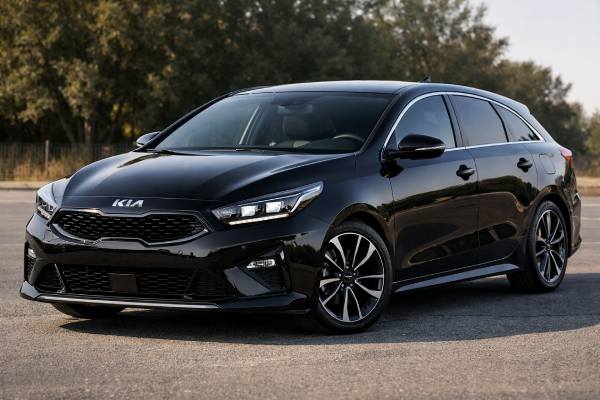
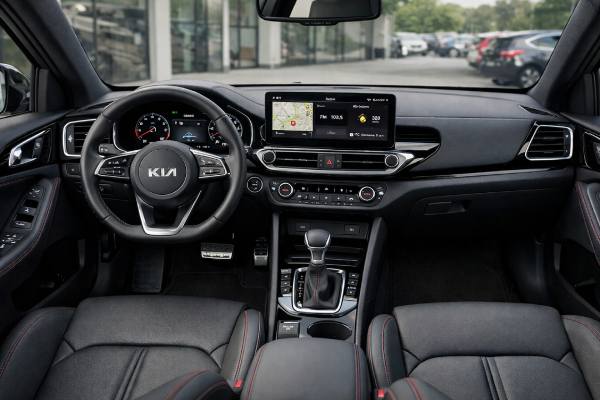
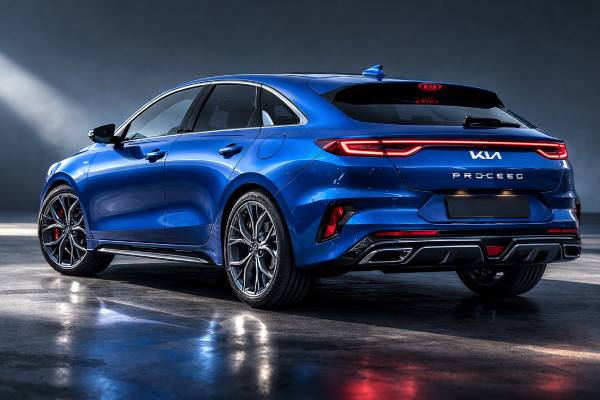
The facelift-era Kia ProCeed CD with the 1.6 Smartstream CRDi (134 hp) is a practical “shooting brake” that’s tuned for long-distance efficiency without giving up daily comfort. In most markets, this diesel sits in the sweet spot of the range: strong mid-range torque for relaxed overtakes, a chassis that feels more planted than many compact wagons, and a cargo area that’s genuinely useful for family or work gear. The facelift (2021–2024) matters because Kia updated driver-assistance availability and refreshed infotainment and interior tech on many trims, so the ownership experience can feel noticeably more modern than the early cars.
If you drive lots of highway kilometers, this is one of the most cost-effective ways to cover distance in a stylish body shape—provided you maintain the emissions hardware correctly and avoid a “short-trip-only” lifestyle that can punish modern diesels.
What to Know
- Strong low- and mid-rpm pull makes highway driving and passing feel easy, even when loaded.
- Real-world economy is typically excellent on steady-speed routes, especially on 17–18 inch wheels.
- Useful cargo space for the footprint, with a low loading lip and wide opening.
- Short-trip use can accelerate DPF and EGR issues; this diesel prefers regular long runs.
- Plan oil service every 15,000 km or 12 months (earlier for heavy city use or frequent short trips).
Guide contents
- Kia ProCeed CD facelift diesel overview
- Kia ProCeed 1.6 CRDi 134 specs and dimensions
- Kia ProCeed facelift trims, options and ADAS
- Reliability and common problems 1.6 CRDi
- Maintenance plan and buyer’s checklist
- Real-world driving and fuel economy
- ProCeed diesel vs compact wagon rivals
Kia ProCeed CD facelift diesel overview
Think of the facelift ProCeed as a compact wagon alternative for people who don’t want the boxy look or the higher center of gravity of a crossover. The CD-generation ProCeed uses a low, wide stance and a relatively long roofline, which helps both stability and cargo practicality. With the 1.6 Smartstream CRDi rated at 134 hp, the character is about torque and efficiency, not headline acceleration. You get a calm, flexible power delivery that suits motorway commuting, mixed-route business use, and family trips where the car spends hours at a steady 110–140 km/h.
The facelift years (2021–2024) are also when many buyers notice the “day-to-day” upgrades: infotainment revisions, improved smartphone integration on many builds, and broader availability of driver assistance depending on trim and market. That matters because the ProCeed tends to be bought as a do-everything car, where small convenience and safety features add up over years of ownership.
From an engineering standpoint, this diesel’s key ownership traits revolve around emissions hardware management. Most versions use a diesel particulate filter (DPF) and, depending on emissions standard and market, may also use SCR (AdBlue/DEF) to cut NOx. These systems work well when the car regularly reaches full operating temperature and gets periodic longer runs. They can become expensive when the car is driven only for short commutes and school runs.
Who is it for?
- High-mileage drivers who want low fuel spend and stable highway manners.
- Families who need real cargo volume but prefer a lower roofline than an SUV.
- Used-car buyers who can verify maintenance history and recall completion.
Who should think twice?
- Drivers doing mostly 2–5 km trips, frequent cold starts, and heavy stop-and-go traffic.
- Buyers who plan to ignore service intervals or use the wrong oil spec (a common root cause of turbo and DPF trouble over time).
Kia ProCeed 1.6 CRDi 134 specs and dimensions
Below are practical, ownership-focused specifications for the facelift ProCeed CD with the 1.6 Smartstream CRDi (134 hp). Exact numbers can vary slightly by market emissions certification, wheel and tire package, and transmission choice, so where variation is common, you’ll see a realistic range.
Powertrain and efficiency
| Item | Specification |
|---|---|
| Code | Smartstream 1.6 CRDi (U3 family; market naming varies) |
| Engine layout and cylinders | Inline-4, DOHC, 16 valves (4 valves/cyl) |
| Bore × stroke | 77.2 × 84.5 mm (3.04 × 3.33 in) |
| Displacement | 1.6 L (1,598 cc) |
| Induction | Turbocharged (VGT on many versions) |
| Fuel system | Common-rail direct injection |
| Compression ratio | ~16.0:1 (varies by calibration) |
| Max power | 134 hp (100 kW) @ ~4,000 rpm |
| Max torque | Typically ~280–320 Nm (207–236 lb-ft) @ ~1,500–3,000 rpm (varies by gearbox and emissions tune) |
| Timing drive | Chain (inspect for noise/stretch symptoms rather than routine replacement) |
| Rated efficiency | Commonly ~4.5–5.2 L/100 km (52–63 mpg US / 54–70 mpg UK), depending on wheels and transmission |
| Real-world highway @ 120 km/h | Often ~5.0–6.0 L/100 km (39–47 mpg US / 47–56 mpg UK) when healthy and correctly inflated |
Transmission and driveline
| Item | Specification |
|---|---|
| Transmission | 6-speed manual or 7-speed dual-clutch (DCT) in many markets |
| Drive type | FWD |
| Differential | Open (traction management via brake-based systems) |
Chassis and dimensions
| Item | Specification |
|---|---|
| Suspension (front/rear) | Front: MacPherson strut; Rear: multi-link (common on this platform/spec) |
| Steering | Electric power steering (EPS) |
| Brakes | 4-wheel discs (diameter varies by trim/wheels) |
| Wheels/tyres (popular sizes) | 225/45 R17 or 225/40 R18 (market dependent) |
| Ground clearance | Typically ~135–150 mm (5.3–5.9 in), trim dependent |
| Length / width / height | ~4,605 / 1,800 / 1,422 mm (181.3 / 70.9 / 56.0 in) |
| Wheelbase | ~2,650 mm (104.3 in) |
| Turning circle (kerb-to-kerb) | Typically ~10.6–10.8 m (34.8–35.4 ft) |
| Kerb weight | Commonly ~1,400–1,520 kg (3,086–3,351 lb) depending on gearbox and equipment |
| Fuel tank | Typically ~50 L (13.2 US gal / 11.0 UK gal) |
| Cargo volume | ~594 L (21.0 ft³) seats up; ~1,545 L (54.6 ft³) seats down (method: often VDA) |
Performance and capability
| Item | Typical value (varies by trim/gearbox) |
|---|---|
| 0–100 km/h (0–62 mph) | ~10.5–11.5 s |
| Top speed | ~195–205 km/h (121–127 mph) |
| Braking distance 100–0 km/h | Commonly ~36–40 m (setup and tyres matter most) |
| Towing capacity | Often ~1,300–1,500 kg braked; ~600–750 kg unbraked (market dependent) |
| Payload | Commonly ~450–550 kg (trim dependent) |
Fluids and service capacities (typical)
| Item | Specification (verify by VIN/engine label) |
|---|---|
| Engine oil | Low-SAPS oil meeting the required ACEA spec (often C2/C3); viscosity commonly 0W-30 or 5W-30 depending on market; capacity typically ~5.0–5.5 L (5.3–5.8 US qt) with filter |
| Coolant | Long-life ethylene glycol coolant; mix commonly 50/50; capacity often ~6–7 L (6.3–7.4 US qt) |
| Transmission fluid (manual) | MTF per Kia spec; capacity varies by gearbox |
| Transmission fluid (7DCT) | DCT fluid per Kia spec; service method and capacity vary (often best handled by a specialist with correct fill procedure) |
| A/C refrigerant | R-1234yf in many facelift-era EU cars; charge varies by build |
| Key torque specs | Wheel nuts commonly ~88–108 Nm (65–80 lb-ft); engine oil drain plug commonly ~30–40 Nm (22–30 lb-ft) depending on sump design |
If you want to build a “garage-ready” spec sheet, the most important takeaway is that tires and wheels change the driving feel and fuel burn more than most people expect. On this ProCeed diesel, 17-inch packages usually ride better and return the best steady-speed economy.
Kia ProCeed facelift trims, options and ADAS
Trim naming differs across Europe (and even within the same country over time), but facelift ProCeed diesels commonly appear in mid-to-high trims where the car’s comfort and technology features make sense for long-distance use. When shopping used, focus less on the badge and more on equipment reality: wheel size, headlight type, and the driver-assistance bundle.
Common trims and how to spot them
Typical positioning you’ll see:
- Entry or mid trims: cloth or mixed upholstery, smaller infotainment screen, more often 16–17 inch wheels, fewer driver aids as standard.
- Sportier “GT-Line”-type trims: sport seats, more aggressive bumpers, larger wheels (often 18 inch), and more tech bundled in.
- Luxury-focused trims: leather or leatherette seating, premium audio, more parking aids, and wider ADAS availability.
Quick identifiers that help in listings and walkarounds:
- Headlights: full LED units and distinctive DRL signatures often indicate higher trims or option packs.
- Wheels: 18-inch wheels frequently mean sport styling packages; they can look great but may add road noise and reduce real-world economy.
- Interior controls: heated seats/steering wheel buttons and dual-zone climate panels are common “tells” for higher equipment levels.
- Parking tech: front sensors and a reversing camera are common; 360° cameras are less common and usually tied to option packs.
Year-to-year notes (2021–2024 facelift)
Facelift-era improvements often include:
- Updated infotainment software and connectivity features (market dependent).
- Broader availability of driver assistance suites.
- Small interior revisions that improve daily usability (USB placement, menus, camera quality, etc.).
When comparing a 2021 to a 2023, the bigger difference is usually standard equipment, not the underlying platform. That means you should shop the spec, not the plate.
Safety ratings and how they apply
The Ceed family (which ProCeed is based on) achieved a 5-star Euro NCAP result under the applicable test regime for that era. Ratings are based on a specific test configuration, and some driver-assistance items may be required for the highest “Safety Assist” scoring. In practical terms:
- Structural crash performance is generally strong for the class.
- Active safety performance depends on whether your car has the relevant camera/radar hardware and whether those features are enabled and calibrated.
ADAS and what to verify on a used car
Common systems you may encounter (standard or optional depending on trim/market):
- AEB (autonomous emergency braking): may include pedestrian/cyclist detection on higher systems.
- ACC (adaptive cruise control): especially valuable for diesel highway use.
- Lane support: lane keep assist (LKA) or lane following assist (LFA), depending on build.
- Blind-spot monitoring and rear cross-traffic alert: typically tied to option packs.
- Traffic sign recognition: usefulness varies by region and map/camera updates.
Ownership tip: after windshield replacement, front bumper work, suspension alignment changes, or major steering work, ADAS calibration may be required. A test drive should include checking for warning lights, camera/radar faults, and whether lane and cruise functions behave consistently.
Reliability and common problems 1.6 CRDi
A well-maintained 1.6 Smartstream CRDi can be a durable high-mileage engine, but modern diesel reliability is less about the pistons and more about the systems wrapped around them: emissions controls, sensors, and software. Below is a practical map of issues by prevalence and typical cost impact. Treat these as patterns, not guarantees.
Common issues (most likely to appear)
- DPF loading and forced regenerations (medium cost if caught early; high if ignored)
- Symptoms: rising fuel use, frequent idle fans, rough running during regen, warning lights, limp mode.
- Root cause: repeated short trips, interrupted regenerations, incorrect oil spec, failed temperature/pressure sensors.
- Remedy: confirm regen history, check soot/ash values with diagnostics, address sensor faults, and adjust driving pattern (regular long runs).
- EGR valve or cooler fouling (medium cost)
- Symptoms: hesitation, uneven idle, smoke, fault codes, reduced performance.
- Root cause: soot buildup from low-load use, sometimes accelerated by intake contamination.
- Remedy: cleaning or replacement; address underlying driving cycle and ensure correct oil/filters.
- NOx sensor and SCR/AdBlue faults (medium-to-high cost depending on parts)
- Symptoms: check engine light, “emissions system” warnings, countdown to no-start (some markets), increased AdBlue use.
- Root cause: sensor failure, AdBlue crystallization, dosing issues, wiring faults.
- Remedy: proper diagnostic confirmation; use correct AdBlue, avoid topping off with contaminated fluid, and resolve software updates if applicable.
Occasional issues (seen but not universal)
- Turbo actuator, boost leaks, or intercooler hose issues (medium cost)
- Symptoms: whistling, underboost codes, sluggish acceleration, limp mode.
- Remedy: smoke test intake tract, inspect hoses and clamps, verify actuator function.
- Thermostat or coolant temperature control faults (low-to-medium cost)
- Symptoms: slow warm-up, poor heater performance, higher fuel burn, regen frequency changes.
- Remedy: verify coolant temp on live data; replace thermostat/module if out of spec.
- Dual-clutch transmission behavior (varies: low to high)
- Symptoms: hesitation in stop-start traffic, shudder, harsh engagement, warning messages.
- Root cause: clutch wear from creeping, software calibration, mechatronics faults (rarer).
- Remedy: check for software updates, confirm correct fluid service procedure, evaluate clutch wear data where available.
Rare but expensive (watch carefully)
- Injector sealing or fuel system damage (high cost)
- Symptoms: diesel smell, hard start, misfire, excessive smoke.
- Remedy: professional diagnosis; don’t ignore early signs.
- Wiring or sensor network faults affecting ADAS and powertrain (medium-to-high cost)
- Symptoms: multiple unrelated warnings, intermittent faults.
- Remedy: careful electrical diagnosis beats parts swapping.
Service actions, recalls, and software
Modern Kia powertrains often receive calibration updates that improve drivability, emissions behavior, and fault detection. On a used ProCeed diesel, ask for:
- Proof of recall completion via VIN check and dealer records.
- Evidence of software updates if the car had drivability, DPF, or sensor issues.
- Documentation for any emissions-system part replacements (EGR, sensors, SCR components).
Reliability takeaway: the best “modification” for this engine is the right driving cycle—regular heat, occasional longer motorway runs, and disciplined servicing with the correct low-ash oil.
Maintenance plan and buyer’s checklist
This schedule is designed for real ownership decisions. Always cross-check with the service book for your exact VIN and market, but use this as a strong baseline.
Practical maintenance schedule (distance/time)
- Engine oil and filter: every 15,000 km or 12 months (reduce to ~10,000 km for heavy city use, lots of idling, or frequent short trips).
- Cabin air filter: every 15,000–30,000 km (or annually if allergies/dust).
- Engine air filter: every 30,000–45,000 km (earlier in dusty conditions).
- Fuel filter (if serviceable separately): commonly 60,000–90,000 km.
- Brake fluid: every 2 years regardless of mileage.
- Coolant: often long-life (first change may be many years out); verify the exact interval in your market schedule.
- Serpentine/aux belt and hoses: inspect at every service; replace at signs of cracking, glazing, noise, or seepage.
- Timing chain: no routine interval—inspect for abnormal noise, correlation faults, or metallic debris; replace when symptoms or measurement justify it.
- DPF health checks: no scheduled “replacement,” but monitor regen behavior and soot/ash values during services if the car does short trips.
- Transmission service:
- Manual: fluid change interval varies; consider a preventive change around 90,000–120,000 km if you keep the car long-term.
- DCT: follow the exact Kia schedule and fluid spec; improper servicing can create problems.
Fluid specs that matter
- Engine oil: use the exact low-SAPS specification required for your emissions system (DPF/SCR). Wrong oil can raise ash accumulation and shorten DPF life.
- Coolant: keep the correct mix ratio (often 50/50).
- AdBlue/DEF (if equipped): use ISO-compliant fluid from sealed containers; keep filler areas clean to avoid contamination and crystallization.
Buyer’s inspection checklist (diesel-focused)
Before purchase, aim for a cold start plus a full warm drive.
- Cold start quality: should start quickly without excessive smoke or rough running.
- Regeneration clues: ask how often it does long drives; inspect for warnings in history and look for frequent fan running after short trips.
- Idle stability and smells: no strong exhaust smell in the cabin; no fuel smell around injectors.
- Turbo response: smooth torque build from ~1,500 rpm; no sudden limp mode under load.
- Cooling system behavior: reaches temperature steadily; heater gets properly warm.
- DCT test (if equipped): check for shudder when creeping, harsh engagement, and hesitation after stop-start.
- Brakes and tyres: uneven tire wear suggests alignment or suspension bushing issues; brake feel should be consistent without steering wheel shake.
- ADAS health: verify lane and braking aids work without warnings; confirm sensors aren’t damaged and windshield cameras are intact.
Which versions are easiest to live with?
- For comfort and cost control: 17-inch wheels and a well-equipped mid trim often deliver the best balance.
- For long-term durability: prioritize cars with documented oil services, evidence of periodic motorway use, and a clean diagnostic report.
Long-term outlook: these cars can be excellent high-mileage companions when used as intended. The biggest ownership risks come from neglected servicing and diesel-unfriendly driving patterns.
Real-world driving and fuel economy
On the road, the facelift ProCeed diesel feels like a confident long-distance tool. The low seating position and wide track help stability in crosswinds, and the body shape gives you wagon-like usefulness without the tall, floaty feel some crossovers develop at speed.
Ride, handling, and NVH
- Ride quality: generally composed, especially on 17-inch wheels. With 18-inch packages, expect sharper responses but more impact harshness over broken pavement.
- Handling balance: the chassis feels secure and predictable. It’s not a hot hatch, but it doesn’t punish you for driving briskly on a back road.
- Steering: light to medium effort with a modern EPS feel—more precise than “talkative.”
- Noise: diesel clatter is usually well-managed once warm, but cold starts can be noticeably louder. Road noise depends heavily on tire brand and wheel size.
Powertrain character (why this diesel works)
The 1.6 CRDi’s strength is usable torque. In daily driving, you can short-shift and still make progress, which keeps the cabin calm and consumption low. Passing performance is typically strong in the 80–120 km/h range because the engine pulls confidently without needing high rpm.
Transmission notes:
- Manual: offers straightforward control and can be very efficient when driven smoothly.
- DCT: can feel quick and efficient once rolling, but it may not love creeping traffic. Smooth throttle inputs help, and fresh fluid (done correctly) matters.
Real-world efficiency expectations
Fuel economy varies with speed, wheel size, and route type, but realistic patterns look like this:
- City-heavy use: often ~6.0–7.5 L/100 km (31–39 mpg US / 38–47 mpg UK), especially with lots of cold starts.
- Mixed driving: commonly ~5.0–6.2 L/100 km (38–47 mpg US / 46–56 mpg UK).
- Highway 110–120 km/h: often ~5.0–6.0 L/100 km (39–47 mpg US / 47–56 mpg UK).
- Cold weather penalty: short trips in winter can raise consumption significantly and increase DPF regen frequency.
A practical owner strategy: if your weekly routine includes mostly short trips, schedule one longer drive (30–45 minutes at steady speed) periodically. It’s not magic, but it helps the emissions system complete its work and can reduce the chance of warning lights.
Load, cargo, and towing
With luggage onboard, the ProCeed remains stable and doesn’t feel overwhelmed—one of the benefits of diesel torque. If you tow, keep expectations realistic: it can handle moderate loads when correctly equipped, but towing raises exhaust temperatures and workload, so strict maintenance and correct oil become even more important. Also expect a noticeable fuel consumption increase under load.
ProCeed diesel vs compact wagon rivals
The ProCeed occupies a niche: it’s wagon-practical but styled like something more premium and sporty. To decide if it’s the right pick, compare it on the things you’ll live with daily: cabin ergonomics, highway comfort, fuel costs, and long-term complexity.
Versus mainstream compact wagons
- Škoda Octavia Combi (diesel variants)
- Strengths: usually more rear legroom and a more traditional “family car” interior layout; often huge cargo space.
- ProCeed advantage: sportier seating position and styling; often feels more “special” without stepping into a premium brand.
- Volkswagen Golf Variant / SEAT León Sportstourer
- Strengths: strong ergonomics, wide parts ecosystem, familiar driving feel.
- ProCeed advantage: distinctive shooting brake shape and often better value-for-equipment in many markets.
- Peugeot 308 SW (diesel versions where available)
- Strengths: efficient engines and a modern cabin design.
- ProCeed advantage: more conventional controls for some drivers and typically a more straightforward seating and visibility setup.
Versus “style wagons” and premium alternatives
- Mercedes-Benz CLA Shooting Brake (diesel variants)
- Strengths: premium badge, interior ambience, and optional high-end features.
- ProCeed advantage: significantly lower ownership cost risk, generally simpler packaging, and often better value on the used market.
Versus crossovers in the same budget
- Kia Sportage / Nissan Qashqai-type crossovers
- Strengths: higher seating position, sometimes easier entry/exit.
- ProCeed advantage: better aerodynamics and highway stability, typically better fuel use at speed, and a more car-like driving feel.
Bottom-line comparison
Choose the ProCeed 1.6 CRDi (134 hp) if:
- You drive long distances and want diesel economy with a stable, low-slung feel.
- You want cargo practicality without a tall SUV body.
- You value equipment-per-money and don’t want a premium-brand ownership cost curve.
Choose a rival wagon if:
- You need maximum rear-seat space and the largest possible boot in the class.
- Your driving is mostly short urban trips (where a petrol, hybrid, or full EV often makes more sense than a modern diesel).
In the used market, the ProCeed’s “best deal” versions are usually the well-equipped mid trims on 17-inch wheels with documented servicing and a driving history that includes regular motorway use.
References
- Kia Recalls | Kia Europe 2026 (Recall Database)
- Car Safety Recalls | What They Are & What To Do 2026 (Recall Database)
- Official Kia Cee’d 2019 safety rating 2019 (Safety Rating)
- Kia Ceed range gets extensive design, tech and powertrain upgrades 2021 (Technical Guide)
Disclaimer
This article is for informational purposes only and is not a substitute for professional diagnosis, inspection, or repair. Specifications, torque values, service intervals, and procedures can vary by VIN, market, emissions certification, and installed equipment. Always verify details using official Kia documentation for your exact vehicle and consult a qualified technician when needed.
If this guide helped you, please consider sharing it on Facebook, X (Twitter), or your favorite forum to support our work.