
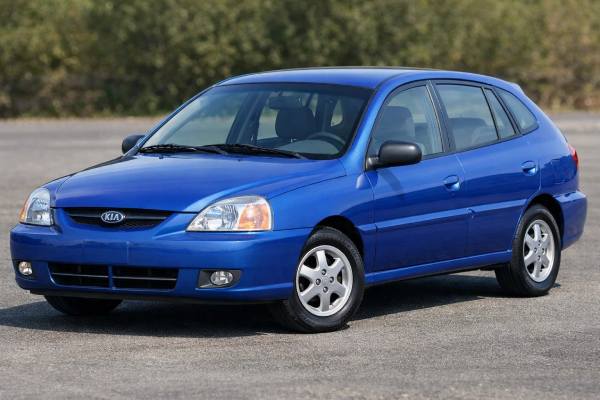
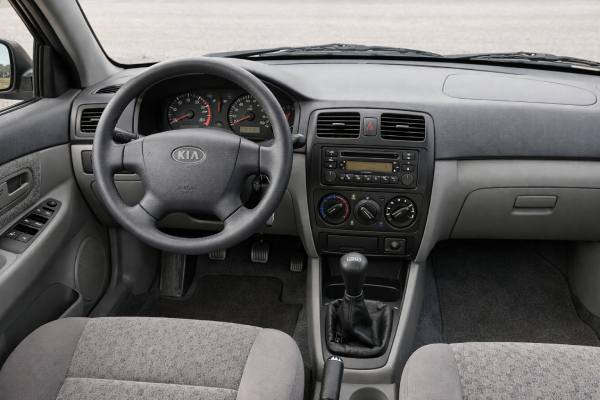
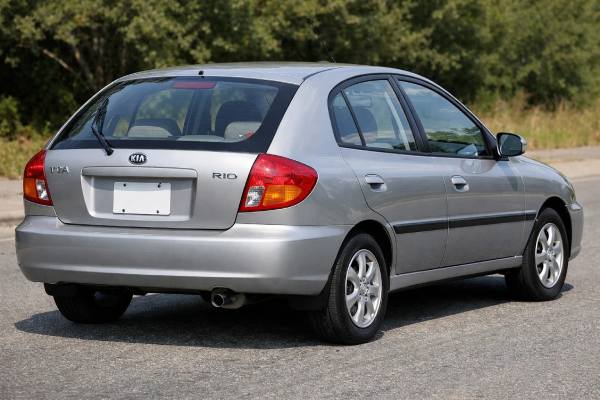
The 2000–2002 Kia Rio (DC) with the 1.3-liter 75 hp engine is a straightforward, early-2000s economy car built around simplicity. It uses a naturally aspirated inline-four, front-wheel drive, and a conventional suspension and braking layout—meaning most jobs are familiar to any independent workshop, and many wear items are easy to access. For owners today, that “basic engineering” is the main advantage: this Rio is usually more limited by age-related upkeep (rubber, fluids, corrosion, and neglected service history) than by complicated electronics.
If you’re considering one now, think like a caretaker. Choose condition over mileage, verify timing-belt service, and inspect the body structure carefully. Driven with realistic expectations, it’s not fast, but it can be dependable and inexpensive when you stay ahead of routine maintenance and address small problems before they cascade.
Owner Snapshot
- Simple mechanical layout keeps many repairs approachable and affordable
- Light weight and compact size suit city driving and tight parking
- Predictable handling and easy controls make it low-stress to drive
- Timing-belt history matters—treat “unknown” as overdue and budget to replace
- Plan engine-oil service every 10,000 km (6,200 mi) or 12 months for typical mixed use
Navigate this guide
- Kia Rio DC 1.3 what it is
- Kia Rio DC 1.3 specs and measurements
- Kia Rio DC trims, equipment, and safety gear
- Reliability, problems, and recalls
- Maintenance plan and buying advice
- Driving feel and real-world economy
- Rivals and better-value alternatives
Kia Rio DC 1.3 what it is
This Rio (generation “DC”) follows the classic small-car formula: a transverse front engine, front-wheel drive, a simple unibody shell, and a focus on low running costs rather than performance. In 2000–2002 form, the 1.3-liter 75 hp version is the calmest, most economical configuration in typical markets—an engine tuned for steady commuting, not rapid overtakes.
You’ll often see the engine described with two different labels. Some catalogs and enthusiast references use “B3” because the engine traces to a Mazda B-series family. In Kia parts contexts, you may also see Kia-specific designations. For ownership, the key technical implications are the same: a modest-output naturally aspirated inline-four with multi-point fuel injection and a timing belt. That combination is generally forgiving of normal driving, but it is not forgiving of skipped belt intervals or chronic overheating.
In daily use, the Rio’s strengths are practical rather than exciting. The car is easy to place on the road, visibility is usually good by modern standards, and the controls are light. Its modest power output can actually help durability: tires, brakes, and drivetrain components tend to live a less stressful life when the car isn’t asked to transmit big torque spikes. When owners report “major” problems, they typically trace back to deferred basics—old coolant, ignored leaks, worn suspension bushings, or corrosion that has quietly expanded.
It also helps to set expectations around safety and refinement. Early-2000s small cars generally offer fewer airbags and less advanced crash structure than newer vehicles, and they lack modern crash-avoidance assistance. Noise levels and ride control also depend heavily on the condition of the suspension and the quality of the tires fitted.
The best way to view the Rio DC 1.3 today is as a simple mobility tool. If you want modern performance, quiet cruising, and advanced safety tech, a newer small hatchback will feel like a different world. If you want a basic car you can keep reliable with regular service and sensible inspections, this Rio can still be a solid choice—especially if you buy a rust-free example with verified maintenance history.
Kia Rio DC 1.3 specs and measurements
The tables below focus on the specs that matter for ownership: maintenance planning, fitment, performance expectations, and day-to-day practicality. Values can vary by market (body style, gearbox, emissions calibration, wheel package), so treat them as typical for the 2000–2002 Rio DC 1.3 75 hp rather than VIN-perfect.
Powertrain and efficiency
| Item | Typical spec (2000–2002 1.3 75 hp) |
|---|---|
| Engine family and code | B3 family (Kia catalog code may differ by market) |
| Engine layout and cylinders | Inline-4, SOHC, 2 valves/cyl (8-valve) |
| Bore × stroke | ~75.5 × 75.0 mm (2.97 × 2.95 in) |
| Displacement | ~1.343 L (1343 cc) |
| Induction | Naturally aspirated |
| Fuel system | Multi-point injection (MPI) |
| Compression ratio | ~9.5:1 (varies by market) |
| Max power | 75 hp (55 kW) (rpm varies by calibration) |
| Max torque | ~113–116 Nm (~83–86 lb-ft) (rpm varies by calibration) |
| Timing drive | Belt |
| Rated efficiency | Commonly mid-6 to low-7 L/100 km combined (test-cycle dependent) |
| Real-world highway @ 120 km/h (75 mph) | Often ~7.0–8.0 L/100 km with A/C and normal load |
Transmission and driveline
| Item | Typical spec |
|---|---|
| Transmission | 5-speed manual common; 4-speed automatic optional (market-dependent) |
| Drive type | FWD |
| Differential | Open |
Chassis and dimensions (typical hatchback footprint)
| Item | Typical spec |
|---|---|
| Suspension (front/rear) | Front struts; rear torsion beam |
| Steering | Hydraulic assist common for era (varies) |
| Brakes | Front discs / rear drums (size varies by market) |
| Wheels and tyres (popular) | 175/70 R13 or 185/60 R14 depending on trim |
| Ground clearance | ~140–150 mm (~5.5–5.9 in), package-dependent |
| Length / Width / Height | ~4215 / 1675 / 1440 mm (165.9 / 65.9 / 56.7 in) |
| Wheelbase | ~2410 mm (94.9 in) |
| Turning circle (kerb-to-kerb) | ~9.5 m (~31 ft) |
| Kerb (curb) weight | Commonly ~970–1050 kg (~2140–2315 lb), body/gearbox dependent |
| GVWR | Varies by market; check door-jamb plate |
| Fuel tank | ~45 L (11.9 US gal / 9.9 UK gal) |
| Cargo volume | Varies by body; check body style and rear-seat folding setup |
Performance and capability
| Metric | Typical expectation |
|---|---|
| 0–100 km/h (0–62 mph) | Around mid-14 seconds (gearbox and body dependent) |
| Top speed | Around 160–165 km/h (~99–103 mph) |
| Braking distance | Heavily dependent on tire quality and brake condition |
| Towing capacity | Often modest; confirm by local homologation and handbook |
| Payload | Varies by market; confirm on vehicle plate |
Fluids and service capacities (planning values)
| Item | Typical planning value |
|---|---|
| Engine oil | Common viscosity 10W-40 or 5W-40 depending on climate; capacity roughly mid-3 L range with filter |
| Coolant | Around ~6 L total system capacity; typical 50/50 mix unless climate guidance differs |
| Manual transmission | GL-4 75W-90 often used; capacity commonly around ~2 L (confirm spec) |
| Automatic transmission | Fluid spec and capacity vary; use the correct ATF for the gearbox |
| A/C refrigerant | R134a typical for era; charge amount varies by condenser and body |
| Key torque specs | Always confirm in service documentation; wheel nuts and brake fasteners are the most critical |
Safety and driver assistance (period-correct expectations)
| Item | Typical spec |
|---|---|
| Crash ratings | Not consistently available across all markets/variants for this generation |
| ADAS suite | None in this era |
| Core safety equipment | Seatbelts, head restraints, basic airbags and ABS depending on trim/market |
A useful mindset for older cars: specs tell you what the vehicle was designed to be, but condition tells you what it is today. A well-sorted Rio with good tires, healthy brakes, and tight suspension will feel safer and more stable than a neglected “higher-spec” example.
Kia Rio DC trims, equipment, and safety gear
Trim names vary by country and importer, and 20+ years of ownership often blurs what was “factory” versus later changes. Instead of trusting trim badges, focus on equipment that genuinely changes safety, comfort, and maintenance outcomes.
Trims and options that affect ownership
These are the items that typically matter most on the Rio DC 1.3:
- Manual vs automatic transmission:
A manual usually suits the 75 hp engine better and is often cheaper to keep healthy. Automatics can be fine, but they need correct fluid and smooth behavior under light throttle. If an automatic feels reluctant, flares between gears, or bangs into gear, treat that as a warning. - Air conditioning:
A/C transforms comfort in summer, but older systems can be expensive to revive properly. A quick check isn’t just “is it cold?”—listen for compressor noise, ensure idle remains stable with A/C on, and verify the radiator fan behavior when the A/C is engaged. - ABS (anti-lock brakes):
ABS may be optional or absent on base trims. If the car has ABS, confirm the warning light behavior at start-up and do a controlled brake test on a safe surface to feel for consistent pedal response (not a pulsing pedal all the time, which can indicate warped rotors or drum issues rather than ABS function). - Airbags:
Some markets offered a driver airbag as standard but made passenger airbags optional. Side airbags were uncommon. Confirm what’s fitted by visual inspection and by checking the instrument cluster for SRS warning behavior. - Power steering, electric windows, central locking:
These don’t decide whether the car can be reliable, but they can decide whether it’s pleasant. Window regulators, door wiring, and worn ignition switches can be nuisance issues—small individually, annoying collectively.
Quick identifiers when listings are vague
If you’re standing next to the car:
- ABS: Look for an ABS warning lamp in the cluster and an ABS hydraulic unit with multiple brake lines in the engine bay.
- Airbags: Look for SRS/airbag markings on the steering wheel and the passenger-side dash. Seat-side tags can indicate side airbags on some cars.
- Wheel and tire packages: Smaller steel wheels often indicate base trims; alloys or larger wheels can indicate higher trim—though wheels are easy to swap, so treat this as a clue, not proof.
Safety ratings: how to interpret them for this car
For early-2000s small cars, rating information can be inconsistent by region and test version. Even when a rating exists, it may reflect a different body style, safety package, or test protocol than your exact vehicle. Practically, that means:
- Treat the Rio DC as basic by modern standards: fewer airbags, less advanced crash structures, and no crash-avoidance assistance.
- Make safety condition-based: tires, brake performance, suspension stability, lights, and seatbelt integrity.
- Verify recall completion and safety campaigns by VIN where possible, and keep documentation.
Safety systems and “ADAS” reality
This Rio predates the ADAS era. There is no automated emergency braking, adaptive cruise control, or lane support. If the car has ABS, it’s a real benefit in emergency braking, but it does not shorten braking distances by itself—tires and brake condition still dominate.
Because the car’s safety margin depends heavily on maintenance, it’s worth being picky. A Rio with fresh tires, aligned suspension, and strong brakes will stop straighter, steer more predictably, and feel calmer in wet conditions—advantages that matter more here than trim-level infotainment or cosmetic upgrades.
Reliability, problems, and recalls
The Rio DC 1.3 is generally “reliable in the old-school sense”: simple, tolerant, and fixable. But at this age, reliability is less about original design and more about how the car was maintained through multiple owners. The patterns below reflect what typically shows up on older naturally aspirated small cars with timing belts and basic running gear.
Common issues (common, usually low-to-medium cost)
- Oil seepage and minor leaks (low/medium):
Symptoms: oily dampness around the engine, drips after parking, a light burning smell when oil hits hot surfaces.
Likely causes: aged valve-cover gasket, crank seals, oil-pan sealant fatigue, or a clogged PCV system increasing crankcase pressure.
Remedy: diagnose the exact leak, reseal properly, and ensure crankcase ventilation is clear. - Rough idle, hesitation, or stalling (low/medium):
Symptoms: unstable idle when cold, stumble on throttle tip-in, occasional stalling during warm-up.
Likely causes: dirty throttle body, vacuum leaks, tired ignition components (plugs/leads), or aging sensors.
Remedy: fix air leaks first, clean the throttle body, then address ignition and sensors based on measured data. - Cooling-system aging (medium):
Symptoms: slow coolant loss, temperature creeping in traffic, weak cabin heat, or a fan that doesn’t cycle as expected.
Likely causes: radiator end-tank cracks, old hoses, weak pressure cap, thermostat sticking, or air trapped after previous work.
Remedy: pressure test, replace weak components, and refill/bleed correctly. - Exhaust corrosion and leaks (low/medium):
Symptoms: louder exhaust note, rattles, fumes smell at idle.
Likely causes: rusted joints, failing flex section, tired hangers.
Remedy: repair with proper clamps/welds and confirm no leaks near the cabin.
Occasional issues (medium cost, often age-related)
- Clutch wear and release issues (manual):
Symptoms: slipping under load, high bite point, chatter, difficulty engaging gears.
Root causes: worn friction disc, tired pressure plate, or release mechanism wear; sometimes oil contamination from a seal leak.
Remedy: clutch kit replacement and inspection of seals and release components. - Automatic shift quality concerns (automatic):
Symptoms: delayed engagement, flare on upshift, harsh shifts, or shudder.
Root causes: old/incorrect ATF, clogged filter, or internal wear.
Remedy: confirm fluid spec, service appropriately, and avoid “miracle additives.” If symptoms persist, walk away unless you’re buying very cheap and budgeting for gearbox work. - Suspension bushings, ball joints, and wheel bearings (medium):
Symptoms: clunks over bumps, wandering steering, humming with speed, vibration under braking.
Remedy: replace the specific worn parts, then align the front end. Cheap parts can ruin the result—use reputable components.
Rare but expensive (or safety-critical)
- Timing-belt neglect (high):
Risk: sudden no-start, breakdown, and possible internal engine damage depending on variant and failure scenario.
Ownership rule: if there’s no proof of recent belt service, treat it as overdue and replace the belt, tensioners, and related wear parts immediately. - Structural corrosion (high):
Risk: safety and inspection failure, poor alignment stability, and expensive welding.
Hotspots: sills/rockers, rear arches, floor edges, suspension mounting points, and subframe areas.
Ownership rule: cosmetic rust can be managed; structural rust should usually end the deal.
Recalls, service bulletins, and how to verify completion
Older cars may have safety campaigns related to wheels, seatbelts, airbags, or other safety-critical components depending on market and production batch. The most important point is method: verify by VIN using official recall databases and dealer records where available. When a seller says “it’s all done,” ask for paperwork or a printout.
Pre-purchase checks worth requesting
- Timing-belt replacement evidence (invoice showing date and mileage)
- Cooling-system history (radiator/thermostat/hoses)
- Brake inspection notes and confirmation all warning lamps behave correctly
- Underbody inspection for corrosion and prior accident repair
- Confirmation of recall completion (VIN check and documentation)
Maintenance plan and buying advice
A Rio DC 1.3 rewards proactive maintenance. The car is simple enough that small issues are usually easy to correct—if you catch them early. The schedule below is designed for an older engine where oil quality, cooling health, and belt history matter more than stretching intervals.
Practical maintenance schedule (distance/time)
| Item | Interval (typical) | Notes |
|---|---|---|
| Engine oil and filter | 10,000 km (6,200 mi) or 12 months | Short trips/cold climate: consider 7,500 km (4,700 mi) |
| Engine air filter | 15,000–30,000 km (9k–19k mi) | Inspect yearly; dusty use shortens interval |
| Cabin air filter (if fitted) | 15,000–30,000 km | Some trims may not have one |
| Spark plugs | 30,000–60,000 km (19k–37k mi) | Depends on plug type; verify what’s installed |
| Coolant | Every 2–3 years | Replace sooner if contamination or rust is present |
| Brake fluid | Every 2 years | Helps prevent internal corrosion and soft pedal feel |
| Manual gearbox oil | 80,000–120,000 km (50k–75k mi) | Earlier if shifts feel rough or noisy |
| Automatic transmission fluid | 40,000–60,000 km (25k–37k mi) | Use correct fluid spec; service history matters |
| Timing belt and tensioners | 90,000–100,000 km (56k–62k mi) or 5 years | Replace as a kit; consider water pump at same time |
| Auxiliary belt(s) | Inspect yearly; replace 60,000–100,000 km | Replace if cracked, glazed, or noisy |
| Brakes (pads/rotors/drums) | Inspect every service | Replace by wear and symptoms, not just mileage |
| Tire rotation and alignment | Rotate 10,000–12,000 km | Align after any front suspension work |
| 12 V battery | Test yearly after year 4 | Weak batteries stress charging and starting systems |
Fluids and specs: how to be “right enough” without guessing
Because exact specs vary by market and production, use these rules:
- Match the correct standard, not just the viscosity. If your manual specifies an API/ACEA class, follow it.
- Avoid universal fluids when a specific ATF is required. Automatics are far less tolerant of “close enough.”
- Don’t mix unknown coolants. If the type is unknown, drain and refill properly rather than topping up with random chemistry.
- Use a torque wrench for safety-critical fasteners. Wheels and brakes deserve precision.
Buyer’s guide: inspection checklist that saves money
Body and structure (highest priority)
- Check sills/rockers, floor edges, and suspension mounting points for rot.
- Look for uneven panel gaps, overspray, or underbody patches that suggest repairs.
- Lift the trunk carpet and inspect inner seams for corrosion or water ingress.
Engine and cooling
- Start cold: listen for belt squeal, tapping, or rough idle that persists.
- Check for coolant smell, oily residue in the coolant tank, or pressurized hoses after a short drive.
- Confirm the temperature gauge behaves normally and the fan cycles in traffic.
Transmission and driveline
- Manual: check clutch bite point, hill start behavior, and shifting into 2nd/3rd under light load.
- Automatic: ensure smooth engagement, no flare, no harsh bangs, and no burnt-smelling fluid.
Suspension, steering, and brakes
- Listen for front-end clunks over small bumps.
- Brake from speed: the car should track straight without vibration.
- Inspect tire wear: uneven wear often indicates worn bushings or poor alignment.
Recommended ownership strategy (what to do after purchase)
If you buy a Rio with uncertain history, a “baseline refresh” is usually the smartest first step:
- Change oil and filter, air filter, and spark plugs if age is unknown
- Replace timing belt kit immediately if undocumented
- Flush brake fluid and inspect all brake hardware
- Refresh coolant if age/type is unknown
- Replace worn tires (including checking DOT age) and align the car
Done early, this approach prevents a common pattern where small neglected items create recurring breakdowns and make the car feel “unreliable” when it’s really just overdue for basics.
Driving feel and real-world economy
The Rio DC 1.3 drives like a light, honest economy car. It’s easy to maneuver, easy to park, and generally predictable. If the car you test feels twitchy, noisy, or unstable, assume it’s a condition issue—tired shocks, cheap tires, worn bushings—not an unavoidable trait of the model.
Ride, handling, and NVH
- Ride comfort: The suspension tuning is usually forgiving at city speeds. Worn dampers can make it bounce over undulations, and worn rear beam bushings can add a “wiggle” mid-corner.
- Handling balance: Safe understeer is the norm. The car prefers smooth inputs; abrupt steering and braking can overwhelm narrow tires.
- Steering feel: Light and easy, with modest feedback. Proper alignment and good tires make the biggest improvement.
- Braking feel: Typically linear. If the pedal is soft or inconsistent, suspect old brake fluid, rear drum adjustment issues, or mixed-quality friction parts.
- Cabin noise: Expect more road and wind noise than newer cars. A big jump in noise often points to wheel bearings, exhaust leaks, or aggressive/cheap tires.
Powertrain character
With 75 hp, you drive this car with momentum and planning:
- Urban driving: Fine. It’s responsive enough at low speeds, and the light weight helps.
- Highway merges and passing: You’ll need space. Downshifting is normal, not a sign of strain.
- Load sensitivity: Passengers, cargo, hills, and A/C noticeably reduce urgency. That’s expected for the output and displacement.
Manual transmission generally complements the engine best. Automatic transmission can be comfortable, but it often makes the car feel slower and requires more careful maintenance choices.
Real-world efficiency
Fuel economy depends heavily on trip length and speed. On short cold trips, warm-up and stop-start traffic dominate consumption. On steady runs, aerodynamic drag becomes the main load at motorway speeds, which is why small older cars can drink more than expected at 120 km/h.
Typical owner-reported ranges for a healthy car on sensible tires:
- City: ~7.5–9.0 L/100 km (31–26 mpg US) depending on traffic and warm-up time
- Highway (100–120 km/h / 60–75 mph): ~6.0–8.0 L/100 km (39–29 mpg US) depending on wind and load
- Mixed: ~6.8–8.2 L/100 km (35–29 mpg US)
Big levers for economy on this model:
- Correct tire pressures
- A clean air filter
- A healthy thermostat (engine reaches proper temperature)
- No dragging brakes or underinflated tires
- Smooth driving and moderate cruising speed
Performance metrics that matter in practice
Instead of focusing on peak numbers, focus on whether the car delivers “normal” behavior:
- It should idle smoothly after warm-up
- It should pull cleanly through the rev range without flat spots
- It should hold motorway speed without overheating or vibration
- It should brake straight and remain stable over bumps
If any of those basics are missing, you’re likely looking at maintenance debt, and the cheapest purchase price can quickly become the most expensive car.
Rivals and better-value alternatives
The Rio DC 1.3 competes best on simplicity and low-cost ownership when the body is solid. Its weak points are also typical for the era: modest crash protection compared with newer designs, less refinement, and limited power for fast highways.
Where the Rio DC 1.3 tends to win
- Straightforward mechanics: Fewer systems to diagnose, fewer expensive electronic modules, and generally familiar service procedures.
- Low ongoing costs (when sorted): Once you baseline the car, you’re mostly paying for consumables.
- City-friendly packaging: Small footprint, easy maneuvering, and light controls.
Where it tends to lose
- Safety versus newer cars: Even with airbags and ABS, it lacks the structural and avoidance advantages of later generations.
- Refinement: More noise and a less “tight” feel than the best rivals.
- Highway ease: Passing power is limited, especially with an automatic or full load.
Rival snapshots to cross-shop (same general era)
- Toyota Yaris (early 2000s): Often strong durability and efficient packaging; usually priced higher in good condition.
- Honda Jazz: Excellent interior flexibility and real-world usability; can cost more up front.
- Volkswagen Polo: Can feel more solid; costs can rise with age and parts pricing.
- Ford Fiesta: Good steering feel and broad parts support; rust and neglect still matter.
- Opel Corsa: Easy to live with; condition varies widely, especially electrics and cooling health.
- Hyundai Accent: Similar value-focused formula; buy on condition and rust status.
The practical decision rule
Choose the Rio DC 1.3 when:
- You mainly drive city/suburban routes
- You can verify (or immediately do) timing-belt service
- The body is clean, straight, and rust-light
Choose a different car when:
- You commute fast highways daily and want relaxed passing
- Safety is your top priority and you can afford a newer platform
- You want modern comfort features and lower cabin noise
If you’re honest about its mission, the Rio DC 1.3 can still be a sensible low-cost commuter. The trick is buying a good shell, then maintaining it like a simple machine rather than “running it until something breaks.”
References
- Vehicle Detail Search – 2001 KIA RIO 2026 (Recall Database)
- RCAK-05V159-7049 2005 (Recall Document)
- Engine Oil Grades and Capacities 2023 (Service Guide)
- Owner’s Manuals and Documents 2026 (Owner’s Manual Portal)
- Official Kia Rio safety rating 2017 (Safety Rating)
Disclaimer
This article is for informational purposes only and is not a substitute for professional inspection, diagnosis, or repair. Specifications, torque values, service intervals, fluids, and procedures can vary by VIN, market, body style, and equipment. Always verify details against official Kia service information and the documentation for your exact vehicle before ordering parts or performing work.
If this guide helped you, please consider sharing it on Facebook, X (Twitter), or your favorite forum to support our work.