
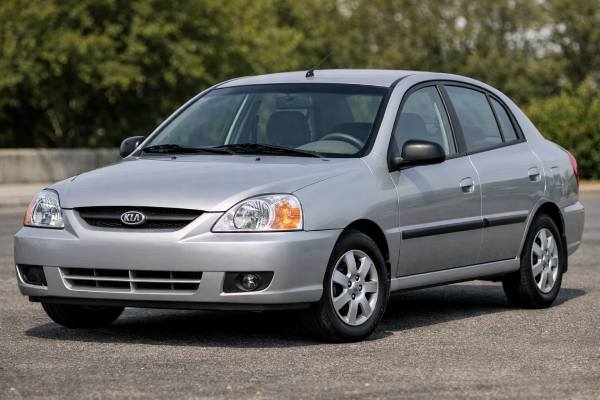
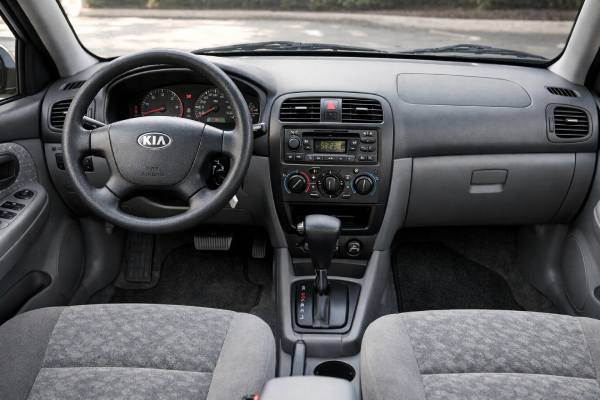

The 2000–2002 Kia Rio (DC) with the 1.5-liter 16-valve engine is a simple, light, and surprisingly “honest” small car. With around 98 hp and modest curb weight, it doesn’t win drag races—but it can feel more willing than the numbers suggest, especially with the 5-speed manual. The engineering story here is straightforward: a naturally aspirated, multi-point injected inline-four, front-wheel drive, and cost-conscious chassis hardware that’s easy to service and cheap to keep on the road.
For owners today, the main value is predictable running costs. Parts availability is still decent, and most repairs are conventional. The trade-off is age-related wear (rubber, corrosion, cooling, and fuel-system aging), plus safety performance that reflects early-2000s standards. If you buy carefully and maintain it on schedule, this Rio can still be a dependable commuter.
Fast Facts
- Light curb weight helps city drivability and keeps tire and brake costs low.
- Simple MPI (multi-point injection) engine tends to be tolerant of fuel quality and short trips.
- Manual gearbox versions usually feel more responsive than the 4-speed automatic.
- Watch for fuel smell, hard starting, or dampness around fuel lines—address immediately.
- Plan engine-oil service every 7,500–10,000 km (6–12 months) depending on usage and climate.
Navigate this guide
- Kia Rio DC 1.5 ownership profile
- Kia Rio DC 1.5 specs and capacities
- Kia Rio DC trims and safety equipment
- Reliability patterns and known faults
- Maintenance plan and used-buyer checks
- On-road performance and economy
- Rival cars to cross-shop
Kia Rio DC 1.5 ownership profile
In this 2000–2002 configuration, the Rio (DC) is best understood as a “basic transportation” platform with two strong ownership advantages: low operating complexity and low mass. That matters because, as cars age, simplicity often becomes a reliability feature. The 1.5-liter 16-valve engine (commonly associated with the B5 family; often listed under Kia’s A5D code in catalogs) uses conventional multi-point injection rather than direct injection, and it avoids turbocharging. For long-term ownership, that generally means fewer high-cost failure modes, easier diagnostics, and less sensitivity to carbon buildup.
The chassis is equally straightforward. Front-wheel drive, a compact wheelbase, and modest tire sizes keep consumables inexpensive. Even when suspension parts wear (bushings, ball joints, dampers), the repair approach is usually familiar to any independent shop. The Rio’s light curb weight is also kind to brakes and wheel bearings when compared with heavier modern cars—assuming alignment is kept in check and tires aren’t run underinflated.
Where owners should be realistic is refinement and crash safety. Noise, vibration, and harshness (NVH) are “economy car” by design, and safety engineering from the early 2000s is not comparable to modern subcompacts with advanced airbag systems and driver-assistance tech. The Rio can be made safe to operate through good tires, strong brakes, correct lighting aim, and a healthy suspension—but it won’t match newer designs in structural performance or crash-avoidance systems.
The sweet spot for this model today is predictable commuting: short highway runs, city errands, and secondary-car duty. It’s less ideal for frequent high-speed motorway use with heavy loads, or for owners who want modern crash tech. If you want one, prioritize condition over options: rust-free structure, clean fuel system behavior, and evidence of routine maintenance are worth more than a “loaded” trim with neglected service.
Kia Rio DC 1.5 specs and capacities
Below are the most relevant specifications for the 2000–2002 Rio (DC) with the 1.5-liter 16V 98 hp engine. Values can vary by market (sedan vs hatch, emissions equipment, and gearbox), so treat them as a strong baseline and verify against your VIN-specific documentation.
Powertrain and efficiency
| Item | Spec |
|---|---|
| Engine family / code (common listings) | B5-family 1.5; often cataloged as A5D |
| Layout | Front-engine, transverse |
| Cylinders / valvetrain | Inline-4, DOHC, 4 valves/cyl |
| Displacement | 1.5 L (1493 cc) |
| Bore × stroke | 75.5 × 83.4 mm |
| Compression ratio | 9.5:1 |
| Induction | Naturally aspirated |
| Fuel system | Multi-point injection (MPI) |
| Max power | 98 hp (≈72 kW) @ 5500 rpm |
| Max torque | 138 Nm (≈102 lb-ft) @ 4500 rpm |
| Timing drive | Belt (service item) |
| Rated fuel economy (EPA, US-market reference) | 1.5 auto: 22/28/25 mpg (city/hwy/combined) • 1.5 manual: 24/29/26 mpg |
Fuel economy conversions (approx.)
- 25 mpg US combined ≈ 9.41 L/100 km
- 26 mpg US combined ≈ 9.05 L/100 km
Transmission and driveline
| Item | Spec |
|---|---|
| Drive type | FWD |
| Manual | 5-speed manual (common) |
| Automatic | 4-speed automatic (market-dependent) |
| Differential | Open |
Chassis and dimensions
| Item | Spec |
|---|---|
| Front suspension | Strut-type |
| Rear suspension | Coil-spring rear setup (simple layout) |
| Steering | Rack and pinion; hydraulic assist on many trims |
| Brakes (typical) | Front ventilated discs; rear drums |
| Wheels/tires (common fitment) | 175/65 R14 |
| Length / width / height | 4215 / 1675 / 1440 mm |
| Wheelbase | 2410 mm |
| Turning circle (kerb-to-kerb) | 9.5 m |
| Curb weight | ~945 kg |
| GVWR | ~1435 kg |
| Payload (approx.) | ~490 kg |
| Fuel tank | 45 L |
| Trunk (sedan, minimum) | ~326 L |
Performance (baseline expectations)
| Item | Spec |
|---|---|
| 0–100 km/h (0–62 mph) | ~11.6 s |
| Top speed | ~182 km/h |
| 100–0 km/h braking | Not consistently published; varies heavily by tires, pads, and road surface |
| Towing capacity | Often not rated or very limited depending on market and hitch approval |
Fluids and service capacities (commonly published)
| Item | Spec |
|---|---|
| Engine oil capacity | ~3.0 L (verify dipstick after fill) |
| Coolant capacity | ~6.0 L |
| ATF / gear oil | Varies by gearbox; verify by transmission code and service manual |
| A/C refrigerant | Varies by market system; check under-hood label |
Key torque specs (practical ownership set)
Because published torque tables vary by market and manual edition, use these as decision-grade guidance only:
- Wheel lug nuts: typically 90–110 Nm (66–81 lb-ft) for small passenger cars of this era (verify for your wheels)
- Oil drain plug: commonly 35–55 Nm (26–41 lb-ft) depending on pan design and washer type (verify before tightening)
Kia Rio DC trims and safety equipment
Trim naming differs by country, but most 2000–2002 Rio (DC) lineups followed a familiar pattern: a base model focused on price, and an upgraded trim (often “LS” or similar) adding comfort and convenience. The mechanical core—engine, FWD layout, and braking architecture—usually stayed the same. The big ownership differences were in gearbox choice, steering assist, and whether ABS was fitted.
Trims and options that matter in real life
When you evaluate a used example, focus on options that change the driving experience or maintenance planning:
- Transmission: The 5-speed manual generally feels livelier and can be cheaper to keep healthy. The 4-speed automatic is convenient, but it’s more sensitive to neglected fluid and overheating.
- Power steering: Many cars used hydraulic power steering. A “heavier” steering feel can be normal at low speed, but groans, jerky assist, or leaks from lines/pump/rack matter.
- Air conditioning: A working A/C system is valuable, but age can bring leaks and weak compressors. Confirm cold vent temperatures and stable idle when A/C engages.
- ABS (if equipped): Some markets offered ABS on higher trims or as an option. It’s a meaningful safety upgrade, especially in rain or snow, but it adds sensors and wiring that can fail with corrosion.
Quick identifiers you can use during inspection:
- ABS light behavior: Key-on should illuminate the ABS lamp, then go out after start (if ABS is fitted). A missing ABS lamp or a lamp that stays on is a flag.
- Rear brakes: Most versions used rear drums; if a seller claims “four-wheel disc,” verify visually.
- Tire size: Common 175/65 R14 can indicate standard wheels; oversized aftermarket wheels can hide suspension issues and worsen ride.
Safety ratings: how to interpret them
Early-2000s safety testing often used different protocols than modern tests, and some variants were “not rated” in certain categories. If you see a mix of results, that’s normal. The main takeaway is to compare the Rio against cars from the same era, not against 2020s vehicles with advanced structures and airbags.
Safety systems and what’s realistically available
Typical equipment in this generation includes:
- Front airbags (usually driver and passenger; confirm presence and warning-light check)
- Seat-belt pretensioners in some trims/markets
- Child-seat provisions: May be pre-ISOFIX in some markets; check rear-seat anchors carefully if child seats are part of your plan
- No modern ADAS: Expect no factory AEB, ACC, lane support, or blind-spot monitoring
Service implication: if the SRS (airbag) warning light is on, treat it as a priority repair—diagnose with a capable scan tool and correct the root cause before daily use.
Reliability patterns and known faults
At this age, “reliability” is usually more about prior maintenance and operating conditions than the original design. The Rio (DC) 1.5 can be durable, but it has a few repeatable problem areas worth mapping by prevalence and cost.
Common (often seen)
1) Fuel smell, leaks, or hard-start behavior (medium to high urgency)
- Symptoms: Fuel odor near the engine bay, dampness at fittings, extended cranking, rough start, or intermittent stalling.
- Likely causes: Aging fuel hoses, cracked plastic fittings, or fuel distributor/line issues addressed by recalls in some markets and years.
- Remedy: Inspect fuel lines and connections immediately; replace aged hoses with correct pressure-rated parts. Verify recall completion where applicable.
2) Timing belt overdue (high severity if it fails)
- Symptoms: No immediate warning, sometimes squeal from the belt area, or visible cracking when inspected.
- Likely cause: Age and mileage—rubber belts degrade even when the car is not driven much.
- Remedy: Replace timing belt on schedule with tensioner/idler(s). If history is unknown, treat it as due.
3) Cooling system aging (medium severity)
- Symptoms: Temperature creep in traffic, coolant smell, low coolant, heater weak, or crusted residue around hoses/radiator.
- Likely causes: Old hoses, tired radiator, weak cap, stuck thermostat, or neglected coolant changes.
- Remedy: Pressure-test, replace weak components, and refill with the correct coolant mix.
Occasional (depends on care and climate)
4) Automatic transmission shift quality (medium cost)
- Symptoms: Hesitation, harsh shifts, flare, or delayed engagement.
- Likely causes: Old ATF, varnish buildup, overheating from city use, or worn mounts.
- Remedy: Verify fluid condition and level; service with correct ATF. Avoid aggressive “flush” methods on neglected units unless the shop has a clear procedure.
5) Suspension wear and alignment drift (low to medium cost)
- Symptoms: Tire edge wear, pulling, clunks over bumps, wandering at speed.
- Likely causes: Worn bushings, ball joints, tie-rod ends, tired dampers.
- Remedy: Refresh worn components and align with correct tire pressures.
Rare (but expensive when it happens)
6) Structural corrosion in critical points (high severity)
- Symptoms: Rust at sills/rockers, rear beam mounts, floor edges, strut towers, and brake/fuel line routing areas.
- Likely cause: Winter salt, poor underbody cleaning, and old repairs.
- Remedy: Walk away from major structural rust unless you’re prepared for welding and a thorough inspection.
Recalls, service actions, and how to verify
The Rio has had safety recalls affecting some model years/regions—particularly around fuel leakage risk and wheel cracking risk. The right approach is practical:
- Run an official VIN check (country-specific).
- Ask the seller for dealer paperwork showing recall completion.
- Inspect the affected areas anyway—age can recreate similar problems even after recall work.
Maintenance plan and used-buyer checks
A good maintenance plan for the Rio (DC) 1.5 does two things: it prevents age-related failures (belts, rubber, corrosion) and it keeps the car safe (tires, brakes, steering, lights). Below is a practical schedule that balances modern oil quality with an older engine’s needs.
Practical maintenance schedule (distance/time)
Every 7,500–10,000 km or 6–12 months
- Engine oil and filter (use a quality filter; verify oil level after refill)
- Visual inspection: coolant level, hose condition, belt condition, leaks
- Tire pressure check and quick tread/sidewall inspection
Every 15,000 km or 12 months
- Engine air filter inspection/replace as needed
- Cabin filter (if fitted) replace as needed
- Brake inspection: pad/shoe thickness, rotor/drum condition, fluid leaks
- Battery test and charging voltage check (alternator health)
Every 30,000–40,000 km or 2 years
- Brake fluid replace (helps corrosion resistance in ABS and calipers)
- Coolant condition check; replace on a conservative interval if history is unknown
- Manual gearbox oil inspection/service (especially if shifting feels notchy)
Every 60,000–90,000 km or 4–6 years (whichever comes first)
- Timing belt service (belt plus tensioner and idlers; consider water pump “while you’re there” if driven by the belt or if access overlaps)
- Accessory/serpentine belt and tensioner inspection/replacement
- Spark plugs (interval depends on plug type; confirm what’s installed)
As-needed, but don’t delay
- Suspension wear items (ball joints, tie-rods, bushings)
- Fuel and brake lines corrosion protection/repair
- A/C service if cooling performance drops
Fluid specs and practical choices
For an older MPI engine, the most important rule is consistency and cleanliness:
- Choose a reputable oil meeting the manual’s API requirements for the climate you drive in. In cold climates, a lighter winter rating can improve starting and reduce wear.
- Use a proper coolant type and correct mix ratio. Avoid mixing unknown coolant types.
Used-buyer inspection checklist (high value)
Bring a flashlight and plan to spend 30–45 minutes:
Body and structure
- Check sills/rockers, floor edges, strut towers, rear suspension mounts
- Look under the trunk floor and around spare tire well for water intrusion
Engine bay
- Sniff for fuel odor; look for damp fittings and cracked hoses
- Inspect coolant residue and radiator condition
- Ask directly about timing belt history—request receipts
Road test
- Cold start should be quick and stable
- Steering should be consistent and quiet
- Braking should be straight with no pulsing (warped rotors) and no dragging (sticking calipers)
- At 80–100 km/h: check for vibration (tires, wheels, bearings) and wandering (alignment/suspension)
Likely reconditioning items after purchase
- Fluids and filters baseline service
- Tires (if date codes are old)
- Battery and charging system check
- Brake refresh (pads/shoes, fluid)
Long-term durability outlook
If the structure is clean and the fuel system is healthy, the Rio (DC) 1.5 can remain dependable. Most “end-of-life” outcomes come from rust, neglected belts, or untreated fuel and cooling problems—not from the engine suddenly wearing out. Buy the best-maintained car you can, even if it costs more up front.
On-road performance and economy
The Rio (DC) 1.5’s personality is shaped by two things: modest torque at higher rpm and relatively low vehicle mass. In city driving, that means it feels cooperative if you keep it in the right part of the rev range. With the manual gearbox, it’s easy to stay in the engine’s “working zone” and make the car feel quicker than expected. With the automatic, performance is more relaxed—fine for commuting, less satisfying for merging or passing.
Ride, handling, and NVH
Ride: On the common 14-inch tire setup, the Rio’s ride is typically compliant at low speed. As components age, harshness often comes from tired dampers, dry bushings, or overinflated tires. If the car feels crashy, don’t assume “that’s how it is”—it often improves dramatically with fresh shocks and correct tire pressures.
Handling: Expect safe understeer and simple behavior at the limit. The short wheelbase and light rear end can feel a bit busy on uneven highways, especially if rear suspension bushings are worn. Steering is usually light with hydraulic assist; excessive play suggests tie-rod or rack wear.
Noise: Cabin noise at 100–120 km/h is higher than in newer subcompacts. Tires make a big difference—cheap, hard-compound tires often add roar and reduce wet grip, while better touring tires improve comfort and braking confidence.
Powertrain character
- Throttle response: Generally crisp at moderate rpm thanks to MPI and low mass, but not “torquey” off-idle.
- Manual gearing: Helps keep the engine on boil; clutch feel varies by wear and cable/hydraulic setup.
- Automatic behavior: Can hunt between gears on mild grades; fluid condition strongly affects shift quality.
Real-world economy expectations
Using official US-market EPA figures as a reference point:
- Manual 5-speed: about 9.0 L/100 km combined (26 mpg US combined) in gentle mixed driving
- Automatic 4-speed: about 9.4 L/100 km combined (25 mpg US combined)
In the real world, a well-maintained manual car can do better on steady highway runs, while an automatic in stop-and-go traffic can do worse—especially if tires are underinflated or the engine runs rich due to a sensor issue (like an aging oxygen sensor).
Cold weather and short trips typically raise consumption noticeably. If you do frequent short journeys, prioritize:
- Correct thermostat operation (engine reaches normal temperature)
- Clean air filter and healthy ignition components
- Proper tire pressures
“Feels slow” checklist (before blaming the engine)
If performance seems unusually flat:
- Confirm brakes aren’t dragging (hot wheels after a short drive are a clue).
- Scan for misfire codes and check plugs/wires (or coils, depending on setup).
- Inspect for vacuum leaks and tired engine mounts.
- Verify the catalytic converter isn’t restricted (rare, but possible on neglected cars).
The Rio won’t become a fast car, but it should feel willing and consistent when healthy.
Rival cars to cross-shop
If you’re considering a 2000–2002 Rio (DC) 1.5, it’s smart to compare it with other small cars from the same era, because condition and parts support can matter more than badge. Here are the most relevant cross-shops and how the Rio typically stacks up.
Late-1990s to early-2000s Toyota Corolla (E110-era)
Why people buy it: Strong long-term durability reputation and broad parts availability.
Where the Rio can win: Lower purchase price for similar mileage; sometimes cheaper insurance.
Where Corolla often wins: Better overall refinement and often better corrosion resistance depending on region.
Verdict: If you find a clean Corolla at a fair price, it’s usually the safer bet. If the Corolla examples in your budget are rusty or abused, a clean Rio can be the better real-world choice.
Honda Civic (late 1990s / early 2000s)
Why people buy it: Efficient engines, strong support network, good driving feel.
Where the Rio can win: Lower entry cost and simpler “basic commuter” positioning.
Where Civic often wins: Better handling polish and often stronger resale value.
Verdict: Civic is often the more complete car, but watch for modified or poorly repaired examples. A stock, well-kept Rio may be more predictable than a heavily altered Civic.
Ford Fiesta / Opel Corsa / similar European superminis (market-dependent)
Why people buy them: Better packaging, sometimes better ride/handling balance.
Where the Rio can win: Straightforward engine bay layout and often simpler maintenance.
Where rivals can win: Tighter interiors and potentially better crash engineering depending on model/year.
Verdict: Choose based on local parts pricing and rust. In some regions, European superminis have stronger shop familiarity; in others, the Rio’s simplicity is an advantage.
Hyundai Accent (same era)
Why compare: Similar philosophy and running costs; often a closer “apples to apples” match.
Rio advantage: If you find a well-documented Rio, it can be just as economical to run.
Accent advantage: Depending on year and market, may have slightly better parts supply or trim features.
Verdict: Buy the best condition car with the strongest maintenance record—either can be a sensible choice.
Practical recommendation
If your priority is lowest cost per kilometer and you can verify maintenance and recall work, the Rio can be a rational buy. If your priority is maximum crash protection and refinement, it’s usually smarter to spend the same money on a newer vehicle class—because safety advances after the early 2000s are significant.
References
- Kia Rio I Sedan (DC) 1.5i 16V (98 Hp) | Technical specs, data, fuel consumption, Dimensions 2026 (Technical Data)
- Gas Mileage of 2001 Kia Rio 2026 (Official Fuel Economy Data)
- Vehicle Detail Search – 2001 KIA RIO | NHTSA 2026 (Recall Database)
- RCMN-05V159-3623 2005 (Recall Notice)
- Safety Recall: Rlo/Rio Cinco Fuel Distributor Replacement 2004 (Recall Bulletin)
Disclaimer
This article is for informational purposes only and is not a substitute for professional diagnosis, inspection, or repair. Specifications, torque values, service intervals, and procedures can vary by VIN, market, model year, and equipment. Always verify details using official owner and service documentation for your exact vehicle and follow safe workshop practices.
If you found this guide useful, please consider sharing it on Facebook, X (Twitter), or your favorite forum—it helps others find reliable, practical information.