


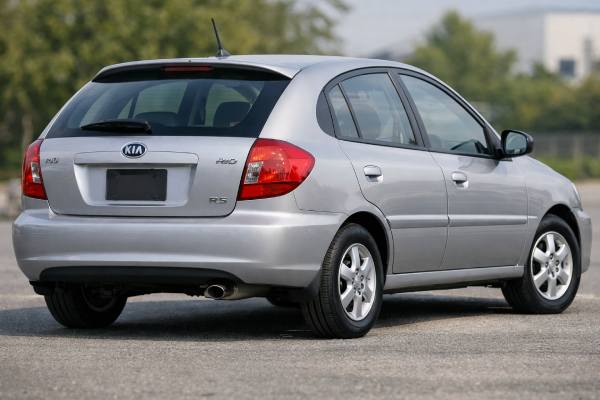
The facelifted 2003–2005 Kia Rio (DC) with the 1.6-liter B6 engine is the “simple car done right” version of early-2000s budget motoring. It’s light, easy to park, and mechanically straightforward—qualities that still matter if you’re shopping for a low-cost commuter or a first car. In this spec, the 104 hp 1.6 is the sweet spot of the range: it’s noticeably more flexible than the smaller engines, yet it keeps the Rio’s maintenance approach uncomplicated (timing belt, regular fluids, basic suspension hardware).
Ownership tends to hinge on two things: how well it was serviced and how carefully you stay ahead of age-related rubber, cooling, and fuel-system issues. Treat it as a small machine with a predictable schedule—not as a “just add fuel” appliance—and it can be an honest, inexpensive daily.
Owner Snapshot
- Strong value if you prioritize low purchase price and simple mechanicals over modern refinement.
- The 1.6 feels meaningfully more usable in traffic than the smaller engines, especially with passengers.
- Parts availability is generally good, and most jobs are DIY-friendly with basic tools.
- Watch for fuel smells or hard starts on older examples; address fuel and evap faults early.
- Plan engine oil and filter service every 7,500 km (5,000 mi) or 6 months for best durability.
Quick navigation
- Kia Rio DC facelift profile
- Kia Rio DC 1.6 specifications
- Kia Rio DC equipment and safety
- Known faults and recalls
- Service schedule and purchase checklist
- Road manners and economy
- Competitors and value comparison
Kia Rio DC facelift profile
The 2003–2005 facelift of the Rio (DC) kept the original formula—compact footprint, front-wheel drive, and a “repairable by any shop” mindset—while tightening day-to-day usability. In most markets, the facelift brought detail changes to trim, lighting, and interior materials, plus incremental tweaks to equipment packaging. The bigger story for many buyers is the 1.6-liter B6 engine: it makes the Rio feel less strained without turning it into a complex car.
Where it fits today. This Rio works best as a short- to medium-distance commuter, a city runabout, or a low-cost second car. It’s happiest in steady-state driving and moderate climates. In heavy stop-start use, the age-related load goes up: engine bay heat cycles, idling time, and repeated cold starts amplify small leaks and sensor problems. None of that is unique to the Rio—it’s simply what happens to early-2000s compact cars once they pass the 15–20 year mark.
What owners usually like:
- Simple service access. Basic ignition, belts, filters, brakes, and suspension parts are straightforward compared with newer tightly packaged cars.
- Light weight and visibility. The car feels easy to place on the road, and parking is stress-free.
- Low operating cost when maintained. Fuel economy is reasonable and consumables (tires, pads, filters) are typically modest.
Where expectations need to be realistic.
- NVH and refinement. Cabin noise at highway speeds is higher than modern compacts; wind and tire roar are normal.
- Safety baseline. You should not expect modern crash performance or advanced driver assistance; equipment levels depend heavily on market and trim.
- Aging plastics and seals. Interior wear, window seals, door checks, and weatherstripping can feel “tired” even when the powertrain is sound.
Who should buy one. Choose a Rio DC 1.6 facelift if you value predictable ownership, you can tolerate a basic cabin, and you’re willing to perform “small car stewardship”: fluids on time, cooling system attention, and prompt repairs when warning lights appear. If you want modern quietness, high-speed stability, or strong crash-avoidance tech, a newer compact is a better fit—even if it costs more upfront.
Kia Rio DC 1.6 specifications
Specs vary by market, body style (sedan vs hatch), transmission, and emissions package. The tables below focus on the typical facelift Rio DC with the 1.6-liter B6 family engine rated around 104 hp.
Powertrain and efficiency (typical)
| Item | Specification |
|---|---|
| Code | B6 (market naming may differ) |
| Engine layout and cylinders | Inline-4, DOHC, 16 valves (4 valves/cyl) |
| Bore × stroke | ~81.0 × 77.4 mm (3.19 × 3.05 in)* |
| Displacement | 1.6 L (1,594 cc) |
| Induction | Naturally aspirated |
| Fuel system | Multi-point fuel injection (MPFI) |
| Compression ratio | ~9.5:1 |
| Max power | 104 hp (78 kW) @ ~5,800 rpm* |
| Max torque | ~145 Nm (107 lb-ft) @ ~4,500 rpm* |
| Timing drive | Timing belt |
| Rated efficiency (example: 2005 1.6 manual) | 9.4 L/100 km combined (25 mpg US / ~30 mpg UK) |
| City / highway (example: 2005 1.6 manual) | 10.7 / 8.1 L/100 km (22 / 29 mpg US) |
| Real-world highway @ 120 km/h (75 mph) | Often 7.8–9.0 L/100 km (26–30 mpg US) depending on tires, load, and wind |
*Items marked as approximate are commonly published values for this engine family; confirm by VIN-specific service data when precision matters.
Transmission and driveline
| Item | Specification |
|---|---|
| Transmission | 5-speed manual (common) or 4-speed automatic (market-dependent) |
| Drive type | Front-wheel drive (FWD) |
| Differential | Open |
Chassis and dimensions (typical class values)
Exact measurements depend on body style and market bumpers. Use this as a sizing guide and verify your specific car if you need garage-fit precision.
| Item | Typical specification |
|---|---|
| Suspension (front / rear) | MacPherson strut / torsion beam |
| Steering | Hydraulic power steering (most markets) |
| Brakes | Front disc / rear drum (many trims); rear disc in some markets |
| Wheels/tires (common) | 175/70 R13 or 185/60 R14 (varies by trim) |
| Turning circle (kerb-to-kerb) | ~10.0–10.5 m (33–34 ft)* |
| Fuel tank | ~45 L (11.9 US gal / 9.9 UK gal)* |
Performance and capability (what to expect)
| Metric | Typical range |
|---|---|
| 0–100 km/h (0–62 mph) | ~10.5–12.5 s (manual usually quicker) |
| Top speed | ~175–185 km/h (109–115 mph) |
| Braking 100–0 km/h | ~41–46 m (varies heavily by tires and brake condition) |
| Towing capacity | Often not rated or very limited in many markets |
Fluids and service capacities (engine-focused)
| Item | Specification |
|---|---|
| Engine oil | API SL/SM class equivalents; 5W-30 common choice* |
| Engine oil capacity | ~3.4 L (3.6 US qt) total* |
| Coolant | Ethylene glycol long-life coolant; 50/50 mix typical |
| Coolant capacity | ~6.0 L (6.3 US qt)* |
| A/C refrigerant | Varies by market/year; verify under-hood label |
If you only remember one thing from the tables: the Rio’s durability comes from routine fluids + timing belt discipline more than from any exotic engineering feature.
Kia Rio DC equipment and safety
Because the Rio DC was sold widely, “trim” can mean very different things depending on region. Instead of memorizing badge names, it’s more useful to identify what changes ownership experience: transmission, airbags/ABS, and the body style.
Trims and options that matter
Body styles. Many markets offered both a 4-door sedan and a hatchback. The hatch is often more versatile for real life—its usable cargo area makes the car feel “bigger” than its footprint. For a reference point from official U.S. fuel-economy data on a 2005 1.6 manual: passenger volume is listed around 88 ft³ (~2,492 L) and luggage volume about 9 ft³ for the sedan (~255 L), while the hatchback listing shows 25 ft³ (~708 L). In practice, real cargo depends on seat shape and how high you load.
Transmission. The 5-speed manual is usually the simplest long-term bet: fewer heat-related failure modes and more predictable repair costs. The 4-speed automatic can be fine, but it’s less forgiving of neglected fluid, and harsh shifts or delayed engagement can signal expensive wear.
Comfort and convenience. Common equipment differences include:
- Air conditioning vs no A/C in base trims (in some markets)
- Power windows/locks and mirror type
- Wheel size (13–14 inch common), which affects ride and braking feel
- Audio system tiers (basic radio vs CD; rarely anything modern)
Quick identifiers when inspecting.
- ABS: Look for an ABS warning lamp at key-on and, under the hood, a hydraulic ABS unit with multiple hard brake lines.
- Airbags: Check steering wheel and passenger dash markings. Some markets had driver-only airbags in lower trims.
- Hatch vs sedan practicality: Fold the rear seat and check latching; older hatchbacks sometimes develop rattles or tired hatch struts.
Safety ratings and what they mean here
Early-2000s subcompacts were designed to a different safety baseline than modern cars. Even when a vehicle has airbags, overall crash protection depends on structure, restraint tuning, and test protocols used at the time. For the Rio DC facelift, the most practical approach is:
- Confirm what the car actually has (airbags, ABS, child-seat anchors).
- Make safety mechanical: good tires, fresh brake fluid, sound suspension bushings, and correct alignment.
- Use child seats correctly and confirm anchor integrity—especially because child-seat anchorage compliance campaigns exist for this model line in some years.
Driver assistance (ADAS)
Treat ADAS as essentially not part of the Rio DC story. You may see basic features like:
- ABS (trim/market dependent)
- Basic traction control in some late-market variants (not universal)
There is no expectation of AEB, adaptive cruise, lane keeping, or modern sensor suites. If those are priorities, cross-shopping newer rivals is the right move.
Known faults and recalls
At this age, the Rio’s problems are less about “design flaws” and more about heat, time, and maintenance gaps. The best way to think about reliability is by prevalence and cost tier.
Common (expect to see) — usually low to medium cost
- Oil seepage and gasket sweating (low/medium).
Symptoms: oily film around valve cover, mild burning smell after a drive.
Likely cause: hardened gasket material and crankcase ventilation (PCV) aging.
Remedy: replace valve cover gasket, inspect PCV valve and hoses, clean mating surfaces. - Cooling system aging (medium).
Symptoms: fluctuating temperature gauge, slow coolant loss, heater performance changes.
Likely cause: tired radiator end tanks, aging hoses, thermostat sticking, old coolant.
Remedy: pressure test, replace suspect hoses/clamps, thermostat, and keep coolant fresh. - Ignition wear and misfires (low/medium).
Symptoms: rough idle, hesitation, flashing MIL under load.
Likely cause: spark plugs overdue, ignition wires/coils aging (market dependent), moisture intrusion.
Remedy: correct plugs, inspect leads/coils, check for vacuum leaks. - Front suspension knocks (medium).
Symptoms: clunks over small bumps, wandering feel, uneven tire wear.
Likely cause: worn sway bar links, strut mounts, control arm bushings, or ball joints.
Remedy: replace worn components as a set when budget allows; align afterward.
Occasional — watch during inspection
- Automatic transmission shift quality (medium/high if ignored).
Symptoms: delayed engagement, flare on upshift, harsh 2–3 shift.
Likely cause: fluid degraded, solenoid wear, internal clutch wear.
Remedy: verify fluid condition and service history; a careful fluid service may help, but severe symptoms can mean rebuild territory. - Evaporative emissions leaks (low/medium).
Symptoms: check-engine light, fuel smell, difficulty refueling.
Likely cause: cracked hoses, purge valve issues, charcoal canister aging.
Remedy: smoke test EVAP system; replace failed hoses/valves.
Rare but important — safety or high consequence
- Fuel-system recall-related concerns (high priority).
Some model years have campaigns addressing fuel delivery components.
Symptoms: fuel odor, visible dampness near lines, hard starting, or poor running.
Remedy: confirm recall completion by VIN and repair immediately if any fuel leak is suspected. - Child-seat anchorage compliance campaign (high priority for families).
If you transport children, confirm that anchor points and hardware meet the applicable recall remedy and that the seat installs securely.
Service actions, updates, and verification
This era is not heavy on software updates, but campaign completion matters:
- Request dealer printouts or official paperwork showing recall work completed.
- During a pre-purchase inspection, ask for a fuel odor check, underbody inspection for dampness near the tank/lines, and a general safety check of belts, brakes, and steering.
A well-maintained Rio can be dependable, but a neglected one can quickly cost more than its purchase price. Your goal is to buy the car after the previous owner paid the “catch-up tax,” not before.
Service schedule and purchase checklist
Below is a practical schedule for long life on the 1.6 Rio DC facelift. When factory intervals differ by market, choose the shorter interval unless you have clear documentation and mostly highway driving.
Maintenance schedule (practical, durability-focused)
Every 7,500 km (5,000 mi) or 6 months
- Engine oil and filter
- Inspect oil leaks, coolant level, and accessory belt condition
- Tire pressure check and visual tread inspection
Every 15,000 km (10,000 mi) or 12 months
- Rotate tires; check alignment wear patterns
- Inspect brake pads/shoes, rotors/drums, and brake hoses
- Engine air filter inspection (replace if dirty)
- Cabin filter (if equipped) check/replace
Every 30,000–40,000 km (20,000–25,000 mi) or 2 years
- Brake fluid flush (DOT 3/4 as specified for the car)
- Coolant condition check; replace at 2–4 year cadence depending on coolant type and history
- Inspect PCV valve and vacuum hoses
- Manual gearbox oil check/service if shifting feels notchy (where serviceable)
Every 60,000 km (37,500 mi) or 4 years
- Spark plugs (sooner if misfire-prone or using standard copper plugs)
- Full cooling system inspection: thermostat, radiator cap, hose condition
Timing belt service (critical)
- Replace timing belt at the manufacturer interval or earlier if history is unknown.
- When doing the belt, strongly consider water pump + tensioner/idlers as a package.
- If there is no proof of a belt service, treat it as due immediately.
Automatic transmission (if equipped)
- Verify the correct ATF spec for the unit. A conservative approach is fluid service every 40,000–60,000 km (25,000–37,500 mi) if you want longevity, especially in city use.
Fluids and capacities (decision-making quick list)
- Engine oil: ~3.4 L total
- Coolant: ~6.0 L total
(Always verify by VIN and service literature; drain-and-fill amounts can differ from dry-fill.)
Buyer’s guide: inspection checklist
Paperwork first
- Timing belt proof (invoice with mileage/date).
- Cooling system service history (coolant type and last change).
- Recall completion proof (fuel system and child-seat anchorage campaigns where applicable).
Walk-around and underbody
- Check for fuel smell around the rear and underbody after a drive.
- Look for uneven tire wear (alignment and bushing health).
- Inspect for rust at sills, rear arches, and subframe mounting points (regional).
Engine bay
- Cold start behavior: should settle to a stable idle within seconds.
- Look for oil seepage around the valve cover and front engine area (belt-side leaks should be taken seriously).
- Check coolant for oil contamination and signs of chronic overheating.
Test drive
- Straight-line tracking: no wandering or steering shake.
- Braking: firm pedal, no pull, no grinding.
- Transmission: smooth engagement; automatic should not flare or slam.
Best ownership strategy
Buy the cleanest, most documented example you can, even if it costs more upfront. On inexpensive cars, condition is usually cheaper than repairs.
Road manners and economy
A facelift Rio DC 1.6 drives like what it is: a light, practical compact designed for normal speeds and simple comfort. If you set expectations correctly, it can feel agreeable—especially around town.
Ride, handling, and NVH
Ride quality. The Rio’s suspension is tuned for compliance rather than sharp handling. With correct tire sizes and healthy dampers, it absorbs broken pavement reasonably well at city speeds. Worn struts or tired rear beam bushings show up as hop, extra bounce, or a “busy” rear end over small bumps.
Handling balance. Steering response is predictable, but feedback is limited. In corners, the car tends to understeer progressively. This is good for normal drivers: it’s easy to read, and it won’t surprise you—provided tires are decent.
Highway behavior. At 100–120 km/h (60–75 mph), you’ll notice:
- More wind and tire noise than modern compacts
- Shorter wheelbase stability limits—crosswinds and ruts can move the car around
- A need for healthy front-end parts (ball joints, bushings, alignment) to keep it tracking straight
Powertrain character
The 1.6 is the engine to choose if you regularly carry passengers or use highways. It doesn’t feel fast, but it’s more relaxed than smaller options:
- Throttle response: straightforward; low-rpm pull is adequate for city traffic
- Passing: you’ll plan it, especially with the automatic
- Manual gearbox: typically the best match for keeping the engine in its useful range
- Automatic: can feel slower to respond; condition and fluid history make a big difference
Real-world efficiency
Official fuel-economy data for a 2005 Rio 1.6 with a 5-speed manual lists 22 mpg city, 29 mpg highway, 25 mpg combined (US), which converts to about 10.7 / 8.1 / 9.4 L/100 km. In real use:
- Short trips and cold weather often push consumption toward 10–12 L/100 km (20–24 mpg US).
- Steady highway cruising can land in the 8–9 L/100 km range (26–30 mpg US), assuming tires and alignment are right.
If economy is worse than expected, the usual causes are basic: underinflated tires, dragging rear drums, misfires, oxygen sensor aging, or a thermostat stuck open.
Competitors and value comparison
The Rio DC facelift 1.6’s biggest advantage against rivals is not outright performance—it’s purchase price plus mechanical simplicity. Still, it helps to compare what you gain or give up versus key early-2000s small cars.
Versus Toyota Echo/Yaris (XP10 early Yaris era)
- Why pick the Rio: often cheaper to buy; straightforward parts; decent cabin space for footprint.
- Why pick Toyota: typically stronger long-term reliability reputation, better resale, and fewer “small aging issues” as mileage rises.
- Verdict: If you’re keeping the car for years and can pay more upfront, Toyota often wins. If budget is tight and condition is good, the Rio can be a rational buy.
Versus Honda Civic (7th gen)
- Why pick the Rio: lower entry cost; simpler trim structure; easier to find inexpensive examples.
- Why pick Civic: generally better chassis refinement, more mature highway feel, and a deeper aftermarket/parts ecosystem.
- Verdict: Civic is usually the better “one car does everything,” but the Rio can be the better “cheap commuter that you won’t worry about.”
Versus Hyundai Accent (LC)
- Why pick the Rio: similar philosophy and often similar running costs; depending on market, the Rio may have better availability or pricing.
- Why pick Accent: sometimes more common, which can help parts sourcing and shop familiarity.
- Verdict: Choose based on condition and service history—these two are closer than most buyers expect.
Versus Ford Fiesta (early-2000s markets)
- Why pick the Rio: simpler ownership path; fewer “special tool” vibes; often cheaper to repair.
- Why pick Fiesta: can feel more agile and “European” in steering/ride balance in some versions.
- Verdict: Fiesta can be more engaging, but the Rio is often easier to live with if your priority is cost control.
The Rio’s “best case” value scenario
A documented, rust-minimized Rio with timing belt history, healthy cooling system, and completed recalls can deliver extremely low cost per kilometer. The “worst case” is the opposite: unknown belt history, overheating episodes, and neglected fuel/brake issues. If you buy carefully, the Rio’s value proposition is strong—because it rewards simple, consistent maintenance.
References
- Fuel Economy of the 2005 Kia Rio 2005 (Official Fuel Economy Data)
- Safety Recall: Rlo/Rio Cinco Fuel Distributor Replacement 2004 (Recall Notice)
- 2003-2005 MY Kia Rio Child Seat Anchorage System 2005 (Recall Notice)
- Kia Rio L4-1.6L DOHC 16V Repair and Diagnosis 2003 (Service Manual)
Disclaimer
This article is for informational purposes only and is not a substitute for professional inspection, diagnosis, or repair. Specifications, torque values, fluid capacities, maintenance intervals, and procedures can vary by VIN, market, model year, and installed equipment—always verify details using the official documentation for your specific vehicle.
If this guide helped, please consider sharing it on Facebook or X/Twitter to support our work.