
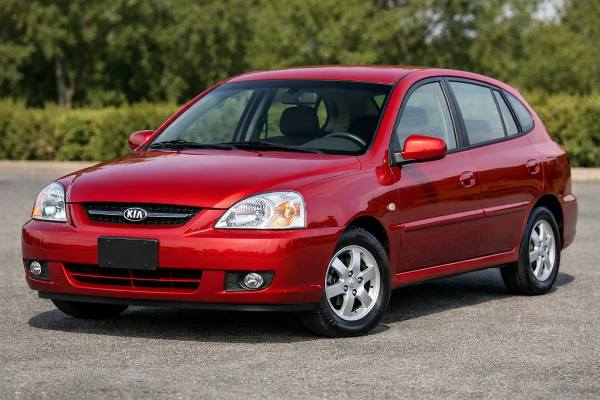
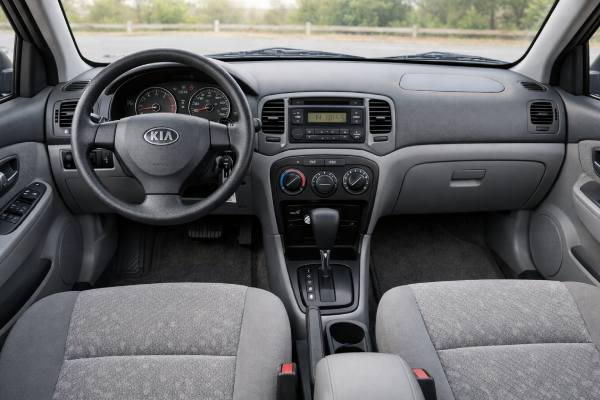

The facelifted 2002–2005 Kia Rio DC with the 1.3-liter B3 engine is the definition of “simple transport done honestly.” With just 82 hp, it is not fast, but it is light, predictable, and easy to keep on the road when you treat it like a small, older economy car. The engineering story here is straightforward: a naturally aspirated multi-point injected four-cylinder, a conventional manual gearbox, and a chassis tuned for comfort more than precision. That simplicity is the main advantage—most problems are mechanical, diagnosable, and typically affordable.
Where owners win is in running costs: reasonable fuel use, uncomplicated service access, and parts availability in many markets. Where owners can lose is neglect: cooling system maintenance, timing belt discipline, and corrosion control matter a lot at this age.
Owner Snapshot
- Simple powertrain that is easy to service and generally tolerant of everyday driving.
- Light curb weight helps city efficiency and makes the 82 hp feel adequate around town.
- Comfortable ride for a small sedan, with straightforward controls and good visibility.
- Watch for rust and cooling-system wear; neglected examples can become money pits fast.
- Plan oil and filter service every 10,000–15,000 km (6,000–9,000 mi) or 12 months, depending on use.
Contents and shortcuts
- Kia Rio DC facelift basics
- Kia Rio DC facelift spec sheet
- Kia Rio DC facelift trims and safety
- Failure trends and service campaigns
- Maintenance schedule and costs
- Ride, handling and efficiency
- Comparison with small rivals
Kia Rio DC facelift basics
The 2002 facelift brought the first-generation Rio (DC) into a more mature phase of its life cycle. For buyers today, the facelift matters less for styling and more for what it suggests: later production years, incremental improvements, and often better parts interchangeability within the 2002–2005 range. This 1.3-liter, 82 hp version targets the cost-sensitive end of the market—drivers who need a compact sedan that starts every day, handles short trips, and is cheap to keep insured and fueled.
From an engineering perspective, the B3 1.3 is a conservative setup: naturally aspirated, multi-point fuel injection, and a simple valvetrain. You will not find complex variable valve timing, direct injection, turbocharging, or modern electronic driver aids. That is a benefit for long-term ownership because there are fewer expensive subsystems to fail. It is also a limitation, because performance and crash technology reflect early-2000s standards.
In daily use, the car works best when driven within its comfort zone:
- City and suburban speeds: The light weight makes it feel responsive enough at low speeds, especially with a manual gearbox.
- Highway cruising: It can cruise legally, but passing requires planning; wind noise and engine noise are typical for the class and era.
- Full load driving: With passengers and luggage, expect slower acceleration and more frequent downshifts.
Advantages are most visible when you approach it as an ownership project rather than a “set and forget” appliance. At this age, condition outweighs mileage. A well-maintained Rio can be a dependable commuter; a neglected one often has stacked issues—overheated once, driven with an old timing belt, rusty brake lines, tired dampers, and intermittent electrical faults from moisture.
A smart way to think about this Rio is as a “maintenance-driven car.” If you are willing to do preventive service on schedule, it is usually cooperative. If you want modern refinement, high-speed quietness, or top-tier crash results, it will feel dated.
Kia Rio DC facelift spec sheet
Below are key specifications for the Kia Rio I Sedan (DC, facelift 2002) 1.3i 82 hp configuration. Values can vary by market, gearbox, and year, so treat these as a practical baseline for comparison and maintenance planning.
Powertrain and efficiency
| Item | Specification |
|---|---|
| Engine code (commonly listed) | A3E |
| Layout | Front, transverse |
| Configuration | Inline-4, OHC, 2 valves/cyl |
| Displacement | 1.3 L (1343 cc) |
| Bore × stroke | 75.5 × 75.0 mm (2.97 × 2.95 in) |
| Induction | Naturally aspirated |
| Fuel system | Multi-point injection (MPFI) |
| Compression ratio | 9.4:1 |
| Max power | 82 hp (60 kW) @ 5500 rpm |
| Max torque | 116 Nm (86 lb-ft) @ 3000 rpm |
| Timing drive | Belt (service-critical item) |
| Official combined economy (typical) | 7.1 L/100 km (33.1 mpg US / 39.8 mpg UK) |
| Official urban / extra-urban (typical) | 8.8 / 5.4 L/100 km |
Transmission and driveline
| Item | Specification |
|---|---|
| Drive type | FWD |
| Common transmission | 5-speed manual |
| Differential | Open |
Some markets offered an automatic on higher trims, but manuals are the most common pairing with the 1.3.
Chassis and dimensions
| Item | Specification |
|---|---|
| Front suspension | Strut-type |
| Rear suspension | Coil-spring rear (simple layout) |
| Steering | Rack-and-pinion; typically hydraulic assist |
| Brakes | Front disc / rear drum (ABS varies by trim/market) |
| Popular tyre size | 175/65 R14 |
| Turning circle (kerb-to-kerb) | 9.5 m (31.2 ft) |
| Length / width / height | 4240 / 1680 / 1440 mm (166.9 / 66.1 / 56.7 in) |
| Wheelbase | 2410 mm (94.9 in) |
| Curb weight | 965 kg (2127 lb) |
| GVWR | 1470 kg (3241 lb) |
| Payload (typical) | 505 kg (1113 lb) |
| Fuel tank | 45 L (11.89 US gal / 9.90 UK gal) |
| Trunk (sedan) | 326 L |
Performance (realistic expectations)
| Metric | Typical figure |
|---|---|
| 0–100 km/h (0–62 mph) | 14.3 s |
| Top speed | 172 km/h (106.9 mph) |
Fluids and service capacities (useful for planning)
| Item | Capacity (typical) | Notes |
|---|---|---|
| Engine oil | 3.4 L (3.6 US qt) | Choose viscosity by climate; confirm spec for your VIN |
| Coolant | 6.0 L (6.3 US qt) | Use the correct antifreeze type and mix ratio |
Key torque specs (practical “decision-making” values)
Because published torque values vary by market documentation, use these as typical ranges for this class and confirm before final tightening:
- Wheel nuts: commonly 90–110 Nm (66–81 lb-ft)
- Spark plugs: commonly 18–25 Nm (13–18 lb-ft)
Kia Rio DC facelift trims and safety
Trim names on the Rio DC facelift vary widely by country, and equipment can change year to year, even within the 2002–2005 window. In general, think in terms of three “equipment levels” rather than a single universal trim ladder: a base model focused on price, a comfort-focused mid trim, and a higher trim that adds convenience and (sometimes) safety options.
Common trim and option patterns (what usually changes)
- Air conditioning: often optional on base cars; common on mid and higher trims. Confirm the A/C actually works—repairs can cost more than the car is worth.
- Power features: electric front windows and central locking typically appear on better-equipped cars; base models may be manual windows.
- Power steering: many have hydraulic assist; check for pump noise and leaks at the rack lines.
- Wheels and tyres: steel wheels with hubcaps are common; alloys may indicate a higher trim or dealer fitment.
- ABS: may be present on better-equipped cars, but do not assume it is standard. Verify by key-on warning lights and a safe brake test on a low-grip surface.
Quick identifiers when shopping used
- ABS check: with ignition on, the ABS lamp should illuminate briefly, then go out after starting (if equipped).
- Airbag count cues: look for steering wheel and passenger dash markings; side airbags (where fitted) often have tags on the seat outer bolsters.
- A/C confirmation: check that the compressor engages, the fan speeds work, and the system can cool at idle (weak idle cooling often points to low refrigerant, fan issues, or a tired compressor).
- Gearbox feel: a healthy manual should shift cleanly without grinding; a high clutch bite point suggests wear.
Safety ratings: what you can and cannot assume
For this generation and era, safety ratings can be inconsistent across regions because test programs, equipment, and tested body styles differ. Some markets have published ratings for early-2000s small cars, but not always for the exact 1.3 facelift sedan configuration. Treat any “star” claim you see online as market-specific unless it clearly matches your body style, year, and test protocol.
What you can confidently evaluate on the car itself:
- Structure and corrosion: rust is a safety issue. Corroded sills, strut towers, and rear suspension mounts reduce crash protection.
- Restraints: ensure seat belts retract crisply and latch securely; check for airbag warning lights at startup.
- Brakes and tyres: good tyres and sound brakes often improve real-world safety more than trim badges do.
Safety systems and driver assistance (ADAS)
This Rio predates modern ADAS. Expect:
- Dual front airbags on many versions (market-dependent)
- Seat belt pretensioners on some trims/years
- ABS as optional or trim-dependent
- No factory AEB, ACC, lane assist, or blind-spot monitoring
One important ownership note: if the car has had interior work, seats removed, or steering wheel/airbag repairs, insist on a proper scan for airbag system faults and verify that warning lamps behave correctly.
Failure trends and service campaigns
At 20+ years old, “reliability” on a Rio DC facelift depends far more on maintenance history than on the original design. Still, patterns show up repeatedly. The best way to manage them is to sort issues by prevalence and cost severity, then inspect the known hotspots before they become breakdowns.
Common, low-to-medium cost issues (most cars will show some of these)
- Cooling system aging
- Symptoms: temperature needle wandering, weak cabin heat, coolant smell, damp radiator corners.
- Likely causes: tired radiator, thermostat sticking, old coolant, hose swelling, weak cap.
- Remedy: refresh thermostat and hoses as needed; replace radiator if seeping; bleed properly. Overheating is not “normal” and should be treated urgently.
- Ignition and idle quality
- Symptoms: misfire under load, rough idle, hesitation, poor fuel economy.
- Likely causes: worn spark plugs, aged leads/coils, dirty throttle body or idle control passages, tired oxygen sensor.
- Remedy: tune-up with correct plugs, clean throttle body, fix vacuum leaks, then diagnose sensors.
- Suspension wear
- Symptoms: clunks over bumps, wandering alignment, uneven tyre wear.
- Likely causes: worn drop links, control arm bushings, ball joints, tired struts.
- Remedy: replace worn joints/bushings in pairs; align afterward.
Occasional but higher-impact issues (worth screening carefully)
- Timing belt neglect (high severity if it fails)
- Symptoms: no warning until failure; sometimes belt noise, oil contamination, or visible cracking.
- Root cause: overdue belt interval, leaking cam/crank seals contaminating the belt, worn tensioner.
- Remedy: replace belt, tensioner, and ideally the water pump on schedule. Because interval guidance differs by market, many owners choose a conservative approach (distance or time-based) to avoid engine damage.
- Brake line and underbody corrosion
- Symptoms: soft pedal, damp lines, failed inspection, uneven braking.
- Root cause: rust on steel lines and hardware.
- Remedy: replace corroded lines and bleed with fresh fluid; address rust early.
Recalls and service actions (what to verify)
Even if your local market differs, service campaigns and recalls are still valuable clues about what can go wrong on the platform:
- Fuel system leak-related campaign (fuel distributor and fuel tube assembly)
- Risk: fuel smell, leaks, and fire hazard if fuel contacts an ignition source.
- What to do: confirm recall completion via documentation, dealer record, or official VIN-based lookup tools where available.
- Child seat anchorage compliance campaign (market-dependent)
- Risk: noncompliance with child restraint anchorage requirements on certain vehicles.
- What to do: if you rely on rear child seats, verify anchorage condition and any corrective service history.
Pre-purchase checks to request (high value, low effort)
- Proof of timing belt service (invoice with date and mileage).
- Evidence of coolant changes and no overheating history.
- Confirmation that recall work, where applicable, is completed.
- A simple underside inspection for corrosion and brake/fuel line condition.
Maintenance schedule and costs
A Rio DC facelift can be inexpensive to run, but only if you treat maintenance as a routine rather than a reaction. The schedule below balances realistic ownership with the car’s age and typical wear points. Use it as a planning template, then align it to your official service documentation and driving conditions.
Practical maintenance schedule (distance or time, whichever comes first)
| Item | Normal use | Severe use (short trips, cold climate, heavy city) | Notes |
|---|---|---|---|
| Engine oil and filter | 15,000 km / 12 months | 7,500–10,000 km / 6–12 months | Older engines benefit from shorter intervals |
| Engine air filter | 30,000 km / 24 months | 15,000–20,000 km | Dusty areas shorten life |
| Cabin filter (if fitted) | 15,000–30,000 km | 15,000 km | Some trims may not have one |
| Spark plugs | 30,000–60,000 km | 30,000–45,000 km | Depends on plug type and fuel quality |
| Coolant | 2–4 years | 2–3 years | Replace before corrosion starts |
| Brake fluid | 2 years | 2 years | Helps ABS components where fitted |
| Manual gearbox oil | 80,000–120,000 km | 80,000–100,000 km | Often ignored; worth doing |
| Timing belt kit | conservative: 60,000–90,000 km or 4–5 years | conservative: 60,000 km / 4 years | Market guidance varies; failure risk is high |
| Aux belt and tensioner | inspect every service | inspect every service | Replace at first cracking/noise |
| Tyre rotation and alignment | 10,000–15,000 km | 10,000 km | Protects tyres and steering feel |
| Suspension and steering inspection | every service | every service | Catch bushings and ball joints early |
| Battery test | yearly | yearly | Old wiring and grounds amplify weak battery issues |
Fluids: what to buy (safe, decision-ready guidance)
- Engine oil (capacity about 3.4 L): choose viscosity by climate; many owners use 5W-30 in colder climates or 10W-40 in warmer climates, provided it meets the required quality standard in your market documentation.
- Coolant (capacity about 6.0 L): use a compatible long-life coolant mixed to the correct ratio for your climate (often 50/50).
- Brake fluid: DOT 4 is common in many European markets; confirm what your reservoir cap and manual specify.
Ownership costs: where money usually goes
For most well-kept examples, the recurring expenses cluster into:
- Wear items: tyres, brake pads, rear drums/shoes, suspension links and bushings.
- Age items: radiator, hoses, battery, alternator belt, A/C service.
- Big-ticket prevention: timing belt kit and water pump service.
Buyer’s guide (what to seek, what to avoid)
Prefer cars with:
- Documented belt service, coolant service, and regular oil changes
- Dry engine bay (no fresh oil sprayed around timing covers)
- Even tyre wear (suggests alignment and suspension are not completely worn)
- A clean start with no airbag or ABS warning lights
Be cautious with cars showing:
- Any overheating history or milky oil (possible head gasket damage)
- Fuel smell near the engine bay (treat as urgent)
- Heavy underbody corrosion, especially near structural seams and brake lines
- Sloppy shifting or clutch slip under load
Long-term durability outlook is good only when maintenance is consistent. The car’s simplicity is an advantage, but it will not forgive missed belt service or repeated overheating.
Ride, handling and efficiency
Driving the 82 hp 1.3 Rio is a lesson in momentum and smooth inputs. It is not trying to be sporty; it is built to be easy and predictable. That said, it can be enjoyable in a “light car” way when it is mechanically healthy and wearing decent tyres.
Real-world ride, handling, and NVH
- Ride comfort: Generally compliant at city speeds, absorbing small bumps well for a compact sedan. Worn dampers make it bouncy; replacing struts can transform the car.
- Steering: Light and simple. It is usually easy to place in traffic, though feedback is modest compared with newer cars.
- Braking feel: With front discs and rear drums, pedal feel is acceptable when the system is properly maintained. Old brake fluid and out-of-adjustment rear drums are common reasons for a long or inconsistent pedal.
- Cabin noise: Expect noticeable engine and road noise at highway speeds. Door seals and tyre choice can make a measurable difference.
Powertrain character
- Low rpm behavior: Adequate for gentle starts, but it feels more willing once the revs rise.
- Midrange: Best for city merging and moderate hills; downshift early rather than lugging the engine.
- Highway passing: Requires planning. In a manual, dropping one or two gears is normal; keep the engine in its useful rpm band.
If an automatic is fitted (market-dependent), expect slower responses and more frequent kickdowns, especially with passengers. A hesitant automatic can also signal overdue fluid service.
Real-world efficiency (what owners typically see)
Official combined consumption figures for this configuration are reasonable, but age and condition change outcomes:
- City-heavy driving: typically higher consumption due to short trips and idle time, especially in winter.
- Highway at 100–120 km/h (60–75 mph): usually more efficient than city, assuming tyres are properly inflated and alignment is correct.
- Mixed driving: often lands close to official combined numbers when the engine is well tuned and the thermostat is working correctly.
Practical tips that genuinely move fuel use on this car:
- Fix vacuum leaks and misfires quickly (they waste fuel fast).
- Keep tyres at correct pressure and ensure alignment is not pulling.
- Replace a stuck-open thermostat; an engine that never warms up runs rich.
Performance metrics that matter for ownership
A 0–100 km/h time in the mid-14 second range is slow by modern standards, but it is consistent with the car’s mission. The key is drivability: a healthy example should start cleanly, idle steadily, and pull smoothly without surging or hesitation. If it does not, the car is telling you it needs maintenance—not that “they’re all like that.”
Comparison with small rivals
To judge the Rio DC facelift fairly, compare it to other early-2000s small cars that were built to the same cost targets. The Rio’s core advantage is simplicity and purchase price; its weak points are refinement and, depending on market equipment, safety technology.
Versus Toyota Yaris (XP10) and Honda Jazz/Fit (GD)
- Reliability reputation: Yaris and Jazz/Fit generally set the benchmark for long-term durability and fewer surprise repairs.
- Powertrain feel: Competitors often feel more refined and efficient in real-world use, especially at highway speeds.
- Rio advantage: lower upfront price and straightforward mechanical layout can make it attractive if you do your own maintenance.
Verdict: If you want the “least drama” ownership, the Toyota and Honda choices usually win, but you will pay more for a good one.
Versus Hyundai Accent (LC) and Chevrolet Aveo/Daewoo Kalos
- Closest match in spirit: These cars share a similar economy-first approach and can be good value.
- Parts and servicing: Often affordable across the group, with broad independent shop familiarity.
- Rio advantage: solid basic packaging and a simple engine that responds well to routine care.
Verdict: Shop condition first. A maintained Rio is a better buy than a neglected rival.
Versus Ford Fiesta (Mk5), Opel/Vauxhall Corsa (C), and Renault Clio (II)
- Driving dynamics: Fiesta and some Corsa/Clio variants can feel sharper or more composed.
- Complexity: Some European rivals add complexity in electronics or suspension details; not necessarily a deal-breaker, but it can raise repair effort.
- Rio advantage: simpler diagnosis and fewer “specialist-only” quirks.
Verdict: If you value steering and chassis feel, a good Fiesta or Clio may be more satisfying. If you value simplicity and low-cost repairs, the Rio remains competitive.
Best use case for the Rio DC facelift 1.3
Choose this Rio when you want:
- A low-cost commuter for short-to-medium trips
- A car you can maintain predictably with routine service
- Straightforward mechanics without modern driver-assistance complexity
Skip it if you need:
- Strong highway passing power, quiet cruising, or modern crash tech
- A “just add fuel” experience with minimal maintenance attention
- High annual mileage where comfort and refinement matter more
In the end, the Rio’s value depends on buying the right example. The best one is the car with proof: timing belt done, cooling system healthy, rust controlled, and a clean electrical and warning-light check.
References
- Kia Rio I Sedan (DC, facelift 2002) 1.3i (82 Hp) | Technical specs, data, fuel consumption, Dimensions 2026 (Specifications)
- Vehicle Detail Search – 2003 KIA RIO 4-DR | NHTSA 2026 (Recall Database)
- RCRIT-04V179-8312 2004 (Recall Notice)
- RCRIT-05V557-8446 2005 (Recall Notice)
- Kia Service Intervals 2023 (Service Intervals)
Disclaimer
This article is for informational purposes only and is not a substitute for professional inspection, diagnosis, or repair. Specifications, torque values, service intervals, and procedures can vary by VIN, market, model year, and equipment. Always verify details using official manufacturer service information for your exact vehicle and follow safe workshop practices.
If you found this guide useful, please consider sharing it on Facebook, X (Twitter), or your favorite forum to help others maintain and buy these cars more confidently.