
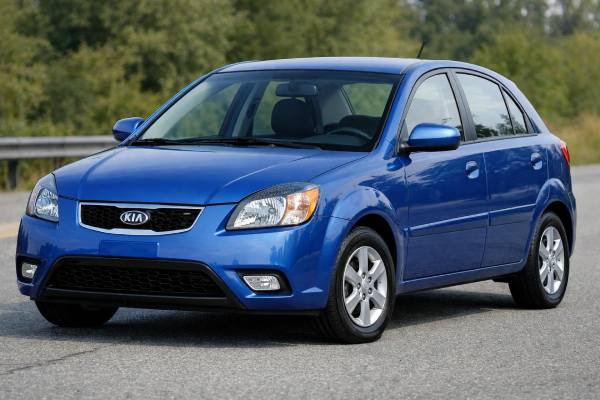
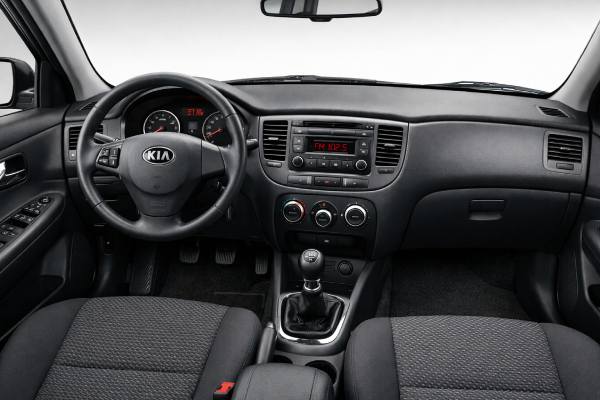
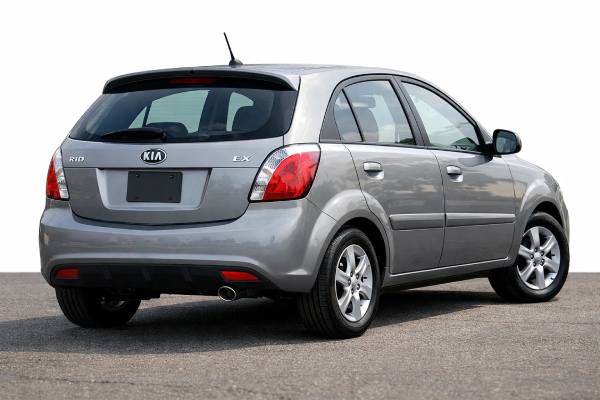
The facelift-era Kia Rio (JB) with the 1.6i 16V petrol engine targets drivers who want simple, low-stress ownership rather than headline performance. It is a light, front-wheel-drive supermini with straightforward mechanicals, predictable handling, and relatively affordable parts. The key engineering story is balance: enough displacement to feel relaxed in everyday traffic, while still staying efficient if the car is in good tune and driven smoothly.
Where these cars age is not usually in the engine block itself, but in “supporting” systems—cooling hoses, sensors, mounts, and wear items in the suspension and brakes. If you approach the Rio as a maintenance-led car (fluids, belts, filters, and rust prevention), it can be a durable and economical used buy. The facelift years also tend to feel a bit more polished inside, which matters when you drive it daily.
Owner Snapshot
- Smooth, low-effort city driving with usable low-rpm pull for a small petrol hatch.
- Simple FWD layout keeps repairs and parts costs manageable in most markets.
- Prioritize service history—neglect shows up as rough idle, warning lights, and overheating risk.
- Plan on timing-belt service at 60,000 km (48 months) in some schedules—confirm for your VIN/market.
- Manual gearboxes are usually long-lived, but fluid changes help shift quality as mileage climbs.
Navigate this guide
- Kia Rio JB facelift 16V in brief
- Kia Rio JB 1.6 petrol specs and measurements
- Kia Rio JB facelift trims, safety and equipment
- Reliability trouble spots and service campaigns
- Maintenance plan and used buying tips
- How it drives and real-world economy
- Rio JB 16V versus key competitors
Kia Rio JB facelift 16V in brief
This facelift Kia Rio (JB) 1.6i 16V sits in the “honest transport” part of the small-car market. It is not built to impress with tech or luxury materials, but it tends to reward owners who value clarity: simple controls, straightforward packaging, and conventional mechanical systems that most independent workshops understand. The facelift years commonly feel a touch quieter and better finished inside than early JB cars, which helps on long commutes.
The 1.6 petrol variant is usually the sweet spot for drivability in the lineup. Compared with smaller petrol options, it needs fewer downshifts and feels less strained on hills, especially with passengers or air conditioning running. Compared with many turbocharged small engines, it also avoids some modern complexity (high-pressure direct injection hardware, turbo heat management, and related plumbing). That does not make it “maintenance free,” but it makes fault-finding more predictable.
From an ownership viewpoint, think in systems:
- Engine health is mostly about temperature control and clean lubrication. Overheating events and neglected oil changes are what shorten life.
- Sensors and ignition components matter because small petrol engines rely on precise fueling and spark. A tired ignition coil or oxygen sensor can shift the car from “fine” to “annoying” quickly.
- Chassis wear shows up early on rough roads. Bushings, drop links, and wheel bearings are not exotic parts, but they define ride quality.
In terms of practicality, the Rio’s footprint is easy to live with in cities—tight parking, light steering effort, and modest running costs. Cabin space is usually acceptable for two adults up front and occasional rear passengers. The trade-off is highway refinement: wind noise and tire roar tend to be more noticeable than in larger or newer cars, and the car benefits from good tires and fresh suspension dampers as it ages.
If you are choosing among used examples, your best predictor of a “good” Rio is not the odometer—it is evidence of routine service, timing-belt work where required, and a cooling system that has not been patched together.
Kia Rio JB 1.6 petrol specs and measurements
Below are the most useful specifications for shopping, servicing, and comparing the facelift 1.6 petrol Rio. Because JB cars were sold across many markets with small differences, treat values as typical ranges unless your documentation lists a single VIN-specific figure.
Powertrain and efficiency (typical)
| Item | Specification |
|---|---|
| Engine code | Market-dependent (verify on engine plate/VIN data) |
| Layout and valvetrain | Inline-4, 16-valve |
| Displacement | 1.6 L (≈1599 cc) |
| Induction | Naturally aspirated |
| Fuel system | Multi-point injection (typical) |
| Max power | 112 hp (≈82 kW) @ rpm (market-rated) |
| Max torque | Typically in the 145–155 Nm range (market-dependent) |
| Timing drive | Belt (common on this generation; verify for your engine) |
| Rated efficiency | Varies by gearbox and test cycle; expect mid-6 to high-7 L/100 km combined in many markets |
| Real-world highway @ 120 km/h | Often ~6.5–8.0 L/100 km depending on tires, load, and wind |
Transmission and driveline
| Item | Specification |
|---|---|
| Drive type | FWD |
| Transmissions | 5-speed manual common; 4-speed automatic in some markets |
| Differential | Open |
Chassis and dimensions (common JB figures)
| Item | Specification |
|---|---|
| Front suspension | MacPherson strut |
| Rear suspension | Torsion beam |
| Steering | Electric or hydraulic assist by market/trim (verify); rack-and-pinion |
| Brakes | Front discs; rear drums on many trims (rear discs on some markets/trims) |
| Wheels/tires (popular) | Often 185/65 R14 or 195/55 R15 depending on trim |
| Fuel tank | 45 L |
| Length / width / height | Market-dependent; typical small-hatch proportions |
| Wheelbase | Typical supermini wheelbase (~2.5 m class) |
| Kerb weight | Often ~1050–1150 kg depending on body and gearbox |
Performance and capability (realistic expectations)
| Item | Typical outcome |
|---|---|
| 0–100 km/h (0–62 mph) | Commonly low-10s seconds (gearbox and weight dependent) |
| Top speed | Often ~180–190 km/h (market dependent) |
| Towing | Usually modest; many markets list low braked towing limits for small petrol hatchbacks—check your registration data |
| Payload | Varies by trim and GVWR; confirm on door-jamb plate |
Fluids and service capacities (decision-making values)
Because published capacities vary by engine variant and market, use these as planning ranges, then verify before ordering fluids:
| Fluid | Spec and typical quantity |
|---|---|
| Engine oil | SAE 5W-20 or 5W-30 commonly recommended (API/ILSAC class depends on market); ~3.3–3.8 L with filter (verify) |
| Coolant | Ethylene-glycol based mix; typical 50/50 climate mix; total system quantity varies (verify) |
| Manual gearbox oil | Often ~1.8–2.2 L (verify fluid spec in your manual) |
| Automatic ATF | Quantity depends on service method; verify spec and fill procedure |
| A/C refrigerant | Commonly R-134a on this era; charge amount varies by system (verify) |
Safety and driver assistance
| Category | What to expect |
|---|---|
| Structural era | Mid-2000s small-car platform with later refinements |
| Euro NCAP | Some JB-era results use older protocols (stars without modern % breakdown) |
| IIHS | Often not tested for this exact configuration/market |
| ADAS | Generally none beyond ABS/EBD; stability control availability varies by year/market |
Kia Rio JB facelift trims, safety and equipment
Facelift-era Rio JB trims vary widely by country, so it helps to think in “equipment families” rather than exact badge names. Most markets offered a base trim focused on price, a mid-grade with comfort features, and a higher trim that added convenience and styling items. The mechanical package (engine, basic suspension layout, and brakes) often stays similar, but wheels, tire width, and cabin features can change how the car feels day to day.
Trims and options: what changes in practice
Common differences you will see across trims:
- Wheels and tires: Larger wheels can sharpen steering response but increase tire cost and road noise. A Rio on fresh, quality tires often feels like a different car compared with one on old budget rubber.
- Air conditioning: Manual A/C is common; automatic climate control appears on some higher trims. A working A/C system matters for resale, so check compressor engagement and cooling performance.
- Audio and connectivity: Many cars have basic head units; some trims add steering-wheel controls or AUX/USB. Don’t overpay for an old infotainment “upgrade” if the speakers are tired or the wiring has been modified.
- Interior wear points: Driver seat bolster, window switches, and door handles are quick indicators of how the car was treated.
Quick identifiers when viewing used cars:
- ABS presence: Look for an ABS warning light during ignition-on self-test and confirm it turns off after start.
- Airbag count: Some cars have front airbags only; others add side airbags and curtains. Count markings on seats/pillars and confirm via the instrument cluster self-test.
- Rear brakes: Drum rear brakes are normal for this class and age; rear discs may appear on some trims/markets.
Safety ratings: interpret them correctly
A common trap is comparing old-star ratings with modern-percent ratings. Older small-car tests often used different scoring methods, fewer impact types, and different dummy criteria. If you see a “stars” result for a JB-era Rio, treat it as a snapshot of its time, not a direct comparison with a 2020s supermini. Also note that body style and equipment can alter results—a sedan vs hatch, or a car with extra airbags, may not match the published test vehicle exactly.
Safety systems and “driver assistance”
What you should expect:
- ABS and electronic brake-force distribution (EBD): Common, but confirm operation by checking for warning lights and by inspecting wheel speed sensor wiring if a fault is present.
- Stability control: Some markets offered it later; many cars do not have it. If present, it is usually basic and can be sensitive to mismatched tire sizes.
- Child-seat provisions: ISOFIX/LATCH availability depends on year and market. Confirm anchor points physically rather than assuming.
- True ADAS (AEB, lane support, adaptive cruise): Generally not offered on this generation. If a seller advertises these features, treat it as a misunderstanding unless you can verify factory equipment.
If you plan to keep the car long-term, prioritize the best safety equipment you can find—side and curtain airbags and stability control (where available) are the upgrades that matter most, and they are hard to retrofit correctly.
Reliability trouble spots and service campaigns
The Rio JB 1.6 petrol can be a dependable car, but it is sensitive to neglect. Most expensive “failures” are not sudden mysteries—they are predictable outcomes of skipped maintenance, overheating, or repeated short trips that never let fluids reach stable temperature. Use the patterns below to assess risk.
Common issues (higher prevalence)
- Ignition coils and spark plugs (low–medium cost):
Symptoms: Misfire under load, flashing engine light, rough idle, fuel smell.
Likely cause: Aging coil packs, incorrect plugs, moisture intrusion.
Remedy: Replace coils as needed (often best in matched sets if multiple failures), fit correct plug type and gap, inspect for oil in plug wells. - Oxygen sensor and catalytic efficiency faults (medium cost):
Symptoms: Check-engine light, higher fuel use, failed emissions test.
Likely cause: Sensor aging, exhaust leaks ahead of the sensor, or catalyst wear.
Remedy: Diagnose with live data before replacing parts; fix exhaust leaks first. - Cooling system leaks and thermostat issues (medium cost, high risk if ignored):
Symptoms: Temperature creep in traffic, coolant smell, heater performance changes.
Likely cause: Aged hoses, radiator seepage, thermostat sticking, cap not holding pressure.
Remedy: Pressure test, renew weak hoses/clamps, replace thermostat with correct temperature rating, flush and refill with the correct coolant mix. - Suspension bushings and drop links (low–medium cost):
Symptoms: Clunks over bumps, vague steering, uneven tire wear.
Likely cause: Rubber aging, rough-road use.
Remedy: Replace worn links/bushings; align after work.
Occasional issues (market and usage dependent)
- Fuel pump or fuel pressure regulation: Hard starting, loss of power at high load, whining from tank.
- Accessory drive belt and tensioner wear: Chirps or squeal at cold start, visible belt cracking.
- Manual gearbox linkage wear: Notchy selection or difficulty engaging certain gears (often improves after bushing refresh and fluid service).
Rare but costly issues (watchlist)
- Overheat aftermath: A single severe overheat can warp the cylinder head, damage head gasket sealing, and create long-term coolant consumption. If the seller cannot explain a replaced radiator, repeated coolant top-ups, or a “new head gasket,” approach carefully.
- Rust and structural corrosion (location dependent): Underbody rust is the silent budget killer. Corroded brake lines, subframe mounting points, and sills can turn a cheap car into a poor investment.
Recalls, TSBs, and service actions
Coverage varies by country and by VIN range. The practical approach is:
- Run a VIN recall check through the appropriate official database for your market.
- Ask for dealer invoices showing recall completion (not just verbal assurance).
- If warning lights are present, confirm whether a software update or reflash is part of the official remedy before replacing hardware.
For many owners, the best “service campaign” is simply catching up: fresh fluids, correct plugs, and a cooling system refresh often transform how the Rio runs.
Maintenance plan and used buying tips
A Rio JB 1.6 rewards routine. The goal is not perfection—it is consistency, because small petrol engines run best when airflow, spark, and fuel control are all within spec.
Practical maintenance schedule (typical)
Use this as a working plan, then align it with your official schedule:
- Engine oil and filter: Every 10,000–15,000 km or 12 months (short-trip city use: closer to 10,000 km). Use the correct viscosity for climate; many manuals recommend SAE 5W-20/5W-30 equivalents.
- Engine air filter: Inspect every service; replace roughly every 30,000–60,000 km depending on dust exposure.
- Cabin air filter: Replace about yearly, or sooner if airflow drops or odors appear.
- Spark plugs: Often 30,000–60,000 km depending on plug type; always use the correct heat range.
- Timing belt (if equipped): Some schedules list replacement at 60,000 km or 48 months—confirm for your engine and market. Replace tensioners and idlers at the same time.
- Manual gearbox oil: Many cars benefit from a change around 90,000 km to keep shifts smooth.
- Automatic ATF (if equipped): Conservative service intervals help longevity; use the exact fluid spec and correct level-setting method.
- Brake fluid: Every 2 years.
- Coolant: Replace on the official interval; if history is unknown, a flush and refill with the correct mix is cheap insurance.
- Accessory drive belts and hoses: Inspect yearly; replace at the first sign of cracking, glazing, or coolant oil contamination.
- 12 V battery: Test yearly after year 4; replace proactively if cold-cranking performance is weak.
Fluid specs, capacities, and essential torque values
For planning and quoting work:
- Oil: Follow the viscosity chart in your manual; low-viscosity oils can improve cold-start behavior, while correct high-temperature protection matters in hot climates.
- Coolant: Use an ethylene-glycol based coolant suitable for aluminum components, mixed to climate needs (commonly ~50/50).
- Critical torques (verify): Wheel nuts, spark plugs, and drain plugs should be tightened to factory torque; overtightening is a common cause of stripped threads and warped brake rotors.
Used buyer’s checklist (fast but thorough)
Focus on the items that change the economics:
- Cold start: Should start quickly and settle into a stable idle. A hunting idle can indicate vacuum leaks, dirty throttle body, or sensor issues.
- Cooling system: Check coolant level and condition; look for dried residue on radiator seams and around hose joints. Verify the temperature gauge behaves normally in traffic.
- Service proof: Timing-belt invoice (if applicable), oil-change history, and any recall paperwork.
- Underbody: Inspect sills, rear axle mounts, brake lines, and the fuel tank area for corrosion.
- Test drive: Listen for suspension knocks and wheel bearing hum; confirm straight tracking and consistent braking.
- Electrics: Windows, central locking, alternator charging behavior, and A/C performance.
Long-term outlook: a well-maintained Rio JB 1.6 can be a durable daily driver, but a neglected one often costs more to “bring back” than the purchase price suggests.
How it drives and real-world economy
On the road, the facelift Rio JB 1.6 tends to feel honest and predictable. You get light controls, an easy-to-place body, and a powertrain that is happier when driven smoothly than when pushed hard. If you are coming from a newer supermini, the main adjustment is refinement: you may notice more tire noise and a simpler suspension “signature” over sharp bumps.
Ride, handling, and NVH
- Ride: The torsion-beam rear is robust and space-efficient, but it can transmit bumps into the cabin on broken pavement. Fresh dampers and correct tire pressures make a bigger difference than many owners expect.
- Handling balance: Safe and mildly understeery, which is what you want in this class. The car is stable in normal cornering, and it communicates grip changes through the steering and front tires.
- Steering feel: Typically light around town. Some trims feel vague on-center if alignment is off or if front suspension bushings are tired.
- Braking feel: With good pads and fresh brake fluid, the pedal should be consistent. A spongy pedal often points to old fluid, worn rear drums adjustment, or air in the system.
Powertrain character
The naturally aspirated 1.6 is usually most satisfying in the mid-range rather than at the redline. In daily use:
- It pulls cleanly from low rpm for a small petrol engine, making it easier to merge or climb modest grades without constant shifting.
- With a manual gearbox, it rewards early upshifts and steady throttle.
- With an automatic, expect relaxed cruising but modest kickdown urgency; keeping the transmission fluid healthy helps shift quality over time.
Real-world efficiency
Fuel consumption depends heavily on maintenance and rolling resistance:
- City: Short trips and cold starts push consumption up quickly, especially with A/C and stop-start traffic.
- Highway (100–120 km/h): Expect consumption to rise with speed; tires, alignment, roof racks, and headwinds matter more than you might think on a small car.
- Mixed driving: A well-tuned engine (no misfires, correct thermostat behavior, clean air filter) usually delivers the best value because it avoids “wasted fuel” from running rich or from constant high-rpm operation.
A practical tip: if a Rio suddenly gets thirsty, do not assume “it’s old.” Look for a stuck thermostat, dragging brakes, underinflated tires, or a check-engine fault that forces a rich mixture.
Key metrics that actually matter
For this model, the metrics that influence ownership most are not 0–100 times. Instead, focus on:
- Turning ease and visibility in dense urban driving.
- Passing response in the 60–110 km/h band (which depends on gearbox choice and engine health).
- Braking consistency after repeated stops—fresh fluid and quality pads are key.
If your driving is mostly city and suburban, the Rio JB 1.6 can feel “just right.” If you do high-speed motorway miles daily, it will do the job, but you may prefer a rival with better insulation and a longer final drive.
Rio JB 16V versus key competitors
The Rio JB 1.6 sits in a crowded supermini field. Its value is usually strongest when you care more about predictable ownership than brand prestige or the newest safety tech.
Against the typical supermini benchmark set
- Toyota Toyota Yaris: The Yaris often feels more refined and can hold resale value better. The Rio’s advantage is that it can be cheaper to buy and straightforward to service. If you find a Rio with excellent history, the value gap can be meaningful.
- Ford Motor Company Ford Fiesta: The Fiesta is frequently more engaging to drive, with sharper steering and chassis tuning. The Rio leans toward simplicity and comfort, and many owners prefer that calm character for daily commuting.
- Volkswagen Volkswagen Polo: The Polo often wins on cabin feel and highway refinement, but running costs and purchase price can be higher. A Rio in good condition can be a more economical “tool” car.
- **Honda Honda Fit (Jazz in many markets): The Fit/Jazz is usually a packaging champion with strong practicality and a clever interior. The Rio is simpler, sometimes cheaper to buy, but often less versatile in cargo and rear space tricks.
How to choose based on your priorities
Pick the Rio JB 1.6 if you want:
- A conventional petrol drivetrain with fewer “new-tech” complications.
- A small car that most workshops can diagnose quickly.
- Strong value when purchase price matters more than prestige.
Consider a rival instead if you prioritize:
- Newer safety systems and higher crash-test standards.
- Better motorway refinement and quieter cabins.
- Best-in-class interior flexibility (Fit/Jazz) or sharper handling (Fiesta).
The Rio-specific edge
The Rio’s real advantage is that it tolerates normal ownership: mixed fuel quality, varied driving, and independent garage maintenance—provided the basics are done on time. When you buy one with documented timing-belt work (where required), a healthy cooling system, and clean-running ignition and fueling, it can be one of the more “boring in a good way” used small cars.
References
- JB swd-3.qxd 2011 (Owner’s Manual)
- Fuel Economy of the 2010 Kia Rio 2010 (Official Fuel Economy Data)
- Vehicle Detail Search – 2010 KIA RIO | NHTSA 2026 (Recall Database)
- Crash Test Report 2007 (Safety Rating)
Disclaimer
This article is for informational purposes only and is not a substitute for professional diagnosis, inspection, or repair. Specifications, torque values, service intervals, and procedures vary by VIN, market, model year, and equipment. Always verify details against your official owner’s manual and service documentation for your exact vehicle.
If you found this guide useful, please consider sharing it on Facebook, X (Twitter), or your favorite forum to support our work.