
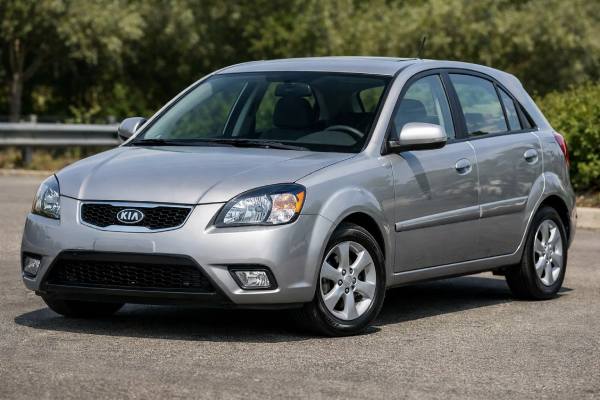
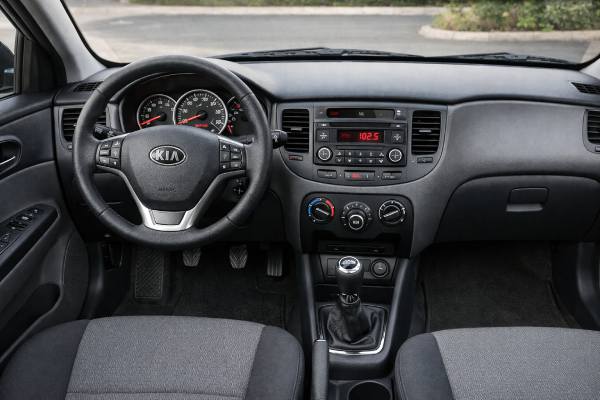
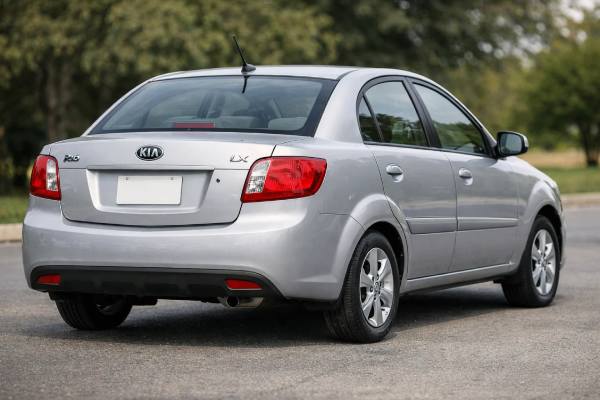
The facelifted 2009–2011 Kia Rio (JB) with the 1.4 i 16V petrol engine is a classic “keep it simple” supermini: naturally aspirated power, conventional front-wheel drive, and maintenance tasks that most independent shops handle easily. With 97 hp, it is not quick, but it is usually adequate for city work and steady motorway cruising if you keep expectations realistic and the car in good mechanical condition.
Where this Rio rewards careful owners is consistency. Regular oil changes, a healthy cooling system, and documented timing-belt service make a bigger difference than chasing upgrades. The facelift years also tend to feel a little more modern day-to-day thanks to small equipment improvements (often better audio options, trim tweaks, and minor cabin updates, depending on market). Buy based on condition and service history, and the Rio JB 1.4 can be a dependable commuter that stays inexpensive to run.
Owner Snapshot
- Straightforward 1.4 petrol drivetrain that suits short commutes and mixed driving well.
- Typically low parts prices for brakes, filters, and suspension wear items.
- Facelift cars often have nicer daily-use features than early JB models, depending on trim.
- Missing timing-belt paperwork should be treated as “due now” for budgeting purposes.
- Plan on engine oil and filter service every 10,000–15,000 km (6,000–9,000 mi) or 12 months.
Jump to sections
- Kia Rio JB facelift 1.4 in context
- Kia Rio JB facelift 1.4 technical specs
- Kia Rio JB facelift trims and safety
- Common problems and service actions
- Maintenance plan and buyer’s checklist
- Real-world driving and economy
- How it stacks up against rivals
Kia Rio JB facelift 1.4 in context
The 2009–2011 facelift version of the Rio JB is best approached as a practical used-car choice rather than an enthusiast pick. The 1.4 i 16V engine is typically a multi-point injected inline-four (often listed as G4EE in many markets), and that combination is a major reason these cars age gracefully. There is no turbocharger to cook oil, no direct-injection system to load the intake with carbon in normal use, and the overall packaging leaves decent access for routine work like belts, plugs, and cooling components.
This Rio’s main advantage is balance. It is light enough that 97 hp feels workable around town, and it usually returns respectable fuel economy when the tires, alignment, and brakes are healthy. On the road, it’s also a car that tells you a lot about itself quickly: if it pulls under braking, wanders at speed, or clunks over bumps, you are feeling wear items that are common and fixable—but only if you budget for them.
Who this car fits best:
- Urban and suburban commuters who want a simple petrol engine and low running complexity.
- First-time buyers who prefer inexpensive maintenance and a forgiving learning curve.
- Owners who keep records, because service history matters more than trim level here.
Who should look elsewhere:
- Drivers who want modern driver assistance features (this era generally predates AEB and lane-keeping tech).
- People who regularly carry heavy loads or do fast motorway work in hilly regions; the 1.4 is capable, but it will feel busy, especially with the automatic.
The facelift years are also worth seeking because small updates can improve day-to-day life: revised bumpers and lighting details, plus market-specific improvements like better head units or additional convenience features. Just remember that “facelift” does not guarantee a big mechanical change; the best car is still the one with evidence of careful maintenance, clean fluids, and no overheating history.
Kia Rio JB facelift 1.4 technical specs
Specifications vary by region, emissions package, body style (hatchback vs sedan), and gearbox. The tables below reflect common facelift-era 1.4 i 16V configurations and focus on values that matter for ownership, service planning, and comparisons.
Powertrain and efficiency
| Item | Spec (typical 1.4 i 16V) |
|---|---|
| Code | G4EE (common listing; verify by VIN/market) |
| Engine layout and cylinders | I-4, transverse; DOHC; 4 valves/cyl |
| Bore × stroke | 75.5 × 78.1 mm (2.97 × 3.07 in) |
| Displacement | 1.4 L (1399 cc) |
| Induction | Naturally aspirated |
| Fuel system | Multi-point injection (MPI) |
| Compression ratio | ~10.0:1 (market-dependent) |
| Max power | 97 hp (71 kW) @ ~6000 rpm |
| Max torque | ~125 Nm (92 lb-ft) @ ~4700 rpm |
| Timing drive | Belt (confirm in your owner documentation) |
| Rated efficiency | Commonly ~6.0–6.6 L/100 km combined (39–47 mpg UK), depending on gearbox and test cycle |
| Real-world highway @ 120 km/h (75 mph) | Often ~7.0–7.8 L/100 km (30–34 mpg US), condition-dependent |
Transmission and driveline
| Item | Spec |
|---|---|
| Transmission | 5-speed manual (common) or 4-speed automatic (market-dependent) |
| Drive type | FWD |
| Differential | Open |
Chassis and dimensions
| Item | Hatchback (common) | Sedan (common) |
|---|---|---|
| Length | ~3990 mm (157.1 in) | ~4240 mm (167.0 in) |
| Width | ~1695 mm (66.7 in) | ~1695 mm (66.7 in) |
| Height | ~1470 mm (57.9 in) | ~1470 mm (57.9 in) |
| Wheelbase | ~2500 mm (98.4 in) | ~2500 mm (98.4 in) |
| Suspension (front/rear) | MacPherson strut / torsion beam | |
| Steering | Usually hydraulic assist; ratio varies by market | |
| Brakes | Front discs; rear drums or discs depending on trim/market | |
| Brake diameters (typical) | Front ~256 mm (10.1 in); rear drum ~203 mm (8.0 in) or rear disc ~262 mm (10.3 in) | |
| Common tire sizes | 175/70 R14, 185/65 R14, 195/55 R15 | |
| Ground clearance | ~150–160 mm (5.9–6.3 in), market-dependent | |
| Turning circle (kerb-to-kerb) | ~10.2 m (33.5 ft), market-dependent | |
| Kerb weight | ~1050–1160 kg (2315–2557 lb), body/gearbox-dependent | |
| Fuel tank | 45 L (11.9 US gal / 9.9 UK gal) | |
| Cargo volume (typical) | Hatch ~270 L (9.5 ft³) seats up; sedan trunk often ~390 L (13.8 ft³), market-dependent |
Performance and capability
| Metric | Typical value |
|---|---|
| 0–100 km/h (0–62 mph) | ~11.5–13.5 s (gearbox and body-dependent) |
| Top speed | ~170–180 km/h (106–112 mph) |
| Braking 100–0 km/h | Often ~41–45 m (tire and brake condition dominate) |
| Towing capacity | Frequently 800–1000 kg braked, ~450 kg unbraked (market-dependent) |
| Payload | Commonly ~400–500 kg (varies by GVWR and trim) |
Fluids and service capacities
| Item | Spec (typical; verify on your car) |
|---|---|
| Engine oil | API SL/SM or higher; common viscosities 5W-30 or 5W-40; ~3.3–3.6 L (3.5–3.8 US qt) with filter |
| Coolant | Ethylene-glycol base; ~5.5–5.8 L (5.8–6.1 US qt) |
| Manual trans oil | GL-4; ~1.9 L (2.0 US qt) |
| Automatic ATF | SP-III type; ~6.1 L (6.4 US qt) |
| Brake/clutch fluid | DOT-3 or DOT-4; ~0.7–0.8 L (0.74–0.85 US qt) |
| A/C refrigerant | Commonly R134a; charge varies by system (check under-hood label) |
| Key torque specs | Wheel lug nuts 88–107 Nm (65–79 lb-ft) |
Safety and driver assistance
| Item | What to expect on 2009–2011 facelift |
|---|---|
| Crash ratings | Dependent on test body and variant; older protocols differ from modern star systems |
| ABS and EBD | Often trim/market-dependent; worth prioritizing |
| ESC (stability control) | Often not available on many JB configurations |
| ADAS | Generally none (no AEB/ACC/LKA in this era) |
Kia Rio JB facelift trims and safety
Trim naming differs by country, but the facelift Rio JB usually follows a familiar pattern: a base trim with the essentials, a mid-trim adding convenience, and a higher trim adding comfort and a few safety upgrades. When you shop these cars today, focus on the options that change real ownership outcomes rather than cosmetic extras.
Trims and options that matter most
- ABS with EBD (and sometimes brake assist)
If your market offered ABS/EBD as optional on lower trims, it is one of the most important “yes/no” features. On slippery roads, ABS helps maintain steering control while braking hard. For a small, light car, that stability benefit is significant. - Airbags: front, side, and curtains
Many cars will have dual front airbags. Side and curtain airbags may be optional or limited to certain variants. For family use, a car with side and curtain airbags is usually worth paying extra for. - ISOFIX or LATCH child-seat anchors
Most late-2000s small cars provide child-seat provisions, but details vary. Confirm the anchor points exist and that trim pieces are intact; damaged anchor covers can be a clue that the car has lived a hard life. - Audio and connectivity upgrades
Facelift years often bring better head units, sometimes with AUX/USB depending on market. This doesn’t change reliability, but it does affect daily satisfaction and resale ease.
How to identify the facelift quickly
A practical used-car tip is to confirm you’re actually looking at a 2009–2011 facelift and not an earlier JB with a newer registration date. Common cues include revised front and rear bumper styling and small lighting and grille detail changes. Inside, some markets updated steering-wheel designs, fabrics, or the audio faceplate. Because these differences are market-specific, the cleanest check is the VIN build information and the exact model year in the registration documents.
Safety ratings and what they mean in practice
For this generation, crash-test outcomes depend heavily on the exact variant and safety equipment. A car with only front airbags is not the same safety proposition as one with side and curtain airbags plus ABS/EBD. Also, modern rating systems evolved; comparing a 2008-style result to a modern test is not apples-to-apples.
A sensible buyer strategy is to evaluate “safety equipment present” first:
- Confirm the airbag warning light illuminates at key-on and then turns off.
- Verify any ABS light behaves correctly if ABS is fitted.
- Inspect seat belts for smooth retraction and any fraying.
- Look for accident repair clues: uneven panel gaps, mismatched paint texture, or overspray around seals.
Driver assistance and service implications
Most facelift Rio JB cars do not have camera- or radar-based driver assistance systems, which keeps complexity low. The trade-off is that you rely more on fundamentals: tires, brakes, alignment, and lighting. A Rio with mismatched tires or tired dampers can feel nervous and stop poorly. A Rio with correct tire sizes, healthy dampers, and good brake fluid can feel far more confident than its age suggests.
Common problems and service actions
The Rio JB 1.4 i 16V generally earns its reputation through “normal” aging rather than catastrophic design flaws. Most issues fall into wear-and-tear categories, and many are affordable if you address them early. The key is to separate common annoyances from the few faults that can become expensive.
Common and usually low-cost issues
- Ignition wear (plugs and coils)
Symptoms: rough idle, hesitation under load, occasional misfire.
Root cause: aging ignition components and, sometimes, oil seepage into plug wells from a valve-cover gasket.
Remedy: replace plugs to the correct spec; replace coils if misfires persist; fix gasket leaks to prevent repeat failures. - Throttle body and idle stability
Symptoms: hunting idle, stalling when rolling to a stop, inconsistent throttle response.
Root cause: deposits in the throttle body and intake tract; PCV (positive crankcase ventilation) flow issues can contribute.
Remedy: clean the throttle body; inspect vacuum lines and the PCV valve; confirm there are no intake leaks. - Cooling system seepage
Symptoms: slow coolant loss, sweet smell, residue around hose joints, temperature creeping in traffic.
Root cause: aging hoses, clamps, and plastic tanks; thermostat aging can also cause unstable temps.
Remedy: fix leaks promptly and bleed air correctly; replace the thermostat if temperature control is inconsistent. Overheating is the most avoidable way to shorten engine life. - Front suspension noises
Symptoms: clunks over bumps, vague steering, tire shoulder wear.
Root cause: worn end links, control-arm bushings, ball joints, and tired dampers.
Remedy: repair in a logical order (tires and alignment first, then worn joints/bushings), and always align after suspension work.
Occasional issues with higher annoyance factor
- Manual gearbox shift feel
Symptoms: notchiness when cold, occasional grind into a gear.
Root cause: old gear oil, clutch drag, or synchro wear.
Remedy: confirm the clutch releases cleanly; refresh gearbox oil with correct spec; investigate further if grinding remains. - Automatic transmission behavior (if equipped)
Symptoms: delayed engagement, flare on upshift, harsh shifts when hot.
Root cause: aged ATF, heat stress, or neglected service history.
Remedy: service with the correct ATF type; avoid unknown “universal” fluids; ensure cooling airflow and engine temps are healthy. - A/C decline
Symptoms: weak cooling at idle, frequent cycling, compressor noise.
Root cause: slow refrigerant leaks and aging compressor/clutch components.
Remedy: leak-test and repair rather than repeated top-ups; recharge to the exact specified amount.
Critical “budget now” items
- Timing-belt history
If your engine is belt-driven, treat missing documentation as a serious planning issue. A timing-belt service is often paired with tensioners and commonly the water pump, because the labor overlaps and a failed pump can ruin a new belt. The exact interval varies by market and service schedule, so verify for your VIN—but budget proactively if you cannot prove it has been done. - Rust and water intrusion
Even when mechanicals are sound, corrosion can decide the car’s remaining life. Check rear arches, door bottoms, underbody seams, and the spare-wheel well. Also look for damp carpets (sunroof drains on equipped cars, door seals, or hatch seals can cause leaks).
Recalls and service campaigns
Recall exposure varies by market and model year. The most reliable approach is to run an official VIN check and confirm completion records through dealer history where possible. If the car shows any warning lights related to airbags or ABS, treat that as a “fix before purchase” item rather than a negotiating detail; safety system faults can be costly if you guess wrong.
Maintenance plan and buyer’s checklist
A good maintenance plan for the Rio JB facelift 1.4 is built around two ideas: keep fluids fresh and prevent small leaks or wear items from snowballing. Because the engine and chassis are uncomplicated, consistent routine service tends to deliver excellent reliability for the money.
Practical maintenance schedule
- Engine oil and filter: every 10,000–15,000 km (6,000–9,000 mi) or 12 months. Use the shorter interval for frequent short trips, cold climates, or heavy city traffic.
- Engine air filter: inspect every oil change; replace around 30,000 km (18,000 mi) or sooner in dusty areas.
- Cabin air filter: every 15,000–30,000 km (9,000–18,000 mi) depending on air quality.
- Spark plugs: often 60,000–100,000 km (37,000–62,000 mi) depending on plug type; replace sooner if misfire or poor economy appears.
- Coolant: a conservative ownership interval is 5 years / 100,000 km (60,000 mi) unless your market schedule specifies otherwise.
- Brake fluid: every 2 years, regardless of mileage.
- Manual trans oil: refresh around 90,000–120,000 km (55,000–75,000 mi) if history is unknown or shifts feel tired.
- Automatic ATF (if equipped): typically 60,000–90,000 km (37,000–55,000 mi); heat and urban use justify the shorter side.
- Accessory belt and hoses: inspect annually; replace at first signs of cracking, glazing, or seepage.
- Tires: rotate every 8,000–10,000 km (5,000–6,000 mi); align if wear is uneven or after any suspension repair.
- 12 V battery: test annually after year 4; many batteries last 4–6 years depending on climate and usage.
Fluid specs, capacities, and decision torque
Use these as planning numbers, not substitutes for your under-hood label or official documentation:
- Engine oil with filter: ~3.3–3.6 L (3.5–3.8 US qt); choose viscosity and spec appropriate for climate and the manual.
- Coolant: ~5.5–5.8 L (5.8–6.1 US qt).
- Manual gearbox oil: ~1.9 L (2.0 US qt) GL-4.
- Automatic ATF: ~6.1 L (6.4 US qt) SP-III type.
- Wheel lug nuts: 88–107 Nm (65–79 lb-ft).
Buyer’s checklist: what to inspect and why
- Timing-belt evidence
If you cannot confirm the belt service date and mileage, assume it needs doing and negotiate accordingly. - Cooling system health
Look for dried coolant residue at hose joints, radiator seams, and around the thermostat housing. Confirm the cabin heater is strong and stable (weak heat can hint at low coolant or air pockets). - Brakes and tire condition
A straight stop and a firm pedal matter more than “new pads.” Check tire wear patterns: inside-edge wear often points to alignment or worn bushings. - Suspension noises and steering feel
Listen for knocks over small bumps and feel for steering looseness on-center. These are common wear items, but they define how the car feels every day. - Electrics and warning lights
Confirm all warning lights function correctly at key-on and then go out. A missing airbag light bulb or a permanently lit warning lamp should stop the deal until diagnosed.
Durability outlook
A well-kept Rio JB facelift 1.4 can be a long-lived commuter if you prevent overheating, keep oil service consistent, and refresh suspension and brakes before they become safety issues. The cars that disappoint are usually those with neglected fluids and “drive it until it breaks” ownership—especially where a small coolant leak is ignored until it becomes a serious overheating event.
Real-world driving and economy
The Rio JB facelift 1.4 is at its best when driven smoothly and kept in good mechanical condition. It is not a high-powered car, but it is predictable, easy to place in traffic, and generally inexpensive to keep comfortable if you stay ahead of basic wear.
Ride, handling, and noise
- Ride quality: The front strut and rear torsion-beam layout is robust and space-efficient. On rough roads it can feel firm, especially on low-profile tires. If comfort is a priority, 14- or 15-inch wheels with reasonable sidewall height usually ride better than larger wheel packages.
- Handling balance: Typical front-wheel-drive behavior—secure and mildly understeery near the limit. Good tires and fresh dampers make a bigger difference than you might expect because the car is light.
- NVH (noise, vibration, harshness): Road noise is often the dominant sound at speed. Engine noise increases noticeably when you ask for acceleration, which is normal for a small naturally aspirated engine working near its power band.
Powertrain character
The 1.4 i 16V generally delivers its best response in the mid-to-upper rev range. Around town, it feels fine because the car is light and gearing is usually short enough to keep it moving without drama. On faster roads, you may find yourself downshifting more often than in the 1.6 versions, particularly for overtakes or long climbs.
- Manual transmission: Usually the better match for extracting performance from 97 hp. A healthy clutch and clean gear oil help shift quality and reduce notchiness.
- Automatic transmission: If equipped, it tends to prioritize smoothness over urgency. With only four speeds, it may hold revs higher on grades or kick down more readily at motorway speeds.
Real-world fuel economy
The 1.4’s fuel economy is heavily influenced by rolling resistance, alignment, brake drag, and driving speed. As a practical expectation:
- City driving: often ~7.0–8.5 L/100 km (28–34 mpg US) depending on traffic and trip length.
- Mixed driving: commonly ~6.0–7.0 L/100 km (34–39 mpg US).
- Highway at 120 km/h: typically ~7.0–7.8 L/100 km (30–34 mpg US), especially with A/C use and wind.
If your economy is worse than expected, check tire pressures, alignment, and brake caliper slide function before blaming the engine. A slightly dragging brake or poor alignment can cost more fuel than most people assume.
Performance metrics that change the verdict
Because the Rio is light, the “feel” can be excellent even when numbers are modest—if the car is healthy. During a test drive, prioritize these outcomes:
- Straight, stable tracking at motorway speeds.
- Consistent braking feel with no pull and no steering shake.
- Clean throttle response with no flat spots or misfire under load.
If those are good, the Rio usually delivers the kind of low-stress, low-cost driving experience buyers want from this class.
How it stacks up against rivals
The facelift Rio JB 1.4 competes in a crowded used-car space where small differences in refinement and equipment can matter. Its core value proposition is simple mechanics and reasonable running costs rather than class-leading space or driving polish.
Against Toyota Yaris 1.3–1.5
A comparable Yaris often feels more refined in interior materials and noise control, and it may hold resale value better. The Rio’s advantage is typically purchase price and straightforward servicing. If you want maximum “just works” confidence and strong resale, the Yaris is tough to beat. If you want solid basic transport for less money and you are careful about service history, the Rio can make more financial sense.
Against Honda Jazz (Fit) 1.4
The Jazz is the packaging champion: more usable space, clever seat folding, and a more versatile cabin. If you frequently carry bulky items, that can outweigh everything else. The Rio counters with a simpler, often cheaper ownership story—especially if you find a well-maintained example and your priorities are commuting and low-cost upkeep.
Against Ford Fiesta 1.25–1.4
Many Fiesta variants of the era feel more “sorted” in steering and ride tuning, which can be noticeable on mixed roads. The Rio tends to be less exciting but also less demanding to keep in good shape if you value simplicity over sharp handling. Your local parts pricing and shop familiarity can swing this comparison either way.
Against Renault Clio and Peugeot 207 1.4
These European superminis can offer a more upscale feel in certain trims, but they may bring more variation in equipment, electronics, and repair approach depending on the exact model year and engine. If you have a strong local specialist network, they can be excellent. If you prefer a car that most general repair shops see regularly and can service with minimal fuss, the Rio often feels like the lower-risk choice.
Where the Rio JB facelift 1.4 wins
Pick the Rio when you want:
- A simple petrol engine without turbo or direct injection complexity
- Predictable maintenance with widely available consumables
- A used-car purchase that can be economical if you choose based on condition
Pick a rival if you want:
- More interior space and flexibility (Jazz/Fit)
- A more polished drive (often Fiesta)
- Strongest resale and perceived quality (often Yaris)
In short, the facelift Rio JB 1.4 is a sensible, practical car that rewards buyers who shop carefully, verify service history, and keep up with routine maintenance.
References
- JB swd-3.qxd 2011 (Owner’s Manual)
- Gas Mileage of 2011 Kia Rio 2011 (Fuel Economy Data)
- Vehicle Detail Search – 2011 Kia Rio | NHTSA 2011 (Recall Database)
- Crash Test Report 2008 (Safety Rating)
Disclaimer
This article is for informational purposes only and is not a substitute for professional inspection, diagnosis, or repair. Specifications, torque values, service intervals, and procedures vary by VIN, market, engine version, and equipment level, so verify all details against official documentation for your exact vehicle before performing work.
If this guide helped you, please consider sharing it on Facebook, X (Twitter), or another platform to support our work.