


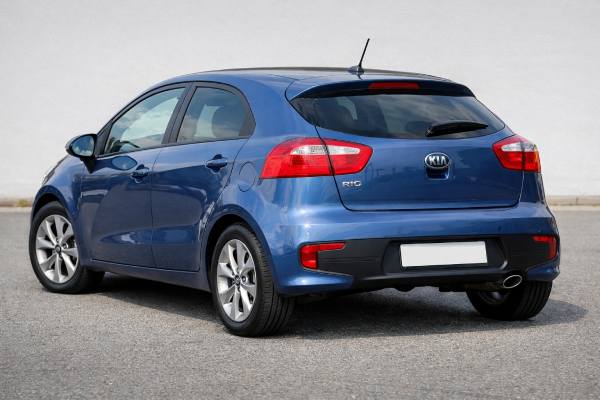
The 2015–2017 facelift Kia Rio (UB) with the 1.4 CVVT petrol engine is the “sweet spot” of the range for many owners. It keeps the simplicity of a naturally aspirated, multi-port injected four-cylinder—meaning fewer high-heat turbo parts and generally straightforward servicing—but adds enough power (about 109 hp) to feel comfortable on modern highways. For daily use, the biggest advantage is how predictable the car is: light controls, stable road manners, and maintenance that follows familiar, affordable patterns.
Ownership success with this Rio is less about chasing rare options and more about buying a clean example with consistent oil changes, timely coolant and brake-fluid service, and a suspension that hasn’t been battered by potholes. If you drive mostly in town, it stays easy and efficient. If you do regular highway miles, the 1.4 feels less strained than the 1.2, with better passing flexibility and fewer “downshift moments.”
Quick Specs and Notes
- 1.4 CVVT offers noticeably better highway comfort than the 1.2 without adding turbo complexity.
- MPI fuel injection is typically deposit-resistant compared with early direct-injection small engines.
- Good parts availability and simple chassis layout keep routine repairs predictable.
- Check for front-end knocks and uneven tire wear—common signs of neglected suspension or alignment.
- Plan engine oil and filter every 15,000 km (9,000 mi) or 12 months (shorten for heavy city use).
Explore the sections
- Kia Rio UB 1.4 CVVT facelift profile
- Kia Rio UB 1.4 CVVT specs, dimensions, and data
- Kia Rio UB trim equipment and safety features
- Reliability trouble spots and service actions
- Maintenance routine and buyer’s guide
- Driving performance and real fuel economy
- Rio UB 1.4 CVVT competition check
Kia Rio UB 1.4 CVVT facelift profile
The facelifted 2015–2017 Rio (UB) is a practical supermini that tries to feel a class above its price point. For the 1.4 CVVT, the appeal is balance: it’s still light and easy around town, but it has enough power and gearing to settle at motorway speeds without feeling “maxed out.” That’s an important difference versus smaller engines in the same body, especially if you drive with passengers, carry luggage, or face hilly routes.
The 1.4 CVVT is a naturally aspirated gasoline engine with variable valve timing (CVVT) and, in most markets, multi-port injection (MPI). This is good news for long-term ownership. MPI engines generally cope well with mixed driving and are less prone to intake valve carbon build-up than early direct-injection designs. The engine’s output isn’t about excitement; it’s about having adequate torque and a broader usable rpm range so you can climb grades and merge confidently without constant downshifting.
Most cars pair this engine with a 6-speed manual or a conventional automatic depending on region. The 6-speed manual is typically the best all-around match because it gives you a relaxed cruising gear for highway use and keeps the engine quieter. If you live in heavy traffic, the automatic can be the more comfortable choice, but you should be more disciplined about transmission fluid service as the car ages.
Chassis design remains simple and service-friendly: MacPherson struts up front and a torsion-beam rear axle. It won’t corner like a dedicated “driver’s” supermini, yet it’s predictable and stable, with steering that’s light in parking and calm at speed. The facelift often improves perceived quality through small interior and infotainment refinements, but the core ownership experience is still defined by basics: tire choice, suspension condition, and brake maintenance.
When shopping used, your best indicator of a good Rio is how it feels over broken pavement. A tight car will be quiet and composed. A neglected one will clunk, wander, and chew tires. The 1.4 is forgiving, but it rewards buyers who prioritize condition and service history over a shiny option list.
Kia Rio UB 1.4 CVVT specs, dimensions, and data
Specs vary by market, body style, and transmission. The tables below describe the typical 2015–2017 facelift Rio (UB) 1.4 CVVT 109 hp configuration and the values most owners use for maintenance and buying decisions.
Powertrain and efficiency
| Item | Typical specification |
|---|---|
| Engine code (common) | G4FA (market dependent) |
| Engine layout | Inline-4, transverse |
| Cylinders / valvetrain | I-4; DOHC; 4 valves/cyl (16 total) |
| Bore × stroke | ~77.0 × 74.9 mm (3.03 × 2.95 in) |
| Displacement | 1.4 L (1,396 cc) |
| Induction | Naturally aspirated |
| Fuel system | MPI (most markets; confirm by VIN) |
| Compression ratio | ~10.5:1 |
| Max power | 109 hp (80 kW) @ ~6,300 rpm |
| Max torque | ~137 Nm (101 lb-ft) @ ~4,200 rpm |
| Timing drive | Chain |
| Rated efficiency | ~5.5–6.3 L/100 km (37–43 mpg US / 45–51 mpg UK) |
| Real-world highway @ 120 km/h | ~6.3–7.2 L/100 km (33–37 mpg US / 39–45 mpg UK) |
Transmission and driveline
| Item | Typical specification |
|---|---|
| Transmission | 6-speed manual (common) or automatic (market dependent) |
| Drive type | FWD |
| Differential | Open |
Chassis and dimensions
| Item | Typical specification |
|---|---|
| Suspension (front/rear) | MacPherson strut / torsion beam |
| Steering | Electric power steering (EPS) |
| Brakes | Front ventilated discs; rear drums or discs (trim dependent) |
| Wheels/tyres (popular) | 185/65 R15; some trims 195/55 R16 |
| Ground clearance | ~140–155 mm (5.5–6.1 in) |
| Length / width / height | ~4,050 / 1,720 / 1,455 mm (159.4 / 67.7 / 57.3 in) |
| Wheelbase | ~2,570 mm (101.2 in) |
| Turning circle (kerb-to-kerb) | ~10.2 m (33.5 ft) |
| Kerb weight (range) | ~1,080–1,170 kg (2,381–2,579 lb) |
| GVWR (typical) | ~1,580–1,650 kg (3,483–3,638 lb) |
| Fuel tank | ~43–45 L (11.4–11.9 US gal / 9.5–9.9 UK gal) |
| Cargo volume (hatch) | ~288 L (10.2 ft³) seats up; ~900+ L (31+ ft³) seats down (method varies) |
Performance and capability
| Metric | Typical value |
|---|---|
| 0–100 km/h (0–62 mph) | ~10.5–11.5 s (gearbox dependent) |
| Top speed | ~185–190 km/h (115–118 mph) |
| Braking 100–0 km/h | Commonly ~38–41 m on good tires |
| Towing capacity | Often limited or not rated; verify handbook for your VIN |
| Payload | Typically ~400–500 kg (880–1,100 lb), market dependent |
Fluids and service capacities
These are practical expectations; confirm exact specs using the under-hood labels and your handbook.
| Item | Typical specification |
|---|---|
| Engine oil | Commonly 5W-30 meeting required ACEA/API spec; capacity ~3.3–3.6 L (3.5–3.8 US qt) with filter |
| Coolant | Long-life ethylene glycol; typical 50/50 mix; ~5–6 L (5.3–6.3 US qt) |
| Manual gearbox oil | Manufacturer-specified gear oil; ~1.7–2.0 L (1.8–2.1 US qt) |
| A/C refrigerant | R-134a in many markets; charge varies by equipment label |
Key torque specs (critical fasteners only)
| Item | Typical range (verify per manual) |
|---|---|
| Wheel nuts | ~85–110 Nm (63–81 lb-ft) |
| Spark plugs | ~18–25 Nm (13–18 lb-ft) |
| Engine oil drain plug | ~30–40 Nm (22–30 lb-ft) |
Kia Rio UB trim equipment and safety features
The facelift Rio’s trim names differ by country, but the equipment pattern is consistent: base trims focus on affordability, mid trims add comfort, and higher trims add wheels, infotainment, and convenience technology. For the 1.4 CVVT, the most important differences are the ones that change daily use and long-term costs: wheel size, brake configuration, and the presence (or absence) of stability control and optional safety packs.
Trims and options that matter most
- Wheel and tire packages:
15-inch wheels usually deliver the best ride comfort, lowest tire cost, and quietest cabin. 16-inch wheels can improve steering response but may raise road noise and make pothole impacts harsher. - Cruise control:
If you do regular highway miles, cruise control is one of the most valuable comfort features. It also helps keep consumption consistent. - Infotainment and camera/sensors:
Touchscreens and reversing cameras improve daily usability. However, check that everything works cleanly and that aftermarket wiring hasn’t been added poorly (a common source of battery drain). - Climate control:
Manual A/C is simpler; automatic climate is convenient but adds extra sensors and actuators.
Year-to-year notes in the 2015–2017 facelift window
Changes are typically incremental: infotainment updates, minor interior trim revisions, and occasionally revised option availability. What matters is confirming the actual equipment fitted to your car, because listings can be inaccurate—especially when sellers copy features from a different engine or year.
Safety ratings and how to interpret them
For this generation, Euro NCAP results often show solid occupant protection for the class, but the overall score can depend on whether the car is assessed with standard equipment or an optional safety pack. That pack can influence Safety Assist results if it adds systems like AEB or lane support. Treat ratings as “within-era comparisons,” not as a direct equivalent to a brand-new car’s rating under newer protocols.
Safety systems and driver assistance (what to expect)
Typical safety equipment includes:
- Airbags: front airbags are universal; side and curtain airbags vary by trim and market.
- ABS: expected on virtually all cars in this period.
- ESC: common in many markets and strongly recommended if you have a choice.
- ISOFIX/LATCH: typically fitted on rear outboard seats.
ADAS availability depends on market and trim. If your car has camera-based features, remember that windshield replacement and front-end repairs can require correct sensor alignment or calibration. Even if the system is basic, it needs correct geometry to behave properly.
Reliability trouble spots and service actions
The facelift Rio 1.4 CVVT has a generally strong reliability profile because the engine is naturally aspirated, uses a timing chain, and avoids complex turbo hardware. Most problems are typical “age-and-use” issues rather than fundamental design weaknesses. Still, a few patterns are worth knowing before you buy.
Common issues (high prevalence)
- Front suspension knocks (low–medium cost):
Symptoms: clunks over small bumps, slight steering looseness, uneven tire wear.
Root cause: stabilizer links, strut top mounts, or control arm bushings wearing with age.
Remedy: replace worn parts and perform an alignment. Don’t ignore it—tire wear can become the expensive part. - Brake service neglect (low–medium cost):
Symptoms: vibration, squeal, long pedal travel.
Root cause: seized caliper slider pins, old brake fluid, cheap pads.
Remedy: service sliders, refresh fluid every 2 years, and use decent pads/rotors. - Battery and electrical gremlins (low cost):
Symptoms: slow cranking, infotainment resets, intermittent warnings.
Root cause: aging battery, corroded terminals, or parasitic draw from accessories.
Remedy: load-test the battery and check charging voltage; investigate aftermarket wiring.
Occasional issues (medium prevalence)
- Ignition coils and spark plug wear (medium cost if ignored):
Symptoms: misfire under load, rough idle, check-engine light.
Root cause: plug wear, coil breakdown, moisture intrusion.
Remedy: replace plugs at interval and coils as needed; don’t drive long with a misfire (it can damage the catalyst). - Cooling system seepage (medium cost):
Symptoms: slow coolant loss, sweet smell after a drive.
Root cause: hose joints, radiator end-tanks, thermostat housing seals aging.
Remedy: pressure test and replace the leaking component; refill with the correct coolant type.
Rare issues (low prevalence, higher impact)
- Timing chain noise or correlation faults:
Rare on well-maintained cars, but if you hear persistent rattling at cold start or see timing-related fault codes, investigate promptly. Long oil intervals can accelerate tensioner wear.
Recalls, TSBs, and software updates
Campaigns vary by country and VIN. Always verify recall completion using an official VIN check and request dealer documentation. For infotainment or drivability quirks, software updates can be the official remedy; proof of updates on invoices is valuable when buying.
Maintenance routine and buyer’s guide
This Rio’s best advantage is that maintenance is clear and affordable—if you follow it consistently. The 1.4 CVVT doesn’t demand special procedures, but it responds well to clean oil, correct plugs, and brake-fluid discipline.
Practical maintenance schedule
Use whichever comes first: distance or time.
- Engine oil and filter: every 15,000 km (9,000 mi) or 12 months. For heavy city use, frequent short trips, or very hot climates, many owners choose 10,000–12,000 km for added margin.
- Engine air filter: inspect each service; replace about 30,000 km (sooner in dust).
- Cabin air filter: every 15,000–30,000 km or annually for allergy seasons.
- Spark plugs: typically 60,000–100,000 km depending on plug type and market schedule. Use the correct spec and heat range.
- Coolant: often around 5 years first change, then every 2–3 years (verify in your handbook).
- Brake fluid: every 2 years without exception.
- Manual gearbox oil: consider a change around 100,000–150,000 km if shifts feel notchy or if history is unknown.
- Brake pads/rotors: inspect every service; replace by thickness, runout, and corrosion condition.
- Tires and alignment: rotate about every 10,000–12,000 km and align if wear is uneven or after suspension work.
- 12 V battery: test annually after year 4; typical replacement window 4–6 years.
Fluid specifications and decision-grade notes
- Oil viscosity and spec: match the official spec for your market. If the engine is noisy at cold start, confirm the oil grade and filter quality before changing viscosity.
- Coolant: use one compatible coolant type; avoid mixing unknown coolants.
- Brake fluid: prioritize this service—old fluid reduces braking consistency and accelerates internal corrosion.
Buyer’s checklist (what to check before paying)
- Cold start and idle: should be smooth and quiet after the initial start flare.
- Test drive over bumps: clunks suggest links/mounts/bushings; a tight car should feel composed.
- Braking feel: no steering shake, no pulling, and a firm pedal.
- Tire wear: uneven wear often means alignment or suspension issues.
- Service proof: look for oil services at sensible intervals and brake-fluid changes every 2 years.
- Electronics: confirm all windows, locks, infotainment, and camera/sensors work; check for suspicious aftermarket wiring.
Long-term outlook
A well-kept 1.4 CVVT Rio can be a durable, low-stress commuter. The majority of “big bills” come from neglected suspension/brakes or ignored misfires rather than the core engine design.
Driving performance and real fuel economy
The 1.4 CVVT Rio is best described as “adequate with breathing room.” It won’t feel fast, but it’s noticeably less strained than the 1.2 at motorway speeds and when loaded with passengers.
Ride, handling, and NVH
- Ride: Comfortable enough for daily use, especially on 15-inch wheels. Rough-road harshness increases with 16-inch wheels and low-profile tires.
- Handling: Neutral and predictable with safe understeer. The rear torsion beam keeps the car stable, but it won’t feel as eager as the most driver-focused rivals.
- Steering: Light, easy parking feel; stable on the highway.
- Noise: Tire roar is the biggest variable; engine noise rises when pushed, but it’s generally refined for the class.
Powertrain behavior
Throttle response is linear and easy to modulate. The engine pulls cleanly through the mid-range, and the 6-speed manual (where fitted) helps by providing a relaxed top gear. For brisker progress, downshift early rather than flooring it in a tall gear. This engine prefers revs to make power, but it doesn’t need to be wrung out constantly to keep up with traffic.
If your car has an automatic, expect slightly softer response and a small fuel-economy penalty. The key to a long-lived automatic is correct fluid service and avoiding overheating in stop-and-go conditions.
Real-world efficiency
Typical owner-reported patterns for a healthy car with proper tire pressures:
- City: ~7.0–8.5 L/100 km (28–34 mpg US / 33–40 mpg UK)
- Highway (100–120 km/h): ~6.0–7.2 L/100 km (33–39 mpg US / 39–47 mpg UK)
- Mixed: ~6.5–7.8 L/100 km (30–36 mpg US / 36–43 mpg UK)
Cold weather adds consumption, mainly due to longer warm-up and winter fuel blends. The most common hidden efficiency losses are underinflated tires, dragging rear brakes (especially if drums are neglected), and misalignment.
Performance metrics that matter in practice
The 0–100 km/h time around the low-11s is less important than the car’s everyday flexibility: it merges confidently, cruises comfortably, and doesn’t feel overwhelmed by typical highway grades. If you routinely carry heavy loads, the 1.4 is the minimum sensible engine in this body.
Rio UB 1.4 CVVT competition check
Used-car shopping is comparison shopping. The Rio 1.4 CVVT competes by being predictable, easy to service, and often well equipped for the money.
Against Toyota Yaris
The Yaris typically wins on resale strength and long-run simplicity reputation. The Rio often counters with a lower purchase price and, in some markets, more comfort features at the same age. If you want maximum “set and forget,” Yaris is hard to beat. If value and equipment matter most, a clean Rio is compelling.
Against Ford Fiesta
The Fiesta is often the driver’s choice—sharper steering and more agile handling. The Rio usually feels calmer and more appliance-like, with a straightforward maintenance profile. Pick the Fiesta for engagement, the Rio for relaxed commuting and predictable upkeep.
Against Volkswagen Polo
A Polo can feel more solid inside and sometimes quieter at speed, but maintenance and parts costs can be higher depending on engine and gearbox. If you prioritize cabin feel and refinement, Polo is attractive. If you prioritize cost control and simplicity, the Rio often makes more sense.
Against Hyundai i20
The i20 is the closest cousin. Differences come down to condition, service history, and equipment. Choose the better-kept example rather than chasing a particular badge.
Best-fit verdict
Choose the Rio 1.4 CVVT facelift if you want:
- A simple petrol engine with enough power for highway use
- Reasonable real-world fuel economy without turbo complexity
- Straightforward servicing and predictable wear-item repairs
Avoid it (or choose a different engine) if you:
- Need strong performance in hilly areas with full loads
- Prefer a more engaging chassis above all else
References
- Official Kia Rio safety rating 2017 (Safety Rating)
- Official Kia Rio (with Safety Pack) safety rating 2017 (Safety Rating)
- Check for Recalls: Vehicle, Car Seat, Tire, Equipment | NHTSA 2025 (Recall Database)
- Kia Recalls | Kia Europe 2026 (Recall Database)
Disclaimer
This article is for informational purposes only and is not a substitute for professional inspection, diagnosis, or repair. Specifications, torque values, fluid types and capacities, intervals, and procedures can vary by VIN, market, production date, and installed equipment. Always verify details using official Kia owner and service documentation for your exact vehicle.
If this guide helped, please consider sharing it on Facebook, X (Twitter), or your preferred social platform to support our work.