

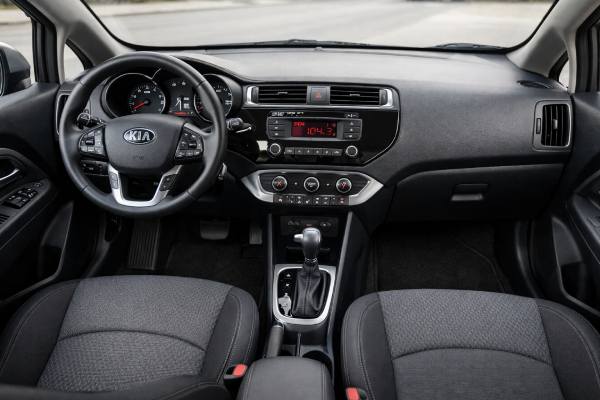

The facelifted 2015–2017 Kia Rio (UB) with the 1.6 GDI is the “small car that behaves like a bigger one” in everyday ownership: tight packaging, simple mechanical layout, and a naturally aspirated engine that feels immediate in city traffic. The direct-injection 1.6 is also the most performance-oriented Rio engine from this generation, with stronger mid-range pull than the smaller CVVT units and less complexity than a turbo setup.
For buyers today, the real story is balance. You get low operating costs, easy parts availability, and predictable handling—plus enough power for confident motorway merges. In return, you accept typical small-car compromises (road noise, modest rear space) and a few GDI-specific maintenance habits that matter more as mileage climbs.
Fast Facts
- Strong day-to-day responsiveness for a supermini, especially 40–100 km/h.
- Simple, naturally aspirated setup—no turbo heat or boost plumbing to maintain.
- Good parts availability and straightforward service access for most jobs.
- Plan for intake-valve carbon cleaning if the car is used mainly on short trips.
- Sensible oil interval: change every 10,000 km or 12 months (sooner in severe use).
Navigate this guide
- Kia Rio UB facelift what it is
- Kia Rio UB 1.6 GDI specs and dimensions
- Kia Rio UB trims safety and ADAS
- Reliability issues and service actions
- Maintenance plan and buyers checklist
- Driving character and real world economy
- Rivals and which one fits you
Kia Rio UB facelift what it is
The 2015–2017 facelift of the Rio UB is best understood as a refinement pass rather than a redesign. The platform fundamentals stay the same—front-engine, front-wheel drive, torsion-beam rear suspension on most markets—while the cabin materials, noise isolation, lighting, and equipment packaging typically improve by trim level. With the 1.6 GDI, the Rio moves from “budget transport” into “honest all-rounder,” because the powertrain finally matches the chassis’ competence.
The 1.6 GDI is a direct-injection petrol engine. Direct injection (DI) sprays fuel straight into the combustion chamber at high pressure, which helps power and efficiency—but it also changes how the intake valves stay clean. In older port-injected engines, fuel washes the back of the valves; in GDI engines, that washing effect is reduced. The result is that short-trip cars can develop intake-valve carbon deposits over time. This is not a reason to avoid the car, but it is a reason to maintain it with intent (oil quality, PCV health, and occasional longer, fully warmed drives).
In daily use, this Rio’s strengths are predictable: quick steering response, tidy footprint for parking, and a drivetrain that feels linear. You do not need to “wait for boost” or manage a complicated hybrid system. The 6-speed manual (where available) keeps the engine in its sweet spot, while the 6-speed automatic tends to prioritize smoothness and calm fuel use.
Ownership-wise, the Rio benefits from being common. Wear parts (brakes, filters, suspension links) are inexpensive, and most independent shops know the layout. What matters most in a used purchase is not the badge on the hatch—it is the service history, the quality of past oil changes, and whether the car has been driven in a way that suits a small GDI engine (not only cold starts and five-minute trips).
Kia Rio UB 1.6 GDI specs and dimensions
Specs vary by market, gearbox, wheel size, and trim. The tables below reflect the most common configurations for the 2015–2017 Rio UB facelift with the 1.6 GDI (138 hp), focusing on the items that matter for maintenance, fitment, and real-world performance.
Powertrain and efficiency
| Item | Typical spec (most markets) |
|---|---|
| Code | Gamma 1.6 GDI (commonly G4FD, market-dependent) |
| Engine layout and cylinders | Inline-4, DOHC, 16-valve (4 valves/cyl) |
| Bore × stroke | 77.0 × 85.4 mm (3.03 × 3.36 in) |
| Displacement | 1.6 L (1,591 cc) |
| Induction | Naturally aspirated |
| Fuel system | Direct injection (GDI) |
| Compression ratio | ~11.0:1 (market-dependent) |
| Max power | 138 hp (103 kW) @ ~6,300 rpm |
| Max torque | ~167 Nm (123 lb-ft) @ ~4,850 rpm |
| Timing drive | Chain |
| Rated efficiency | Typically ~5.8–6.8 L/100 km (40–35 mpg US / 49–42 mpg UK), depending on gearbox/tyres |
| Real-world highway @ 120 km/h | Commonly ~6.5–7.5 L/100 km (36–31 mpg US / 43–38 mpg UK) |
Transmission and driveline
| Item | Typical spec |
|---|---|
| Transmission | 6-speed manual (where offered) or 6-speed automatic |
| Drive type | FWD |
| Differential | Open |
Chassis and dimensions
| Item | Typical spec (range by trim) |
|---|---|
| Suspension (front/rear) | MacPherson strut / torsion beam |
| Steering | Electric power steering |
| Brakes | Front discs ~256 mm (10.1 in); rear drums ~203 mm (8.0 in) or rear discs on higher trims/markets |
| Wheels and tyres (common) | 185/65 R15 or 195/55 R16 |
| Ground clearance | ~140 mm (5.5 in), market-dependent |
| Length / width / height | ~4,065 / 1,720 / 1,455 mm (160.0 / 67.7 / 57.3 in) |
| Wheelbase | ~2,570 mm (101.2 in) |
| Turning circle | ~10.2 m (33.5 ft) |
| Kerb weight | ~1,120–1,220 kg (2,469–2,690 lb) |
| Fuel tank | ~43 L (11.4 US gal / 9.5 UK gal) |
| Cargo volume | ~288 L (10.2 ft³) seats up; varies by measurement method |
Performance and capability
| Item | Typical real-world result |
|---|---|
| 0–100 km/h (0–62 mph) | ~9.5–10.5 s (gearbox and tyres matter) |
| Top speed | ~185–195 km/h (115–121 mph) |
| Braking 100–0 km/h | Commonly ~38–41 m (125–135 ft), tyre-dependent |
| Towing capacity | Often limited/market-specific; many variants are not rated for heavy towing |
| Payload | Typically ~400–500 kg (880–1,100 lb), market-dependent |
Fluids and service capacities (common service practice)
Always verify by VIN and service literature, but these figures are typical for planning.
| Item | Typical spec |
|---|---|
| Engine oil | 5W-30 or 5W-20 (market/climate dependent); capacity ~3.6–3.8 L (3.8–4.0 US qt) with filter |
| Coolant | Ethylene glycol long-life; 50/50 mix; capacity ~5.5–6.0 L (5.8–6.3 US qt) |
| Automatic transmission fluid | Hyundai/Kia SP-IV class (common); drain/fill often ~3–4 L, total higher |
| Manual transmission fluid | MTF per Kia/Hyundai spec; capacity varies |
| A/C refrigerant | Commonly R134a; charge often ~450–550 g (16–19 oz), market-dependent |
Key torque specs (high-level, typical)
| Fastener | Typical torque |
|---|---|
| Wheel lug nuts | ~88–108 Nm (65–80 lb-ft) |
| Spark plugs | ~18–25 Nm (13–18 lb-ft), plug type dependent |
| Engine oil drain plug | ~35–45 Nm (26–33 lb-ft), pan/plug dependent |
Kia Rio UB trims safety and ADAS
Trim names vary widely by country, but the equipment “shape” is consistent: base grades focus on value, mid grades add comfort and convenience, and top grades bundle appearance plus safety extras (where available). For the 1.6 GDI specifically, it is common to see it paired with higher trims, larger wheels, and the automatic transmission more often than the smallest engines.
Trims and options that change ownership
Look for these practical differences—because they change running costs and daily comfort more than badges do:
- Rear brake type: Some markets give rear discs on higher trims. Rear drums can be perfectly fine, but they like periodic cleaning and adjustment if the car sees winter roads.
- Wheel size: 16-inch wheels sharpen response but increase tyre cost and can add road noise. 15-inch setups usually ride better and are cheaper to keep.
- Climate control: Automatic HVAC is convenient and can reduce window fogging in winter, but adds blend-door actuators and sensors that can fail with age (usually not expensive, but annoying).
- Infotainment tier: Basic head units are often more reliable long-term. Higher units add cameras, navigation, and more connectors—useful, but check every function works.
Quick identifiers when you inspect a used car:
- VIN plate and build month: helpful for matching parts and software updates.
- Brake hardware behind the wheel: rear disc caliper vs drum backplate is easy to spot.
- Tyre placard: confirms original wheel sizes and pressures.
Safety ratings and what they mean today
The Rio UB generation achieved strong crash-test performance for its era, especially in front and side impacts, with standard stability control on many markets. The key point for a 2015–2017 facelift car is that the underlying structure is the same generation that earned those results—so you should focus on whether the individual car still has its safety systems intact and correctly functioning.
Practical safety checks that matter on a used Rio:
- Confirm the airbag warning light proves out and turns off normally.
- Verify ABS and stability control operation (no stored faults, no wheel-speed sensor issues).
- Inspect seat belts for smooth retraction and any crash locking events.
Driver assistance (ADAS) reality check
Most Rio UB facelift cars do not have modern ADAS features like automatic emergency braking (AEB) or lane-keep assist. If a listing claims these, treat it as “verify, don’t assume.” What you typically do get:
- ABS with electronic brake-force distribution.
- Stability control and traction control (often standard).
- Rear parking sensors and/or a reversing camera on higher trims.
Because ADAS is limited, tyres and brakes become even more important as “active safety.” A Rio on premium tyres with fresh brake fluid and properly serviced brakes is meaningfully safer than the same car on cheap, hardened tyres—even if the spec sheet looks identical.
Reliability issues and service actions
The 2015–2017 Rio UB 1.6 GDI is generally robust when serviced on time, but it has a handful of predictable weak spots. The best way to understand them is to map issues by prevalence and cost—and then know what to check before you buy.
Common (most likely as mileage climbs)
- Intake-valve carbon buildup (medium cost):
Symptoms: rough idle, hesitation at light throttle, reduced fuel economy.
Root cause: GDI airflow and oil vapors depositing carbon on intake valves, amplified by short trips.
Remedy: intake cleaning (often walnut blasting) and addressing contributing factors (PCV valve health, oil quality, avoiding constant cold operation). - Ignition coils and spark plugs (low–medium cost):
Symptoms: misfire under load, check engine light, poor starting.
Root cause: coil aging or incorrect/overdue plugs.
Remedy: replace coils as needed, install correct plug type and gap, avoid cheap incompatible plugs. - Brake hardware wear and sticking (low–medium cost):
Symptoms: uneven pad wear, pulling, hot wheel smell.
Root cause: seized caliper slide pins (front), neglected rear drum cleaning/adjustment (where fitted).
Remedy: clean and lubricate slide pins, refresh boots, service rear brakes on schedule.
Occasional (depends on climate and service history)
- Cooling system seepage (medium cost):
Symptoms: slow coolant loss, sweet smell, dampness around hose joints.
Root cause: hose aging, clamp tension loss, thermostat housing or radiator end-tank seep.
Remedy: pressure test, replace compromised hoses/clamps, address leaks early to avoid overheating. - Automatic transmission shift quality (medium cost if neglected):
Symptoms: rough 2–3 shifts, delayed engagement, shudder.
Root cause: old ATF, adaptive learning needing reset after service, wear accelerated by heat.
Remedy: correct ATF service strategy (often drain/fill cycles), verify mounts and software updates if applicable.
Rare but expensive (watch for red flags)
- High-pressure fuel system faults (high cost):
Symptoms: hard starts, hesitation, fuel rail pressure codes.
Root cause: high-pressure pump or injector issues (less common, but possible on high-mileage DI engines).
Remedy: proper diagnosis with rail pressure data; replace failed components, avoid guesswork.
Recalls, TSBs, and verification
For any used Rio, verify recalls and service actions using an official VIN check and dealer records. Service bulletins (TSBs) may exist for drivability, software calibrations, and theft-prevention measures depending on market and model year. If a seller cannot show proof, assume it has not been done and budget time to confirm.
Pre-purchase requests that pay off:
- A scan for stored powertrain and ABS faults (even if the dash is clear).
- Evidence of regular oil changes (dates and mileage).
- Proof of transmission fluid service on automatics if mileage is high.
- Confirmation of recall completion via VIN search.
Maintenance plan and buyers checklist
A Rio 1.6 GDI stays cheap to own when you treat it like a high-efficiency engine, not like an appliance you ignore. The schedule below is practical for most owners; adjust for severe use (short trips, dusty roads, extreme heat/cold, constant stop-start).
Practical maintenance schedule
- Engine oil and filter: every 10,000 km or 12 months; consider 7,500 km if the car does mostly short trips or hard city use. Use the correct viscosity and a quality filter to help manage deposits.
- Engine air filter: inspect every 15,000 km; replace around 30,000 km (sooner in dust).
- Cabin filter: every 15,000–20,000 km or annually if you want consistent HVAC performance.
- Spark plugs: typically 90,000–100,000 km with long-life plugs; earlier if misfires or incorrect plugs are fitted.
- Coolant: often long-life; a common strategy is 10 years/160,000 km first change, then 5 years/80,000 km—verify by market.
- Brake fluid: every 2 years, regardless of mileage.
- Brakes: inspect pads, rotors/drums, and slide pins every 20,000 km; service rear drums periodically if fitted.
- Tyres: rotate every 10,000–12,000 km; align if you see uneven wear or after suspension work.
- Automatic transmission fluid: if the car sees heavy city use, consider service around 60,000 km; use the correct ATF spec and avoid “universal” fluids unless approved.
- 12 V battery: test annually after year 4; replacement commonly needed in the 4–6 year window depending on climate.
Small GDI habits that reduce long-term issues
- Let the engine reach full operating temperature regularly (not every drive must be long, but short-trip-only life is hard on any DI engine).
- Use top-tier fuel where available and avoid running the tank near empty repeatedly (helps fuel pump longevity).
- Fix vacuum leaks, PCV issues, and misfires quickly—GDI engines dislike prolonged “almost broken” running.
Buyer’s inspection checklist (high value, low effort)
Bring a flashlight and be systematic:
- Cold start: listen for rattles, unstable idle, or prolonged cranking.
- Idle quality and light throttle: should be smooth; stumble can hint at carbon or ignition issues.
- Cooling system: check reservoir level and signs of dried coolant around hose joints.
- Transmission behavior: smooth engagement from Park/Neutral into Drive/Reverse; no flare on kickdown.
- Suspension and steering: clunks over small bumps often point to end links or bushings (cheap, but leverage for price).
- Brakes: consistent pedal feel; no pulsing (warped rotors) or pulling.
- Tyre wear: uneven wear can reveal alignment problems or a past curb impact.
- Electrics: confirm windows, locks, HVAC modes, and infotainment functions—small cars often live a hard urban life.
Long-term durability outlook: with consistent oil changes and attention to GDI carbon tendencies, these engines routinely deliver dependable service. The car’s age-related costs are more likely to come from rubber, suspension wear, and neglected fluids than from dramatic engine failures.
Driving character and real world economy
The Rio UB chassis is honest and easy to place, and the 1.6 GDI finally gives it the energy to feel “complete.” Around town, throttle response is crisp for a naturally aspirated engine, and the car is light enough that you do not need to rev it aggressively to keep up with traffic. The steering is typically light at parking speeds and firms up modestly as speed rises—good for confidence, though not “sports car” communicative.
Ride, handling, and NVH
- Ride: firm but not harsh on 15-inch wheels; 16-inch setups can transmit sharper impacts on broken pavement.
- Handling balance: predictable front-wheel-drive behavior with mild understeer when pushed. It responds well to good tyres; cheap tyres make it feel nervous.
- Braking feel: generally stable and linear. If the pedal feels soft, old brake fluid is a frequent culprit and an easy fix.
- Noise: motorway road noise is the main limitation. Expect more tyre and wind noise than in larger hatchbacks.
Powertrain character
- Low-rpm response: strong enough for city use without constant downshifts.
- Mid-range: the 1.6 GDI pulls cleanly through typical overtaking speeds (60–120 km/h), especially with the manual.
- Automatic logic: tuned for smoothness; may downshift reluctantly unless you use a deeper throttle input. If it “hunts,” check fluid condition and software status.
Real-world efficiency (what owners usually see)
Fuel economy depends heavily on speed and temperature. Typical patterns:
- City: ~7.5–9.0 L/100 km (31–26 mpg US / 38–31 mpg UK), especially in winter or heavy traffic.
- Mixed driving: ~6.5–7.5 L/100 km (36–31 mpg US / 43–38 mpg UK).
- Highway at 120 km/h: commonly ~6.5–7.5 L/100 km, with headwinds and winter tyres pushing it higher.
If your priority is fuel economy above all else, smaller-displacement engines or diesel variants can win on paper. But the 1.6 GDI’s advantage is that it does not feel strained at higher speeds, which can make it easier to drive efficiently because you are not constantly chasing momentum.
Performance metrics that matter
In day-to-day terms, the most useful performance is not the launch—it is overtaking and merging:
- Expect 0–100 km/h in the ~9.5–10.5 s range depending on gearbox and tyres.
- Passing from 80–120 km/h feels competent for the class, especially with a manual or a willing downshift.
For most owners, this is the “sweet spot” Rio: fast enough to be relaxing, but simple enough to stay affordable.
Rivals and which one fits you
In the 2015–2017 supermini class, the Rio 1.6 GDI competes on value, simplicity, and predictable ownership. Rivals often beat it in one specific area—steering feel, cabin design, or ultra-low fuel consumption—but may cost more to buy or maintain.
How the Rio stacks up
Against the Ford Fiesta (typical 1.0 turbo variants in many markets):
- Fiesta strengths: sharper handling, more engaging steering, often better infotainment integration.
- Rio advantage: no turbo complexity; linear power delivery; often cheaper routine maintenance.
- Choose the Rio if: you want fewer heat- and boost-related long-term variables.
Against the **Volkswagen Polo / **Škoda Fabia (TSI-era small cars):
- Polo/Fabia strengths: more solid cabin feel, strong torque with turbo petrols, refined motorway manners.
- Rio advantage: simpler engine setup, usually lower parts prices, less sensitive to neglected service.
- Choose the Rio if: you want a straightforward car that tolerates real life well.
Against the **Toyota Yaris (non-hybrid petrol):
- Yaris strengths: excellent long-term durability reputation, strong resale in many regions.
- Rio advantage: more power in this 1.6 GDI form, often better equipment for the money.
- Choose the Rio if: you value performance-per-euro and can maintain it properly.
Against the **Hyundai i20 (similar era):
- i20 strengths: often very close mechanically; some trims feel more modern inside.
- Rio advantage: depending on market, better value on the used market and similar service simplicity.
- Choose the Rio if: the example you found has the best history and condition—condition matters more than the badge here.
Quick buyer guidance
Pick the Rio 1.6 GDI if you want:
- A small car that feels confident at 100–130 km/h without being complicated.
- Affordable wear items and easy service access.
- A drivetrain you can keep healthy with regular oil changes and sensible driving patterns.
Consider a rival instead if you want:
- The quietest cabin (Polo-class refinement tends to win).
- Modern ADAS features (many newer rivals introduced AEB/lane support earlier).
- Maximum fuel economy at any cost (some smaller engines/diesels can beat it under specific use).
If you find a well-maintained Rio with proof of consistent servicing, it remains one of the more rational used-car buys in its class: quick enough to feel safe, simple enough to stay affordable, and common enough that ownership does not become a parts scavenger hunt.
References
- 2016 Kia Rio Features & Options 2016 (Manufacturer Publication)
- Kia Rio | Safety Rating & Report | ANCAP 2011 (Safety Rating)
- Check for Recalls: Vehicle, Car Seat, Tire, Equipment | NHTSA 2026 (Recall Database)
- Kia Global Information System – TSB 2024 (TSB)
Disclaimer
This article is for informational purposes only and is not a substitute for professional inspection, diagnosis, or repair. Specifications, torque values, service intervals, and procedures can vary by VIN, market, model year, and installed equipment; always verify details against official Kia service documentation for the exact vehicle you are working on.
If this guide helped you, please consider sharing it on Facebook, X (Twitter), or your favorite forum to support our work.